Live Long and Porter – Kegged

Today, Stardate 68649.4, I kegged Live Long and Porter. This beer had been fermenting for nine days, with some nice and vigorous yeast action along the way.

Final gravity was 1.016, down from a starting gravity of 1.050. This works out as 4.5% abv. The slightly higher final gravity is probably due to the warm mash temp (155°), which I’m guessing left the wort a little less fermentable. Because this is a porter, I don’t consider the extra body a tragedy.

The final product is a beautiful chocolate brown. In addition to a full 5 gallon keg, I also got one 22-oz. bottle. I am carbonating that with 2 carbonation drops (per the dosage instructions on the package). Because there is a little bit of “sludge”, and the bottling process wasn’t terribly tidy (will have to work on that for the next batch), I’m going to consume the bottled beer as soon as it is carbonated. The keg is carbonating under my usual settings for the keezer, ~13.5 psi at 42°, or ~2.5 volumes of CO2.

Lab Bench Pale Ale

Another weekend, another brewing session. Because the IPA on tap just ran out, I figured it was a good time to rev up another IPA or pale ale. A recipe I saw in the September 2013 issue of BYO was intriguing. Miss’ippi #BIGCASCADE Pale Ale was originally brewed in honor of the legalization of homebrewing in Mississippi, back on July 1, 2013. Beyond its historic interest, this recipe also interested me because it incorporated hops in the mash as well as first wort hopping. I had heard of both techniques, but never used them, so this seemed like a great opportunity to expand my brewing horizons. I made a few other (minor) adjustments to the recipe for my equipment, and thus Lab Bench Pale Ale was born.

As another note, I added a small amount of gypsum to the boil. My hope is that the sulfate from this will help add some “zing” to the hops character. Additionally, I prepared the yeast starter 4 days in advance, and cold crashed it in the refrigerator after 3 days. After approximately 36 hours, and just prior to pitching the yeast, I decanted most of the spent wort, and pitched just a yeast slurry of approximately 0.5 L volume.

Finally, I have been doing some adjustments to my equipment profile in BeerSmith, to try and get my mash temperatures a little closer. For this time around, I assumed a mash tun temperature of 164°. Finally, that seemed to do the trick, and I hit my mash temperature pretty much square on.

Lab Bench Pale Ale

  • 8.6 lbs. 2-row malt (Great Western Malting Co.)
  • 6 oz. 40° L crystal malt
  • 0.5 oz. whole Cascade hops (added to mash; approximately 85 minutes steeping total)
  • 0.5 oz. whole Cascade hops (first wort; steeped in wort for approximately 45 minutes and boiled for 60 minutes)
  • 1 oz. whole Cascade hops, 20 minute boil
  • 0.75 oz. Cascade hops pellets (7.5% alpha, 5.5% beta), 10 minute boil
  • 1.25 oz. Cascade hops pellets (7.5% alpha, 5.5% beta), added at flame-out and steeped for ~30 minutes during chilling of wort
  • 2 oz. Cascade hops pellets (7.5% alpha, 5.5% beta), dry hop for 10 days
  • 1 tbs. 5.2 pH stabilizer (added to mash)
  • 8 g. powdered gypsum (added to boil)
  • 1 tsp. Irish moss  (10 minute boil)
  • California Ale Yeast (White Labs WLP001), prepared 4 days in advance with 1.5 L starter
Anticipated statistics
  • 1.047 o.g., 1.010 f.g., 4.8% abv
  • 37.8 IBU
  • 5.0 SRM
Procedure
  • I mashed in with 4 gallons of water at 164°. The grains, 0.5 oz. of whole hops, and 5.2 pH stabilizer were all included in this mix. The temperature had stabilized at 152° within 10 minutes, and was down to 150° after 30 minutes.
  • After a 60 minute mash, I added 1.35 gallons of 190° water, let it sit for 10 minutes, vorlaufed, and collected approximately 3.25 gallons of wort.
  • I added 3.14 gallons of water at 180°, which brought the mash up to 168°. I let this rest for 10 minutes, vorlaufed, and collected the remainder of the wort.
  • All together, I collected ~6.65 gallons of wort, with a gravity of 1.038 at 60°. This translates to 76.8% mash efficiency, within a percentage point or so of where I predicted.
  • I added the gypsum and brought the wort to a boil, adding hops at the designated intervals. Thus, hops were added at 40 minutes, 50 minutes (along with Irish moss), and 60 minutes (at flame-out). I noted a larger than normal amount of hot break; I’m not sure why this was.
  • I chilled the wort down to 72°, transferred it to a carboy, and pitched the yeast. I plan to start fermentation (the first 12-24 hours) at 67°, and will do the remainder of fermentation at 65°.
  • I plan to transfer to the keg and dry-hop in 7 to 10 days.
  • Starting gravity was 1.047, exactly as calculated by BeerSmith. This has been a really good brew session, in terms of nailing efficiency, temperatures, volumes, and gravities.

Vitamin K Kölsch Clone

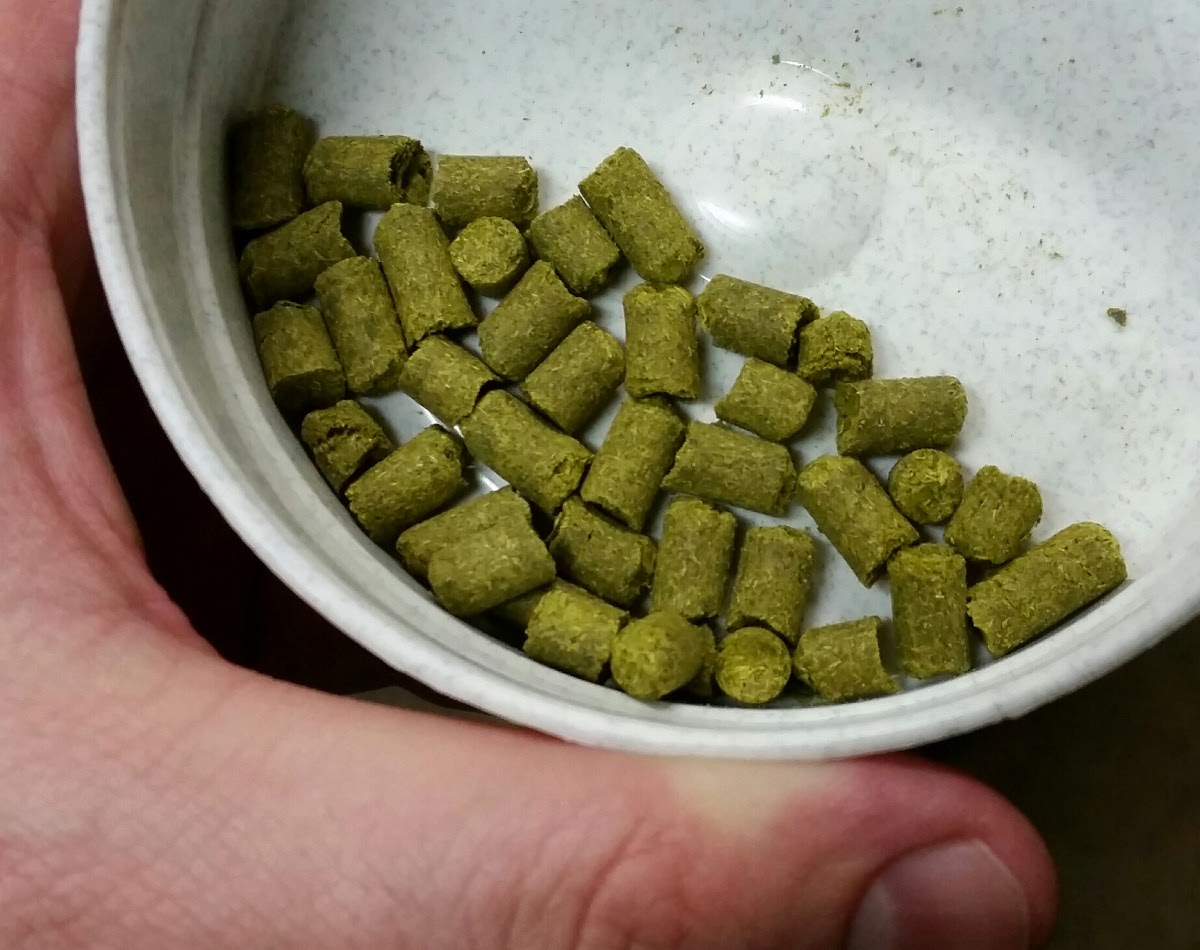
Magnum hops, locked and loaded
Magnum hops pellets, locked and loaded for this recipe.

As we inch closer and closer to the southern California version of spring, it’s time to wind down the “winter beers”, and start gearing up for some spring and summer brews. A kölsch seems like a good start for this. After thumbing through back issues of Brew Your Own, I found a recipe that is just the ticket. Vitamin K Kölsch Clone is a recipe mirroring a beer from Thunder Island Brewing Company, featured in the May/June 2014 issue of BYO. My adaptation of the recipe would probably horrify style purists, because I’ll be using American 2-row malt as the backbone. Then again, I’m not brewing this in Cologne, either, so authenticity (or indeed, the right to call it a kölsch) is out the window from the get-go.

I’m using White Labs WLP029, German Ale/Kölsch yeast. Following the calculations from my brewing software, I needed about 1 L starter (~1.040 starting gravity). This was prepared roughly 36 hours in advance of pitching; I haven’t yet made a stir plate, so I am relying instead on constant agitation. It took nearly 24 hours before I saw any real signs of activity in the starter (e.g., extensive foaming when agitated, etc.). The starter initially (for the first 24 hours or so) had a prominent fruity aroma, which is quite different from starters I have made for other strains. This transitioned into the more expected “yeast/bready” aroma after 30 hours or so. I am going to presume that this is just a characteristic of the strain (nothing online mentions typical aroma for this strain’s starter).

Following exceptional efficiency (75% and 83%) in my last two all-grain recipes, I have adjusted my equipment profile accordingly in BeerSmith to assume average efficiency of around 78%. Additionally, I will be tweaking my temperature settings a touch, based on the fact that my mash was ending up just a degree or two warmer than target on most occasions. I am heating up my mash tun with hot tap water prior to mashing in; in the past, I’ve been assuming a mash tun temperature of 75°. For BeerSmith calculations in this batch, I will assume a pre-warmed mash tun temperature of 130°.

Vitamin K Kölsch Clone

  • 7.25 lbs. 2-row malt (Great Western Malting Co.)
  • 0.75 lbs. white wheat malt
  • 0.5 lbs. Munich malt
  • 0.45 oz. Magnum hops pellets (13.7% alpha, 6.4% beta), 50 minute boil
  • 1 tsp. Irish moss, 10 minute boil
  • White Labs German Ale/Kölsch yeast (WLP029), in 1 L starter prepared 36 hours in advance.

Anticipated Statistics

  • S.g.=1.045; f.g. = 1.009, 4.6% abv
  • Bitterness = 22.2 IBU
  • Color = 3.7 SRM
Procedure
  • I mashed in with 3.25 gallons of water at 163° (a ratio of 1.5 quarts of water per pound of grain), aiming for a mash temperature of 150°. The mash settled at ~154° after five minutes, and was at 152° after 40 minutes. My mash temps are still running a little above calculated targets; I need to do a little more tweaking in BeerSmith. I wonder if my mash water isn’t rising in temperature just a touch after I turn the flame off.
  • After 60 minutes, I added 0.9 gallons of water at ~190°. I let this rest for 10 minutes, vorlaufed, and then drained the mash tun. From this step, I collected 3 gallons of wort.
  • Next, I added 3.1 gallons of water at ~185°. This brought the mash temperature up to 168°. I let this rest for 10 minutes, vorlaufed, and drained the mash tun.
  • In total, I collected 6.5 gallons of wort, with an overall gravity of 1.038. This equates to roughly 78% efficiency; looks like I guessed correctly on my mash efficiency assumptions.
  • I brought the wort to a boil; after 10 minutes, I added the Magnum hops (which were boiled for a total of 50 minutes).
  • 10 minutes before flame-out, I added the Irish moss. At this same time, I measured the volume of the wort to be ~5.6 gallons; this was a little below where I wanted, and I suspected this would bump my gravity up just a touch over target, so I added 0.25 gallons of distilled water. The boil-off rate must be just a touch higher than calculated for my equipment; I’ll have to adjust this in BeerSmith.
  • After a total of 60 minutes on the boil, I turned off the flame and began chilling the wort with my wort chiller. I brought the wort down to ~69°.
  • I transferred the wort to the fermenter and added the entire 1 L starter. Although I do not have this particular fermenter calibrated for volume measurements, based on my measurements at the end of the boil I transferred approximately 5.5 gallons into the fermenter.
  • I will be fermenting this beer at approximately 66°, which is right at the lower end of the optimal zone for WLP029 (65-69°). This way if things heat up a tad during the most vigorous part of fermentation, I should still keep esters and such under control.
  • Starting gravity was 1.045 – exactly on the nose! The wort is a beautiful light yellow in color, with excellent hot break separation.
  • I brewed this up on March 1, 2015. I will let it ferment for ~7 days before cold crashing it. Then, I’ll let it sit at least another week before kegging.

Live Long And Porter Update

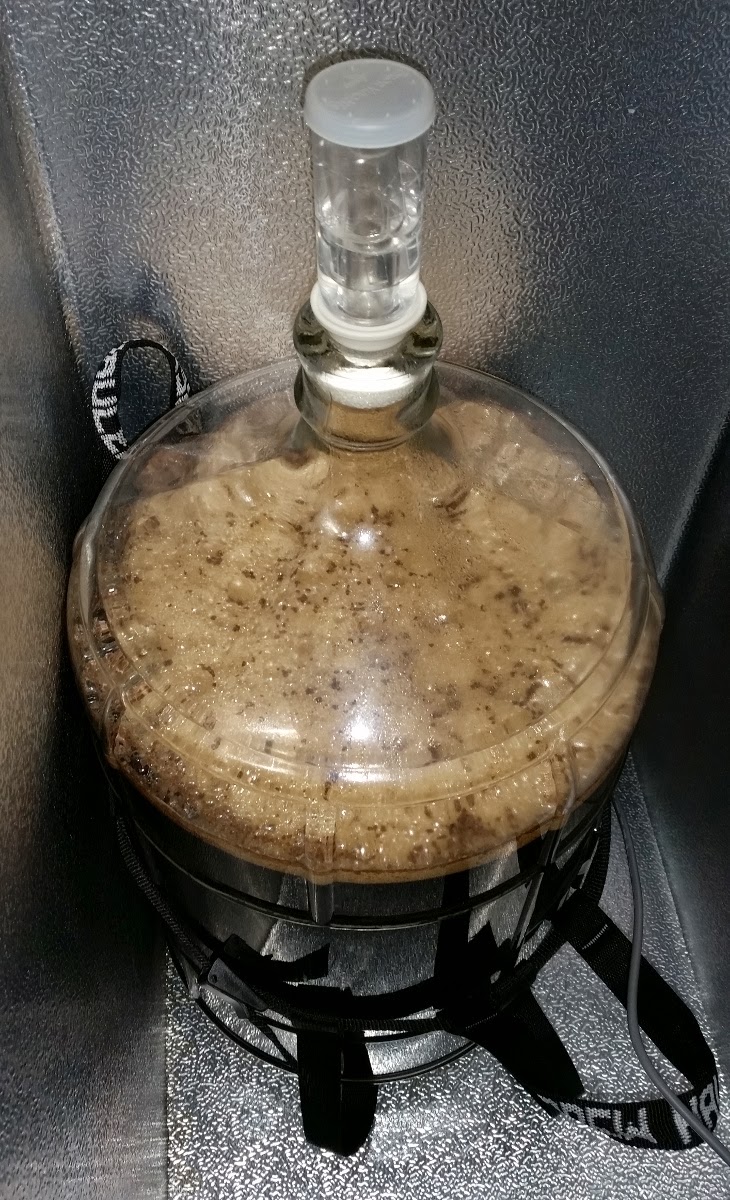
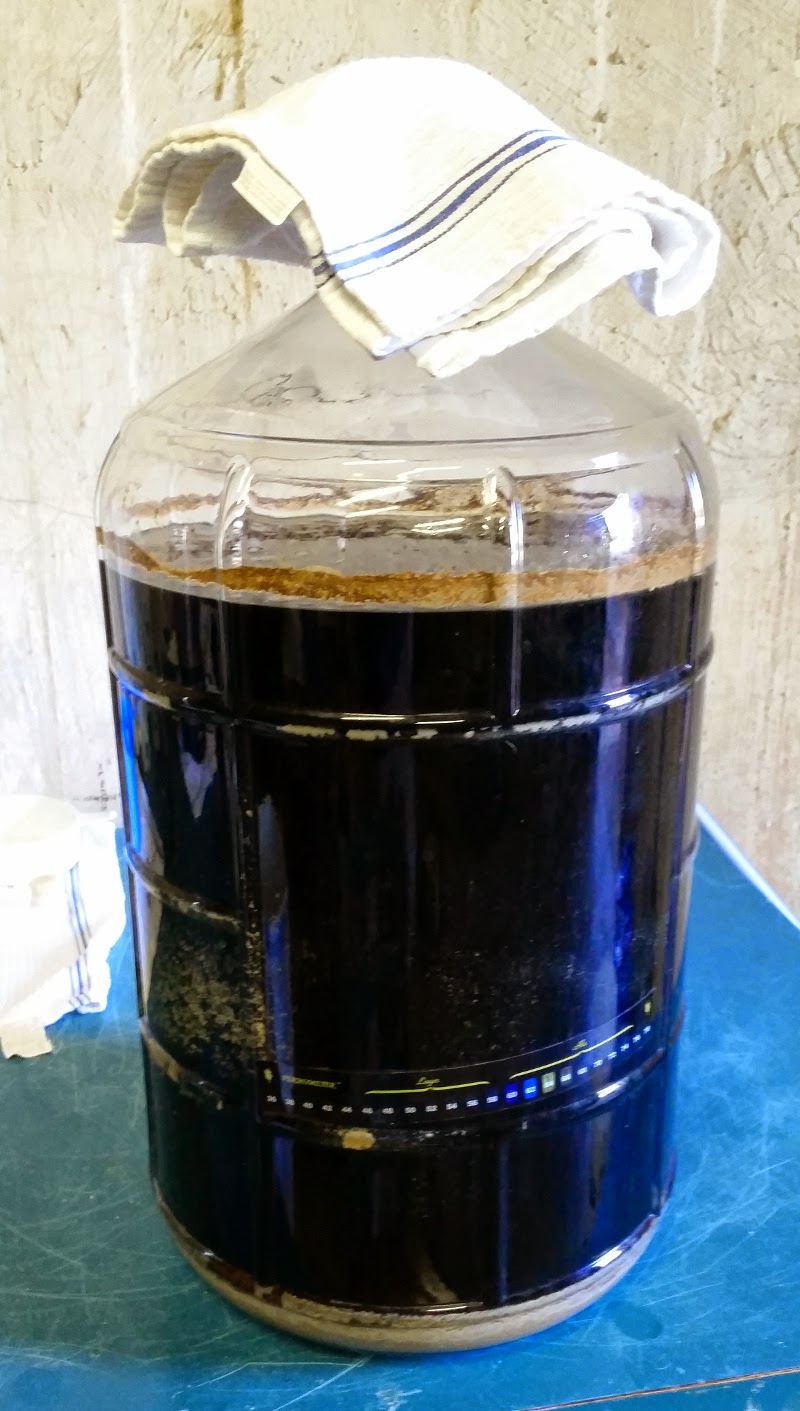
The “Live Long And Porter” is fermenting vigorously, barely 40 hours after pitching the yeast. Many of the online reviews for WLP051 (California Ale V yeast from White Labs) noted a strong sulfur aroma during fermentation; they weren’t kidding! It’s a genuine rotten eggs smell in the chamber. We’re fermenting along at between 66° and 68°; another week, and it’s into the keg with this one!

Live Long and Porter

Today, Leonard Nimoy (better known as Mr. Spock) passed away after a long and prosperous life. As someone who really enjoyed his work and found his public presence to be a positive one, it only seemed appropriate to name today’s brew in his honor. I had a porter recipe that was otherwise untitled…thus, “Live Long and Porter” was born.

Live Long and Porter

  • 7.5 lbs. 2-row malt (Great Western Malting)
  • .75 lbs. chocolate malt
  • .75 lbs. Vienna malt
  • .5 lbs. Carapils malt
  • 1 oz. Cascade whole hops (5.5% estimated alpha), 60 minute boil
  • 1 oz. Cascade whole hops (5.5% estimated alpha), 20 minute boil
  • 1 tsp. Irish moss
  • 1 tbs. 5.2 pH stabilizer (in mash)
  • California Ale V yeast (White Labs WLP051), prepared 24 hours in advance in 1.5 L starter
Anticipated Statistics
  • 1.048 s.g., 1.012 f.g., 4.7% abv
  • 29.5 IBU
  • 23.8 SRM
Procedure
  • I mashed in with 3.125 gallons of water at 172°; the mash stabilized at 155°.
  • I let the mash sit for 80 minutes and then added 1.15 gallons of water at 190°. I let the mash rest for 20 minutes, and collected 3 gallons of wort.
  • I added 3.15 gallons of water at 190°; the mash was a little too hot, so I added ~0.25 gallons of ice cubes to bring the temperature down to 168°. I let this sit for 20 minutes.
  • In total, I collected 6.85 gallons of wort, with a gravity of 1.043 at 60°. This works out to roughly 83% efficiency!
  • I brought the wort to a boil and added the first round of hops. These were boiled for 60 minutes total; the second hops addition was boiled for 20 minutes. For the last 15 minutes of the boil, I added 1 tsp. of Irish moss.
  • After 60 minutes of boiling, I removed the kettle from the heat and cooled it down using my wort chiller. Final volume in the kettle was roughly 6.2 gallons.
  • The “official” measured starting gravity was 1.050 at 60°; this is just a hair above my predicted target (1.048), but well within the bounds of acceptability. The wort is a rich, chocolatey brown…very pretty!
  • I ended up with around 5.75 gallons of wort in the fermenter (after adding the starter), with a starting temperature of approximately 72°. I pitched the entire yeast starter and transferred the whole lot into the fermentation chamber. I’ll ferment it at 66°.