Beer Tasting: Live Long & Porter

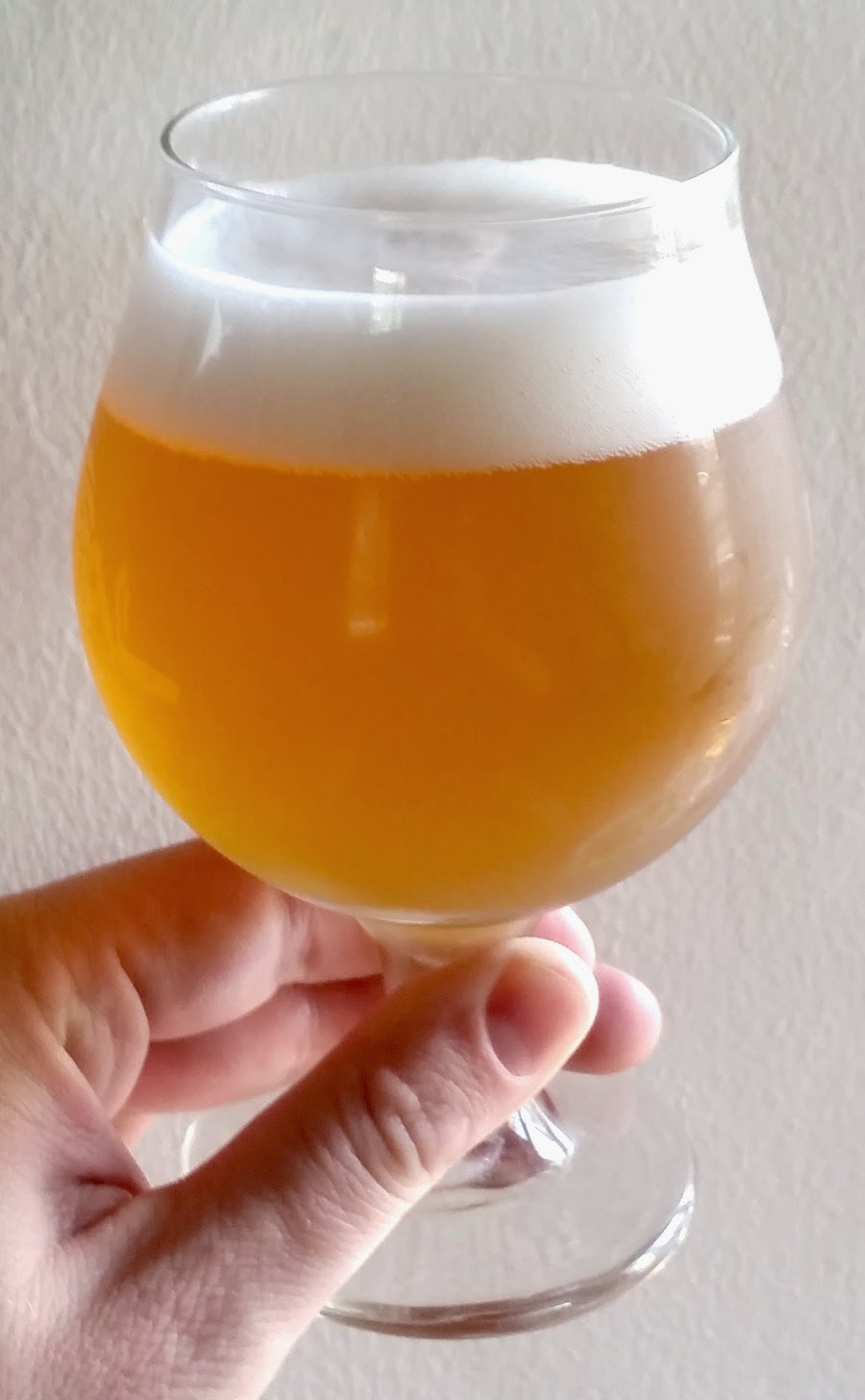
In mid-April, roughly two months after brewing, I did a formal tasting of Live Long & Porter.

  • The Basics
    • Starting gravity = 1.050; final gravity =  1.016; abv = 4.5%; estimated IBU = 30
  • Aroma
    • Coffee and a hint of chocolate. Nice.
  • Appearance
    • Creamy, tan-colored head, very persistent. Dark brown beer with good clarity.
  • Flavor
    • Chocolate, coffee; some maltiness behind it. Finish a little more bitter than perhaps I like.
  • Mouthfeel
    • Carbonation is good, but body is pretty weak.
  • Would I brew this again?
    • Probably not in this form; it’s a good enough beer (and the aroma absolutely nails what I love in a porter), but the body is too thin, which really detracts from the overall beer. For the next iteration, I would probably add a bit more carapils and crystal malt, as well as perhaps some flaked oats.
  • Overall rating: 
    • 5.5/10

A Whole Mess of Kegging

Eagle Face Oatmeal Stout, ready for kegging

It’s only five weeks until AHA (American Homebrewers’ Association) in San Diego, and in preparation I’ve been brewing up a storm the past few weekends. In order to give everything sufficient time for conditioning, carbonation, and such, tonight was the night to keg it all.

Gondwana Pale Ale 1.2

  • This beer had been in the primary fermenter for 3.5 weeks, for the first 10 days at 66°, and the rest of the time at ambient temperature.
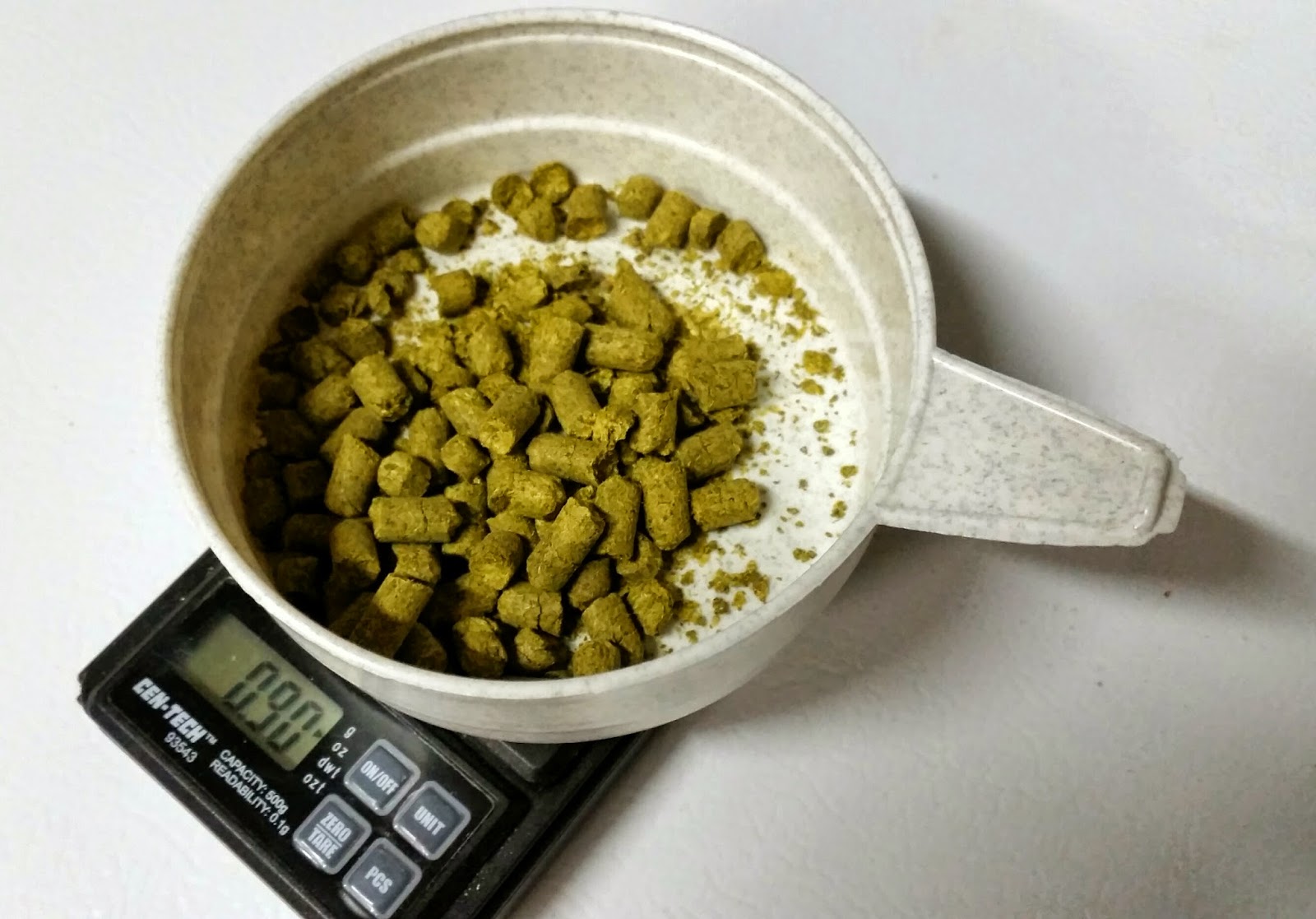
  • I racked the beer onto 2 ounces of Citra hops (13.2% alpha, 3.7% beta), weighted down in a bag at the bottom of the keg.
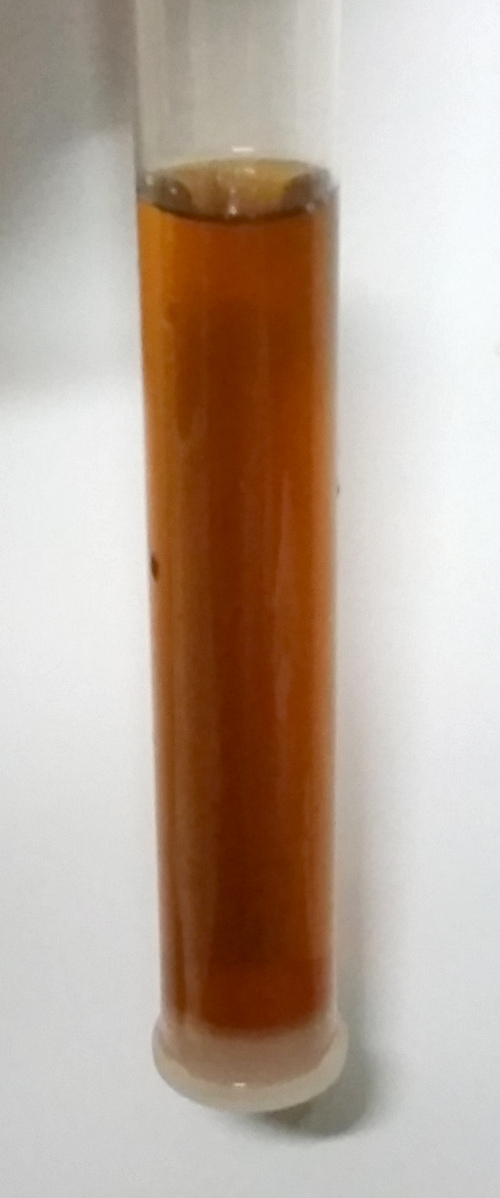
  • Final gravity was 1.010; down from 1.048, this works out to 5.0% abv. The beer was wonderfully clear, with a medium yellow color and clean flavor.
  • I’ll let this dry hop at room temperature for a week or two before carbonating.


Eagle Face Oatmeal Stout 1.1

  • This beer had been in the primary fermenter for 2.5 weeks; I cold-crashed it for the final 24 hours down to 38°.
  • Final gravity was down to 1.021 from 1.061, which works out to 4.1% abv. The beer has really nice body to it, and should be delightful once carbonated.
  • I began carbonating this beer immediately.


Bonedigger Brown Ale 1.1

  • This beer had been in the primary fermenter for 11 days (cold crashed during the final 24 hours).
  • Final gravity was 1.013, down from 1.052. This works out to 5.1% abv. Both flavor and appearance are on the mark.
  • I began carbonating this beer immediately.
To move things along, I’m going to try a “quick carbonation” technique. For the oatmeal stout and brown ale, I began carbonation under 40 psi at 38°. In 24 hours, I’ll lower pressure to 20 psi, and after another 24 hours I’ll check out the carbonation.

Bonedigger Brown Ale 1.1

Another one for the homebrewer conference…this is my second go at the brown ale. Basically unchanged recipe from last time.

Bonedigger Brown Ale 1.1

  • 9 lbs. 2-row malt
  • 1 lb. Maris Otter pale malt
  • 0.75 lb. 80°L crystal malt
  • 0.5 lb. carapils malt
  • 0.5 lb. chocolate malt
  • 1 oz. Cascade whole hops, bittering (60 minute boil)
  • 1 oz. Cascade whole hops, bittering (20 minute boil)
  • 0.5 oz. Willamette hops pellets, aroma (5.2% alpha; 3.7% beta; 5 minute boil)
  • 1 tsp. Irish moss (10 minute boil)
  • 1 pkg. US-05 Safale American Yeast, rehydrated in 150 mL of water.
Procedure
  • I mashed in with 3.75 gallons of water at 164.5°, hitting my target mash temperature of 153°.
  • The mash was down to 151° after 35 minutes, and down to 149° after 50 minutes.
  • I added 0.75 gallons of water at 190°, stirred, and let sit for 10 minutes. I vorlaufed and collected 3.1 gallons of wort.
  • I added 3.25 gallons of water at 185°, which raised the temperature of the mash bed to around 168°. After 10 minutes, I vorlaufed and collected the remainder of the wort.
  • In total, I collected 6.4 gallons of wort at 1.052 specific gravity. This works out to 79% efficiency.
  • I boiled for 60 minutes, adding hops and Irish moss at the appropriate intervals.
  • After chilling with the wort chiller, 5 gallons of wort went into the fermenter. The starting gravity is 1.059.
  • After pitching the yeast, I set my temperature controller to 68°. On the second day, once fermentation had started, I dropped the temperature down to 65°.
  • This beer was brewed on April 26, 2015, and fermented for 10 days, before cold crashing for 24 hours and then kegging.


Pannotia White IPA Kegged

Every once in awhile, you just know that a particular batch is going to be good, even early on in the process. It doesn’t happen often, but when it does, you can’t stop thinking about how the final product is going to taste. I’m thinking my Pannotia White IPA just might be one of those batches.

Tonight, I transferred this batch over to the keg. It had been in the primary fermenter for 18 days, after two pretty vigorous bouts of fermentation. The first bout settled down a couple of days after brewing. Given come online commentary I read about this particular yeast strain, I agitated the carboy a bit (four days post-brewing), and sure enough, fermentation took off again. At kegging, the beer had a gravity of 1.012, down from 1.057. This works out to 5.9% abv, right within the range of what I was hoping for.

I transferred just under 5 gallons of beer over to the keg, and added 2 oz. of Citra hops pellets for dry hopping. I’ll leave it to dry hop for about a week before carbonating.

At the time of kegging, the beer was a beautiful straw color with a prominent hazy; truly a “white” IPA! There is a nice citrus and slight clove aroma, along with a delightfully balanced bitterness on the tasting. This beer can only get better from here!

Eagle Face Oatmeal Stout 1.1

In my second brew for the AHA club night, I’m revisiting my Eagle Face Oatmeal Stout. The beer recipe is pretty much unchanged, with just a touch more flaked oats to round out the body a bit.

Eagle Face Oatmeal Stout

  • 8.5 lbs. 2 row malt (Great Western)
  • 1.25 lbs. flaked oats
  • 1 lb. 80° L crystal malt
  • 1 lb. Victory malt
  • 0.75 lb. chocolate malt
  • 0.5 lb. roasted barley
  • 0.5 lb. rice hulls
  • 1 tsp. Irish moss
  • 1.5 oz. Northern Brewer hops pellets (7.8% alpha, 4.5% beta)
  • 1 pkg. English Ale yeast (White Labs WLP002, 1L starter)
Procedure
  • 24 hours before brewing, I began a 1L starter (4 oz. of extra light DME in 1L water), and ran this on the stir plate. True to the yeast strain (WLP002), the culture was a snowstorm of flocculated yeast by the end.
  • I mashed in with 4.25 gallons of water at 169°, and hit 155-156° for my mash-in temperature. The mash had dropped to 155.4° after 10 minutes and was down to 152.4° after 50 minutes.
  • After 60 minutes, I added 0.5 gallons of 170° water, let this sit for 10 minutes, vorlaufed, and collected 3 gallons of wort at ~1.070 gravity. Then, I added 3.25 gallons of water at 180°, which raised the mash bed to 168°. I let this sit for 10 minutes, vorlaufed, and collected the remainder of the wort.
  • All together, I collected 7.6 gallons of wort with a gravity of 1.049. This works out to a mash efficiency of 81%! I suspect I collected only 3 gallons on the first round due to slow draining of the mash tun; the rice hulls were definitely a good addition to this recipe!
  • I brought the wort to a high, rolling boil. After 5 minutes, I added the hops.
  • After 50 minutes, I added the Irish moss.
  • After 60 minutes, the wort gravity was reading ~1.054 on my refractometer, a little bit lower than I wanted. So, I removed the hops (to avoid over-bittering), and boiled for another 15 minutes. This may have overboiled the Irish moss a bit, but I figured that was a small price to pay for hitting my target gravity.
  • After flame-out, I chilled the wort down to 70° using my wort chiller. In the end, I had 6.25 gallons of wort, ~5.75 gallons of which went into the fermenter. Final gravity was 1.061 at 60°. This was nearly exactly at my target of 1.062.
  • I put this in the fermentation chamber, which was set at 66°.