Schell’s Pils Clone

It’s always lager season, and especially so during the warm opening days of fall here in SoCal. I’m continuing to explore the morphospace of pilsners, with my latest foray following a recipe in Craft Beer for the Homebrewer: Recipes from America’s Top Brewmasters. I was particularly interested by a clone recipe for a pilsner from Schell’s Brewing, based out of Minnesota. One notable thing about the provided recipe is that it used American 2-row instead of European pilsner malt. They’re not too far off each other in terms of color, so I thought it would be a neat test of malt character.

The recipe itself closely matches that in the book; my main adjustment was to modify the hop schedule slightly for amounts and time to account for the hops I had on hand.

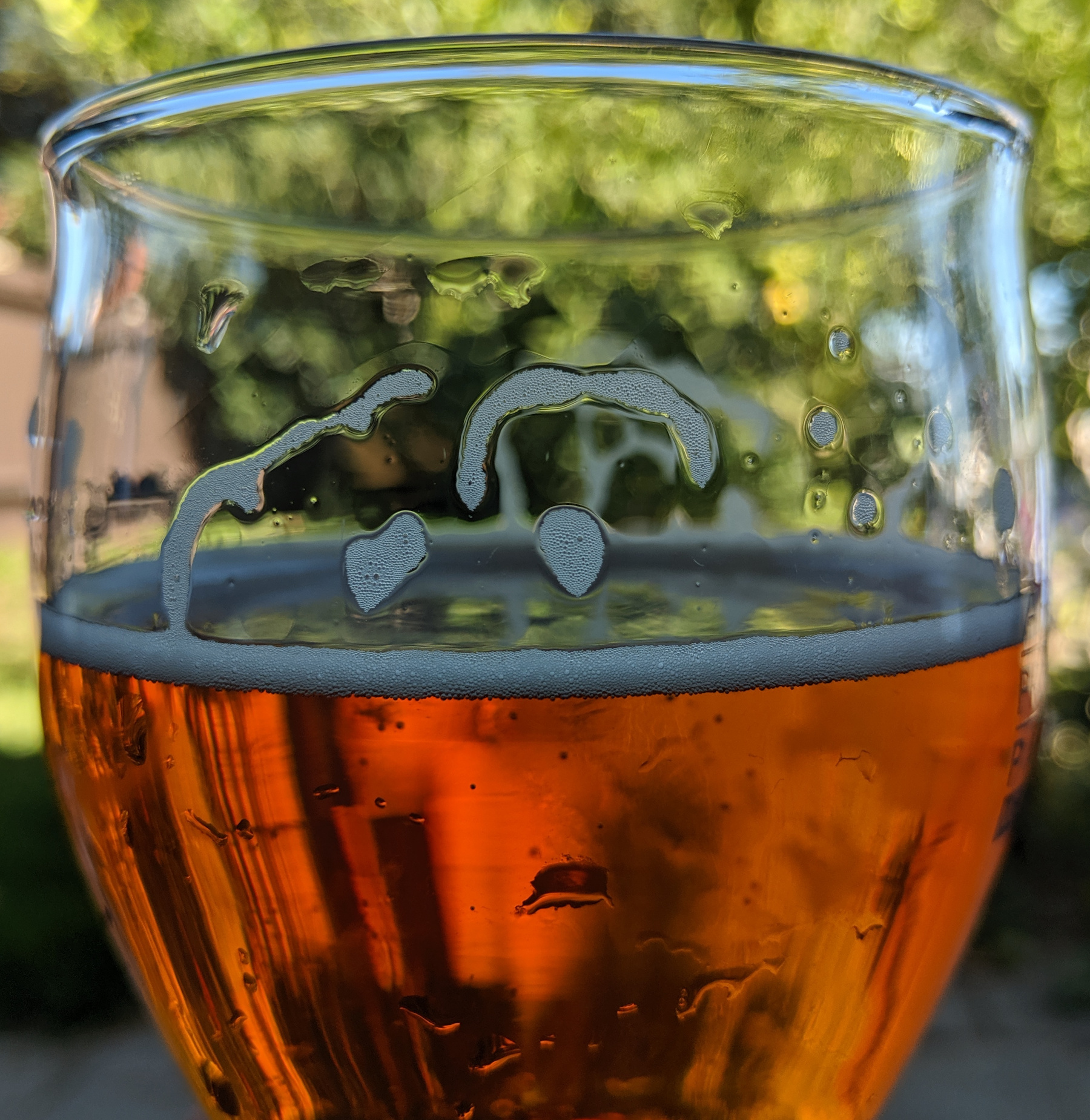
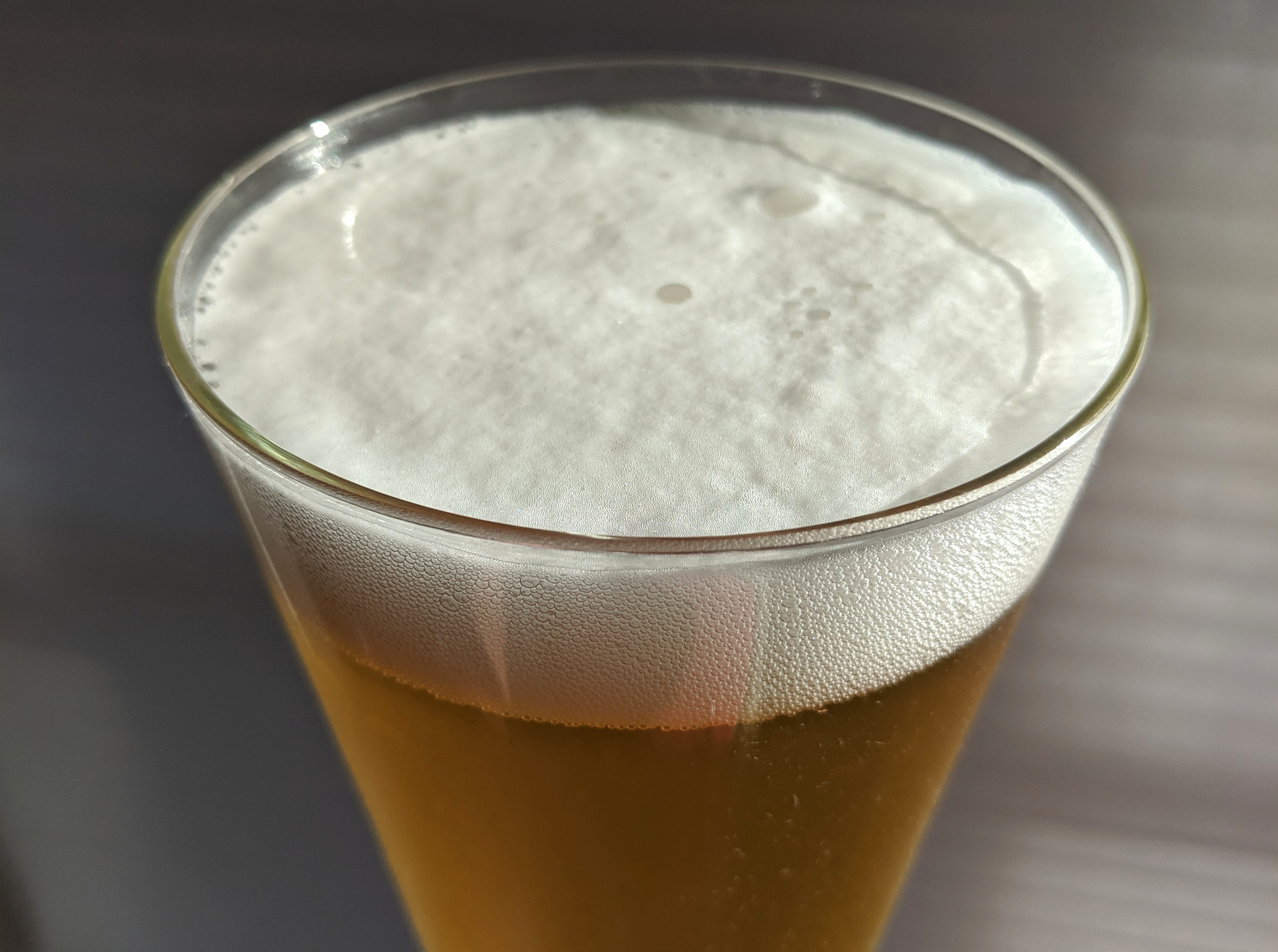
Close-up of pilsner beer foam in conical glass

Schell’s Pils Clone

  • 10.5 lb. 2-row pale malt (Rahr)
  • 0.25 lb. Carapils malt (Briess)
  • 1.9 oz. Mt. Hood hop pellets (4.6% alpha), 60 minute boil
  • 1 Whirlfloc tablet, 10 minute boil
  • 1 tsp. Fermax yeast nutrient, 10 minute boil
  • 1.1 oz. Mt. Hood hop pellets (4.6% alpha), 5 minute boil
  • 1 oz. Sterling hop pellets (7.9% alpha), 5 minute boil
  • 1 pkg. Harvest liquid yeast (Imperial Yeast #L17), prepared in 1.5L starter
  • 1 oz. Sterling hop pellets (7.4% alpha), 7 day dry hop

Target Parameters

  • 1.050 o.g., 1.013 f.g., 4.8% abv, 38 IBU, 3 SRM
  • 60 minute infusion mash, 152°, batch sparge
  • Water built up from RO, to hit target water profile of 59 ppm Ca, 8 ppm Mg, 89 ppm SO4, 63 ppm Cl; RA=-47ppm

Procedure

  • I made a 1.5L starter a few days in advance, let it run for 48 hours, and then cold crashed it (and decanted the spent wort).
  • To create my brewing water, I added 3.3 g gypsum, 2.7 g epsom salt, and 4.2 g calcium chloride to 8.5 gallons of RO water.
  • I mashed in with 3.5 gallons of water at 162°, to hit a mash temperature of 152.2°. I added 7.5 mL of 88% lactic acid to the mash, to help hit a target pH of ~5.3.
  • After 50 minutes, I added 1.25 gallons of water at 185°, in order to raise the mash temperature o 156°. I let the mash sit for 10 more minutes, vorlaufed, and collected first runnings. Then, I added 3.75 gallons of water at 185°, let sit for 10 minutes, vorlaufed, and collected second runnings.
  • In total, I collected 6.9 gallons of wort with a gravity of 1.042, for 74% efficiency.
  • I brought the runnings to a boil, adding hops and other kettle additions per the schedule. After 60 minutes, I turned off the flame and chilled down as far as I could (~80°) before transferring.
  • I chilled the wort down to 57°, before pitching the yeast and continuing to chill down to 52°. I completed the fermentation at 52°.
  • A good krausen was built within 24 hours.
  • I brewed the beer on 11 August 2019.
  • On 18 August 2019, I raised the temperature of the beer to 56°.
  • On 21 August 2019, I raised the temperature of the beer to 66°.
  • I added the dry hops on 24 August 2019.
  • I cold crashed the beer to 33° on 29 August 2019.
  • I kegged the beer on 1 September 2019. Final gravity was 1.008 (via refractometer), for 5.5% abv.

IMG_20191009_171317

Tasting

  • Appearance
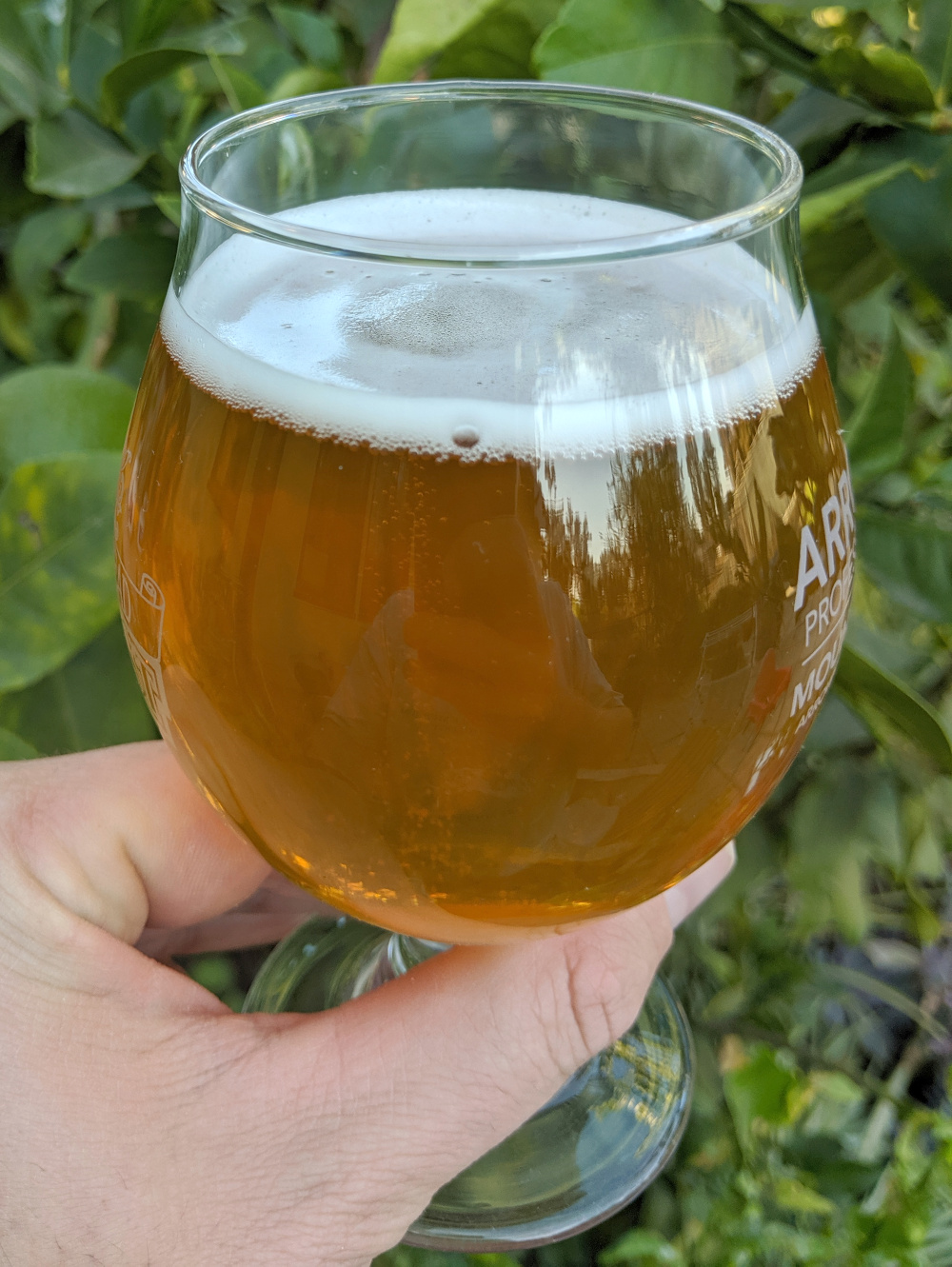
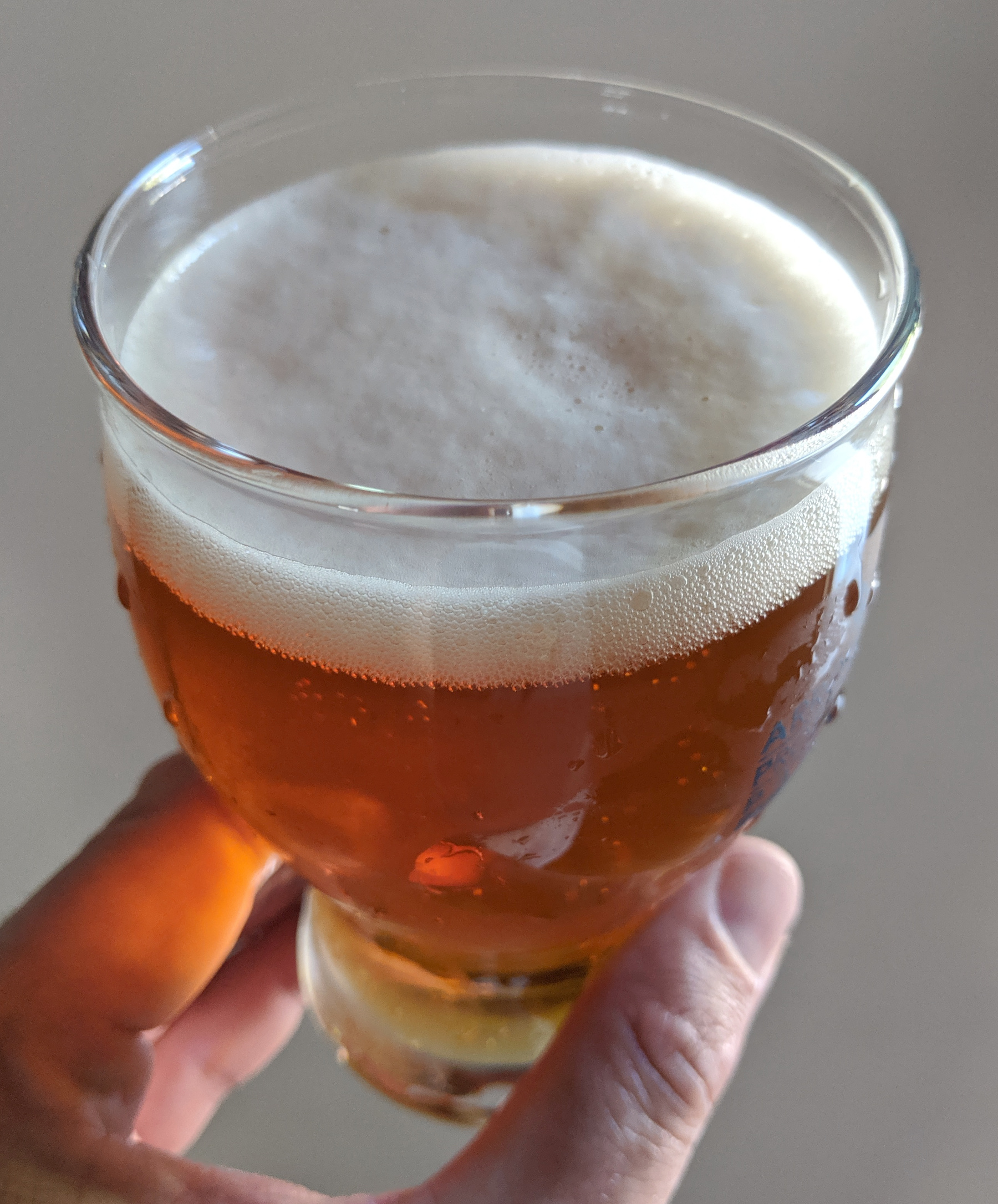
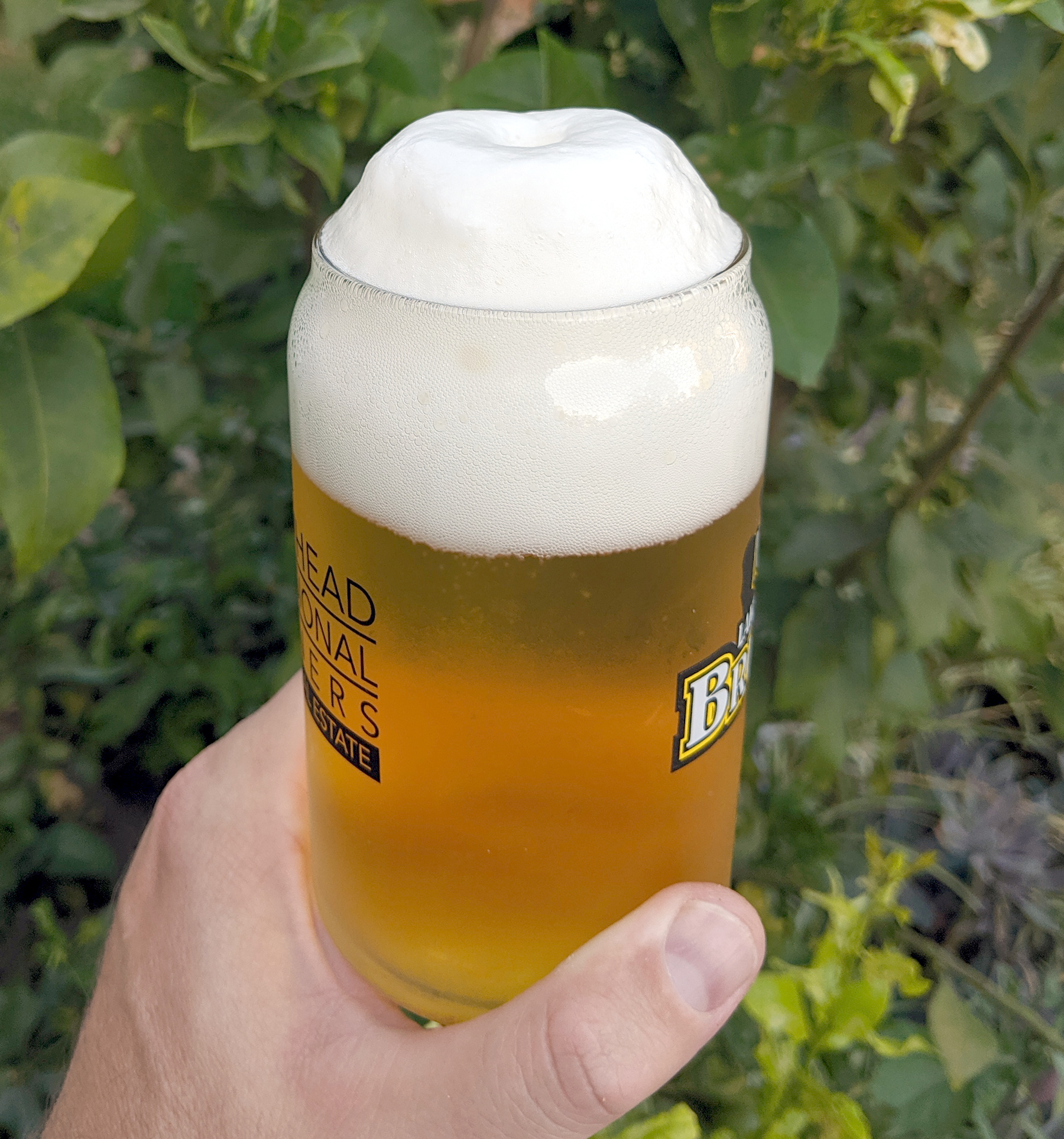
    • Pours with a thick, fine, frothy head, that is quite persistent. The beer itself is light yellow and fairly clear (but just a touch away from brilliant clarity).
  • Aroma
    • Light grainy aroma, with a nice spicy hop note alongside it. Very clean!
  • Flavor
    • Grainy and ever-so-slightly sweet malt profile, with a firm, clean, and slightly spicy bitterness. Balance is tilted modestly in the hoppy direction.
  • Mouthfeel
    • Crisp, with a slightly dry finish. Moderately high carbonation.
  • Would I brew this again?
    • YES! This is a really nice German-American pilsner, all the more interesting because I got such a nice malt flavor profile using American 2-row rather than European pilsner malt. The Rahr 2-row is pretty light (1.8 SRM), not too far from typical pilsner malt (Weyermann Barke pilsner is actually 1.9 SRM), so I guess it shouldn’t be too surprising, at least on the basis of color. I’m particularly pleased with the head retention on this beer; it pours with a beautiful foam that sticks around for quite awhile. If I had a little more patience, I would let it condition a bit longer to clarify to brilliant, but that’s pretty much the only (minor) flaw in this beer.
  • Overall
    • 9.5/10

Polacanthus Porter

IMG_20190829_193848Dark beers! They’re seemingly banished from the summer months, and yet I often have a craving for one even on the hottest days. Not a triple imperial barrel aged chocolate stout, of course–that’s best dumped in the sink during the month of December. I’m thinking of those more drinkable dark beers, a bit lower on the alcohol but still robust on flavor.

An end-of-summer porter seemed like a good way forward. They’re flavorful, but not necessarily gut bombs. They’re relatively easy to brew, and turn around fairly quickly. Also, they’re a “traditional” style that’s just a bit harder to find, overwhelmed by trendier beers on tap lists. If I want a mediocre hazy IPA, I don’t need to make my own; there is no shortage in area breweries!

This recipe is based on the American porter from Gordon Strong’s Modern Homebrew Recipes. My version fairly closely follows that by Strong, with the modifications primarily on the hopping and malt brands. The name recognizes the combination of American and English ingredients, because Polacanthus is a type of armored dinosaur that had relatives on both sides of the Atlantic.

Polacanthus Porter

  • 11 lb. 2-row pale malt (Rahr)
  • 12 oz. 1823 Heritage Crystal Malt (Bairds), 75°
  • 10 oz. chocolate malt (Bairds), 500°
  • 5 oz. roasted barley (Bairds), 600°
  • 0.65 oz. Magnum hop pellets (13.2% alpha), 60 minute boil
  • 1 Whirlfloc tablet, 10 minute boil
  • 1 oz. Cascade whole hops (~5.5% alpha), 10 minute boil
  • 1 oz. Cascade whole hops (~5.5% alpha), 5 minute boil
  • 1 pkg. Safale American Ale Yeast (US-05)

Target Parameters

  • 1.058 o.g., 1.014 f.g., 5.8% abv, 36 IBU, 34 SRM
  • 60 minute infusion mash, 154°, batch sparge
  • Claremont tap water

Procedure

  • I mashed in with 4.25 gallons of water at 164.5°, to his a mash temperature of 155°. After 45 minutes, I added 1 gallon of water at 185°, and collected first runnings after a 10 minute rest and vorlauf. I then added 3.5 gallons of water, let rest for 10 minutes, vorlaufed, and collected second runnings.
  • In total, I collected 7.1 gallons of runnings with a gravity of 1.048, for 73% efficiency.
  • I brought the runnings to a boil, adding hops and such per the recipe.
  • After 60 minutes, I turned off the flame, chilled, and transferred to the fermenter (with aeration). I had to let the wort rest in the fermenter for a few hours, to chill down to the fermentation temperature of 66°.
  • I brewed this beer on 13 July 2019. Starting gravity was 1.057.
  • I kegged the beer on 14 August 2019. Final gravity was 1.013, for 5.8% abv. This was exactly on the dot for my targets!

Tasting

  • Appearance
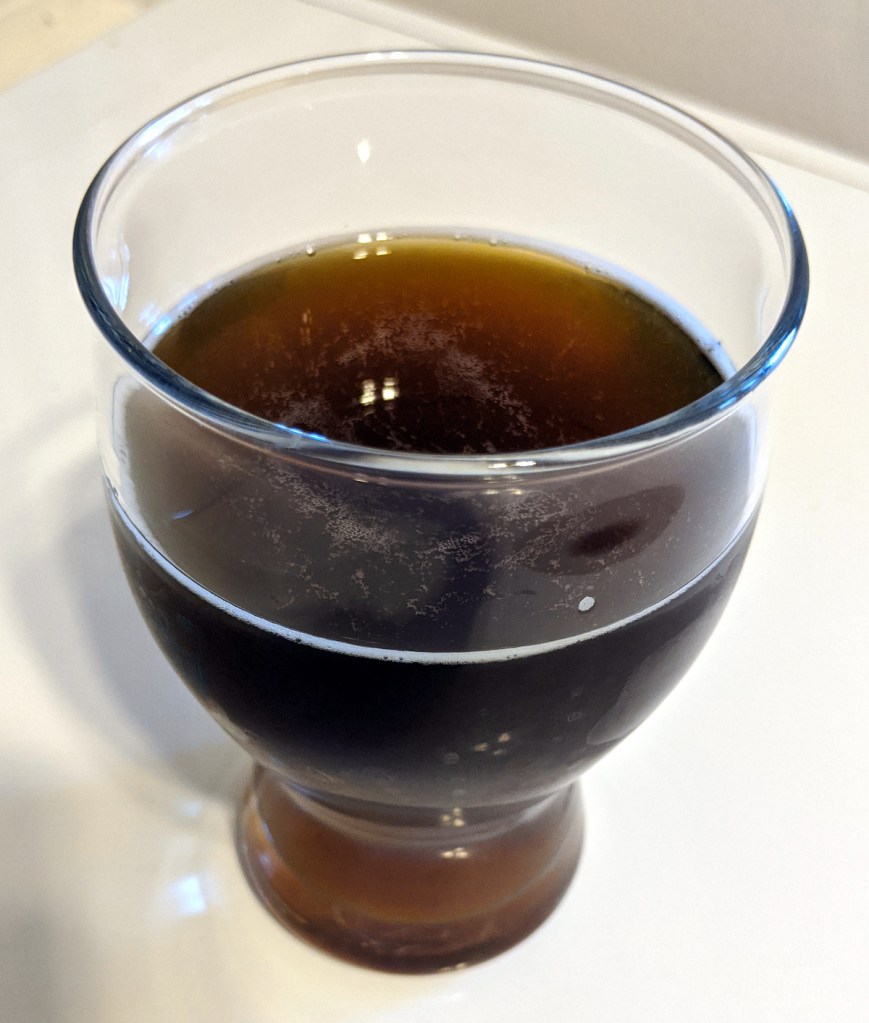
    • Deep brown, with garnet tones when illuminated from behind; clear; persistent tan head
  • Aroma
    • Roasty, chocolately aroma; very nice.
  • Flavor
    • Roast malt character at the front, with a slight chocolate and coffee tinge; slight citrus aspect; moderately bitter, with a finish that tilts towards the bitter rather than the malty side.
  • Mouthfeel
    • Medium body, medium carbonation; off-dry finish (probably due to the roast character). It could maybe have a touch more body, but I think overall it’s okay on this end. Too much body would make this harder to drink.
  • Would I brew this again?
    • Yes! This is a nice and simple recipe, with a pleasant flavor. As porters go, this definitely is towards the roasted and bitter side, but I’m okay with that. This is really drinkable as a summer porter! I would add it to my regular repertoire.
  • Overall
    • 9/10

Czech Pilsner

My homebrew club recently had a competition centered around Bohemian-style pilsners. I’ve done a few iterations, but haven’t quite hit where I want to yet. The primary issue concerns hop aroma–it’s really, really hard to get good Saaz as a homebrewer. Gotta keep trying.

Czech Pilsner

  • 10.5 lbs. Barke Pilsner malt (Weyermann)
  • 2.4 oz. melanoidin malt (Weyermann)
  • 0.3 oz. Carafa Special III malt (Weyermann)
  • 2 oz. Saaz hop pellets (3.0% alpha), 60 minute boil
  • 1 oz. Saaz hop pellets (3.5% alpha), 60 minute boil
  • 1 Whirlfloc tablet, 10 minute boil
  • 1 tsp. Fermax yeast nutrient, 10 minute boil
  • 2 oz. Saaz whole hops (2.8% alpha), 5 minute boil
  • 1 pkg. WLP800 Pilsner Lager yeast, prepared in starter

Target Parameters

  • 1.050 o.g., 1.010 f.g., 5.2% abv, 35 IBU, 5 SRM
  • 60 minute infusion mash, 150°, batch sparge
  • Water built from RO, to hit target of 20 ppm CA, 8 ppm Na, 15 ppm SO4, 35 ppm Cl, -61 ppm RA

Procedure

  • I made a 2L yeast starter a few days in advance, and cold crashed it, followed by decantation of the spent wort.
  • I built up the mash water using 0.6 g baking soda, 0.4 g CaCl, 0.4 g gypsum, added to 8.5 gallons of RO water.
  • I mashed in with 3.5 gallons of water at 161°, to hit a mash temperature of 150.2°. I added 7 mL of 88% lactic acid, to adjust the pH of the mash.
  • After a 60 minute mash, I batch sparged in two steps (first of 1.25 gallons, second of 3.6 gallons). At each step, I let the mash sit for 10 minutes, vorlaufed, and collected the runnings.
  • In total, I collected 6.9 gallons of runnings with a gravity of 1.043, for 75% mash efficiency. Right on target!
  • I boiled for 60 minutes, adding stuff per the recipe, and then chilled after flame-out.
  • I transferred the wort to my fermenter, and put it in the fermentation chamber to drop down to 48°. This took a few hours. Then, I oxygenated for 30 seconds and pitched the yeast.
  • I fermented the brew at 50°. The brew date was 25 May 2019.
  • After three weeks, I raised the temp to 65° for a few days, then cold crashed. After a few more days, I kegged the beer using a semi-closed transfer (CO2-flushed keg, but just air-pushed the beer into the keg). Alas, I neglected to take a final gravity!

Tasting

  • I didn’t get to do a formal tasting before the keg kicked, but did get a few quick observations.
  • The beer flavor was a bit too forward on the melanoidin; I will just ditch that in the future! I am still in search of good hop aroma…overall, the beer is just OK with good clarity, decent head; not quite there yet. Bitterness level is about right. Malt body is about right.
  • Overall, 6/10.

Aftershock Amber Ale

Craft beer is more common than ever, but it still seems like the style landscape has contracted. Hazy IPAs are everywhere, and of course you can get double IPAs and the barrel aged stouts. These are great from time to time, but every once in awhile I long for one of those “classic” styles that disappeared as breweries expanded their repertoire and chased the latest trends. I want a beer that tastes like it came from around 2002; something you might find at the local “microbrewery” alongside a plate of greasy boneless wings from the kitchen in back. What is more classic than an amber ale?

IMG_20190825_122630I love the American amber ale style. It can fit just about any time of year and any occasion, and the best ones bring a nice dose of maltiness and hoppiness into a cohesive package. I also like that they’ve been mostly immune from the double-triple-imperial crazes, and clock in between 4.5 and 5.7% (by the 2015 BJCP style guidelines). They’re fairly simple to brew, but also have a broad stylistic interpretation that rewards experimentation.

I put together a recipe that would have a nice dose of malt, drawing on Munich I (Weyermann) for nearly 50% of the grist, backed up by 2-row pale malt. To add a bit of zest, I put in a dose of rye malt, along with a generous helping of two kinds of crystal malt. The results came together in one of my favorite beers as of late!

I brewed this batch on 6 July 2019, just after two days of fairly large earthquakes in southern California. There was no choice for the name, then, other than “Aftershock Amber Ale.”

Aftershock Amber Ale

  • 5 lbs. Munich I (Weyermann)
  • 3 lbs. 2-row pale malt (Rahr)
  • 1 lb. 1823 Heritage crystal malt (Bairds), 75°
  • 1 lb. rye malt (Viking)
  • 4 oz. 2-row crystal 60° malt (Great Western)
  • 3 oz. rice hulls
  • 0.5 oz. Warrior hop pellets (15.8%), 60 minute boil
  • 1 Whirlfloc tablet, 10 minute boil
  • 2 oz. Cascade whole hops (~5.5% alpha), 5 minute boil
  • 1 pkg. Safale American ale yeast (US-05)
  • 1 oz. Amarillo hop pellets (9.2% alpha), dry hop in keg

Target Parameters

  • 60 minute infusion mash, 152°, batch sparge
  • 1.048 o.g., 1.010 f.g., 4.9% abv, 34 IBU, 13 SRM
  • Claremont tap water

Procedure

  • I mashed in with 3.5 gallons of water at 162.5°, to hit a target mash temperature of 152°.
  • After 60 minutes, I added 1.3 gallons of water, let sit for 10 minutes, vorlaufed, and collected the first runnings. Next, I added 3.6 gallons of water at 185°, and did the same procedure before collecting the rest of the runnings.
  • In total, I collected 6.6 gallons of runnings with a gravity of 1.042, for 73% efficiency.
  • I brought everything to a boil, adding hops and finings per the schedule. After 60 minutes, I turned off the heat, chilled the wort, transferred it, and pitched the yeast.
  • Starting gravity was 1.048. I brewed this on 6 July 2019, and fermented it at 68°.
  • I kegged the beer on 17 July 2019. It had a final gravity of 1.011, for 4.9% abv.

Tasting

  • Appearance
    • Beautiful, fairly clear, reddish amber hue to the beer, with an ivory-colored head that is fine and quite persistent.
  • Aroma
    • Mild rye aroma, with a bit of caramel behind that. Not much for hops.
  • Flavor
    • Moderately bitter and highly malty, with a pleasant rye flavor at the forefront. The malt and bitterness are nicely balanced against each other; it’s not too sweet, but just about right. The hop character comes across as somewhat piney and woody…there’s less citrus than I would expect, probably because of the malt overriding the hops.
  • Mouthfeel
    • Moderate body, moderate carbonation, with a slightly dry finish.
  • Would I brew this again?
    • Absolutely! I love the mouthfeel and flavor on this; it really is exactly what I hoped for. I think I would probably ditch the dry hops on this; they aren’t really perceptible and might even clash with the malts a bit. Plus, they don’t really seem necessary.
  • Overall
    • 9/10

Pannotia White IPA 1.7

I skipped a round last year, but decided that I needed to do another batch of my old favorite, Pannotia White IPA.

As I brewed this a few weeks back and as I enjoyed it now, I reflected on the fact that the (now long since past) white IPA mini-craze laid groundwork for the current hazy IPA mega-craze. White IPAs share some important features with the hazy ones, including haze and a juicy-fruity hop bill. They’re a distinct beast though, distinguished in large part by their drier body and distinct Belgian character. Personally, I find white IPAs a lot more enjoyable, but then again I also find the vast majority of hazy IPAs to be pretty mediocre.

In any case, this version of my white IPA recipe is pretty similar to the last time I brewed it, with the only minor distinction being the lack of lemon zest tincture. No particular reason I skipped that–I just forgot. Ah well!

IMG_20190713_123502

Pannotia White IPA 1.7

  • 7 lbs. 2-row malt (Rahr Malting Co.)
  • 3 lbs. white wheat malt
  • 1 lb. flaked wheat
  • 0.5 lbs. flaked quick oats
  • 0.5 lbs. rice hulls
  • 2 oz. Amarillo hops pellets (7.7% alpha), 45 minute boil
  • 1 oz. Amarillo hops pellets (7.7% alpha), 5 minute whirlpool
  • 1 oz. Citra hops pellets (13.2% alpha), 5 minute whirlpool
  • 1 oz. Galaxy hops pellets (13.8% alpha), 5 minute whirlpool
  • 1 oz. Citra hops pellets (13.2% alpha), dry hop in keg
  • 1 oz. Galaxy hops pellets (13.8% alpha), dry hop in keg
  • 1 oz. Mosaic hops pellets (11.3% alpha), dry hop in keg
  • 1 tsp. Fermax, 10 minute boil
  • 8 g gypsum (added to boil)
  • 0.35 oz. bitter orange peel, 1 minute boil
  • 0.15 oz. coriander seed (crushed), 1 minute boil
  • 1 pkg. Belgian Wit Ale yeast (WLP400, White Labs), prepared in 1.25L starter, chilled and decanted

Target Parameters

  • 60 minute infusion mash, 152°, batch sparge
  • 1.059 o.g., 1.013 f.g., 6.1% abv, 60 IBU, 4 SRM
  • Claremont water, with 8 g gypsum added to boil

Procedure

  • I began a starter a few days in advance of brewing, and cold crashed it for two days.
  • I mashed in with 4 gallons of water at 163.6°, hitting a mash temperature of 152°. I added 10 mL of 88% lactic acid to hit my pH estimate.
  • With two collections of runnings (one after 0.75 gallons of water at 185° and one after adding 3.35 gallons at 185°), I collected 6.8 gallons of runnings in total with a gravity of 1.046, for 73% efficiency.
  • I brought everything to a boil, adding hops and such per the recipe. After 60 minutes, I turned off the flame and chilled to pitching temperature.
  • I brewed this beer on 18 May 2019, fermenting at 66°. Learning my lesson from past experiences with an extremely vigorous fermentation for WLP400, I used a blow-off tube for initial fermentation. I moved it to ambient temperatures on 2 June 2019, and kegged on 22 June 2019. The hops were added to the keg in a mesh sack at this point.
  • Starting gravity was 1.057, and final gravity was 1.011, for 6.1% abv.
  • The tasting was done about a month after kegging; two months after kegging, this beer is still holding up really well!

Tasting

  • Aroma
    • Tropical fruit forward; it’s like a nose punch of passionfruit, guava, and citrus all at once! There’s just a hint of the Belgian ale spice behind that.
  • Appearance
    • Slightly hazy, with a pale gold color. The head is low but persistant.
  • Flavor
    • Definite tropical hop flavor at the front of this, with a smooth bitterness and the spicy Belgian ale yeastiness around that. Malt character is in the background, and is pretty clean (as expected for the grain bill).
  • Mouthfeel
    • Moderate carbonation, moderate body, very slightly dry finish.
  • Would I brew this again?
    • Yep! This is a good recipe as always. The head could be a touch better on this one, I probably should have added the lemon tincture, and I suppose there should be a little more haze, but nonetheless it’s a great beer.
  • Overall
    • 9/10