Beer Tasting: Old Speckled Hen Clone

After a month of keg conditioning, it’s time to do a taste test of my Old Speckled Hen clone attempt!

Old Speckled Hen Clone

  • Basics
    • Starting gravity = 1.055; final gravity = 1.011; abv = 5.8%; estimated IBU = 37
  • Appearance
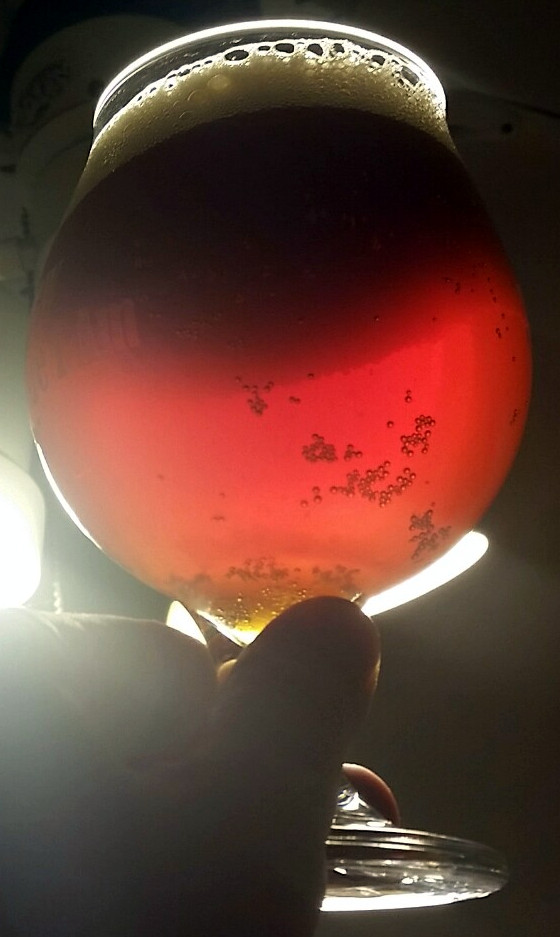
    • The beer is a rich amber color with orangish hints; a modest bit of chill haze. Head is low, creamy and ivory-colored; fairly persistent.
  • Aroma
    • Light caramel notes, with a bit of maltiness at the core.
  • Flavor
    • Lightly malty, with a lingering bitterness on the finish. Very hop-centered. Unfortunately, I think the bitterness overrides the maltiness more than I like. This becomes a better beer as it warms up a bit, though.
  • Mouthfeel
    • In the mouth, the carbonation has an almost creamy effect that is quite nice. The overall body, though, is moderately thin and a bit thinner than I prefer in this type of beer.
  • Would I brew this again?
    • In it current incarnation, probably not. The aroma is delightful, but the bitterness:body ratio is just a too high for my preference. I attribute this primarily to the fairly low mash temperature called for in the recipe, as well as use of the highly attenuative Nottingham yeast strain. If I were to do this again, I would mash higher (maybe 156°), use a different yeast strain (perhaps WLP002), and cut back the bittering addition just a touch. As it is, the current iteration just doesn’t hit the round, malty notes that the original OSH does.
  • Overall rating
    • 4/10
Note (19 July 2015): After a few more weeks in the keg, this is a much better beer. The bitterness has rounded out quite a bit, and more balanced relative to the maltiness. So, I would up it to 6/10; brew again, with modifications to the mash temperature and a longer conditioning time (probably 6 or 7 weeks).

Beer Tasting: Lab Bench Pale Ale

My Lab Bench Pale Ale has turned into a pretty nice brew; I did a formal tasting at the end of April (as well as a run-through with my homebrew club). Results are below.

  • The Basics
    • Starting gravity = 1.047; final gravity = 1.010; abv = 4.8%. Estimated IBU = 38
  • Aroma
    • Crisp and hoppy, as expected for a dry-hopped beer. A touch citrusy.
  • Appearance
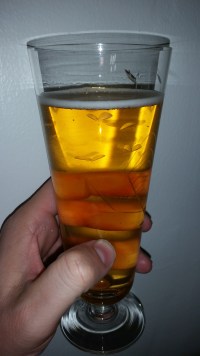
    • Clear, rich golden hue; off-white head with fine bubbles and excellent persistance.
  • Flavor
    • Hop-forward, only a hint of maltiness. Smooth bitterness on the finish.
  • Mouthfeel
    • A touch thin (but not overly so); excellent carbonation for the style
  • Would I brew this again?
    • I think so, but with a little modification. My mash temperature seems to have been about right, but perhaps a little carapils would help with body. I am pretty pleased with how the first wort hopping seems to have created a smooth bitterness for the beer. The aroma is also just about perfect!
  • Overall rating
    • 7.5/10

Beer Tasting: Andy’s Pumpkin Ale 1.0

Before this beer got too far along, I wanted to do a critical tasting of my pumpkin ale. I’ve only got a few bottles left, and have been enjoying these through the winter months. Pumpkin ales (and pumpkin spice anything) are a bit of a trend these days, which has resulted in no shortage of commercial examples that (in my taste opinion) range from mediocre to delicious. Not one to dodge a beer bandwagon, it seemed like a good idea to brew one. As you’ll see below, yes, it was a good idea!

  • Basics
    • Original gravity = 1.060; final gravity = 1.012; abv = 6.3%
  • Aroma
    • A hint of nutmeg and pumpkin (the savory vegetable aroma from freshly cooked pumpkin). Very nicely balanced–not a “spice bomb.”
  • Appearance
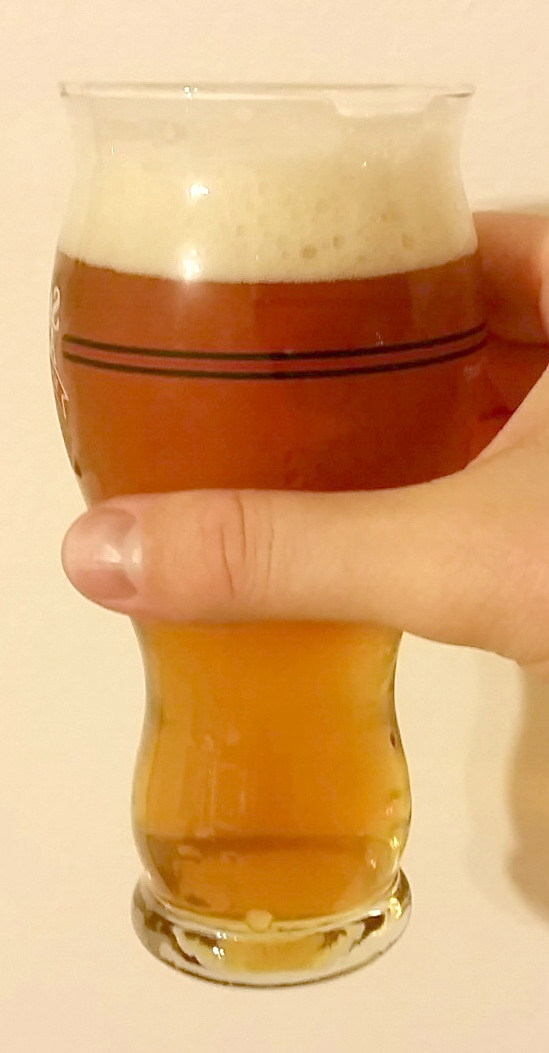
    • Thick off-white head with excellent staying power; a creamy appearance and feel to the head. The beer itself is brilliantly clear, with a rich golden hue (the picture really doesn’t do it justice). This is about as beautiful as it gets.
  • Flavor
    • Hard to describe, in a good way. Very lightly malty, with a pleasant but not overwhelming bitterness. I definitely pick up the nutmeg–distinct, but not overpowering–but the cinnamon is much more subtle; basically, just a little zing on the finish.
  • Mouthfeel
    • Perhaps a touch overcarbonated. That aside, the mouthfeel is pretty smooth, just as I’d hope for something with pumpkin.
  • Would I brew this again?
    • Absolutely! I might dial back the carbonation just a notch, but otherwise this is pretty much the perfect pumpkin ale. The vegetable, malt, and spices are well balanced, and the body is full enough that it’s not like a lager with spice added. This recipe is going into the yearly rotation. I’ll also note that it has aged very well, and is just as tasty (if not more) after two months.
  • Overall rating
    • 8/10

First Taste of KPA

Over the past week or two, I’ve been (impatiently) cracking open a bottle or two of the Kamikaze Pale Ale. I don’t think it has fully carbonated yet – after two weeks, it has a nice fizz, but not quite the level of bubbly that I would prefer. My red ale had similar behavior at first, so I think I’m just being impatient. At any rate, I agitated the bottles a bit tonight to see if that will help the carbonation along. Some brewing sites I’ve read recommended this procedure to “rouse” the yeast if it’s not carbonating at the preferred rate. Mostly, I think I just need to wait a little longer.

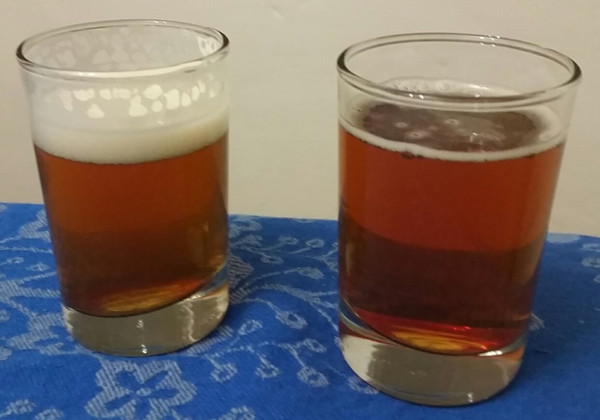
On first pouring the beer, I get a mild hops scent. The beer is a nice red color (as mentioned in a previous post), and the carbonation (at this writing) is manifested as a light but steady stream of tiny bubbles along the side of the glass. The taste is smooth, with some definite hops flavor, but not overly bitter. The finish is pretty smooth, too. I don’t know if it quite has as much “body” as I’d like on my beers. There is relatively little head, too, but I think this might just be a factor of the present low carbonation.

So what might I do differently next time? I might experiment with steeping another type of malt or two, to add a little extra body (but not too much). Perhaps I just need to crack the pale malt a little finer. I think I’ll also try dry-hopping, to give it a more prominent hops aroma (the aroma is just a little milder at present than I might like). Additionally, I’ll try boiling with a greater water volume – I only did two gallons (modified after one recipe I saw) for the boil this time, but I suspect I’d get slightly better hops utilization if I used 2.5 or 3 gallons. Next time, I’ll also try using dry malt instead.

Despite all these ideas for “next time,” I still think it’s a pretty drinkable beer. I like the smoothness, and it will be even better once that last bit of carbonation settles in.