Beer Tasting: Azacca Session IPA

My first intentional attempt at a session IPA has been in the keg for about a month. A perfect time for a tasting!

Azacca Session IPA

  • The Basics
    • Original gravity = 1.045, final gravity = 1.015, abv = 3.9%, estimated IBU = 38.
  • Appearance
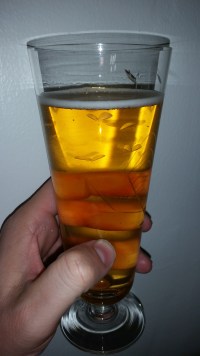
    • The head is white and fairly thin, but still pretty persistent. The beer itself is slightly hazy and light gold in color. Quite pretty!
  • Aroma
    • Fairly weak, considering that it was dry-hopped for so long. There are slight tropical fruit notes, with perhaps a whiff of citrus.
  • Flavor
    • Light and hop-forward, with a pleasant floral and tropical fruit taste; very smooth on the finish. The bitterness is noticeable but restrained; I might up the hops a bit for any future iterations. There is a slight (but not unpleasant), rounded mineral taste at the finish. The malts are very much in the background, perhaps too much so.
  • Mouthfeel
    • Pleasant and fine carbonation; the body is adequate but perhaps a touch thin. 
  • Would I brew this again?
    • Yes, but with some modifications. I quite like the concept of session IPAs, which hit all of my buttons (hop-forward, not numbing in alcohol content). Truth be told, I was a little disappointed with Azacca hops. My personal preference for an IPA is to have a big nose punch, and Azacca just isn’t there. It has pleasant aroma and great flavor, but is restrained to the point where it might be better suited for light dry hopping in a blonde or perhaps plain pale ale. Next time, I’m going to try something different from the hops, and perhaps a little more for bittering. I also would like to up the maltiness on this just a touch–a small amount of crystal malt (perhaps crystal 60) might be what I need. Finally, I’m thinking about a little wheat to aid with head formation and retention. All in all, I feel like I’m on the right track with this brew, but have a little work to do to dial it in.
  • Overall rating
    • 5.75/10

Beer Tasting: Red Oak Ale

After about a month of conditioning, it’s time to review the red oak ale I brewed in mid-May. As previously described, I oaked it with oak chips for a week, and have been dry-hopping it ever since.

Red Oak Ale

  • The Basics
    • Original gravity = 1.070; final gravity = 1.015; abv = 7.3%; estimated IBU = 45.
  • Appearance
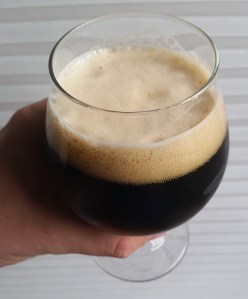
    • The modest head is tan, finely bubbled, and moderately persistent. The beer is a burnt umber shade and quite hazy.
  • Aroma
    • Light and crisp oakiness when freshly poured; as the beer warms up there is a background of alcoholic aroma and raisin/currant notes. Very subtle spicy aroma (presumably from the Willamette dry hops?).
  • Flavor
    • A modest, but not overwhelming, oakiness at the forefront of the beer, backed by a subdued but not insubstantial malt backbone. Very slight toasty notes and a hint of rye crispness. The finish has a smooth hoppiness and oakiness that fade slowly.
  • Mouthfeel
    • Delightfully fine carbonation and quite smooth to the feel. There is a very mild tannic finish from the oak. I could perhaps expand the body just a small touch, but that is a minor issue.
  • Would I brew this again?
    • Absolutely! As a type of recipe outside my usual styles, this one was a pleasing success. The level of oakiness is just about perfect for my taste, and truth be told it is nice to have oakiness alone, rather than the bourbon-soaked oak chips that most people use. The only minor tweak might be to fill out the body just a shade; a slightly higher mash temperature could do the trick. If I did that, I also might oak it for an extra day or two, to compensate for the greater body.
  • Overall rating
    • 8/10

Beer Tasting: Old Speckled Hen Clone

After a month of keg conditioning, it’s time to do a taste test of my Old Speckled Hen clone attempt!

Old Speckled Hen Clone

  • Basics
    • Starting gravity = 1.055; final gravity = 1.011; abv = 5.8%; estimated IBU = 37
  • Appearance
    • The beer is a rich amber color with orangish hints; a modest bit of chill haze. Head is low, creamy and ivory-colored; fairly persistent.
  • Aroma
    • Light caramel notes, with a bit of maltiness at the core.
  • Flavor
    • Lightly malty, with a lingering bitterness on the finish. Very hop-centered. Unfortunately, I think the bitterness overrides the maltiness more than I like. This becomes a better beer as it warms up a bit, though.
  • Mouthfeel
    • In the mouth, the carbonation has an almost creamy effect that is quite nice. The overall body, though, is moderately thin and a bit thinner than I prefer in this type of beer.
  • Would I brew this again?
    • In it current incarnation, probably not. The aroma is delightful, but the bitterness:body ratio is just a too high for my preference. I attribute this primarily to the fairly low mash temperature called for in the recipe, as well as use of the highly attenuative Nottingham yeast strain. If I were to do this again, I would mash higher (maybe 156°), use a different yeast strain (perhaps WLP002), and cut back the bittering addition just a touch. As it is, the current iteration just doesn’t hit the round, malty notes that the original OSH does.
  • Overall rating
    • 4/10
Note (19 July 2015): After a few more weeks in the keg, this is a much better beer. The bitterness has rounded out quite a bit, and more balanced relative to the maltiness. So, I would up it to 6/10; brew again, with modifications to the mash temperature and a longer conditioning time (probably 6 or 7 weeks).

Beer Tasting: Lab Bench Pale Ale

My Lab Bench Pale Ale has turned into a pretty nice brew; I did a formal tasting at the end of April (as well as a run-through with my homebrew club). Results are below.

  • The Basics
    • Starting gravity = 1.047; final gravity = 1.010; abv = 4.8%. Estimated IBU = 38
  • Aroma
    • Crisp and hoppy, as expected for a dry-hopped beer. A touch citrusy.
  • Appearance
    • Clear, rich golden hue; off-white head with fine bubbles and excellent persistance.
  • Flavor
    • Hop-forward, only a hint of maltiness. Smooth bitterness on the finish.
  • Mouthfeel
    • A touch thin (but not overly so); excellent carbonation for the style
  • Would I brew this again?
    • I think so, but with a little modification. My mash temperature seems to have been about right, but perhaps a little carapils would help with body. I am pretty pleased with how the first wort hopping seems to have created a smooth bitterness for the beer. The aroma is also just about perfect!
  • Overall rating
    • 7.5/10

Beer Tasting: Andy’s Pumpkin Ale 1.0

Before this beer got too far along, I wanted to do a critical tasting of my pumpkin ale. I’ve only got a few bottles left, and have been enjoying these through the winter months. Pumpkin ales (and pumpkin spice anything) are a bit of a trend these days, which has resulted in no shortage of commercial examples that (in my taste opinion) range from mediocre to delicious. Not one to dodge a beer bandwagon, it seemed like a good idea to brew one. As you’ll see below, yes, it was a good idea!

  • Basics
    • Original gravity = 1.060; final gravity = 1.012; abv = 6.3%
  • Aroma
    • A hint of nutmeg and pumpkin (the savory vegetable aroma from freshly cooked pumpkin). Very nicely balanced–not a “spice bomb.”
  • Appearance
    • Thick off-white head with excellent staying power; a creamy appearance and feel to the head. The beer itself is brilliantly clear, with a rich golden hue (the picture really doesn’t do it justice). This is about as beautiful as it gets.
  • Flavor
    • Hard to describe, in a good way. Very lightly malty, with a pleasant but not overwhelming bitterness. I definitely pick up the nutmeg–distinct, but not overpowering–but the cinnamon is much more subtle; basically, just a little zing on the finish.
  • Mouthfeel
    • Perhaps a touch overcarbonated. That aside, the mouthfeel is pretty smooth, just as I’d hope for something with pumpkin.
  • Would I brew this again?
    • Absolutely! I might dial back the carbonation just a notch, but otherwise this is pretty much the perfect pumpkin ale. The vegetable, malt, and spices are well balanced, and the body is full enough that it’s not like a lager with spice added. This recipe is going into the yearly rotation. I’ll also note that it has aged very well, and is just as tasty (if not more) after two months.
  • Overall rating
    • 8/10