Beer Tasting: Lithographica Pilsner

The keg for my Bohemian pilsner is long past kicked, but better late than never, right?

  • The Basics
    • Original gravity = 1.053; final gravity = 1.011; abv = 5.5%; estimated IBU = 39
  •  Aroma
    • Light bready aroma, with a moderate spicy hops note. I might detect a very, very faint fruitiness, but this seems to come and go, so I’m not certain it is really there.
  • Appearance
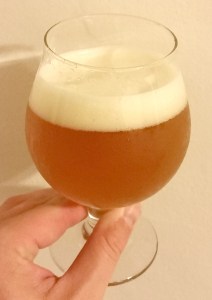
    • Clear, but not brilliant, with a moderate yellow color. The head pours rather high when first poured, but settles down to a low head with good coverage. The head is fine and white.
  • Flavor
    • A moderate hoppiness is at the fore, moderately balanced against a decent but not overwhelming maltiness. The malt has a bready/grainy character. As I drink this, the hoppiness fades out nicely on the finish.
  • Mouthfeel
    • This is a beer with modest body and a medium rather than dry finish. Carbonation is moderately high.
  • Would I brew this again?
    • This beer is a pretty respectable first go at a Bohemian pilsner. It’s quite drinkable, and there isn’t anything I would call a major flaw. If I do this recipe again, I would up the maltiness a touch, darken the color to more gold than yellow, and work on improving the clarity just a little. Clarity could be fixed by more careful racking, and a little bit more time lagering before initial tapping. For increased maltiness, I might add another grain or two to the malt bill (e.g., Carapils), or else boil the decoctions for a longer stretch. This would also help burnish the color to the golden sheen that is more appropriate for the style.
  • Rating
    • 6/10

Beer Tasting: Citra Wit

Citra WitMy Citra Wit has come and gone, but luckily I was able to squeeze in an “official” tasting in before the keg kicked!

  • The Basics
    • Original gravity = 1.043; final gravity = 1.010; abv = 4.3%; estimated IBU = 13
  • Aroma
    • Light citrus aroma (reflecting the Citra hops) with a slight bready character. There is surprisingly little obvious yeast character (in terms of a spice note).
  • Appearance
    • Thick, white head with fine bubbles, that pours high and settles down to a broad blanket across the top of the beer. It leaves some lacing across the side of the glass. The beer itself is light yellow and beautifully cloudy.
  • Flavor
    • A definite bready character to the malt, with only the lightest of bitterness and a smooth finish. A gentle coriander comes through across the taste, but the grapefruit is surprisingly absent. This is a marked contrast to when I first brewed and transferred the beer.
  • Mouthfeel
    • This is probably more lightly carbonated than is true to style, but I’m OK with that. This beer has a really nice, light body and a fairly smooth finish that tends towards the delicate malt side rather than the hoppy side. The finish feels a little “flabby,” though, and I wonder if that might be resolved with some water adjustments.
  • Would I brew this again?
    • This is a nice, refreshing beer, which hits most of the notes I am aiming for. I might try dry-hopping with fresh grapefruit peel on the next round, if I wanted a bigger grapefruit character (which I do). The appearance of the beer is dead-on for what I had in mind, and stayed that way until the end of the keg. I might play with the water profile a bit, to perk up the mouthfeel.
  • Rating
    • 7/10

Beer Tasting: Centennial IPA

20160714_204030My Centennial IPA has been in the keg and cold conditioning/dry-hopping for nearly a month. Because I’m taking off soon for a few weeks, and because IPA’s are best fresh, now is as good of a time as any to do a tasting.

Centennial IPA

  • The Basics
    • Original gravity = 1.063; final gravity = 1.010; abv = 7.0%; estimated IBU = 59
  • Aroma
    • Very lightly sweet malt aroma, with a moderate hop aroma that is citrusy (slightly orange-hinted) and lightly floral.
  • Appearance
    • A hazy beer with a moderately deep gold color. The off-white head is fine and persistent, with modest lacing.
  • Flavor
    • As it should be, this is a hop-forward beer, with a smooth but assertive bitterness that fades in and then gently fades out. The bitterness has a piney note to it. The modest malt flavor tends toward the grainy side.
  • Mouthfeel
    • This is a fairly dry beer, with a relatively light body. Carbonation is moderate, as is appropriate for the style.
  • Would I brew this again?
    • This is a solid traditional American IPA–I would characterize it as squarely middle of the road; not in a bad way, just that it is tasty but not adventurous. In the original recipe, Gordon Strong noted that the recipe would be a solid base for any single hop American IPA; I agree! For this particular run, I feel like I’m getting a nice feel for what Centennial is as a hop. Compared to recent varieties such as Mosaic or Citra, Centennial is so “yesterday.” But, it has a character all its own that deservedly places it in the great pantheon of hops. I can’t say I’ll change much (other than hop variety) when I brew this again; it would definitely be OK with other American yeast varieties, but in terms of malt bill and brewing technique it’s spot-on.
  • Rating
    • 9/10

Beer Tasting: Accretion Porter

Porters are some of my favorites (especially during the fall through spring seasons), and seem to turn out well pretty consistently. Accretion Porter fits this trend. Details are below.

  • The Basicsaccretion_porter
    • Original gravity = 1.058; final gravity = 1.020; abv = 5.0%; estimated IBU = 41
  • Aroma
    • The aroma is exceptionally malty, with a grainy and roasty character to it., and a touch of coffee. Delicious!
  • Appearance
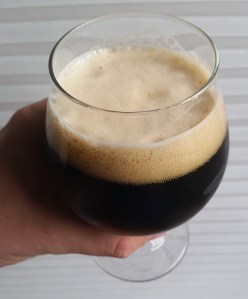
    • The beer is a deep, deep chocolate brown, with a light brown head that pours tall and settles down to a thin but persistant blanket over the beer.
  • Flavor
    • The roasty maltiness has a nice chocolate and coffee flavor. The hops have a gentle background flavor, with the slight herbal/woody component so classic for Northern Brewer.
  • Mouthfeel
    • This is a beer with moderate body and a smooth and pleasant, but moderately dry, finish. The carbonation is maybe a touch higher than I need (contributing to a perception of the beer being drier than it actually is).
  • Would I brew this again?
    • This is a pretty nice beer across the board; maybe a little drier and more carbonated than is needed, but the overall impression is exceptionally drinkable. I like this one!
  • Overall rating
    • 7.5/10

Beer Tasting: New World Blonde Ale

blonde_aleMy New World Blonde Ale ran out last week, but I did a tasting before the keg kicked. Results are below.

  • The Basics
    • Original gravity = 1.045; final gravity = 1.008; abv = 4.9%; estimated IBU = 24
  • Aroma
    • Initial aroma has a bit of orange with a hint of grainy maltiness behind that.
  • Appearance
    • Moderately hazy and light gold beer, with a low and fine but persistant white head.
  • Flavor
    • Light malt flavor with a slightly grainy and bready aspect. Hops are at a moderately high level for a blonde ale, with a slight orange pith aspect to it. When I first tapped this beer, the citrus was a bit overwhelming and unpleasant–almost like rotten orange. I think somewhere this flavor was euphemistically called “candy orange,” but I can’t say it is a particularly pleasant flavor. It has moderated quite a bit, but is still hanging around in the shadows.
  • Mouthfeel
    • This is a light-bodied beer with moderately high carbonation, so that it has a slightly effervescent feel on the tongue. The finish is dry, and the hop bitterness persists as the dominant character.
  • Would I brew this again?
    • This is a decent beer, but not a great beer. Or I should say that it’s not really to my tastes. I think I will lay much of the “blame” on HBC 438–the hop comes across as a bit harsher than I like. Perhaps it is good in other styles, but it just doesn’t do the trick in this particular beer. Apparently HBC 438 has been a pretty divisive hop–people either love it or hate it. I wonder if there’s not some compound in there similar to the various stuff in brussels sprouts, where folks with one taste receptor taste awesomeness and folks with another taste receptor taste awfulness.
  • Overall rating
    • 5 / 10