Pre-Prohibition Lager

Continuing my journey through the world of lagers, I decided to try a new version of a Pre-Prohibition lager. I’ve made something from this style range before, during my first foray into lagers, and it turned out pretty well. For the current batch, I used a blend of pilsner and 2-row malt to achieve a bit of complexity, layering in some flaked corn to give the “American” component. I got some Triumph hops in a HOPBOX selection, and thought this would be well suited for my American lager. Triumph is an American hop with European parentage, including some noble hops, and it is supposed to bring some noble characteristics along with delicate fruit qualities.

Pre-Prohibition Lager

  • 6.5 lb. Pilsner Malt (Viking)
  • 4 lb. 2-row malt (Rahr)
  • 1 lb. flaked corn
  • 0.25 lb. rice hulls
  • 0.5 oz. Triumph hop pellets (7.9% alpha), 60 minute boil
  • 0.75 oz. Triumph hop pellets (7.9% alpha), 15 minute boil
  • 1 tsp. BruTahB, 10 minute boil
  • 1 Whirlfloc tablet, 5 minute boil
  • 0.75 oz. Triumph hop pellets (7.9% alpha), 5 minute boil
  • 2 pkg. Diamond lager yeast (Lallemand)

Target Parameters

  • 1.051 s.g., 1.008 f.g., 28 IBU, 5.7% abv, 4 SRM
  • Full volume Hochhurz mash, 45 minutes at 144°, 45 minutes at 10 minutes at 160°, 10 minute mash-out at 168°
  • Water built from scratch to hit 59 ppm Ca, 8 ppm Mg, 89 pm SO4, 63 ppm Cl, -47 ppm RA

Procedure

  • I added 2.7 g gypsum, 2.2 g epsom salt, and 3.4 g calcium chloride to 7 gallons of RO water, to hit a target of 59 ppm Ca, 8 ppm Mg, 89 pm SO4, 63 ppm Cl, and -47 ppm RA.
  • I heated the water in the Foundry to 150°, and added the grains to hit a mash temperature of 144°. I added 1.5 mL of 88% lactic acid to adjust pH slightly. I held the mash at 144° with recirculation for 45 minutes, and then raised the temperature to 160°, holding it here for 45 minutes also. Finally, I raised the mash to 168° and held it here for a 10 minute mash-out.
  • After the mash-out, I removed the grain basket and brought the runnings to a boil. I collected 6.3 gallons of runnings with a gravity of 1.048, for 71% mash efficiency.
  • I brought the beer to a boil, aiming for 60 minutes, adding hops and such per the recipe. My Foundry had an issue mid-boil (the power switch was starting to burn out),so it took a bit of work to limp the boil through to the end. I adjusted the length of the boil time slightly to compensate.
  • After approximately 60 minutes of total boil, I turned off the heat and chilled to ~68°, before transferring to the fermenter and chilling down to 48° in the fermentation chamber. I then pitched the yeast.
  • I brewed the beer on 14 February 2022, and fermented at 52°. Starting gravity was 1.053.
  • I kegged the beer on 8 April 2022. Final gravity was 1.013, for 5.3% abv.

Tasting

  • Appearance
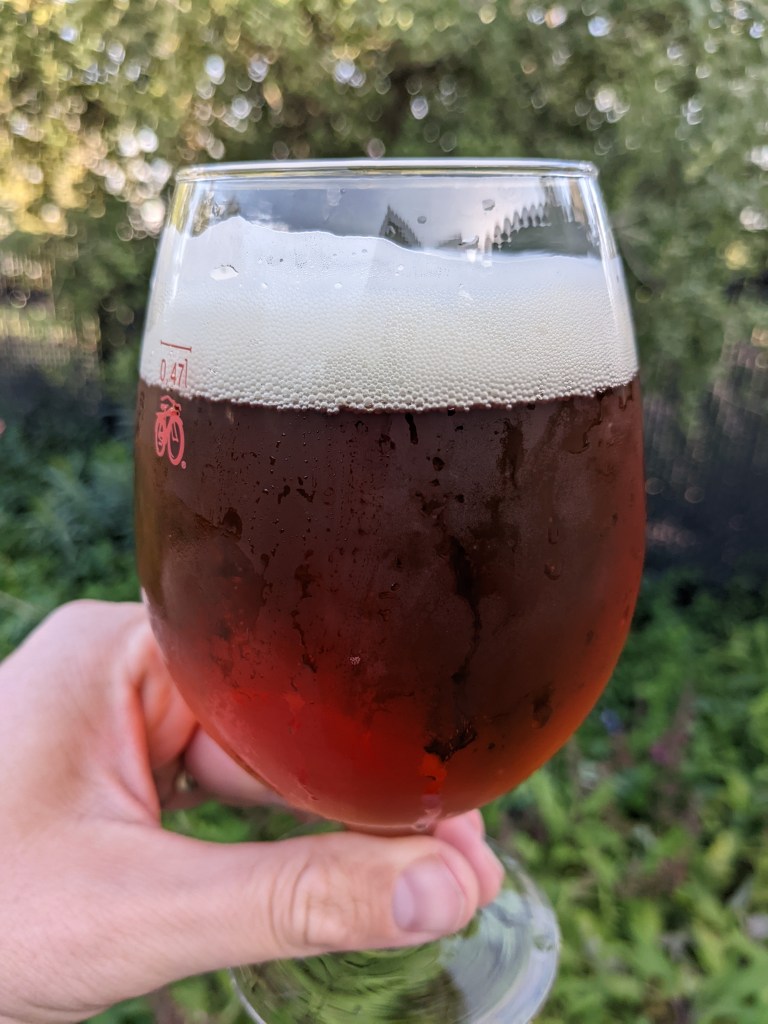
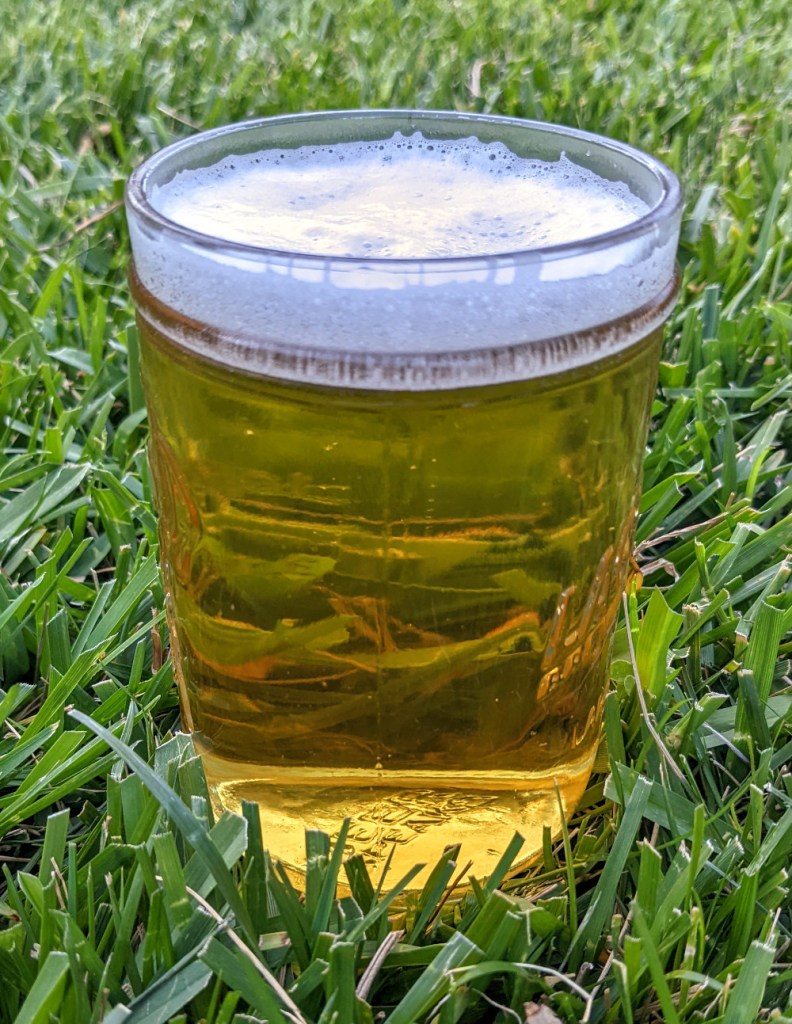
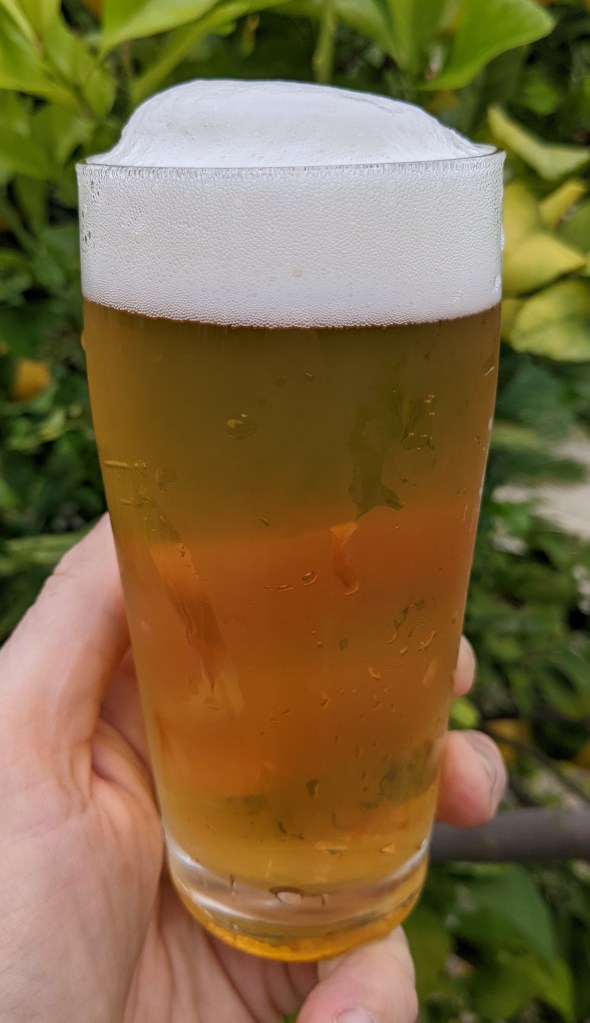
    • Brilliantly clear, light yellow beer with moderately persistent head. The head pours fairly thick, but thins out after awhile.
  • Aroma
    • Clean! Slight grainy/corn profile; not much hop character, although there is a bit of a spice hop note.
  • Flavor
    • Malty/grainy, with light corn flavor; moderately high bitterness, but not much for hop character otherwise.
  • Mouthfeel
    • Fairly crisp finish, with moderate carbonation. Medium body. Very smooth drinking!
  • Would I brew this again?
    • YES! This is a nice version of the style; I suppose it doesn’t hit all of the BJCP style notes, but it really is a pretty awesome American lager. A touch more hop aroma would be nice, but not mandatory.
  • Overall
    • 9/10

Stratigraphic Pale Ale

As mentioned previously, Yakima Valley’s HOPBOX is a good way to sample fresh and interesting hops. My first box included Strata and El Dorado; I’ve brewed with the latter previously, but not Strata. I was noodling about for a recipe that would have tropical-type notes, and these seemed to be a good way to achieve that goal.

The base recipe is a fairly standard American pale ale; I aimed for the lighter side of the style, with a very deft touch of caramel malts. To maximize the hop character, I dosed all of the aroma hops in the whirlpool and the dry hop additions. Otherwise, there’s not a ton of note in the recipe design.

Stratigraphic Pale Ale

  • 7.25 lb. 2-row pale malt (Rahr)
  • 4 lb. Maris Otter malt (Crisp)
  • 5 oz. crystal 15 (Great Western)
  • 4 oz. caramel 10L (Briess)
  • 0.25 oz. Bravo hop pellets (14.2% alpha), 60 minute boil
  • 1 oz. El Dorado hop pellets (16.2% alpha), 15 minute whirlpool
  • 1 oz. Strata hop pellets (13.7% alpha), 15 minute whirlpool
  • 1 pkg. Safale American Ale yeast (Fermentis US-05)
  • 1 oz. El Dorado hop pellets (16.2% alpha), dry hop in keg
  • 1 oz. Strata hop pellets (13.7% alpha), dry hop in keg

Target Parameters

  • 1.053 s.g., 1.011 f.g., 5.5% abv, 5 SRM, 38 IBU
  • Full volume mash, 60 minute mash at 152°, 10 minute mash-out at 168°
  • Claremont tap water adjusted to hit target of 71 ppm Ca, 6 ppm Mg, 91 ppm Na, 154 ppm SO4, 85 ppm Cl, 144 ppm bicarbonate, RA=63.

Procedure

  • I heated 7.25 gallons of water to 159°, and mashed in with the grains to hit a target mash temperature of 152°. I added 7.5 mL of 88% lactic acid to adjust the pH. I held it here while recirculating for 60 minutes, before raising the temperature to 168° for a 10 minute mash-out.
  • I removed the grain basket and brought the kettle to a boil. In total, I collected 6.4 gallons of runnings with a gravity of 1.048, for 70% mash efficiency. I added 5 g of gypsum to the boil kettle, to adjust the mineral profile of the water.
  • I added hops and finings per the recipe, with a 60 minute boil. After 60 minutes, I turned off the heat, added the whirlpool hops, and whirlpooled for 15 minutes.
  • After the whirlpool, I chilled and then transferred to the fermenter.
  • I chilled the wort down to 66° in my fermentation chamber, before pitching the yeast. I fermented at 66° also.
  • I brewed the beer on 29 January 2022. I kegged it on 8 March 2022, adding the dry hops to the keg.
  • Final gravity was 1.012, for 5.4% abv.

Tasting

  • Appearance
    • Gold beer, slight haze; pours with a persistent fine white head.
  • Aroma
    • Citrus/orange prominent, with a bit of tropical fruit and strawberry also. Light malt aroma. Clean yeast character.
  • Flavor
    • Light malty flavor, against a moderate bitterness. The hop flavor is citrus, tropical fruit, and strawberry. Very nice!
  • Mouthfeel
    • Medium body, medium carbonation, slightly dry finish.
  • Would I brew this again?
    • Yes! This is a nice hop combo. I ding the beer slightly for the haze, but otherwise this is a great recipe for tropical-type hops. I enjoyed Strata–the strawberry character really is something!
  • Overall
    • 8/10

Kölsch Simplicitas

I try to do a kölsch-style ale roughly once a year, in part because I like the style, in part because it’s hard to find (in my opinion) truly great commercial examples, and in part because it’s a fun challenge to brew such a fussy beer. I’ve made a few iterations over the years, heading ever simpler with each batch. 2020’s version (Kölsch Minimus) was really elegant in its simplicity, so I modified it slightly for ingredients on-hand and to try a slight variation. Whereas last year’s batch had pilsner and Munich malt, this year I used pilsner and a touch of Carahell. I used the Edelweiss hop blend (instead of Sterling), and brought in the Lallemand Köln Kölsch-style ale yeast instead of K97.

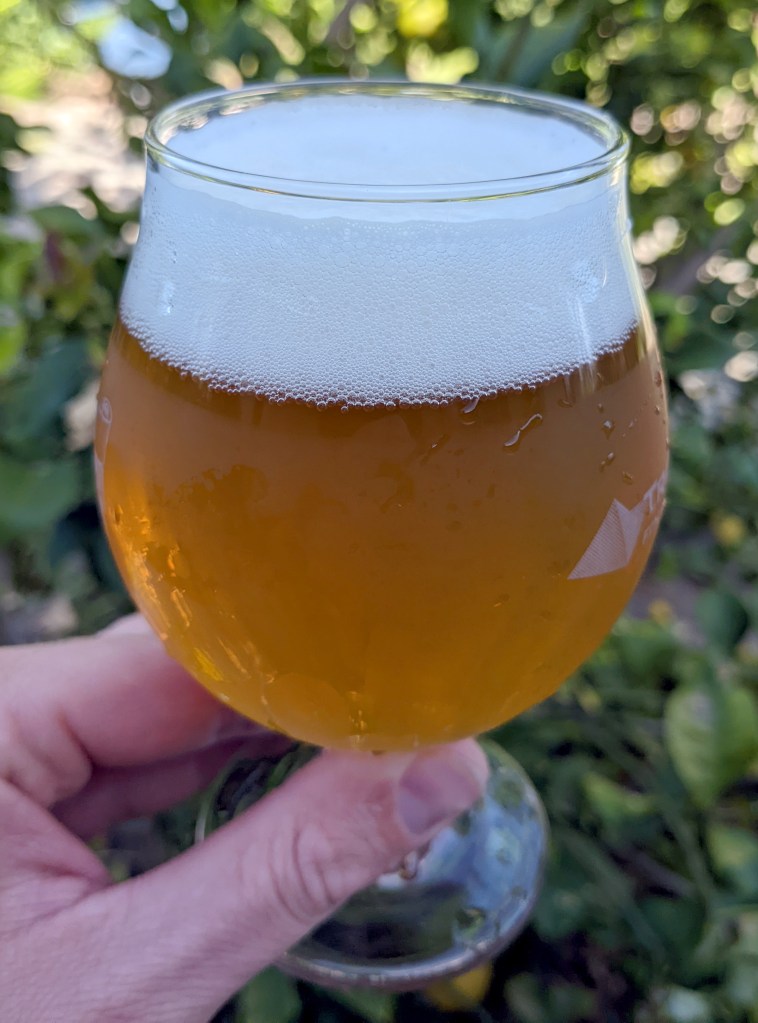
clear, yellow beer with white head, poured into a clear glass, held in a hand

Kölsch Simplicitas

  • 9.25 lb. Viking pilsner malt
  • 0.5 lb. Carahell malt (Weyermann)
  • 1 oz. Edelweiss hop blend (5.1% alpha), 60 minute boil
  • 0.5 oz. Edelweiss hop blend (5.1% alpha), 10 minute boil
  • 0.25 tsp. BruTanB, 10 minute boil
  • 1 Whirlfloc tablet, 5 minute boil
  • 0.5 oz. Edelweiss hop blend (5.1% alpha), 5 minute boil
  • 1 pkg. Köln Kölsch Style ale yeast (Lallemand)

Target Paremeters

  • 1.047 s.g., 1.009 f.g., 5.0% abv, 4 SRM, 24 IBU
  • Full volume mash, 90 minute mash at 150°, 10 minute mash-out at 168°
  • Claremont tap water, adjusted with 88% lactic acid to hit target of 28 ppm Ca, 6 ppm Mg, 91 ppm Na, 50 ppm SO4, 85 ppm Cl, 15 ppm HCO3, -11 ppm RA

Procedure

  • I adjusted the tap water with 5.4 mL of 88% lactic acid, to neutralize the carbonates. Then, I heated to 156° and mashed in, to hit a target of 150°. I added 2 mL of 88% lactic acid to adjust mash pH. I held the mash at 150° for 90 minutes while recirculating, and then raised the mash to 168° for 10 minutes, before removing the grains.
  • In total, I had 6.4 gallons of runnings with a gravity of 1.041, for 73% mash efficiency.
  • I brought the runnings to a boil, adding hops and finings per the recipe.
  • After a 60 minute boil, I turned off the heat and chilled to 64°, before transferring to the fermenter.
  • I brewed this beer on 8 January 2022. After pitching the yeast, I held the beer at 64° for fermentation.
  • I kegged the beer on 4 March 2022, transferring into a purged keg. The final gravity of the beer was 1.010, for 4.9% abv.

Tasting

  • Appearance
    • Very clear, just short of brilliant; medium-yellow in color. Pours with a creamy white head–absolutely beautiful and very persistent!
  • Aroma
    • Lightly grainy malt aroma; hop character is fairly minimal now, although in the earlier days of the beer there was a more prominent floral note that has since faded. Yeast character is very clean.
  • Flavor
    • The beer has a very nice, moderately malty flavor, against a moderate level of bitterness. Malt and hops are perfectly in balance. Yeast character is clean, with very slight fruitiness.
  • Mouthfeel
    • Crisp finish! Yum. The body is medium-light, and carbonation is moderate.
  • Would I brew this again?
    • Yes! This is a nice alternate recipe relative to 2020’s kölsch. My only minor dings are that the hop aroma has faded a bit since initial tastings; I kept this one in the fermenter awhile before kegging, so I think I would be in better shape if I had done the transfer a few weeks earlier. Otherwise, this is a great alternative kölsch to add to my recipe library. I like the Lallemand German ale yeast; it seems to ferment a touch cleaner than K97. I don’t know if I have a strong preference for one or the other, at least in the case of a kölsch. It just brings something different.
  • Overall
    • 8/10

Alstadt Alt 2.0

Altbiers are one of my favorite styles, so I have made a few versions over the years. I had great success with a recipe from the Altbier book by Horst Dornbusch. I first brewed it back in 2020, and it turned out really well. The 2021 edition was similarly great, so I made only minor tweaks for the 2022 brew. Instead of a mix of Briess Caramel Munich 60L and Caramunich I, I went with straight Caramunich I. Additionally, I switched the yeast from K97 to Lallemand’s Kolsch-style ale yeast. Everything else is pretty much the same.

Alstadt Alt 2.0

  • 6.5 lb. Viking Pilsner malt
  • 1.5 lb. Munich I malt (Weyermann)
  • 1.5 lb. Vienna malt (Weyermann)
  • 1 lb. Caramunich I malt (Weyermann)
  • 2 oz. Carafa Special I malt (Weyermann)
  • 1.2 oz. Sterling hop pellets (7.5% alpha), 60 minute boil
  • 1.0 oz. Spalt Spalter hop pellets (5.6% alpha), 5 minute boil
  • 1 Whirlfloc tablet, 5 minute boil
  • 1 pkg. Köln Kölsch Style Ale Yeast (Lallemand)

Target Parameters

  • 1.050 s.g., 1.011 f.g., 5.1% abv, 36 IBU, 12 SRM
  • 90 minute infusion mash, full volume, 152°
  • Claremont tap water treated with Campden tablet

Procedure

  • I mashed in with 7.25 gallons of water at 158°, to hit a mash temperature of 152°. I added 3mL of 88% lactic acid and held the mash here (with recirculation) for 90 minutes, before raising to 168° for the 10 minute mash-out. I extended the mash a touch so as to aim for a slightly higher attenuation.
  • After removing the grain basket, I had 6.5 gallons of wort with a gravity of 1.044, for an efficiency of 72%.
  • I brought the runnings to a boil, adding malt and finings per the recipe. After the 60 minute boil, I chilled to 68° and transferred to the fermenter. I let it chill a bit more in the fermentation chamber, before pitching the yeast and setting the fermentation temperature to 64°.
  • I brewed the beer on 22 January 2022, and it had a starting gravity of 1.049. I kegged the beer on 14 February 2022, and it had a final gravity of 1.014. This works out to 4.6% abv.

Tasting

  • Appearance
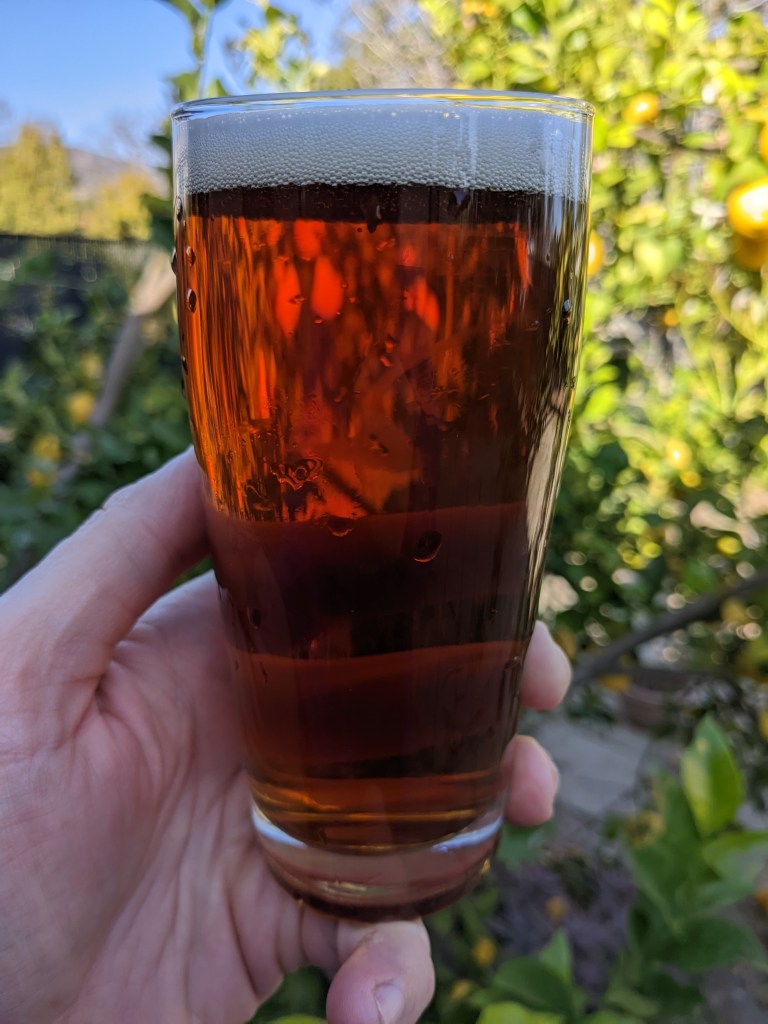
    • Brilliantly clear beer, of medium-dark amber color, with a fine and persistent ivory colored head.
  • Aroma
    • Rich and malty, with a bread crust character; a low level of spicy hop character is also present.
  • Flavor
    • Malty and bready, with a firm and assertive but not over the top bitterness. There is a very, very slight fruity yeast character.
  • Mouthfeel
    • Medium body, moderate carbonation, with a dry finish. Very pleasant.
  • Would I brew this again?
    • This one of my favorite recipes! The hop presence isn’t quite as nice this time around, but otherwise it’s a really great beer. It’s very drinkable and very flavorful.
  • Overall
    • 9/10

The Simple Monk

We’re into the season of Lent on the liturgical calendar, often observed through simple food choices or abstinence from dietary pleasures like chocolate and alcohol. Although I won’t go quite so far as to give up beer for the season, I do think it’s worth trying something a bit different for my beer. Along these lines, it seemed appropriate to make a Lenten beer, focused on the principle of simplicity.

I was inspired by the concept of a patersbier, or a low alcohol table beer that might be served at an abbey or monastery. This of course brings associations with Belgian styles, leading me towards a Belgian ale yeast. I was determined to go for simplicity in recipe and process, and so decided to execute a SMaSH recipe. I had some pilsner malt to use up, and chose whole Cascade hops from South Dakota. I also wanted to go lower alcohol, perhaps around 4% or so, to be safely on the session side of things. A hotter mash temperature would keep the result from getting too thin, and I also wanted to keep the hop rate down to avoid being overly bitter. Finally, I aimed to keep the fermentation simple. I would do an open-style fermentation (no airlock), and let it ride at ambient temperature. Finally, instead of force carbonating, I would let the keg condition with corn sugar. It was a fun experiment! I wouldn’t claim this fits any style particularly well — the whole concept is pure fantasy, but that made the brewing even more fun as a creative process.

The Simple Monk

  • 9 lb. Viking pilsner malt
  • 1 oz. Cascade whole hops (5.5% estimated alpha), 60 minute boil
  • 1 pkg. Abbaye Belgian ale yeast (Lallemand)

Target Parameters

  • 1.044 o.g., 1.013 f.g., 4.1% abv, 3 SRM, 19 IBU
  • Full volume mash at 154° for 60 minutes
  • Claremont tap water, no adjustment

Procedure

  • I mashed in with 7 gallons of water at 159°, to hit a mash rest of 154°. I added 7 mL of 88% lactic acid, and recirculated for 60 minutes before raising the temperature to 168° for 10 minutes.
  • When I pulled the grain basket, I had 6.4 gallons of runnings with a gravity of 1.039, for 75% mash efficiency.
  • I brought the wort to a boil, adding the hops and boiling for 60 minutes.
  • Once the boil was done, I chilled to 68° and transferred to the fermenter, before pitching the yeast.
  • Starting gravity was 1.043. I brewed the beer on 5 February 2022.
  • In the interest of simplicity, I left the beer to ride at ambient indoors (the garage was going to be a bit too cool). I also tried an open fermentation of sorts–instead of an airlock or blowoff tube, I just put a bit of foil over the outlet of the fermenter.
  • I kegged the beer on 16 February 2022, adding 2.6 oz. of corn sugar boiled in a cup of water. The beer carbonated at room temperature for about two weeks, before I put it into the keezer.
  • Final gravity was 1.014, for 3.8% abv.

Tasting

  • Appearance
    • Straw colored beer, very hazy, with a thin white head that sticks around only as a thin ring around the margin of the glass.
  • Aroma
    • Spicy yeast character, and a bit of clove aroma. It’s very clearly Belgian, and pretty nice. As the beer warms up, I get a tiny bit of hot alcohol character.
  • Flavor
    • Slightly grainy malt flavor, with low bitterness. Yeast character has a very slight tartness, and a bit of pepper and clove.
  • Mouthfeel
    • Medium light body, with medium-low carbonation. There is a slight astringency on the finish; it’s not over the top, but a bit noticeable.
  • Would I brew this again?
    • This was a super fun experiment. I enjoyed the freedom that the simplicity brought, in not having to really fret over a recipe or over the details of mashing and fermentation. It isn’t the best beer I’ve ever made (the slight astringency is a bit of a ding), but the experience was really enjoyable, and it’s a highly drinkable brew.
  • Overall
    • 7/10