Olde Persica Porter

I’m getting that itch again, to brew with new styles and new ingredients. With winter on the horizon, I want to stock up on some beers that will serve well on a chilly night next to the fire. I also recently realized I haven’t brewed with smoked malt before. So, a smoked porter seemed like just the thing to try.

In assembling the recipe, I drew heavily upon an Alaskan Smoked Porter clone from the American Homebrewers Association website. This was augmented with a Smoked Robust Porter recipe, also from AHA. Because I wanted this to be a fairly rich base porter that would stand up to the smoke, I elected to go with Vienna malt for the majority of the grist. Conveniently, I also have a decent bit still in stock. To add an American emphasis, I’m going to use whole Cascade hops from South Dakota as the bittering hops, with a charge of Willamette at the very end.

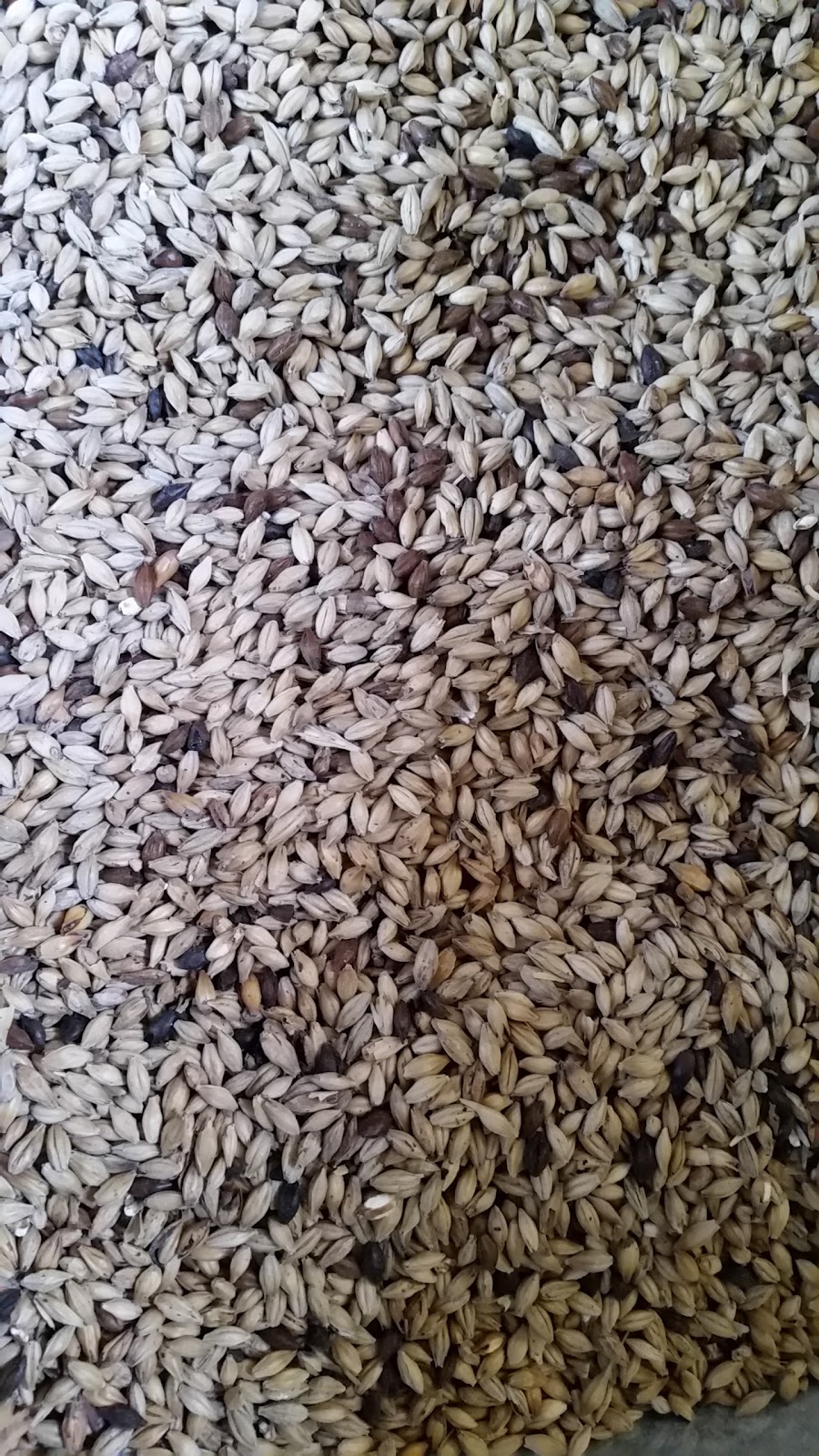
Once I got to the homebrew shop, I discovered that they had several different kinds of smoked malt in stock. I had been planning on using a beechwood-smoked rauch malt, but the owners suggested trying a peachwood-smoked malt instead. I was intrigued!

The malt itself is from Copper Fox Distillery, a Virginia-based operation that specializes in small-batch whiskeys and such. They have also started a brew malt operation, with a handful of products. Because the maltster is so new and so small, it is very difficult to find any specific information on the malts. Their website didn’t have any real information, but Southern Hills Homebrew Supply did. I also learned a bit in chatting with a local person who is helping to distribute Copper Fox malts in California. The bottom line is that this is a floor malted, smoked 2-row barley malt. The aroma and flavor profile are supposed to be a bit gentler than in traditional beechwood-smoked malt. Based on what I tasted and smelled during the brew, this very much seems to be the case. The aroma is delightfully aromatic and smoky, but the flavor in the wort is not at all overpowering.

As for the name of this recipe? Well, because I am using peach wood malt, I wanted to honor peaches. The scientific name for a peach is Prunus persica, reflecting its close kinship with plums (and thus prunes) as well as the fact that domesticated peaches entered Europe via Persia. However, peaches themselves have a deeper origin in China; the oldest fossil peaches clock in at around 2.6 million years old. As a frame of reference, our genus Homo was just getting started around that time, and the modern Homo sapiens was still 2.4 million years away!

Olde Persica Porter, just into the primary fermenter

Olde Persica Porter, just into the primary fermenter

Olde Persica Porter

  • 7 lbs. Vienna malt (Weyermann)
  • 3 lbs. peach wood smoked 2-row malt (Copper Fox Distillery)
  • 1 lb. 80° crystal malt
  • 1 lb. 40° crystal malt
  • 0.5 lb. black (patent) malt
  • 0.5 lb. chocolate malt
  • 2 oz. Cascade whole hops (5.1% alpha), 60 minute boil
  • 1 oz. Willamette hop pellet (4.1% alpha), 10 minute boil
  • 1 oz. Willamette hop pellet (4.1% alpha), 1 minute boil and 5 minute steep after flame-out
  • 1 Whirlfloc tablet, 10 minute boil
  • 0.25 yeast nutrient, 10 minute boil
  • White Labs California Ale yeast (WLP001)

Target Parameters

  • 1.065 o.g., 1.017 f.g., 6.3% abv, 37 IBU, 36 SRM, 5.5 gallons into the fermenter

Procedure

  • Five days before brewing, I made a 2L starter. After two days, I split the starter (to create a yeast culture with 100 billion cells for later), and cold crashed the remainder in the flask for pitching on brew day.
  • I mashed in with 4.3 gallons of water at 166.7°, to hit a mash temperature of 154.5°. After 60 minutes, the mash was down to 151°. At this point, I added 0.75 gallons of water at 165°, to raise the mash to 152°.
  • I let the mash rest for 10 minutes, vorlaufed, and collected the first runnings. I then added 3.5 gallons of water at 175°, let everything sit for 10 minutes, and then collected the second runnings.
  • Altogether, I collected 6.75 gallons of wort with a gravity of 1.054, for a mash efficiency of 77%.
  • I brought the runnings to a boil, and added hops and other stuff per the schedule. After 60 minutes, I turned off the heat and chilled the wort to 80°. Our groundwater is still too warm to get much below that!
  • Starting gravity is 1.060. This is a bit below my target (1.065), most likely because I didn’t have the boil as vigorous as it usually is. I pitched the yeast, and will be fermenting at 68°.
  • This beer was brewed on 22 October 2016, with vigorous fermentation underway within 24 hours.
Beer Tasting: Accretion Porter

Porters are some of my favorites (especially during the fall through spring seasons), and seem to turn out well pretty consistently. Accretion Porter fits this trend. Details are below.

  • The Basicsaccretion_porter
    • Original gravity = 1.058; final gravity = 1.020; abv = 5.0%; estimated IBU = 41
  • Aroma
    • The aroma is exceptionally malty, with a grainy and roasty character to it., and a touch of coffee. Delicious!
  • Appearance
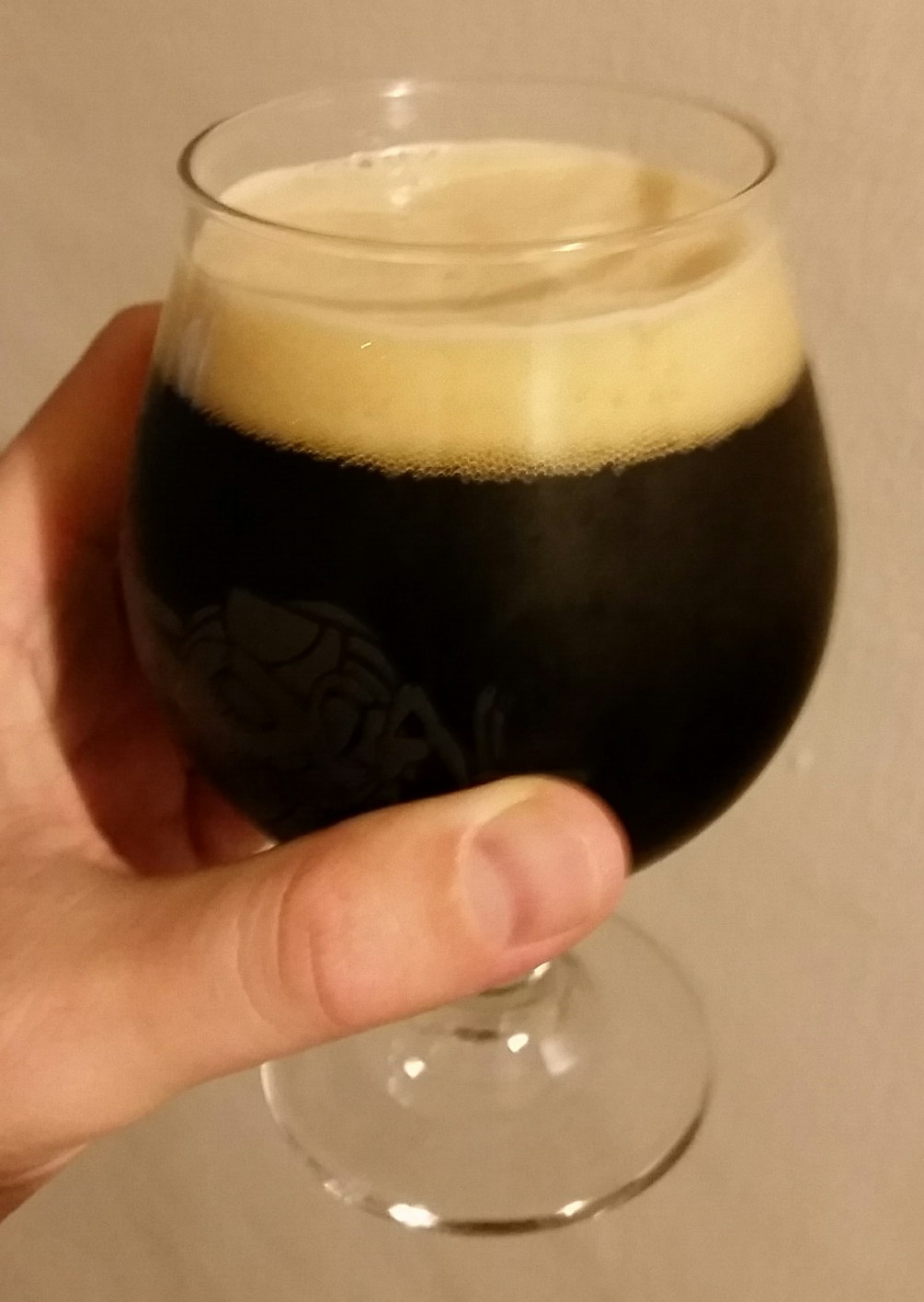
    • The beer is a deep, deep chocolate brown, with a light brown head that pours tall and settles down to a thin but persistant blanket over the beer.
  • Flavor
    • The roasty maltiness has a nice chocolate and coffee flavor. The hops have a gentle background flavor, with the slight herbal/woody component so classic for Northern Brewer.
  • Mouthfeel
    • This is a beer with moderate body and a smooth and pleasant, but moderately dry, finish. The carbonation is maybe a touch higher than I need (contributing to a perception of the beer being drier than it actually is).
  • Would I brew this again?
    • This is a pretty nice beer across the board; maybe a little drier and more carbonated than is needed, but the overall impression is exceptionally drinkable. I like this one!
  • Overall rating
    • 7.5/10

Accretion Porter

My oatmeal stout is popular–and so it is just about all gone, thanks to the able efforts of many friends and family members. I do like to have a “dark beer” on tap at all times, though, so it’s time for another brew. I had thought about doing a “session porter,” but thought instead I’d use up a bunch of ingredients and go for something a little bigger instead. I haven’t done a robust porter in awhile, so that seemed like a good style to aim for.

In formulating this recipe, I had a two things in mind. Firstly, I wanted/needed to use up a bunch of ingredients. Secondly, I wanted a rich and complex brew. The intersection of these two sets brought in a ton of dark grains–pale chocolate malt, roasted barley, de-bittered black malt, and black patent malt, along with a healthy dose of honey malt and dark crystal malt to bring some rich caramel characteristics. I was okay with having a high percentage of ultra-dark grains, because I felt the beer would need some of that to balance out any sweetness from the honey and crystal malts. I elected to use WLP002 (English Ale yeast), because I had a culture of that in the fridge. Plus, I figured that would add a nice complex and fruity dimension to the beer.

Thus, Accretion Porter was born! The name references the geological process by which some landmasses are formed–successive addition of a random smattering of crust–that mimics the assembly of the grain bill.

Accretion Porter

  • 9.5 lbs. Maris Otter (pale malt)
  • 1 lb. honey malt
  • 0.75 lb. crystal dark malt (77°L, Crisp)
  • 0.5 lb. flaked barley
  • 7 oz. pale chocolate malt
  • 4.4 oz. roasted barley
  • 4 oz. de-bittered black malt
  • 2 oz. black (patent) malt
  • 0.84 oz. Northern Brewer hops pellets (9.9% alpha), 60 minute boil
  • 1 oz. Cascade hops (whole; est. 4% alpha), 30 minute boil
  • 1 oz. Cascade hops (whole; est. 4% alpha), 10 minute boil
  • 1 tsp. Irish moss, 10 minute boil
  • 1 pkg. English ale yeast (White Labs WLP002), prepared in 1.5L starter.
Procedure
  • A day in advance, prepared a 1.5L starter of the yeast, which I had cultured previously. Because I don’t know when I’ll next get a chance to use this strain, I elected not to overbuild the starter.
  • I mashed in with 4.5 gallons of water at 168.5°, to hit a mash temperature of 155.5°. After 50 minutes, I added 0.75 gallons of water at 200°, let sit for 10 minutes, vorlaufed, and collected the first runnings. I added another 3.5 gallons of water at 180°, which raised the mash bed to 165.5°. I let this sit for 10 minutes, vorlaufed, and collected the remainder of the wort. In total, this was 6.9 gallons of wort with a gravity of 1.048, for 70% mash efficiency.
  • I brought the wort to a boil, and added the hops and Irish moss at the indicated schedule.
  • After 60 minutes, I turned off the heat and chilled the wort to 76°.
  • 5.1 gallons of wort went into the fermenter, with a starting gravity of 1.058. I am starting fermentation at ambient temperature (65°), and will move it into the fermentation chamber within 24 hours, for a fermentation temperature of 66°.
  • I brewed the beer on 19 March 2016.

Beer Tasting: Packrat Porter

  • The Basics
    • Starting gravity = 1.054; final gravity = 1.017; abv = 5.1%; estimated IBU = 38
  • Aroma
    • Lots of malty aroma, with a grainy and roasty character to it. I don’t pick up much in the way of hops or yeast esters.
  • Appearance
    • The beer is deep brown in gross examination. When held up to the light, a deep ruby tinge is quite apparent, as well as excellent clarity. It’s very pretty! The head is beige, fine, and moderately low, with excellent retention during the course of consumption. 
  • Flavor
    • The beer is malt-forward, with a primarily grainy and chocolate character backed up by roasty notes (in the overall same ballpark as the aroma). The bitterness is moderate and smooth, but not overwhelming.
  • Mouthfeel
    • The beer has a moderate body and a pleasant, fine carbonation with a slightly creamy sensation. The finish is relatively dry and tasty. 
  • Would I brew this again?
    • Yes! For something that was thrown together from odds-and-ends, it turned out exceptionally well. Although I am unlikely to duplicate this exact recipe ever again, I think the overall ‘feel’ is a definite winner. The beer is a solid improvement on my last porter, most probably in my choice of a less attenuative English ale yeast as well as a healthy addition of flaked oats, which added some needed body over the previous recipe. I would note that this probably is best classified as a “hybrid porter”–the starting gravity is a bit higher than conventional for an English porter and the graininess is apparently slightly out of character, but it’s not quite aggressive enough to be an American porter (no ‘burnt’ characteristics and the hops are fairly tame). Ignoring the BJCP, though, it’s a great beer! I would definitely brew a simplified version of the recipe (cut the micro-additions of various grain sample packs), or perhaps even switch it up by using Maris Otter for the base malt.
  • Overall rating
    • 8.5/10