Polacanthus Porter

IMG_20190829_193848Dark beers! They’re seemingly banished from the summer months, and yet I often have a craving for one even on the hottest days. Not a triple imperial barrel aged chocolate stout, of course–that’s best dumped in the sink during the month of December. I’m thinking of those more drinkable dark beers, a bit lower on the alcohol but still robust on flavor.

An end-of-summer porter seemed like a good way forward. They’re flavorful, but not necessarily gut bombs. They’re relatively easy to brew, and turn around fairly quickly. Also, they’re a “traditional” style that’s just a bit harder to find, overwhelmed by trendier beers on tap lists. If I want a mediocre hazy IPA, I don’t need to make my own; there is no shortage in area breweries!

This recipe is based on the American porter from Gordon Strong’s Modern Homebrew Recipes. My version fairly closely follows that by Strong, with the modifications primarily on the hopping and malt brands. The name recognizes the combination of American and English ingredients, because Polacanthus is a type of armored dinosaur that had relatives on both sides of the Atlantic.

Polacanthus Porter

  • 11 lb. 2-row pale malt (Rahr)
  • 12 oz. 1823 Heritage Crystal Malt (Bairds), 75°
  • 10 oz. chocolate malt (Bairds), 500°
  • 5 oz. roasted barley (Bairds), 600°
  • 0.65 oz. Magnum hop pellets (13.2% alpha), 60 minute boil
  • 1 Whirlfloc tablet, 10 minute boil
  • 1 oz. Cascade whole hops (~5.5% alpha), 10 minute boil
  • 1 oz. Cascade whole hops (~5.5% alpha), 5 minute boil
  • 1 pkg. Safale American Ale Yeast (US-05)

Target Parameters

  • 1.058 o.g., 1.014 f.g., 5.8% abv, 36 IBU, 34 SRM
  • 60 minute infusion mash, 154°, batch sparge
  • Claremont tap water

Procedure

  • I mashed in with 4.25 gallons of water at 164.5°, to his a mash temperature of 155°. After 45 minutes, I added 1 gallon of water at 185°, and collected first runnings after a 10 minute rest and vorlauf. I then added 3.5 gallons of water, let rest for 10 minutes, vorlaufed, and collected second runnings.
  • In total, I collected 7.1 gallons of runnings with a gravity of 1.048, for 73% efficiency.
  • I brought the runnings to a boil, adding hops and such per the recipe.
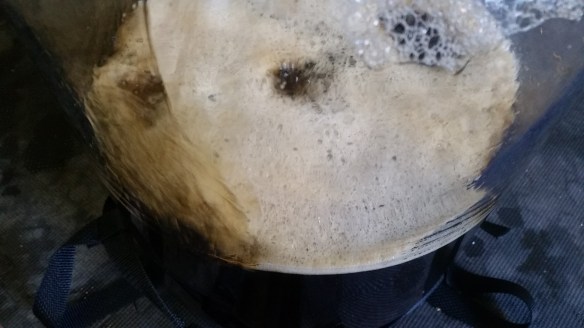
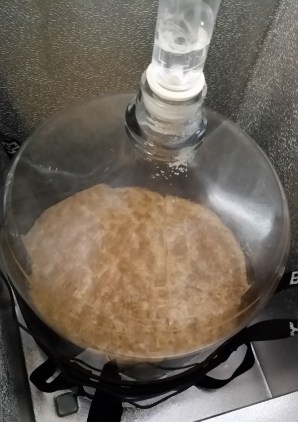
  • After 60 minutes, I turned off the flame, chilled, and transferred to the fermenter (with aeration). I had to let the wort rest in the fermenter for a few hours, to chill down to the fermentation temperature of 66°.
  • I brewed this beer on 13 July 2019. Starting gravity was 1.057.
  • I kegged the beer on 14 August 2019. Final gravity was 1.013, for 5.8% abv. This was exactly on the dot for my targets!

Tasting

  • Appearance
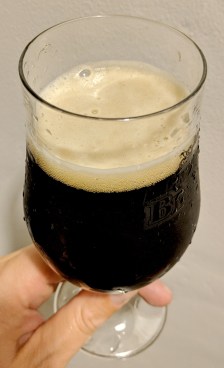
    • Deep brown, with garnet tones when illuminated from behind; clear; persistent tan head
  • Aroma
    • Roasty, chocolately aroma; very nice.
  • Flavor
    • Roast malt character at the front, with a slight chocolate and coffee tinge; slight citrus aspect; moderately bitter, with a finish that tilts towards the bitter rather than the malty side.
  • Mouthfeel
    • Medium body, medium carbonation; off-dry finish (probably due to the roast character). It could maybe have a touch more body, but I think overall it’s okay on this end. Too much body would make this harder to drink.
  • Would I brew this again?
    • Yes! This is a nice and simple recipe, with a pleasant flavor. As porters go, this definitely is towards the roasted and bitter side, but I’m okay with that. This is really drinkable as a summer porter! I would add it to my regular repertoire.
  • Overall
    • 9/10

Gravel Bottom Porter

Our upcoming club competition focuses on porters of all types. My own entry is a bit of a last-minute affair; this is coupled with a need/desire to use up some ingredients in the brewing stash.

For this batch, I wanted something more on the English end of porters. I’ve done a lot of American porters and robust porters, but it’s been a long time since I’ve deviated from those. This one isn’t a true English porter–the base malts are decidedly German–but the overall feel is on the west side of the Channel.

20171104_153434

Transferring the wort into the fermenter

Gravel Bottom Porter

  • 5.25 lbs. Munich I malt (Weyermann)
  • 1.5 lbs. Vienna malt (Great Western)
  • 1 lb. crystal extra dark malt 120° (Crisp)
  • 1 lb. pale chocolate malt 225° (Crisp)
  • 6.4 oz. flaked barley
  • 4 oz. caramel 120° malt (Briess)
  • 3.2 oz. flaked wheat
  • 1 oz. Cascade whole hops (5.5% alpha), 60 minute boil
  • 0.85 oz. Willamette hop pellets (4.9% alpha), 10 minute boil
  • 1 Whirlfloc tablet, 10 minute boil
  • 1 pkg. Empire Ale dry yeast (Mangrove Jack’s M15)

Target Parameters

  • Infusion mash to hit target of 152° for 60 minutes, batch sparge
  • Claremont tap water
  • 1.049 o.g., 1.013 f.g., 4.6% abv, 27 IBU, 29 SRM, 5.5 gallons into fermenter

Procedure

  • I mashed in with 3.25 gallons of water at 165°, to hit a mash temperature of 153°. After 45 minutes, it was down to around 151°.
  • After 60 minutes, I added 1.37 gallons of water at 185°, let it sit for 10 minutes, vorlaufed, and collected the first runnings. Then, I added 3.5 gallons of water at 185°, let sit for 10 minutes, vorlaufed, and collected the second runnings.
  • In total, I collected ~6.25 gallons of wort. This was below my target, so I added RO water to get to 6.8 gallons. This equates to around 79% efficiency.
  • I brought the wort to a boil, adding hops and Whirlfloc at the appropriate times.
  • After 60 minutes, I turned off the flame and began chilling. Once I was down to ~78°, I transferred to the primary fermenter and pitched the yeast.
  • Starting gravity was 1.049; right on the nose!
  • I brewed this beer on 4 November 2017, and will be fermenting at 68°.

Olde Persica Porter 1.1

20170402_154913My homebrew club is serving at an upcoming regional festival, and I volunteered to provide a keg of beer. In order to highlight the stuff our group of brewers is doing, I figured something outside of the ordinary (i.e., a generic American IPA or whatever) would be best. What better than a smoked porter?

A few months back, I made a smoked porter that turned out pretty darned delicious (in fact, it was one of my favorite beers of 2016). So, it was an easy decision to bring that recipe back! Once again, I’m using the peachwood smoked malt from Copper Fox–it’s really delicious stuff. Try it out if you can! Otherwise, I made a few very small tweaks for ingredients–in particular, I made some minor adjustments to use up a half ounce of Willamette hop pellets, and I also used dry yeast instead of liquid because I didn’t quite have time this past week to spool up a starter.

Olde Persica Porter 1.1

  • 7 lbs. Vienna malt (Weyermann)
  • 3 lbs. peach wood smoked 2-row malt (Copper Fox Distillery)
  • 1 lb. 80° crystal malt
  • 1 lb. 40° crystal malt
  • 0.5 lb. black (patent) malt
  • 0.5 lb. chocolate malt
  • 2 oz. Cascade whole hops (5.1% alpha), 60 minute boil
  • 0.8 oz. Willamette hop pellets (5.1% alpha), 10 minute boil
  • 1 oz. Willamette hop pellets (4.1% alpha), 5 minute steep/whirlpool after flame-out
  • 1 Whirlfloc tablet, 10 minute boil
  • Safale American ale yeast (US-05), 1 package

Target Parameters

  • 1.065 o.g., 1.017 f.g., 6.3% abv, 37 IBU, 36 SRM, 5.5 gallons into the fermenter

Procedure

  • I added 4.3 gallons of water at 172°, and let it cool until it hit 166.5°. This was a little below my target (I got distracted by some other tasks in the brewery), so the mash temperature only hit 154°. Thus, I added 1 quart of boiling water to hit 154.5°. The mash was only down to 153° after an hour.
  • After 60 minutes of mashing, I collected the first runnings and then added 4 gallons of water at 190°, to hit a mash out temperature of 169°. I let it sit for 10 minutes, vorlaufed, and collected the second runnings.
  • Altogether, I collected 6.25 gallons of wort with a gravity of 1.052, for a mash efficiency of 69%. I’m not entirely sure why I was a bit below my target–maybe a volumetric issue when measuring out the mash and sparge water?
  • I brought the runnings to a boil, and added hops and other stuff per the schedule. After 60 minutes, I turned off the heat and chilled the wort to 75°. Just to see if the whole Cascade hops would create enough of a filter to keep the pelletized gunk out, I left the hop pellets loose rather than bagging them or using my hop spider. That was a mistake! The kettle screen ended up clogged, and I only got about 4 gallons into the fermenter. This lessened volume is OK in my view, because past experience shows that we generally use only 2-3 gallons of a typical beer during a typical festival pour.
  • After transferring to the fermenter, I pitched the yeast. Starting gravity is 1.061. I will be fermenting at 67°.
  • This beer was brewed on 1 April 2017, with vigorous fermentation underway within less than 24 hours.
  • Update: Final gravity was 1.018 on 23 April 2017, which works out to 5.5% abv.

Beer Tasting: Olde Persica Porter

Sometimes you make a beer that just nails it. It doesn’t happen often, but when it does…wow! Olde Persica Porter is one of those beers.

  • 20161207_201748The Basics
    • Original gravity = 1.060, final gravity = 1.016, abv = 5.8%, estimated IBU = 37
  • Aroma
    • Smoky and rich, really nicely balanced. The smokiness has subsided a bit since first sampling a few weeks back, but is still quite pleasant. It’s hard to find the exact words for the smoke character, but it’s about spot-on for what I like in a beer.
  • Appearance
    • Brown head with decent retention; deep, chocolate brown beer, with decent clarity.
  • Flavor
    • The malts are wonderfully at the centerpiece of this beer. A moderate smokiness, roastiness, and slight hint of chocolate combine into something incredibly tasty.
  • Mouthfeel
    • This beer has a moderate body, and a smooth finish. Carbonation is right about perfect.
  • Would I brew this again?
    • In a heartbeat! This ranks up there as probably one of the best beers I have ever made. The smokiness and overall body combine beautifully in this one. A week or so back I was thinking I needed to up the smoked malt percentage (as the smoke character faded over time), but now I’m not so convinced of that. I’ll keep it as is (although might adjust my boil slightly to achieve a slightly greater final gravity). This is one of those beers made for a cold night in front of the fire, and I’ve done exactly that.
  • Overall
    • 10/10

Update: Olde Persica Porter

My smoked porter has been in the primary fermenter for 13 days, coasting along at around 66°. So, I kegged it tonight. Final gravity was 1.016, down from 1.060, for 5.8% abv. The aroma and flavor are pretty darned delicious! The level of smokiness is just about perfect for my palate, too. Everything is carbonating and conditioning now at 40°.