I set a goal to brew more with kveik, and did get two batches in with this family of yeast cultures, both IPAs. They turned out OK, but not great. I’ll probably play around more with kveik in the future, but I feel that the trend has perhaps run its course for my brewing tastes and needs.
Final Score: 5/10
Pilsner.
I set out to perfect a German pils, and came close. I’ve figured out my general grain bill and bitterness regimes, and now it’s just a matter of continued iteration. The Pilsnerpeton batch is perhaps the best from 2020/2021, and Farke’s Best Pils also came out pretty great. I just need a little more practice, and I’ll get there.
Final Score: 7/10
Big Beers in Small Batches.
I’m feeling really great about this one. I ended up with three small-batch beers higher than 7% abv, including the excellent Winter Dream Ale. Although I could have brewed more of these, I am actually pretty satisfied with where I landed on this goal. Each of the beers turned out fairly well, and it was about the perfect quantity for what I had energy to drink (or share).
Final Score: 8/10
Belgian Beers.
I didn’t do great on this one, probably because I got distracted by other brewing projects. Alongside the aforementioned Winter Dream Ale, I fermented three other beers with Belgian yeast. Two of these were old favorites (Raspberry Belgian and Pannotia White IPA), and another was a big quad for a homebrew club barrel project. So…I really have work to do here next year. Maybe a patersbier for Lent?
Final Score: 4/10
Overall Assessment of 2021: 6/10 for brewing goals — not great, but not awful. I still had fun, though!
This was a big year for my brewing, even if I had busy stretches with minimal time. As I enter the last few minutes of 2021, here are my thoughts looking back…
Favorite Batch
This was a tough one to pick! I had a decent number of beers I really liked, and so I chose the following two as my favorite batches:
Ill-Tempered Gnome. I don’t make American brown ales very often, but this one was just awesome. The hop character is particularly memorable, and I definitely want to make it again sometime.
Alstadt Altbier. I feel like I perfected my altbier game on this latest version of the recipe. Again, a very memorable beer!
Least Favorite Batch
Mow the Damn Lawn, Farke. I have done this one before and really enjoyed it, but the batch this year had some issues–specifically, a serious acetaldehyde problem. It cleared over time, but the batch never advanced much beyond “drinkable.”
Experimental Recipe with Most Potential
Winter Dream Ale. High-alcohol beers are not the sort of thing I do all the time, but this particular recipe was really enjoyable in the Christmas to New Year’s stretch. It had a nice mix of flavor and body, making an interesting beer without addition of spices or strange adjuncts.
Most Fun New Style/Recipe to Try
I had fun putting together an amber kellerbier, in Dimorphos Kellerbier. I really freestyled it in the recipe, and achieved a tasty result.
Upcoming Beer With Most Potential
I have another Pliny the Elder clone fermenting right now, and I’m crossing my fingers that it turns out well!
Best Technique Added to Repertoire
I’ve been using a Hochkurz mash semi-regularly, and like the results in terms of extract yield as well as fermentability and flavor.
Best Ingredient Added to Repertoire
The HOPBOX was a lot of fun to play with, and gave me a nice IPA as a result. I’ll be enjoying the next iterations as they arrive this year.
Favorite Book(s)
For Christmas, I received a copy of Dark Lagers: History, Mystery, Brewing Techniques, Recipes (by Thomas Kraus-Weyermann and Horst Dornbusch)…it has been a fun one to browse! The historical information is interesting, the recipes seem solid, and the food recipes are also something I’ll look forward to trying.
Other Milestones
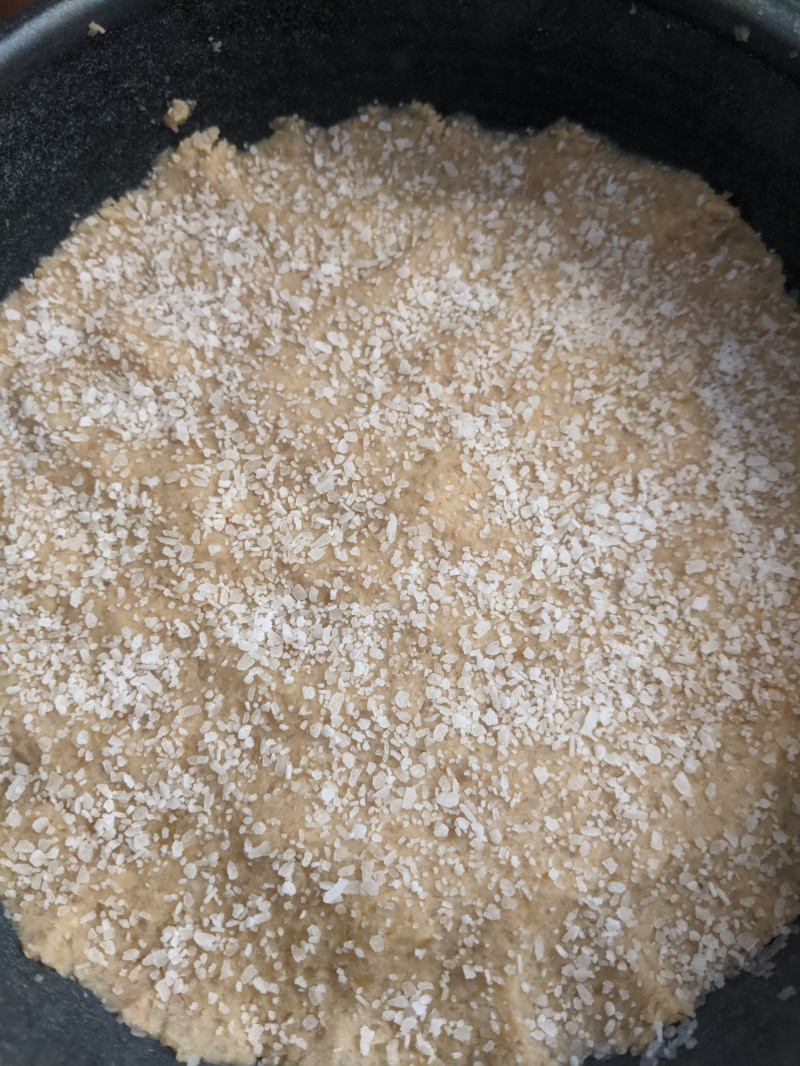
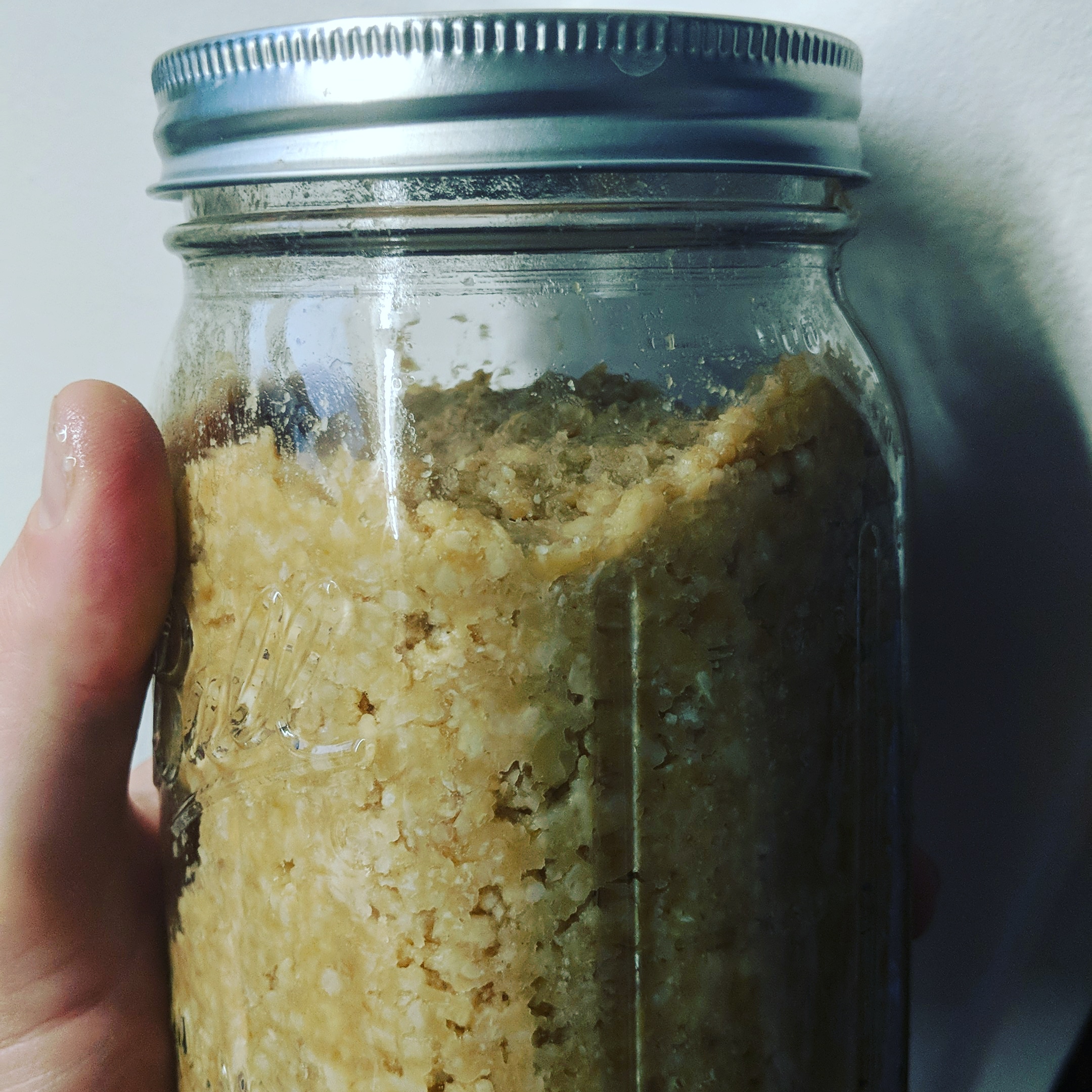
I had some fun with other fermentables this year, including creation of miso paste as well as injera bread. I’ve continued with sauerkraut and homemade mustard, all of which are fantastic accompaniments for beer and sausage.
Overall Stats
I brewed 31 batches of beer this past year, totalling around 150 gallons of beer produced.
No particular beer style dominated 2021, although I had three batches of German pils and two batches of American IPA as the most frequently brewed styles. Expanding into IPAs as a general category, I brewed seven recipes in the IPA world (including American, English, white, and double IPAs).
As we head into the end of the year, I find that I’m having to pace my brewing a bit. I want to brew more frequently, but either don’t have time or (more pragmatically) have a bunch of beer on-hand already. In any case, I’m planning out the brewing schedule for the next few weeks, and have some fun stuff “on tap.” My current tap selection is pretty darned good, which makes for enjoyable sampling.
Beer Batch Updates
Eagle Face Oatmeal Stout is now kegged, and conditioning. I’ve noted that this recipe tends to attenuate fairly poorly (finishing north of 1.020), which is actually a good thing in terms of body and lower alcohol.
I kegged the amber kellerbier / zwickel, and it is now carbonating. The plan is to have it on-tap very soon, so that it can be available for pairing with our traditional pretzel night during the holidays.
I brewed a dark mild last weekend, and it is now fermenting. In a bit of experimental laziness, I transferred the beer directly onto the yeast cake from the oatmeal stout. In part, I wanted to try this technique. But mostly I just didn’t want to clean the fermenter. As a side effect, I saved a few bucks (unless the beer is bad, in which case I didn’t save anything).
My newer German pils is lagering, and I plan to keg it soon.
What’s On Tap?
I’m on the home stretch for the kegs of Farke’s Best Pils and Humboldt’s Lesser Hefeweizen. Once those are done, I can rotate in the kellerbier!
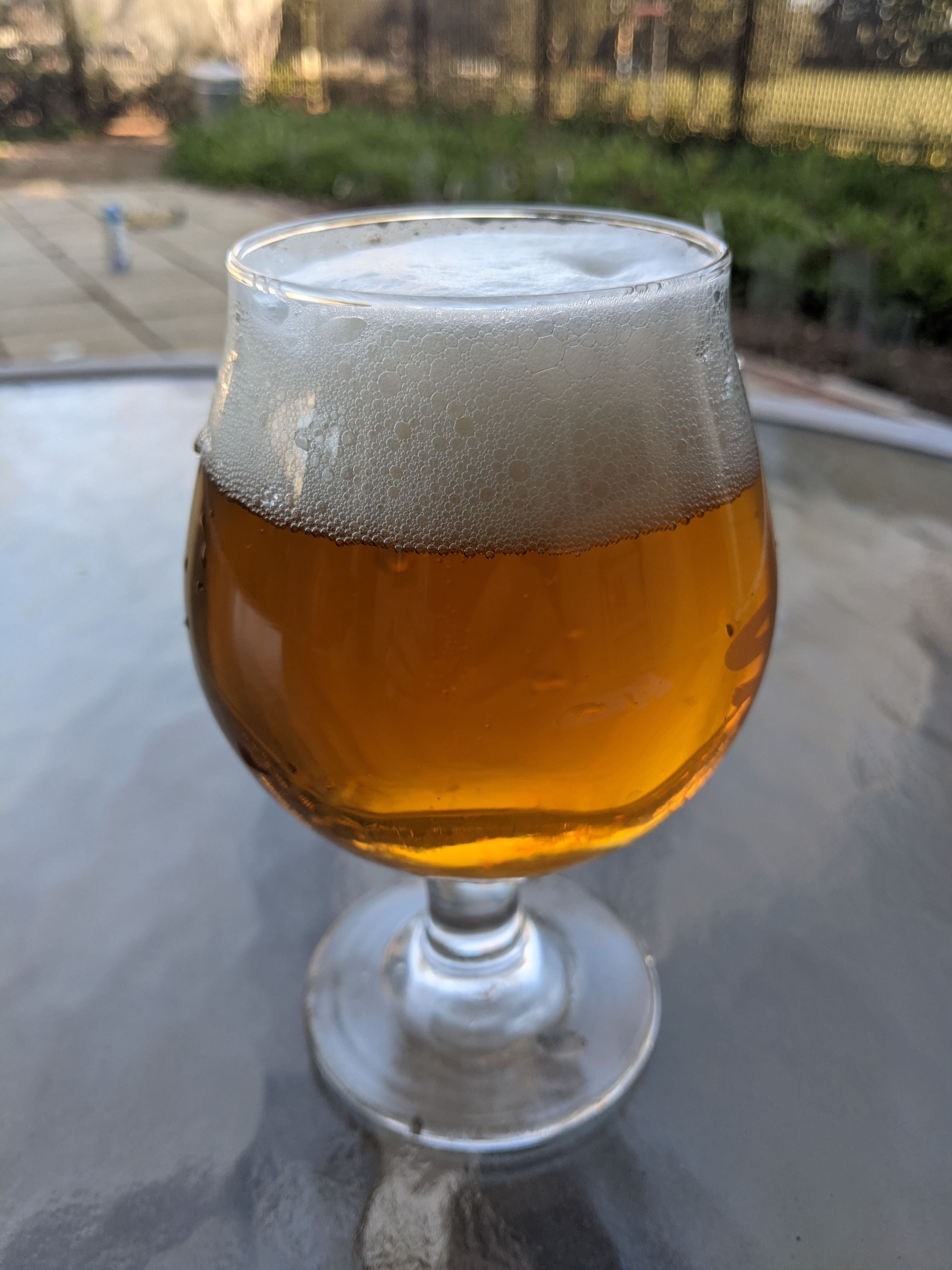
I just put the American IPA on-tap (made with 2021 hops), and it is drinking beautifully.
What’s Coming Up?
I plan to brew a pale ale with a few more of the hops from the HOPBOX, specifically Strata and El Dorado.
I’m also going to run a clone recipe of Pliny the Elder again, this time with slight modification. Kits were on sale at MoreBeer, so I picked one up just to give it a try.
I am thinking about another pilsner soon, once I evaluate the most recent German pils.
A Scottish 70/- heavy is on my list, so I can have another lower alcohol beer on hand.
Brewing continues to be an on-again/off-again festivity, as I work my way through a busy chunk of the year. Thankfully, the weekends are starting to free up a bit, so I’ve started to get ahead of things again.
Beer Batch Updates
Since last report, I kegged my Ill Tempered Gnome clone, and it’s now on tap. Although I had planned to bring some to Thanksgiving with friends, plans changed and now I’m “stuck” with the keg all on my own. Looks like a few lucky local friends will get a growler!
Winter Dream Ale–a Belgianesque winter warmer–has been kegged, and is now conditioning. The flavors seem pretty nice in preliminary tastings, although it needs a bit more time to drop completely clear. I hope to move it on-tap in time for Christmas.
On November 6, I brewed an IPA using hops from a recent HOPBOX, and it is now conditioning in the keg. I expect it will go on-tap fairly soon, because the kegs in the main keezer are getting pretty low.
I brewed this year’s iteration of Eagle Face Oatmeal Stout on November 13. It’s finishing up the rest in the primary fermenter, and should be kegged in the next day or two.
A new German pils is currently fermenting, after my brew day on November 21. It is going to ferment next to an amber zwickel, which got brewed on November 22. The former beer was made using the Edelweiss hop blend, which is an interesting experiment. The latter beer is a bit of a kitchen sink recipe to use up some odds and ends (especially Munich and Vienna malt). For each, I did a hochhurz mash (45 minutes at 144° and 45 minutes at 160°, before mash-out), and this really seems to boost my mash efficiency! I was at nearly 77% for the zwickel and 74% for the pils, which are each well above my usual 68%. On my previous pils, I just did a 60 minute mash at 149°, which ended with 70% mash efficiency. So, I speculate that a longer mash can be a key to boosting gravity in the Anvil Foundry. I might add this in to my regimen more frequently, once I evaluate the results.
What’s On Tap?
Ill-Tempered Gnome is now on tap, and it drinks really well. It’s a perfect winter beer, in that it has lots of flavor but isn’t too heavy or cloying.
I need to plan my holiday brewing sessions, and am starting to work out the possibilities. A tropical pale ale is in the lineup (using HOPBOX hops), and I’m also thinking an English dark mild for something a bit more sessionable that will use up ingredients.
When it comes to hops, I am often a creature of habit. I love Cascade, Centennial, Citra, and Simcoe for my IPAs, and I’ll sometimes throw in Galaxy or Amarillo. I love Saaz, Hallertauer, and their American equivalents for my German beers. And…I don’t get much outside of that box very often. With a bewildering array of hops on the market for homebrewers, I just get overwhelmed and usually stick with what I know.
Now, that philosophy can be great for consistency and predictability. It also helps me to avoid chasing the latest expensive fad hop, and I’ve really gotten to know the flavors in each familiar variety. That said, I’m almost certainly missing out on some real gems. But, how can I break out of my rut, without too much effort on researching and such?
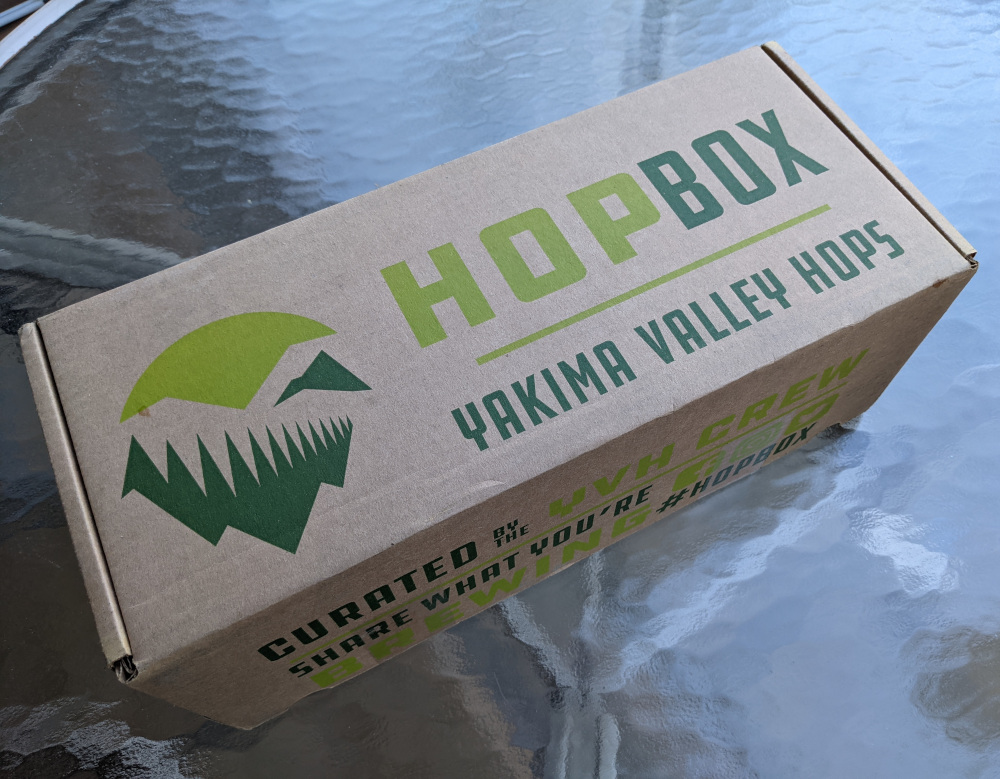
About two months ago, I was super excited to learn about a hop subscription box from Yakima Valley Hops, called The HOPBOX. HOPBOX was totally sold out then, but one of their reps said to check back at a certain date, and I should be good to go. Sure enough, I visited the website a few weeks later and I could order! (thanks for the tip, YVH rep!) I signed up for a full year (which came with a 15% discount), and waited for my first shipment…
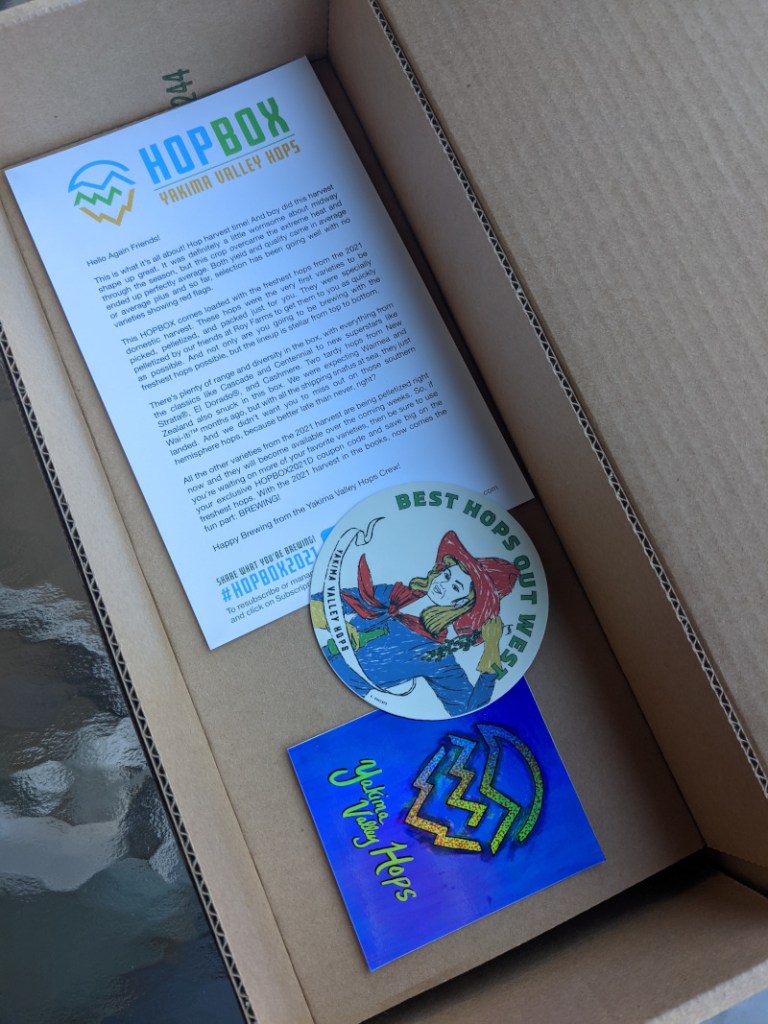
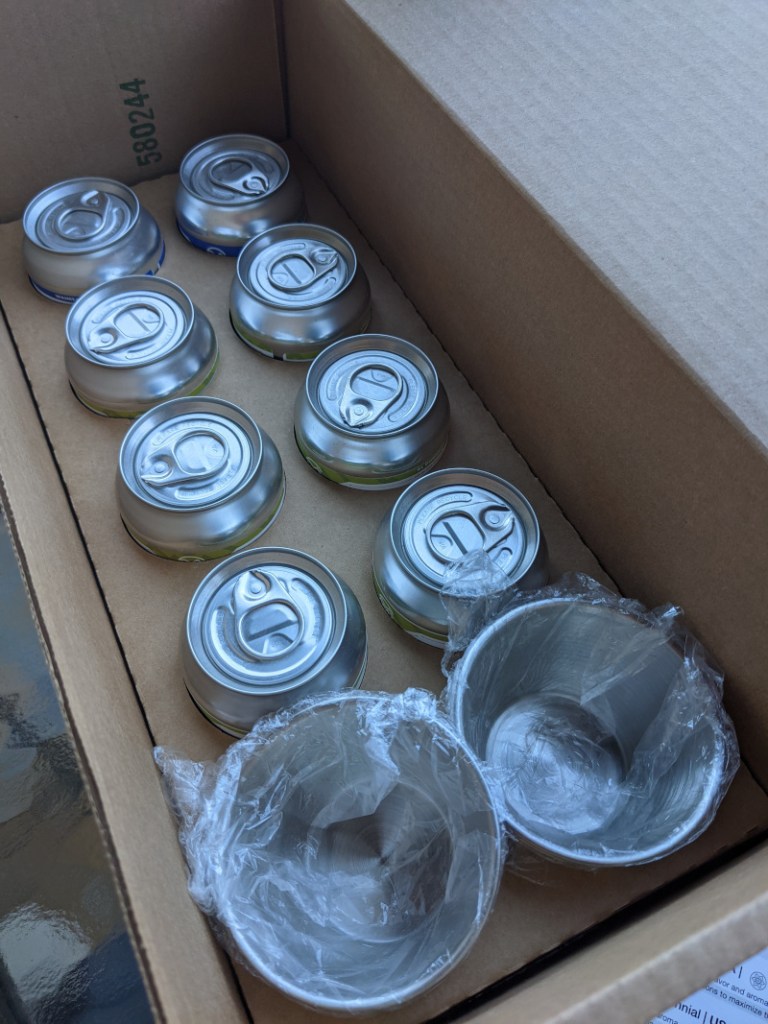
A little over a week ago, a very attractive box landed in my mailbox. Opening it up, I saw eight 2-oz. cans of eight different hop varieties, along with some stickers, a card describing the hops, and a set of stainless steel cups to portion out hop additions.
So, what do I think about all of this? Let’s take a look! (note: I paid for this myself, and did not receive any compensation for the review, so I feel I can be reasonably even-handed)
The Hops
I was pretty impressed by the hops! All were from the 2021 crop, so I have no doubt on freshness. High marks there.
I am also impressed by the varieties–this box included Bravo, Cashmere, Cascade, Centennial, El Dorado, Strata, Waimea, and Wai-iti. A few are ridiculously expensive to buy at some suppliers (e.g., Strata sells at over $2.50 per ounce at some online stores), and others aren’t yet available for this crop via YCH (e.g., Cashmere and El Dorado).
For my brewing habits, this is a perfect quantity of hops. There are enough to do a few beers with fun blends–for instance, my first batch uses Bravo as the bittering with Waimea+Wai-iti+Cashmere for the whirlpool and dry hop. There isn’t enough of each for a five gallon SMaSH beer, but I think I’m okay with that. I can always go back and try a particularly intriguing variety in more depth. For me, Waimea is the standout in my current package so far, and I may well come back to that.
I like that this box fits within a general theme, of “hops that are good for IPAs and pale ales”. That made it a lot easier to plan brewing, versus if I had gotten a smattering of hops suited for disparate styles.
One thing that might have been nice is access to detailed data on individual lots. The packages had alpha acids, etc., but I wouldn’t complain if there were specifics on particular hop oil quantities, etc. That is a very minor quibble, though.
The Extras
This box came with two stickers as well as a set of stainless steel cups to portion out hops. I’m not really a sticker person, so those were somewhat of a wash, but the cups have already gotten use in my brewery. Previously I have been using reusable plastic containers, which are OK but a bit large for what I need. The little stainless steel containers (the same as 4 oz. sauce cups you might get at a restaurant) are branded with the YVH logo and will fit 3 oz. of hops fairly comfortably. The cups also make it easy to weigh out an ounce at a time, or a measure mineral additions.
One extra I might suggest for future boxes would be to include variety-specific recipes for the hops. I of course had fun thinking up something on my own, but at the very least a starting point would be helpful.
The Packaging
Yakima Valley Hops uses a nitrogen-flushed pull-top can, which is pretty slick. There’s no doubt as to the fact that they’re sealed and pretty impermeable to oxygen. A minor beef is that they are a little less convenient to store compactly in my deep freezer than bags are, and the cans also tend to wrinkle slightly due to the contraction of the internal gases at freezer temperatures. That said, they’re quite visually attractive.
The box itself was nicely arranged, and it was enjoyable to open and see what all was inside. I personally find unboxing videos or excessive commentary on such things a bit over the top, but I can’t deny that I had fun.
The box/packaging itself are maybe a little big for what’s inside, but it is all cardboard and recyclable, so I give them high marks for that. There’s no excess plastic junk, or unrecyclable bits. Also, everything arrived in perfect shape.
The Cost
Because I ponied up for a one year (four box) subscription, this knocked 15% off the $40 price tag per box, so I’m paying $34/box. And, shipping is free! Is that worth it? Overall, I think yes.
For comparison, I priced out 2 oz. containers of each hop on the Yakima Valley Hops website. This adds up to about $18.50 of hops and $9.70 of shipping, for $28.20 total. I will note, though, that some of the things in my box are currently sold out or only available in 2020 or 2019 crop years. When I compared with MoreBeer, you’d spend around $31.42 and then an additional $8 or $10 for shipping, and you wouldn’t necessarily get as much control over which year you got.
In pricing out the stainless steel cups, it looks like they run around 50 cents to $1 each online; just for the sake of argument, let’s say $1 each (they have printing on the outside, after all). So, that’s $6 value there, more or less.
With everything included ($28.20 of hops and $6 of steel cups), and free shipping, I would say this box is about a break-even proposition, and you definitely come out ahead versus if you had to pay shipping. The exclusive access to some hops is also a nice perk. Overall, the box is also a fairly good value versus buying each individually at a reseller. However, the box wouldn’t necessarily be a good value at full price ($40).
Overall
On the whole, I rate the HOPBOX a 4 out of 5, and it comes awfully close to being 5 out of 5. The cost for what you get is pretty good, although not a ridiculous steal. The full-price one-off box might make for a good gift for someone, but if you brew a lot and are likely to use the hops, I would just get a full-year subscription to save a fair bit of money. The hop selection is top-notch, and the extras in the box are pretty cool. Additionally, at least this first box has definitely helped me to expand my brewing horizons, so mission accomplished! I definitely recommend this if you are a hophead or know someone who is.




 Andy's Brewing Blog