Sierra Nevada Porter Clone

I love American porters, and they are among the first beers I ever brewed (all the way back to 2009!). Sierra Nevada’s porter is a great one, a classic in the American porter style, as listed by the BJCP 2021 style guide. The BJCP also indicates that this style is “becoming increasingly hard to find.” That’s a good reason to make a homebrew version!

I did some searching to find an appropriate recipe, which landed on one that is allegedly directly from Sierra Nevada. I adjusted the grains very slightly to get more even amounts, and I also upped the Carafa Special III and black malt, in order to darken the beer. Oddly, the grain-only version was lighter than consistent with the style (noted by folks at the original link), so I added Sinamar to bring things into line. The original recipe called for Sterling and Aurora hops, neither of which I had on-hand. So, I substituted Mandarina Bavaria and Elixir. They’re not the same, but should be enough in the ballpark.

This was an enjoyable recipe to brew. It didn’t require dry hopping or whirlpooling, and I didn’t bother with a closed transfer. Other than using Sinamar, the ingredients and techniques were dead-basic.

Sierra Nevada Porter Clone

  • 10.25 lb. 2-row malt (Briess)
  • 1 lb. Munich I malt (Weyermann)
  • 0.5 lb. caramel malt – 60L (Briess)
  • 0.5 lb. chocolate malt (Bairds)
  • 1 oz. black malt (Briess)
  • 1 oz. Carafa Special III (Weyermann)
  • 1.5 oz. Sinamar (added at end of boil)
  • 1 oz. Mandarina Bavaria hop pellets (6.7% alpha), 60 minute boil
  • 1 oz. Elixir hop pellets (5.1% alpha), 15 minute boil
  • 1 Whirlfloc tablet, 5 minute boil
  • 1 oz. Elixir hop pellets (5.1% alpha), 5 minute boil
  • 1 pkg. California ale yeast, dry version (White Labs WLP001)

Target Parameters

  • 1.056 s.g., 1.014 f.g., 5.7% abv, 35 IBU, 40 SRM
  • Full volume infusion mash, held at 154° for 60 minutes and 168° for 10 minutes
  • Claremont tap water with Campden tablet

Procedure

  • I heated 7.5 gallons of water to 160°, and added the grains for a mash temperature of 154°. I added 5 mL of 88% lactic acid to adjust the pH, and held the mash at 154° for 60 minutes.
  • After 60 minutes, I raised the mash to 168° for 10 minutes, before pulling the grains and heating to a boil.
  • The mash yielded 6.5 gallons of runnings with a gravity of 1.050, for 71% mash efficiency.
  • I boiled the wort for 60 minutes, adding finings and hops per the recipe.
  • After the boil, I chilled to 70° and transferred to the fermentater.
  • I brewed the beer on 2 December 2023. Starting gravity was 1.058, just a touch above target.
  • I fermented the beer at 66°, and kegged on 31 December 2023. Final gravity was 1.016, for 5.5% abv.

Tasting

  • Appearance
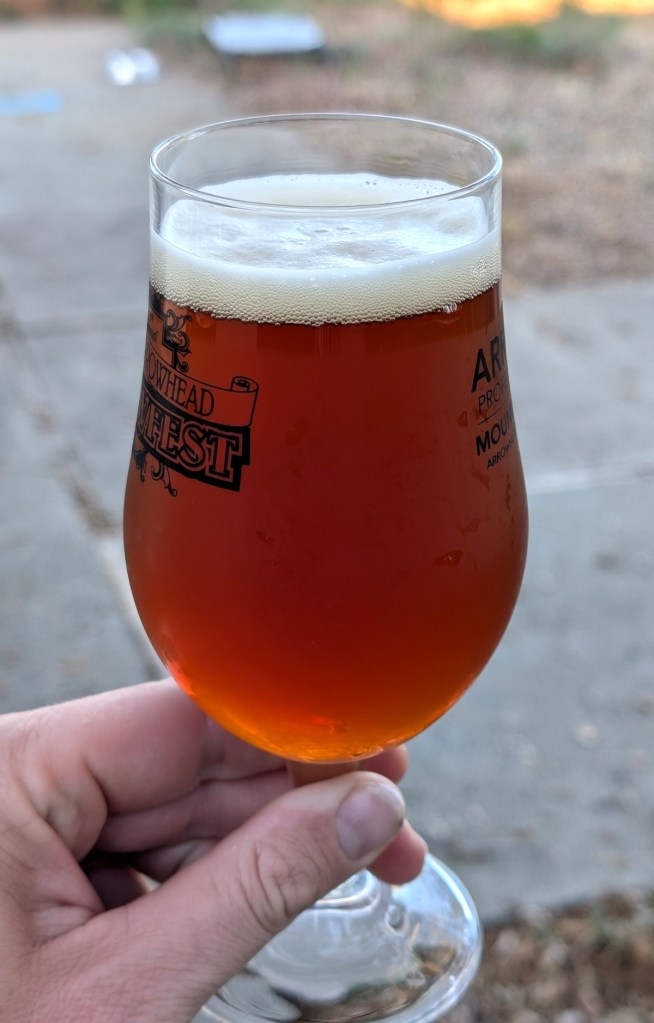
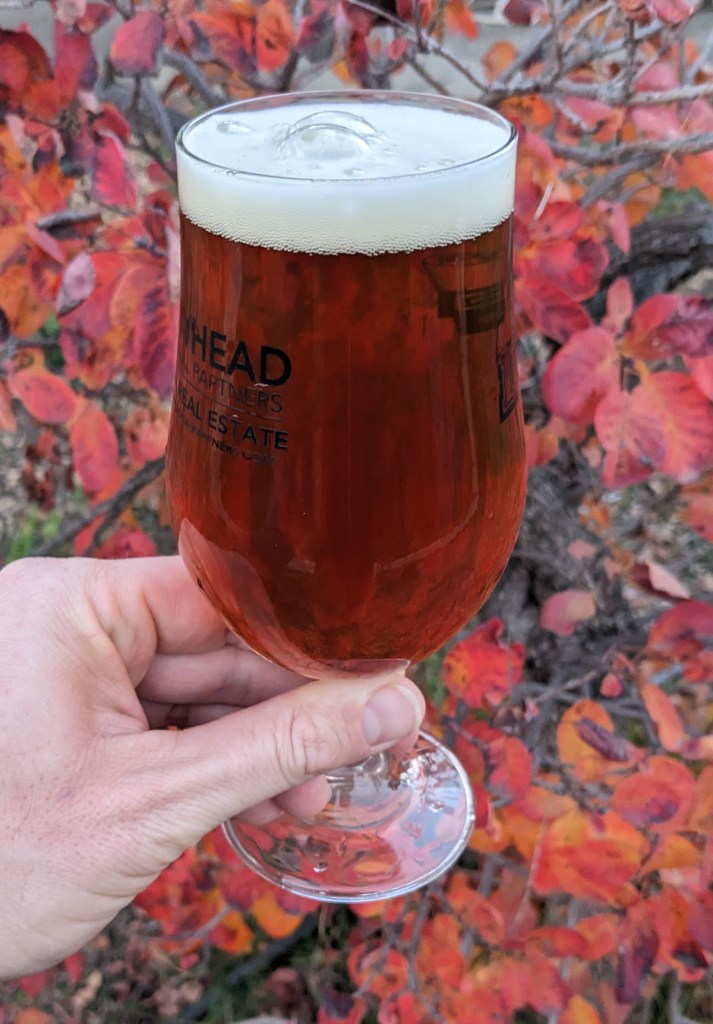
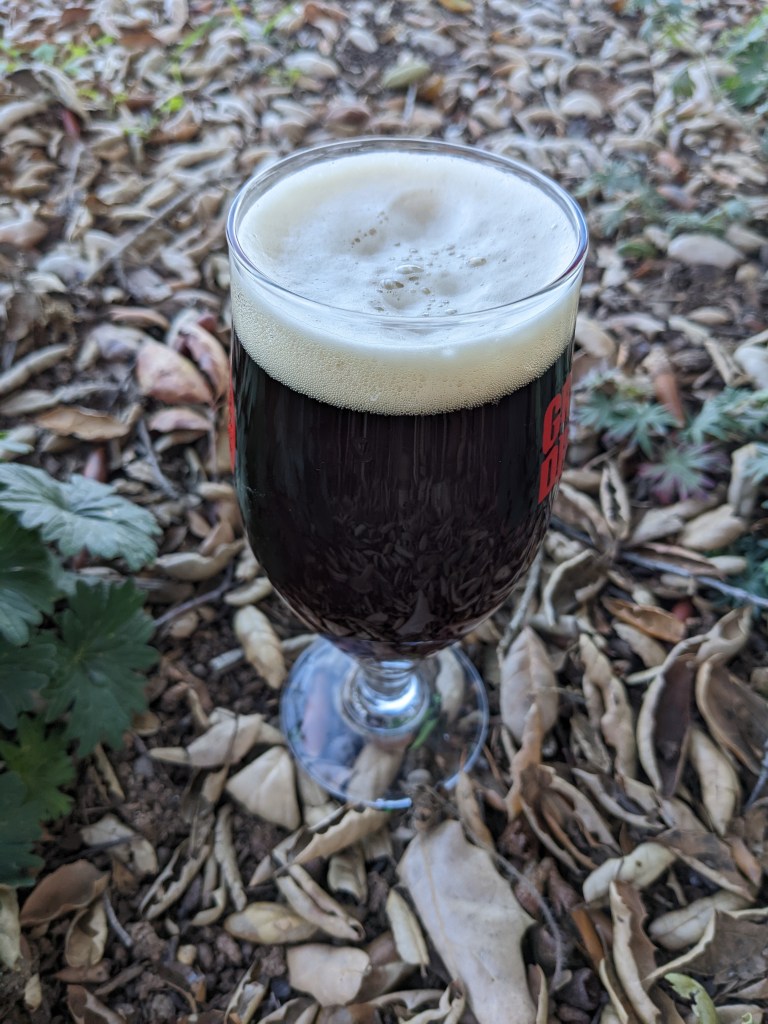
    • The beer is a deep, deep brown, almost black, with a persistent tan head.
  • Aroma
    • Dark chocolate and coffee–very roasty! Resiny hop character. Very nice!
  • Flavor
    • Rich, chocolate and coffee malt notes. Medium-high bitterness with a resiny and piney character.
  • Mouthfeel
    • Medium body, moderate carbonation, slightly dry finish.
  • Would I Brew This Again?
    • Yes! This is a fantastic American porter, simultaneously rich and drinkable. It has interesting character, and is just a nice beer. I don’t know how it would stack up against Sierra Nevada’s product, but even on its own this recipe is pretty nice.
  • Overall
    • 10/10

Beam Me Up Pale Ale

Beer can commemorate life events and the passage of time…meeting new friends and saying farewell to old. A dear friend and neighbor is off to new opportunities with their family, and it’s definitely a beer-worthy event. He loves Sierra Nevada Pale Ale (SNPA), and we’ve shared a few in his driveway (as well as a few homebrews) over the years. So, I decided to brew something SNPA-inspired…and by coincidence, this year’s “Big Brew Day” recipe is right in that wheelhouse.

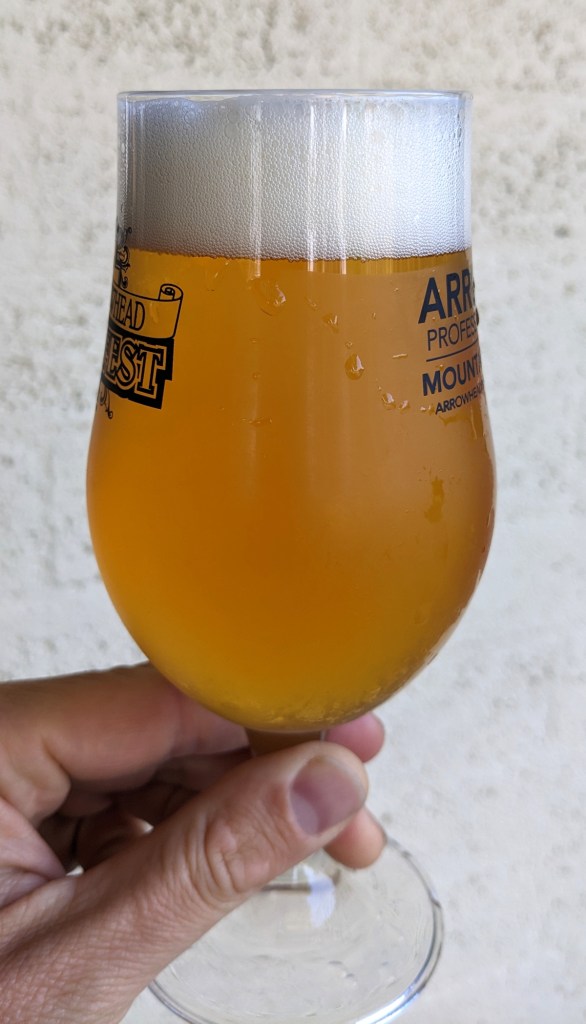
Beam Me Up Pale Ale, all on its own

The original recipe was in the March/April 2023 issue of Zymurgy, under the name of “Nearly Nirvana Pale Ale.” It’s pretty similar to the Miss’ippi #BIGCASCADE recipe from the September 2013 BYO issue, too! My recipe is a good match for “Nearly Nirvana,” except I lowered the gravity a touch (1.056 vs. 1.060), to more closely match SNPA. This batch is also special in that I used only whole cone Cascade hops from the Farke family farm in South Dakota, all representing the 2022 crop year. I made some minor adjustments in the grist — the original called for Simpsons Crystal Light malt, and I substituted in Briess’s Caramel 40L.

I elected for a quick mash on this one, with just 30 minutes for the main rest of 156°. The goal was to shave a few minutes off of the brew day!

I did something a little different for the tasting, in doing a head-to-head with Sierra Nevada Pale Ale. Although my beer isn’t precisely a clone, I thought it would be good to make a comparison nonetheless. The intent was to help me more clearly evaluate my own version, and think about what the ingredients delivered.

Beam Me Up Pale Ale

  • 12 lb. 2-row pale malt (Rahr)
  • 0.5 lb. caramel malt – 40L (Briess)
  • 1.5 oz. Cascade whole hops (5.5% estimated alpha acid), 60 minute boil
  • 1.0 oz. Cascade whole hops (5.5% estimated alpha acid), 15 minute boil
  • 0.5 tsp. BrewTanB, 10 minute boil
  • 1 Whirlfloc tablet, 5 minute boil
  • 1.5 oz. Cascade whole hops (5.5% estimated alpha acid), 5 minute boil
  • 2 pkg. BRY-97 (Lallemand)

Target Parameters

  • 1.056 s.g., 1.015 f.g., 5.4% abv, 44 IBU, 6 SRM
  • Full volume mash, 156° for 30 minutes, 168° mash-out for 10 minutes
  • Claremont tap water adjusted with lactic acid and mineral additions, to achieve calculated water profile of 142 Ca, 6 Mg, 84 Na, 83 SO4, 120 Cl, 156 HCO3, RA=23 ppm.

Procedure

  • I mashed in with 7.75 gallons of water at 163°, to hit a target rest of 156°. I added 5.5 mL of 88% lactic acid to adjust the pH.
  • I recirculated during the mash, raising it to 168° for a 10 minute mash-out.
  • After the mash, I removed the grains. In total, the mash yielded 7 gallons of runnings with a gravity of 1.046, for 70% mash efficiency.
  • On the way to the boil, I added 2.5 g of gypsum to accentuate the bitterness a bit more.
  • Once the runnings were boiling, I added hops and kettle finings per the recipe. After 60 minutes, I turned off the heat and chilled to 68° and transferred the wort to the fermenter. I pitched the yeast, and held the fermenter at 67° for the primary fermentation.
  • I brewed the beer on 18 March 2023. Starting gravity was 1.053.
  • I kegged the beer using a closed transfer, on 15 April 2023. Final gravity was 1.013, for 5.3% abv.
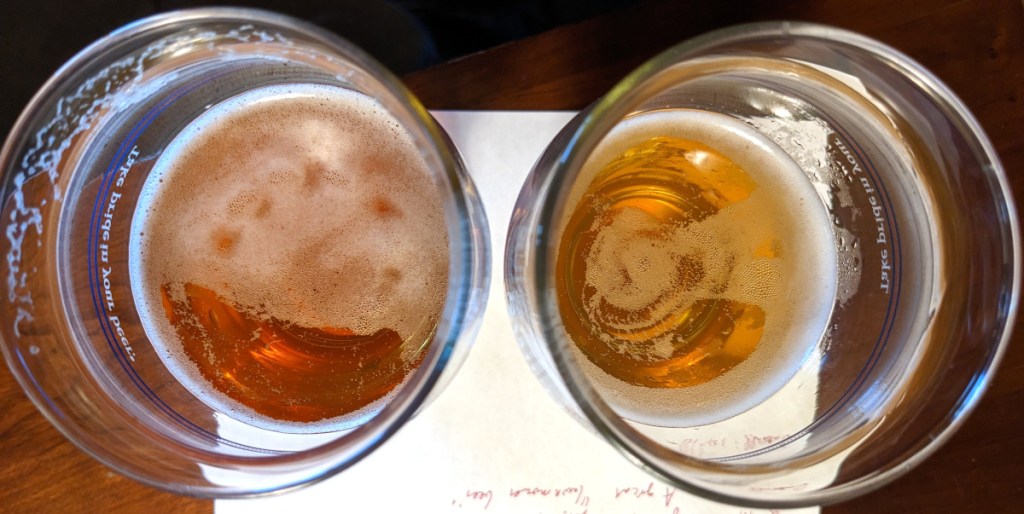
Down the glass, with Sierra Nevada Pale Ale at left, and Beam Me Up Pale Ale at right.

Tasting

Just for fun, I tasted the beer on its own and also did a side-by-side with a can of Sierra Nevada Pale Ale.

  • Appearance
    • The beer is very clear, gold in color, and pours with a white and moderately persistent head.
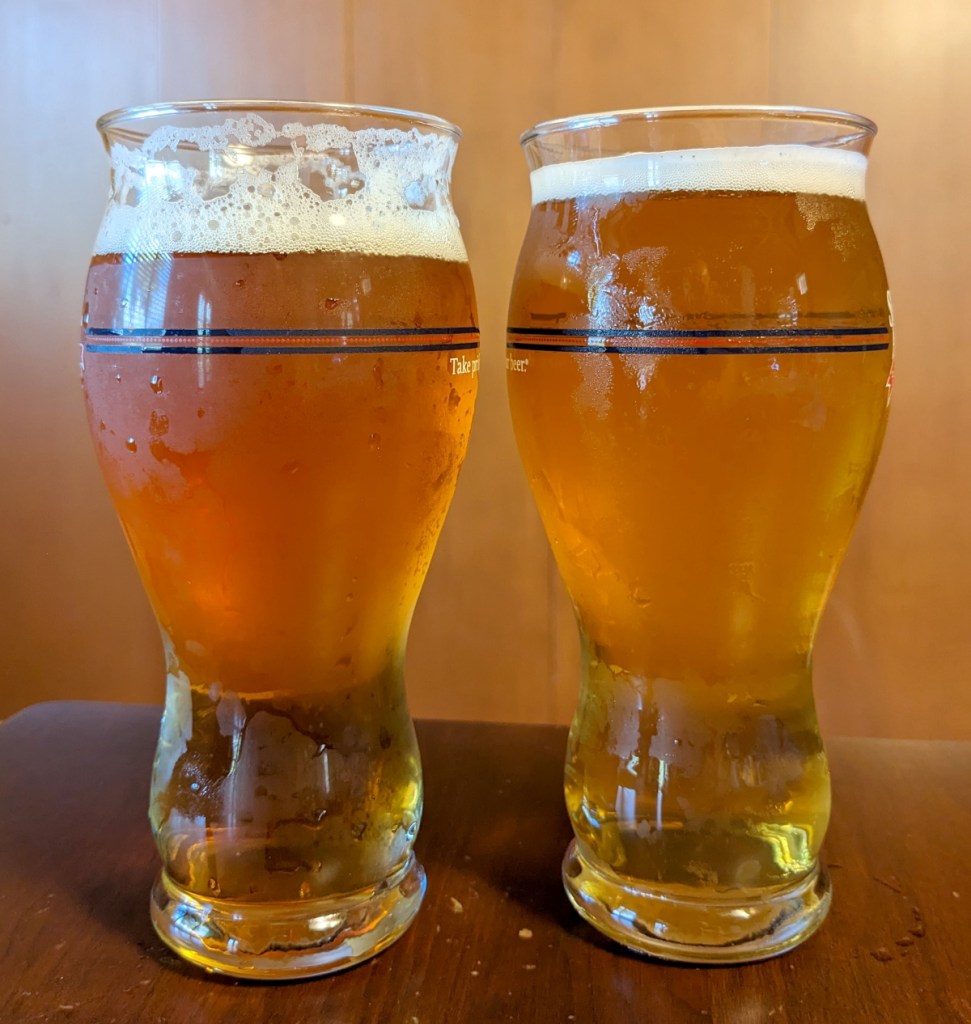
      • Versus Sierra Nevada: Mine is slightly lighter in color, with less head and less head retention. The latter might be a result of a pour from draft versus the can? I’m not sure. The SNPA is slightly clearer, but also has what looks like some minor hop particulates at the bottom.
      • Winner: SNPA, by just a small margin, due to the better head and head retention.
  • Aroma
    • Sweet malt aroma and light caramel, with a light and citrusy hop aroma. The hops definitely have a mandarin quality.
      • Versus Sierra Nevada: SNPA lacks the light caramel aroma, and doesn’t have as much hop character (at least in the can I poured).
      • Winner: It’s a draw! I don’t have a preference either way.
  • Flavor
    • Medium level of citrusy mandarin orange and grapefruit, with a light resin quality in the hops. Light caramel in the malt character, medium bitterness, and clean yeast character.
      • Versus Sierra Nevada: SNPA is slightly more bitter, with more resin/pith character to the hop flavor. It’s definitely hop-dominated, with the malt to the back end, unlike mine.
      • Winner: Draw! I like aspects of each. They’re just different beers.
  • Mouthfeel
    • Medium carbonation, medium-light body, off-dry and smooth finish.
      • Versus Sierra Nevada: SNPA has a medium body profile and is slightly dryer on the finish.
      • Winner: I like SNPA slightly better, for having just a touch more body.
  • Would I brew this again?
    • Yes! “Beam Me Up Pale Ale” is by no means a clone (nor is it intended to be), but it’s a tasty and very drinkable beer! The mandarin quality on the hops in my version is super enjoyable. My main adjustments would be to up the bitterness slightly, and perhaps bitter with Chinook or another more resiny hop, using the Cascade for later additions. Or maybe I would leave it the same! It’s not a clone, after all.
  • Overall
    • 8/10
Sierra Nevada Pale Ale (left) and Beam Me Up Pale Ale (right), head to head

Mahajanga Imperial IPA

It’s the cooler season here in SoCal, so I like a higher strength beer every once in awhile. To that end, I wanted to do an old-school double IPA–something with big malt and piney hop character. So, I returned to the Maharajah Imperial IPA recipe from Craft Beer for the Homebrewer, with my own paleontological spin on it. I made some malt and hop substitutions for what was on-hand, but overall it has the same feel as my previous version. I also added some dextrose to dry out the beer a touch; with the combo of darker malts, I didn’t want it to end up feeling syrupy. I aimed for a batch volume of around 3.5 gallons–firstly, because I don’t want 5 gallons of a beer with this high of alcohol, and secondly because I figured I would lose a bit of volume to the heavy hopping level.

Mahajanga Imperial IPA

  • 11 lb. 2-row malt (Rahr)
  • 6 oz. Special B malt (Dingemans)
  • 4 oz. Aromatic Munich Malt 20L (Briess)
  • 12 oz. dextrose
  • 1.5 oz. Centennial hop pellets (8.1% alpha), 60 minute boil
  • 1 oz. Amarillo hop pellets (10.5% alpha), 30 minute boil
  • 0.5 oz. Amarillo hop pellets (9.5% alpha), 30 minute boil
  • 1 tsp. BruTanB, 10 minute boil
  • 1 Whirlfloc tablet, 5 minute boil
  • 1.75 g yeast nutrient (WLN1000, White Labs), 5 minute boil
  • 1 oz. Centennial hop pellets (8.1% alpha), 5 minute whirlpool
  • 1 oz. Talus hop pellets (6.2% alpha), 5 minute whirlpool
  • 2 pkg. American West Coast Ale yeast BRY-97 (Lallemand)
  • 1 oz. Centennial hop pellets (8.1% alpha), dry hop in keg
  • 1 oz. LUPMAX Chinook hop pellets (17.0% alpha), dry hop in keg
  • 1 oz. Talus hop pellets (6.2% alpha), dry hop in keg

Target Parameters

  • 1.083 s.g., 1.011 f.g., 102 IBU, 12 SRM, 9.6% abv
  • Full volume mash at 149° for 60 minutes, 10 minute mash-out at 168°
  • Claremont tap water adjusted to hit target of 68 ppm Ca, 7 ppm Mg, 92 ppm Na, 108 ppm sulfate, 110 ppm chloride, 156 ppm bicarbonate

Procedure

  • I mashed in with 5.25 gallons of water at 158° and added 5.5 mL of 88% lactic acid, to hit a target rest temperature of 149°. I held it here for 60 minutes, before raising the temperature to 168°.
  • After the mash, I pulled the grains and sparged with about 0.75 gallons of hot water, to rinse the residual sugars out.
  • In total, I collected 5 gallons of runnings with a gravity of 1.060, for 70% mash efficiency. This is good on the one hand, but it meant I had to boil a little harder and longer to get the volume down.
  • I added 2 g of gypsum to the boil, to hit my water target, and also added the corn sugar at this time.
  • I boiled for around 75 minutes, adding the hops and finings per the schedule. After the boil, I chilled a few degrees and then added the whirlpool hops, recirculating for 10 minutes during this process.
  • I chilled the beer the rest of the way, down to around 68°, before transferring to the fermenter and adding the yeast.
  • Starting gravitry was 1.074, a bit short of my goal; I should have boiled a bit longer, because I had plenty of volume. I brewed this beer on 20 November 2022, and fermented at 68°.
  • I kegged the beer on 10 December 2022, with a final gravity of 1.012 and 8.3% abv. I’m pretty happy with that! I bagged the hops and added them to the keg. It didn’t take long for the beer to drop clear at serving temperatures!

Tasting

  • Appearance
    • Gorgeous! This is a beautifully clear beer–one of the quickest and best I’ve gotten for an IPA–that pours with a tall, persistent, fine, and off-white head.
  • Aroma
    • Pine and resiny hop aroma, with a hint of deep caramelly malt behind that. There is a very slight bit of alcohol apparent when warmed.
  • Flavor
    • High level of piney hop bitterness at the front, with a bit of citrus pith.
  • Mouthfeel
    • Medium body, medium carbonation. The beer has a very slightly dry finish, but not over the top dry.
  • Would I Brew This Again?
    • Yes! This beer is incredibly drinkable; a little too much so, in fact. It goes down smoother than its ABV allows, and there is no solventy alcohol character that sometimes happens in these kinds of homebrews. The end result was a classic “old school” IPA.
  • Overall
    • 10/10

Ill-Tempered Gnome Clone 2022

Another year, another brew of the excellent Ill-Tempered Gnome clone recipe! This version is identical, except I swapped in BRY-97 for US-05. Without any further introduction, all of the details are below.

Ill-Tempered Gnome Clone

  • 12 lb. 2-row pale malt (Rahr)
  • 11 oz. crystal 15° (Great Western)
  • 5 oz. coffee malt (Simpsons)
  • 5 oz. honey malt (Gambrinus)
  • 5 oz. special B malt (Dingemans)
  • 4.5 oz. special roast malt (Briess)
  • 3.5 oz. chocolate malt (Bairds)
  • 1 oz. Nugget hop pellets (13.0% alpha), 60 minute boil
  • 0.5 oz. Centennial hop pellets (8.1% alpha), 20 minute boil
  • 0.5 oz. Crystal hop pellets (4.5% alpha), 20 minute boil
  • 1 Whirlfloc tablet, 5 minute boil
  • 1 oz Cascade whole hops (est. 5.5% alpha), 5 minute boil
  • 2 pkg. American West Coast ale yeast (BRY-97)

Target Parameters

  • 1.063 o.g., 1.015 f.g., 6.3% abv, 58 IBU, 21 SRM
  • Full volume mash at 154° for 60 minutes, with 10 minute mash-out at 168°
  • Claremont tap water, adjusted to reach estimated profile of 75 ppm Ca, 11 ppm Mg, 93 ppm Na, 149 ppm sulfate, 105 ppm Cl, 156 ppm bicarbonate; RA 68, 128 ppm alkalinity; 60 ppm effective hardness.

Procedure

  • I heated 7.5 gallons of water to 162°, adding a Campden tablet to remove chloramines. Then, I mashed in with the grains to hit a temperature of 154°. I added 7 mL (1.5 tsp.) of 88% lactic acid to adjust the pH of the mash, and recirculated at 154° for 60 minutes. Then, I raised the mash temperature to 168° and held it there for 10 minutes, before removing the grains.
  • In total, I collected 6.5 gallons of runnings with a gravity of 1.054, for 68% mash efficiency.
  • As I brought the runnings to a boil, I added 5 g of gypsum to adjust the water profile.
  • The Foundry had some issues with turning on and off, but I approximated a 60 minute boil, adding hops and kettle finings per the recipe.
  • After the 60 minute boil, I chilled to ~75°, transferred to the fermenter, and chilled down to 65° in the fermentation chamber. Then, I pitched the two packages of yeast.
  • I brewed the beer on 2 October 2022, and fermented at 65°. Starting gravity was 1.060.
  • On 8 October 2022, I removed the beer from the fermentation chamber and let it free rise to ambient to finish out fermentation.
  • I kegged the beer on 30 October 2022. At this point, its gravity was 1.015. This equates to 5.9% abv.

Tasting

  • Appearance
    • Thick, creamy, persistent tan head. Brilliantly clear, reddish-brown beer. Very pretty!
  • Aroma
    • Dark caramel and coffee malt aroma.
  • Flavor
    • Resiny hop bitterness at a moderately high level is very prominent, with a coffee and dark chocolate malt character behind that. There is a very very faint fruity character in the yeast, barely detectable. The bitterness lingers on the finish, quite pleasantly.
  • Mouthfeel
    • Medium body and moderate carbonation, with a smooth finish.
  • Would I Brew This Again?
    • Yep! This is a nice recipe; my memory of last year’s version is that it was a touch better, although I think that’s in part the keg. I split the beer into two 2.5 gallon kegs, and I suspect the one I’m sampling from (the less filled one) may have had a touch of oxidation due to the head space. Either way, it’s enjoyable!
  • Overall
    • 9/10

Pliny vs. Pliny

I recently brewed a Pliny clone, which turned out pretty well. By fortunate coincidence, a local store (the amazing Liquorama) regularly has Russian River products, including Pliny. As an aside, if you are in the general Claremont/Upland/Rancho area, and if you are a beer (or liquor) geek, I absolutely encourage you to check out Liquorama. They have an amazing local and regional craft beer selection, and they properly store their beer at cold temperatures. They very consistently have fresh Pliny (and other great RR beers like Blind Pig and STS Pils), which is an incredible treat. I always end up walking out with waaaay more than I intended to purchase.

In any case, I thought it would be fun to do a head-to-head comparison of my Pliny versus the actual Pliny. The real Pliny was bottled on February 4, which is three weeks before this tasting. My beer was kegged on 21 January, so mine is slightly older, but not by much.

So, let’s do a direct comparison!

Pliny vs. Pliny — my clone version is on the left
  • Appearance
    • My version is very slightly darker, and clearer. The Russian River (RR) version had a slight bit of hop debris (a common issue with their bottled beer if it has been agitated, as happened when I transported it home). My version had a slightly more persistent head.
    • Appearance Winner: The Clone
  • Aroma
    • The RR version is absolutely better, with a more “fresh” orange/citrus hop aroma at the forefront. I definitely pick up the Simcoe hops, which I don’t get from my version.
    • Aroma Winner: RR
  • Flavor
    • Both beers are equally smooth. Mine has a touch more malt character, but the RR version has a touch more citrus/Simcoe flavor.
    • Flavor Winner: RR (but it’s very close)
  • Mouthfeel
    • Both are pretty equivalent, in terms of body, carbonation, and mouthfeel.
    • Mouthfeel Winner: A draw
  • Overall
    • RR’s authentic Pliny has just a touch better hop aroma and flavor, so I give a slight edge to the “real deal.” It’s most apparent in the aroma (and slightly in the flavor), where the Simcoe is more prominent. If I were to do mine again, I would swap the quantities of CTZ and Simcoe. My version had 1 oz. Simcoe, 3 oz. CTZ and 1 oz. Centennial; for a future version, I would do 3 oz. Simcoe, 1 oz. CTZ, and 1 oz. Centennial, to (hopefully) better match the original.

There is a reason why Pliny the Elder is a classic, and it’s super apparent when I do this tasting. It is just a nice beer! My clone comes close, but doesn’t quite hit the mark. Time to rebrew, I suppose!