
My homebrew club recently had a competition centered around Bohemian-style pilsners. I’ve done a few iterations, but haven’t quite hit where I want to yet. The primary issue concerns hop aroma–it’s really, really hard to get good Saaz as a homebrewer. Gotta keep trying.
Czech Pilsner
- 10.5 lbs. Barke Pilsner malt (Weyermann)
- 2.4 oz. melanoidin malt (Weyermann)
- 0.3 oz. Carafa Special III malt (Weyermann)
- 2 oz. Saaz hop pellets (3.0% alpha), 60 minute boil
- 1 oz. Saaz hop pellets (3.5% alpha), 60 minute boil
- 1 Whirlfloc tablet, 10 minute boil
- 1 tsp. Fermax yeast nutrient, 10 minute boil
- 2 oz. Saaz whole hops (2.8% alpha), 5 minute boil
- 1 pkg. WLP800 Pilsner Lager yeast, prepared in starter
Target Parameters
- 1.050 o.g., 1.010 f.g., 5.2% abv, 35 IBU, 5 SRM
- 60 minute infusion mash, 150°, batch sparge
- Water built from RO, to hit target of 20 ppm CA, 8 ppm Na, 15 ppm SO4, 35 ppm Cl, -61 ppm RA
Procedure
- I made a 2L yeast starter a few days in advance, and cold crashed it, followed by decantation of the spent wort.
- I built up the mash water using 0.6 g baking soda, 0.4 g CaCl, 0.4 g gypsum, added to 8.5 gallons of RO water.
- I mashed in with 3.5 gallons of water at 161°, to hit a mash temperature of 150.2°. I added 7 mL of 88% lactic acid, to adjust the pH of the mash.
- After a 60 minute mash, I batch sparged in two steps (first of 1.25 gallons, second of 3.6 gallons). At each step, I let the mash sit for 10 minutes, vorlaufed, and collected the runnings.
- In total, I collected 6.9 gallons of runnings with a gravity of 1.043, for 75% mash efficiency. Right on target!
- I boiled for 60 minutes, adding stuff per the recipe, and then chilled after flame-out.
- I transferred the wort to my fermenter, and put it in the fermentation chamber to drop down to 48°. This took a few hours. Then, I oxygenated for 30 seconds and pitched the yeast.
- I fermented the brew at 50°. The brew date was 25 May 2019.
- After three weeks, I raised the temp to 65° for a few days, then cold crashed. After a few more days, I kegged the beer using a semi-closed transfer (CO2-flushed keg, but just air-pushed the beer into the keg). Alas, I neglected to take a final gravity!
Tasting
- I didn’t get to do a formal tasting before the keg kicked, but did get a few quick observations.
- The beer flavor was a bit too forward on the melanoidin; I will just ditch that in the future! I am still in search of good hop aroma…overall, the beer is just OK with good clarity, decent head; not quite there yet. Bitterness level is about right. Malt body is about right.
- Overall, 6/10.
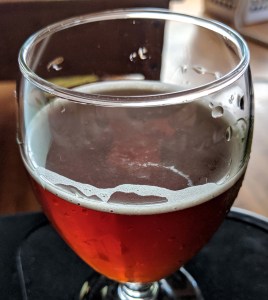 I love the American amber ale style. It can fit just about any time of year and any occasion, and the best ones bring a nice dose of maltiness and hoppiness into a cohesive package. I also like that they’ve been mostly immune from the double-triple-imperial crazes, and clock in between 4.5 and 5.7% (by the 2015 BJCP style guidelines). They’re fairly simple to brew, but also have a broad stylistic interpretation that rewards experimentation.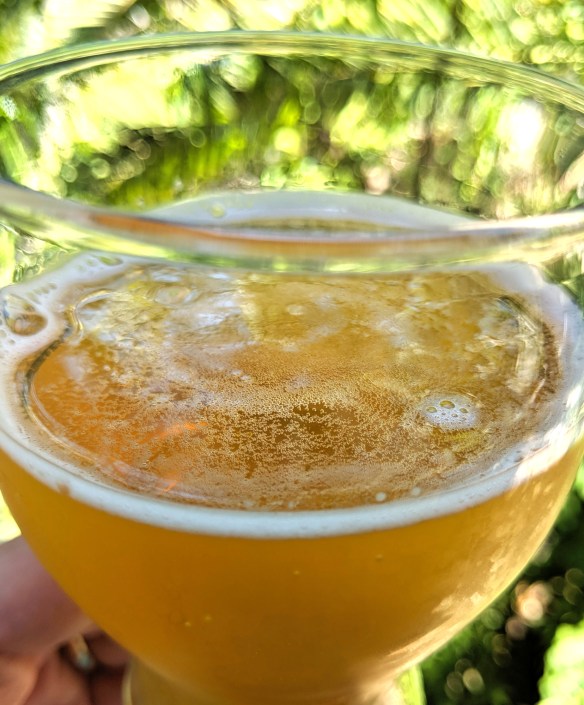
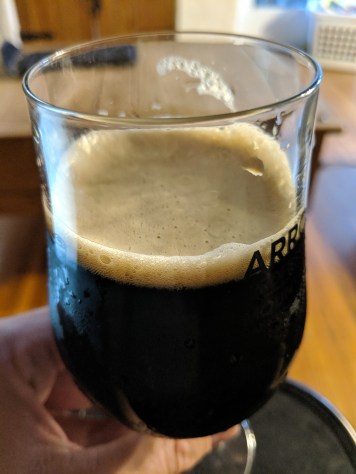 Summer fun doesn’t mean I have to be limited to light lagers (and I do love
 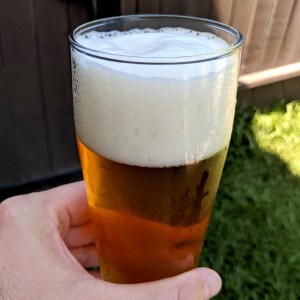 As I continue my explorations of German-style brewing, a kölsch-style ale seemed like a good next step for the summer months. My local brew shop had a kolsch malt from Schill, that was supposed to have a really nice flavor. It’s a touch on the dark side (4.5 SRM), but I thought what the heck, let’s roll with it anyhow. I’m glad I did, because the malt character really is spectacular (rich and bready), even if the beer is too deep in color to satisfy kölsch purists! The beer has drastically improved since I first kegged it. This particular yeast strain has nice background character, but takes forever to drop clear (which I would have realized if I had read about it in more depth). As a result, the beer was a sort of muddy, unattractive mess for the first few weeks. Thankfully, this could be fixed by time and cold…
 Andy's Brewing Blog