Baryonyx Brown Ale

For our November meeting, my homebrew club chose “British Brown Ales” (BJCP 2015 Style 13B) as our in-club competition. This is a style that I like (Newcastle and Sam Smith’s come to mind as good examples), but not one I brew very often.
My recipe research often begins on the American Homebrewers Association website, which has an extensive recipe library (some freely available, some available only to members). Many of the recipes are from National Homebrew Competition winners, so I figure they’re probably a decent representation of the style. Nick’s Northern English Brown Ale took gold in 2012, and I used that as my jumping-off point. My only real modification to the original recipe was in the yeast; I used Nottingham dry yeast, instead of West Yorkshire Ale yeast. A second minor modification was use of crystal 80 instead of the English crystal 77°, based on availability.

Baryonyx Brown Ale

  • 5.5 lb. Maris Otter malt (Crisp)
  • 3 lb. Vienna malt (Weyermann)
  • 0.75 special roast malt
  • 0.5 lb. brown malt
  • 0.5 lb. caramel 80° malt (Briess)
  • 0.5 lb. Victory (biscuit) malt (Briess)
  • 6 oz. pale chocolate malt (Crisp)
  • 1.25 oz. East Kent Goldings hop pellets (6.0% alpha), 60 minute boil
  • 1 Whirlfloc tablet, 10 minute boil
  • 0.5 oz. East Kent Goldings hop pellets (6.0% alpha), 5 minute boil
  • 2 pkg. Nottingham ale yeast (Lallemand)

Target Parameters

  • Infusion mash, batch sparge
  • Claremont tap water, treated with Campden tablet
  • 1.049 o.g., 1.011 f.g., 5.0% abv, 28 IBU, 19 SRM

Procedure

  • I mashed in with 3.75 gallons of water at 163°, to hit a mash temperature of 152°. After 60 minutes, I batch sparged in two steps with 1.25 gallons and 3.5 gallons of water (with 10 minute wait and vorlauf between each).
  • In total, I collected 6.8 gallons of runnings with a gravity of 1.046, for 78% mash efficiency.
  • I brought the runnings to a boil, adding hops and finings per the recipe. After 60 minutes, I turned off the flame and chilled the wort.
  • I pitched the yeast, and fermented at 68°.
  • I brewed this beer on 19 October 2019. Starting gravity was 1.052, just a hair above target.
  • I kegged the beer on 11 November 2019. Final gravity was 1.011, for 5.3% abv.

Tasting

  • Appearance
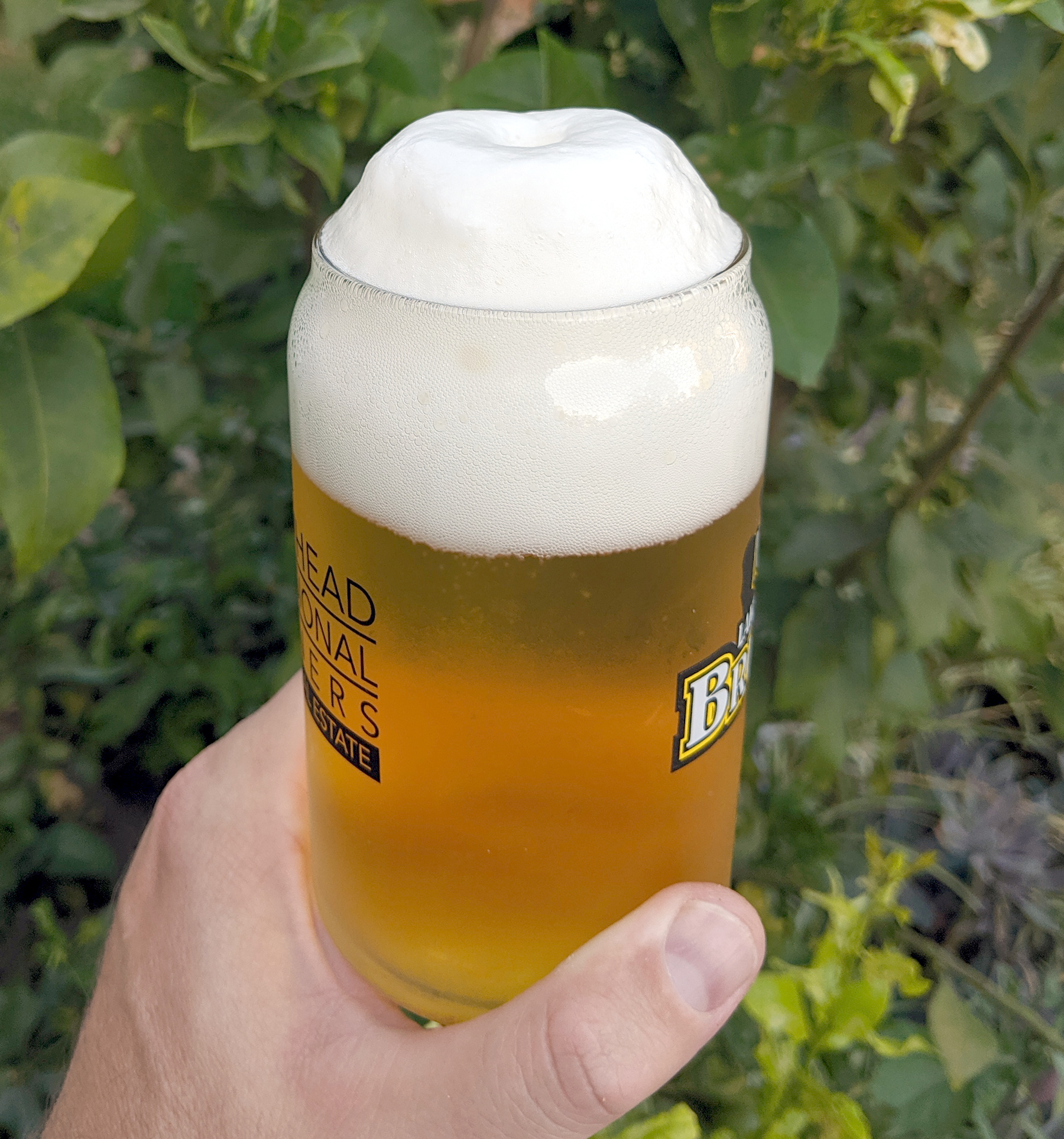
    • Deep amber beer, fairly hazy still. Thin, tan head.
  • Aroma
    • Lightly malty, slightly earthy
  • Flavor
    • Malt-forward beer, with a chocolate note at the back end; hop bitterness hides behind the malt. Caramel notes are fairly minimal. The flavor deepens as the beer warms up in the glass.
  • Mouthfeel
    • Medium-light body, moderate carbonation, smooth and extended bitterness on the finish.
  • Would I brew this again?
    • Maybe? This isn’t a completely amazing beer, but it ain’t bad either. It’s smooth and pretty darned drinkable, which is not a bad target to hit. The main deficit is that it needs more caramel character, perhaps with an extra helping of crystal 80. The chocolate note is nice in this one. Clarity is also a disappointment when I did the tasting today; maybe it will drop clear with another week or two in the keg?
  • Overall
    • 6/10

The beer was reasonably well received in our club competition; it scored in the mid-30s, earning third place after two other great entries. As I have mentioned before, I really like that club contests help push me to try out new things!
Comet Pale Ale

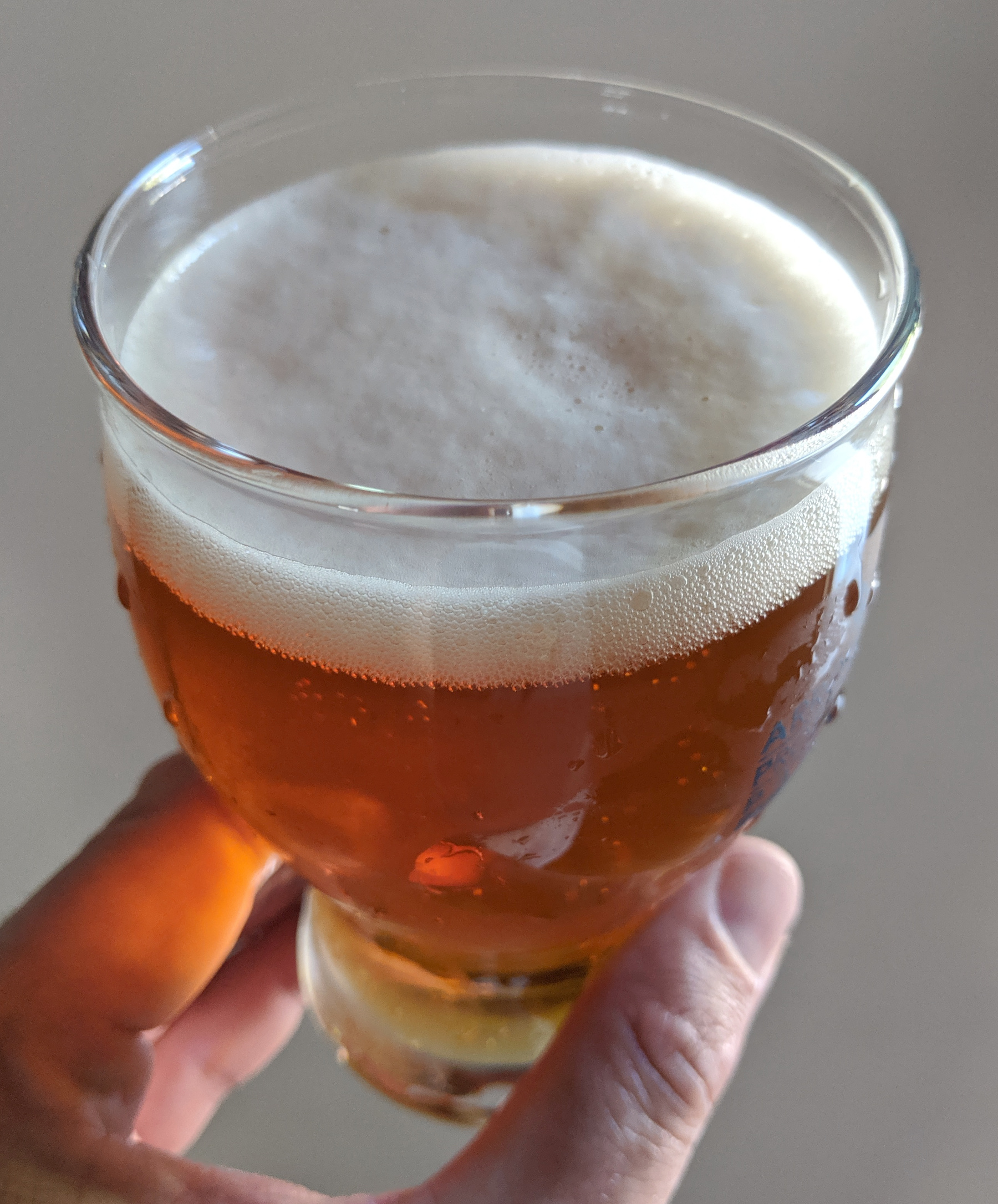
IMG_20191109_145744For our October meeting, my homebrew club decided to do a hop comparison test, with members brewing the same grain bill and different hops. At a recent homebrew festival, I had sampled an IPA with Comet hops, and rather liked it. My choice of hop was decided!
Comet Pale Ale

  • 10.5 lb. 2-row premium malt (Great Western)
  • 0.5 oz. Caravienne malt
  • 0.25 oz. crystal 20 malt (Briess)
  • 1 oz. Comet hop pellets (8.2% alpha), 60 minute boil
  • 1 Whirlfloc tablet, 10 minute boil
  • 2 oz. Comet hop pellets (8.2% alpha), 10 minute whirlpool
  • 1 pkg. Safale American ale yeast (US-05)
  • 3 oz. Comet hop pellets (8.2% alpha), 5 day dry-hop

Target Parameters

  • 1.052 s.g, 1.012 f.g., 5.3% abv, 41 IBU, 6 SRM
  • Infusion mash, full volume
  • Claremont tap water

Procedure

  • I mashed in with 7.5 gallons of Claremont tap water at 159°, to hit a 152.8° mash temperature. This was a full-volume mash.
  • After 45 minutes, I vorlaufed and collected 6.3 gallons of runnings with a gravity of 1.041, for 63.4% mash efficiency. This was a bit lower than I had expected even for a no-sparge recipe.
  • I boiled for 60 minutes, adding hops and kettle finings at the indicated times.
  • After flame-out, I added the whirlpool hops and let them ride for 10 minutes.
  • Starting gravity was 1.048; this is definitely below my target, but not terribly unsurprising given the low efficiency. I did an adjustment of my grain mill after this, and found that the gap had wandered a bit wide since I last set it.
  • I brewed this beer on 5 October 2019, and pitched the yeast immediately. Fermentation temperature is set at 68°.
  • After five days of fermentation, I added the dry hops on 10 October 2019, and cold crashed the beer on 13 October 2019. I kegged the beer on 15 October 2019, using a modified closed transfer. I purged the keg with CO2, and siphoned the beer in via the out port of the keg.
  • This is one of the fastest turnarounds I’ve ever done for a beer, with 12 days between brewing and the tasting at our club meeting. The beer cleared up surprisingly well, and was well received by my fellow homebrewers. I normally like to have a bit more time in my brewing process (it’s a hobby after all), but the challenge of producing a beer in limited time was a fun one.
  • Final gravity was 1.008, for 5.0% abv.

Tasting

  • Appearance
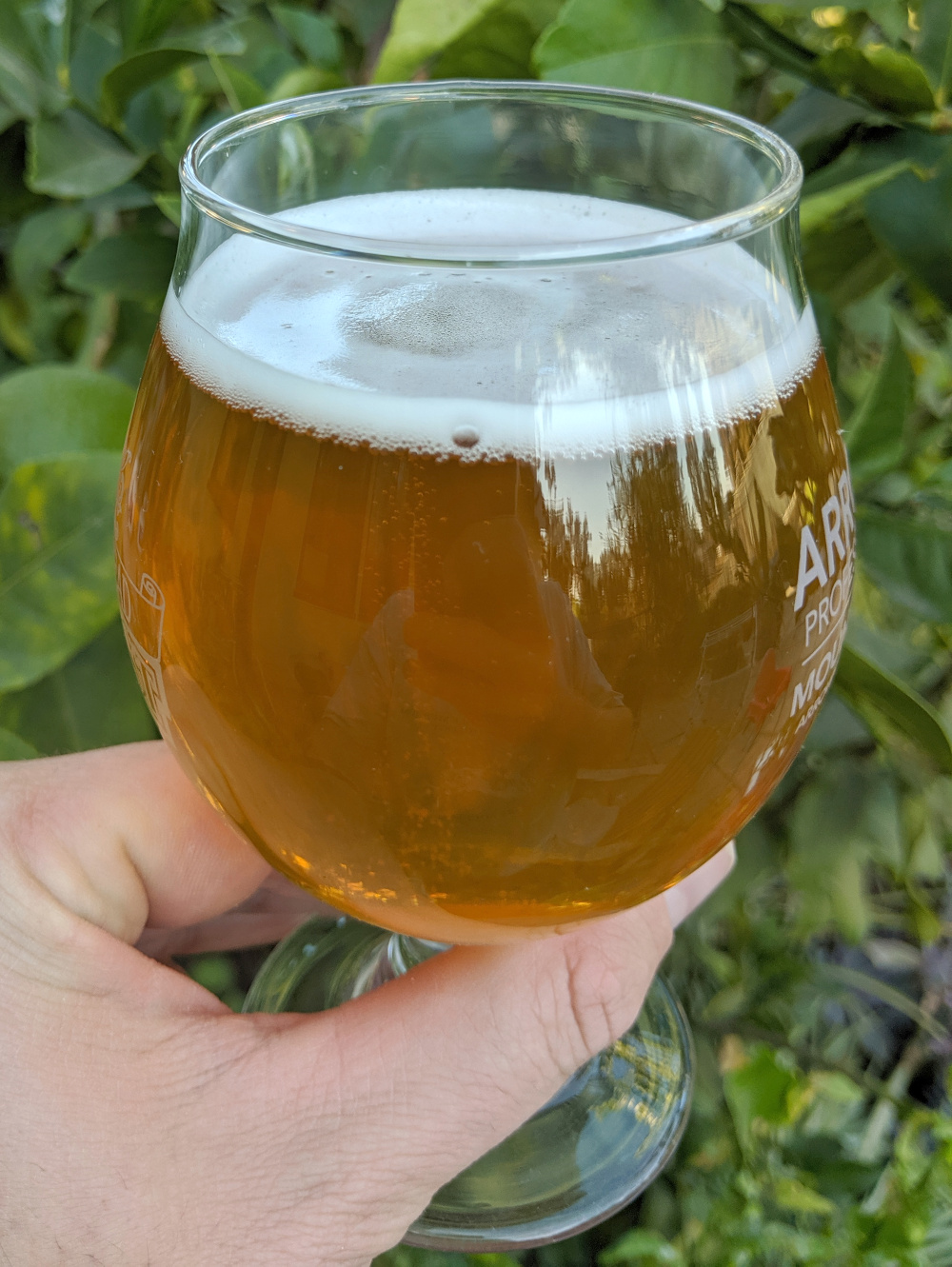
    • Light gold, clear but not brilliant; persistent white and fine head
  • Aroma
    • Strong citrus aroma, sometimes with a whiff of resiney goodness.
  • Flavor
    • Grapefruity/orangey citrus and grapefruit pith at the forefront, with a touch of pine behind that, for the hops. Bitterness is fairly prominent, perhaps just a bit too much so. There’s not much in the way of malt flavor for this one. It’s pretty clean, inoffensive, and squarely in the background.
  • Mouthfeel
    • Fairly light-bodied, moderately high carbonation. The finish is pretty dry, and there is a touch of astringency that detracts a little from the beer.
  • Would I brew this again?
    • I don’t think I would brew with the particular grain bill again (it’s just a little too lacking in malt character, which is fine for this experiment but not ), but I’m definitely going to be giving Comet more attention in the future. It doesn’t taste like a hop from 1974 (when it was released by the USDA)–it just as plausibly could be from 2014! It works pretty well in a single hop situation, and I bet would be really nice if paired up with Simcoe or Cascade. Some places I read referred to Comet as “Citra’s Little Sibling,” and I definitely can see that. Comet has a very prominent citrus character in the same vein as that of Citra; the main difference is that Comet has a bit of resiney harshness, where Citra is pretty smooth (to my palate). In the future, I might cut back the dry-hopping amount, or perhaps let it sit for 2 days instead of 3. I would also swap out the bittering addition of Comet for Magnum or another high alpha hop.
  • Overall
    • 6.5/10. The main deductions are for the relatively “boring” malt character, and the slight harshness on the hopping backend.

Cascade-o Classico Pale Ale

IMG_20191005_144434Lately, I’ve had a soft spot for “classic” American pale ales, from the era before Citra, Mosaic, and Simcoe were a thing. I love the more subtle flavors of Cascade and Centennial…and the cheaper price point for those hops doesn’t hurt, either. I recently got a shipment of the new Cascade crop from my dad in South Dakota (he raises them for his own brewing), and decided to do another iteration of my Classico Pale Ale. Aside from the hops (Cascade instead of Falconer’s Flight), the only other change is upping the percentage of Maris Otter versus 2-row, from around 50/50 to 66/33 in the current recipe.
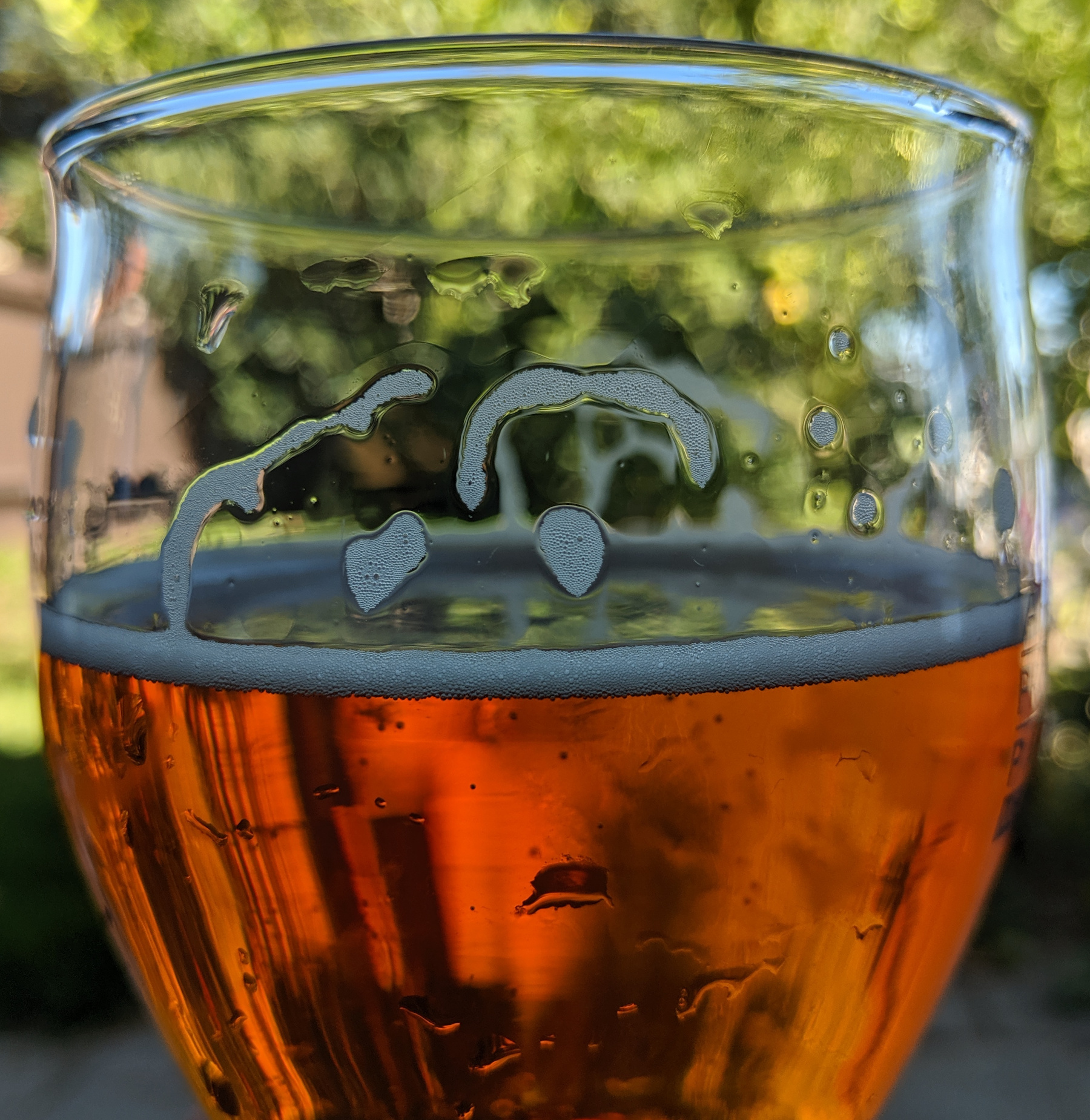
I know that you’re not supposed to put crystal malts in pale ales and IPAs, but I’ve decided that piece of advice is bunk in a well-brewed recipe with modest amounts of crystal malts. For this formulation, I think they add a subtle but important character, and I ain’t likely to remove them for future brews!

Cascade-o Classico Pale Ale

  • 7 lb. 0.5 oz. Maris Otter malt (Bairds)
  • 3 lb. 9 oz. 2-row pale malt (Rahr)
  • 8 oz. caramel 40 (Briess)
  • 4 oz. caramel 60 (Briess)
  • 0.70 oz. Warrior hop pellets (15.8% alpha), 60 minute boil
  • 1 Whirlfloc tablet, 10 minute boil
  • 2 oz. Cascade whole hops (~5.5% alpha), 5 minute boil
  • 1 pkg. Safale American ale yeast (US-05)
  • 2 oz. Cascade whole hops (~5.5% alpha), dry hop in keg

Target Parameters

  • 60 minute infusion mash, 152°, batch sparge
  • 1.058 o.g., 1.013 f.g., 46 IBU, 8 SRM, 6.0% abv
  • Claremont water with 1 tsp. of gypsum added during boil

Procedure

  • I mashed in with 3.2 gallons of water at 162°, to hit a 152.5° mash temperature.
  • After 60 minutes, I added 0.8 gallons of water at ~185°, let sit for 10 minutes, vorlaufed, and collected the first runnings.
  • Next, I sparged with 3.4 gallons of water, let it sit for 10 minutes, vorlaufed, and collected the second runnings.
  • In total, I collected 6.2 gallons of runnings with a gravity of 1.048, for 71% efficiency.
  • As I heated the runnings to a boil, I added 1 tsp. gypsum. Once the boil started, I added the various hops and Whirlfloc per the recipe.
  • After 60 minutes, I turned off the heat and chilled the wort. I transferred to the fermenter while aerating, and pitched the yeast. I am fermenting at 68°.
  • The beer was brewed on 24 August 2019, and fermentation signs were quite visible by the next morning.
  • I kegged the beer on 6 September 2019. Final gravity was 1.011, down from 1.058, for 6.2% abv. The dry hops were added to the keg in a mesh bag.

IMG_20191005_144934

Tasting

  • Appearance
    • Pours with persistent ivory-colored head; brilliantly clear and copper-colored beer
  • Aroma
    • Lightly caramel, citrus/piney aroma
  • Flavor
    • Slightly grainy, caramel flavor, with firm bitterness. Bitterness is slightly piney
  • Mouthfeel
    • Medium-light body, moderate carbonation, off-dry finish.
  • Would I brew this again?
    • Yes! This is a nice base recipe, and a good way to highlight classic American hops. I feel like it could use just a touch more body, so might mash at 154° next time. It might be interesting to try this with 100% Maris Otter or even Vienna malt, too, to give a bit more malt character I love how clear this beer has turned out–it clarified really quickly and nicely, to make an incredibly pretty brew.
  • Overall
    • 9.5/10

Schell’s Pils Clone

It’s always lager season, and especially so during the warm opening days of fall here in SoCal. I’m continuing to explore the morphospace of pilsners, with my latest foray following a recipe in Craft Beer for the Homebrewer: Recipes from America’s Top Brewmasters. I was particularly interested by a clone recipe for a pilsner from Schell’s Brewing, based out of Minnesota. One notable thing about the provided recipe is that it used American 2-row instead of European pilsner malt. They’re not too far off each other in terms of color, so I thought it would be a neat test of malt character.

The recipe itself closely matches that in the book; my main adjustment was to modify the hop schedule slightly for amounts and time to account for the hops I had on hand.

Close-up of pilsner beer foam in conical glass

Schell’s Pils Clone

  • 10.5 lb. 2-row pale malt (Rahr)
  • 0.25 lb. Carapils malt (Briess)
  • 1.9 oz. Mt. Hood hop pellets (4.6% alpha), 60 minute boil
  • 1 Whirlfloc tablet, 10 minute boil
  • 1 tsp. Fermax yeast nutrient, 10 minute boil
  • 1.1 oz. Mt. Hood hop pellets (4.6% alpha), 5 minute boil
  • 1 oz. Sterling hop pellets (7.9% alpha), 5 minute boil
  • 1 pkg. Harvest liquid yeast (Imperial Yeast #L17), prepared in 1.5L starter
  • 1 oz. Sterling hop pellets (7.4% alpha), 7 day dry hop

Target Parameters

  • 1.050 o.g., 1.013 f.g., 4.8% abv, 38 IBU, 3 SRM
  • 60 minute infusion mash, 152°, batch sparge
  • Water built up from RO, to hit target water profile of 59 ppm Ca, 8 ppm Mg, 89 ppm SO4, 63 ppm Cl; RA=-47ppm

Procedure

  • I made a 1.5L starter a few days in advance, let it run for 48 hours, and then cold crashed it (and decanted the spent wort).
  • To create my brewing water, I added 3.3 g gypsum, 2.7 g epsom salt, and 4.2 g calcium chloride to 8.5 gallons of RO water.
  • I mashed in with 3.5 gallons of water at 162°, to hit a mash temperature of 152.2°. I added 7.5 mL of 88% lactic acid to the mash, to help hit a target pH of ~5.3.
  • After 50 minutes, I added 1.25 gallons of water at 185°, in order to raise the mash temperature o 156°. I let the mash sit for 10 more minutes, vorlaufed, and collected first runnings. Then, I added 3.75 gallons of water at 185°, let sit for 10 minutes, vorlaufed, and collected second runnings.
  • In total, I collected 6.9 gallons of wort with a gravity of 1.042, for 74% efficiency.
  • I brought the runnings to a boil, adding hops and other kettle additions per the schedule. After 60 minutes, I turned off the flame and chilled down as far as I could (~80°) before transferring.
  • I chilled the wort down to 57°, before pitching the yeast and continuing to chill down to 52°. I completed the fermentation at 52°.
  • A good krausen was built within 24 hours.
  • I brewed the beer on 11 August 2019.
  • On 18 August 2019, I raised the temperature of the beer to 56°.
  • On 21 August 2019, I raised the temperature of the beer to 66°.
  • I added the dry hops on 24 August 2019.
  • I cold crashed the beer to 33° on 29 August 2019.
  • I kegged the beer on 1 September 2019. Final gravity was 1.008 (via refractometer), for 5.5% abv.

IMG_20191009_171317

Tasting

  • Appearance
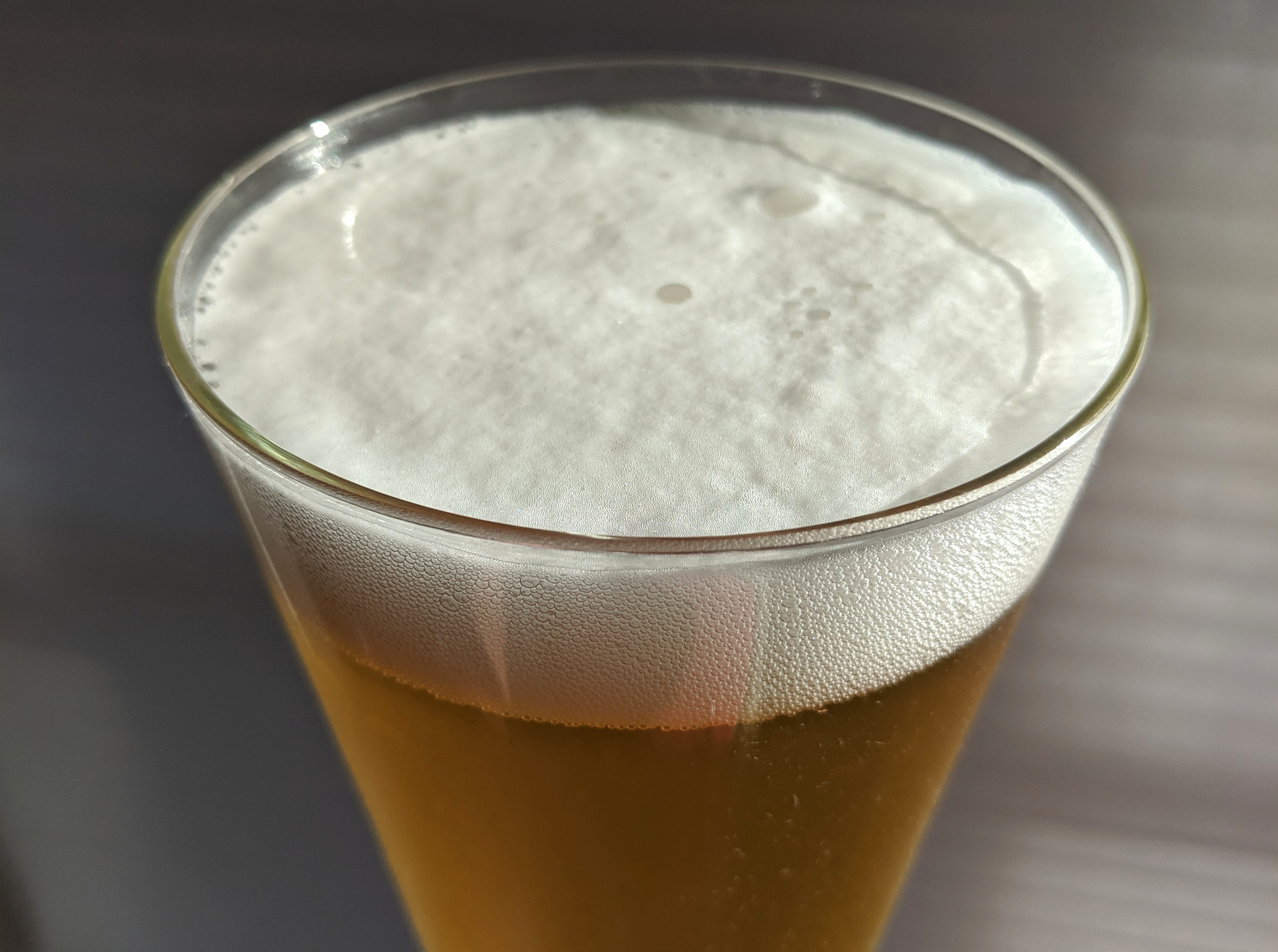
    • Pours with a thick, fine, frothy head, that is quite persistent. The beer itself is light yellow and fairly clear (but just a touch away from brilliant clarity).
  • Aroma
    • Light grainy aroma, with a nice spicy hop note alongside it. Very clean!
  • Flavor
    • Grainy and ever-so-slightly sweet malt profile, with a firm, clean, and slightly spicy bitterness. Balance is tilted modestly in the hoppy direction.
  • Mouthfeel
    • Crisp, with a slightly dry finish. Moderately high carbonation.
  • Would I brew this again?
    • YES! This is a really nice German-American pilsner, all the more interesting because I got such a nice malt flavor profile using American 2-row rather than European pilsner malt. The Rahr 2-row is pretty light (1.8 SRM), not too far from typical pilsner malt (Weyermann Barke pilsner is actually 1.9 SRM), so I guess it shouldn’t be too surprising, at least on the basis of color. I’m particularly pleased with the head retention on this beer; it pours with a beautiful foam that sticks around for quite awhile. If I had a little more patience, I would let it condition a bit longer to clarify to brilliant, but that’s pretty much the only (minor) flaw in this beer.
  • Overall
    • 9.5/10

Polacanthus Porter

IMG_20190829_193848Dark beers! They’re seemingly banished from the summer months, and yet I often have a craving for one even on the hottest days. Not a triple imperial barrel aged chocolate stout, of course–that’s best dumped in the sink during the month of December. I’m thinking of those more drinkable dark beers, a bit lower on the alcohol but still robust on flavor.

An end-of-summer porter seemed like a good way forward. They’re flavorful, but not necessarily gut bombs. They’re relatively easy to brew, and turn around fairly quickly. Also, they’re a “traditional” style that’s just a bit harder to find, overwhelmed by trendier beers on tap lists. If I want a mediocre hazy IPA, I don’t need to make my own; there is no shortage in area breweries!

This recipe is based on the American porter from Gordon Strong’s Modern Homebrew Recipes. My version fairly closely follows that by Strong, with the modifications primarily on the hopping and malt brands. The name recognizes the combination of American and English ingredients, because Polacanthus is a type of armored dinosaur that had relatives on both sides of the Atlantic.

Polacanthus Porter

  • 11 lb. 2-row pale malt (Rahr)
  • 12 oz. 1823 Heritage Crystal Malt (Bairds), 75°
  • 10 oz. chocolate malt (Bairds), 500°
  • 5 oz. roasted barley (Bairds), 600°
  • 0.65 oz. Magnum hop pellets (13.2% alpha), 60 minute boil
  • 1 Whirlfloc tablet, 10 minute boil
  • 1 oz. Cascade whole hops (~5.5% alpha), 10 minute boil
  • 1 oz. Cascade whole hops (~5.5% alpha), 5 minute boil
  • 1 pkg. Safale American Ale Yeast (US-05)

Target Parameters

  • 1.058 o.g., 1.014 f.g., 5.8% abv, 36 IBU, 34 SRM
  • 60 minute infusion mash, 154°, batch sparge
  • Claremont tap water

Procedure

  • I mashed in with 4.25 gallons of water at 164.5°, to his a mash temperature of 155°. After 45 minutes, I added 1 gallon of water at 185°, and collected first runnings after a 10 minute rest and vorlauf. I then added 3.5 gallons of water, let rest for 10 minutes, vorlaufed, and collected second runnings.
  • In total, I collected 7.1 gallons of runnings with a gravity of 1.048, for 73% efficiency.
  • I brought the runnings to a boil, adding hops and such per the recipe.
  • After 60 minutes, I turned off the flame, chilled, and transferred to the fermenter (with aeration). I had to let the wort rest in the fermenter for a few hours, to chill down to the fermentation temperature of 66°.
  • I brewed this beer on 13 July 2019. Starting gravity was 1.057.
  • I kegged the beer on 14 August 2019. Final gravity was 1.013, for 5.8% abv. This was exactly on the dot for my targets!

Tasting

  • Appearance
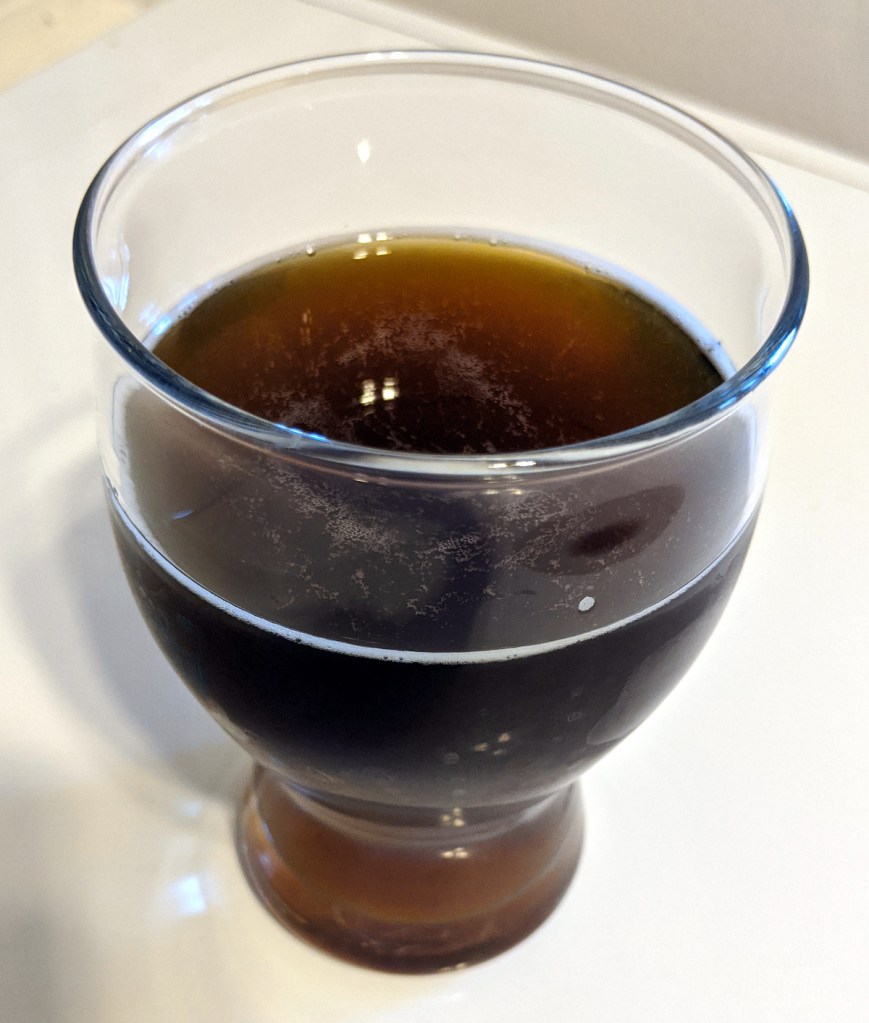
    • Deep brown, with garnet tones when illuminated from behind; clear; persistent tan head
  • Aroma
    • Roasty, chocolately aroma; very nice.
  • Flavor
    • Roast malt character at the front, with a slight chocolate and coffee tinge; slight citrus aspect; moderately bitter, with a finish that tilts towards the bitter rather than the malty side.
  • Mouthfeel
    • Medium body, medium carbonation; off-dry finish (probably due to the roast character). It could maybe have a touch more body, but I think overall it’s okay on this end. Too much body would make this harder to drink.
  • Would I brew this again?
    • Yes! This is a nice and simple recipe, with a pleasant flavor. As porters go, this definitely is towards the roasted and bitter side, but I’m okay with that. This is really drinkable as a summer porter! I would add it to my regular repertoire.
  • Overall
    • 9/10