Snowdrop Kölsch

Kölsch is a great style for mid- to late spring, and I’ve been chasing the perfect batch these past few years. I’ve dialed it in pretty closely, between Kölsch Simplicitas and Kölsch Minimus, two different takes on kölsch recipes that ended up quite tasty.

For 2023, I decided to split the difference between the Simplicitas and Minimus recipes–the grain bill is from Kölsch Minimus, and the hops+yeast are from Kölsch Simplicitas. I liked the blend of Munich and pilsner malt, for its interesting but not overpowering malt character. My previous iteration using the Edelweiss hop blend was also nice, and I had been trying to use them up anyhow. Finally, I was pretty impressed by the Lallemand Köln Kölsch-style dry yeast, and gave it another go on this batch.

The name for my batch–Snowdrop Kölsch–derives from the rare snowfall that hit our part of southern California on brew day.

snow falling with background of green trees
Snow falling in SoCal on brew day

Snowdrop Kölsch

  • 9.5 lb. Pilsner Zero malt (Viking)
  • 0.5 lb. Munich I malt (Weyermann)
  • 1.38 oz. Edelweiss hop blend (5.1% alpha), 30 minute boil
  • 0.25 tsp. BruTanB, 10 minute boil
  • 1 Whirlfloc tablet, 5 minute boil
  • 1 oz. Edelweiss hop blend (5.1% alpha), 5 minute boil
  • 1 pkg. Köln Kölsch-Style Ale Yeast (Lallemand)

Target Parameters

  • 1.046 s.g., 1.010 f.g., 24 IBU, 4 SRM, 4.7% abv
  • Full volume mash, 60 minute mash at 152°, 10 minute mash-out at 168°
  • Claremont tap water, adjusted with 88% lactic acid to hit target of 50 ppm Ca, 6 ppm Mg, 84 ppm Na, 30 ppm SO4, 120 ppm Cl, 15 ppm HCO3, -73 ppm RA

Procedure

  • I collected 7 gallons of water and added 5.85 mL of 88% lactic acid in order to knock out the carbonates. Not further pH adjustments were required, by my calculations.
  • I heated the water to 158° and added the grains, to hit a mash temperature of 152°. I held it here for 60 minutes with recirculation, before elevating the temperature to 168° for a 10 minute mash-out. Finally, I pulled the grain basket.
  • In total, I collected 6.25 gallons of runnings with a gravity of 1.042, for 70% mash efficiency.
  • I brought the runnings to a boil, adding hops and finings per the recipe. After 60 minutes, I turned off the heat and chilled the wort.
  • Upon transferring the wort to the fermenter, I chilled it additionally in my fermentation chamber down to 64° before pitching the yeast.
  • I brewed the beer on 25 February 2023. It had a starting gravity of 1.050.
  • I fermented the beer at 64° for three weeks, and then pulled it to ambient, where it ranged between 64° and 68°.
  • I kegged the beer on 26 March 2023. It had a wonderful aroma of fresh-mown hay and floral hops in my sample at the time. Final gravity was 1.010, which works out to 5.2% abv.

Tasting

  • Appearance
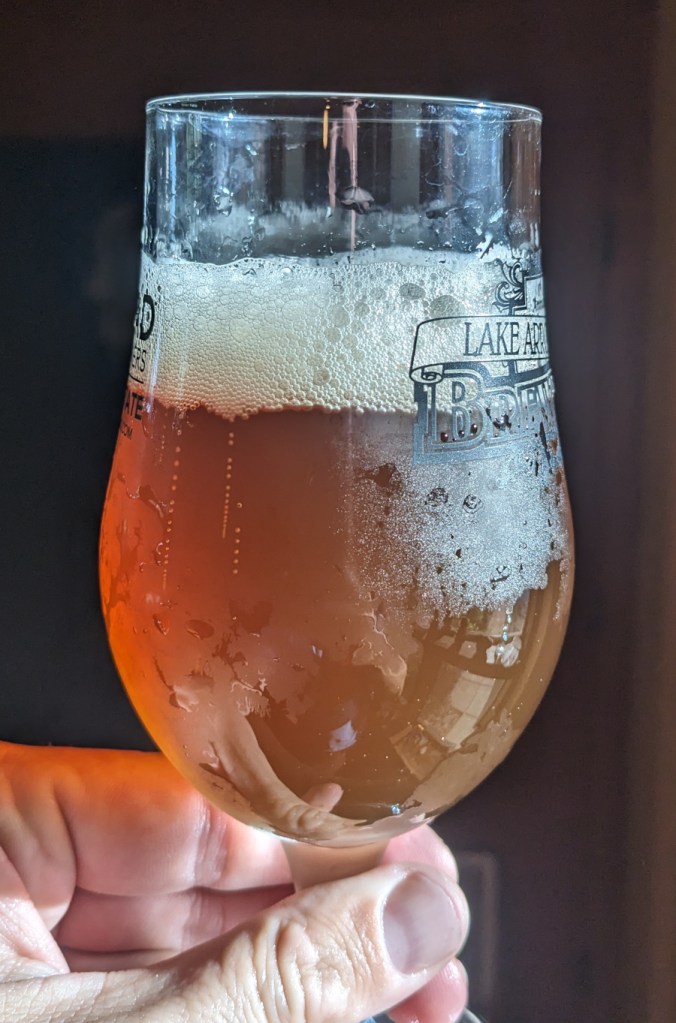
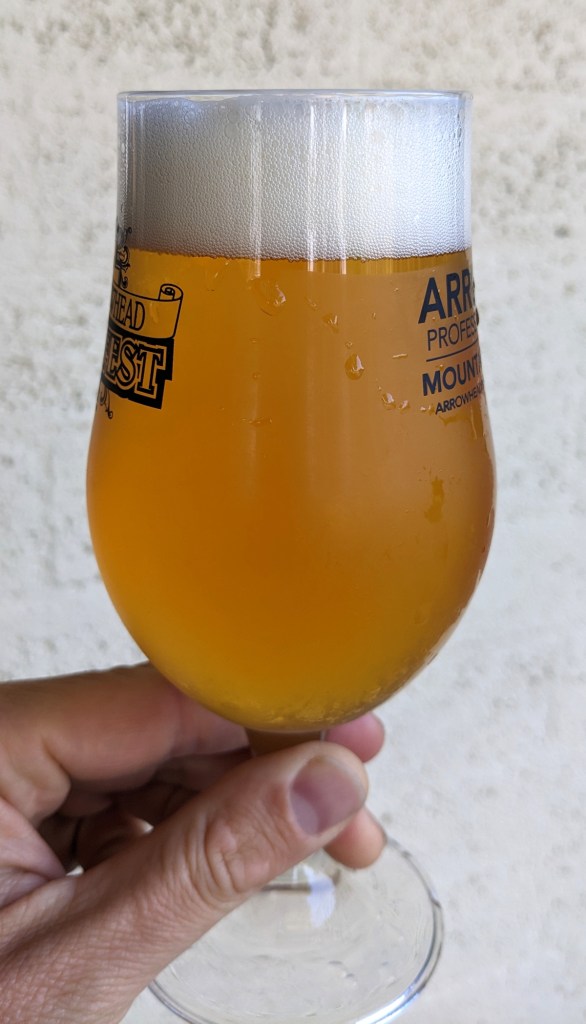
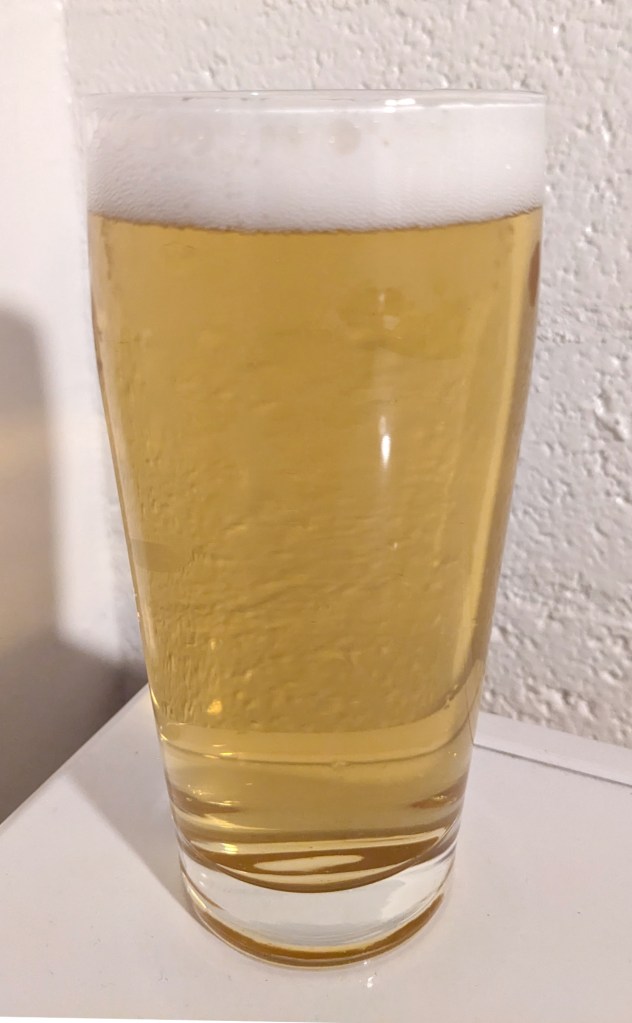
    • Nearly brilliantly clear, straw-colored beer, with a white head that settles to a ring around the glass. Very pretty!
  • Aroma
    • Lightly fruity yeast character–very delicate. It has a slight floral hop and a low, malty-sweet character.
  • Flavor
    • Low bitterness, with a fruity, pear-like yeast character evident. Hops have a slight floral quality, as I have noticed on previous batches with Edelweiss hop blend. This exemplifies the delicate qualities of a fresh kölsch, and is simply amazing.
  • Mouthfeel
    • Medium-light body, moderate carbonation, smooth and soft finish.
  • Would I Brew This Again?
    • I would make this recipe again in an instant! This is, at long last, my absolutely perfect kölsch. It exemplifies the very best, delicate aspects of the style, and is incredibly drinkable. I don’t know that I”ll ever modify the recipe.
  • Overall
  • 10/10

Sabrasaic IPA

My recent Tropical Dream IPA was a big hit, so I wanted to try another recipe in a different vein. This time around, I aimed for a combo of Citra+Mosaic+Sabro, to get a very citrusy, berry-forward blend of hop qualities. I tilted the malt towards the base malt end, with just a touch of crystal 40 to add a some depth and body.

I built this up as a bigger IPA, aiming for around 6.5 to 7.0% abv. It’s almost into double IPA territory (but not quite). It is a deceptively drinkable beer!

Sabrasaic IPA

  • 7.5 lb. 2-row pale malt (Rahr)
  • 6 lb. 7 oz. Golden Promise Malt (Simpsons)
  • 8 oz. caramel 40L (Briess)
  • 1 oz. Sabro hop pellets (14.2% alpha), 60 minute boil
  • 1 tsp. BruTanB, 10 minute boil
  • 1 Whirlfloc tablet, 5 minute boil
  • 1 oz. Citra hop pellets (13.4% alpha), 15 minute whirlpool
  • 1 oz. Mosaic hop pellets (12.2% alpha), 15 minute whirlpool
  • 2 pkg. BRY-97 ale yeast (Lallemand)
  • 1 oz. Citra hop pellets (13.4% alpha), dry hop in keg
  • 1 oz. Mosaic hop pellets (12.2% alpha), dry hop in keg
  • 1 oz. Sabro hop pellets (14.2% alpha), dry hop in keg

Target Parameters

  • 1.065 o.g., 1.012 f.g., 7.1% abv, 64 IBU, 7 SRM
  • Full volume mash at 149° for 60 minutes and 10 minute mash-out at 168°
  • Claremont tap water with Campden tablet, adjusted with salts to hit 137 ppm Ca, 28 ppm Mg, 84 ppm Na, 156 ppm SO4, 120 ppm Cl.

Procedure

  • I mashed in with 6.25 gallons of water at 157°, to hit a mash temperature of 149°. I adjusted the pH with 88% lactic acid, and then held the mash (with recirculation) at 149° for 60 minutes. Then, I raised the mash temperature to 168° for 10 minutes, and finally pulled the grains.
  • My mash efficiency was pretty awful — a gravity of 1.048 with 6.1 gallons, for only 56%! I have no idea why; I suspect I might have had the “buttons” on the removable bottom for the mash basket upside-down, impeding flow during recirculation. But that’s just a guess. In any case, I added a pound of extra light DME to bring up the gravity.
  • I brought the wort to a boil, adding 2 g of gypsum and 6 g of epsom salts to hit my water target parameters. I added hops and finings per the recipe.
  • After a 60 minute boil, I turned off the heat and cooled slightly before the 15 minute whirlpool. Then, I chilled the wort the rest of the way.
  • I brewed this beer on 4 February 2023, and cooled it overnight after the transfer. I pitched the yeast on 5 February 2023, using three packs because they were on the expired side. I maintained the fermenter at 66°.
  • Fermentation was very vigorous, coming out the top of the fermenter!
  • I kegged the beer on 25 February 2023, adding the dry hops to the keg at that point. Final gravity was 1.010, for 6.8% abv.

Tasting

  • Appearance
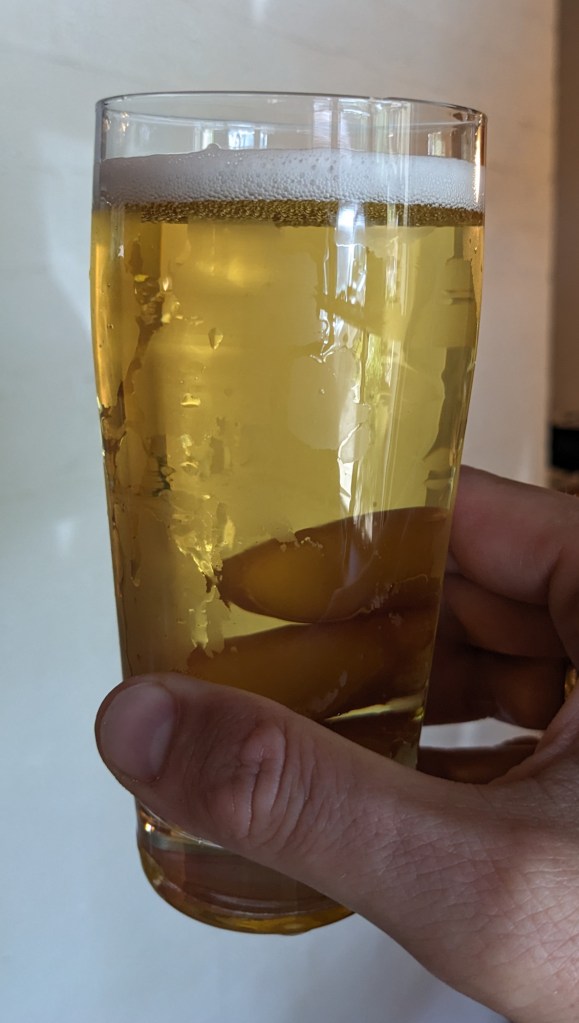
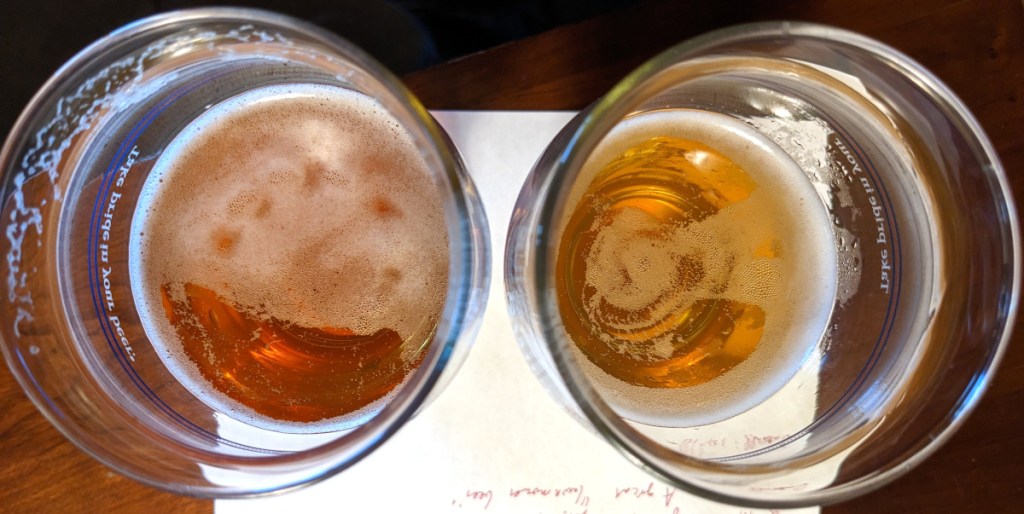
    • Very clear, gold beer, with persistent white head. It pours beautifully! The head creates gorgeous lacing as it settles in the glass.
  • Aroma
    • Very delicious hop aroma! Tangerine, honeydew melon, and mango are all prominent, and incredibly delicious. Clean fermentation profile, and not much for malt character. This is all hops!
  • Flavor
    • Just like with the aroma, hops are at the forefront. It starts with some prominent mandarin orange / tangerine, and then I get cantaloupe and a bit of blueberry. The bitterness is assertive yet smooth, and is right where it should be for an American West Coast IPA.
  • Mouthfeel
    • Medium-light body, moderate carbonation; smooth and very slightly dry finish.
  • Would I Brew This Again?
    • It took a little bit of time in the keg, but this has turned into one of the best American IPAs I have ever brewed. The hop combination is killer! I’ve been on a good roll lately with my IPA hop combos, especially in the tropical/fruity world. Interestingly, the Sabro hops swamped out the Citra and Mosaic, and after a few weeks, things have fallen into happy (or is that hoppy?) balance.
  • Overall
    • 10/10

Bamberger Hofbräu® Schwarzbier

I enjoy some lager variety in my life, and dark lagers add a fun dimension to my brewing (and tasting). Although Munich dunkel has special place in my heart, schwarzbier is another great standby.

This time around, I followed the Bamberger Hofbräu® Schwarzbier recipe from the Dark Lagers book by Kraus-Weyermann and Dornbusch (you can also download a version on the Weyermann website). In terms of the grist, it’s probably closest to my Twisted Schwarzbier recipe, in that it uses primarily pilsner malt. However, rather than using just dark grains to produce the color, some Sinamar provides the final color adjustment. I have never used Sinamar before, so I was happy to have an excuse to explore this ingredient. My hop selection is very different from the original recipe (Magnum+Vanguard, vs. Perle+Spalter), but I am okay with that.

No Spaceballs jokes this time.

Bamberger Hofbrau Schwarzbier

  • 9 lb. Barke pilsner malt (Weyermann)
  • 1 lb. Munich II malt (Weyermann)
  • 0.5 lb. Carafa Special III malt (Weyermann)
  • 0.5 lb. Carapils malt malt (Briess)
  • 3 oz. acidulate malt (Weyermann)
  • 0.9 oz. (25.3 g) Sinamar extract (Weyermann), added at end of boil
  • 0.3 oz. Magnum hop pellets (16.5% alpha), 60 minute boil
  • 1 oz. Vanguard hop pellets (6.5% alpha), 10 minute boil
  • 1 Whirlfloc tablet, 5 minute boil
  • 2 pkg. Diamond lager yeast (Lallemand)

Target Parameters

  • 1.050 s.g., 1.011 f.g., 5.2% abv, 26 IBU, 21 SRM
  • Claremont tap water, with Campden tablet to remove chloramines
  • Full volume mash at 149° for 60 minutes and 10 minute mash-out at 168°

Procedure

  • I mashed in with 7 gallons of water at 155°, to hit 149°. I recirculated and held it at this temperature for 60 minutes, and then raised the mash to 168° for 10 minutes, before pulling the grains.
  • In total, I collected 6.1 gallons of runnings with a gravity of 1.045, for 68% mash efficiency.
  • I brought the runnings to a boil, adding hops and finings per the recipe. After a 60 minute boil, I turned off the heat and chilled down to 70° before transferring it to the fermenter. I chilled down to 49° in my fermentation chamber, before pitching the yeast.
  • I brewed this beer on 31 December 2022, fermenting at 50°. Starting gravity was 1.051.
  • I pulled the beer to garage ambient temperatures (55° to 60°) after 1 week.
  • I kegged the beer on 20 February 2023. Final gravity was 1.014, for 72% attenuation and 4.9% abv.

Tasting

  • Appearance
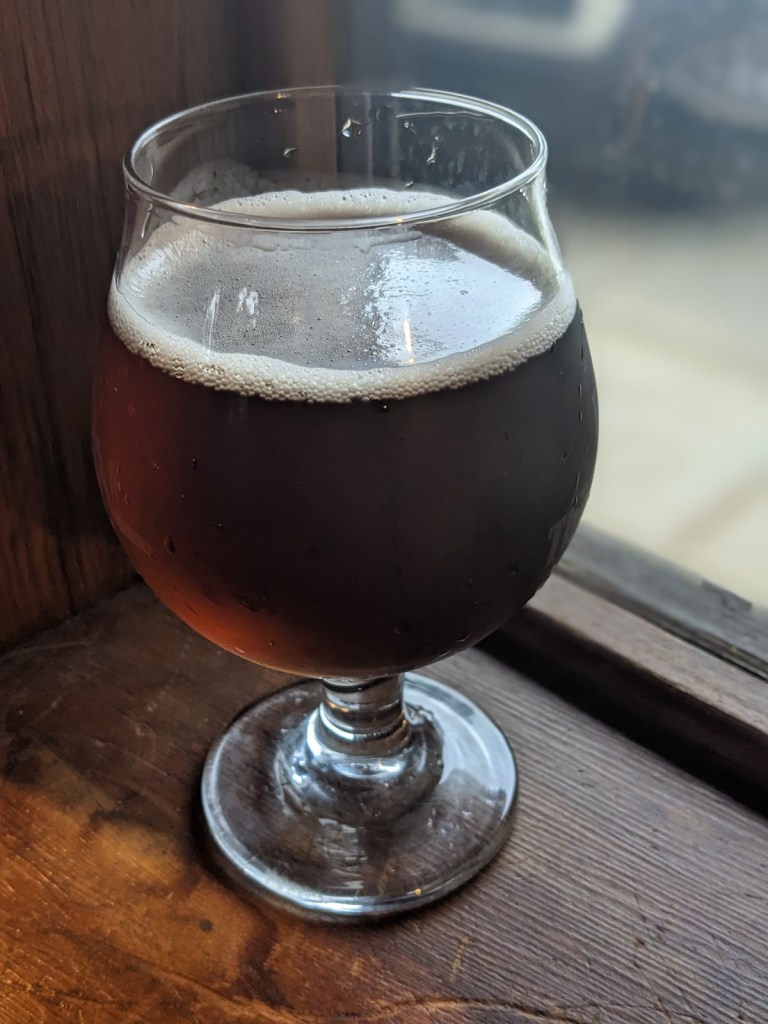
    • Deep, deep brown in appearance with a tan head; when you shine a light through it, it is very clear and dark brown with a reddish cast. The head is persistent, but not particularly fluffy.
  • Aroma
    • Malty, with a slight hint of dark chocolate.
  • Flavor
    • Rounded and bready yet highly drinkable maltiness, with a dark chocolate aspect. Yeast character is clean. Moderate bitterness that balances well against the malt.
  • Mouthfeel
    • Medium-light body, moderate carbonation, smooth and very slightly dry finish.
  • Would I Brew This Again?
    • This is a really nice dark lager. It hits some nice malty notes, without being cloying or burnt-roasty. A little more head retention would be nice (hence my lower score), but even so I’m quite happy with this beer.
  • Overall
  • 8/10

Nut Nut Brown Ale

I particularly enjoy dark English-style beers during the winter, and brown ale is a particularly nice style for my tastes. So, I put together a British Brown Ale recipe from an amalgamation of various online versions.

Nut Nut Brown Ale

  • 10 lb. Golden Promise malt (Simpsons)
  • 4 oz. crystal 75 malt (Bairds)
  • 4 oz. chocolate malt (Bairds)
  • 3 oz. Special B malt (Dingemans)
  • 1.25 oz. East Kent Goldings hop pellets (5.0% alpha), 60 minute boil
  • 0.25 oz. Fuggles hop pellets (4.6% alpha), 60 minute boil
  • 1 Whirlfloc tablet, 5 minute boil
  • 1 pkg. Windsor ale yeast (Lallemand)

Target Parameters

  • 1.047 o.g., 1.013 f.g., 4.5% alpha, 27 IBU, 17 SRM
  • Full volume mash at 156° for 60 minutes and 10 minute mash-out at 168°
  • Claremont tap water with Campden tablet

Procedure

  • I mashed in with 7 gallons of water at 162°, to hit a target mash temperature of 156°. I added 6 mL of 88% lactic acid to adjust the pH, at the start of the mash. After 60 minutes of recirculation, I increased the temperature to 168° and held it there for 10 minutes, before pulling the grains.
  • I collected 6.1 gallons of runnings at a gravity of 1.044, for 69% mash efficiency.
  • I brought the kettle to a boil, adding hops and finings per the recipe. After a 60 minute boil, I turned off the heat, chilled the wort, and transferred it to the fermenter.
  • I brewed this beer on 19 November 2022. It had a starting gravity of 1.049. I held the temperature at 68° for fermentation.
  • I kegged the beer on 10 December 2022. It had a final gravity of 1.025, for 3.1% abv. This was surprisingly low attenuation, which I attribute to the high mash temperature.

Tasting

  • Appearance
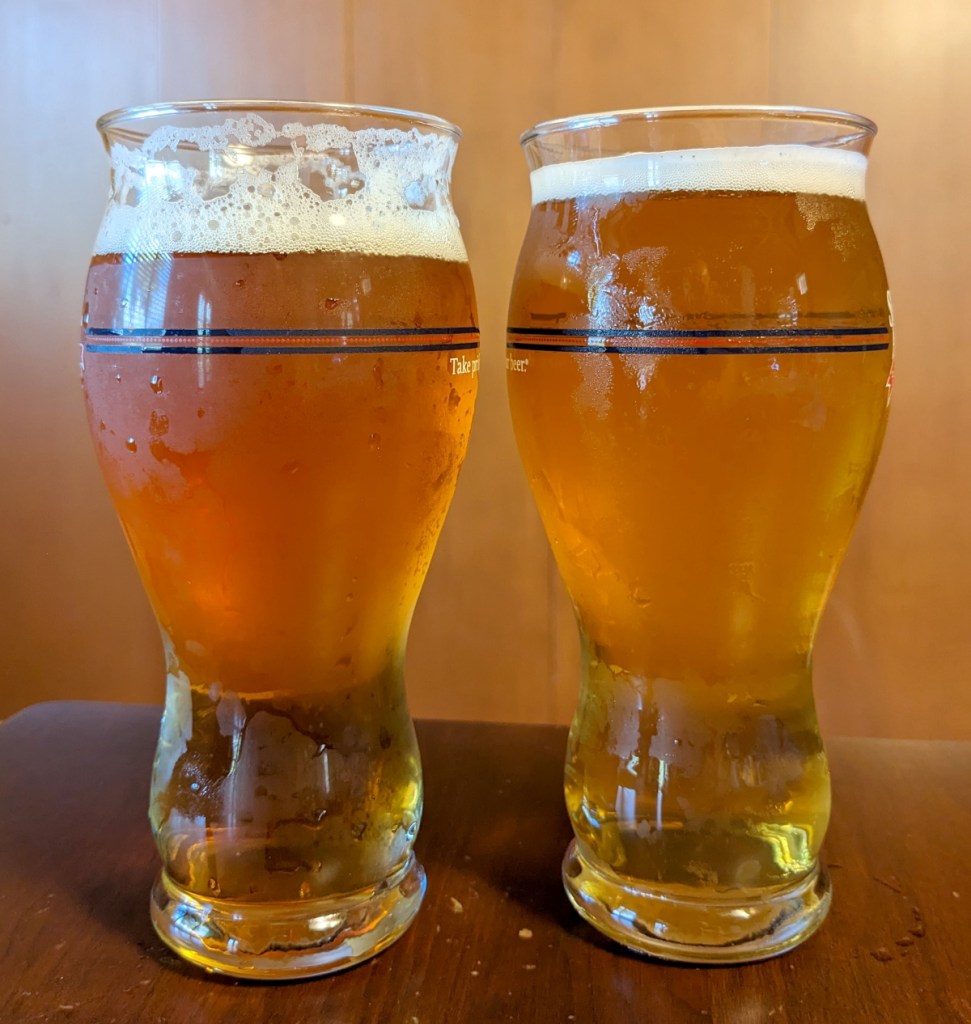
    • Deep cinnamon brown color with brilliant clarity; pours with a thin and persistent off-white head. Very pretty!
  • Aroma
    • Coffee and chocolate; light yeasty esters too; very pleasant.
  • Flavor
    • Cocoa and rich bread crust in the malt; moderate bitterness; slight yeasty esters again like in the aroma, with a very pleasant quality.
  • Mouthfeel
    • Medium-light body, moderate carbonation, smooth finish with a very very slightly dry quality.
  • Would I Brew This Again?
    • It’s not perhaps the most exciting style for me (relative to a porter or stout), but this is a super tasty beer that has come into its own. It’s interesting that it doesn’t taste nearly as thick as it should given the final gravity. The caramel qualities that this style is supposed to have aren’t terribly prominent, and the bread crust character is a bit off for the style also. This is a really interesting beer, but not to the literal BJCP standards. It would be a 10 on its own, but I gave it a 6 given the style considerations. It should probabkly have more caramel malts in the grist to hit the style marks.
  • Overall
    • 7/10

Tropical Dream IPA

I crafted this recipe to be very tropical hop-forward, with Voss kveik to accentuate any citrus qualities. The kveik choice also let me not be so fussy about temperature; in the end, I’m not sure I’m 100% happy with that decision, but even so the beer is pretty darned good. The hops are amazing!

Tropical Dream IPA

  • 12 lb. 2-row malt (Rahr)
  • 0.5 lb. biscuit malt (Dingemans)
  • 5 oz. crystal 15 malt (Great Western)
  • 5 oz. corn sugar, added to boil
  • 1.15 oz. Magnum hop pellets (10.1% alpha), 60 minute boil
  • 1 tsp. BruTanB, 10 minute boil
  • Whirlfloc tablet, 5 minute boil
  • 1 oz. Enigma hop pellets (19.2% alpha), 10 minute whirlpool
  • 1 oz. HBC 586 hop pellets (11.5% alpha), 10 minute whirlpool
  • 1 oz. Vic Secret hop pellets (18.4% alpha), 10 minute whirlpool
  • 1 pkg. Voss Kveik Ale Yeast (Lallemand)
  • 1 oz. Enigma hop pellets (19.2% alpha), dry hop in keg
  • 1 oz. HBC 586 hop pellets (11.5% alpha), dry hop in keg
  • 1 oz. Vic Secret hop pellets (18.4% alpha), dry hop in keg

Target Parameters

  • 1.060 s.g., 1.010 f.g., 6.6% abv, 67 IBU, 6 SRM
  • Full volume mash at 149° for 60 minutes and 10 minute mash-out at 168°
  • Claremont tap water with Campden tablet, adjusted to hit 113 Ca, 7 ppm Mg, 92 ppm Na, 194 ppm SO4, 110 ppm Cl, 156 ppm HCO3.

Procedure

  • I heated 7.25 gallons of water to 155°, and added the grains along with 8 mL of 88% lactic acid for pH adjustment. I maintained the mash at 149° for 60 minutes, with recirculation, and then raised the mash to 168° for 10 minutes.
  • In total, I collected 6.25 gallons of runnings with a gravity of 1.045, for only 60% mash efficiency. Awful! I’ve had major issues with my grain mill lately, and this was pretty much the last straw. I added a bit of DME to adjust things.
  • I added 7 g of gypsum to the boil, to hit my water target.
  • I brought the wort to a boil, adding the hops and finings per the recipe.
  • After a 60 minute boil, I chilled the wort slightly (down to around 195°), did the whirlpool, and then did the initial chilling of the wort. I finished the chill overnight at ambient, letting things settle down to around 68°.
  • I brewed this beer on 26 November 2022, pitched the yeast on 27 November 2022, and let the beer ferment at ambient. Starting gravity was 1.055.
  • I kegged the beer on 29 December 2022. Final gravity was 1.012, for 5.6% abv.

Tasting

  • Appearance
    • The beer pours relatively clear, with a light-gold appearance and a persistent white head. Overall, it’s a very pretty brew!
  • Aroma
  • Lots of hop aroma–guava, honeydew, and orange; very nice!
  • Flavor
    • The beer has a prominent pithy bitterness, with guava, melon, and bright citrus character. The malt is light, clean, and malty sweet. The yeast quality has a very slight bit of ester character; it’s not bad, but gives some kind of Belgian character to the brew. The yeast holds fairly well against the hops, but as an American IPA it would be better without the kveik.
  • Mouthfeel
    • Medium-light body, medium carbonation, dry finish with lingering bitterness.
  • Would I Brew This Again?
    • Yes, but I would likely do it without the kveik; perhaps swap in some American ale yeast instead? There is some type of ester in the background that keeps it from being truly clean. There are no off-flavors; just…something…that clashes a bit. The hop combination is fantastic, though!
  • Overall
    • 7/10