Kitchen Sink Porter

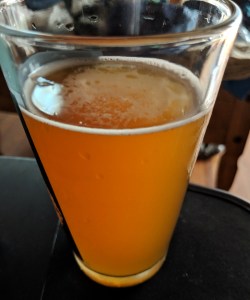
Continuing in my “kitchen sink” series of beers, I brewed a porter recently; it was really a session porter in the end, which has been nice for easy quaffing during the winter months.

Kitchen Sink Porter

  • 7 lbs. Maris Otter malt (Crisp)
  • 1 lb. Munich II malt (Weyermann)
  • 0.75 lb. caramel 60°L malt (Briess)
  • 0.5 lb. pale chocolate malt (Crisp)
  • 5 oz. caramel 120°L malt (Briess)
  • 2 oz. chocolate malt (Bairds)
  • 1 oz. roasted barley (Bairds)
  • 2 oz. Bobek hop pellets (4.5% alpha), first wort hop and 30 minute boil
  • 1 Whirlfloc tablet, 10 minute boil
  • 1 pkg. Windsor dry yeast (Lallemand)

Target Parameters

  • 30 minute full volume infusion mash, 155°
  • 1.044 o.g., 1.012 f.g., 4.3% abv, 26 IBU, 23 SRM
  • Claremont tap water

Procedure

  • I mashed in with 7.5 gallons of water at 159.5°, to hit a 154° mash temperature.
  • After 30 minutes, I vorlaufed and collected 6.3 gallons of runnings with a gravity of 1.039, for 68% efficiency.
  • I brought everything to a boil, boiling for 30 minutes and adding hops and finings as required.
  • After a 30 minute boil, I turned off the heat and chilled down to 70°, before pitching the yeast.
  • I brewed this beer on 3 January 2019. It had a starting gravity of 1.043.
  • The beer was fermented at ambient temperature of around 60°. I pitched the yeast immediately after transfer into the fermentation vesel, and fermentation took off pretty quickly.
  • On January 6, ambient was down to around 58°, so I moved the fermener into the fermentation chamber, where I applied some heat and set the temperature for 66°.
  • I cold crashed the beer on 13 January 2020.
  • I kegged the beer on 15 January 2020. Final gravity was 1.015, for 3.6% abv.
Tasting

  • Appearance
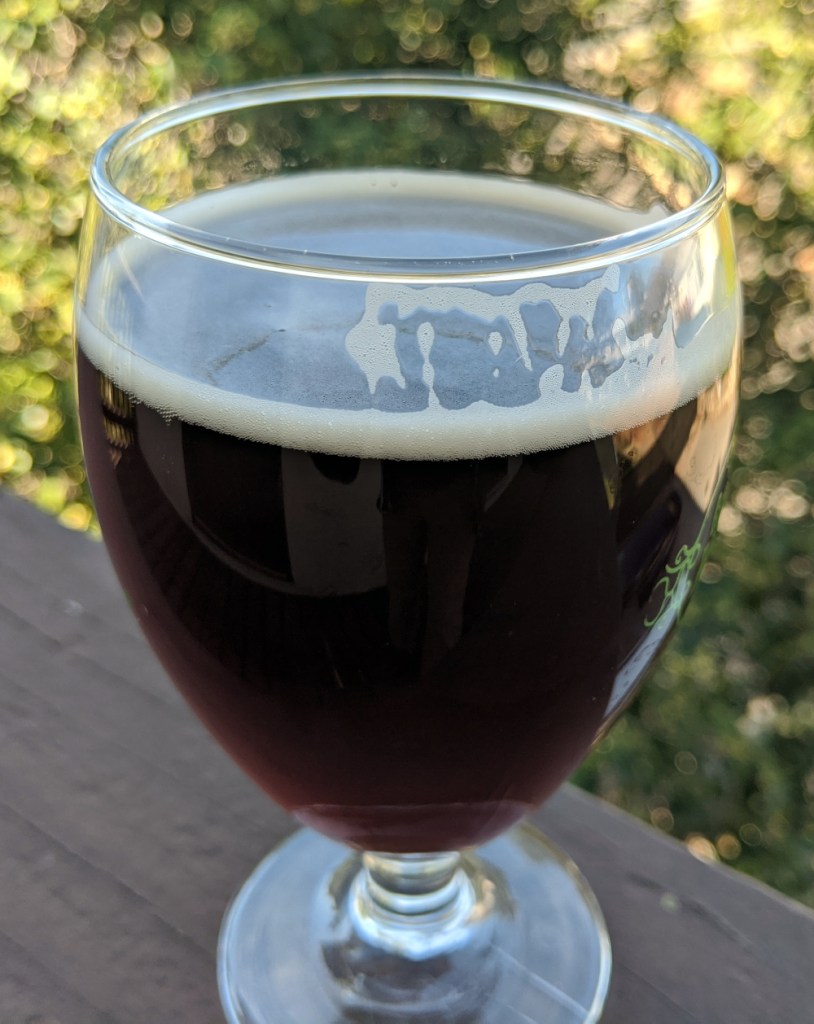
    • Medium brown color, mostly clear (slight haze), with persistent tan head.
  • Aroma
    • Chocolaty, clean aroma. I’m not picking up much of the bread and biscuit aroma that a good English porter should have.
  • Flavor
    • Roasty, chocolate flavor, with a distinct (but not harsh) bitterness that persists on the tongue. As the beer warms up, some of the biscuity malt notes start to come through.
  • Mouthfeel
    • This is a little thinner than I would like; it needs some extra body, I think. Moderate carbonation, smooth and off-dry finish.
  • Would I brew this again?
    • There’s a fair bit happening in dark malt flavor, but the mouthfeel department needs some serious augmentation. I also feel like the lighter character malts (e.g., crystal malts) could be expanded a bit more, because the dark malts really take over. It’s not unpleasant, just a bit one-dimensional. This is a pretty drinkable beer–and the low abv certainly helps with that–but not a recipe I’m likely to do again. For a future iteration of this type of beer, I would definitely mash at a much higher temperature (maybe 158°?) and perhaps add in some biscuit malt and/or more crystal 120.
  • Overall
    • 5.5/10

Summertime Session IPA

Maker:L,Date:2017-9-11,Ver:5,Lens:Kan03,Act:Kan02,E-YMy previous session IPA didn’t turn out terribly great (not even worth a blog post), due at least in part to a clash between the hops and malt. Munich just ain’t a good base for even a session IPA, so lesson learned! For a second try, I am switching over to Vienna malt and using up some hops in the freezer. The Cascade hops are whole hops that my dad sent. These are interesting, in that they are a bit more earthy/herbal than I typically think of for Cascade. Terroir, I suppose. I also used some Falconer’s Flight hop pellets, free courtesy of a brewing friend.
Summertime Session IPA

  • 7 lbs. Vienna malt (Great Western Malting)
  • 1 lb. Maris Otter pale malt
  • 0.5 lb. flaked oats
  • 0.5 lb. white wheat malt
  • 0.5 oz. Warrior hop pellets (15.8% alpha), 60 minute boil
  • 1 oz. Cascade whole hops (5.5% alpha), 10 minute boil
  • 1 Whirlfloc tablet, 10 minute boil
  • 2 oz. Cascade whole hops (5.5% alpha), 10 minute whirlpool
  • 1 pkg. Empire Ale Yeast (Mangrove Jack’s M15)
  • 3 oz. Falconer’s Flight hop pellets (9.1% alpha), dry hop in keg

Target Parameters

  • 1.046 o.g., 1.014 f.g., 4.1% abv, 44 IBU, 5 SRM
  • Infusion mash to hit target of 155°, 45 minutes, batch sparge.
  • Claremont tap water, treated with Campden tablet

Procedure

  • I mashed in with 3.25 gallons of water heated to 166.5°, to hit a mash temperature of 153.5°. After 15 minutes, I added 1.5 gallons of water to raise the temperature to 155°. After 45 minutes of total mashing, I drained the mash tun and collected the first runnings.
  • Next, I sparged with 3.5 gallons of water at 185°, let it sit for 10 minutes, vorlaufed, and collected the second runnings.
  • In total, I collected 6.7 gallons of wort with a gravity of 1.039, for 78% efficiency.
  • After starting the boil, I added the hops and kettle finings per the schedule. At flame-out, I added the whirlpool hops and let it sit for 10 minutes before chilling to 74°.
  • I transferred the wort to the fermenter, added the yeast, and fermented the beer at 68°. This batch was brewed on 16 May 2018.
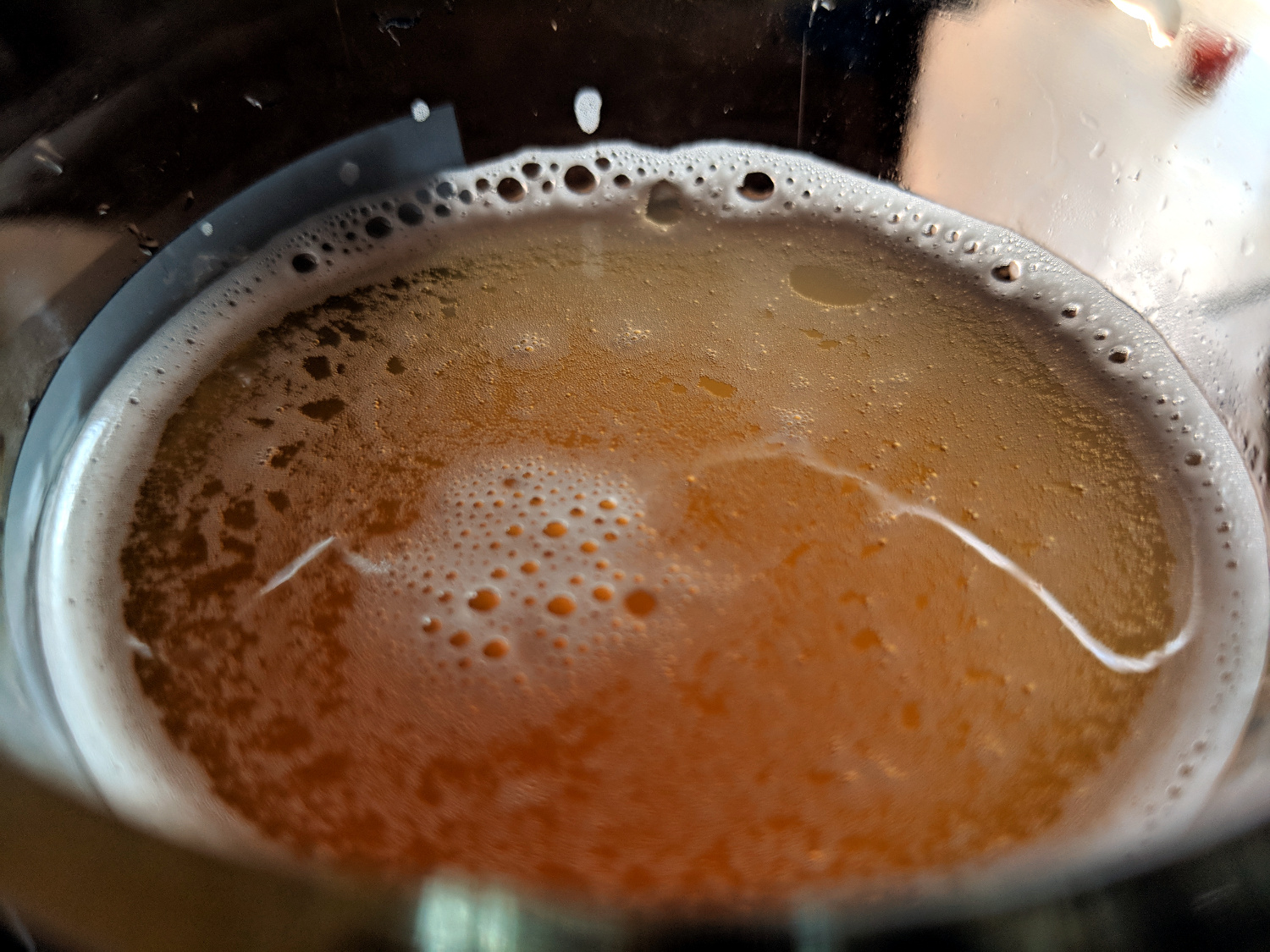
  • Starting gravity was 1.046, and final gravity was 1.016, for 3.9% abv. A perfect session beer!
  • I kegged the beer on 27 May 2018, adding the hops to the keg in a bag. I let it sit at temperature for a few days while carbonating, until 2 June 2018, when I moved it back to the fermentation chamber and dropped the temperature down to 34°.

Maker:L,Date:2017-9-11,Ver:5,Lens:Kan03,Act:Kan02,E-Y

Initial Impressions

This is a decent enough beer, but nothing remarkable. Because I used older hop pellets for the dry hopping, there’s not a ton of aroma. Bitterness versus maltiness is fairly perfect, and I’d be pretty happy with this bittering level as well as this malt combination in future recipes. This is a highly drinkable beer, so I suspect I’ll be going through this fairly quickly even if the flavor/aroma aren’t exceptional for an IPA.

Beer Tasting: Session Stout

stoutI’ve had this beer on tap for about a month; it has been really enjoyable!

Session Stout

  • The Basics
    • 1.042 s.g., 1.012 f.g., 3.9% abv, 31 IBU, 42 SRM
  •  Appearance
    • Clear, black beer, with a fine tan head that is moderately persistent. It looks awesome!
  • Aroma
    • The aroma has a prominent roasted character, with a tiny hint of chocolate behind that.
  • Flavor
    • The beer has a forward roasted/slightly burnt character with a dark coffee tone, as expected from the roast barley. The hop bitterness is smooth, in the background behind the malt.
  • Mouthfeel
    • The beer is fairly light bodied with moderate carbonation. The finish is dry, but smooth.
  • Would I brew this again?
    • I think so! It’s a very drinkable beer, both in terms of its flavor/mouthfeel as well as the low alcohol. I’ve been enjoying it quite a bit. If I were to make any minor changes, I would probably up the body just a little (it can tend to slightly thin after awhile). I might also experiment with a version that has more chocolate malt, to richen the  profile and make it a bit more complex than just roast barley.
  • Overall
    • 8/10

Session Stout

The past few months have been exceedingly packed for a variety of reasons, and so I’ve had little time to brew and even less time to blog! Here is a quick report on an Irish-like stout I brewed up around a month ago.

The intention for this recipe was to create an Irish-like stout; note that I say “Irish-like” because I didn’t go completely authentic with all ingredients. I also wanted something that was fairly low in alcohol and quite drinkable. Thus, I aimed for something <4.5% abv and fairly dry.

The recipe is modified (slightly) from a recipe in Jennifer Talley’s Session Beers book.

Session Stout

  • 6.46 lb. 2-row malt (Rahr)
  • 1 lb. flaked barley
  • 0.75 oz. roasted barley (Bairds)
  • 4.2 oz. black malt (Bairds)
  • 3 oz. chocolate malt (Briess)
  • 1 oz. pale chocolate malt (Crisp)
  • 4 oz. rice hulls
  • 0.5 oz. Warrior hops (15.8% alpha), 60 minute boil
  • 1 Whirlfloc tablet, 10 minute boil
  • 1 pkg. Irish ale yeast, prepared in 0.75L starter

Target Parameters

  • Infusion mash to hit target of 152°. Batch sparge.
  • Claremont tap water.
  • 1.043 o.g., 1.012 f.g., 4.2% abv, 31 IBU, 42 SRM, 5 gallons into fermenter

Procedure

  • I mashed in with 2.83 gallons of water at 162°, to hit a target temperature of 151°.
  • After 60 minutes, I added 1.65 gallons of water at 185° for the first batch sparge, let it sit for 10 minutes, vorlaufed, and collected first runnings. Then, I added 3.5 gallons of water at 185°, let sit for 10 minutes, vorlaufed, and collected the second runnings.
  • In total, I collected 6.5 gallons of wort at a gravity of 1.037. To this, I added 0.25 gallons of RO water to bring the volume up to 6.75 gallons.
  • I boiled for 60 minutes, adding hops and other ingredients at the times indicated in the recipes.
  • After flame-out and chilling, I aerated while transferring into the primary fermenter.
  • Starting gravity was 1.042, and I fermented at 67°. The beer was brewed on 9 October 2017.
  • I kegged this beer on 2 November 2017. The yeast had settled into a nice dense cake at the bottom of the fermenter.
  • Final gravity was 1.012, for 3.9% abv. This was pretty close to my target, so I’m happy. I force carbonated at high pressure with a little bit of shaking, and was drinking the beer within a day after kegging.
  • In my initial tasting, this beer pretty much hits all the notes I wanted. It’s a highly drinkable Irish-type stout with a good bit of flavor. I think this will be a good beer to kick off fall!

Ophidia IPA

I “needed” to brew another IPA, and was in the mood for something a bit lower in alcohol. The November 2014 issue of Brew Your Own magazine had a clone recipe for Suicide Squeeze IPA, from Fort George Brewery. It was a nice session-ish beer (4.7% abv), and the recipe called for stuff I had pretty much entirely on hand. With just a few minor modifications, my recipe was all set! The name for my personal take on this (Ophidia) refers to a scientific name for snakes, because the original Fort George product had a snake on the label for the can.

Ophidia IPA

  • 8 lbs. 3 oz. 2-row malt (California Select, Great Western Malting Co.)
  • 1 lb. Munich I malt (Weyermann)
  • 0.5 lb. caramel 40° malt (Briess)
  • 0.5 lb. flaked oats
  • 0.25 lb. Carafoam malt (Weyermann)
  • 0.45 oz. Warrior hop pellets (15% alpha), 60 minute boil
  • 1 oz. Citra hop pellets (14.1% alpha), 5 minute boil
  • 1 oz. Mosaic hop pellets (11.3% alpha), 5 minute boil
  • 2 oz. Mosaic hop pellets (11.3% alpha), 5 minute steep
  • 1 Whirlfloc tablet, 10 minute boil
  • 1 tsp. Fermax yeast nutrient, 10 minute boil
  • 2 oz. Mosaic hop pellets (11.3% alpha), dry hop in keg
  • 1 oz. Citra hop pellets (14.1% alpha), dry hop in keg

Target Parameters

  • 156° mash, 45 minutes
  • 1.053 o.g., 1.019 f.g., 4.4% abv, 52 IBU, 6 SRM, 5.5 gallons into the fermenter

Procedure

  • 24 hours in advance of brewing, I made a 1.5L starter. This is the second use for the culture–I set aside 0.55L for later use.
  • My water was 5.25 gallons of Claremont water mixed with 3 gallons of RO water and 5 g of gypsum. For the strike/first round of sparge water, I used 1.5 gallons of RO and 3.25 gallons of Claremont water, with the gypsum added directly into the mash tun. For the rest of the sparge water, I used 1.5 gallons of RO with 2 gallons of Claremont tap water.
  • I mashed in with 4.75 gallons of water 167°, to hit a mash temperature of 153°. This was a bit below my target, but I figure I’ll roll with it. I did only a 45 minute mash, before vorlaufing and collecting the first runnings.
  • I sparged with 3.5 gallons of water at 185°, to hit a mash temperature of 168° for the mash-out.
  • I collected 6.75 gallons of wort at a gravity of 1.044, for 77% efficiency.
  • I started the boil, and added the various ingredients per the schedule. After a 60 minute boil, I chilled the wort to 68° and pitched the yeast.
  • Starting gravity was 1.055, slightly above my target but not by too much.
  • I brewed this beer on February 6, 2017, and fermented at 66° for the first four days. Then, I removed it from the fermentation chamber (to make room for another beer), and fermented it at ambient room temperature with a heating pad beneath the carboy, to maintain ~68° in the fermenter.