Pfriem Pilsner 2024

I have done a version of this three times previously, usually with some minor variations for hops or yeast. This time, I decided to do the hop varieties and timings exactly as written (with adjustments for alpha acid), to follow the original Pfriem Pilsner clone recipe from Dave Carpenter’s Lager book. Without further ado, here’s what I did.

Pfriem Pilsner 2024

  • 9.75 lb. pilsner malt (Rahr)
  • 6 oz. Carafoam malt (Weyermann)
  • 0.5 tsp. BrewTanB, in mash
  • 0.75 oz. Perle hop pellets (6.3% alpha), 60 minute boil
  • 0.5 oz. Tettnang hop pellets (2.4% alpha), 60 minute boil
  • 0.5 oz. Tettnang hop pellets (2.4% alpha), 10 minute boil
  • 0.75 oz. Saphir hop pellets (2.3% alpha), 10 minute boil
  • 0.5 oz. Spalt Spalter hop pellets (4.3% alpha), 10 minute boil
  • 0.5 tsp. BrewTanB, 10 minute boil
  • 1 Whirlfloc tablet, 5 minute boil
  • 1.5 oz. Tettnang hop pellets (2.4% alpha), 10 minute whirlpool
  • 0.75 oz. Saphir hop pellets (2.3% alpha), 10 minute whirlpool
  • 0.5 oz. Spalt Spalter hop pellets (4.3% alpha), 10 minute whirlpool
  • 2 pkg. Diamond dry lager yeast (Lallemand)

Target Parameters

  • 1.046 s.g., 1.007 f.g., 5.1% abv, 4 SRM, 38 IBU
  • Full volume step mash, with 45 minutes at 142°, 45 minutes at 156°, and 10 minutes at 168°; 70 minute boil
  • Water built up from RO, to hit target parameters of 62 ppm Ca, 11 ppm Mg, 121 ppm SO4, and 51 ppm Cl, with RA=-50 ppm

Procedure

  • I built up my mash water from 7.5 gallons of RO water, with 3 g calcium chloride, 3 g epsom salt, and 4 g gypsum. Then, I heated it to 146° before adding the grains and holding at 142° for 45 minutes, with recirculation. Then, I raised the mash to 156° for 45 minutes and finished up at 168° for 10 minutes.
  • After the mash, I pulled the grains. I collected 6.8 gallons of runnings with a gravity of 1.041, for 74% mash efficiency.
  • I brought the runnings to a boil, boiling for 10 minutes before adding the first round of hops and proceeding with the rest of the recipe as written. In total, this was a 70 minute boil.
  • At the end of the boil, I turned off the heat, added the whirlpool hops, and whirlpooled for 10 minutes before continuing with the rest of the chill.
  • Once the beer was down to 72°, I transferred to the fermenter and chilled down to 46° in my fermentation chamber, before pitching the yeast.
  • I brewed this beer on 28 October 2024, and the starting gravity was 1.049.
  • The starting fermentation temperature was 48°, and I held it here until 3 November 2024, when I raised the temperature to 52°. On 17 November, I raised the temperature to 54°, and then to ambient (~62°) on 24 November 2024.
  • I kegged the beer on 25 November 2024. Final gravity was 1.009, for 5.3% abv.

Tasting

  • Appearance
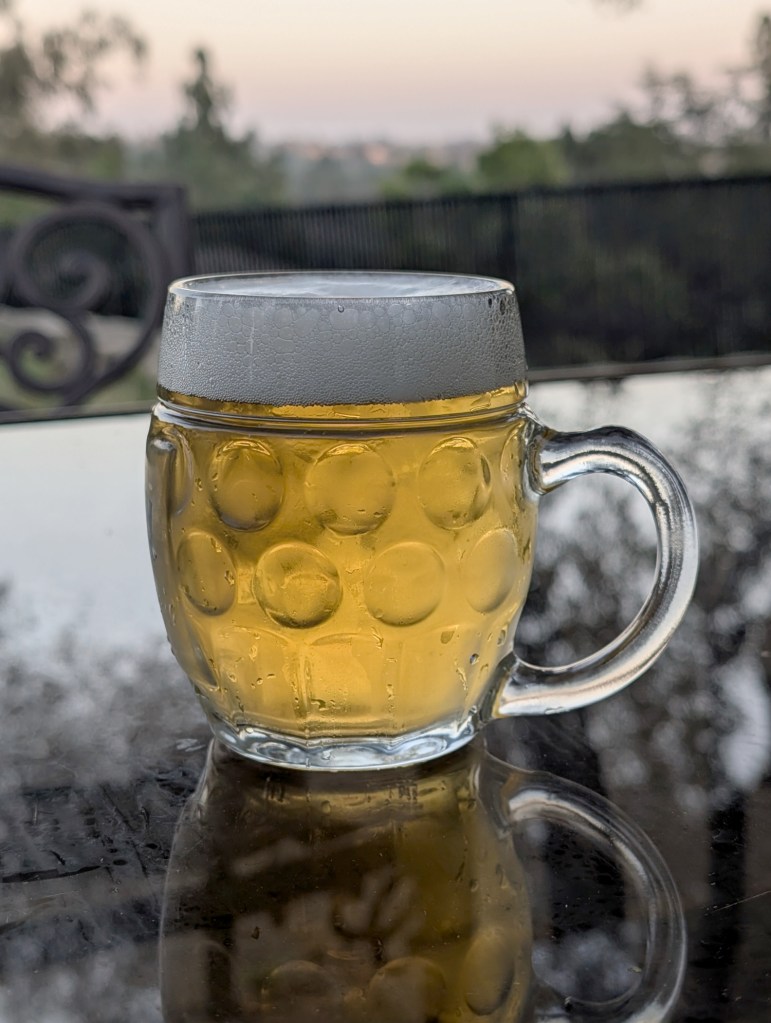
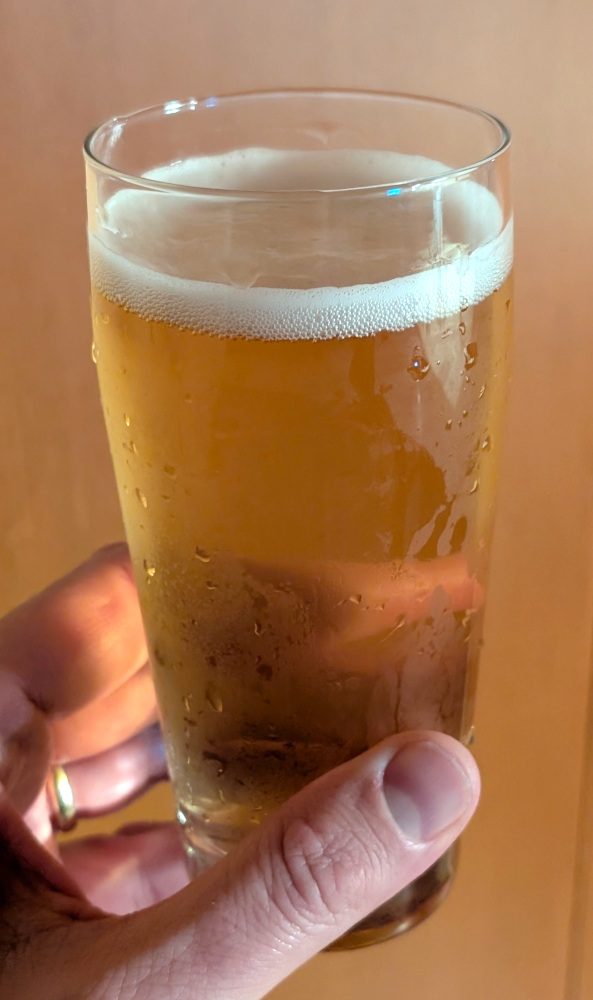
    • Clear, but short of brilliant; there is just a tiny touch of barely visible haze. It is a straw-colored beer that pours with a fine and persistent white head, which leaves some nice lacing on the glass.
  • Aroma
    • Light notes of cracker and honey in the malt, and a pleasant light floral hop aroma, with a touch of fresh hay. This beer smells awesome!
  • Flavor
    • Medium-high bitterness, grainy sweet malt character; hop flavor is lightly herbal. Minerally feel to finish out the flavor.
  • Mouthfeel
    • Medium carbonation, medium light body, dry finish. Minerally, but not unpleasantly so.
  • Would I Brew This Again?
    • I am feeling pretty good about this recipe overall. It is perhaps a touch more bitter than I prefer in all of my pils, but I like the hop aroma and malt character; the overall aroma is amazing! I wouldn’t mind a touch taller head (but that may be in the pour), and I also must ding the beer a bit for its clarity. I wonder if the persistent light haze is from the large dose of whirlpool hops? I could have used some finings, and might do that next time for a pilsner-type beer, because clarity is something important to me for these.
  • Overall
    • 8/10

Super SMaSH Pils

It’s no secret that German Pils is one of my very favorite styles, and one that I finally feel like I’ve mastered. I brewed German pils recipes 18 times in the past seven years, with some batches turning out well, and others less well.

My latest iteration is a SMaSH-esque beer, testing out Rahr’s pilsner malt. I tend to favor European pilsner malts, but that is more through habit than actual comparison. Weyermann, Viking, and Best have all made semi-regular appearances. This past fall, I picked up a 55-lb. sack of Rahr pilsner at the local store, and I wanted to test it in a beer like this. For the hops, I focused on the Edelweiss hop blend from Hop Heaven. In the past, I have absolutely loved the product, and wanted to see what it could do here. Because Edelweiss is a blend, it’s important to note that this is a “SMaSH-esque” beer, rather than a true SMaSH. So, I named my recipe “Super SMaSH Pils”, as a nod to the blend and an homage to a well-known video game.

For yeast, I selected S-189. I’ve been doing lots with Diamond and Novalager lately, and they are truly great yeasts, but I wanted to expand my horizons a little bit. I had a good experience with S-189 in one previous batch, and thought I’d test it out again.

Super SMaSH Pils

  • 10.5 lb. pilsner malt (Rahr)
  • 0.5 tsp. BrewTanB (mash)
  • 1.25 oz. Edelweiss hop pellets (5.8% alpha), 60 minute boil
  • 0.75 oz. Edelweiss hop pellets (5.8% alpha), 10 minute boil
  • 0.5 tsp. BrewTanB, 10 minute boil
  • 1 Whirlfloc pellet, 5 minute boil
  • 1 oz. Edelweiss hop pellets (5.8% alpha), 5 minute boil
  • 2 pkg. SafLager German Lager (S-189)

Target Parameters

  • 1.048 s.g., 1.007 f.g., 5.3% abv, 37 IBU, 4 SRM
  • Full-volume infusion mash, held at 144° for 60 minutes, 160° for 45 minutes, and 168° for 10 minutes
  • Water built up from RO, to hit target parameters of 53 ppm Ca, 11 ppm Mg, 123 ppm SO4, and 52 ppm Cl, with RA=-51 ppm

Procedure

  • Starting with 7.25 gallons of RO water, I added 4 g gypsum, 3 g epsom salts, and 3 g calcium chloride, to hit my water target. I heated this water to 149° and added the grains along with 1.5 mL of 88% lactic acid. This hit a mash temperature of 144° for 60 minutes, with recirculation. Then, I raised the mash to 160° for 45 minutes, and finally to 168° for the final 10 minutes of the mash.
  • I pulled the grain basket, and collected 6.5 gallons of runnings at a gravity of 1.043, for 71% mash efficiency.
  • I brought the runnings to a boil, boiling for 60 minutes and adding hops and finings per the recipe. After the boil, I turned off the heat and chilled to 75° before transferring to the fermenter.
  • Starting gravity was 1.049, pretty close to my target. I chilled the wort further to 48° in the fermentation chamber, before pitching the yeast.
  • I brewed the beer on 29 October 2023, and fermented at 52°.
  • On 12 November 2023, I moved the beer to ambient (~62°).
  • I kegged the beer on 29 November 2023, with a closed transfer.
  • Final gravity was 1.011, which works out to 5.0% abv.

Tasting

  • Appearance
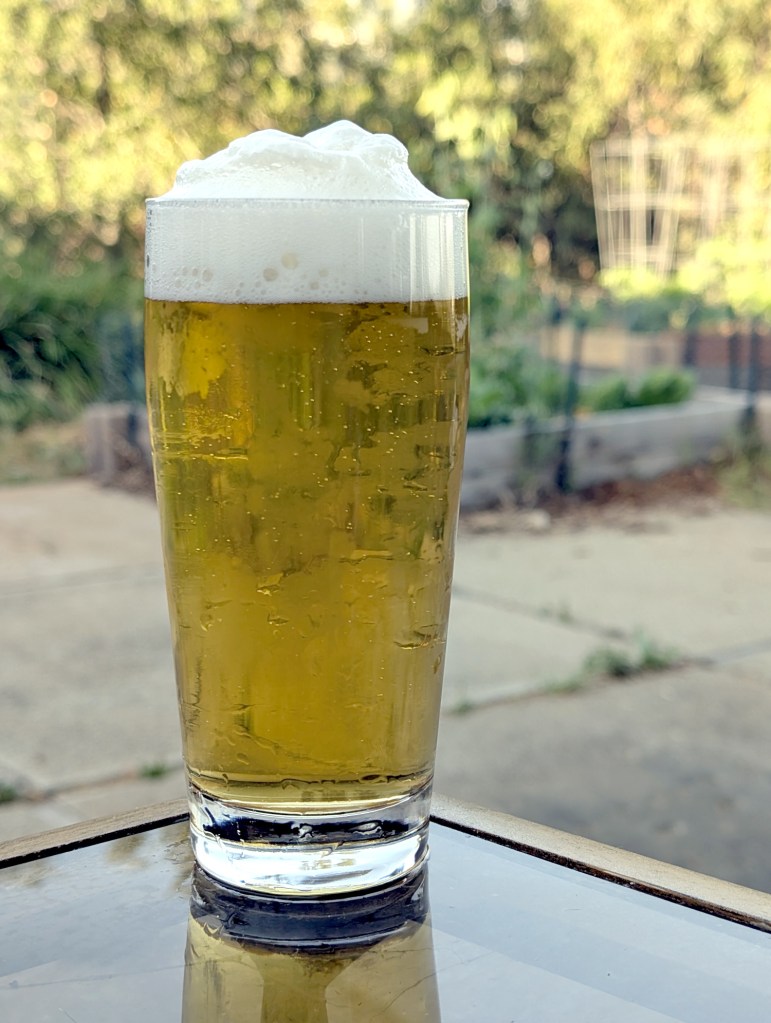
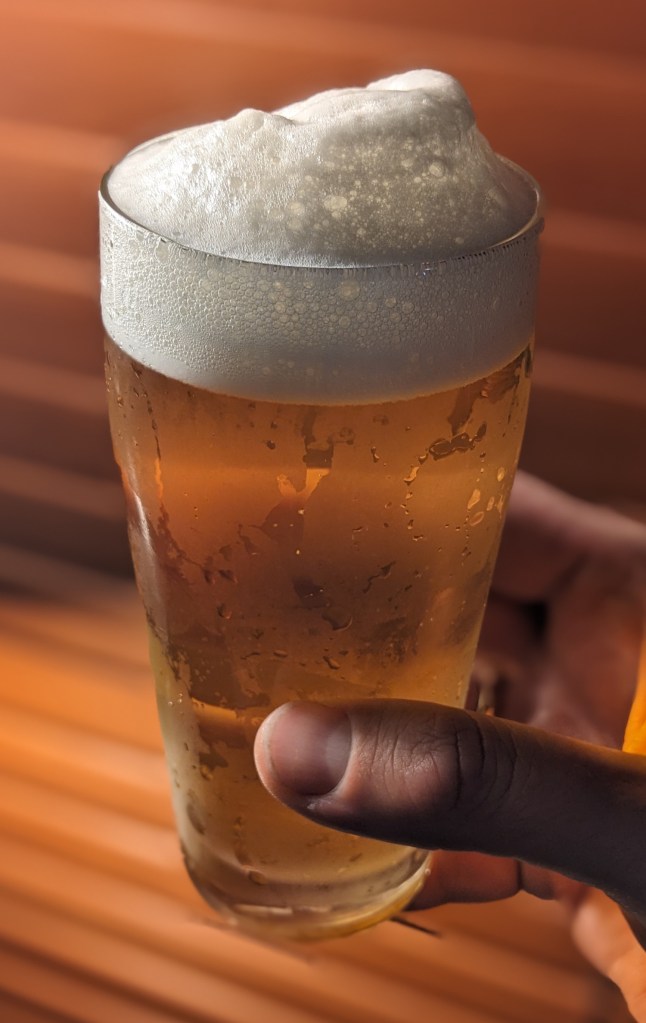
    • Brilliantly clear, straw yellow beer that pours with a dense and persistent, creamy white head.
  • Aroma
    • Clean, lightly floral, and slightly spicy aroma. Very pleasant! Malty sweet character, too.
  • Flavor
    • Clean, lightly floral hop flavor, with moderately high yet smooth bitterness. Light malty sweet flavor, with a nice balance against the hops. No yeast character detectable — it is very clean and crisp!
  • Mouthfeel
    • Medium-light body, moderate carbonation; nice and smooth finish.
  • Would I brew this again?
    • This is a near-perfect pils! It hits every mark of the classic style and is just plain enjoyable. I am incredibly pleased, and would absolutely brew it again.
  • Overall
    • 10/10

Dakota Gold Pils

Summer is a great time for pale lagers! For this recipe, I riffed on the Schell’s Pils clone I’ve brewed in the past. It is intended to be a German pils, which is a style I quite enjoy. This recipe uses only 2-row malt, rather than pilsner malt, for the base, with a bit of CaraPils or similar malt.

For this iteration, I tried out Mecca Grade’s pale American malt as the primary base grain, using a bit of Rahr 2-row to finish out that supply. I also subbed in Carafoam instead of Carapils. The hops are entirely whole cones from South Dakota (thanks, Dad!). I had to guess on the alpha based on what is typical for the style, and as you’ll see in the results probably guessed high.

Dakota Gold Pils

  • 7 lb. 9 oz. Lamonta Pale American malt (Mecca Grade)
  • 2 lb. 7 oz. 2-row pale malt (Rahr)
  • 0.5 lb. Carafoam malt (Weyermann)
  • 1.09 oz. Hallertauer whole hops (3.0% estimated alpha), 60 minute boil
  • 1 oz. Sterling whole hops (4.5% estimated alpha), 60 minute boil
  • 1 oz. Saaz whole hops (3.5% estimated alpha), 15 minute boil
  • 0.5 tsp. BrewTanB, 10 minute boil
  • 1 Whirlfloc tablet, 5 minute boil
  • 1 oz. Saaz whole hops (3.5% estimated alpha), 5 minute boil
  • 1 tsp. yeast nutrient (WLN1000, White Labs), 5 minute boil
  • 2 pkg. Diamond Lager dry yeast (Lallemand)

Target Parameters

  • 1.047 s.g., 1.010 f.g., 4.8% abv, 35 IBU, 5 SRM
  • Full volume mash, 149° for 60 minutes, 168° mash-out for 10 minutes
  • RO water with minerals added to hit target of 59 ppm Ca, 8 Mg, 89 SO4, 63 Cl, RA=-47, alkalinity=0.

Procedure

  • Starting with 7.6 gallons of RO water, I added 2.7 g gypsum, 2.2 g epsom salt, and 3.4 g of calcium chloride, to hit the target water profile. I also added half of a sodium metabisulfate tablet, to remove any latent oxygen in the water.
  • I heated the water to 154° and added the grains to hit a target mash temperature of 149°. I did not add any lactic acid, because the pH was calculated to be approximately fine (pH of 5.4) without any additions.
  • After a 60 minute mash, I heated to 168° for the mash-out, and pulled the grains after 10 minutes of this.
  • In total, I collected 6.8 gallons of runnings with a gravity of 1.039, for 70% efficiency.
  • I brought the runnings to a boil, adding hops and finings as indicated by the recipe. After a 60 minute boil, I turned off the heat and chilled to ~70°. I transferred the wort to the fermenter, and chilled down to 50° before pitching the yeast.
  • Starting gravity was 1.047. I brewed the beer on 15 April 2023, fermenting at 52°. I held it here until 13 May 2023, when I cold crashed the beer.
  • I kegged the beer with a closed transfer on 28 May 2023. Final gravity was 1.009, for 5.0% abv.

Tasting

  • Appearance
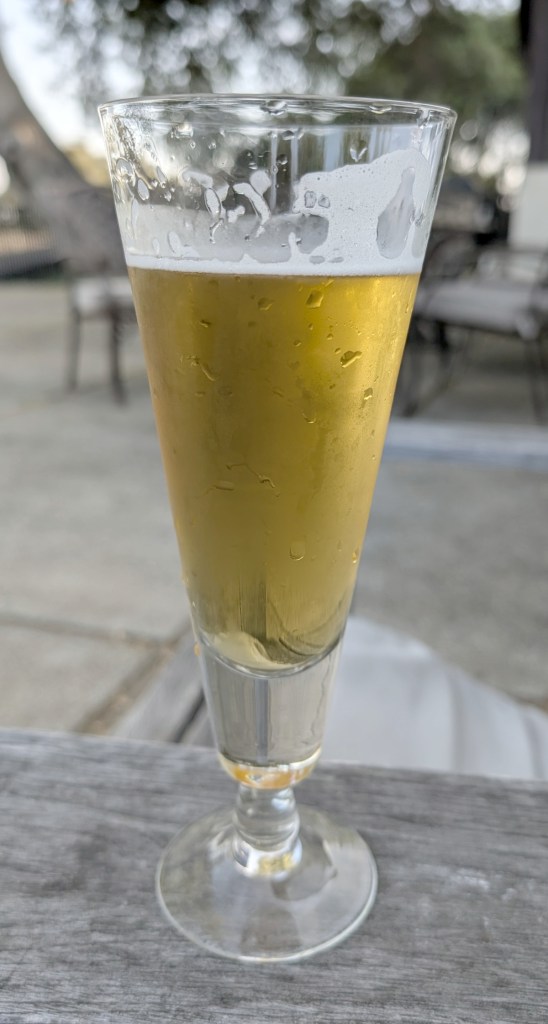
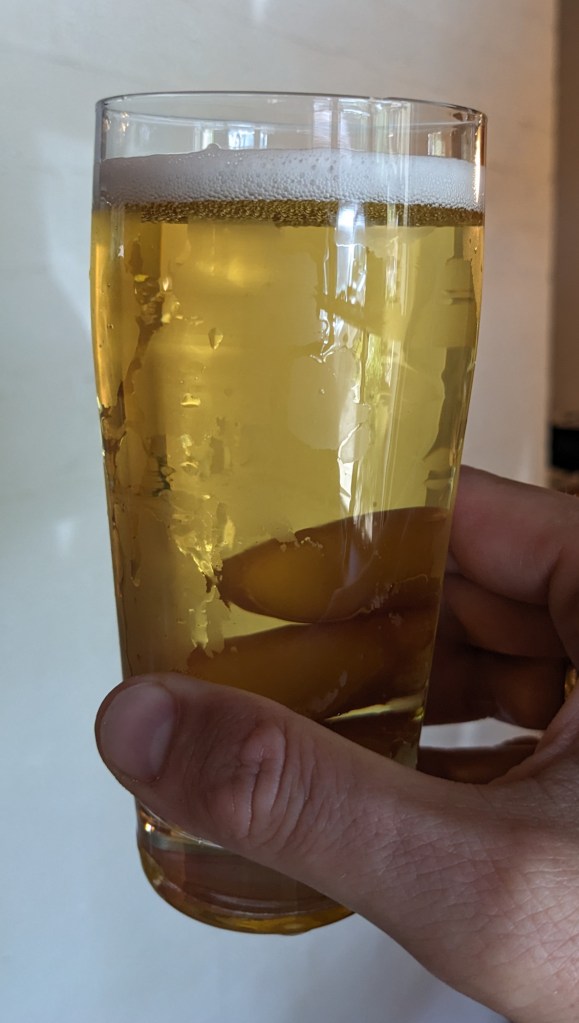
    • Brilliantly clear, straw-colored beer that pours with a fine and persistent white head. Absolutely beautiful!
  • Aroma
    • Sweet malt aroma. Not really much for hops.
  • Flavor
    • Cracker and sweet malty flavor. Moderately low bitterness, with a very clean fermentation profile. There is not a ton of hop character, surprisingly.
  • Mouthfeel
    • Medium-light body, moderately high carbonation, and smooth finish with a slightly extended bitterness.
  • Would I Brew This Again?
    • This is an excellent beer! A touch more bitterness and hop flavor/aroma would be great, but it is otherwise fantastic in drinkability and appearance. It’s not really a German pils at all–it should be more bitter–but that’s OK. Were I to assign a BJCP category, I would probably put it in International Pale Lager. This is the definition of a lawnmower beer!
  • Overall
    • 10/10 as a beer on its own; 6/10 as a German pils.

Pilsnerpeton

I’m slowly and steadily improving my German pils game, and feel like this one is a winner! It’s a super basic recipe, but my philosophy has always been that the best pilsners are accentuated by skill and quality ingredients, rather than endless ingredient lists.

The name is a cheeky reference to a naming convention in zoology, with many amphibians, reptiles, and relatives getting an “-erpeton” suffix. It translates literally as “reptile” or “creeping thing.” Acquaintance Brad McFeeters cheekily noted that Pilsnerpeton would be a great name for a lagerpetid (dinosaur cousin), and I thought it would also be a euphonious name for a beer! I might keep it as the name for my house German pils recipe from here on out…

Pilsnerpeton

  • 10 lb. Viking Pilsner Zero malt
  • 0.4 oz. Perle hop pellets (7.1% alpha), 60 minute boil
  • 0.15 oz. Sterling hop pellets (7.4% alpha), 60 minute boil
  • 1.0 oz. Perle hop pellets (7.1% alpha), 10 minute boil
  • 0.25 oz. Mt. Hood hop pellets (4.6% alpha), 10 minute boil
  • 1 tsp. Fermax yeast nutrient, 10 minute boil
  • 1 WhirlFloc tablet, 5 minute boil
  • 1 pkg. Global liquid yeast (Imperial #L13)

Target Parameters

  • 1.046 s.g., 1.006 f.g., 5.2% abv, 4 SRM, 26 IBU
  • Full volume step mash, with 30 minute rest at 142°, 40 minute rest at 156°, and 10 minute mash-out at 168°
  • Claremont tap water, treated with Campden tablet.

Procedure

  • Around 12 hours in advance of pitching, I made a 1.5L SNS (shaken-not-stirred) starter with 150 g of light DME.
  • I heated 7.25 gallons of water to 147°, and mashed in the grains. I added 5 mL of 88% lactic acid to adjust pH.
  • I held the mash at 142° for 30 minutes, and then raised it to 156°, which took approximately 9 minutes. After 40 minutes at 156°, I raised the temperature to 168°, which took around 10 minutes. I held it at this temperature for 10 minutes, before removing the grains and bringing the kettle to a boil.
  • The gravity out of the mash was 1.039, with 6.4 gallons collected. This equates to 67% mash efficiency.
  • Once the kettle was boiling, I added hops and kettle finings per the recipe.
  • After a 60 minute boil, I turned off the heat and chilled down to 88° while recirculating. At this point, I stopped recirculation and let the wort settle for 30 minutes.
  • Then, I transferred the wort to the fermenter, discarding around 1 gallons of trub. This was probably a bit more than I needed to get rid of, and would aim for ~0.5 gallons next time.
  • In the fermenter, I chilled the wort down to 49°, over a 3 hour period. I oxygenated the wort for 40 seconds, and then pitched the yeast.
  • I brewed the beer on 28 December 2020. Starting gravity was 1.044.
  • I started fermentation at 48°, with a free rise to 50° after pitching. I raised the beer to 54° on 1 January 2021, 56° on 5 January, and 60° on 9 January. I cold crashed down to 34° on 16 January 2021.
  • I kegged the beer on 30 January 2021, after two weeks of cold crashing.
  • Final gravity was 1.013, down from 1.044, for 4.1% abv. The final gravity was a bit higher than predicted by BeerSmith, but I think that’s because the software doesn’t do well with calculating wort fermentability from step mashes.

Tasting

  • Appearance
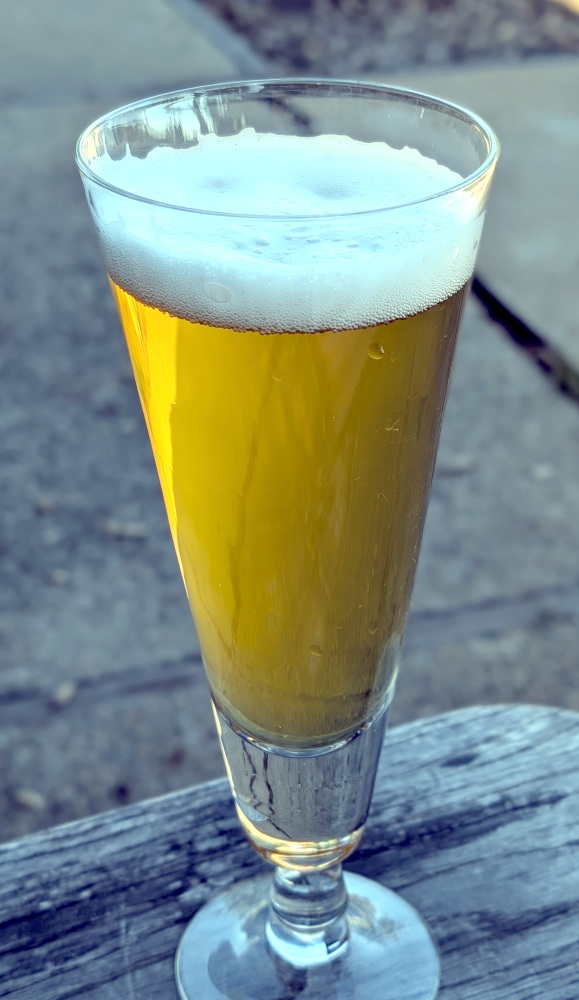
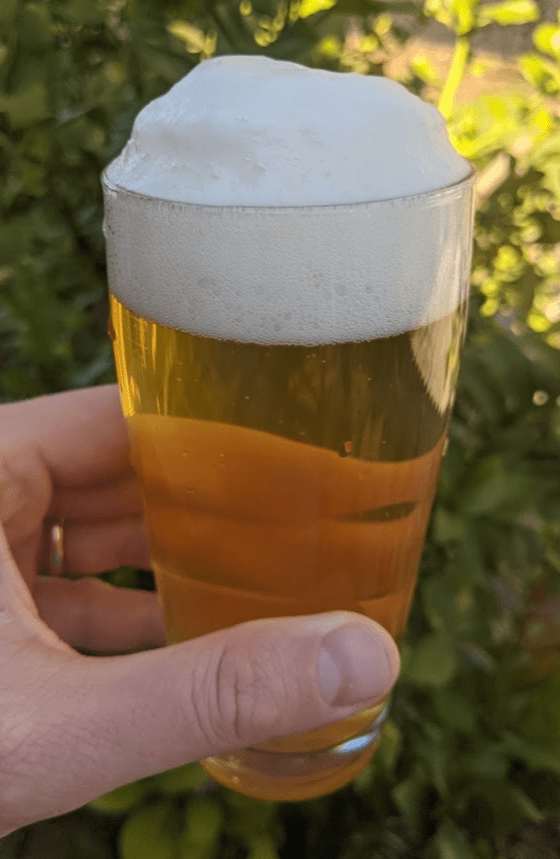
    • Very clear light gold beer, just shy of brilliant, with a beautifully creamy, tall, and persistent white head. It has wonderful lacing down the side of the glass as you drink it.
  • Aroma
    • Malty sweet and cracker notes in a moderate malt aroma. There is a low level of “spicy” hop character. I might like a little more hop aroma, but that’s a minor fault.
  • Flavor
    • Clean, malty-sweet character, with moderate level of very smooth bitterness. The hop flavor is herbal/spicy, with a clean finish. The bitterness lingers pleasantly.
  • Mouthfeel
    • Medium-light body, moderate carbonation, very smooth finish.
  • Would I brew this again?
    • Yes! The malt/hop balance are perfect for my taste, so I think ~25 IBU in a lower-gravity pils is a sweet spot for my preference. Clean fermentation character and clean malt make this taste so good! I might try some hop adjustments for the late hopping to improve aroma, but that is the only real fault in this beer.
  • Overall
    • 9/10