Holiday Festbier

I have always stereotyped lagers–especially those that are lighter in color–as beers best suited for warm weather. Lawnmower beer. That kind of thing. As my palate has expanded, though, I’ve decided that lighter lagers aren’t just for the summer. A festbier–with its slightly more complex flavor profile–seems like a good option for cooler months. And who says it’s just for Oktoberfest?

My recipe was inspired by a festbier recipe I saw on Brulosophy, with pilsner and Vienna malts carrying the bulk of the grist alongside a splash of Munich malt. In the end, it worked out pretty well!

Holiday Festbier

  • 6 lb. Vienna malt (Weyermann)
  • 5.5 lb. Superior pilsen malt (Great Western)
  • 0.75 lb. Munich Malt (Best; 7.6 SRM)
  • 0.35 oz. Magnum hops (13.2% alpha), 60 minute boil
  • 2 oz. Saaz whole hops (3.0% alpha), 10 minute boil
  • 1 Whirlfloc tablet, 10 minute boil
  • 1 tsp. Fermax yeast nutrient, 10 minute boil
  • 2 pkg. Saflager lager yeast (W34/70)

Target Parameters

  • 60 minute infusion mash, 149°, batch sparge.
  • 1.056 o.g., 1.011 f.g., 5.9% abv, 21 IBU, 5 SRM
  • Water built from RO, for target of 35 Ca, 3 Mg, 29 Na, 41 SO4, 40 Cl, 77 HCO3, 37 RA

Procedure

  • I built up 4.25 gallons of mash water by adding 1.7 g baking soda, 1.3 g CaCl, 0.8 g gypsum, and 0.5 g epsom salts. I aimed for a mash-in temperature of 160.5°, to hit 149.1° for the mash. Immediately after mashing in the grains, I added 9.5 mL of 88% lactic acid, to adjust the pH appropriately.
  • I built up the sparge water with 4.6 gallons of RO water supplemented with 1.9 g baking soda, 1.5 g CaCl, 0.9 g gypsum, and 0.6 g epsom salts.
  • I started the batch sparge with 1 gallon of water at 180°, let it sit for 10 minutes, vorlaufed, and collected first runnings. I then added the remainder of the sparge water, vorlaufed, and collected the rest of the runnings.
  • In total, I collected 7 gallons of runnings with a gravity of 1.045, for 70% efficiency.
  • I brought the kettle to a boil, adding hops and finings per the recipe. After 60 minutes, I turned off the flame and chilled down to 75° or so. After transferring to the fermenter, I chilled down to 50° in the fermentation chamber before oxygenating the wort and pitching the yeast.
  • I brewed this beer on 7 December 2019. Starting gravity was 1.053, a touch below my target (1.056), but not too awfully low.
  • I started fermentation at 52°, and raised it to 56° after two weeks (21 December 2019). I raised the beer to 60° on 23 December 2019, before crashing to 33° on 26 December 2019.
  • I kegged the beer on 28 December 2019, by semi-closed transfer into a CO2 purged keg. Final gravity was 1.009, which works out to 5.9% abv.
  • After kegging, I lagered the beer at 33°. From the start, flavor was really nice. When I sampled the beer on 12 January 2020, after two weeks of lagering, flavor was still amazing, but the beer was still fairly hazy. By February 6, the beer had only a slight haze, and could be rated as relatively clear (but not yet bright). I expect it should be up to snuff within a week or two.

Tasting

  • Appearance
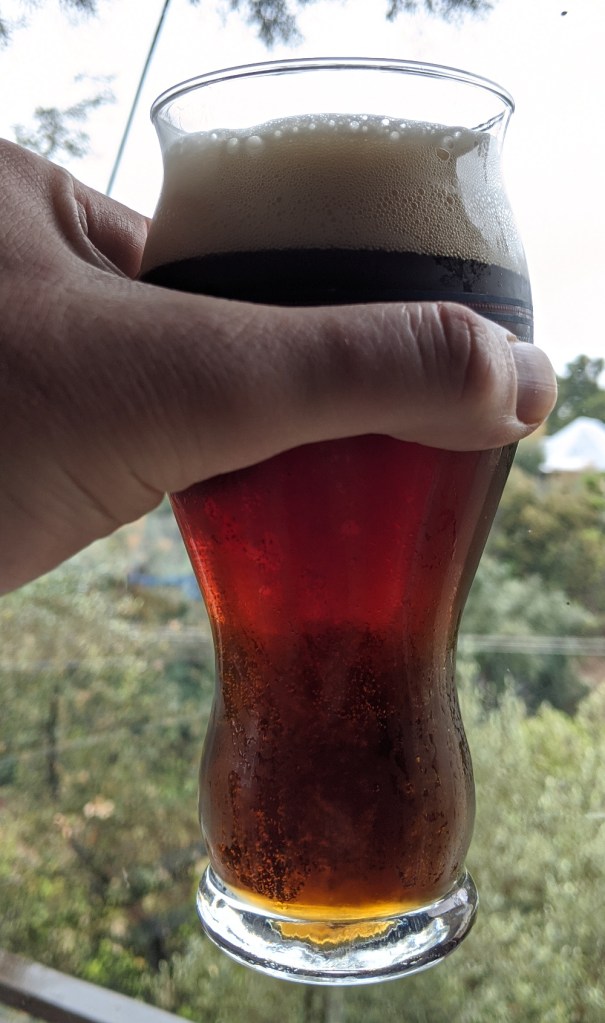
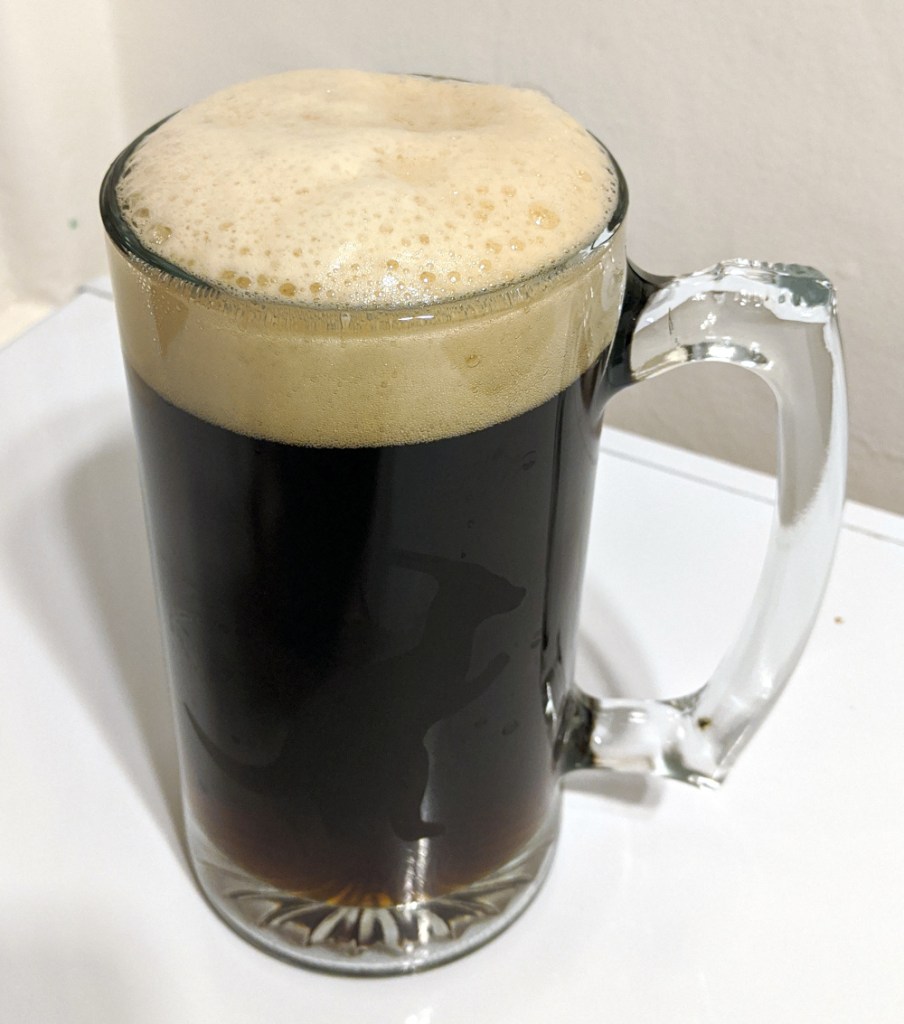
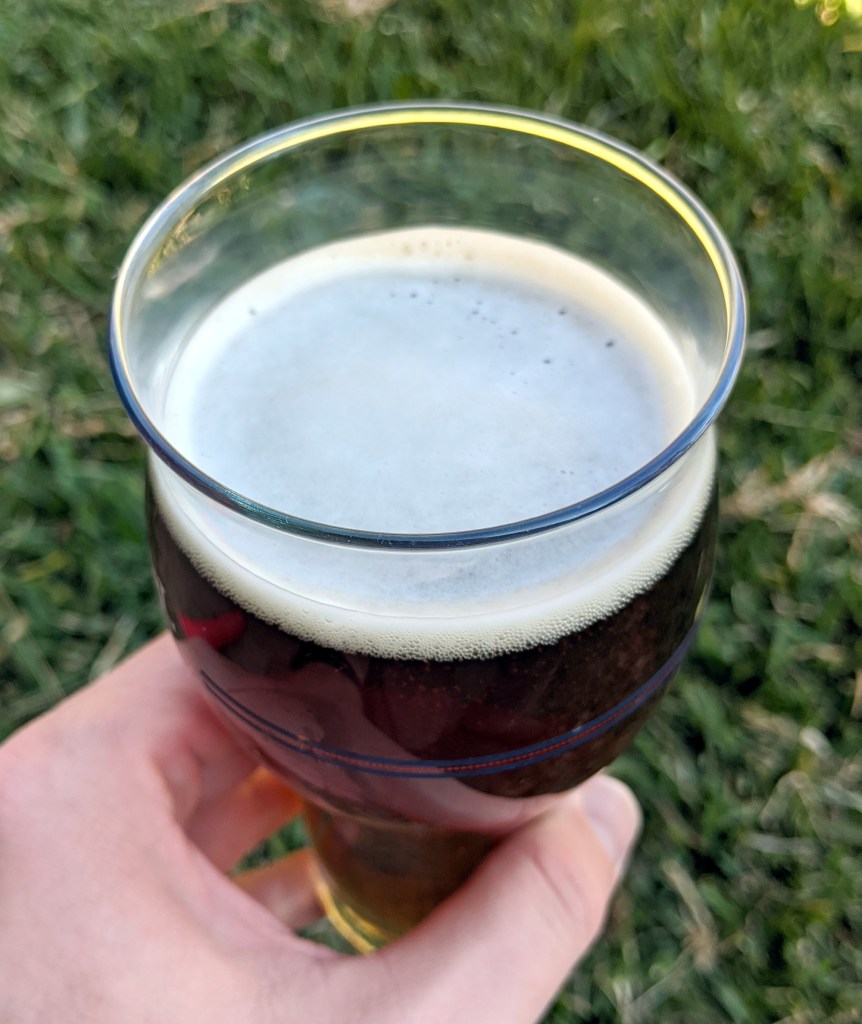
    • Gold, nearly clear (only a slight haze at the time of this tasting), with a nice and persistent white head.
  • Aroma
    • Malt, malt, malt. Aroma is a slightly sweet malty quality, and I don’t pick up much for hops.
  • Flavor
    • Smooth maltiness, with the malt character being a combination of pure maltiness and a bit of breadiness. (I’m using various forms of “malt” in my descriptions, but that’s really the best descriptor for this beer!) Hop level is moderate and has a beautiful smoothness, with the balance of the beer definitely tilted towards malt.
  • Mouthfeel
    • This beer is sooooo drinkable! Medium body, moderate carbonation, just a pure thing of beauty.
  • Would I brew this again?
    • Absolutely! This is a wonderful recipe. My only mild knock-down is for the slight haze in the beer, but if I were to lager this for months as a proper festbier I think it would be fine. The malt character and hopping level are perfect. On top of all of this, it really nails the high drinkability that a good festbier should have.
  • Overall
    • 9/10

Bierstadt Pils Clone 1.1

I brewed this recipe nearly a year ago, and found the result to be super enjoyable. Why not give it another try? I made a few modifications for hopping rate, and ditched the whirlpool hops, which were apparently a mistake in the originally published recipe (now corrected at the link).

Bierstadt Pils Clone 1.1

  • 9.75 lbs. Barke Pilsner malt (Weyermann)
  • 0.5 lb. Acidulated malt (Bestmalz)
  • 1.25 oz. Hallertauer Mittelfrueh hop pellets (3.0% alpha), first wort hopping, 90 minute boil
  • 1.5 oz. Hallertauer Mittelfrueh hop pellets (3.0% alpha), 70 minute boil
  • 1.25 oz. Hallertauer Mittelfrueh hop pellets (3.0% alpha), 5 minute boil
  • 1 Whirlfloc tablet, 10 minute boil
  • 1 tsp. Fermax yeast nutrient, 10 minute boil
  • 2 pkg. Saflager lager yeast (W34/70)

Target Parameters

  • 1.048 s.g, 1.007 f.g., 5.4% abv, 34 IBU, 3.4 SRM
  • Infusion step mash with decoction
  • Water built from 8.75 gallons of RO water, with 4.3 g CaCl, 3.4 g gypsum, 2.7 g epsom salts, to achieve -47 RA, 59 ppm Ca, 8 ppm Mg, 89 ppm SO4, 63 ppm Cl

Procedure

  • I mashed in with 12 quarts of water at 140°, to hit 132°. After 10 minutes, I added 3.5 quarts of water just below boiling, to hit 145°. I let it rest here for 30 minutes. Finally, I added 5.5 quarts just below boiling, to hit 158°. After 40 minutes, I pulled 1.66 gallons of thin decoction and boiled it for 10 minutes. I added it back to the mash, which raised the temperature to 164°.
  • Next, I let the mash sit for 10 minutes, vorlaufed, and collected the first runnings. I added the first hop charge to the kettle at this time.
  • Next, I added the remaining sparge water (3.5 gallons) at ~170°, to hit a 164° mash temperature. I let it sit for 10 minutes, vorlaufed, and collected the second runnings.
  • In total, I collected 7 gallons at a gravity of 1.041, for 77% mash efficiency. I added 0.25 gallons of RO water to raise the volume to 7.25 gallons.
  • I brought everything to a boil, adding hops and other ingredients per the schedule.
  • After a 90 minute boil, I chilled and transferred. Gravity at this point was 1.052, a bit above my target. So, I added 7 cups of water heated to near boiling to top up and hit a gravity of 1.049.
  • I chilled in the fermenter down to 48°, before oxygenating and pitching the yeast.
  • I brewed this beer on 14 September 2019, fermenting at 50°.
  • I raised the beer to 60° on 30 September 2019. I cooled down to 50° on 4 October 2019, and down to 35° on 5 October 2019.
  • I kegged the beer on 11 October 2019, with a partially closed transfer. Gravity at this point was 1.010, for 5.2% abv.

Tasting

  • The Basics
    • 1.049 o.g., 1.010 f.g., 5.2% abv
  • Appearance
    • Clear, nearly brilliantly so, light yellow beer, with a fine, white, and persistent head.
  • Aroma
    • Clean, lightly malty aroma, with slight floral hop presence.
  • Flavor
    • Light, slightly sweet, and grainy malt character, with a crisp bitterness against that. The balance tilts slightly towards bitter, but not overly so.
  • Mouthfeel
    • Crisp and light-bodied, with moderate carbonation and a smooth finish.
  • Would I brew this again?
    • This is a great recipe. It’s a really smooth and drinkable beer, and was worth repeating from last time. I enjoy the grainy malt character, and the pleasant German hops alongside that. The head isn’t quite as firm and frothy as I might like (that honor belongs to the last German pils I did), but I’m not sure if that is a recipe flaw or something else. I think it will be worth playing with malts some more to see what happens when I switch those up. This recipe lacks some of what makes my other recent pils great, but in all it’s pretty decent.
  • Overall
    • 8/10

Schell’s Pils Clone

It’s always lager season, and especially so during the warm opening days of fall here in SoCal. I’m continuing to explore the morphospace of pilsners, with my latest foray following a recipe in Craft Beer for the Homebrewer: Recipes from America’s Top Brewmasters. I was particularly interested by a clone recipe for a pilsner from Schell’s Brewing, based out of Minnesota. One notable thing about the provided recipe is that it used American 2-row instead of European pilsner malt. They’re not too far off each other in terms of color, so I thought it would be a neat test of malt character.

The recipe itself closely matches that in the book; my main adjustment was to modify the hop schedule slightly for amounts and time to account for the hops I had on hand.

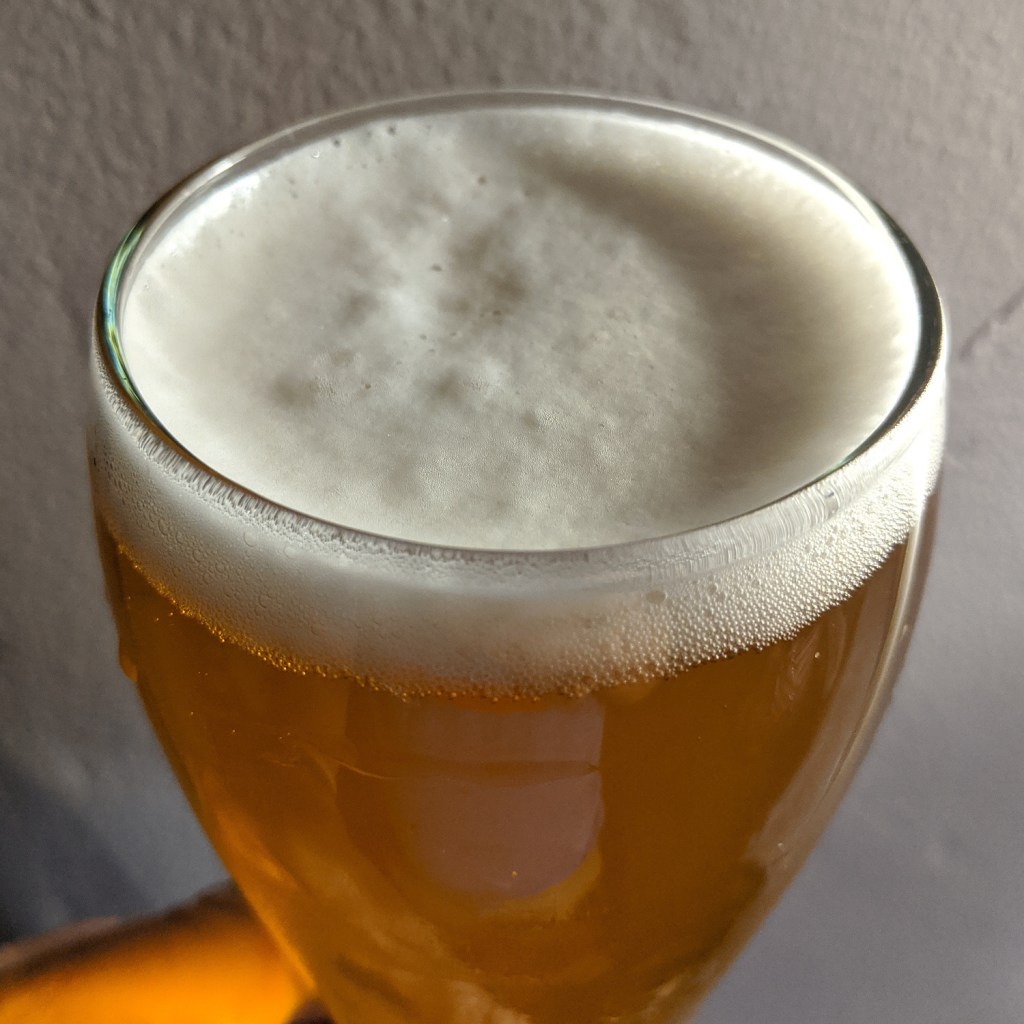
Close-up of pilsner beer foam in conical glass

Schell’s Pils Clone

  • 10.5 lb. 2-row pale malt (Rahr)
  • 0.25 lb. Carapils malt (Briess)
  • 1.9 oz. Mt. Hood hop pellets (4.6% alpha), 60 minute boil
  • 1 Whirlfloc tablet, 10 minute boil
  • 1 tsp. Fermax yeast nutrient, 10 minute boil
  • 1.1 oz. Mt. Hood hop pellets (4.6% alpha), 5 minute boil
  • 1 oz. Sterling hop pellets (7.9% alpha), 5 minute boil
  • 1 pkg. Harvest liquid yeast (Imperial Yeast #L17), prepared in 1.5L starter
  • 1 oz. Sterling hop pellets (7.4% alpha), 7 day dry hop

Target Parameters

  • 1.050 o.g., 1.013 f.g., 4.8% abv, 38 IBU, 3 SRM
  • 60 minute infusion mash, 152°, batch sparge
  • Water built up from RO, to hit target water profile of 59 ppm Ca, 8 ppm Mg, 89 ppm SO4, 63 ppm Cl; RA=-47ppm

Procedure

  • I made a 1.5L starter a few days in advance, let it run for 48 hours, and then cold crashed it (and decanted the spent wort).
  • To create my brewing water, I added 3.3 g gypsum, 2.7 g epsom salt, and 4.2 g calcium chloride to 8.5 gallons of RO water.
  • I mashed in with 3.5 gallons of water at 162°, to hit a mash temperature of 152.2°. I added 7.5 mL of 88% lactic acid to the mash, to help hit a target pH of ~5.3.
  • After 50 minutes, I added 1.25 gallons of water at 185°, in order to raise the mash temperature o 156°. I let the mash sit for 10 more minutes, vorlaufed, and collected first runnings. Then, I added 3.75 gallons of water at 185°, let sit for 10 minutes, vorlaufed, and collected second runnings.
  • In total, I collected 6.9 gallons of wort with a gravity of 1.042, for 74% efficiency.
  • I brought the runnings to a boil, adding hops and other kettle additions per the schedule. After 60 minutes, I turned off the flame and chilled down as far as I could (~80°) before transferring.
  • I chilled the wort down to 57°, before pitching the yeast and continuing to chill down to 52°. I completed the fermentation at 52°.
  • A good krausen was built within 24 hours.
  • I brewed the beer on 11 August 2019.
  • On 18 August 2019, I raised the temperature of the beer to 56°.
  • On 21 August 2019, I raised the temperature of the beer to 66°.
  • I added the dry hops on 24 August 2019.
  • I cold crashed the beer to 33° on 29 August 2019.
  • I kegged the beer on 1 September 2019. Final gravity was 1.008 (via refractometer), for 5.5% abv.

IMG_20191009_171317

Tasting

  • Appearance
    • Pours with a thick, fine, frothy head, that is quite persistent. The beer itself is light yellow and fairly clear (but just a touch away from brilliant clarity).
  • Aroma
    • Light grainy aroma, with a nice spicy hop note alongside it. Very clean!
  • Flavor
    • Grainy and ever-so-slightly sweet malt profile, with a firm, clean, and slightly spicy bitterness. Balance is tilted modestly in the hoppy direction.
  • Mouthfeel
    • Crisp, with a slightly dry finish. Moderately high carbonation.
  • Would I brew this again?
    • YES! This is a really nice German-American pilsner, all the more interesting because I got such a nice malt flavor profile using American 2-row rather than European pilsner malt. The Rahr 2-row is pretty light (1.8 SRM), not too far from typical pilsner malt (Weyermann Barke pilsner is actually 1.9 SRM), so I guess it shouldn’t be too surprising, at least on the basis of color. I’m particularly pleased with the head retention on this beer; it pours with a beautiful foam that sticks around for quite awhile. If I had a little more patience, I would let it condition a bit longer to clarify to brilliant, but that’s pretty much the only (minor) flaw in this beer.
  • Overall
    • 9.5/10

Alta California Lager

It’s late spring in California…theoretically, this should be a warm time of the year. A few months back, I wanted to have a clear, clean, tasty Mexican-style lager on hand for the anticipated afternoons out on the patio. It’s ended up being a cooler and rainier stretch than I expected, but that hasn’t hampered my enjoyment of this beer.

I’ve never brewed a Mexican-style lager in the vein of Corona or Modelo before, so this challenge started with some research. Corn is a key ingredient–but when I stopped by my local shop, they had just sold out of their last flaked corn (everyone else had the same recipe plans, I guess)! So, I took the suggestion to try a cereal mash with corn grits. This contingency plan apparently made all of the difference.

My recipe is based primarily on the Light Mexican Lager recipe in the May/June 2017 issue of Zymurgy (by Amahl Turczyn). The name for this recipe is an homage to the old provincial name for my part of California. It has little link with anything historical, because Alta California ceased to exist before German brewing techniques were widely adopted in Mexico…

This beer is going down as a legendary batch–I had fun brewing it with my dad (we rarely get to brew together because of the distance), and the beer tastes amazing. The cereal mash was a ton of work and substantially lengthened my brew day, but the results were worth it.

IMG_20190402_072248

White corn grits, ready to go into the cereal mash

Alta California Lager

  • 5.5 lbs. Barke pilsner malt (Weyermann)
  • 2 lbs. white corn grits
  • 1.5 lb. Vienna malt (Great Western)
  • 4 oz. rice hulls
  • 0.35 oz. Magnum hop pellets (13.2% alpha), 60 minute boil
  • 1 Whirlfloc tablet, 10 minute boil
  • 1 tsp. Fermax, 10 minute boil
  • 1 oz. Saaz hop pellets (3.5% alpha), 5 minute boil
  • 1 pkg. WLP940 Mexican Lager yeast (White Labs), prepared in 1.75 L starter

Target Parameters

  • 60 minute infusion mash with cereal mash, 152°, batch sparge
  • 1.055 o.g., 1.012 f.g., 5.7% abv, 44 IBU, 8 SRM
  • “Mexican lager water”, built from ~8.5 gallons of RO water with 1.5 g of calcium chloride, to hit ~13 ppm Ca and 23 ppm Cl, -9 RA

Procedure

  • This was a complicated brew session! Lots of moving parts, all happening at roughly the same time.
  • A few days in advance, I made a 1.75L starter, letting it ferment out and then cold-crashing. The supernate was decanted off before pitching.
  • My cereal mash procedure followed recommendations from Milk The Funk. I combined 0.5 lb. of the pilsner malt with the 2 lb. of white corn grits, adding water until things were at the right consistency. This was around a gallon of RO water. I added water until the grains approximated a “thin gruel” consistency, and held it at 158° for 5 minutes. Then, I heated the cereal mash to a boil, stirring constantly for 30 minutes. We added water as needed to keep it from getting too thick.
  • As the cereal mash was nearing its end, we started the main mash, using 3 gallons of RO water with ~0.5 g of CaCl, heated to 138°. We hit a mash temperature (for just the barley, exclusive of the barley and corn in the cereal mash) of 133°. I added 6 mL of 88% lactic acid, and then added in the near-boiling cereal mash. This brought the temperature up to 145°. I added another 0.5 gallon of water at near boiling to hit around 148.5°.
  • After 75 minutes, the mash was down to 143°. I added 1 gallon of water at 200° to bring the mash up to 149°. I let this sit for 15 more minutes, and then used an iodine test to check for conversion. Success! The mash was converted completely.
  • I collected the first runnings, and then added 4.5 gallons of RO water with 1 g of CaCl, to raise the mash up to 160°. After 10 minutes, I vorlaufed and collected the second runnings.
  • In total, we collected 7.1 gallons of runnings, with a gravity of 1.037. This equates to 79% mash efficiency!
  • Because my gravity was a little low and my volume a little high, I boiled the runnings for 20 minutes before adding the hops. This was followed by a 60 minute boil, adding the various ingredients per the recipe. Towards the end of the boil, the gravity was up to 1.048, a little higher than I wanted. So, I added 0.25 gallon of RO water for adjustment.
  • After the full 80 minutes of boiling, I chilled the wort down to ~80° and transferred to the fermenter. I chilled it down further to 50° before oxygenating (30 seconds) and pitching the yeast.
  • I brewed this beer on 2 April 2019, starting with a 50° fermentation temperature as mentioned above. On 3 April, I raised the temperature to 53°. On 9 April, I raised the temperature to 60°, because I wanted to kick this through quickly.
  • I raised the temperature to 62° on 12 April, and 67° on 14 April.
  • Final gravity was 1.010, which equates to 4.6% abv. I cold crashed to 33° on 16 April 2019.
  • I kegged the beer using a closed transfer on 24 April 2019. This was done to reduce oxygen pick-up and keep the beer fresher for longer.
  • I force-carbonated the beer,noted that it had dropped pretty clear within about 2 weeks, and crystal clear within about 3 weeks. By the time of my tasting (~4 weeks after kegging), this beer was brilliant!

IMG_20190514_161406

Tasting

  • Aroma
    • Clean, slight hint of corn, a little bit of hop spiciness
  • Appearance
    • Brilliantly clear, light gold in color. The tall white head settles down to a rim around the glass as the beer is consumed
  • Flavor
    • Crisp and clean; the grainy malt has a hint of corn behind it, and that is backed up by an assertive but not overwhelming hop bitterness. The finish is tilted towards the bitter end versus the malty end, but not overly so.
  • Mouthfeel
    • Off-dry, moderately high carbonation, smooth finish
  • Would I brew this again?
    • This is (modestly speaking) an amazing beer! I’m incredibly impressed by how this one rounded out. It’s eminently drinkable, and ridiculously beautiful in appearance. When I brought it to my brew club meeting, several people thought that I had thrown a commercial ringer into the mix! I’ve never had a lager clear so completely and so quickly. I suspect it’s a combination of the yeast strain and cereal mash–next time I brew this recipe, I won’t be making any changes or taking any shortcuts!
  • Overall
    • 10/10

GBP70 – Bohemian Pilsner Recipe & Tasting

In honor of my dad’s 70th birthday (he introduced me to homebrewing, after all!), I brewed a Bohemian-style pilsner. It was pretty tasty, and sadly didn’t last long enough even for me to do a formal tasting. I made the mistake of serving it at a party, and the keg was finished before I could blink!

GBP70 (Greg’s Birthday Pilsner 70)

  • 10.5 lbs. Barke pilsner malt (Weyermann)
  • 2.3 oz. melanoidin malt (Weyermann)
  • 0.3 oz. Carafa Special III malt (Weyermann)
  • 2 oz. Saaz hop pellets (3.0% alpha), 60 minute boil
  • 0.75 oz. Saaz hop pellets (3.5% alpha), 60 minute boil
  • 1 Whirlfloc tablet, 10 minute boil
  • 1 tsp. Fermax yeast nutrient, 10 minute boil
  • 2.25 oz. Saaz hop pellets (3.5% alpha), 5 minute boil
  • 2 pkg. W34/70 Saflager Lager Yeast (Fermentis)

Target Parameters

  • 60 minute infusion mash, 150°, no sparge
  • 1.049 o.g., 1.010 f.g., 5.2% abv, 38 IBU, 5 SRM
  • Water built from RO to hit targets of 7 ppm Ca, 2 ppm Mg, 2 ppm Na, 5 ppm SO4, 5 ppm Cl, 15 ppm HCO3

Procedure

  • To 7.75 gallons of RO water, I added 0.6 g baking soda, 0.4 g CaCl, and 0.3 g gypsum.
  • I heated the mash water to ~160°, added to the mash tun, allowed to cool to 155.4°, and then added the grains along with 10 mL of 88% lactic acid.
  • I hit 150.7° on the mash temperature–not too bad! It was down to 148.7° after 45 minutes.
  • After 60 minutes, I collected 6.5 gallons of wort with a gravity of 1.041. This works out to 67% efficiency. That’s a fair bit lower than my typical efficiency (73 to 75%), but not unexpected given the no-sparge methods. I added 0.25 gallons of RO water to bring up the volume in the kettle.
  • I boiled for 60 minutes, adding hops and other ingredients per the schedule.
  • I chilled the wort to 75° in the kettle, and chilled the rest of the way down to 49° after transferring to the fermenter. I oxygenated for 60 minutes at this point, and then pitched the dry yeast directly into the wort.
  • Starting gravity was 1.046 on 12 January 2019.
  • I raised the brew temperature to 64° on 26 February 2019, and cold crashed on 28 February 2019. I kegged the beer (using a closed-transfer technique, directly into the CO2-purged keg) on 9 March 2019.
  • Final gravity was 1.010, down from 1.046. This equates to 4.9% abv.

IMG_20190327_202833General Tasting Impressions

I didn’t get to do a formal tasting for this one, and it was finished before it really hit its ultimate peak, but overall I’m pretty happy with it. The malt flavor was spot-on, and I think I’ve finally iterated into a good balance of melanoidin malt within my no-decoction Bohemian pilsner recipes. The beer was pretty clear, but would have cleared to brilliant with another week or two in the keg. The head and head retention were fairly good also, but not the best I’ve ever had. Not sure why that was. I’m still chasing a perfect Saaz hop aroma in my Bohemian pilsners; it’s just a matter of finding the right hops with the right freshness. The ones I used in this batch weren’t awful, but they weren’t awfully exceptional, either. Overall, I would give this recipe 8/10, with targeted improvements to mainly chase the best possible hop flavor.