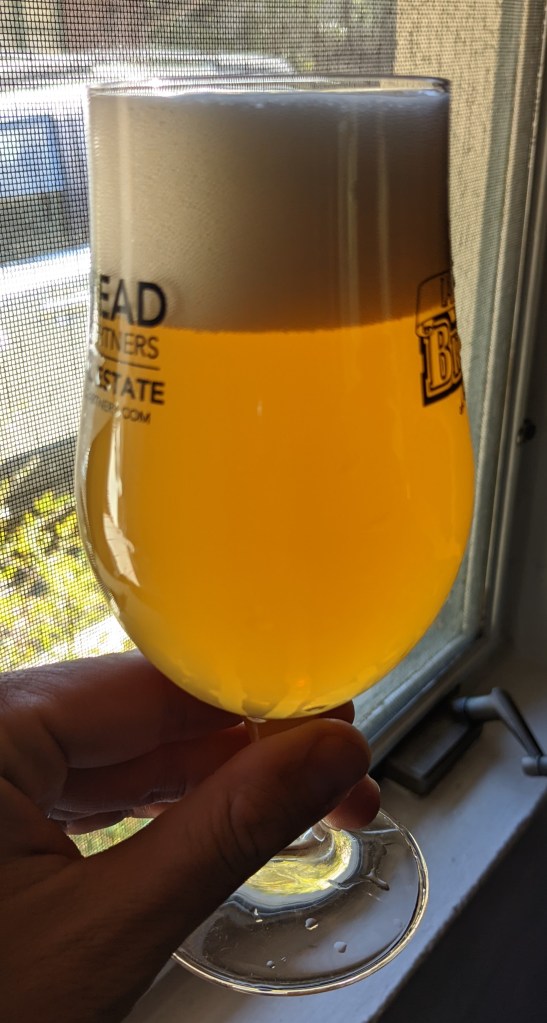
Hop Water v1.0

I enjoy hop water as a non-alcoholic option, but it can be pricey and sometimes even hard to find at my usual grocery store. With my hop stash, it should be easy to make at home, right? There are plenty of recipes for hop water out there (e.g., in the March/April 2024 Zymurgy), but most of them require you to make a keg’s worth and carbonate in the keg. I don’t really have the space for that (beers are the primary thing in my keezer!), and I don’t really want 2, 3, or 5 gallons of hop water that may or may not taste good. For carbonated non-alcoholic beverages, I’m a huge fan of making concentrates that can then be purpose-mixed by the glass (see my tonic syrup and soda syrup recipes).

Photo by Donovan Kelly on Pexels.com

I’ve been keeping an eye out for just this kind of recipe, and recently saw one on the NABeer reddit forum. It fit my most important criterion–a recipe that could be made as a concentrate and mixed with sparkling water–and also gave very specific directions. So, I made some slight adjustments and crafted a batch! The recipe is below.

Hop Water v1.0

  • 500 mL of tap water, heated to 170°
  • 5 g of Centennial hop pellets
  • 1 tsp. of white sugar
  • 1 tbs. of freshly squeezed lime (or lemon) juice
  • carbonated water (12 oz. per serving, approximately)
Procedure

  • I put the white sugar into my Pyrex, and then set my pour-over coffee setup (carefully washed to reduce coffee aroma) on top of the Pyrex.
  • I put the hop pellets inside a tea bag, set inside the pour-over coffee setup. Then, I slowly poured the water over the hop pellets, stopping once I had collected around 500 mL of hop water concentrate.
  • Next, I poured the hoppy goodness into a mason jar, closed it up, and set it in an ice bath to chill. This ice bath isn’t required, but I was impatient and wanted to sample my hop water quickly!
  • Once the concentrate was chilled, I added the lime juice, shook it all up well, and then got ready to serve.
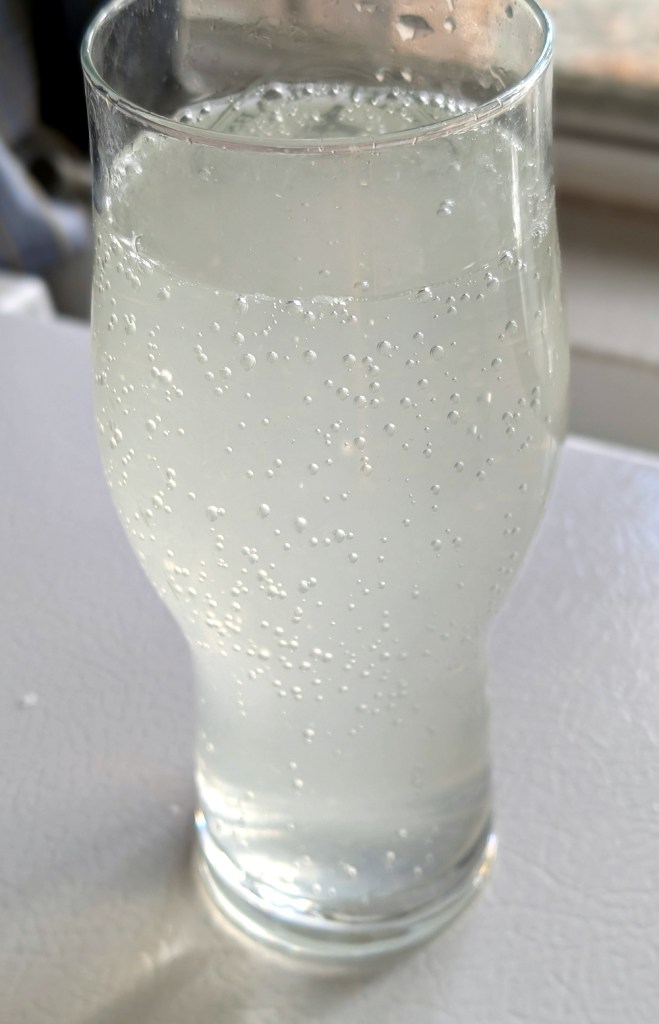
  • To prepare a serving, I mixed 1 shot (~30 mL) of the concentrate with 12 oz. of carbonated water.

Initial Impressions

This is pretty respectable hop water! It’s not overly sweet, and the hoppy bitterness and aroma come through prominently. A recipe on Zymurgy called for 2 oz. of hops cold (1 oz. each of a hop like Citra and Centennial) steeped overnight for a 1 gallon batch, so I might try that to see how it compares.

I’m going to use this as a jumping-off point for some variants — I would like to try a “dip-hopped” version, and I’ll definitely attempt a version with a greater amount of hops. It will be fun to explore this new world, and I’m so glad I have found a hop water I can mix as I need it, without having to tie up a keg.
Dakota Gold Pils

Summer is a great time for pale lagers! For this recipe, I riffed on the Schell’s Pils clone I’ve brewed in the past. It is intended to be a German pils, which is a style I quite enjoy. This recipe uses only 2-row malt, rather than pilsner malt, for the base, with a bit of CaraPils or similar malt.

For this iteration, I tried out Mecca Grade’s pale American malt as the primary base grain, using a bit of Rahr 2-row to finish out that supply. I also subbed in Carafoam instead of Carapils. The hops are entirely whole cones from South Dakota (thanks, Dad!). I had to guess on the alpha based on what is typical for the style, and as you’ll see in the results probably guessed high.

Dakota Gold Pils

  • 7 lb. 9 oz. Lamonta Pale American malt (Mecca Grade)
  • 2 lb. 7 oz. 2-row pale malt (Rahr)
  • 0.5 lb. Carafoam malt (Weyermann)
  • 1.09 oz. Hallertauer whole hops (3.0% estimated alpha), 60 minute boil
  • 1 oz. Sterling whole hops (4.5% estimated alpha), 60 minute boil
  • 1 oz. Saaz whole hops (3.5% estimated alpha), 15 minute boil
  • 0.5 tsp. BrewTanB, 10 minute boil
  • 1 Whirlfloc tablet, 5 minute boil
  • 1 oz. Saaz whole hops (3.5% estimated alpha), 5 minute boil
  • 1 tsp. yeast nutrient (WLN1000, White Labs), 5 minute boil
  • 2 pkg. Diamond Lager dry yeast (Lallemand)

Target Parameters

  • 1.047 s.g., 1.010 f.g., 4.8% abv, 35 IBU, 5 SRM
  • Full volume mash, 149° for 60 minutes, 168° mash-out for 10 minutes
  • RO water with minerals added to hit target of 59 ppm Ca, 8 Mg, 89 SO4, 63 Cl, RA=-47, alkalinity=0.

Procedure

  • Starting with 7.6 gallons of RO water, I added 2.7 g gypsum, 2.2 g epsom salt, and 3.4 g of calcium chloride, to hit the target water profile. I also added half of a sodium metabisulfate tablet, to remove any latent oxygen in the water.
  • I heated the water to 154° and added the grains to hit a target mash temperature of 149°. I did not add any lactic acid, because the pH was calculated to be approximately fine (pH of 5.4) without any additions.
  • After a 60 minute mash, I heated to 168° for the mash-out, and pulled the grains after 10 minutes of this.
  • In total, I collected 6.8 gallons of runnings with a gravity of 1.039, for 70% efficiency.
  • I brought the runnings to a boil, adding hops and finings as indicated by the recipe. After a 60 minute boil, I turned off the heat and chilled to ~70°. I transferred the wort to the fermenter, and chilled down to 50° before pitching the yeast.
  • Starting gravity was 1.047. I brewed the beer on 15 April 2023, fermenting at 52°. I held it here until 13 May 2023, when I cold crashed the beer.
  • I kegged the beer with a closed transfer on 28 May 2023. Final gravity was 1.009, for 5.0% abv.

Tasting

  • Appearance
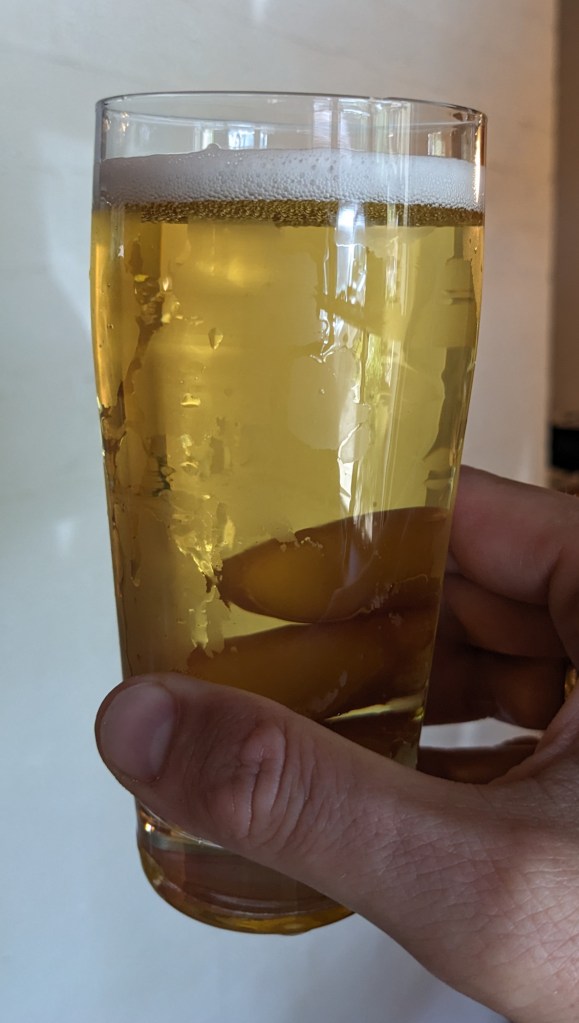
    • Brilliantly clear, straw-colored beer that pours with a fine and persistent white head. Absolutely beautiful!
  • Aroma
    • Sweet malt aroma. Not really much for hops.
  • Flavor
    • Cracker and sweet malty flavor. Moderately low bitterness, with a very clean fermentation profile. There is not a ton of hop character, surprisingly.
  • Mouthfeel
    • Medium-light body, moderately high carbonation, and smooth finish with a slightly extended bitterness.
  • Would I Brew This Again?
    • This is an excellent beer! A touch more bitterness and hop flavor/aroma would be great, but it is otherwise fantastic in drinkability and appearance. It’s not really a German pils at all–it should be more bitter–but that’s OK. Were I to assign a BJCP category, I would probably put it in International Pale Lager. This is the definition of a lawnmower beer!
  • Overall
    • 10/10 as a beer on its own; 6/10 as a German pils.

Tropical Dream IPA

I crafted this recipe to be very tropical hop-forward, with Voss kveik to accentuate any citrus qualities. The kveik choice also let me not be so fussy about temperature; in the end, I’m not sure I’m 100% happy with that decision, but even so the beer is pretty darned good. The hops are amazing!

Tropical Dream IPA

  • 12 lb. 2-row malt (Rahr)
  • 0.5 lb. biscuit malt (Dingemans)
  • 5 oz. crystal 15 malt (Great Western)
  • 5 oz. corn sugar, added to boil
  • 1.15 oz. Magnum hop pellets (10.1% alpha), 60 minute boil
  • 1 tsp. BruTanB, 10 minute boil
  • Whirlfloc tablet, 5 minute boil
  • 1 oz. Enigma hop pellets (19.2% alpha), 10 minute whirlpool
  • 1 oz. HBC 586 hop pellets (11.5% alpha), 10 minute whirlpool
  • 1 oz. Vic Secret hop pellets (18.4% alpha), 10 minute whirlpool
  • 1 pkg. Voss Kveik Ale Yeast (Lallemand)
  • 1 oz. Enigma hop pellets (19.2% alpha), dry hop in keg
  • 1 oz. HBC 586 hop pellets (11.5% alpha), dry hop in keg
  • 1 oz. Vic Secret hop pellets (18.4% alpha), dry hop in keg

Target Parameters

  • 1.060 s.g., 1.010 f.g., 6.6% abv, 67 IBU, 6 SRM
  • Full volume mash at 149° for 60 minutes and 10 minute mash-out at 168°
  • Claremont tap water with Campden tablet, adjusted to hit 113 Ca, 7 ppm Mg, 92 ppm Na, 194 ppm SO4, 110 ppm Cl, 156 ppm HCO3.

Procedure

  • I heated 7.25 gallons of water to 155°, and added the grains along with 8 mL of 88% lactic acid for pH adjustment. I maintained the mash at 149° for 60 minutes, with recirculation, and then raised the mash to 168° for 10 minutes.
  • In total, I collected 6.25 gallons of runnings with a gravity of 1.045, for only 60% mash efficiency. Awful! I’ve had major issues with my grain mill lately, and this was pretty much the last straw. I added a bit of DME to adjust things.
  • I added 7 g of gypsum to the boil, to hit my water target.
  • I brought the wort to a boil, adding the hops and finings per the recipe.
  • After a 60 minute boil, I chilled the wort slightly (down to around 195°), did the whirlpool, and then did the initial chilling of the wort. I finished the chill overnight at ambient, letting things settle down to around 68°.
  • I brewed this beer on 26 November 2022, pitched the yeast on 27 November 2022, and let the beer ferment at ambient. Starting gravity was 1.055.
  • I kegged the beer on 29 December 2022. Final gravity was 1.012, for 5.6% abv.

Tasting

  • Appearance
    • The beer pours relatively clear, with a light-gold appearance and a persistent white head. Overall, it’s a very pretty brew!
  • Aroma
  • Lots of hop aroma–guava, honeydew, and orange; very nice!
  • Flavor
    • The beer has a prominent pithy bitterness, with guava, melon, and bright citrus character. The malt is light, clean, and malty sweet. The yeast quality has a very slight bit of ester character; it’s not bad, but gives some kind of Belgian character to the brew. The yeast holds fairly well against the hops, but as an American IPA it would be better without the kveik.
  • Mouthfeel
    • Medium-light body, medium carbonation, dry finish with lingering bitterness.
  • Would I Brew This Again?
    • Yes, but I would likely do it without the kveik; perhaps swap in some American ale yeast instead? There is some type of ester in the background that keeps it from being truly clean. There are no off-flavors; just…something…that clashes a bit. The hop combination is fantastic, though!
  • Overall
    • 7/10

Big Hop Summer IPA

Although many of my IPAs have been on the session side, I do try to make a full strength version every once in awhile. In this recipe, I aimed for something highly drinkable and packed with hop flavor. Towards the first item, I mashed low and added some dextrose to keep things light. Towards the second end, I looped in some HOPBOX finds–Azacca, HBC 586, and Idaho Gem. Finally, I wanted to experiment with Lutra, a kveik strain that has a reputation of a quick and clean fermentation. It’s a bit of a kitchen sink beer, in order to use up some grains and hops, but it’s all with a purpose.

Big Hop Summer IPA

  • 5.25 lb. Golden Promise malt (Simpsons)
  • 5.25 2-row pale malt (Rahr)
  • 1.75 lb. Vienna malt (Weyermann)
  • 0.25 lb. Munich I malt (Weyermann)
  • 0.75 lb. dextrose (added to boil)
  • 0.75 oz. Bravo hop pellets (14.2% alpha), 60 minute boil
  • 1 Whirlfloc tablet, 5 minute boil
  • 1 oz. Azacca hop pellets (12.7% alpha), 15 minute whirlpool
  • 1 oz. HBC 586 hop pellets (11.8% alpha), 15 minute whirlpool
  • 1 oz. Idaho Gem hop pellets (14.2% alpa), 15 minute whirlpool
  • 1 pkg. Lutra kveik (dry), Omega OYL-071
  • 1 oz. Azacca hop pellets (12.7% alpha), dry hop in keg
  • 1 oz. HBC 586 hop pellets (11.8% alpha), dry hop in keg
  • 1 oz. Idaho Gem hop pellets (14.2% alpa), dry hop in keg

Tasting

  • Appearance
    • The beer pours as a hazy gold, with a persistent white head that leaves nice lacing down the side of the glass over time. I am surprised that the haze hasn’t dropped out, even after two months in the keg at temperatures below 40 degrees.
  • Aroma
    • Orange peel aroma at the front; very citrusy character overall.
  • Flavor
    • The balance is tipped towards the hops (no surprise), with a very citrusy and resin character. I also pick up a bit of stone fruit, which might be from the hops or perhaps from the yeast. There is a little bit of a “twang” of something somewhere in the background, which I suspect is from the yeast but I can’t be 100 percent certain. Even though Lutra is supposed to ferment clean, I’ve seen remarks that it is still a farmhouse-type strain, and they remain a bit rustic. As the beer sits on the tongue, I wonder if some of it is some citrus pith character. In any case, there is something that detracts a little bit from complete enjoyment of the beer by my tastes, but it’s not overwhelming, and it isn’t totally out of character for this kind of beer. The malt is in the background, as it should be, but provides a nice bit of body and a touch of malty flavor to balance against the hop bitterness.
  • Mouthfeel
    • Medium-light body, with moderate carbonation and a dry finish. It goes down super easy.
  • Would I Brew This Again?
    • I like the beer overall, but I might switch up the hop varieties. I tried Azacca years ago, it didn’t overwhelm me with awesome then, and I had a similar experience this time around. I think it’s just not a hop that does much for me. I’m surprised by how persistently hazy the beer has been, even after two months in the keg; the haze doesn’t terribly detract from the beer, but it’s just a bit more haze than I expected. Those remarks aside, this is a very drinkable beer, especially for something that clocks in at 6.7% abv. The combination of low mash temperature and dextrose addition likely contributed to keeping things on the lighter side.
  • Overall
    • 7.5/10

2021 IPA

This might be my least creative recipe name ever, but it sure is appropriate! Thanks to my HOPBOX, I had a whole mess of hops from the 2021 harvest. I wanted to craft a recipe that would highlight more “traditional” IPA flavors of citrus and pine, while also exploring some new-to-me varieties.

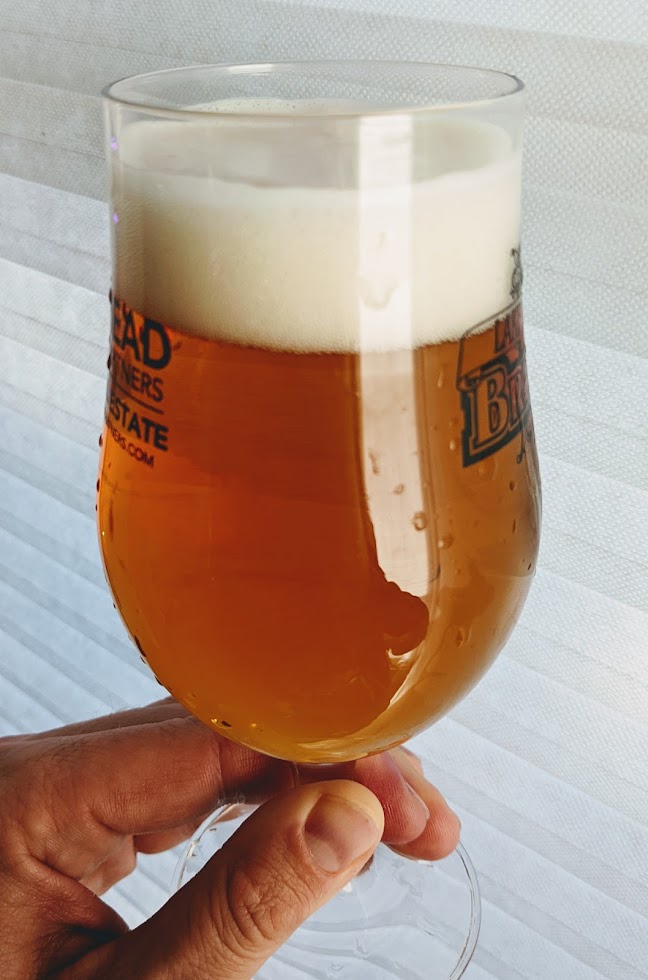
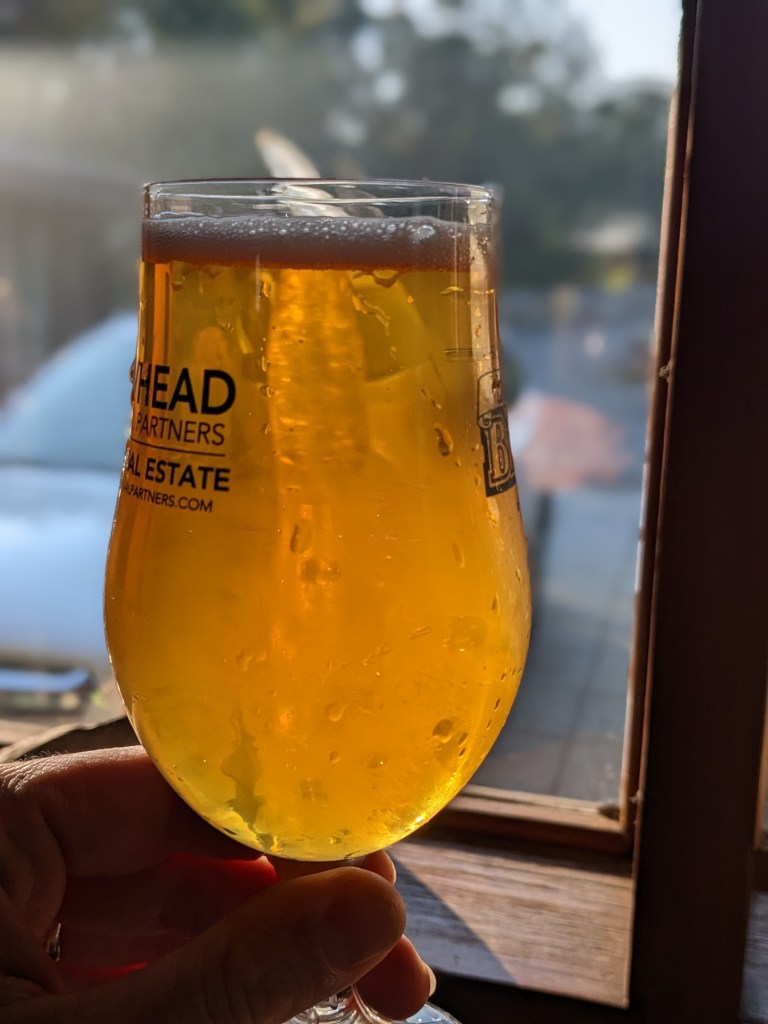
orange-gold beer with off-white head, held in tall tulip glass

After sorting through my hop selection, I selected Bravo as the main bittering hop, with heavy doses of Cashmere, Wai-iti, and Waimea in the whirlpool and dry hop. Each of those brought complementary notes of lemon, citrus, and pine, without major components of tropical fruits. When opening up the hops, I noted that Waimea had an incredible fruit aroma (and was my favorite), with Wai-iti being a close second. The Cashmere had a slightly dank aroma that verged on vegetal, so I wasn’t initially sure how I would like it in the brew. I built a moderately complex grist, in part to use up some malts and in part to give a robust malt backbone to the beer. Finally, I chose BRY-97 as the yeast. I haven’t brewed with it a ton (my early experiments found it to be veeery slooow to take off), but have heard enough great things that I wanted to give it a try.

2021 IPA

  • 10 lb. 6 oz. California Select 2-row malt (Great Western)
  • 2 lb. Maris Otter malt (Crisp)
  • 0.75 lb. Chateau Munich Light malt
  • 0.5 lb. Caramel 40° malt (Briess)
  • 0.25 lb. biscuit malt (BlackSwaen)
  • 1 oz. Bravo hop pellets (14.2% alpha), 60 minute boil
  • 1 Whirlfloc tablet, 5 minute boil
  • 1 oz. Cashmere hop pellets (7.0% alpha), 15 minute whirlpool
  • 1 oz. Wai-iti hop pellets (3.5% alpha), 15 minute whirlpool
  • 1 oz. Waimea hop pellets (13.2% alpha), 15 minute whirlpool
  • 2 pkg. American West Coast Ale yeast (Lallemand BRY-97)
  • oz. Cashmere hop pellets (7.0% alpha), 3 day dry hop in fermenter
  • 1 oz. Wai-iti hop pellets (3.5% alpha), 3 day dry hop in fermenter
  • 1 oz. Waimea hop pellets (13.2% alpha), 3 day dry hop in fermenter

Target Parameters

  • 1.062 o.g., 1.013 f.g., 6.5% abv, 63 IBU, 8 SRM
  • Full volume mash at 152° for 60 minutes, with 10 minute mash-out at 168°
  • Claremont tap water, adjusted with lactic acid to knock out carbonate in strike water. Adjusted further in kettle to reach target water profile of 61 ppm Ca, 16 ppm Mg, 91 ppm Na, 170 ppm SO4, 85 ppm Cl, 15 ppm HCO3; RA=-41 ppm.

Procedure

  • The night before brewing, I collected 7.5 gallons of tap water and treated it with 0.5 Campden tablet and 5.75 mL of 88% lactic acid, to knock out the carbonates. I let it sit overnight, before brewing the next morning.
  • I heated the water to 159°, and mashed in to hit a target temperature of 152°. I added 2.1 mL of 88% lactic acid, to adjust pH.
  • After recirculating at 152° for 60 minutes, I raised the temperature to 168° and held it there for 10 minutes before removing the grain basket.
  • In total, I collected 6.3 gallons of runnings with a gravity of 1.054, for 66% mash efficiency.
  • I brought the runnings to a boil, boiling for 30 minutes before adding the hops, to bring up the gravity a bit. As the boil started, I added 4 g of gypsum of 3 g of epsom salt to the boil, to hit the target water profile.
  • After the initial 30 minute boil, I added hops and finings per the recipe, reaching a 90 minute total boil.
  • Once I had finished the boil, I added the whirlpool hops and whirlpooled for 15 minutes before chilling down to 70° and transferring to the fermenter.
  • I pitched the yeast, and fermented at 66°.
  • I brewed the beer on 6 November 2021, and hit a starting gravity of 1.063.
  • On 14 November 2021, I added the dry hops to the fermenter in a bag, and let it sit at ambient temperature (~64°) for three days.
  • I kegged the beer on 17 November 2021. Within about a month, the beer had dropped completely clear.

Tasting

  • Appearance
    • This is a deep gold and very clear beer, with a persistent ivory head–gorgeous!
  • Aroma
    • Citrus peel and orange; not much in the way of detectable malt character, and the yeast character is very clean.
  • Flavor
    • The hops are at the forefront, with orange and citrus zest, followed by light pine. The malt character is smooth, but not over the top. I feel like a little bit of the hop character was lost between when I smelled the hops directly and now. Although I think it partly could be oxidation, I also suspect I should have either dry hopped more freely or else dry hopped in the keg, to get more exposure time. I bagged the hops for dry hopping, and don’t think they got as much contact as they should have.
  • Mouthfeel
    • Moderate body, with an off-dry finish and moderate carbonation level.
  • Would I Brew This Again?
    • Yes! I think I will modify my dry-hopping for next time, and dry hop a little longer or else leave the hops in the keg, or increase the amount of Waimea and Wai-iti.
  • Overall
    • 8/10