Snowdrop Kölsch 2024

Kölsch is a simple style in so many ways, but a hard one to do well. After a few iterations, I perfected a recipe that works well for me. I first brewed Snowdrop Kölsch in 2023, and it’s a definite winner. I made a batch earlier this year, but it unfortunately (and frustratingly!) got infected, so I did a deep cleaning in the fermenters for my second attempt. This one succeeded!

Other than slight changes in malt brand (Rahr pilsner instead of Viking) and building up my water from scratch, this is identical to the 2023 edition of the recipe. There is no sense in messing with perfection! Sadly, Lallemand has discontinued their German ale yeast, so I will have to search for a different strain in future years. This is a shame, because I quite like it! I suppose it’s back to liquid yeast whenever my dry yeast supply runs out.

Snowdrop Kölsch

  • 9.5 lb. pilsner malt (Rahr)
  • 0.5 lb. Munich I malt (Weyermann)
  • 0.5 tsp. BrewTanB (mash)
  • 1 oz. Edelweiss hop pellets (5.8% alpha), 45 minute boil
  • 0.5 tsp. BrewTanB, 10 minute boil
  • 1 Whirlfloc tablet, 5 minute boil
  • 1 oz. Edelweiss hop pellets (5.8% alpha), 5 minute boil
  • 1 pkg. Köln Kölsch-style yeast (Lallemand)

Target Parameters

  • 1.046 s.g., 1.010 f.g., 24 IBU, 4 SRM, 4.6% abv
  • Full volume mash, 60 minute mash at 152°, 10 minute mash-out at 168°
  • RO water with added minerals to hit target of 50 ppm Ca, 6 ppm Mg, 6 ppm Na, 54 ppm SO4, 72 ppm Cl, 0 ppm HCO3, -39 ppm RA

Procedure

  • Starting with 7.25 gallons of RO water, I added 0.4 g of sea salt, 1.4 g of epsom salt, 1.7 g of gypsum, and 3.6 g of calcium chloride, in order to reach my target water parameters. I heated the water to 157° before adding the grains and holding the mash at 152° (with recirculation) for 60 minutes. Next, I heated the mash to 168° for a 10 minute mash-out, before pulling the grains.
  • In total, I collected 6.6 gallons of runnings with a gravity of 1.041, for 73% mash efficiency.
  • I brought the runnings to a boil, adding hops and finings per the recipe. After 60 minutes, I chilled the wort to 78°, let it settle for a bit, and transferred to the fermenter. I chilled the wort to 60° in the fermentation chamber before pitching the yeast, and fermented at 64°.
  • I brewed this beer on 23 June 2024. Starting gravity was 1.048.
  • I kegged the beer on 12 July 2024, using a closed transfer.
  • Final gravity was 1.009, for 5.2% abv.

Tasting

  • Appearance
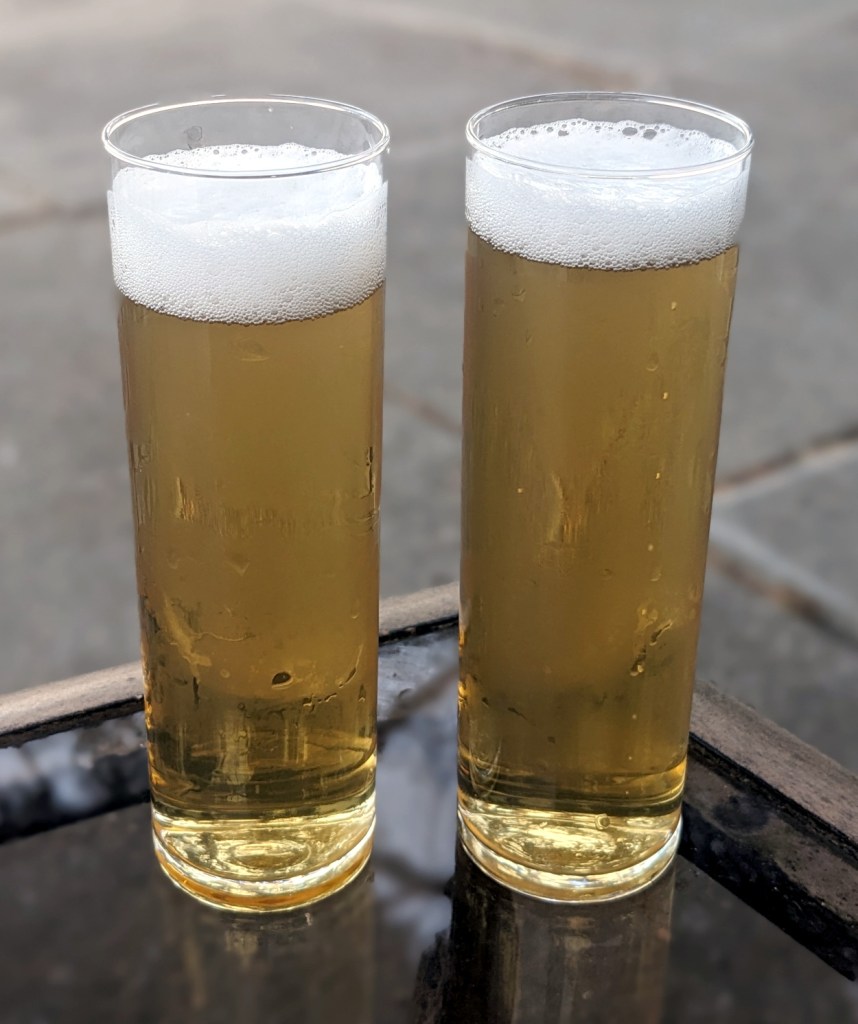
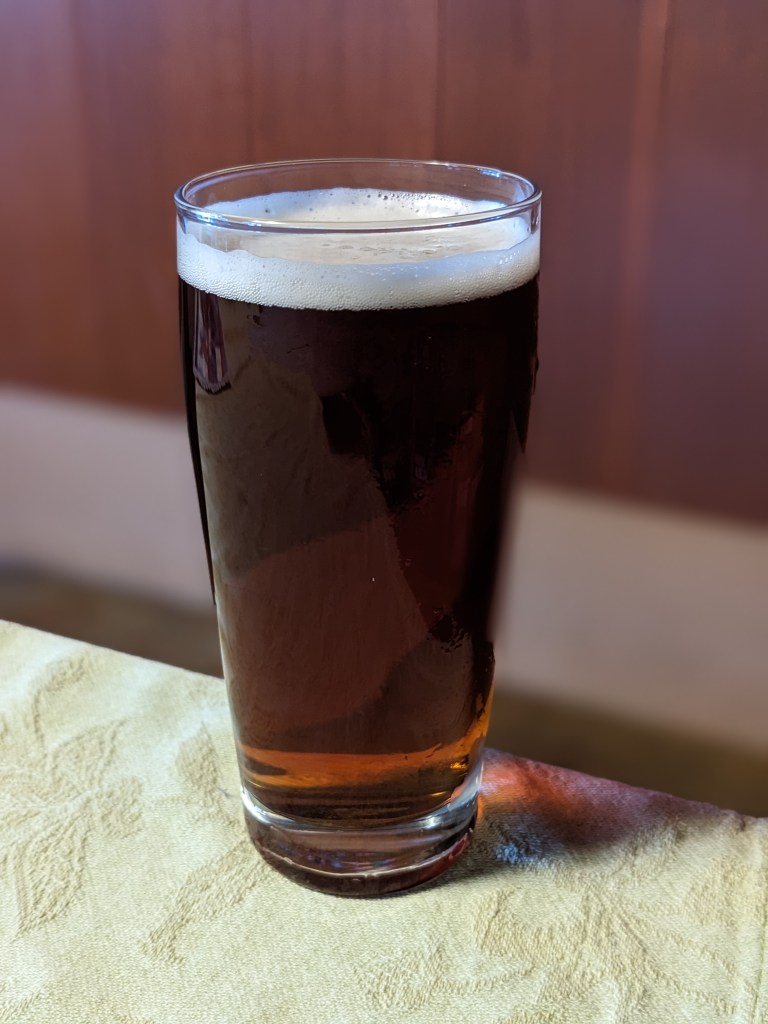
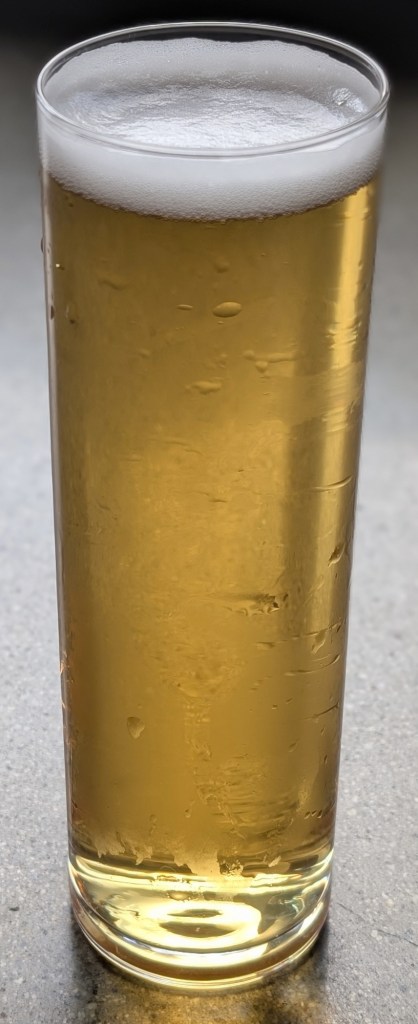
    • Exceptionally clear, light yellow beer with somewhat persistent white head. It is pretty in the glass!
  • Aroma
    • Grainy sweet aroma, light fruity character. Very subtle floral hop note.
  • Flavor
    • Light malty character, medium-low bitterness. Slight fruitness, of the pear/apple variety (but not strictly apple; it has more depth than that!). Slight floral hop quality.
  • Mouthfeel
    • Medium-light body, moderate carbonation, smooth and pleasant finish.
  • Would I Brew This Again?
    • This is a very good kölsch! I don’t know that it’s my best–the hop aroma is a little more subdued than last year’s version–but this one still hits the notes!
  • Overall
    • 9/10

Humboldt’s Hefeweizen 2024

I have made weissbiers (hefeweizens) a few times previously, with decent but not consistent results. This is a style that can be quite enjoyable or quite awful, so I invested some time into learning more of the underlying ingredients and techniques for a tasty, traditional recipe. An article at brau!magazine was incredibly useful, with lots of detailed suggestions. I reformulated my previous Humboldt’s Hefeweizen (because I like the name) for this batch.

My first big decision–perhaps the most important–was yeast choice and fermentation control. Without a good yeast character, you don’t have a good hefeweizen (in my opinion). I am fairly committed to using dry yeast whenever possible because the convenience can’t be beat, and I wanted to give Lallemand’s Munich Classic another chance. My previous attempt was okay, but had little of the yeast character I wanted. That batch was fermented cool (~65°), and I knew I should up the temperature a bit to get more “oomph” to the yeast. So, I aimed for 67°. Working backwards, I decided a ferrulic acid rest would be critical–my previous batch didn’t use that, and I think that factor also set back beer quality.

My second decision concerned the grist. Past beers were ~45 to 55 percent wheat, and I wanted to increase that. This time around, I aimed for over 60 percent wheat, in hopes that it would 1) be more true to style; and 2) tilt the head quality in a positive direction.

I had fun formulating the batch and figuring out what would give the best results. The end product was definitely worth it!

Humboldt’s Hefeweizen 2024

  • 6.75 lb. red wheat malt (Briess)
  • 4 lb. pilsner malt (Rahr)
  • 0.5 lb. rice hulls
  • 0.5 tsp. BrewTanB (mash)
  • 1 oz. Sterling whole hops (4.5% alpha estimated), 45 minute boil
  • 0.5 tsp. BrewTanB, 10 minute boil
  • 1 tsp. yeast nutrient (White Labs WLN1000)
  • 1 pkg. Munich Classic Wheat Beer yeast (Lallemand)

Target Parameters

  • 1.049 o.g., 1.010 f.g., 5.2% abv, 14 IBU, 5 SRM
  • Full volume mash, no sparge, 113° mash for 20 minutes, 145° mash for 45 minutes, 162° mash for 30 minutes
  • RO and Claremont tap water, mixed to hit 10 ppm Ca, 4 ppm Mg, 18 ppm Na, 16 ppm SO4, 19 ppm Cl, 3 ppm CaCO3, RA=-7, effective hardness=10 ppm.

Procedure

  • I collected 2.5 gallons of Claremont tap water and neutralized it with 1.76 mL of 88% lactic acid and a small bit of Campden tablet. Then, I added 5 gallons of RO water, to hit my mash water profile.
  • I started the mash at 113° for 20 minutes, to enable a ferulic acid rest. Then, I raised the mash to 145° for 45 minutes, and finally ended at 162° for 30 minutes. Once the mash was done, I pulled the grains and heated the runnings to a boil.
  • The kettle had 6.6 gallons of runnings with a gravity of 1.040, for 65% mash efficiency. This was a touch lower than I anticipated, but that may be due to the high amount of wheat.
  • Once the kettle was boiling, I added finings per the schedule and then turned off the heat after 60 minutes. A slightly greater boil vigor was used to increase gravity. I chilled the wort to 66° and then transferred to the fermenter.
  • I brewed this beer on 14 April 2024. Starting gravity was 1.048, nearly exactly to target.
  • After pitching the yeast, I started fermentation at ambient for a few hours, and then transferred the fermenter into my fermentation chamber set for 67°. Fermentation seemed to take off pretty quickly!
  • I kegged the beer on 24 April 2024. The beer had an amazing aroma–a decent amount of spicy phenol and a hint of banana; exactly what I was looking for! I carbonted to a higher level, around 3.5 volumes of CO2.
  • Final gravity was 1.014, for 4.4% abv.

Tasting

  • Appearance
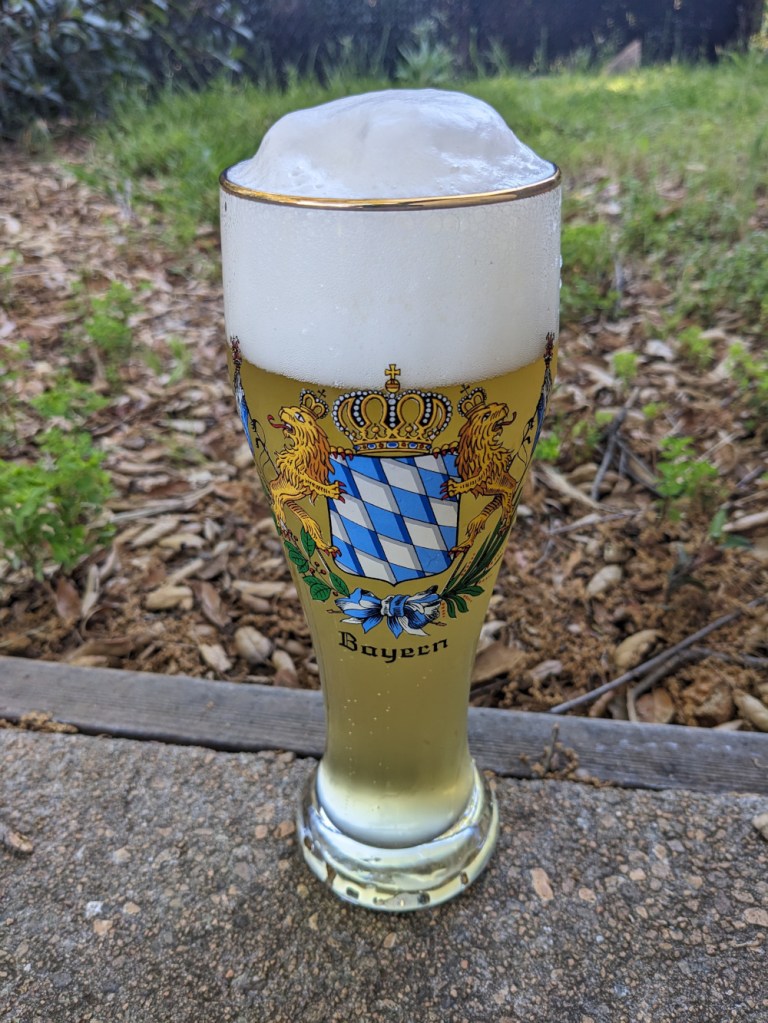
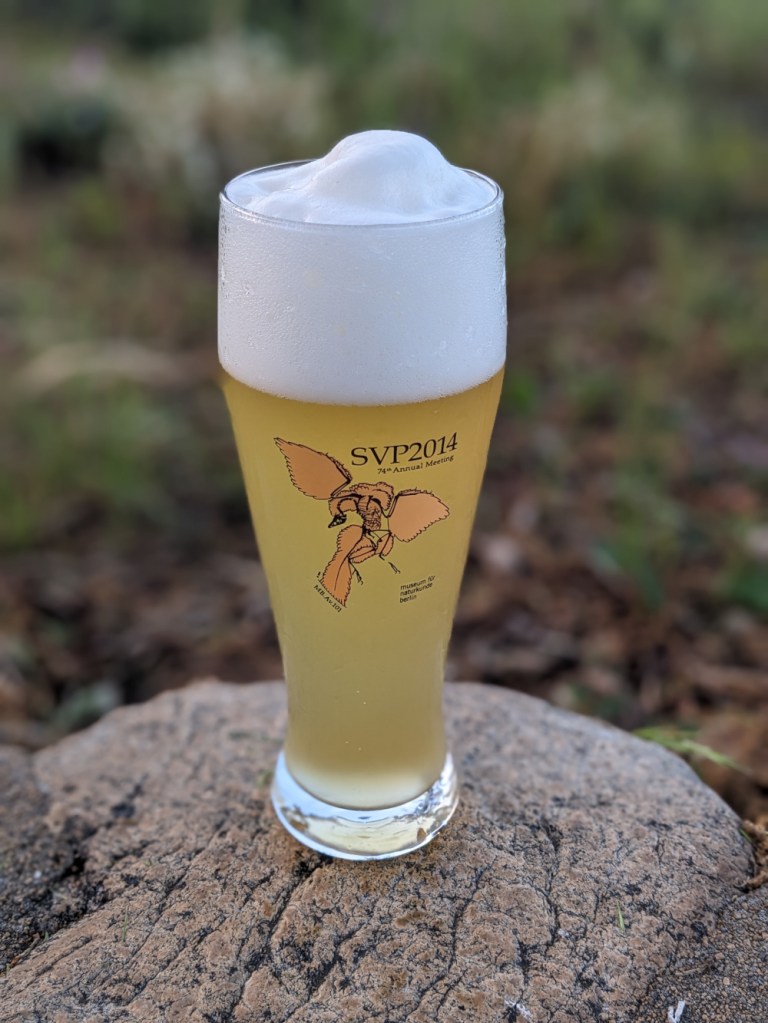
    • Pours with a merangue-like, tall, gorgeous white head that sticks around for ages and leaves gorgeous lacing on the glass. The beer itself is straw yellow and hazy beer. It’s exactly as a fresh hefeweizen should be!
  • Aroma
    • Yeast at the forefront, with a medium-high level of yeast character–primarily clove plus a touch of banana.
  • Flavor
    • Even balance of clove and banana, and a light dough malt character behind that. Low level of bitterness.
  • Mouthfeel
    • Light body. medium-high carbonation, smooth, lightly dry finish (from the hops?).
  • Would I brew this again?
    • This is the best hefeweizen I have made. Everything ran perfectly, and I wouldn’t change a thing. The yeast quality is perfect, head is perfect, all is amazing. It had a sulphur aroma and flavor early on; this faded in a few days.
    • Overall
      • 10/10

Alstadt Alt 2.1

Alstadt Alt is one of my all-time favorite recipes, and I’ve brewed it annually since 2020. I’ve finally realized that altbier is basically the German version of amber ale, which squarely puts it into my favorite flavor wheelhouse. The original recipe was by Horst Dornbusch, and is just superb.

The grain bill on this version is nearly identical to the 2022 version, only with Viking’s Pilsner Zero instead of plain-old Viking Pilsner malt. I used Magnum hops for bittering, with a generous dose of Spalt Spalter. Finally, I used Köln Kölsch Style Ale Yeast — my go-to dry German ale yeast. I recently learned that Lallemand is discontinuing the strain, which is a major bummer. I can only guess that my personal homebrew demand wasn’t enough to float the line for the long-term. Ah well. I stocked up recently, so I’ll be set for the next year or two before having to find an alternative. K-97 is okay, but just not the same…although I note from past notes that it worked well in an alt. I might have to try it again.

Alstadt Alt 2.1

  • 6.5 lb. Viking Pilsner Zero malt
  • 1.5 lb. Munich I malt (Weyermann)
  • 1.5 lb. Vienna malt (Weyermann)
  • 1 lb. Caramunich I malt (Weyermann)
  • 2 oz. Carafa Special I malt (Weyermann)
  • 0.75 oz. Magnum hop pellets (10.1% alpha), 60 minute boil
  • 0.5 oz. Spalt Spalter hop pellets (3.9% alpha), 60 minute boil
  • 1.5 oz. Spalt Spalter hop pellets (3.9% alpha), 5 minute boil
  • 1 Whirlfloc tablet, 5 minute boil
  • 1 pkg. Köln Kölsch Style Ale Yeast (Lallemand)

Target Parameters

  • 1.048 s.g., 1.011 f.g., 4.9% abv, 38 IBU, 12 SRM
  • 60 minute infusion mash, full volume, 152°
  • Claremont tap water treated with Campden tablet

Procedure

  • I mashed in with 7 gallons of water at 158°, to hit a mash temperature of 152°. I added 5 mL of 88% lactic acid and held the mash here (with recirculation) for 60 minutes, before raising to 168° for the 10 minute mash-out.
  • After removing the grain basket, I had 6.3 gallons of wort with a gravity of 1.040, for an efficiency of 63%.
  • I brought the runnings to a boil, adding malt and finings per the recipe. After the 60 minute boil, I chilled to 78° and transferred to the fermenter. I let it chill a bit down to 60° in the fermentation chamber, before pitching the yeast and setting the fermentation temperature to 62°.
  • I brewed the beer on 2 September 2023, and it had a starting gravity of 1.048.
  • I let the beer free-rise to 66° on 11 September 2023.
  • I kegged the beer on 16 September 2023, and it had a final gravity of 1.012. This works out to 4.7% abv.

Tasting

  • Appearance
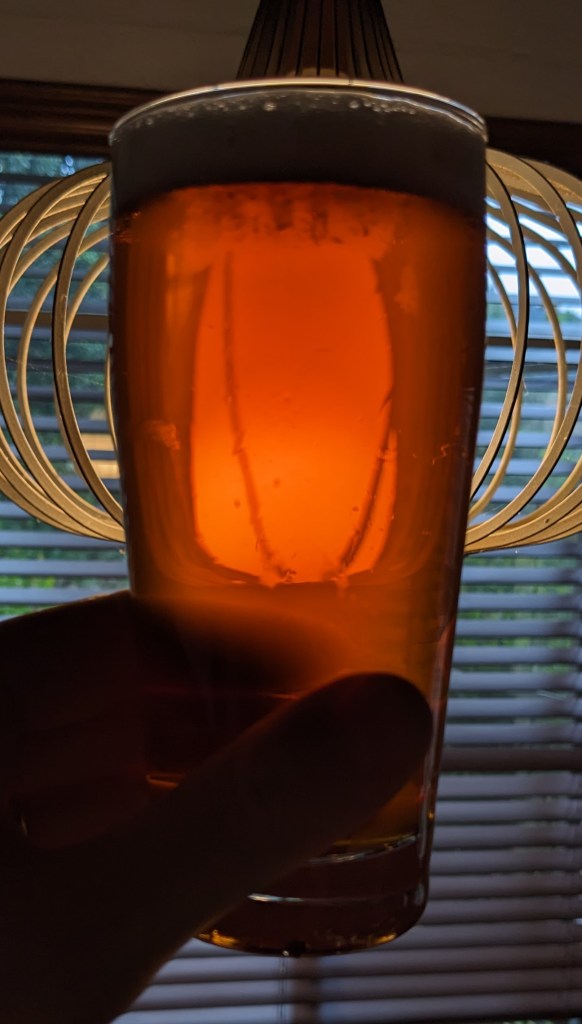
    • The altbier pours with a persistent ivory head; the beer itself is a deep amber and brilliantly clear. It’s gorgeous!
  • Aroma
    • A malty bread crust character predominates, especially as the beer warms in the glass. There is perhaps a hint of fruitiness from the yeast. I don’t get much hop aroma.
  • Flavor
    • I get a rich, somewhat bready and toasty malt character, against a fairly prominent bitterness. This batch feels a bit more bitter than past versions, with a bit of herbal character.
  • Mouthfeel
    • Medium body, moderate carbonation, extended dryness on the finish.
  • Would I brew this again?
    • This remains one of my favorite recipes, but I think I would adjust the hops for my next batch. Magnum ended up just too bitter, taking this just over the edge into what works well for the recipe. For my next version, I think I’ll go back to Sterling for the bittering hops. I might also go back to Briess’s Caramel Munich 60L, to see how that works out.
  • Overall
    • 8/10

Kölsch Simplicitas

I try to do a kölsch-style ale roughly once a year, in part because I like the style, in part because it’s hard to find (in my opinion) truly great commercial examples, and in part because it’s a fun challenge to brew such a fussy beer. I’ve made a few iterations over the years, heading ever simpler with each batch. 2020’s version (Kölsch Minimus) was really elegant in its simplicity, so I modified it slightly for ingredients on-hand and to try a slight variation. Whereas last year’s batch had pilsner and Munich malt, this year I used pilsner and a touch of Carahell. I used the Edelweiss hop blend (instead of Sterling), and brought in the Lallemand Köln Kölsch-style ale yeast instead of K97.

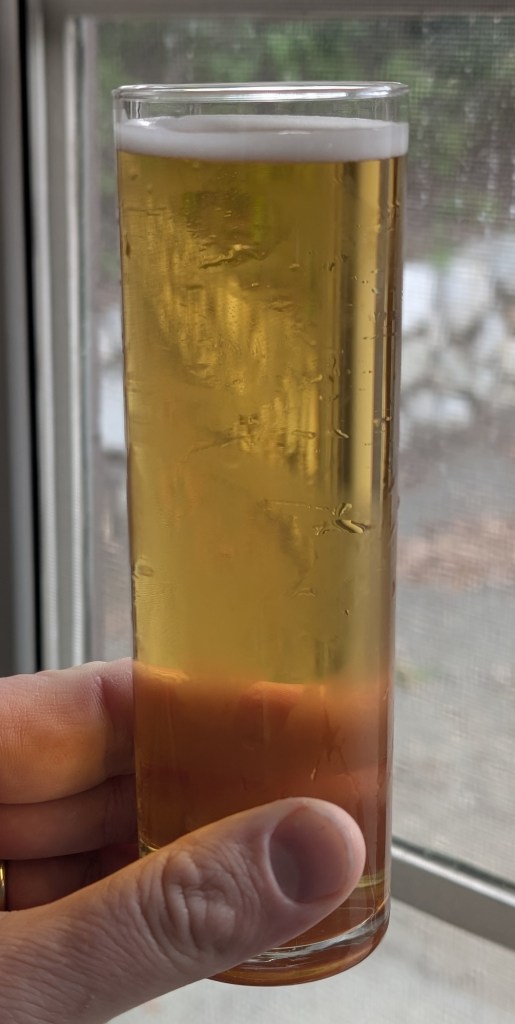
clear, yellow beer with white head, poured into a clear glass, held in a hand

Kölsch Simplicitas

  • 9.25 lb. Viking pilsner malt
  • 0.5 lb. Carahell malt (Weyermann)
  • 1 oz. Edelweiss hop blend (5.1% alpha), 60 minute boil
  • 0.5 oz. Edelweiss hop blend (5.1% alpha), 10 minute boil
  • 0.25 tsp. BruTanB, 10 minute boil
  • 1 Whirlfloc tablet, 5 minute boil
  • 0.5 oz. Edelweiss hop blend (5.1% alpha), 5 minute boil
  • 1 pkg. Köln Kölsch Style ale yeast (Lallemand)

Target Paremeters

  • 1.047 s.g., 1.009 f.g., 5.0% abv, 4 SRM, 24 IBU
  • Full volume mash, 90 minute mash at 150°, 10 minute mash-out at 168°
  • Claremont tap water, adjusted with 88% lactic acid to hit target of 28 ppm Ca, 6 ppm Mg, 91 ppm Na, 50 ppm SO4, 85 ppm Cl, 15 ppm HCO3, -11 ppm RA

Procedure

  • I adjusted the tap water with 5.4 mL of 88% lactic acid, to neutralize the carbonates. Then, I heated to 156° and mashed in, to hit a target of 150°. I added 2 mL of 88% lactic acid to adjust mash pH. I held the mash at 150° for 90 minutes while recirculating, and then raised the mash to 168° for 10 minutes, before removing the grains.
  • In total, I had 6.4 gallons of runnings with a gravity of 1.041, for 73% mash efficiency.
  • I brought the runnings to a boil, adding hops and finings per the recipe.
  • After a 60 minute boil, I turned off the heat and chilled to 64°, before transferring to the fermenter.
  • I brewed this beer on 8 January 2022. After pitching the yeast, I held the beer at 64° for fermentation.
  • I kegged the beer on 4 March 2022, transferring into a purged keg. The final gravity of the beer was 1.010, for 4.9% abv.

Tasting

  • Appearance
    • Very clear, just short of brilliant; medium-yellow in color. Pours with a creamy white head–absolutely beautiful and very persistent!
  • Aroma
    • Lightly grainy malt aroma; hop character is fairly minimal now, although in the earlier days of the beer there was a more prominent floral note that has since faded. Yeast character is very clean.
  • Flavor
    • The beer has a very nice, moderately malty flavor, against a moderate level of bitterness. Malt and hops are perfectly in balance. Yeast character is clean, with very slight fruitiness.
  • Mouthfeel
    • Crisp finish! Yum. The body is medium-light, and carbonation is moderate.
  • Would I brew this again?
    • Yes! This is a nice alternate recipe relative to 2020’s kölsch. My only minor dings are that the hop aroma has faded a bit since initial tastings; I kept this one in the fermenter awhile before kegging, so I think I would be in better shape if I had done the transfer a few weeks earlier. Otherwise, this is a great alternative kölsch to add to my recipe library. I like the Lallemand German ale yeast; it seems to ferment a touch cleaner than K97. I don’t know if I have a strong preference for one or the other, at least in the case of a kölsch. It just brings something different.
  • Overall
    • 8/10

Alstadt Alt 2.0

Altbiers are one of my favorite styles, so I have made a few versions over the years. I had great success with a recipe from the Altbier book by Horst Dornbusch. I first brewed it back in 2020, and it turned out really well. The 2021 edition was similarly great, so I made only minor tweaks for the 2022 brew. Instead of a mix of Briess Caramel Munich 60L and Caramunich I, I went with straight Caramunich I. Additionally, I switched the yeast from K97 to Lallemand’s Kolsch-style ale yeast. Everything else is pretty much the same.

Alstadt Alt 2.0

  • 6.5 lb. Viking Pilsner malt
  • 1.5 lb. Munich I malt (Weyermann)
  • 1.5 lb. Vienna malt (Weyermann)
  • 1 lb. Caramunich I malt (Weyermann)
  • 2 oz. Carafa Special I malt (Weyermann)
  • 1.2 oz. Sterling hop pellets (7.5% alpha), 60 minute boil
  • 1.0 oz. Spalt Spalter hop pellets (5.6% alpha), 5 minute boil
  • 1 Whirlfloc tablet, 5 minute boil
  • 1 pkg. Köln Kölsch Style Ale Yeast (Lallemand)

Target Parameters

  • 1.050 s.g., 1.011 f.g., 5.1% abv, 36 IBU, 12 SRM
  • 90 minute infusion mash, full volume, 152°
  • Claremont tap water treated with Campden tablet

Procedure

  • I mashed in with 7.25 gallons of water at 158°, to hit a mash temperature of 152°. I added 3mL of 88% lactic acid and held the mash here (with recirculation) for 90 minutes, before raising to 168° for the 10 minute mash-out. I extended the mash a touch so as to aim for a slightly higher attenuation.
  • After removing the grain basket, I had 6.5 gallons of wort with a gravity of 1.044, for an efficiency of 72%.
  • I brought the runnings to a boil, adding malt and finings per the recipe. After the 60 minute boil, I chilled to 68° and transferred to the fermenter. I let it chill a bit more in the fermentation chamber, before pitching the yeast and setting the fermentation temperature to 64°.
  • I brewed the beer on 22 January 2022, and it had a starting gravity of 1.049. I kegged the beer on 14 February 2022, and it had a final gravity of 1.014. This works out to 4.6% abv.

Tasting

  • Appearance
    • Brilliantly clear beer, of medium-dark amber color, with a fine and persistent ivory colored head.
  • Aroma
    • Rich and malty, with a bread crust character; a low level of spicy hop character is also present.
  • Flavor
    • Malty and bready, with a firm and assertive but not over the top bitterness. There is a very, very slight fruity yeast character.
  • Mouthfeel
    • Medium body, moderate carbonation, with a dry finish. Very pleasant.
  • Would I brew this again?
    • This one of my favorite recipes! The hop presence isn’t quite as nice this time around, but otherwise it’s a really great beer. It’s very drinkable and very flavorful.
  • Overall
    • 9/10