Centennial IPA

I’ve gotten bored with tropical fruity, citrusy, guava bomb IPAs; they’re fairly easy to nail at least half-way well, but come across as a bit one-note after awhile. I don’t have a huge interest in the hazy IPA trend, either–they’re nice to try from time to time, but I don’t really want or need a 5 gallon keg of IPA orange juice. So, it’s back to the basics for me!

Two years ago, I did a Centennial hop-centered IPA based on one of Gordon Strong’s recipes. The result was quite good, so I figured I would revisit the recipe. 

The new batch is fairly close recipe-wise to the old one, with the main change being in the yeast. I decided to give the Mangrove Jack Liberty Bell Ale (M36) a try; it’s supposed to be a strain good for English or American pale ales.

Centennial IPA

  • 9.5 lbs. 2-row pale malt (Rahr)
  • 2 lbs. Vienna malt (Great Western)
  • 0.5 lb. Caravienne malt (Weyermann)
  • 0.25 lb. Carahell malt (Weyermann)
  • 3.4 oz. acidulated malt (BESTMALZ)
  • 1 oz. Centennial hop pellets (9.3% alpha), 60 minute boil
  • 1 oz. Centennial hop pellets (9.3% alpha), 15 minute boil
  • 1 Whirlfloc tablet
  • 2 oz. Centennial hop pellets (9.3% alpha), 10 minute whirlpool
  • 3 oz. Centennial hop pellets (9.3% alpha), dry hop in keg
  • 2 pkg. Liberty Bell Ale dry yeast (Mangrove Jack’s #M36)

Target Parameters

  • 1.063 o.g., 1.012 f.g., 6.7% abv, 59 IBU, 6 SRM
  • Infusion mash to hit target of 150°, 60 minutes, batch sparge
  • Water built from 3 gallons of Claremont tap water, 3.5 gallons of RO water treated with 4.5 g gypsum, 1.5 g epsom salt, 1 g calcium chloride, to hit target of 74 Ca, 10 Mg, 14 Na, 120 SO4, 27 Cl, 129 HCO3, 47 RA.

Procedure

  • I mashed in with ~4.1 gallons of the RO water with minerals and the balance in tap water, at 161°, to hit a mash temperature of 150°.
  • After a 60 minute mash, I added 0.8 gallons of tap water at 185°, let sit for 10 minutes, vorlaufed, and collected the first runnings. Then, I added 3.5 gallons of tap water at 185°, let sit for 10 minutes, vorlaufed, and collected the second runnings.
  • In total, I collected 6.5 gallons of runnings at a gravity of 1.051, for 72% efficiency.
  • I brought the kettle to a boil, boiling for 60 minutes and adding hops per the schedule. After a full hour boil, I added the whirlpool hops and let them sit for 10 minutes before chilling, transferring to the fermenter, and pitching the yeast.
  • I brewed this batch on 18 September 2018, and fermented it at around 67°. Starting gravity was 1.058.
  • On 30 October 2018, I kegged the beer. Final gravity was 1.005, working out to 7.1% abv. The beer had a somewhat estery aroma and flavor on first taste (see below).

Tasting

  • The Basics
    • Original gravity = 1.058; final gravity = 1.005; abv = 7.1%; esimated IBU = 59
  • Aroma
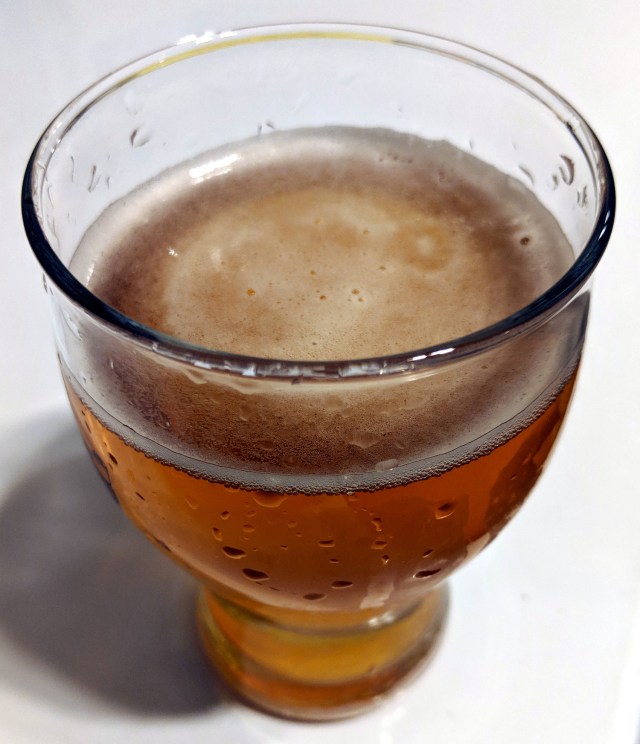
    • Slight phenolic, citrusy aroma
  • Appearance
    • Fine white head that sticks around for awhile; the beer itself is light gold with a slight haze.
  • Flavor
    • This is a very hop-forward beer, with a firm but even bitterness that persists on the tongue. There’s not a ton of malt character, but that’s OK for what this is. The hops have a slightly floral and citrusy character, which is unfortunately swamped out by a bit of a “hot” phenol note.
  • Mouthfeel
    • This is a fairly dry beer. Carbonation is appropriate to style.
  • Would I brew this again?
    • The description for Liberty Bell Ale yeast mentions pear esters in the aroma, which will get out of the way of prominent hop and malt aromas. Sadly, I couldn’t disagree more. The aroma was an estery mess on this one early on–it smelled somewhat like my early homebrew batches fermented without temperature control. I checked my records on power losses at home, and couldn’t find any record of a power outage during the height of fermentation, so I suspect it’s just a flaw in the yeast strain relative to this recipe. It doesn’t really seem like an infection, either, although I suppose that’s not completely outside the realm of possibility (especially given the low finishing gravity). The off flavor has moderated a fair bit as the beer sits in the keg, but in any case, I won’t be trying this yeast strain again.
  • Overall
    • 5/10 — the off flavor overwhelms the positive features of this beer.

Thanksgiving IPA 2017: Recipe & Tasting

I wanted to have a nice IPA on-hand for Thanksgiving. So, I brewed up a recipe based on my Centennial IPA, first brewed last year. The base beer is a favorite of mine, so it seemed like an easy choice. I did modify it slightly to use crystal 20 and Victory malt instead of Caravienne and Carahell. I also mixed the hopping up a little bit, maintaining focus on the citrus/pine American hops. This was combined with Mandarina Bavaria hops, to add an interesting twist that I hoped would play well with everything else.

Thanksgiving IPA 2017

  • 10.5 lbs. California Select 2-row brewer’s malt (Great Western)
  • 1.75 lbs. Vienna malt (Great Western)
  • 0.5 lb. 20°L caramel malt (Briess)
  • 0.25 lb. Victory (biscuit) malt (Briess)
  • 1 oz. Centennial hop pellets (7.6% alpha), first wort hop with 60 minute boil
  • 1 oz. Centennial hop pellets (7.6% alpha), 15 minute boil
  • 1 oz. Cascade whole hops (5.5% alpha), 10 minute boil
  • 1 oz. Centennial hop pellets (7.6% alpha), 10 minute boil
  • 1 oz. Amarillo hop pellets (9.2% alpha), 5 minute whirlpool
  • 1 oz. Mandarina Bavaria hop pellets (9.5% alpha), 5 minute whirlpool
  • 1 oz. Centennial hop pellets (7.6% alpha), 6 day loose dry hop in primary
  • 1 oz. Amarillo hop pellets (9.2% alpha), 6 day loose dry hop in primary
  • 1 oz. Mandarina Bavaria hop pellets (9.5% alpha), 6 day loose dry hop in primary
  • 1 pkg. California Ale yeast (White Labs WLP001), prepared in starter

Procedure

  • I mashed in with 4.25 gallons of Claremont tap water at 161 degrees, to hit a 150° mash target. After 60 minutes, I added 0.75 gallons of water at 185°, let sit for 10 minutes, vorlaufed and drained. I then added 3.5 gallons of water at 185°, let sit for 10 minutes, vorlaufed, and drained.
  • In total, I collected 6.75 gallons of wort at a gravity of 1.050, for 71% efficiency.
    I brought the wort to a boil, and added hops per the schedule.
  • After a 60 minute boil, I chilled to pitching temperatures and added the yeast (which was prepared in a starter).
  • Original gravity was 1.062.
  • I brewed the beer on 7 November 2017, and fermented at 66° for 6 days. On 13 November, I added the dry hops directly to the primary fermenter. On 19 November, I cold crashed the beer.
  • On the morning of 20 November, I accidentally added 0.25L of lager yeast pitch intended for another beer. Oops.
  • On the evening of 20 November, I split the beer into two kegs (2.5 gallons each). The more full keg received 1 tsp. of gelatin in 1/4 cup of water, heated to 150 degrees. The other (less full) did not get gelatin. I force carbonated the kegs.
  • Final gravity was 1.008, for 7.1% abv.

20171123_131532Tasting

  • The Basics
    • 1.062 o.g., 1.08 f.g., 7.1% abv, 62 estimated IBU, 6 SRM
  • Appearance
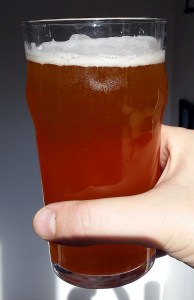
    • This beer is a deep gold, with a modest haze (it looks a bit darker in the photo due to the lighting). The head is exceptionally persistent and off-white, with beautiful lacing on the glass.
  • Aroma
    • Light yet rich citrus aroma from the hops, with a light malty aroma with a slight hint of caramel behind that
  • Flavor
    • The beer has a bready malty character, with a firm and persistent malt bitterness. The hop flavor is piney and citrusy, tending towards a grapefruit character. The bitterness is perfect, with a smooth quality and smooth finish.
  • Mouthfeel
    • The beer has a medium body and has a moderately dry finish with moderate carbonation.
  • Would I brew this again? 
    • Yes! This recipe once again satisfies, and I’m quite pleased with how the hops turned out. This is a classic west coast American IPA. The hop aroma could maybe be a touch stronger, but that’s a minor complaint overall.
  • Overall
    • 9/10

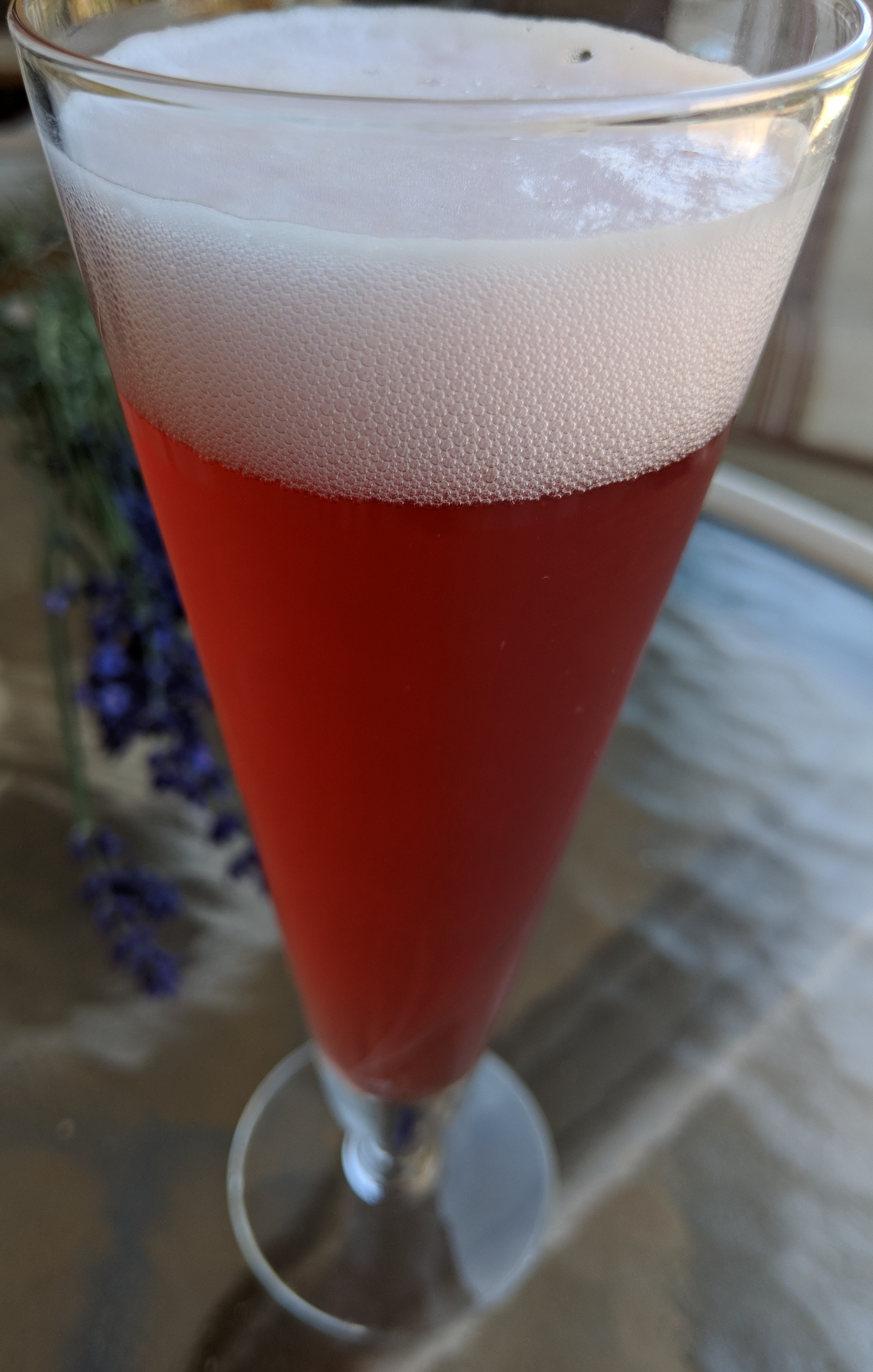
Peach IPA

This is a recipe I’ve been wanting to try for quite awhile…fruit beers intrigue me, and a well executed fruit IPA can be exquisite. This particular recipe is modified from the Peach IPA recipe by Mitch Steele in the March/April 2016 Zymurgy magazine. I adjusted the base malt, hops, etc., to match some of what I had in stock. I also upped the dry hop quantities to provide the more intense hop aroma that I like.

Peach IPA

  • 11.25 lb. 2-row pale malt (Rahr)
  • 0.75 lb. Munich I malt (Weyermann)
  • 0.5 lb. Carapils malt (Briess)
  • 1.10 oz. Warrior hop pellets (15.8% alpha), 60 minute boil
  • 1 Whirlfloc tablet, 10 minute boil
  • 1 oz. Galaxy hop pellets (14.0% alpha), 5 minute whirlpool
  • 2 oz. Helga (Southern Hallertau) hop pellets (5.6% alpha), 10 day dry hop
  • 1 oz. Galaxy hop pellets (14.0% alpha), 10 day dry hop
  • 1 oz. Mosaic hop pellets (12.25% alpha), 10 day dry hop
  • 4 oz. peach puree, added on day 3 of fermentation
  • 1 pkg. California Ale yeast (White Labs WLP001)

Target Parameters

  • Single infusion mash to hit target of 152°, 60 minute rest, batch sparge
  • 1.063 s.g., 1.014 f.g., 6.5% abv, 64 IBU, 4 SRM
  • Water adjusted to 113 ppm Ca, 22 ppm Mg, 24 ppm Na, 194 ppm SO4, 42 ppm Cl, 170 ppm alkalinity, 76 ppm RA

Procedure

  • Two days before brewing, I prepared a 2L yeast starter, and let it go for 36 hours before cold crashing in the fridge. I’ll set aside ~0.6L for a later batch.
  • I prepared my mash water and sparge water in two equal batches of 4.25 gallons. To each, I added 3.1g gypsum, 1.7 g epsom salt, and 0.7 g calcium chloride. To adjust the mash pH, I added 2 tsp (10 mL) of 75% phosphoric acid.
  • I mashed in with 4.25 gallons of water at 160.5°, to hit my mash target of 152°. After 45 minutes, I was down to 150°.
  • After 60 minutes, I added 0.75 gallons of water at 185°, let rest for 10 minutes, vorlaufed, and collected the first runnings.
  • Next, I added 3.5 gallons of water at 185°, let rest for 10 minutes, vorlaufed, and collected the second runnings.
  • In total, I collected 6.5 gallons of sweet wort with a gravity of 1.053, for 75% efficiency.
  • I brought the wort to a boil, and added the hops and other ingredients per the recipe. After 60 minutes, I added the final hop dose and then turned off the flame before chilling as far as I can.
  • I got the wort down to about 85°…that’s the best I could do in the midst of this heat wave! So, I transferred the wort into the fermenter and put it in the fermentation chamber overnight to chill down to 66°.
  • Starting gravity was 1.062. I brewed this beer on 1 September 2017, and pitched the yeast on 2 September 2017.

Beer Tasting: Countdown IPA

20170827_131705This recipe isn’t my best IPA, but it’s a pretty darned good IPA.

  • The Basics
    • 1.064 o.g., 1.011 f.g., 7.1% abv, 68 estimated IBU, 9 SRM
  •  Appearance
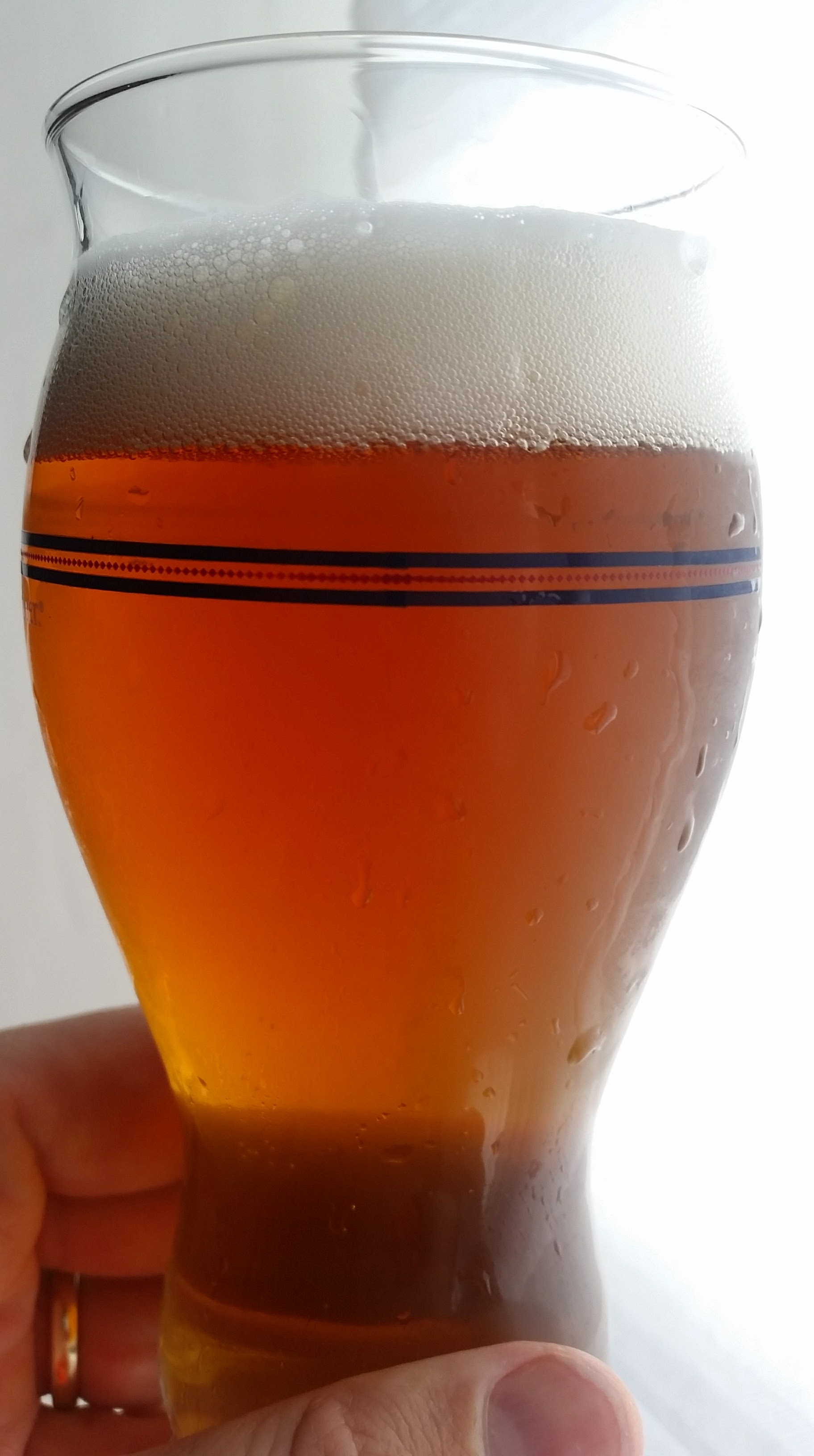
    • Light copper color with a slight haze, pouring with a dense white head that leaves lacing on the side of the glass as it subsides to a persistent ivory colored blanket.
  • Aroma
    • Moderately prominent dank, piney aroma; quite nice and classic! I could up the aroma a touch, but it’s generally OK.
  • Flavor
    • This beer is dominated by a smooth, piney bitterness, backed up by a smooth and doughy malt profile.
  • Mouthfeel
    • Moderately dry, with a smooth and extended bitter finish. Carbonation is moderate and appropriate for the style.
  • Would I brew this again?
    • Probably. This is a nice, middle-of-the-road American IPA. The hops are nice, although I should I say I don’t find the CryoHops notable one way or another. I was perhaps expecting a bit more hop character from them, given they were touted as providing twice the aroma for a given mass of hop. Maybe it’s more like 1.5x? I might up the aroma a touch, with perhaps a bit more Simcoe. As usual, the general base recipe is pretty solid.
  • Overall
    • 8.5/10

Countdown IPA

So named because we’re on the countdown to a new baby in the household…gotta brew while I can! This recipe is basically a minor tweak of my Centennial IPA, just mixing up the hops a little bit both for variety and complexity as well as to burn through a bit more of my stash. I also swapped in the US equivalent of the Belgian crystal malts, so that I didn’t have to buy more malt. Finally, I added a touch of Carafa Special II to deepen the color a bit.

Countdown IPA

  • 10.5 lbs. 2-row pale malt (Rahr)
  • 1.75 lbs. Vienna malt (Great Western)
  • 0.5 lbs. 20° caramel malt (Briess)
  • 0.25 lbs. 10° caramel malt (Briess)
  • 1.5 oz. Carafa Special II (Weyermann)
  • 1 oz. Amarillo hop pellets (7% alpha), first wort hop and 90 minute boil
  • 1 oz. Amarillo hop pellets (7% alpha), 15 minute boil
  • 2 oz. Amarillo hop pellets (7% alpha), 10 minute boil
  • 1 oz. Centennial hop pellets (7.6% alpha), 5 minute boil
  • 1 oz. Amarillo hop pellets (7% alpha), 5 minute whirlpool
  • 1 oz. Centennial hop pellets (7.6% alpha), 5 minute whirlpool
  • 1 oz. Ekuanot (HBC 366 aka Equinox) hop pellets (13.6% alpha), dryhop in keg
  • 1 oz. Simcoe LupuLN2 (23.8% alpha) cryohop pellets (23.8% alpha), dryhop in keg
  • 1 Whirlfloc tablet, 10 minute boil
  • 1 tsp. Fermax yeast nutrient, 10 minute boil

Target Parameters

  • Infusion mash to hit target of 149°. Batch sparge.
  • Claremont tap water with RO and salt additions to hit targets of 113 Ca, 22 Mg, 24 Na, 194 SO4, 42 Cl, 207 HCO3, 170 ppm alkalinity, 76 ppm RA.
  • 1.066 o.g., 1.012 f.g., 7.2% abv, 68 IBU, 9 SRM, 5 gallons into fermenter

Procedure

  • My base water for this beer was all Claremont tap water. I added 3.2 g of gypsum, 1.8 g of epsom salts, and 0.6 g of calcium chloride to 4.3 gallons of mash water, along with 45 mL of 10% phosphoric acid. I used the same masses of salts for 4.75 gallons of sparge water, with 50 mL of 10% phosphoric acid there.
  • I mashed in with 4.3 gallons of water at 157.3°, to hit a mash temperature target of 149°. I mashed for 90 minutes; at the end, temperature was down to 145°. I collected the first runnings after a vorlauf, and then added 4.75 gallons of sparge water at around 185°. I let the mash sit for 10 minutes before vorlaufing and collecting the remaining runnings.
  • In total, I collected 7.2 gallons of runnings with a gravity of 1.052, for 78% efficiency.
  • I boiled the hops per the schedule, adding the kettle finings and yeast nutrients appropriately. After the full 90 minute boil, I turned off the heat, added the final hops, whirlpooled for 5 minutes, and began chilling.
  • Groundwater is pretty warm this time of year, so I could only chill the beer down to around 85°. I transferred to the fermenter and then let it chill overnight (~10 hours) down to 66°. I pitched the yeast, and things had begun to take off within 18 hours.
  • Starting gravity was 1.064. I brewed the beer on 14 July 2017 and pitched the yeast early on the morning of 15 July 2017. I’ll be fermenting at 66°.