Alstadt Alt

German brewing is more than lagers and wheat ales, although I’ve certainly had fun with those lately. For my latest foray, I’m exploring the world of altbiers. I’ve brewed an Americanized version of this amber-colored ale previously, with moderately good results. However, I felt like it was time to delve once more into the classic style.

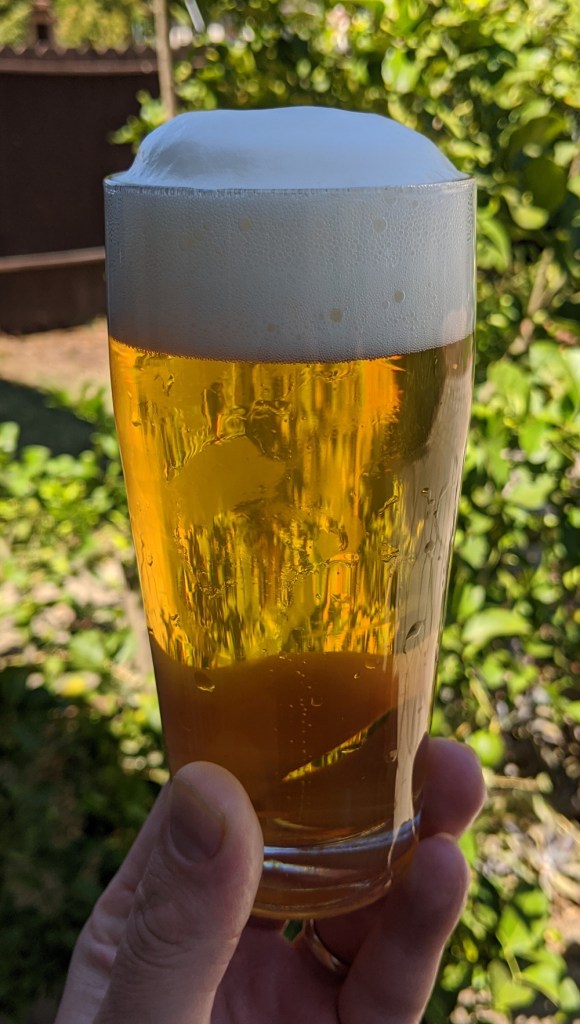
copper-colored beer with off-white head in clear glass, held aloft in hand

I started with the book on altbier by Horst Dornbusch. This volume is part of the Classic Beer Style series from Brewers Publications–I really love them because they are compact, informative, and full of recipes. Some of the books (like the altbier one) are over 20 years old now, which does make me wish for a minor polish to reflect advances in malts and yeasts available to homebrewers nowadays. Nonetheless, the series provides a really nice way to cut straight to the point of a style.

The altbier book has nine recipes of varying grain bills and starting gravities, so I started with something of lower alcohol and straightforward composition. This recipe was Alstadt Alt (p. 100 of the book), described as being typical of the style served in Düsseldorf. The recipe clocks in at 1.048 o.g., 4.8% abv, and 40 IBU. Its grain bill is fairly simple, with 60% “two-row malt,” 15% Munich, 15% Vienna, and 10% crystal 60. This is an area where I think a modern update would be most needed, so I had to punt a bit on malt varieties. I settled on a pilsner malt (consistent with recommendations from elsewhere in the book), with light Munich, Vienna, and American crystal 60. I suspect a German crystal equivalent (maybe CaraMunich II) would also work for the latter, and might produce something truer-to-style (whatever that means).

Curiously, my initial formulation came a bit short of the color in the book’s recipe, at 10 SRM vs. 18 SRM. As I played around in BeerSmith, substituting Munich II for Munich I barely kicked up the color (maybe by 0.5 SRM), and same for substituting in American 2-row for the pilsner malt. I have no idea why this is; perhaps a calculation error by the author? So, I added a touch of Carafa Special III to bring the color more closely to style (14 SRM). This is still a tiny bit lighter than the original recipe (18 SRM), but I thought would be just fine.

In any case, this was a fun batch to brew and a fun style to drink. I’ll be making more altbiers in the future!

Alstadt Alt

  • 6.25 lb. Superior Pilsen malt (Great Western)
  • 1.75 lb. Munich I malt (Weyermann)
  • 1.75 lb. Vienna malt (Great Western)
  • 1.25 lb. Crystal 60 malt (Great Western)
  • 2 oz. Carafa Special III
  • 0.75 oz. Magnum hop pellets (13.2% alpha), 60 minute boil
  • 0.5 oz. Mt. Hood hop pellets (4.6% alpha), 5 minute boil
  • 1 tsp. Fermax, 10 minute boil
  • 1 Whirlfloc tablet, 5 minute boil
  • 1 pkg. German Ale/Kolsch yeast (White Labs WLP029), repitched slurry from my kölsch

Target Parameters

  • 60 minute infusion mash, 152°, batch sparge
  • 1.049 o.g., 1.011 f.g., 5.0% abv, 34 IBU, 14 SRM
  • Claremont tap water

Procedure

  • I mashed in with 3.75 gallons at 162°, to hit a mash temperature of 151°. It was down to 149° after 30 minutes.
  • After a 60 minute mash, I added 1.3 gallons of water at 185°, let sit for 10 minutes, vorlaufed, and collected first runnings.
  • Next, I added 3.75 gallons of water at 185°, let it sit for 10 minutes, vorlaufed, and collected the second runnings.
  • In total, I collected 7.1 gallons of runnings with a gravity of 1.039, for 68% efficiency. This was a touch lower than expected, but we’ll just roll with it!
  • I brought the kettle to a boil, boiling for 60 minutes and adding hops and finings per the schedule.
  • After 60 minutes, I chilled down to 75°, transferred to the fermenter, and chilled down to 65° in the fermentation chamber.
  • Once the wort was at temperature, I pitched a slurry of yeast I had saved from my kölsch-style ale. Fermentation kicked off pretty quickly.
  • I brewed the beer on 9 May 2020, and it had a starting gravity of 1.047.
  • Fermentation was at 65° for around the first two weeks, and then I pulled it out to ambient for the rest of the fermentation.
  • I kegged the beer on 11 June 2020, adding 2.9 oz. of corn sugar in 1 cup of water. I had nearly a full keg, which was nice.
  • Final gravity was 1.012, for 4.6% abv.
  • I kept the keg at 66° until 20 June 2020, when I put it into the lagering chamber to cold crash at 33°. I also hooked it up to CO2 gas directly, to finish out carbonation to the desired level (~2.6 volumes of CO2).
  • As expected for the German ale yeasts, flocculation was pretty minimal, so on 22 June 2020, I added 1/2 tsp. of gelatin dissolved in 1/2 cup of water and held at 150° to pasteurize. In other circumstances, I might have been more patient, but I had a tap open up on my keezer, and wanted to fill the space!

Tasting

  • Appearance
    • Deep copper in color and clear, with an ivory-colored and relatively persistent head. The head starts pretty tall, but settles to a thin blanket as the beer warms up.
  • Aroma
    • Lightly bready aroma, slightly crusty, with a touch of caramel; maybe a hint of hop spice, but the aroma is decidely on the malty side. I don’t really pick up anything in the realm of yeast character.
  • Flavor
    • Bready malt character, very nice; moderate and firm bitterness, but the balance of the beer is nicely balanced between malt and hop (maybe slightly tilted towards the hoppy side). The beer is surprisingly light and quaffable. Hop character is pretty clean, with a spicy character. The finish is smooth, with an extended yet pleasant bitterness.
  • Mouthfeel
    • Moderately light body, moderate carbonation; finish is moderately dry but not overly so. This beer drinks very smoothly, especially as it has conditioned.
  • Would I brew this again?
    • This is a nice recipe…I’d definitely give it a try again! I would like to try it with an all-German grain bill, especially to substitute in CaraMunich II for the crystal 60. I like that this beer has plenty of malt character, without being cloying. It’s a pretty solidly drinkable summer amber beer. My perceptions of the beer match up partially with how it is described in the recipe. The beer is described as medium-coppper in color, and I perceive mine as a deep copper (there is no way their color value of 18 SRM isn’t amber!). Hop character is maybe a bit lower on mine (I don’t perceive much, and the recipe is described as having “a light hoppy nose”). In terms of the BJCP guidelines, it hit those pretty darned well. It could maybe have a touch more hop character in the aroma, but there is very little I would change about this beer otherwise. It’s a winner!
  • Overall
    • 9/10

Adalatherium Pale Ale

This is another kitchen sink beer, clearing out some malt and hops. In terms of overall goals, I aimed for a session beer with a bit of malt character, and hops that were present but not overpowering. The recipe is a mix of English and American ingredients, with Windsor yeast and citrusy American hops. I did a “Short and Shoddy” approach (ala Brulosophy), with a 30 minute full volume mash and 30 minute boil.

The name honors the recently named Adalatherium–an unusual mammal that lived in Madagascar around 70 million years ago. The skeleton used to sit across the hall from my office in grad school, and I spent more than a bit of time in the original field area as a student. In Malagasy, “adala” means “crazy”, and that also seemed to match up with the scattershot blend of ingredients here.

Adalatherium Pale Ale

  • 6.75 lb. Maris Otter malt (Crisp)
  • 2.75 lb. Superior Pilsen malt (Great Western)
  • 0.5 lb. Vienna malt (Great Western)
  • 0.5 lb. crystal 40 2-row (Great Western)
  • 0.85 oz. Warrior hop pellets (15.8% alpha), 30 minute boil
  • 1 Whirlfloc tablet, 5 minute boil
  • 0.5 oz. Simcoe hop pellets (13.6% alpha), 5 minute whirlpool
  • 2 pkg. Windsor yeast (Lallemand)
  • 1 oz. Citra hop pellets (12% alpha), dry hop in keg
  • 1 oz. Mosaic hop pellets (10.9% alpha), dry hop in keg

Target Parameters

  • 1.048 o.g., 1.013 f.g., 4.5% abv, 36 IBU, 7 SRM
  • Infusion mash, 156° for 30 minutes, full volume
  • Claremont tap water adjusted with lactic acid and mineral additions, to achieve calculated water profile of 56 ppm Ca, 24 ppm Mg, 94 ppm Na, 107 ppm sulfate, 110 ppm Cl, 210 ppm bicarbonate, 172 ppm Alkalinity

Procedure

  • I mashed in with 8 gallons of unadjusted tap water at 161° and 0.5 tbs. of 88% lactic acid, to hit a mash temperature of 155°. After 30 minutes, it was down to 154°.
  • I vorlaufed, and collected the runnings, with 6.6 gallons into the kettle and a gravity of 1.046, for 77% efficiency.
  • As I brought the runnings to a boil, I added 3 g of epsom salt and 2 g of gypsum.
  • I boiled for 30 minutes, adding hops and finings as in the recipe.
  • At the end of the boil, I added the Simcoe hops and whirlpooled for 5 minutes, before chilling.
  • I chilled down to 75° or so, and transferred to the fermenter (with aeration). Once the fermenter was down to 66°, I pitched the yeast.
  • Starting gravity was 1.052. I brewed this beer on 3 May 2020.
  • After 6 days at 66°, I pulled out the fermenter and let it finish at ambient temperature.
  • I kegged the beer on 30 May 2020, adding the dry hops in a baggie and 3 oz. of corn sugar (in a cup of boiling water). I sealed the keg, added a bit of CO2, and let it condition at room temperature for 2 weeks.
  • Final gravity was 1.013, down from 1.052, for 5.1% abv.

Tasting

  • Appearance
    • Medium gold in color; after about 2 weeks on tap, it has dropped clear. The head is off-white and modestly persistent.
  • Aroma
    • Plenty of yeast character, with some definite pear ester alongside the hop aroma. The hops have a bit of tropical fruit character.
  • Flavor
    • Hop bitterness is moderately high, but well balanced against the malt. The malt comes through with a bit of biscuity flavor, which is pretty nice. I get a lot of the pear-like yeast esters, which almost swamp out the citrus note on the hops.
  • Mouthfeel
    • Medium body, smooth finish without being biting. Moderate carbonation.
  • Would I brew this again?
    • If I did, I would steer clear of Windsor, and use US-05 or a similarly clean yeast. The yeast character on Windsor is interesting, but the esters clash with the citrusy, tropical notes on the hops. The malt bill is good, and I think makes a nice base otherwise. I would try this recipe pretty close to what it is, just with different yeast. I’m also disappointed by how Windsor clears, or doesn’t clear. It was a hazy mess when first on tap, and took two weeks to really clear up. I expected a bit more to drop out in the fermenter, and that just didn’t happen. The esters are super interesting, and I might poke at them for some other recipes, but as a whole I think I prefer Nottingham for my English ale needs.
  • Overall
    • 5.5/10

Tremonia Lager

Despite their sometimes bland reputation, pale lagers have a surprising breadth of variation. One type I’ve not yet explored is the Dortmunder Export, lumped into the German Helles Exportbier category under the BJCP 2015 guidelines. As described there, it’s a style that packs a fair bit of malt character (especially for a pale lager) and noticeable but not overwhelming hopping, against a relatively mineralized water profile. The latter aspect was particularly appealing for me, given the nature of our local tap water. Let’s just say I’m not going to be making a Bohemian pilsner straight out of the water faucet, but with a bit of tweaking I can get right into the appropriate water zone for a Dortmunder Export.

I did a fair bit of research for this brew, checking out the recipes available already (including this nice article) and trying to approximate something of my own. Compared with other lagers, there are surprisingly few example recipes. My first recipe draft was about 90% pilsner malt and 10% Vienna. After posting this to the Homebrewers Association Forum, common feedback was that some Munich would also be in character and even desirable. So, I adjusted the recipe to include approximately 70% pilsner, 15% Vienna, and 15% light Munich malt. In practice, my percentages were slightly off of this just because I was using up some of my malt stock (for instance, I had 2 ounces of extra Vienna malt, and it seemed silly to leave that behind). I also had a blend of two pilsner malts, because I used up one bag and opened another. Finally, I chose Magnum as the backbone for my bittering, with Mt. Hood as the flavor/aroma addition.

For this recipe, I decided to use my new Lamott water testing kit and some chemistry to adjust my tap water prior to the mash. My goal was to use acid to neutralize much of the carbonate load, and then adjust from there. Excluding the carbonate, my water is actually pretty good most of the time, and can be built up for many styles. It just takes some time and careful adjustment.

The name for this references a supposed archaic Latin name for the city of Dortmund. It sounded cool, so it stuck.

Tremonia Lager

  • 4 lb. 5 oz. Superior Pilsen Malt (Great Western)
  • 4 lb. Pilsner Malt (Weyermann)
  • 1 lb. 10 oz. Vienna Malt (Great Western)
  • 1 lb. 8 oz. Munich I Malt (Weyermann)
  • 0.5 oz. Magnum hop pellets (13.2% alpha), 60 minute boil
  • 0.5 oz. Mt. Hood hop pellets (4.6% alpha), 10 minute boil
  • 0.5 oz. Mt. Hood hop pellets (4.6% alpha), 5 minute boil
  • 1 tsp. Fermax yeast nutrient, 10 minute boil
  • 1 Whirlfloc tablet, 5 minute boil
  • 2 pkg. Saflager W34/70 dry yeast

Target Parameters

  • 1.052 o.g., 1.012 f.g., 5.3% abv, 27 IBU, 5 SRM
  • Infusion mash, 152° for 60 minutes, batch sparge
  • Claremont tap water adjusted with lactic acid and mineral additions, to achieve calculated water profile of 64 Ca, 8 Mg, 26 Na, 97 SO4, 91 Cl, 24 HCO3. RA=-31 ppm, alkalinity=20 ppm, effective hardness 51 ppm.

Procedure

  • The night before brewing, I started the water adjustment process. With 9 gallons of Claremont tap water, I added 7.5 mL of 88% lactic acid to bring down the alkalinity. I stirred the hot tap water sporadically over a 4 hour period, to let the CO2 get kicked out. This amount of lactic acid should be well below the flavor threshold. I tested the water chemistry after this, and confirmed that much of the bicarbonate was dropped out. To this water, I then added 2 g gypsum, 2 g epsom salt, and 0.8 g calcium chloride, along with half a Campden tablet (for chloramine removal), to hit the water properties listed above.
  • I mashed in with 4 gallons of water at 163°, to hit a mash temperature of 152.5°. I added 2.5 mL of 88% lactic acid to drop the pH slightly. The mash had dropped to 149.5° after 25 minutes.
  • After 60 minutes, I added 1.3 gallons of water at ~185°, let it sit for 10 minutes, vorlaufed, and collected first runnings.
  • Next, I added 3.75 gallons of water at ~185°, let it sit for 10 minutes, vorlaufed, and collected the remainder of the runnings.
  • In total, I collected 7.5 gallons of runnings with a gravity of 1.044, for 78% efficiency. I’m happy with that!
  • I boiled the wort for 60 minutes, adding hops and finings per the recipe above.
  • Once the boil was done, I chilled down to 52°, and sprinkled the dry yeast directly into the wort. I did not oxygenate this batch, beyond simple aeration when going into the kettle.
  • I brewed the beer on 16 May 2020, reaching a starting gravity of 1.050. Final gravity was 1.013, for 4.9% abv.
  • I kegged the beer into a CO2-purged keg on 6 June 2020. After a few days of carbonation at 33°, I added 0.75 tsp. of gelatin dissolved and pasteurized in 1/2 cup of water on 12 June 2020, in order to speed up the clarification processs. I noticed nice clarity within 48 hours, and nearly brilliant clarity within a week. Thank you, gelatin! I realize I risked adding some oxygen at this point, but want to see if there are any noticeable effects as I finish the keg.

Tasting

  • Appearance
    • It has the color of burnished gold and is wonderfully clear, with a persistent and creamy white head that leaves slight lacing on the side of the glass.
  • Aroma
    • Moderate bready and slightly sweet malt aroma, with a hint of hop spice against that; very clean yeast character
  • Flavor
    • Moderately bitter, with a grainy/bready malt character that finishes with just a hint of malty sweetness and lingering bitterness; really nice!
  • Mouthfeel
    • Medium body, medium carbonation, very slightly dry on the finish but not overly so
  • Would I brew this again?
    • Absolutely! I really love this recipe, and love this style as a result. It’s a nice notch up from pilsner in terms of maltiness, without getting too heavy or too high in alcohol. I find the beer to drink really easily, too…maybe too easily. I see this as a recipe that I can play around with hop varieties and malt brands, but I really see no reason to make any substantial adjustments. The Pilsner/Vienna/Munich balance is pretty much spot-on!
  • Overall
    • 10/10

What’s Brewing? June 2020 Edition

I’ve been able to get in a bit of brewing this past month during downtime, working through some of my ingredient stock and anticipating the kinds of styles I’ll want to drink over the summer. A perpetual problem is that I rarely have time to lager properly before a tap opens up, so I need to increase the frequency of my lager brew sessions!

Beer Batch Updates

  • I kegged my “kitchen sink pale ale” on 30 May, adding dry hops and priming sugar at that time. I let the beer carbonate for around 10 days before putting it on tap. It was super hazy, almost cloudy, for the first day or two, but has dropped out a bit since then. It has a ways to go before it comes close to clear, something I’ve noticed previously with the Windsor and S-04 dry yeast strains. The yeasts have nice character, but do not flocculate anywhere nearly as well or as quickly as the manufacturers imply (in my experience).
  • My Dortmunder Export Lager is in the keg, finishing out at 4.9% abv. I kegged it on 6 June 2020, and force carbonated at 33°. A week in, the flavor is really nice, bringing a good malt character without being overly heavy or cloying. It has a decent bit of haze still, so I added a dose of gelatin, anticipating that I’ll be serving the keg sooner than later. I would love to let my lagers condition for a longer stretch, but I just don’t brew often enough.
  • The altbier is kegged (11 June 2020), and now carbonating with priming sugar. I hope to let it go another week or so before cold crashing. I might give it a shot of gelatin then, because I’ll likely have a tap slot opening up soon. The beer clocks in at 4.6% abv, and has a really nice flavor on my first tasting.
  • I brewed a kölsch-style ale last weekend, trying a slightly different recipe from past iterations. I used 95% pilsner with 5% light Munich malt, Sterling hops, and K-97 dry yeast.
  • Yesterday, I made an American amber ale, with a newly devised recipe. It was 70% 2-row and 15% light Munich malt, with crystal 80 and crystal 60 to add a caramel note as well as to use up my supply of those malts. I also had a dash of Carafa III for color adjustment, and Cascade as the solo hop.

What’s On Tap?

  • Adalatherium Pale Ale
    • As described above, this was a quick pale ale to satisfy my hop needs.
  • The Celtic Elk Stout 1.1
    • I’m almost at the end of this keg, and it still drinks really nice. The altbier will go on tap to replace this one.
  • Alta California Lager 2020
    • This beer is nearly gone, also; it has clarified really well, and is a nice beer for hot afternoons.

What’s Coming Up?

  • As noted last month, I’m pretty keen on doing a light (lite) American-style lager. I finally punched in the recipe for Annie Johnson’s famous “Mow the Damn Lawn,” and hope to brew it soon. I’ll be repitching the Que Bueno yeast I harvested from my Alta California Lager.
  • I’m also thinking a new SMaSH pils, centered on Mt. Hood hops this time. It will be a standard German-style pils, and I’m hopeful I’ll have a little more time to lager it this round before it has to go on tap.
  • To use up some ingredients, I’m going to do a Rye IPA (RyePA?) with a Pacific Northwest style hop bill.

Other Than Beer

  • My lacto-fermented food projects have been doing pretty well. The carrot sticks I did were super tasty, and we just finished the jar last night. I’m also particularly pleased with my first batch of sauerkraut. It’s tart, crispy, and as good as anything I’ve gotten from the store. I started a second batch last weekend.
  • The juniper syrup I made last month was pretty good, and I made a second batch with some adjustments. Specifically, I halved the sugar–the problem with many syrup recipes (or I guess the point of many syrup recipes) is that they have too much sugar, and so you end up too….well, syrupy…in many cases. I’ll need to up the acid a touch, to help it keep, but I’m getting closer to something that works for me. The current recipe is 3 tbs. juniper berries, 3 cardomom pods, 1 srig rosemary, and the peel of an orange, simmered in a cup of water with 1/2 cup sugar for 15 minutes. I let it steep in the fridge overnight, and then filter it out.
  • Just for fun, I might try to make a pseudo-gin, by infusing vodka with various botanicals.
man with sunglasses looking up at a jar of sauerkraut held aloft
Behold the sauerkraut.

Alta California Lager 2020

Another go at my favorite beer of last year, Alta California Lager. I made a few minor adjustments for this iteration, to simplify brewing. Specifically, I used flaked corn (rather than a cereal mash with grits), and used the Imperial version of the Mexican lager yeast instead of White Labs’ version, due to availability at my local shop.

Alta California Lager 2020

  • 6.5 lb. Superior Pilsen Malt (Great Western)
  • 2 lb. flaked corn
  • 1.75 lb. Vienna Malt (Great Western)
  • 0.25 lb. rice hulls
  • 0.40 oz. Magnum hop pellets (13.2% alpha), 60 minute boil
  • 0.50 oz. Sterling hop pellets (7.4% alpha), 5 minute boil
  • 1 tsp. Fermax yeast nutrient, 10 minute boil
  • 1 Whirlfloc tablet, 5 minute boil
  • 1 tsp. Fermax
  • 1 pkg. Que Bueno liquid yeast (Imperial Yeast L09)

Target Parameters

  • 1.046 o.g., 1.009 f.g., 4.9% abv, 20 IBU, 3 SRM
  • Infusion mash, 149° for 60 minutes, batch sparge
  • Blend of Claremont tap water and RO water, to achieve calculated water profile of 19 Ca, 7 Mg, 46 Na, 15 SO4, 53 Cl, 102 HCO3. RA=66 ppm, alkalinity=84 ppm, effective hardness 18 ppm.

Procedure

  • I spooled up a 1.5L starter on 2 April 2020, and cold crashed it on the morning of 4 April.
  • My water was a mix of tap water (4.25 gallons) and RO water (4.5 gallons), to get 8.75 gallons total. Given the stay-at-home orders, I didn’t want to run out for more RO water.
  • I mashed in with 3.75 gallons of tap water and 5 mL of 88% lactic acid, to hit my 149° mash temperature. The mash was down to 143 after 75 minutes, so I added 1.5 gallons of hot tap water/RO water blend to bring up the temperature and prepare for collection of the runnings.
  • I added rice hulls just before first runnings were collected. Once the first runnings were in the kettle, I added 4 gallons of RO water, let sit for 10 minutes, vorlaufed, and collected the second runnings.
  • In total, I collected 7.25 gallons with a gravity of 1.042, for 80% efficiency.
  • I brought the kettle to a boil, adding hops and finings per the recipe.
  • After 60 minutes, I chilled, and transferred the wort to the fermenter. I let it chill the rest of the way overnight, down to 50°. I brewed the beer on 5 April 2020.
  • On the morning of 6 April 2020, I oxygenated with 45 seconds of pure O2, and pitched the yeast. I am fermenting at 51°. Starting gravity was 1.050.
  • I let the beer free-rise to 62° on 18 April 2020. On 25 April, I lowered the temperature to 52°, and then to 42° on 26 April, and 33° on 27 April.
  • I kegged the beer on 10 May 2020, after purging the target keg with CO2.
  • Final gravity was 1.008, for 5.5% abv.

Tasting

  • Appearance
    • Light yellow, slight chill haze for the first few weeks on tap, but otherwise clear. I finally achieved good clarity about a month after kegging–patience pays off! The beer pours with a nice dense head with excellent retention.
  • Aroma
    • Light spice hop note; malt has a slight graininess with a maize aroma too (not DMS!).
  • Flavor
    • Light grainy maltiness, slight maize character with that; distinct but not overpowering bitterness; this beer is definitely more tilted towards the bitter end than I expected, though. It’s not IPA levels, but I think I could notch the IBUs back about 10 percent. I wonder if I got higher utilization this time with the hops free floating rather than bagged. The finish tilts towards bitter.
  • Mouthfeel
    • Crisp, off-dry, moderately high carbonation.
  • Would I brew this again?
    • I’m going to tweak a bit more, and think I’ll go back to a cereal mash for the next version, and perhaps try the White Labs yeast again. I’ll also notch the hops back a touch, to reduce the bitterness for when I use free floating hops in the boil. It’s a pretty good beer, but the slight persistent haze was mildly disappointing, and the slight overbitterness could be fixed. That said, it’s pretty good with a lime slice!
  • Overall
    • 7.5/10