Summer Session IPA 2024

I’ve been making a session IPA at least annually for awhile now, because it’s a good way to balance the needs of my palate with the needs of my liver. These recipes usually go with a lighter grain bill that leans on flavorful base malts, alongside a high mash temperature to boost body and reduce attenuation. Kveik strains are part of my usual recipe in these, also, because I am often brewing these last-minute and so want a quick fermenting, temperature tolerant variety of yeast.

The 2024 iteration of my session IPA is in the same mold as previous years–I used a 2-row base malt, but beefed things up with a generous helping of Vienna and some Crystal 40. The hops aren’t too dramatic, but are old favorites for this style of beer.

Summer Session IPA 2024

  • 8 lb. 2-row malt (Briess)
  • 1.25 lb. Vienna malt (Weyermann)
  • 0.5 lb. Crystal 40 malt (Great Western)
  • 0.5 tsp. BrewTanB, in mash
  • 2 oz. Citra hop pellets (12.8% alpha), 15 minute boil
  • 1 tsp. BrewTanB, 10 minute boil
  • 1 Whirlfloc tablet, 5 minute boil
  • 1 pkg. Lutra kveik (Omega #OYL-071, dry)
  • 2 oz. Ella hop pellets (17.6% alpha), dry hop in keg
  • 2 oz. Galaxy hop pellets (15.3% alpha), dry hop in keg

Target Parameters

  • 1.044 s.g., 1.011 f.g., 4.4% abv, 48 IBU, 6 SRM
  • Full volume infusion mash to hit target of 156°, 60 minutes, no sparge
  • Claremont tap water, neutralized with lactic acid to reduce carbonates, target parameter of 60 ppm CA, 22 ppm Mg, 136 ppm Na, 175 ppm SO4, 150 ppm Cl, 10 ppm HCO3, RA=-48 ppm

Procedure

  • Prior to the mash, I added 6.5 mL of 88% lactic acid to the 7.25 gallons of tap water (along with a Campden tablet), to drop out the carbonates. Then, I heated the water to 161°, before adding the grains and 1 mL of 88% lactic acid to adjust the mash pH. I held the mash at 156° for 60 minutes, with recirculation, before raising to 168° for 10 minutes.
  • After the mash was done, I pulled the grains and brought the runnings to a boil. In total, I collected 6.5 gallons of runnings with a gravity of 1.039, for 70% mash efficiency.
  • Once the runnings were at a boil, I added hops and finings per the recipe. Following the 60 minute boil, I turned off the heat and chilled to 78° before transferring to the fermenter and pitching the yeast.
  • Starting gravity was 1.045. I brewed this beer on 28 April 2024 and fermented it at ambient.
  • I kegged the beer on 20 May 2024, adding the dry hops in a baggie at this time. FInal gravity was 1.012, for 4.3% abv.
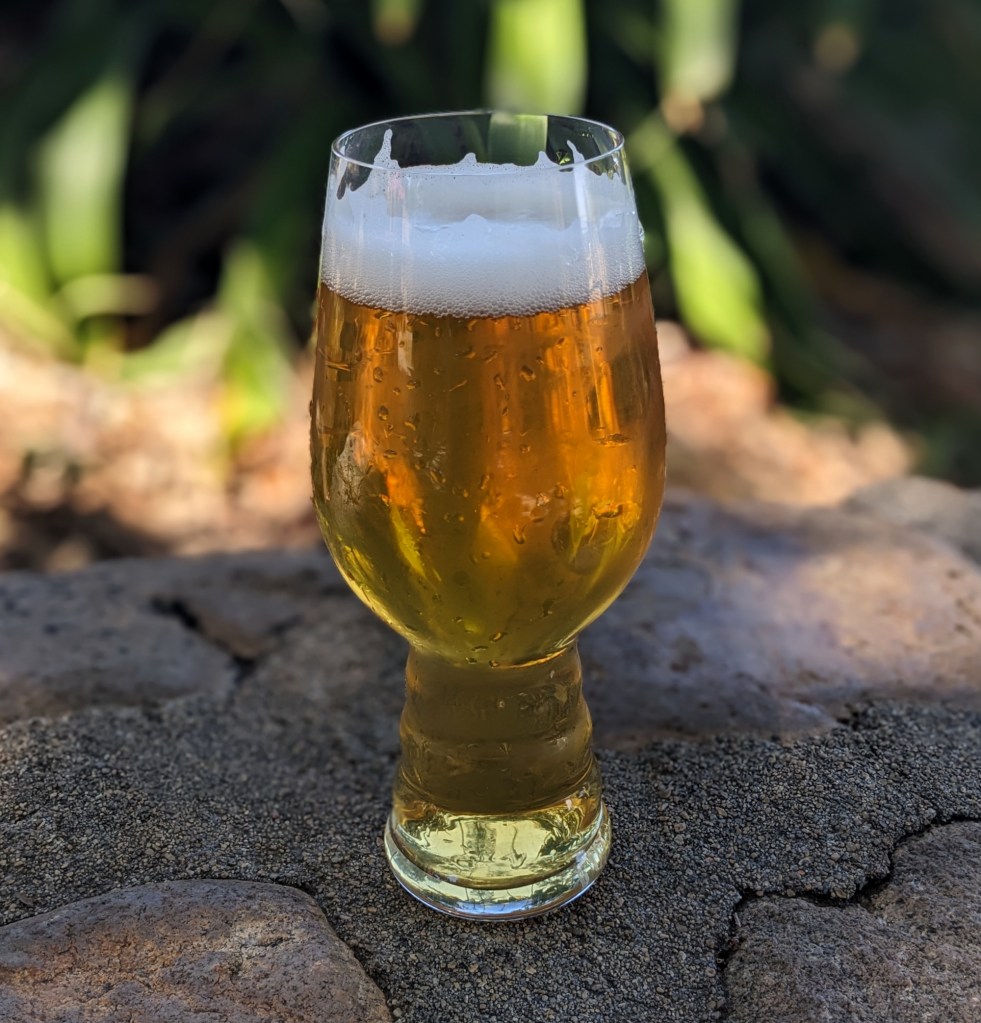
Tasting

  • Appearance
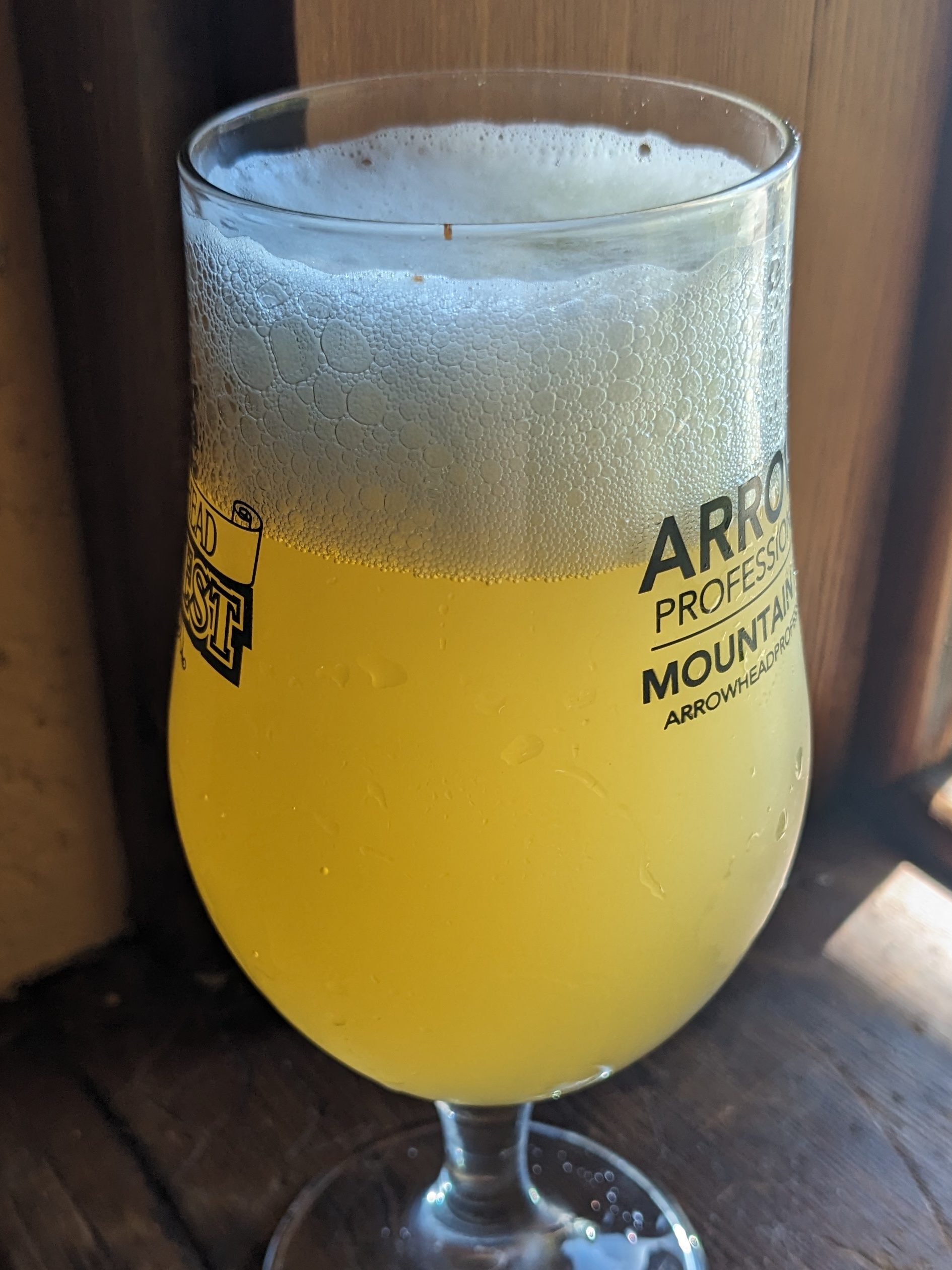
    • Clear, light gold beer, pouring with a persistent white head. Very pretty!
  • Aroma
    • Mandarin orange aroma, with a hint of tropical fruit. Hop aroma moderately high. The malt is in the background, and I don’t get much for yeast.
  • Flavor
    • Hop-forward, with a strong bitterness against a fairly light malt backbone. Very quaffable! Hop flavor has elements of orange and citrus pith. There might be a little peach, but that is more by suggestion (due to the characters of the variety) than something that is easily perceived.
  • Mouthfeel
    • Medium-light body, moderate level of carbonation, crisp and dry finish.
  • Would I brew this again?
    • This is a delightful session IPA, which has matured nicely. It doesn’t taste watery at all, and the hop elements are just what I would want in a modern West Coast IPA, I am quite happy with this one! I might go for a little more hop complexity – but it’s an easy fix with different varieties of hops.
  • Overall
    • 9/10

Fruit Bowl Session IPA

A good session IPA is nice to have on hand in the summer months, and also a handy way to burn through my hop stash. For this batch, I aimed for a “short and shoddy” approach, to speed up the brew day during a busy time of year. This meant a 30 minute mash and 30 minute boil, along with Lutra kveik to reduce chill time.

I have a decent variety of hops on-hand from my HOPBOX subscription, and aimed for a very experimental selection. Comet went in for the bittering, with a hefty dose of BRU-1 and Meridian for the dry hop in the keg. BRU-1 is supposed to provide a pineapple and green fruit combo, and Meridian some tropical fruit and berry. So, I’m calling this “Fruit Bowl Session IPA.”

Fruit Bowl Session IPA

  • 9 lb. 7 oz. Lamonta Pale American Barley Malt (Mecca Grade)
  • 8 oz. caramel malt 20L (Briess)
  • 8 oz. Munich I malt (Weyermann)
  • 2 oz. Comet hop pellets (10.4% alpha), 30 minute boil
  • 0.5 tsp. BrewTanB, 10 minute boil
  • 1 Whirlfloc tablet, 5 minute boil
  • 1 pkg. Lutra Kveik (Omega OYL-071; dry)
  • 2 oz. BRU-1 hop pellets (20.0% alpha), dry hop in keg
  • 2 oz. Meridian hop pellets (5.6% alpha), dry hop in keg

Target Parameters

  • 1.046 s.g., 1.011 f.g., 4.6% abv, 59 IBU, 6 SRM
  • Full volume mash, 156° for 60 minutes, 168° mash-out for 10 minutes
  • Claremont tap water treated with 88% lactic acid to neutralize carbonates

Procedure

  • The night before brewing, I collected 7 gallons of Claremont tap water and added 5.84 mL of 88% lactic acid to neutralize the carbonates.
  • I heated the strike water to 162°, adding the grains to hit a mash temperature of 156°. I added 1.5 mL of 88% lactic acid to adjust the pH, and then recirculated for 30 minutes.
  • After 30 minutes, I raised the mash temperature to 168°, and continued recirculation for another 10 minutes before pulling the grains.
  • In total, I collected 6.5 gallons of runnings with a gravity of 1.041, for 71% mash efficiency.
  • I brought the mash to a boil, adding hops and finings per the recipe. After 30 minutes, I chilled the wort to 82° and transferred to the fermenter.
  • Starting gravity was 1.045. I brewed the beer on 14 May 2023, and fermented at ambient. The fermenter temperature hit between 82° and 85° at the height of fermentation.
  • I kegged the beer on 23 May 2023. Final gravity was 1.012, which works out to 4.4% abv.

Tasting

  • Appearance
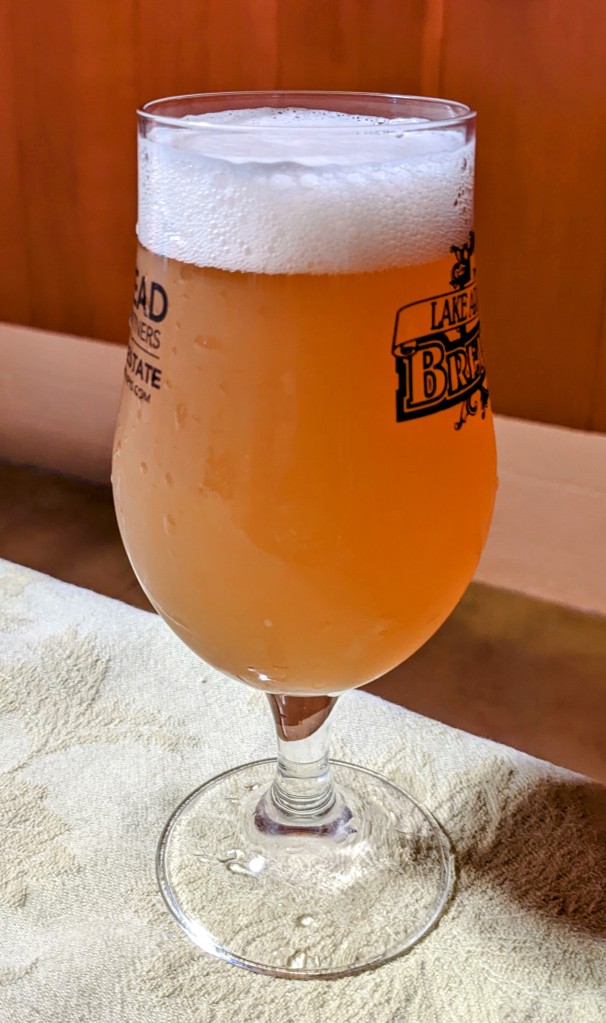
    • A straw yellow beer, with a pillowy and persistent white head. I’m writing this tasting on the last pour of the keg, which has a fair bit of haze. Even before the final pours and after sitting in the keg for two months, the beer never completely cleared.
  • Aroma
    • Bright citrus and kiwi hop aroma — very nice!
  • Flavor
    • Tropical fruit, fresh pineapple, lemon, and orange — it’s a very fruit-forward hop flavor. Bitterness is moderately high. The malt character is fairly subdued, as expected given the gravity and hoppiness of this beer.
  • Mouthfeel
    • Medium-light body, moderate carbonation. There is a slight hop astringency, which is accentuated in the final glass.
  • Would I Brew This Again?
    • I’m fairly pleased with this one, especially in the hop combination. If I were to brew this again (or one like it), I would reduce the dry hop load by a bit, to cut the astringency. I would probably increase the mash time to see if that helps with the haze (in case lingering starch was the cause), too. Overall, it’s a pretty decent session IPA!
  • Overall
    • 7/10

Citrosaic Session IPA

This summer was incredibly hectic–both in expected and unexpected ways–and thus it was hard to fit in as much brewing as I would like. One of my precious brewdays was set aside for a session IPA…and because things were topsy-turvy, I decided to run with kveik.

The recipe itself isn’t based on anything in particular, beyond past experience. I wanted a beer that was flavorful in hops, highly crushable, and not too over-the-top in alcohol. Thanks to my regular HOPBOX deliveries, I had no shortage of IPA-worthy hops.

I built the recipe with a base of Golden Promise malt, and a touch of light crystal malt to keep things from being too dry or too thin. As I often do with my session beers, I mashed high. Instead of a massive whirlpool addition, I tilted the hops towards the final five minutes of the boil, and loaded in a few ounces of dry hops in the keg. Citra, Mosaic, and Eclipse were a natural combination. I hadn’t brewed with Eclipse before, but the description suggested it would meld well with the other two. As for yeast, Voss Kveik seemed like a good fit. I’ve brewed with it a few times before, and the citrus notes hopefully wouldn’t clash. Plus, I liked the idea of a yeast that I didn’t have to baby too much during summer weather.

Citrosaic Session Ale

  • 10 lb. Golden Promise Finest Pale Ale malt (Simpsons)
  • 0.25 lb. Cara 20 (Dingemans)
  • 0.25 lb. Carahell (Weyermann)
  • 1 oz. Citra hop pellets (12.8% alpha), 30 minute boil
  • 1 Whirlfloc tablet, 5 minute boil
  • 1 oz. Citra hop pellets (13.6% alpha), 5 minute boil
  • 1 oz. Eclipse hop pellets (16.8% alpha), 5 minute boil
  • 1 oz. Mosaic hop pellets (11.6% alpha), 5 minute boil
  • Voss kveik (Lallemand), 1 pkg. dry yeast
  • 1 oz. Citra hop pellets (13.6% alpha), dry hop in keg
  • 1 oz. Eclipse hop pellets (16.8% alpha), dry hop in keg
  • 1 oz. Mosaic hop pellets (11.6% alpha), dry hop in keg

Target Parameters

  • 1.046 s.g., 1.013 s.g., 4.4% abv, 66 IBU, 5 SRM
  • Claremont tap water, no adjustments
  • Full-volume mash, no sparge, at 156°

Procedure

  • I mashed in with 7 gallons of water at 162°, to hit a mash temperature of 156°. I held it here with recirculation for 10 minutes. I added ~7 mL of 88% lactic acid at the start of the mash, to adjust pH.
  • After 60 minutes, I raised the mash temperature to 168°, held it here for 10 minutes, and then removed the grains.
  • In total, I collected 6.1 gallons of runnings with a gravity of 1.043, for 69% mash efficiency.
  • I brought the mash to a boil, adding hops and finings per the recipe. After 60 minutes, I turned off the heat and chilled down to around 90°.
  • I brewed this beer on 11 July 2022. Starting gravity was 1.048.
  • I transferred the wort to my fermenter, pitched the yest, and let things roll at ambient temperature. Everything was rocking within 6 hours, and had slowed down within 18 hours.
  • Although I planned to keg this within a week or so, life got in the way (thanks, COVID), and it wasn’t until 13 August 2022 that I managed to get things transferred. I was a bit worried about flavor damage or oxidation, but it didn’t seem too awful.
  • I added the hops in a bag, at the time of kegging. Final gravity was 1.022, for 3.4% abv.

Tasting

  • Appearance
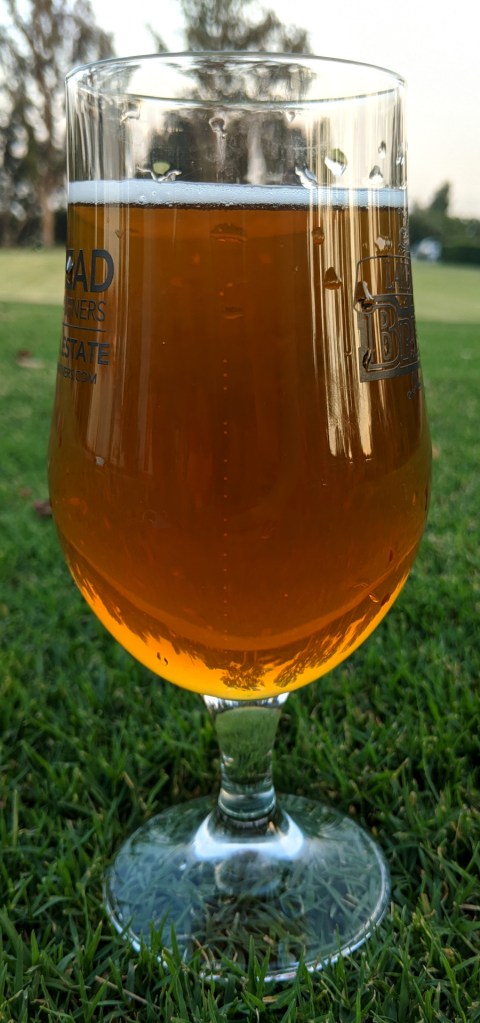
    • Medium-gold, fairly hazy, pours with a creamy and persistent white head.
  • Aroma
    • Fresh tangerine is prominent in the hop aroma, with a bit of passion fruit and other tropical notes; there is a touch of dankness as the beer warms up. And of course I get the class blueberry. Fermentation aroma is clean.
  • Flavor
    • Very bitter, with a slight hop “bite” and citrus pithiness. The very prominent hop flavor includes orange/tangerine, grapefruit, and a bit of blueberry. It tastes quite “juicy”! Malt is clean, with a slight hint of light caramel sweetness and graininess.
  • Mouthfeel
    • Medium dry, with a dry finish. Moderate carbonation.
  • Would I Brew This Again?
    • Yes! This is just a nice summer IPA, in the tropical/citrus tradition. I don’t want these flavors all the time, but I really liked this particular recipe. The kveik meshes well with the hops, and has a surprisingly clean profile. It just stays out of the way. I wouldn’t mind if the clarity was better (hence my lower rating), but in the end this is a highly crushable IPA, exactly what I wanted.
  • Overall
    • 8/10

Summer RyePA

My latest session IPA was a bit of a kitchen sink beer, but also one where I wanted to create a slightly more “traditional” northwest IPA. That means citrus and pine for the hops, and no fear of the crystal malt. To ground my malt character, I used Vienna malt as the base, with a healthy dose of rye malt on top of that. I used about 7% crystal malt to add some body and depth. The overall results were pretty fantastic!

Summer RyePA

  • 8 lb. Vienna malt (Weyermann)
  • 1.5 lb. rye malt (Viking)
  • 0.5 lb. crystal 40 (Great Western)
  • 0.25 lb. crystal 60 (Great Western)
  • 2 oz. rice hulls
  • 0.5 oz. Warrior hop pellets (15.8% alph), 60 minute boil
  • 0.4 oz. Chinook hop pellets (13.0% alpha), 60 minute boil
  • 1 oz. Cascade whole hops (5.5% alpha), 3 minute boil
  • 1 tsp. Fermax yeast nutrient, 10 minute boil
  • 1 Whirlfloc tablet, 5 minute boil
  • 1 pkg. American West Coast Ale yeast (BRY-97)
  • 1 oz. Amarillo hop pellets (9.2% alpha), dry hop in keg
  • 0.5 oz. Cryo-Cascade hop pellets (12.0% alpha), dry hop in keg
  • 0.4 oz. Columbus/Tomahawk/Zeus (CTZ) hop pellets (15.5% alpha), dry hop in keg

Target Parameters

  • 1.047 s.g., 1.012 f.g., 4.5% abv, 7 SRM, 46 IBU
  • Infusion mash, 156°, batch sparge; 60 minute boil
  • Claremont water, with 3 g gypsum and 5 g epsom salts added to kettle during chilling, to hit approximate mixture of 51 ppm Ca, 32 ppm Mg, 71 ppm Na, 156 ppm SO4, 75 ppm Cl, ~100 ppm HCO3

Procedure

  • I mashed in with 3.75 gallons of water, heated to 167°. Once it had cooled down to 163°, I added the grains, and hit a mash temperature of 153°. I added ~2 mL of 88% lactic acid to bring the mash pH down a touch.
  • Around 30 minutes in, I added 2 gallons of water at 175°, to raise the mash temperature to 157°.
  • After 60 minutes of mashing, I collected the first runnings. Then, I added 3 gallons of water with 2.5 mL of 88% lactic acid, to neutralize carbonates. This should result in around ~100 ppm HCO3.
  • I brought the kettle to a boil, adding hops and such per the recipe.
  • After 60 minutes, I began the chilling process. At this point, I realized that I had forgotten to add the gypsum and epsom salts I had intended to add earlier, so boiled them in a cup of water and put this into the wort.
  • Once I had chilled a bit, I transferred to the fermenter and then chilled the rest of the way, down to 68°, in my fermentation chamber.
  • I brewed this beer on 8 August 2020, and fermented at 66°. Starting gravity was 1.048.
  • I brought the beer up to ambient garage temperature (78° to 80°) on 15 August 2020, to finish out fermentation.
  • I kegged the beer on 21 August 2020, adding 2.85 oz. of corn sugar for natural carbonation along with the dry hops in a bag. I let it sit at ambient for about a week, before chilling and finishing carbonation via forced CO2.

Tasting

  • Appearance
    • Deep gold in color, with an orange tinge, and only a slight haze. This beer dropped surprisingly clear after ~2 weeks in the keezer! A persistent off-white head holds modest lacing along the side of the glass.
  • Aroma
    • Hop forward, with citrus/orange at the front, and a bit of earthiness behind that. Yeast character is clean, and not much in the way of malt is noticeable.
  • Flavor
    • Bitterness level is moderately high, with an orange/citrusy character. It’s distinctly tilted towards the hops, with the malt in the background in terms of balance. Malt character is grainy with only a hint of caramel notes, and avoiding any perception of sweetness. I get a touch of rye spice as the beer warms up, but I’m surprised the rye doesn’t come through more prominently. That’s probably an okay thing, though, in that it doesn’t overwhelm the beer. As I finish more of the glass, the pine character of the hops starts to shine through.
  • Mouthfeel
    • Medium-light bodied, with an extended dry finish and a lingering bitterness. Moderate carbonation.
  • Would I brew this again?
    • This is one of the better session IPAs I’ve done over the years. It’s got sufficient character to be interesting, and enough body to keep it from seeming thin. The citrus character is very nice, and I think the blend of hops is spot-on for this kind of beer. It’s squarely in the northwest IPA tradition, with plenty of citrus and not much of the tropical fruit character so common in IPAs nowadays. It’s interesting that the pine character manifests a bit late as I drink the beer, and same for the rye notes. That’s okay by me, though. I could certainly play with the hops more, but the grain bill is pretty close to perfect.
  • Overall
    • 9/10

The Ones That Got Away…

For a variety of reasons, I haven’t been able to blog about every single batch I brewed in 2018. Many of the ones that didn’t make the cut were repeat brewings of successful recipes. Because I’m not likely to get all of them with full blog posts at this stage, I’m giving myself semi-amnesty by listing them with brief comments.

  • Cerveza de Jamaica 1.1
    • This was a rebrew of the first version, which I really liked. Version 1.1 was modified very slightly to add a little more hibiscus and a little more orange peel, and the result was an incredibly tasty beer!
  • Double IPA / Hoppy Blonde Ale
    • This was an experiment with parti-gyle techniques, co-brewed with a friend. The double IPA ended up at around 7.8% abv, and was fairly tasty. The blonde ale rounded out at 4.6% abv, and was also pretty nice. The experiment was a lot of work on brew day, but a fun attempt.
  • Raspberry Belgian 2018
    • I rebrewed a house favorite recipe for a beer festival, and thus didn’t really get to taste the final result (sadly). Everything on the process was tasty, though, so I’ll be doing this one again too.
  • Bavarica Session IPA
    • This one was pretty disastrous! The flavors clashed horribly (never again will I use Munich malt in a session IPA), and I dumped most of the batch.
  • Grab Bag IPA
    • Basically to use up a bunch of ingredients. Nothing memorable here, although it was pretty drinkable.
  • Grapefruit Wheat Ale
    • I don’t have many notes on this, other than that I used Amoretti grapefruit craft puree for some of the flavoring.