Dad’s 3P 2024

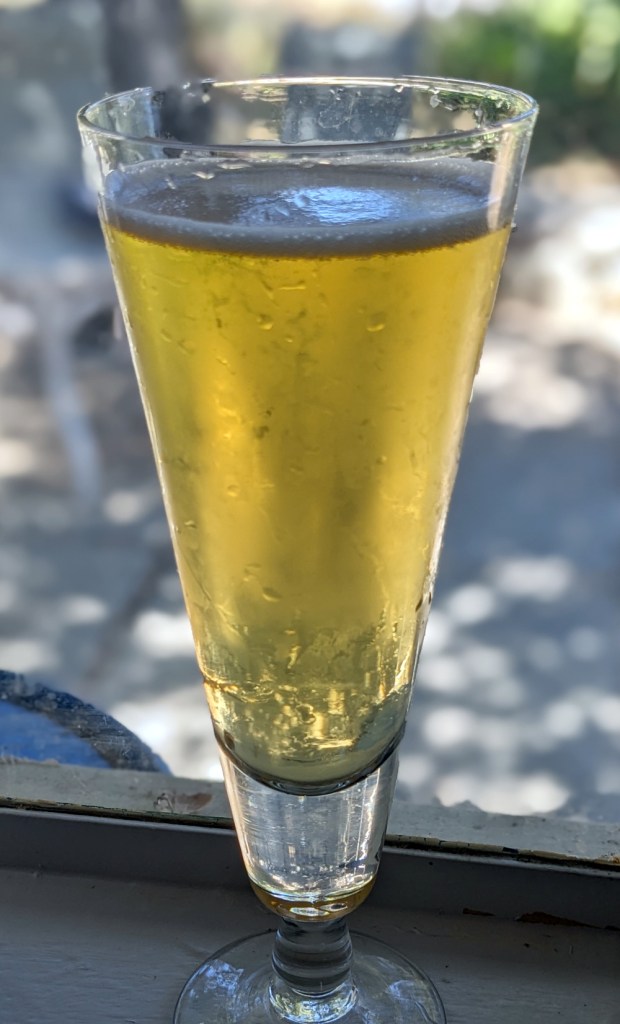
pale yellow beer with white head in conical pilsner glass

I’ve made two previous versions of Pre-Prohibition Pilsners, distinguished as such by having a bit more body and malt character than a typical American macro lager, and distinguished from European pilsners by adjuncts and the frequent use of American hops. My dad’s version originally comes from the April 1999 issue of BYO; it stands out in having a bit of flaked rye in it. Additionally, 6-row malt is nowhere to be seen in my version of this recipe.

This year’s edition is broadly inspired by the 2016 version, but you can check out the last version for differences. I used all American hops (Mt. Hood) instead of German ones, and brought Novalager into the mix, too. The main goal is to have something drinkable for the dog days of summer, but not so inoffensive as to be boring.

Dad’s 3P 2024

  • 6.75 lb. 2-row malt (Briess)
  • 2.25 lb. pilsner malt (Rahr)
  • 1 lb. yellow corn, flaked (Briess)
  • 0.5 lb. rye, flaked (Briess)
  • 0.5 lb. Carafoam (Weyermann)
  • 0.25 lb. rice hulls
  • 0.5 tsp. BrewTanB, in mash
  • 1 oz. Mt. Hood hop pellets (6.0% alpha), 60 minute boil
  • 1 oz. Mt. Hood hop pellets (6.0% alpha), 10 minute boil
  • 0.5 tsp. BrewTanB, 10 minute boil
  • 1 Whirlfloc tablet, 5 minute boil
  • 2 pkg. Novalager yeast (Lallemand)

Target Parameters

  • 1.050 s.g., 1.009 f.g., 30 IBU, 5.5% abv, 4 SRM
  • Full volume mash with recirculation for 60 minutes at 152°, 10 minute mash-out at 168°
  • Water blended from RO and Claremont tap water to hit target of 52 ppm Ca, 10 ppm Mg, 64 ppm Na, 82 ppm SO4, 113 ppm Cl, 5 ppm bicarbonate, alkalinity=4 ppm, RA=-39.

Procedure

  • I built my water the night before with 4 gallons of distilled water and 3.5 gallons of Claremont tap water, adding a Campden tablet and 3.2 mL of 88% lactic acid to drop out the carbonates.
  • I mashed in by heating the strike water to 158°, and then adding the grains and 2.4 mL of 88% lactic acid for pH adjustment.
  • I held the mash, with recirculation, at 152° for 60 minutes, before raising the temperature to 168° for a 10 minute mash-out.
  • At the conclusion of the mash, I removed the grains and let them drain. In total, I collected 6.6 gallons of runnings with a gravity of 1.043, for 69% mash efficiency.
  • As the runnings came to a boil, I added 2.5 g of calcium chloride. Once the runnings boiled, I added the hops and finings per the recipe.
  • After the full 60 minute boil, I chilled the wort to 78° before transferring to the fermenter and letting it chill to 46° in the fermentation chamber.
  • I pitched the yeast at 46°, and then let the fermenter free rise to 52° for fermentation.
  • I brewed the beer on 19 May 2024. Starting gravity was 1.049.
  • I let the beer free rise to 60° on 25 May 2024, and then to 65° on 29 May 2024.
  • The beer was kegged using a closed transfer on 3 June 2024. Final gravity was 1.009, for 5.2% abv.

Tasting

  • Appearance
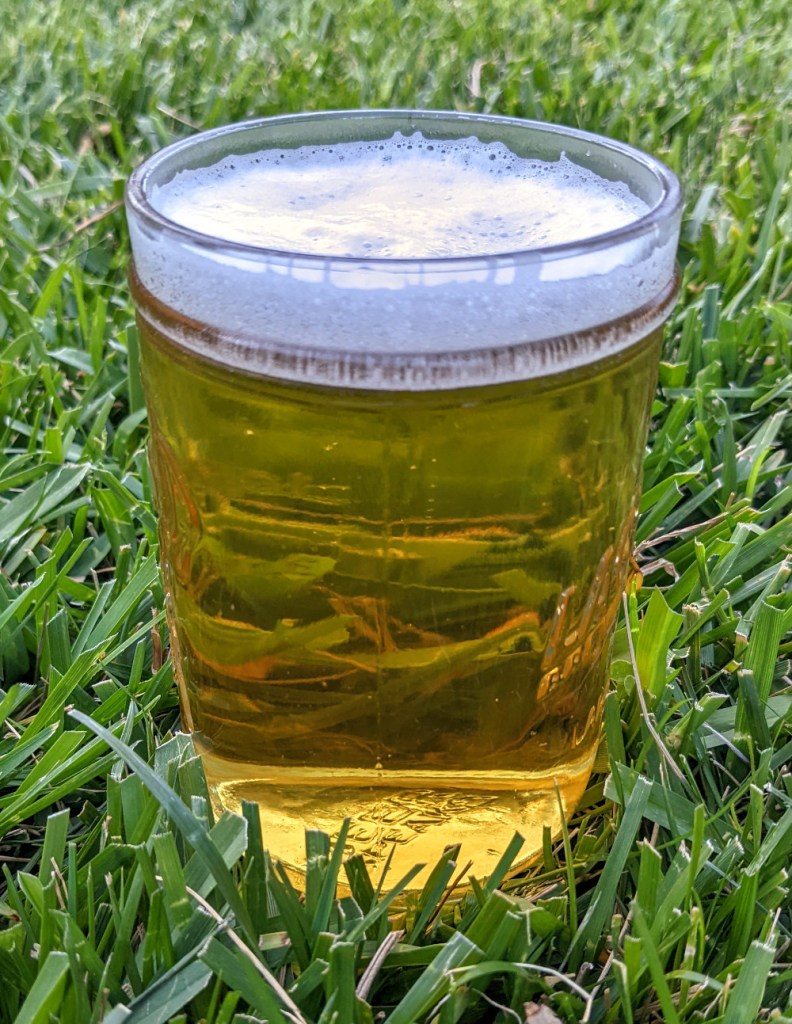
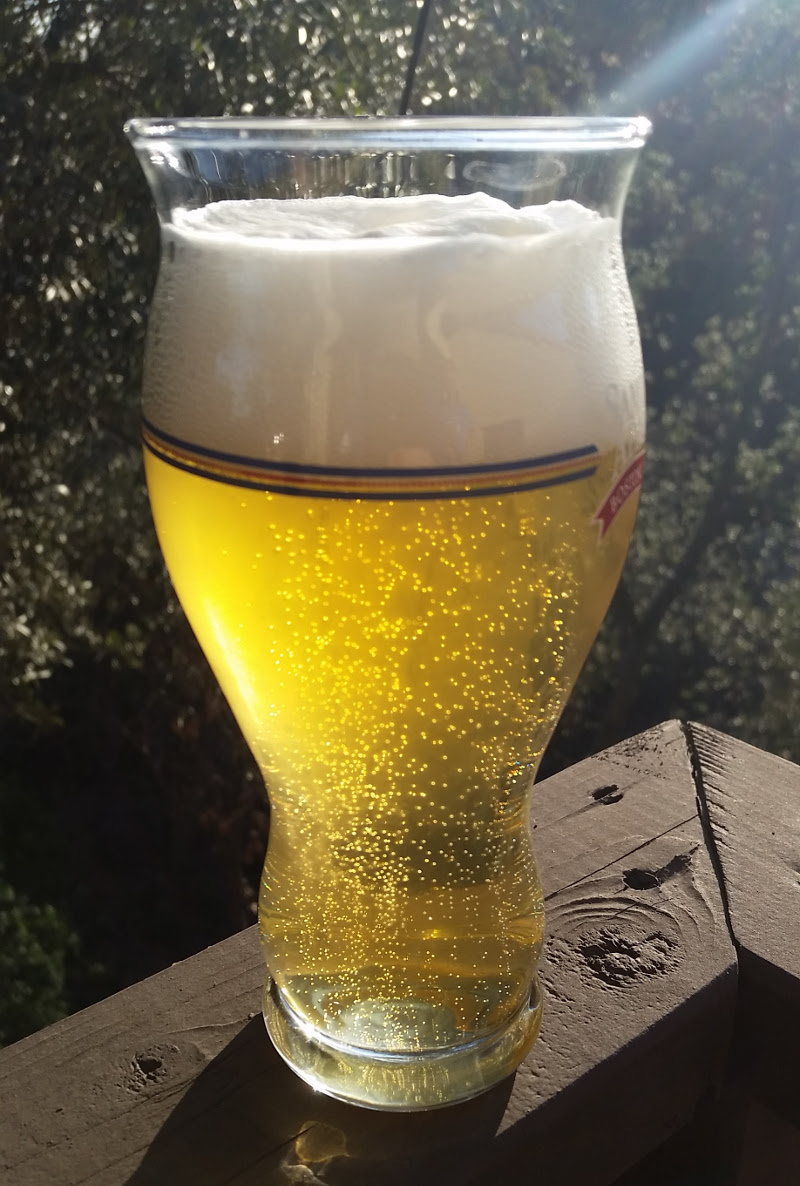
    • Brightly clear, straw yellow beer, which pours with a fine and persistent white head. It just looks nice!
  • Aroma
    • Grainy sweet malt aroma; no appreciable yeast character or hop character apparent.
  • Flavor
    • Medium-high bitterness at the forefront, with a slightly herbal quality. Malty notes and a light hint of corn sweetness are behind that, but the beer definitely tilts toward bitter. Clean fermentation character, Crisp finish.
  • Mouthfeel
    • Medium body with a rounded feel. Dry finish. Medium carbonation.
  • Would I Brew This Again?
    • This is an interesting American lager, and highly drinkable. It’s a great summer beer! I’ve never done a six-row version of this, and might have to try it sometime in the pursuit of historical accuracy. Relative to the BJCP guidelines for Pre-Prohibition Lager (Category 27, Historical Beer), it hits most of the notes but should have perhaps a bit more hop aroma and a slightly taller head. Overall, though, this is a solid beer and recipe! It’s really enjoyable to drink on a hot afternoon, which is really all I demand from such a beer.
  • Overall
    • 9/10

Pre-Prohibition Lager

Continuing my journey through the world of lagers, I decided to try a new version of a Pre-Prohibition lager. I’ve made something from this style range before, during my first foray into lagers, and it turned out pretty well. For the current batch, I used a blend of pilsner and 2-row malt to achieve a bit of complexity, layering in some flaked corn to give the “American” component. I got some Triumph hops in a HOPBOX selection, and thought this would be well suited for my American lager. Triumph is an American hop with European parentage, including some noble hops, and it is supposed to bring some noble characteristics along with delicate fruit qualities.

Pre-Prohibition Lager

  • 6.5 lb. Pilsner Malt (Viking)
  • 4 lb. 2-row malt (Rahr)
  • 1 lb. flaked corn
  • 0.25 lb. rice hulls
  • 0.5 oz. Triumph hop pellets (7.9% alpha), 60 minute boil
  • 0.75 oz. Triumph hop pellets (7.9% alpha), 15 minute boil
  • 1 tsp. BruTahB, 10 minute boil
  • 1 Whirlfloc tablet, 5 minute boil
  • 0.75 oz. Triumph hop pellets (7.9% alpha), 5 minute boil
  • 2 pkg. Diamond lager yeast (Lallemand)

Target Parameters

  • 1.051 s.g., 1.008 f.g., 28 IBU, 5.7% abv, 4 SRM
  • Full volume Hochhurz mash, 45 minutes at 144°, 45 minutes at 10 minutes at 160°, 10 minute mash-out at 168°
  • Water built from scratch to hit 59 ppm Ca, 8 ppm Mg, 89 pm SO4, 63 ppm Cl, -47 ppm RA

Procedure

  • I added 2.7 g gypsum, 2.2 g epsom salt, and 3.4 g calcium chloride to 7 gallons of RO water, to hit a target of 59 ppm Ca, 8 ppm Mg, 89 pm SO4, 63 ppm Cl, and -47 ppm RA.
  • I heated the water in the Foundry to 150°, and added the grains to hit a mash temperature of 144°. I added 1.5 mL of 88% lactic acid to adjust pH slightly. I held the mash at 144° with recirculation for 45 minutes, and then raised the temperature to 160°, holding it here for 45 minutes also. Finally, I raised the mash to 168° and held it here for a 10 minute mash-out.
  • After the mash-out, I removed the grain basket and brought the runnings to a boil. I collected 6.3 gallons of runnings with a gravity of 1.048, for 71% mash efficiency.
  • I brought the beer to a boil, aiming for 60 minutes, adding hops and such per the recipe. My Foundry had an issue mid-boil (the power switch was starting to burn out),so it took a bit of work to limp the boil through to the end. I adjusted the length of the boil time slightly to compensate.
  • After approximately 60 minutes of total boil, I turned off the heat and chilled to ~68°, before transferring to the fermenter and chilling down to 48° in the fermentation chamber. I then pitched the yeast.
  • I brewed the beer on 14 February 2022, and fermented at 52°. Starting gravity was 1.053.
  • I kegged the beer on 8 April 2022. Final gravity was 1.013, for 5.3% abv.

Tasting

  • Appearance
    • Brilliantly clear, light yellow beer with moderately persistent head. The head pours fairly thick, but thins out after awhile.
  • Aroma
    • Clean! Slight grainy/corn profile; not much hop character, although there is a bit of a spice hop note.
  • Flavor
    • Malty/grainy, with light corn flavor; moderately high bitterness, but not much for hop character otherwise.
  • Mouthfeel
    • Fairly crisp finish, with moderate carbonation. Medium body. Very smooth drinking!
  • Would I brew this again?
    • YES! This is a nice version of the style; I suppose it doesn’t hit all of the BJCP style notes, but it really is a pretty awesome American lager. A touch more hop aroma would be nice, but not mandatory.
  • Overall
    • 9/10

Beer Tasting: Dad’s 3P

My first foray into a pilsner is nearing the end of its keg, so I wanted to make sure to get a tasting in before it was gone. I served it at a recent party, which depleted a good chunk of the supply, and gave away a few growlers, also. It’s not that I don’t like the beer–I do!–but I didn’t want to tie up too much equipment with something that required unique handling for serving temperature (cold, cold, cold) and carbonation pressure (high, high, high).

Dad’s Pre-Prohibition Pilsner

  • The Basics
    • Original gravity = 1.051; final gravity = 1.008; abv = 5.5%; estimated IBU = 30.
  • Aroma
    • This beer showcases a crisp and slightly spicy hoppiness, with a hint of corn sweetness behind that.
  • Appearance
    • Clarity is a touch off of the brilliant I was aiming for; there is a very faint chill haze, which is unfortunate (more on this later). The beer has an exceptionally tall and thick white head when poured, almost meringue-like in its texture and fineness. Retention is excellent; it sticks around as a full blanket over the beer until the very end. Despite the very minor chill haze, the effervescence of the beer gives a very nice visual too. The beer itself is a pale straw color.
  • Flavor
    • The flavor profile is quite clean, with crisp hops at the front and a clean but simple malt bill behind that. I definitely taste the corn backing up the rest of the beer, and perhaps a hint of the rye spiciness (although I don’t think I would pick it up if I didn’t know it was supposed to be there). It’s a reasonably bitter beer, but not overly so.
  • Mouthfeel
    • This is a light-bodied beer, with high carbonation (as appropriate for the style). The finish is dry, and very clean. A lingering but not overpowering hop bitterness rounds out each tasting.
  • Would I brew this again?
    • I feel like this is a very solid, but not perfect, first try at a pilsner. There’s a lot that hit the mark with this brew. The flavor and aroma are incredibly clean, without any DMS or diacetyl or fruitiness. It’s a tasty, easy-drinking beer, perfect for warmer weather. The color is a bit too light for the Classic American Pilsner style, and the slight haze is also an issue in terms of the strict style. That said, these don’t matter much for me in terms of taste enjoyment, although they are things I want to work out for the next batch of whatever pilsner I do.

      I think the haze in this case was compounded by two things. First, I added the gelatin to the keg, rather than the fermenter. I think next time I’ll add to the fermenter and let it work its magic in there for a few days before kegging. Second, I let the keg warm up a bit one night after serving, coupled with a bit of movement/sloshing, that probably didn’t help things either. So, I’ll aim to be a bit more careful with my handling next time, and see if that fixes things.

      For my next pilsner, I’ll probably go with something a little more “traditional”, just to see how that goes.

  • Overall
    • 6 / 10

3P Kegged

After 11 days at 65°, my pre-Prohibition pilsner is down to a final gravity of 1.008. This equates to 5.5% abv and 83% attenuation. The low mash temperature definitely did the trick for drying out the beer! On Saturday, January 30, I dropped the temperature down to 40°, and on Sunday dropped it again to 35°. This evening (Sunday, January 31), I kegged the beer. I am fining it with 3/4 tsp. of gelatin in 1/2 cup of water, mixed in with the beer. I’m force-carbonating and lagering at a temperature of 34°.

The beer has cleaned up pretty nicely, although is still pretty hazy. I expect the gelatin should take care of that in short order. I can definitely pick up the corn in the grist, as expected for a beer in the American pilsner style.

3P Update

I checked the gravity for Dad’s Pre-Prohibition Pilsner on Sunday, January 17. At this point, it was down to 1.018, from 1.051. This puts the beer at around 64% apparent attenuation (and 4.3% abv), so it’s time to start ramping up the temperature. The temperature at this point was around 52°. For the first 12 hours, I just let it free rise in the fermentation chamber. The next morning (January 18), it was at 55°. I then put my heating pad in the chamber, and set it at 60°. By that evening, it was at the desired temperature. I then gave it the final bump up to 65°, which it had reached by the morning of January 19.

Per the guidance from Brulosophy, I will leave it at this temperature for four to 10 days. I’ll probably do a check next weekend.

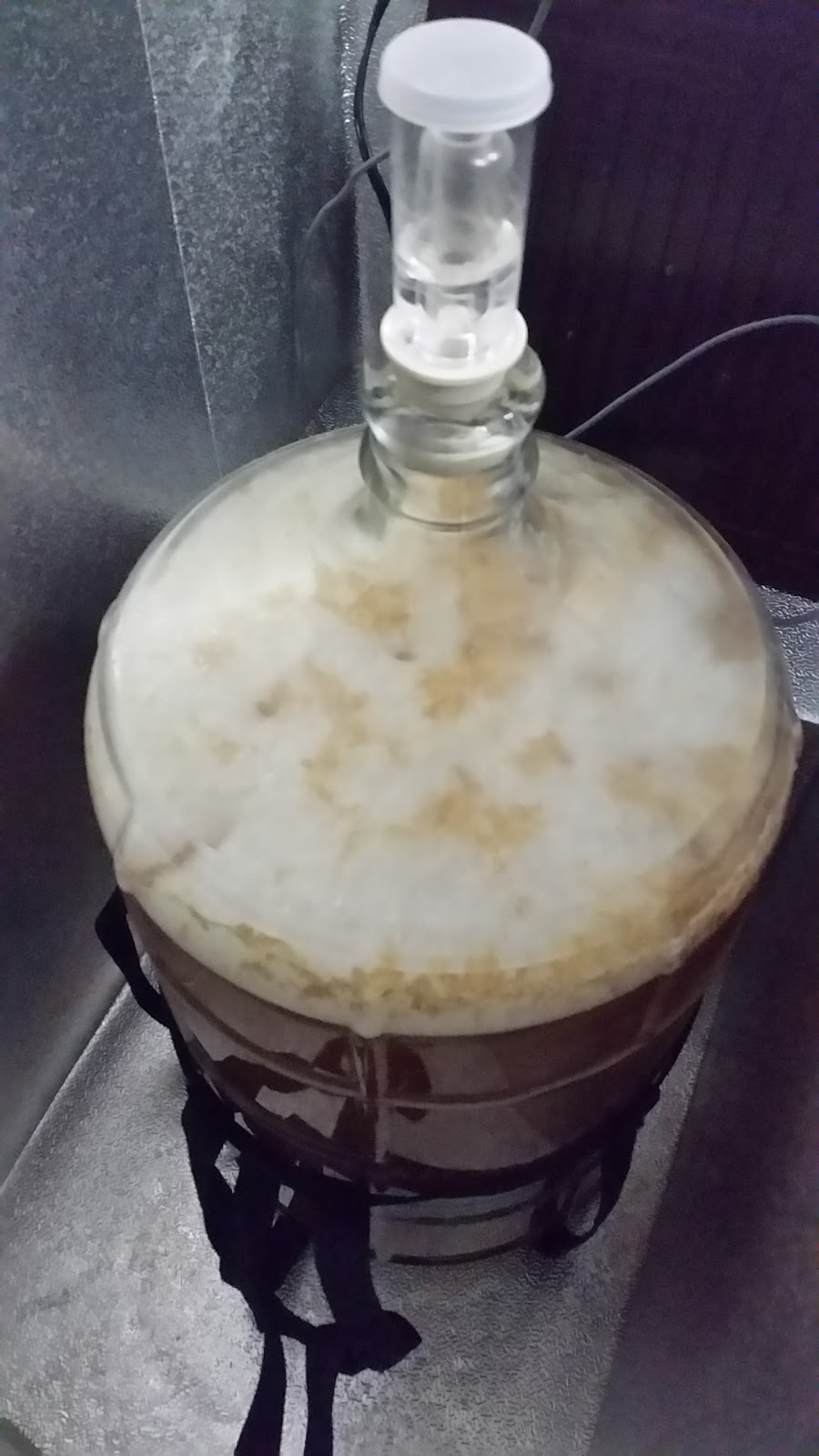
The beer is a quite pale straw color, and pretty hazy yet (not surprising). The krausen was ridiculously rocky on it–I suppose it’s a product of the grains plus the yeast strain. I am a bit surprised that I don’t pick up any really obvious off-flavors (e.g., diacetyl), but perhaps that is just my bad palate.