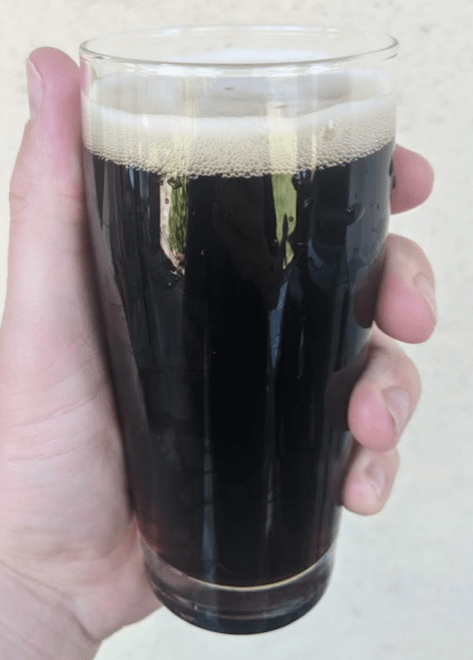
Twisted Schwarzbier

I have brewed schwarzbier once before, and it came out pretty good. I wanted to revisit the style as a warmer-weather dark beer, and so picked out a second recipe from Brewing Classic Styles. This version differed from the last in that it emphasizes pilsner malt more than Munich.

I am contractually obligated to use Space Balls references in any schwarzbier name, with zero apologies from doing so. Thank you.

Twisted Schwarzbier

  • 9 lb. Viking Pilsner Zero malt
  • 1 lb. Munich I malt (Weyermann)
  • 11 oz. Carafa Special II malt (Weyermann)
  • 1 oz. Vanguard hop pellets (6.5% alpha), 60 minute boil
  • 0.5 oz. Mt. Hood hop pellets (4.6% alpha), 15 minute boil
  • 0.5 oz. Mt. Hood hop pellets (4.6% alpha), 5 minute boil
  • 1 tsp. Fermax, 10 minute boil
  • 1 Whirlfloc tablet, 5 minute boil
  • Repitch of Harvest lager yeast (Imperial L17)

Target Parameters

  • 1.049 o.g., 1.013 f.g., 4.7% abv, 30 IBU, 24 SRM
  • 60 minute infusion mash at 152°, full volume
  • Claremont tap water, treated with Campden tablet

Procedure

  • I mashed in with 7.5 gallons of water at 158°, to hit my mash target of 152°. After adding 5 mL of 88% lactic acid, I held the mash at 152°, with recirculation, for 60 minutes. I then raised the mash to 168°.
  • After the mash, I removed the grain basket and collected 6.75 gallons of wort with a gravity of 1.041, for 69% mash efficiency.
  • I brought the wort to a boil, adding hops and finings per the recipe. After 60 minutes, I turned off the heat and chilled it down to 70°, before transferring to the fermenter and chilling down to 52° in the fermentation chamber.
  • After the wort hit fermentation temperature, I oxygenated with 30 seconds of pure O2, and then pitched the yeast.
  • I brewed this beer on 6 February 2021. It had a starting gravity of 1.048.
  • I started fermentation at 52°, held it here for three days, raised to 54° for three days, and then finished at 56° for three days, before cold crashing.
  • I kegged the beer on 27 February 2021. Final gravity was 1.014, for 4.5% abv.

Tasting

  • Appearance
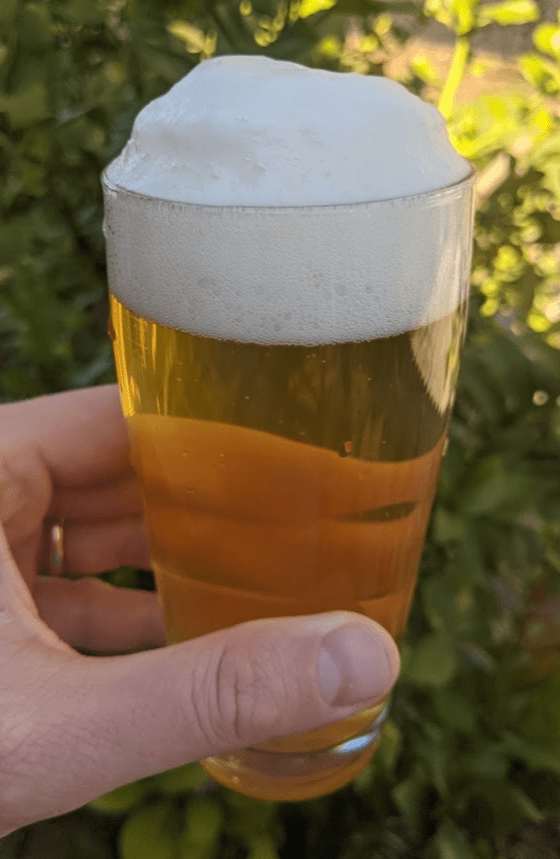
    • Brilliantly clear, deep brown beer, pouring with a persistent tan head.
  • Aroma
    • Roasty and coffee aroma, at a moderately high level.
  • Flavor
    • Roasty malt and coffee flavor, with a bready malt character in the background. Moderately high level of bitterness. Clean yeast character. Extended bitterness on the finish.
  • Mouthfeel
    • Medium-light body, moderate carbonation, off-dry finish.
  • Would I brew this again?
    • Perhaps? It’s a good, clean beer, but if feels like I could dial back the roast/coffee character a touch and move the base malts (especially the Munich) more to the forefront. I think if I were to rebrew this, I would add a bit more Munich, or maybe add in some Vienna, and reduce the percentage of pilsner malt. That said, this beer is very drinkable, so I wouldn’t make it too heavy for the base malts. Based on the BJCP written descriptions, it seems to be a great example of the schwarzbier style, but just isn’t to my taste.
  • Overall
    • 9/10

Pilsnerpeton

I’m slowly and steadily improving my German pils game, and feel like this one is a winner! It’s a super basic recipe, but my philosophy has always been that the best pilsners are accentuated by skill and quality ingredients, rather than endless ingredient lists.

The name is a cheeky reference to a naming convention in zoology, with many amphibians, reptiles, and relatives getting an “-erpeton” suffix. It translates literally as “reptile” or “creeping thing.” Acquaintance Brad McFeeters cheekily noted that Pilsnerpeton would be a great name for a lagerpetid (dinosaur cousin), and I thought it would also be a euphonious name for a beer! I might keep it as the name for my house German pils recipe from here on out…

Pilsnerpeton

  • 10 lb. Viking Pilsner Zero malt
  • 0.4 oz. Perle hop pellets (7.1% alpha), 60 minute boil
  • 0.15 oz. Sterling hop pellets (7.4% alpha), 60 minute boil
  • 1.0 oz. Perle hop pellets (7.1% alpha), 10 minute boil
  • 0.25 oz. Mt. Hood hop pellets (4.6% alpha), 10 minute boil
  • 1 tsp. Fermax yeast nutrient, 10 minute boil
  • 1 WhirlFloc tablet, 5 minute boil
  • 1 pkg. Global liquid yeast (Imperial #L13)

Target Parameters

  • 1.046 s.g., 1.006 f.g., 5.2% abv, 4 SRM, 26 IBU
  • Full volume step mash, with 30 minute rest at 142°, 40 minute rest at 156°, and 10 minute mash-out at 168°
  • Claremont tap water, treated with Campden tablet.

Procedure

  • Around 12 hours in advance of pitching, I made a 1.5L SNS (shaken-not-stirred) starter with 150 g of light DME.
  • I heated 7.25 gallons of water to 147°, and mashed in the grains. I added 5 mL of 88% lactic acid to adjust pH.
  • I held the mash at 142° for 30 minutes, and then raised it to 156°, which took approximately 9 minutes. After 40 minutes at 156°, I raised the temperature to 168°, which took around 10 minutes. I held it at this temperature for 10 minutes, before removing the grains and bringing the kettle to a boil.
  • The gravity out of the mash was 1.039, with 6.4 gallons collected. This equates to 67% mash efficiency.
  • Once the kettle was boiling, I added hops and kettle finings per the recipe.
  • After a 60 minute boil, I turned off the heat and chilled down to 88° while recirculating. At this point, I stopped recirculation and let the wort settle for 30 minutes.
  • Then, I transferred the wort to the fermenter, discarding around 1 gallons of trub. This was probably a bit more than I needed to get rid of, and would aim for ~0.5 gallons next time.
  • In the fermenter, I chilled the wort down to 49°, over a 3 hour period. I oxygenated the wort for 40 seconds, and then pitched the yeast.
  • I brewed the beer on 28 December 2020. Starting gravity was 1.044.
  • I started fermentation at 48°, with a free rise to 50° after pitching. I raised the beer to 54° on 1 January 2021, 56° on 5 January, and 60° on 9 January. I cold crashed down to 34° on 16 January 2021.
  • I kegged the beer on 30 January 2021, after two weeks of cold crashing.
  • Final gravity was 1.013, down from 1.044, for 4.1% abv. The final gravity was a bit higher than predicted by BeerSmith, but I think that’s because the software doesn’t do well with calculating wort fermentability from step mashes.

Tasting

  • Appearance
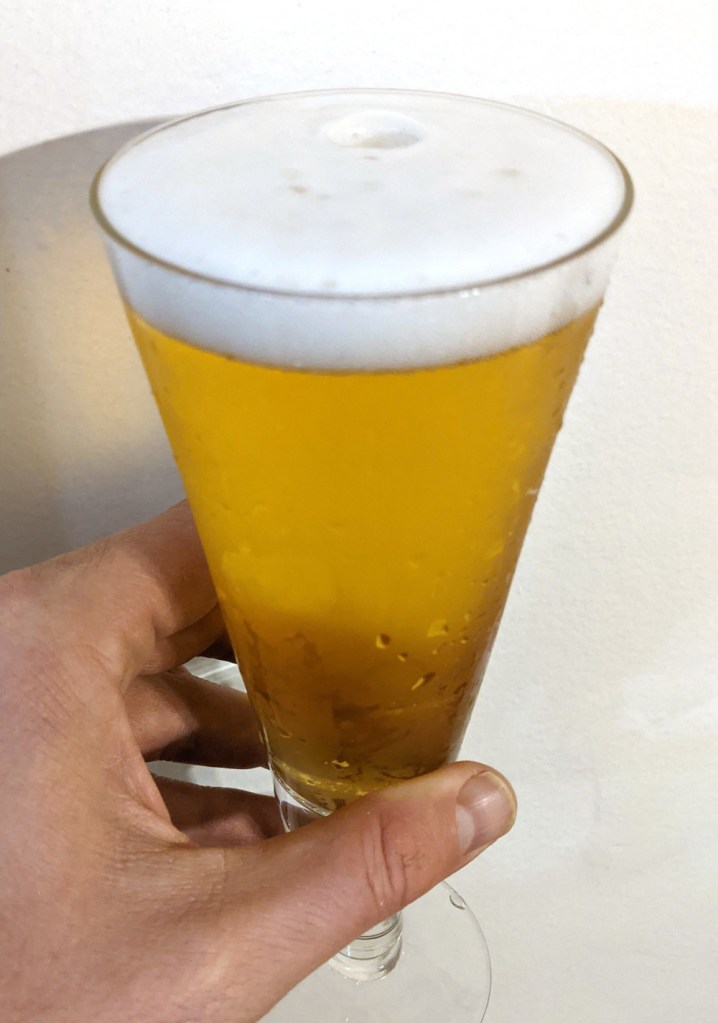
    • Very clear light gold beer, just shy of brilliant, with a beautifully creamy, tall, and persistent white head. It has wonderful lacing down the side of the glass as you drink it.
  • Aroma
    • Malty sweet and cracker notes in a moderate malt aroma. There is a low level of “spicy” hop character. I might like a little more hop aroma, but that’s a minor fault.
  • Flavor
    • Clean, malty-sweet character, with moderate level of very smooth bitterness. The hop flavor is herbal/spicy, with a clean finish. The bitterness lingers pleasantly.
  • Mouthfeel
    • Medium-light body, moderate carbonation, very smooth finish.
  • Would I brew this again?
    • Yes! The malt/hop balance are perfect for my taste, so I think ~25 IBU in a lower-gravity pils is a sweet spot for my preference. Clean fermentation character and clean malt make this taste so good! I might try some hop adjustments for the late hopping to improve aroma, but that is the only real fault in this beer.
  • Overall
    • 9/10

Tremonia Lager 1.1

With the end of the year, I did a rebrew of Tremonia Lager, one of my favorite recipes from the past 12 months. This round uses an identical malt bill, although I switched out the bittering hops (Sterling instead of Magnum), and used Diamond lager yeast from Lallemand instead of W34/70. The water is slightly modified too, to accommodate our seasonal water changes and reduce the magnesium load.

Tremonia Lager 1.1

  • 9.5 lb. pilsner malt (Weyermann)
  • 1.5 lb. Munich I malt (Weyermann)
  • 1.5 lb. Vienna malt (Weyermann)
  • 0.85 oz. Sterling hop pellets (7.4% alpha), 60 minute boil
  • 0.5 oz. Mt. Hood hop pellets (4.6% alpha), 10 minute boil
  • 1 Whirlfloc tablet, 5 minute boil
  • 0.5 oz. Mt. Hood hop pellets (4.6% alpha), 5 minute boil
  • 2 pkg. Diamond Lager yeast (Lallemand)

Target Parameters

  • 1.057 o.g., 1.014 f.g., 5.6% abv, 26 IBU, 5 SRM
  • Infusion mash, 152° for 60 minutes, full volume
  • Claremont tap water adjusted with lactic acid and mineral additions, to achieve calculated water profile of 102 Ca, 45 Mg, 74 Na, 66 SO4, 89 Cl, 25 HCO3, -79 ppm RA, 20 ppm Alkalinity, 99 ppm effective hardness.

Procedure

  • I tested my water the night before brewing, and added 6.75 mL of 88% lactic acid to neutralize carbonates. Then, I added 2 g of gypsum and 0.5 g of calcium chloride, to achieve the target water profile listed above. Unlike my first batch of this beer, I used no Epsom salts.
  • I mashed in with 7.5 gallons of water at 159°, to hit a target mash temperature of 152°. After sitting for 10 minutes, I began recirculation, for a 60 minute mash rest at 152°. Then, I heated the mash to 168°, holding it here for 10 minutes.
  • After removing the grain basket, I had 6.6 gallons of runnings with a gravity of 1.049, for 69% mash efficiency.
  • I brought the kettle to a boil, adding hops and finings per the schedule. I also added 1 tsp. of BrewTan B at the end of the boil, to help maintain freshness of the beer.
  • I chilled the beer down to 75° or so, and then transferred to the fermenter for the final chill down to 50°. Then, I pitched the yeast.
  • Starting gravity was 1.055. I brewed this beer on 21 November 2020.
  • On 30 November 2020, I raised the temperature in the fermenter to 60°, and then cold crashed to 33° on 4 December 2020.
  • I kegged the beer on 10 December 2020, with a semi-closed transfer into the purged keg. It lagered for a few weeks at this temperature before going on-tap.

Tasting

  • Appearance
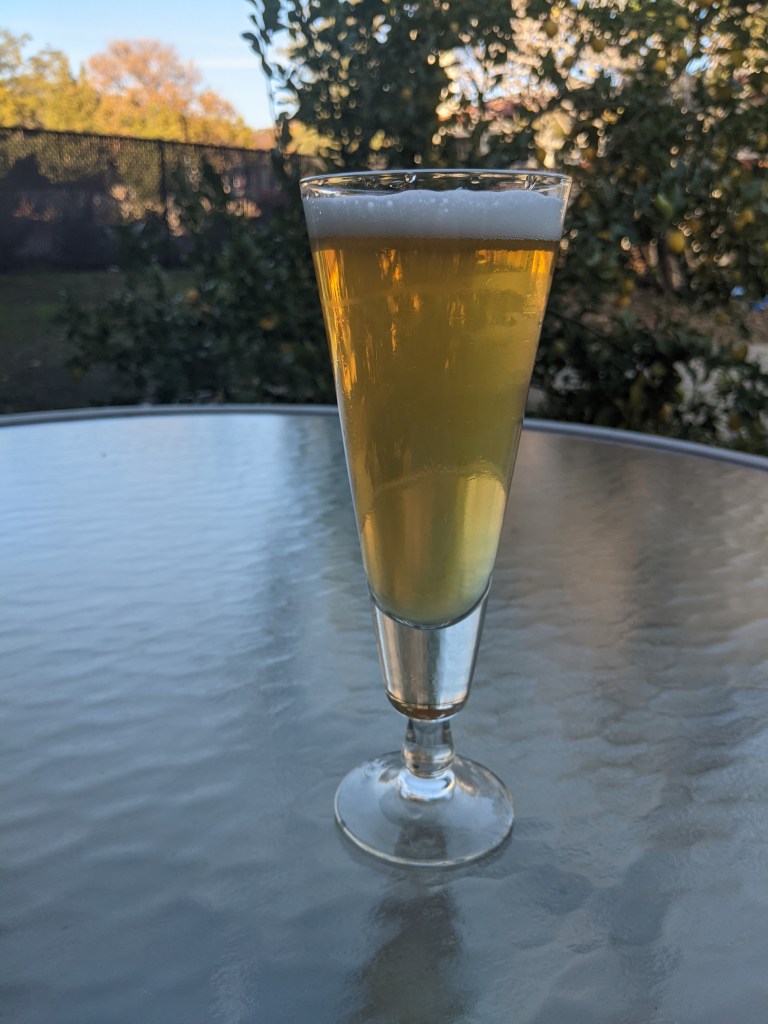
    • Very clear, nearly brilliant gold beer, with a persistent fine white head. Beautiful!
  • Aroma
    • Malt-forward, with a light sweet maltiness and low hop level.
  • Flavor
    • Malty, delicious, with cracker-like character. There is a firm, moderately high bitterness, but not much hop character beyond that.
  • Mouthfeel
    • Medium body, moderate carbonation, with off-dry finish and lingering bitterness.
  • Would I brew this again?
    • This is a nice beer! I like the previous version a touch better, but this one is still pretty good. The hop character was a touch better previously, and I think the mineral balance is slightly out of whack, giving a slight harshness to the bittering. I might adjust the minerals to be just a touch closer to the “old” version next time around.
  • Overall
    • 9/10

Pfriem Pilsner

I recently bought a Foundry brewing system, and chose a German pils as my first brew. First off, I really like this style. Importantly for a first spin on the Foundry, it gave me a chance to try out a step mash. The recipe is from Dave Carpenter’s Lager book, modified slightly for hop varieties. Otherwise, it’s pretty much as advertised.

Pfriem Pilsner

  • 9.5 lb. Pilsner malt (Weyermann)
  • 7 oz. Carafoam malt (Weyermann)
  • 3 oz. acidulated malt (Weyermann)
  • 0.6 oz. Perle hop pellets (7.1% alpha), 60 minute boil
  • 1 oz. Crystal hop pellets (4.5% alpha), 10 minute boil
  • 0.5 oz. Spalt Spalter hop pellets (3.0% alpha), 10 minute boil
  • 0.5 oz. Vanguard hop pellets (6.5% alpha), 10 minute boil
  • 1 oz. Crystal hop pellets (4.5% alpha), 10 minute whirlpool
  • 0.5 oz. Spalt Spalter hop pellets (3.0% alpha), 10 minute whirlpool
  • 0.5 oz. Vanguard hop pellets (6.5% alpha), 10 minute whirlpool
  • 2 pkg. Saflager Lager Yeast (W34/070)

Target Parameters

  • 1.046 s.g., 1.006 f.g., 5.2% abv, 3 SRM, 35 IBU, 5.25 gallon batch
  • Full volume step mash, with 40 minutes at 142°, 40 minutes at 156°, and 10 minutes at 168°; 70 minute boil
  • Claremont water with carbonates knocked out via lactic acid and Campden tablet to remove chloramines.

Procedure

  • While the 7.25 gallons of water were heating, I added 6 mL of 88% lactic acid to neutralize the carbonate load, in addition to adding a Campden tablet. No other minerals were added.
  • It took 29 minutes to heat up from tap water temperature (~115°) to 146° for the mash-in temperature. I also added 5 mL of 88% lactic acid (but realized I had the wrong settings, and this was probably too much). I hit an initial mash temperature of 142°, and held it there for 40 minutes. 10 minutes into the mash, I started recirculating. Then, I raised the temperature to 158°, which took around 20 minutes (I started at 75% power, and then upped it to 100% power for the last 10 minutes). To raise to 168° for mash-out, it took ~7 minutes at 100% power. To get boiling temperatures, it took around 50 minutes. I noted that it was boiling (bubbling) before the panel actually showed 212° (~207°).
  • The post-mash volume was 6.4 gallons, with a gravity of 1.043, for 72% mash efficiency.
  • I boiled for 70 minutes, adding hops and finings per the recipe.
  • After the boil, I chilled and transferred to the fermenter. In the fermenter, I continued the chill, down to 52°. Then, I pitched the yeast.
  • I brewed this beer on 17 October 2020, and it had a starting gravity of 1.049.
  • I raised the beer to 60° on 30 October 2020.
  • I lowered the beer to 55° on 1 November 2020, and down to 33° on 6 November 2020.
  • I kegged using semi-closed transfer on 30 November 2020.
  • Final gravity was 1.013, for 4.7% abv.

Tasting

  • Appearance
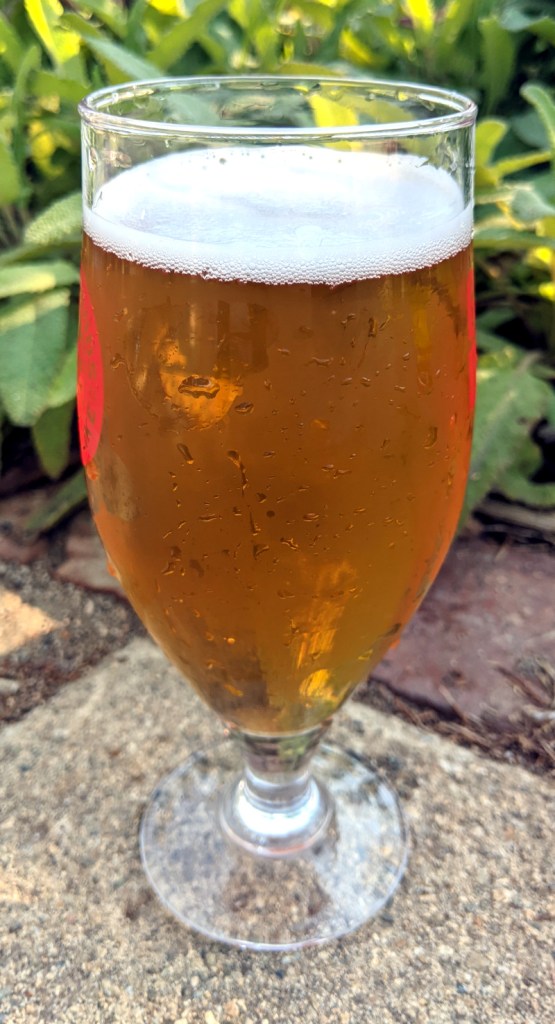
    • The beer pours with a persistent, thick, and white head–absolutely gorgeous! This is a true slow-pour beer. I am so pleased with the heading I’ve been getting from my pilsners. In the glass, the beer has a light gold color, with a very slight haze.
  • Aroma
    • Light grainy malt note, with a low level of spicy hop character. Very clean yeast character.
  • Flavor
    • Moderately low grainy-sweet malt character. The hops are more prominent, with a slight herbal character and clean bitterness that is pretty strong, almost approaching a level of harshness. Yeast flavor is very clean.
  • Mouthfeel
    • Moderate/moderate-low level of carbonation, due to the high head on the pour that drives off some of the CO2. The finish is off-dry, with a light and crisp body.
  • Would I brew this again?
    • Yes? I really need to take a look at my hopping levels, and perhaps consider going with American hops rather than European ones to get a better aroma. The persistent haze is annoying, but I also misjudged the lactic acid addition, which I suspect might be a factor, as well as the whirlpool. I’ll dial back the hops in my next batch and avoid the whirlpool, because this is more bitter than I really like for a pils. Once I’m buying RO water again, I’ll definitely be building up my water profile, rather than augmenting the rather over-mineralized tap water. So, there are things I like about the recipe, but I think I can continue to adjust for improvements.
  • Overall
    • 6/10

Historical(ish) Vienna Lager

I’ve been working my way through the excellent Vienna Lager book by Andreas Krennmair, which presents a fresh, historically grounded account of the development of this classic style. It’s a relatively short, highly readable piece of work, and of course it has some recipes in the back. Although we can’t directly reproduce historical beers–so much has changed with ingredients and procedures–we can create an approximate copy fairly readily.

My recipe is pretty similar to that presented by Krennmair, although I made some modifications for ingredients and process. The original recipe (p. 144 in his book) uses a double decoction and 90 minute boil, along with WLP820 (Oktoberfest/Marzen yeast). I converted to a batch sparge, to streamline the brew day, and also raised the mash temperature a fair bit. The original recipe claimed a final gravity of 1.018, and I really have no idea how one could reach such a high final gravity, even with the hotter decoction rests. The main mash sat around 149° in Krennmair’s version, and the math (and enzyme chemistry) don’t work out for me. So, I raised the mash temperature in my batch to target 156°.

The recipe from Krennmair has many parallels with “Nothing But Vienna” by Gordon Strong, which I brewed some time ago (as “Decoction Envy Vienna Lager“, and it turned out pretty well!). Strong’s recipe is also just Vienna malt, with Sterling instead of Saaz. I did that last batch as a decoction, but decided to be a bit lazy this time around. I’ve tried decoction mashes, and they’re fun every once in awhile, but too much bother sometimes. Batch sparge all the way for this brew!

Historical(ish) Vienna Lager

  • 11 lb. Vienna malt (Weyermann)
  • 1.5 oz. Saaz hop pellets (5.3% alpha), first wort hop, 60 minute boil
  • 1 tsp. Fermax yeast nutrient, 10 minute boil
  • 1 Whirlfloc tablet, 5 minute boil
  • 2 pkg. W34/70 lager yeast (Saflager)

Target Parameters

  • 1.051 s.g., 1.014 f.g., 4.8% abv, 5 SRM, 28 IBU
  • Infusion mash, 156°, batch sparge; 60 minute boil
  • Claremont water, with Campden tablet to remove chloramines, lactic acid to neutralize carbonates, adjusted to target water profile of 50 Ca, 30 Mg, 81 Na, 68 SO4, 90 Cl, 30 HCO3, 25 ppm alkalinity, 53 ppm effective hardness, -29 RA.

Procedure

  • The night before brewing, I took 9 gallons of hot tap water and added 7.5 mL of 88% lactic acid, to neutralize the carbonate load.
  • On brew day, I mashed in with 3.75 gallons of water at 166°, to aim for 156° mash temperature. I added 7 mL of 88% lactic acid to adjust the mash pH. I hit 157°, which was down to ~153° after 45 minutes.
  • After 50 minutes, I added 1.5 gallons of water at 200°, to raise the mash temperature to 168°. I let it sit for 10 minutes, vorlaufed, and collected the first runnings. I added the hops to the kettle at this point.
  • Next, I added 3.75 gallons of water at 185°, let it sit for 10 minutes, vorlaufed, and collected the second runnings.
  • In total, I collected 7.6 gallons of runnings with a gravity of 1.042, for 77% mash efficiency.
  • I brought the kettle to a boil, adding 2 g of gypsum at this time. During the 60 minute boil, I added finings per the recipe.
  • Next, I chilled to ~84°, let it settle for 45 minutes, and transferred to the fermenter. I moved this into the fermentation chamber, and let it chill down to 54° before pitching the yeast. This was about 8 hours after flameout.
  • I brewed this beer on 22 August 2020. Starting gravity was 1.050, pretty darned close to my target.
  • I started fermentation at 54°, and raised the temperature to 56° on 31 August, 58° on 2 September, and hit 60° on 4 September 2020. I held at this temperature for 12 hours, before starting the trend back down. It was at 57° on 5 September, 50° on 6 September, 45° on 7 September, 40° on 8 September, and 35° on 9 September. The final step was down to 32° on 10 September, and I held it there until kegging on 27 September 2020.
  • At the time of kegging, the beer had a really nice flavor but still a fair bit of haze. I did a semi-closed transfer, straight out of the fermenter into a CO2-purged keg.
  • Final gravity was 1.015, for 4.6% abv. I lagered in the keg for about a month at 33°, before it went on tap.

Tasting

  • Appearance
    • Brilliantly clear, gold colored beer, with persistent white head. It looks really nice in the glass!
  • Aroma
    • Malty, fresh bread aroma, with no hop character.
  • Flavor
    • Malt forward flavor, with a bready quality to it. Bitterness is fairly strong too, maybe a little more than I would really like for this beer. There is not a lot of character to the bitterness, beyond a slight spicy quality.
  • Mouthfeel
    • Medium body, off-dry finish, with moderate carbonation.
  • Would I brew this again?
    • This is a pretty decent recipe, but nothing exceptional. For whatever reason, the hop level comes across as a bit more than I really care for, and is almost a bit harsh at times. I blame the gypsum addition for that. I think trying to increase the sulfate level was a bit of a mistake, even if it brought the water closer to what it “should” be for Vienna water. I feel like a yeast that accentuates malt character a bit more would be do some good here, and perhaps a slight reduction in the hop level, too, as well as a minor amount of melanoidin malt. As far as lager character, it’s clear and cleanly fermented, and the reduced oxygen transfer has paid off with a super fresh taste even after nearly two months in the keg. Minor flaws aside, this is still a pretty easy drinking beer!
  • Overall
    • 6/10