It’s nice to brew a festbier from time to time; I most recently made one nearly four years ago! They are a perfect style for fall and winter, given their malt complexity as well as their high drinkability.

For this version, I followed Gordon Strong’s Modern Oktoberfest recipe from Modern Homebrew Recipes. My main adjustment was to swap in some Bohemian floor-malted malts that I had on-hand from the recent Czech dark lager project.
Oktoberfest 2023
- 9 lb. Pilsner Zero malt (Viking)
- 4 oz. Floor-Malted Bohemian Pilsner malt (Weyermann)
- 1 lb. 10 oz. Floor-Malted Bohemian Dark malt (Weyermann)
- 0.5 lb. Munich I malt (Weyermann)
- 1 lb. Vienna malt (Weyermann)
- 0.5 tsp. BrewTanB, added to mash
- 1 oz. Hallertauer Mittelfrueh hop pellets (5.2% alpha), 60 minute boil
- 0.5 tsp. BrewTanB, 10 minute boil
- 1 Whirlfloc tablet, 5 minute boil
- 0.5 oz. Hallertauer Mittelfrueh hop pellets (5.2% alpha), 5 minute boil
- 2 pkg. Novalager dry yeast (Lallemand)
Target Parameters
- 1.056 s.g., 1.005 f.g., 6.7% abv, 21 IBU, 5 SRM
- Full-volume infusion mash, held at 146° for 40 minutes, 158° for 20 minutes, and 168° for 10 minutes
- Claremont tap water, adjusted with lactic acid and minerals to hit target parameters of 59 ppm Ca, 12 ppm Mg, 54 ppm Na, 50 ppm SO4, 107 ppm Cl, 10 ppm HCO3, 8 ppm alkalinity, -41 ppm RA
Procedure
- I collected 8.1 gallons of water, adding 5.7 mL of 88% lactic acid in order to knock out the carbonates. Next, I added 3 g of CaCl to achieve my target water profile.
- I heated the strike water to 151° and added the grains along with 0.5 mL of 88% lactic acid, to hit a calculated pH target of 5.4 and a mash temperature of 146°.
- After holding the mash at 146° for 40 minutes, I raised the temperature to 158° for 20 minutes, before finally raising it to 168° for a 10 minute mash-out.
- I removed the grains, collecting in total 7.25 gallons of runnings at a gravity of 1.044, for 69% mash efficiency.
- I brought the runnings to a boil, adding hops and finings per the recipe. After 60 minutes, I turned off the heat and chilled down to 79° before transferring to the fermenter.
- I chilled the wort to 49° before pitching the yeast. I brewed this beer on 16 September 2023. Starting gravity was 1.053.
- Fermentation temperature was held at 52° for the first 10 days, and then raised to 54° on 26 September 2023. I raised it to 58° on 28 September, 60° on 1 October, and cold crashed to 34° on 4 October 2023.
- I kegged the beer on 14 October 2023, using a closed transfer.
- Final gravity was 1.010, for 5.7% abv.
Tasting
- Appearance
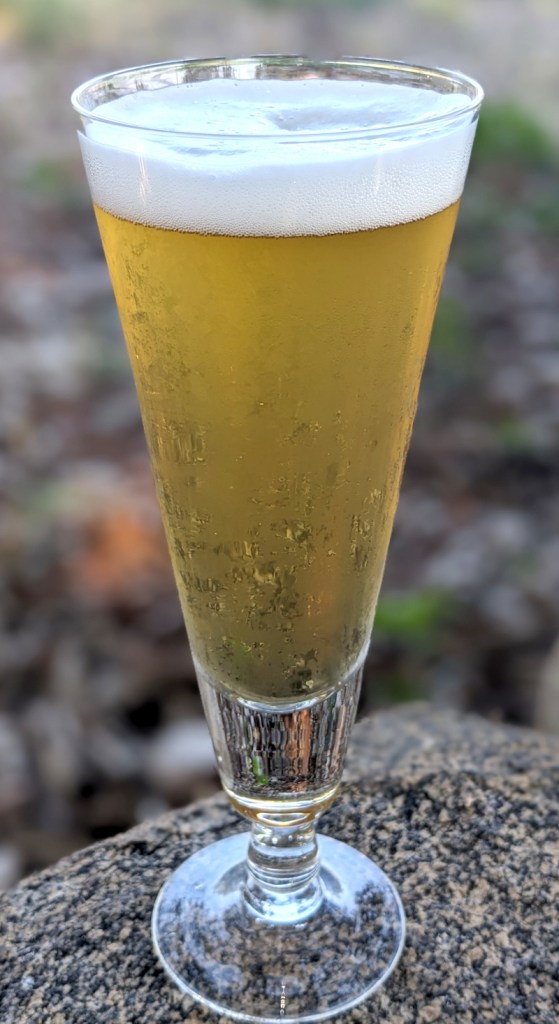
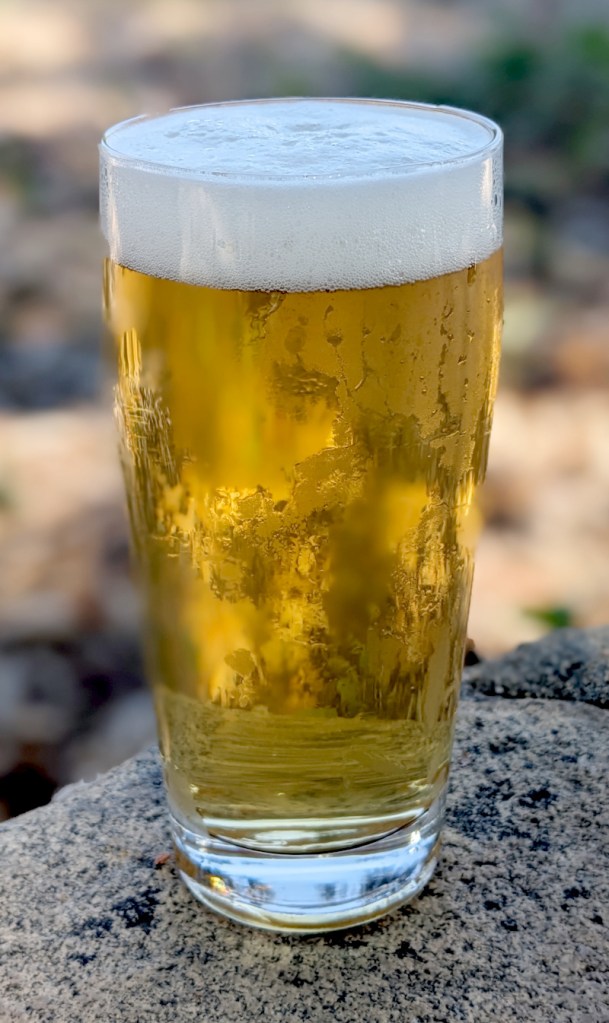
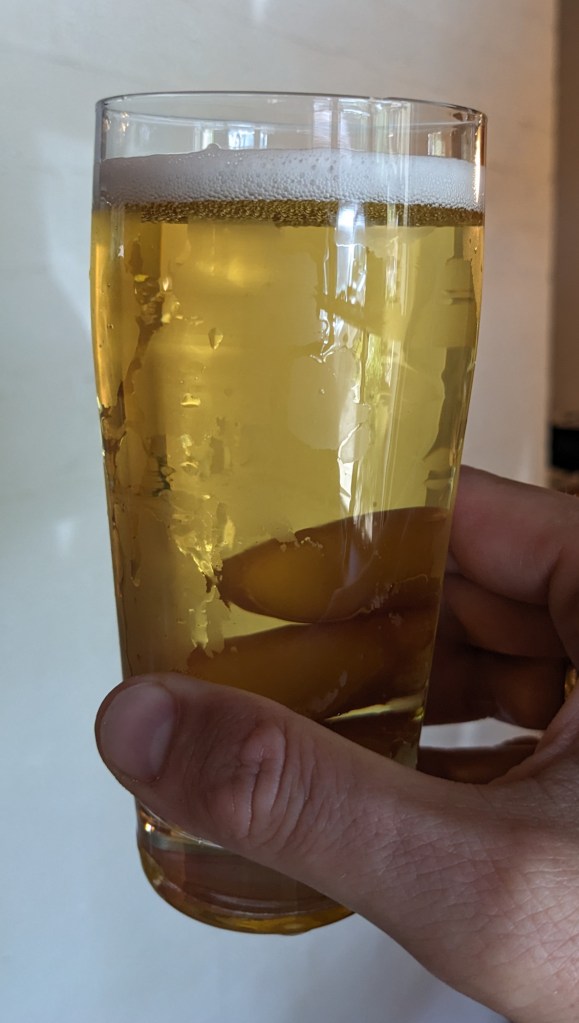
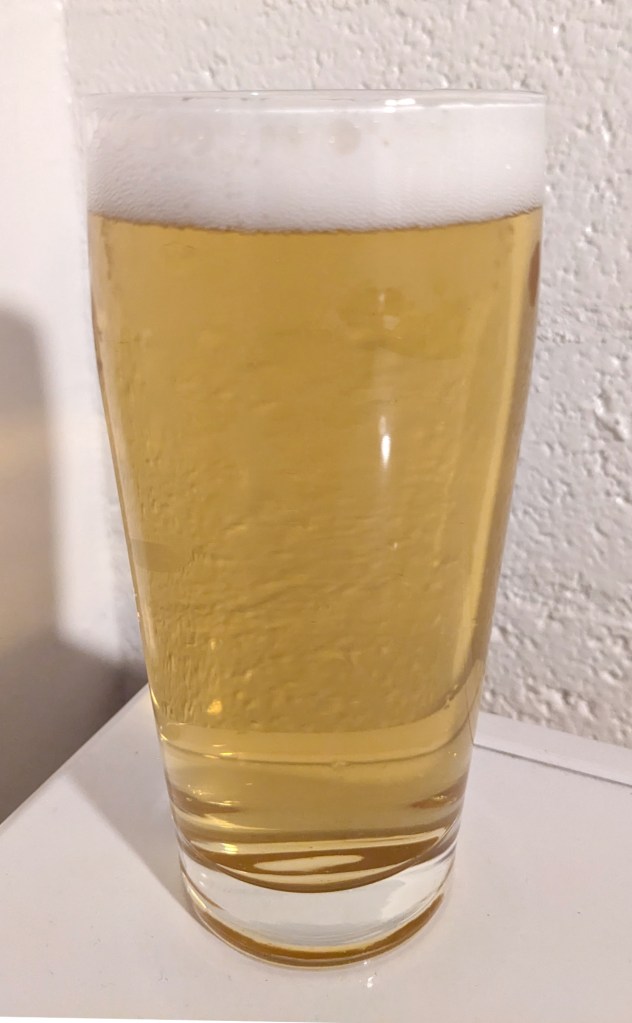
- This festbier pours with a tall white head that subsides rapidly; it’s a bit disappointing in that regard. The beer is a medium gold color and very clear, but not brilliant.
- Aroma
- Clean and malty aroma, with a slight doughy quality.
- Flavor
- Soft but forward maltiness, with lightly toasty and doughy qualities. Medium-low bitterness.
- Mouthfeel
- Medium body, medium carbonation, and a smooth, soft finish.
- Would I Brew This Again?
- This is an incredibly drinkable beer! The flavor is spot on, although the head and head retention are not at all what I want. For this reason, I would probably try a different malt combination next time.
- Overall
- 7/10


 Andy's Brewing Blog