
Kölschy Kölsch

My homebrew club had a kölsch-style ale scheduled as our March contest beer. Well…world events meant that we couldn’t get together. But, I could still do my own tasting at home!

I decided to go for a super-simple beer, with a minimalist grain bill. Last year, I did a kölsch with the Kolsch malt from Schill malting. It turned out pretty well, but was a bit darker than acceptable for the style. So, I used around 1/3 of this malt and the rest was pilsen malt, to lighten up the beer and make the flavor a touch more subtle. I have read in several places that wheat malt is not frequently used in “traditional” grain bills, so I chose to leave this out. Finally, I used Liberty hops for an American twist, and chose WLP029 (White Labs’ German Ale/Kolsch yeast).

As for the recipe name…well, I wasn’t feeling that creative!

Kölschy Kölsch

  • 7.25 lb. Superior Pilsen Malt (Great Western Malting)
  • 3.5 lb. Kölsch (Schill Malting)
  • 1.5 oz. Liberty hop pellets (4.3% alpha), 60 minute boil
  • 1 Whirlfloc tablet, 5 minute boil
  • 0.5 oz. Liberty hop pellets (4.3% alpha), 5 minute boil
  • 2 pkg. German Ale / Kölsch yeast, WLOP024 (White Labs)

Target Parameters

  • 60 minute infusion mash, 151°, batch sparge
  • 1.047 o.g., 1.010 f.g., 4.9% abv, 24 IBU, 4 SRM
  • “Cologne-ish water”, built from 8.5 gallons of RO water with 3.5 g baking soda, 4.5 g of epsom salt, 4.0 g of calcium chloride, and 2.5 g of gypsum, to hit 52 ppm Ca, 14 ppm Mg, 30 ppm Na, 98 ppm SO4, 60 ppm Cl, 78 ppm HCO3, RA=19 ppm, alkalinity=64 ppm

Procedure

  • I mashed in with 3.6 gallons of water at 162°, to hit a 150° mash temperature. It was down to 146° after 45 minutes.
  • After 60 minutes, I added 1.25 gallons of water at 185°, let sit for 10 minutes, and vorlaufed before collecting the first runnings.
  • Next, I added 3.6 gallons of water at 185°, let sit for 10 minutes, vorlaufed, and collected the remainder of the runnings.
  • In total, I collected 7.2 gallons of runnings with a gravity of 1.041, for 76% efficiency.
  • I brought the kettle to a boil, adding hops and other ingredients per the recipe.
  • After a 60 minute boil, I turned off the heat and chilled the wort, before transferring to the fermenter and pitching the yeast.
  • Starting gravity was 1.050, and I fermented at 65°.
  • I brewed the beer on 25 January 2020, and had vigorous fermentation within 24 hours. I moved the beer to ambient conditions on 1 February 2020.
  • I kegged the beer on 29 February 2020, and was able to save around 1/2 quart of yeast for a future brew (probably an altbier).
  • Final gravity was 1.010, which equates to 5.3% abv.

Tasting

  • Appearance
    • Clear, nearly brilliant. Light gold color, with a fine white head. The head is low but persistent around the edges of the glass.
  • Aroma
    • Sweet graininess, with a light touch of honey and apple–almost a Riesling-type character. No hop aroma.
  • Flavor
    • Grainy and lightly sweet grain character, with a subdued apple or pear-like fruitiness. Hop flavor is minimal, although the bitterness is a little stronger than I anticipated.
  • Mouthfeel
    • Moderately light body; crisp, but not overly dry. There is a lingering hop bitterness in the finish…it hangs around perhaps a touch more than is completely enjoyable for my taste.
  • Would I Brew This Again?
    • This is a pretty good beer, with a nice flavor and appearance. I feel like the malt character is a bit stronger than I really want for this style, so I might go with a 100% pilsner or pilsner+American 2-row version in the future, or mix in some Vienna malt instead. That said, though, it’s a solid version of a kölsch!
  • Overall
    • 8.5/10

Kölsch Simple

IMG_20190628_144212As I continue my explorations of German-style brewing, a kölsch-style ale seemed like a good next step for the summer months. My local brew shop had a kolsch malt from Schill, that was supposed to have a really nice flavor. It’s a touch on the dark side (4.5 SRM), but I thought what the heck, let’s roll with it anyhow. I’m glad I did, because the malt character really is spectacular (rich and bready), even if the beer is too deep in color to satisfy kölsch purists! The beer has drastically improved since I first kegged it. This particular yeast strain has nice background character, but takes forever to drop clear (which I would have realized if I had read about it in more depth). As a result, the beer was a sort of muddy, unattractive mess for the first few weeks. Thankfully, this could be fixed by time and cold…
Kölsch Simple

  • 9 lb. Kolsch malt (Schill)
  • 1 lb. Barke pilsner malt (Weyermann)
  • 0.5 lb. carapils malt (Briess)
  • 0.5 lb. white wheat malt (Great Western)
  • 2 oz. Saaz hop pellets (3.35% alpha), 60 minute boil
  • 1 Whirlfloc tablet, 10 minute boil
  • 1 tsp. Fermax, 10 minute boil
  • 0.6 oz. Hallertauer Mittelfrueh hop pellets (4.0% alpha), 5 minute boil
  • 1 pkg. SafAle German Ale dry yeast (K-97, 11 g)

Target Parameters

  • 60 minute infusion mash, 149°, batch sparge
  • 1.048 o.g., 1.010 f.g., 5.0% abv, 24 IBU, 6 SRM
  • “Cologne-ish water”, built from 8.5 gallons of RO water with 1.5 g baking soda, 1.4 g of epsom salt, 1.25 g of calcium chloride, and 0.75 g of gypsum, to hit 16 ppm Ca, 4 ppm Mg, 13 ppm Na, 30 ppm SO4, 19 ppm Cl, 34 ppm HCO3, RA=14 ppm, alkalinity=27 ppm

Procedure

  • I built my strike water with 3.75 gallons of RO water augmented with 0.75 g gypsum, 1.25 g CaCl, 1.4 g epsom salt, 1.5 g baking soda, and heated it up to 160°. This hit my 148° mash temperature target. I added 0.5 tbs. of 88% lactic acid to the mash.
  • I sparged with RO water, in two batches. First, with 1.25 gallons at 185°, added to the mash. I let it sit for 10 minutes, vorlaufed, and collected first runnings. Next, I added 3.6 gallons, let it sit for 10 minutes, vorlaufed, and collected the second runnings.
  • In total, I collected 7 gallons of runnings with a gravity of 1.044, for 80% mash efficiency.
  • I boiled the wort for 60 minutes, adding the various hops and finings as in the recipe. After 60 minutes, I turned off the heat and chilled before transferring.
  • I chilled the beer in the fermentation chamber down to 65° before pitching the yeast.
  • Starting gravity was 1.050. I brewed this beer on 19 April 2019, and there were preliminary signs of fermentation by the next morning.  Primary fermentation was at 65°.
  • I cold crashed the beer on 16 May 2019, and kegged it on 18 May 2019. Final gravity was 1.011, for an overall abv of 5.1%.

Tasting

  • Appearance
    • Clear, but not brilliant, with a slight haze (it has cleared considerably over the past few weeks); deep gold color; frothy white head that is pretty persistent.
  • Aroma
    • Bready malt note, with a bit of spicy hop aroma behind that; a slight hint of fruitiness.
  • Flavor
    • Bready, with a modest bitterness behind that; bitterness is smooth and rounded. The beer has a slightly fruity yeast character, which has subsided considerably since the first tastes.
  • Mouthfeel
    • Moderate body, with smooth finish; moderate carbonation
  • Would I brew this again?
    • Not in this form. I would cut the kölsch malt with pilsner malt, perhaps 50/50. I would also look for another yeast–perhaps the White Labs equivalent? This is a nice German-style ale, but not kölsch in the traditional sense.
  • Overall
    • 6.5/10

Vitamin K Kölsch Clone Kegged

Last night (March 14), I kegged my Vitamin K Kölsch Clone. The beer had been in the primary for 13 days, fermenting from 1.045 down to 1.009. At 4.7% abv, this is exactly on target from the original recipe. Due to another beer in the fermentation chamber, I ended up not cold-crashing this one.

The kölsch is delicious at this stage–clean and lightly fruity, which I suspect will only continue to improve as it matures. I was also impressed by how well the batch has clarified, resulting in a beautifully clear and light yellow beer. A good yeast strain (as an aside, the sulfur production for this one noted by White Labs was indeed prominent–but thankfully it dissipated by kegging time).
This beer will be very nice for the upcoming warm months. I kegged just a touch under 5 gallons of beer, and am carbonating it at 13.5 psi at 42°. This is approximately 2.5 volumes of CO2.

Vitamin K Kölsch Clone

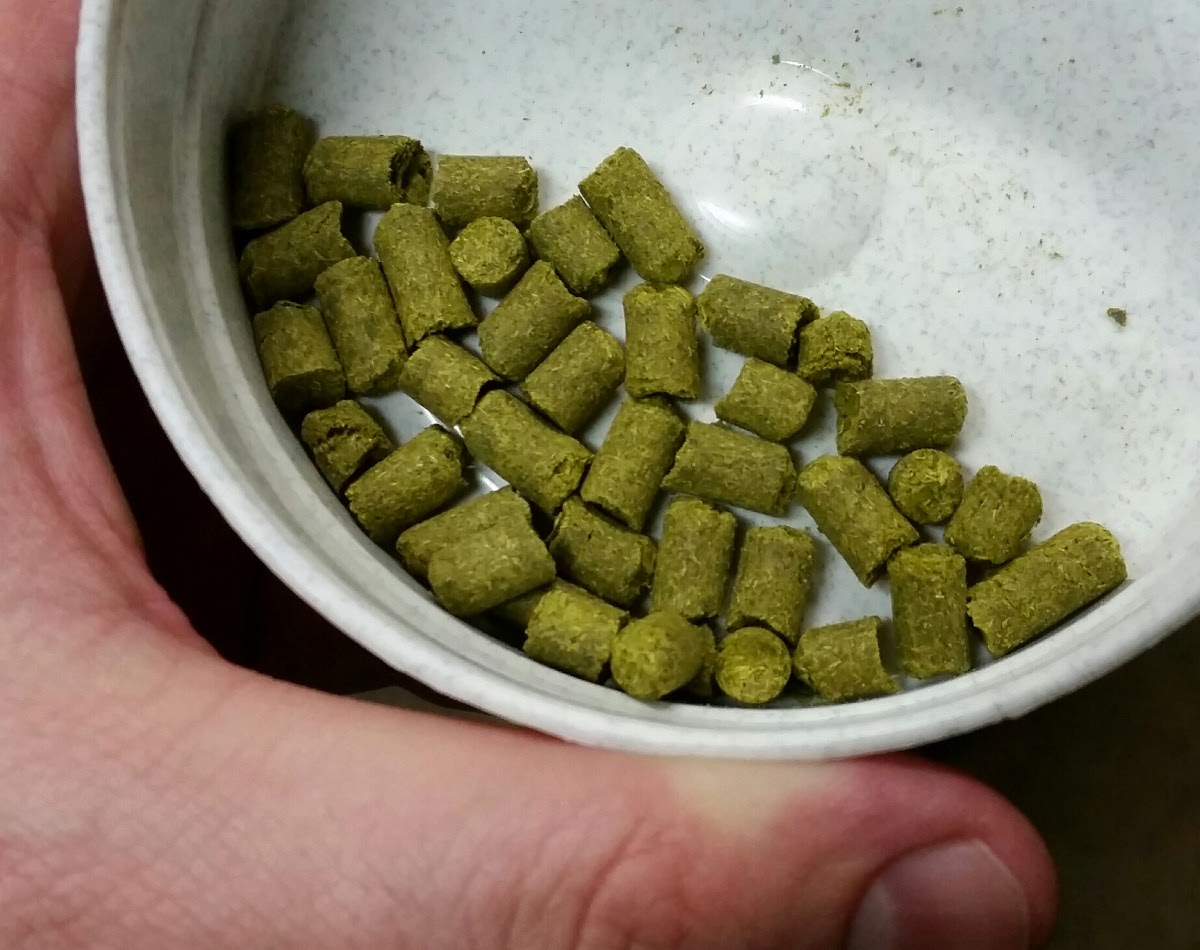
Magnum hops, locked and loaded
Magnum hops pellets, locked and loaded for this recipe.

As we inch closer and closer to the southern California version of spring, it’s time to wind down the “winter beers”, and start gearing up for some spring and summer brews. A kölsch seems like a good start for this. After thumbing through back issues of Brew Your Own, I found a recipe that is just the ticket. Vitamin K Kölsch Clone is a recipe mirroring a beer from Thunder Island Brewing Company, featured in the May/June 2014 issue of BYO. My adaptation of the recipe would probably horrify style purists, because I’ll be using American 2-row malt as the backbone. Then again, I’m not brewing this in Cologne, either, so authenticity (or indeed, the right to call it a kölsch) is out the window from the get-go.

I’m using White Labs WLP029, German Ale/Kölsch yeast. Following the calculations from my brewing software, I needed about 1 L starter (~1.040 starting gravity). This was prepared roughly 36 hours in advance of pitching; I haven’t yet made a stir plate, so I am relying instead on constant agitation. It took nearly 24 hours before I saw any real signs of activity in the starter (e.g., extensive foaming when agitated, etc.). The starter initially (for the first 24 hours or so) had a prominent fruity aroma, which is quite different from starters I have made for other strains. This transitioned into the more expected “yeast/bready” aroma after 30 hours or so. I am going to presume that this is just a characteristic of the strain (nothing online mentions typical aroma for this strain’s starter).

Following exceptional efficiency (75% and 83%) in my last two all-grain recipes, I have adjusted my equipment profile accordingly in BeerSmith to assume average efficiency of around 78%. Additionally, I will be tweaking my temperature settings a touch, based on the fact that my mash was ending up just a degree or two warmer than target on most occasions. I am heating up my mash tun with hot tap water prior to mashing in; in the past, I’ve been assuming a mash tun temperature of 75°. For BeerSmith calculations in this batch, I will assume a pre-warmed mash tun temperature of 130°.

Vitamin K Kölsch Clone

  • 7.25 lbs. 2-row malt (Great Western Malting Co.)
  • 0.75 lbs. white wheat malt
  • 0.5 lbs. Munich malt
  • 0.45 oz. Magnum hops pellets (13.7% alpha, 6.4% beta), 50 minute boil
  • 1 tsp. Irish moss, 10 minute boil
  • White Labs German Ale/Kölsch yeast (WLP029), in 1 L starter prepared 36 hours in advance.

Anticipated Statistics

  • S.g.=1.045; f.g. = 1.009, 4.6% abv
  • Bitterness = 22.2 IBU
  • Color = 3.7 SRM
Procedure
  • I mashed in with 3.25 gallons of water at 163° (a ratio of 1.5 quarts of water per pound of grain), aiming for a mash temperature of 150°. The mash settled at ~154° after five minutes, and was at 152° after 40 minutes. My mash temps are still running a little above calculated targets; I need to do a little more tweaking in BeerSmith. I wonder if my mash water isn’t rising in temperature just a touch after I turn the flame off.
  • After 60 minutes, I added 0.9 gallons of water at ~190°. I let this rest for 10 minutes, vorlaufed, and then drained the mash tun. From this step, I collected 3 gallons of wort.
  • Next, I added 3.1 gallons of water at ~185°. This brought the mash temperature up to 168°. I let this rest for 10 minutes, vorlaufed, and drained the mash tun.
  • In total, I collected 6.5 gallons of wort, with an overall gravity of 1.038. This equates to roughly 78% efficiency; looks like I guessed correctly on my mash efficiency assumptions.
  • I brought the wort to a boil; after 10 minutes, I added the Magnum hops (which were boiled for a total of 50 minutes).
  • 10 minutes before flame-out, I added the Irish moss. At this same time, I measured the volume of the wort to be ~5.6 gallons; this was a little below where I wanted, and I suspected this would bump my gravity up just a touch over target, so I added 0.25 gallons of distilled water. The boil-off rate must be just a touch higher than calculated for my equipment; I’ll have to adjust this in BeerSmith.
  • After a total of 60 minutes on the boil, I turned off the flame and began chilling the wort with my wort chiller. I brought the wort down to ~69°.
  • I transferred the wort to the fermenter and added the entire 1 L starter. Although I do not have this particular fermenter calibrated for volume measurements, based on my measurements at the end of the boil I transferred approximately 5.5 gallons into the fermenter.
  • I will be fermenting this beer at approximately 66°, which is right at the lower end of the optimal zone for WLP029 (65-69°). This way if things heat up a tad during the most vigorous part of fermentation, I should still keep esters and such under control.
  • Starting gravity was 1.045 – exactly on the nose! The wort is a beautiful light yellow in color, with excellent hot break separation.
  • I brewed this up on March 1, 2015. I will let it ferment for ~7 days before cold crashing it. Then, I’ll let it sit at least another week before kegging.