Azacca Session IPA Update

Today (July 15), I kegged five gallons of my Azacca Session IPA, which was brewed 12 days prior. I added 2 oz. of Azacca hops pellets for dry-hopping, and will let it condition at 68° for five days before carbonating at serving temperature.

Gravity was 1.015, down from 1.045. This works out to 3.9% abv, nearly exactly as calculated. The beer is incredibly clear (as expected from the WLP005 yeast strain) and light gold in color. At least on initial tasting, the beer was only moderately bitter (hopefully to be accentuated as the beer conditions and carbonates), with a clean and definitely malty backbone, although not overly malty.

West Coast Wheat Beer Update

Today I kegged up the West Coast Wheat Beer, after 10 days in the primary fermenter. During the course of fermentation, I agitated the beer a few times to keep the yeast in suspension and ensure a full fermentation. At the time of kegging, the beer is at a gravity of 1.012 (down from 1.048), which works out to around 4.7% abv. The flavor is delicious, with a nice balance between tartness, citrus aromas, and a touch of fruitiness. This all bodes quite well! I’m “speed carbonating” at the moment (high pressure for two days, then down to serving pressure), with a hope to sample over the weekend.

Brewing Update: Old Speckled Hen Clone and Red Oak Ale

Red Oak Ale sample

Tonight I transferred the Old Speckled Hen Clone and the Red Oak Ale (right) out of their respective primary fermenters and into their kegs. Visible fermentation had long since ceased for both.

Old Speckled Hen Clone
This beer had been in the primary fermenter for 10 days, with a reasonably vigorous fermentation. The Nottingham dry ale yeast was a little slow to start relative to the liquid yeasts I’ve been using lately, and didn’t display signs of active fermentation until nearly 24 hours after pitching.

This beer had fermented down to 1.011, and is still a little hazy. I’m expecting that should settle out as the beer chills. The beer has a nice toffee color, and was a little more bitter than I expected. I think it is mainly because I had memories of a much more malt-forward beer; I expect this will come back to the fore as the beer conditions and the yeast continues to drop out. The distinct hops flavor is also probably due to the “spicier” English hops (where I usually have been using American hops in my other beers–I had forgotten how big the difference was!). Starting gravity was 1.055, which works out to 5.8% abv.

The kegged beer (~4.5 gallons) went directly into the keezer, where it is force carbonating under 13.5 psi at 42°.

Red Oak Ale
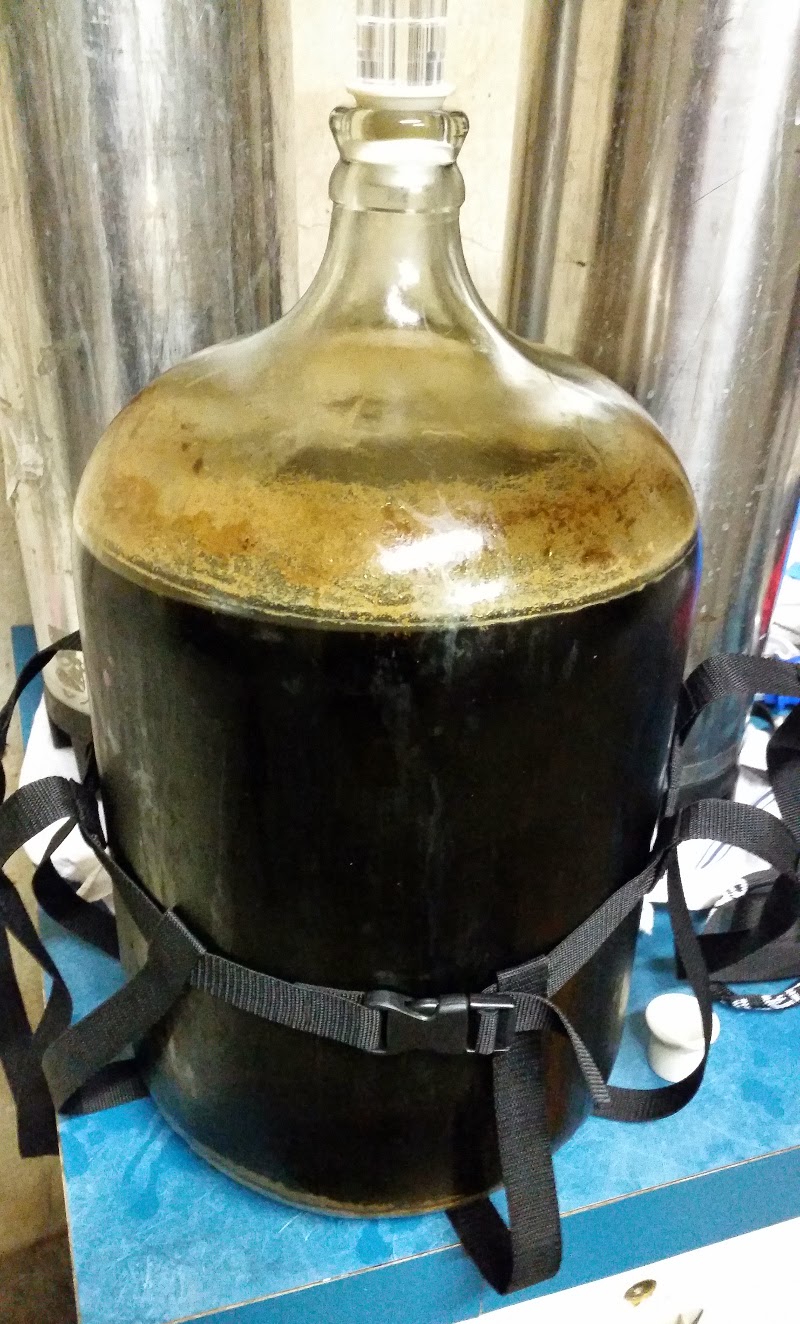
This beer showed vigorous fermentation within 9 hours of pitching the yeast. I agitated the beer a bit after 3 days (and once or twice more after that), following notes from yeast reviewers that the WLP041 strain tended to slow or stall out if left alone. I figured this was a good idea given the relatively high starting gravity, too (1.070).

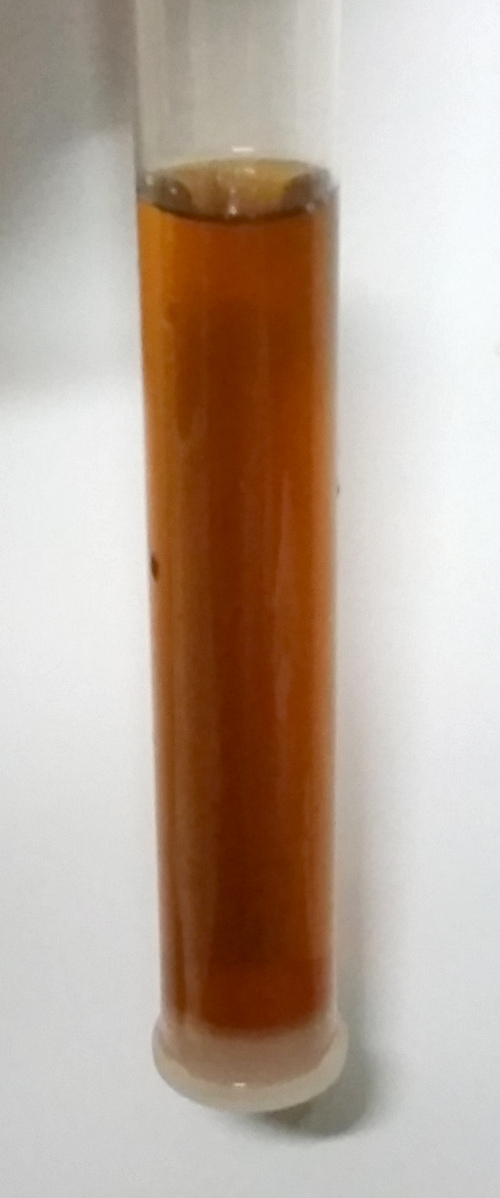
The beer had fermented down to 1.015 over the past 18 days, with a gorgeously clear burn umber color (see above picture). This works out to 7.3% abv, one of the “bigger” beers I’ve done in some time. So far, I’m pretty happy with how it is turning out.

Before sealing up the keg, I added a mesh bag with 2 oz. of Willamette hops pellets for dry hopping. They’ll stay in for ~14 days (or maybe even permanently). Tomorrow, I’ll add 2 oz. of French oak chips (medium toast), boiled in water and contained in a mesh sack. Those will stay in for just a week before being pulled. I’m leaving the keg at room temperature for at least the next week.

A Whole Mess of Kegging

Eagle Face Oatmeal Stout, ready for kegging

It’s only five weeks until AHA (American Homebrewers’ Association) in San Diego, and in preparation I’ve been brewing up a storm the past few weekends. In order to give everything sufficient time for conditioning, carbonation, and such, tonight was the night to keg it all.

Gondwana Pale Ale 1.2

  • This beer had been in the primary fermenter for 3.5 weeks, for the first 10 days at 66°, and the rest of the time at ambient temperature.
  • I racked the beer onto 2 ounces of Citra hops (13.2% alpha, 3.7% beta), weighted down in a bag at the bottom of the keg.
  • Final gravity was 1.010; down from 1.048, this works out to 5.0% abv. The beer was wonderfully clear, with a medium yellow color and clean flavor.
  • I’ll let this dry hop at room temperature for a week or two before carbonating.


Eagle Face Oatmeal Stout 1.1

  • This beer had been in the primary fermenter for 2.5 weeks; I cold-crashed it for the final 24 hours down to 38°.
  • Final gravity was down to 1.021 from 1.061, which works out to 4.1% abv. The beer has really nice body to it, and should be delightful once carbonated.
  • I began carbonating this beer immediately.


Bonedigger Brown Ale 1.1

  • This beer had been in the primary fermenter for 11 days (cold crashed during the final 24 hours).
  • Final gravity was 1.013, down from 1.052. This works out to 5.1% abv. Both flavor and appearance are on the mark.
  • I began carbonating this beer immediately.
To move things along, I’m going to try a “quick carbonation” technique. For the oatmeal stout and brown ale, I began carbonation under 40 psi at 38°. In 24 hours, I’ll lower pressure to 20 psi, and after another 24 hours I’ll check out the carbonation.

Pannotia White IPA Kegged

Every once in awhile, you just know that a particular batch is going to be good, even early on in the process. It doesn’t happen often, but when it does, you can’t stop thinking about how the final product is going to taste. I’m thinking my Pannotia White IPA just might be one of those batches.

Tonight, I transferred this batch over to the keg. It had been in the primary fermenter for 18 days, after two pretty vigorous bouts of fermentation. The first bout settled down a couple of days after brewing. Given come online commentary I read about this particular yeast strain, I agitated the carboy a bit (four days post-brewing), and sure enough, fermentation took off again. At kegging, the beer had a gravity of 1.012, down from 1.057. This works out to 5.9% abv, right within the range of what I was hoping for.

I transferred just under 5 gallons of beer over to the keg, and added 2 oz. of Citra hops pellets for dry hopping. I’ll leave it to dry hop for about a week before carbonating.

At the time of kegging, the beer was a beautiful straw color with a prominent hazy; truly a “white” IPA! There is a nice citrus and slight clove aroma, along with a delightfully balanced bitterness on the tasting. This beer can only get better from here!