Odds ‘n’ Ends Belgian Ale

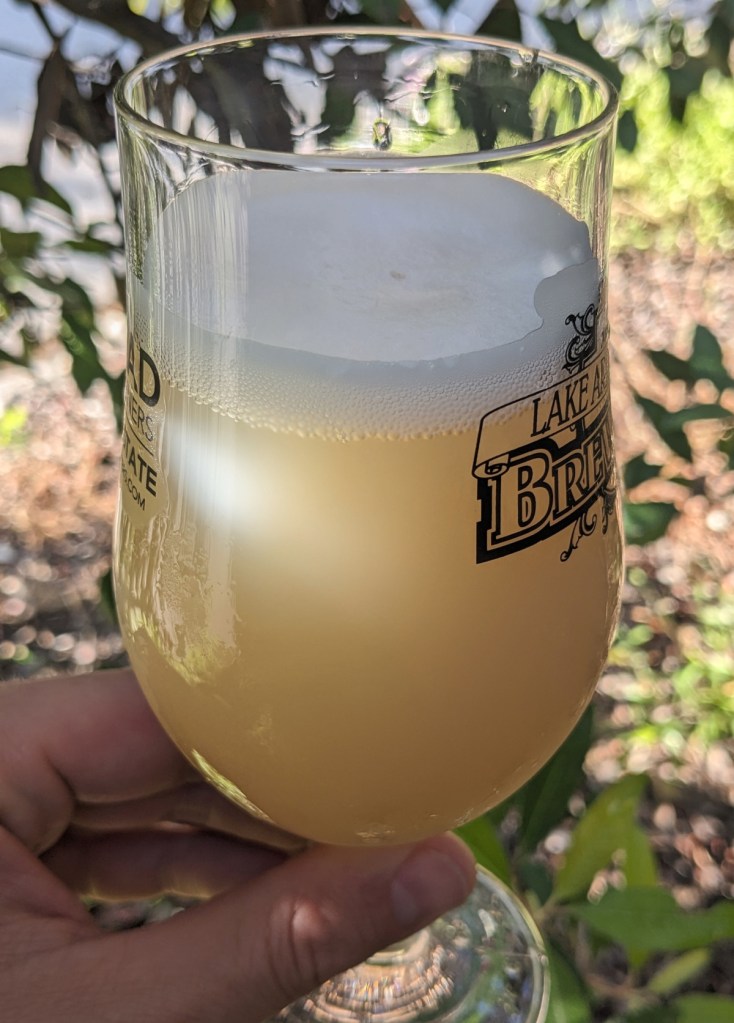
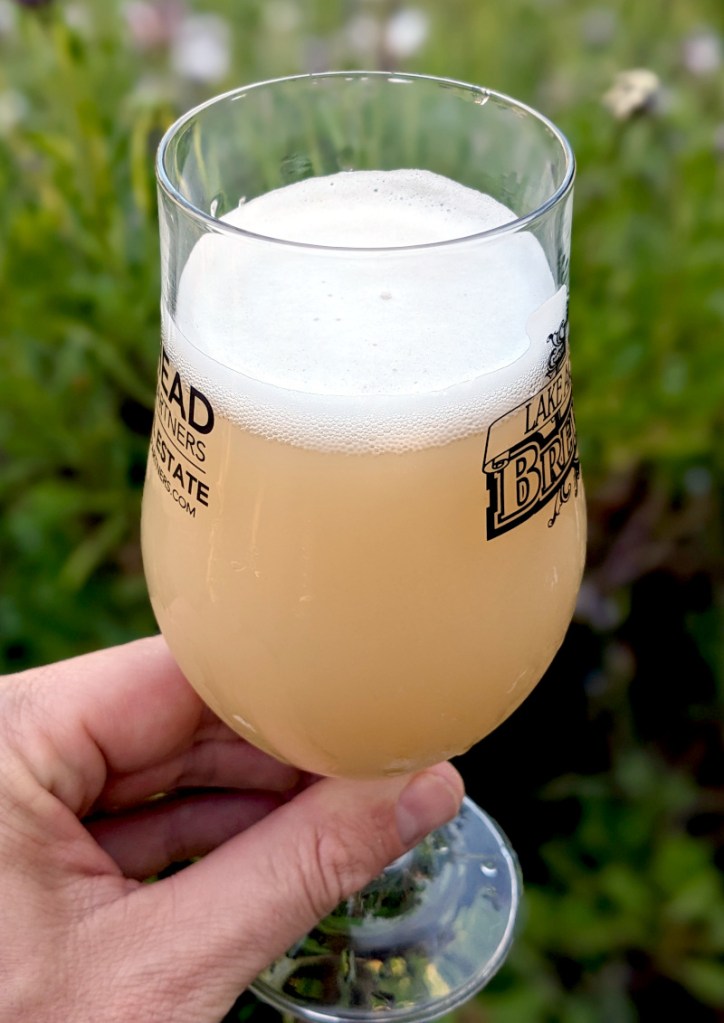
Last year, I had fantastic results with a Belgian pale ale, even if it’s not a style I typically make. They can be interesting beers, so it seemed worth another attempt. This time, though, I’m not worried as much about brewing to style as I am wanting to use up ingredients on-hand. The result is a kitchen sink recipe that tastes pretty good, even if it isn’t precisely any style. We’ll just call it a Belgian ale.

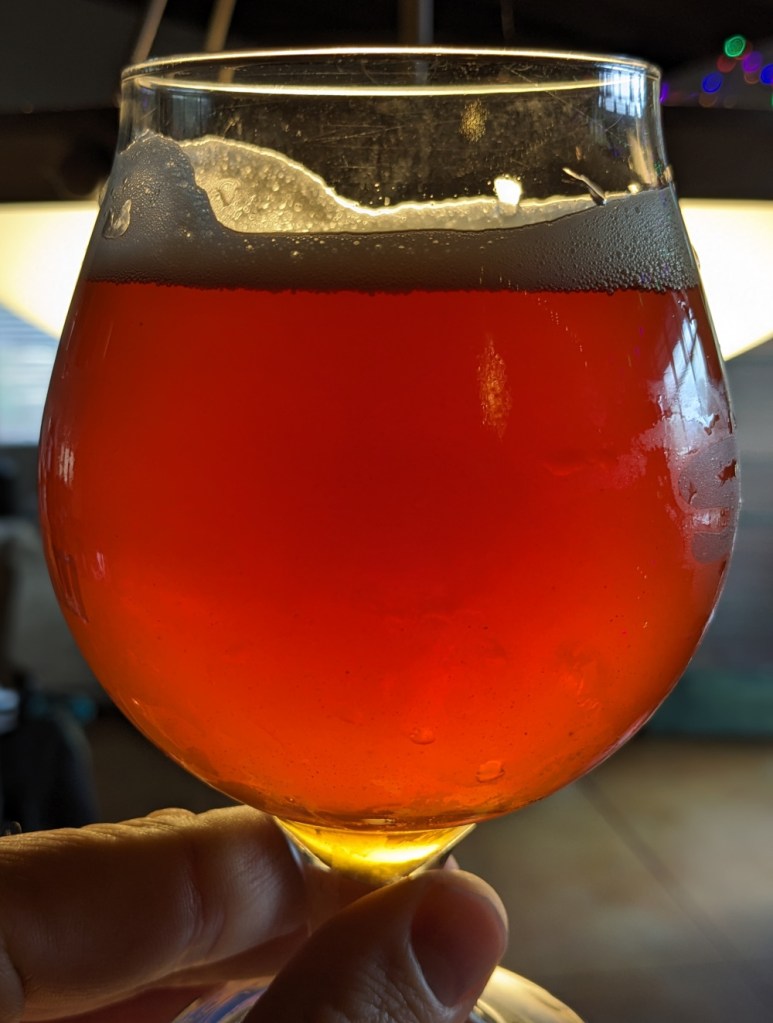
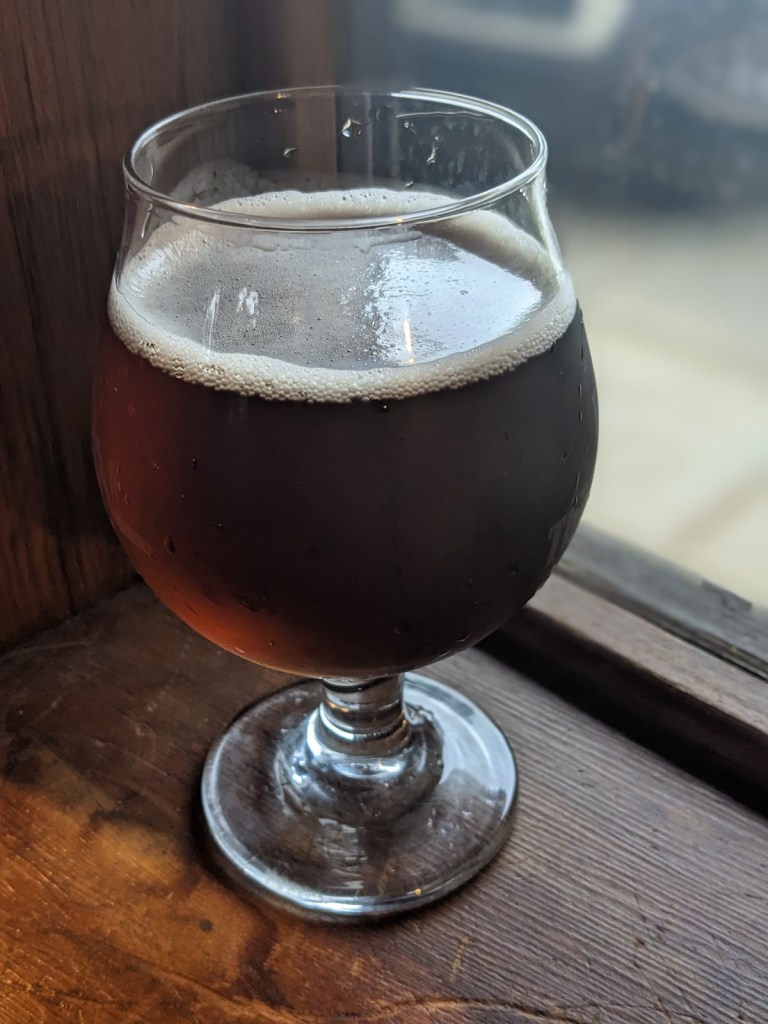
amber beer with ivory head in tulip glass, sitting on wood windowsill

Odds ‘n’ Ends Belgian Ale

  • 9 lb. 15 oz. 2-row malt (Rahr)
  • 8 oz. Carared (Weyermann)
  • 6 oz. honey malt (Gambrinus)
  • 2 oz. Carafa Special II malt
  • 2 oz. coffee malt (Simpsons)
  • 2 oz. Special B malt (Dingemans)
  • 1 oz. Hallertauer Mittelfrueh hop pellets (5.2% alpha), 60 minute boil
  • 1 oz. Hallertauer Mittelfrueh hop pellets (5.2% alpha), 10 minute boil
  • 1 oz. Saaz hop pellets (3.5% alpha), 5 minute boil
  • 1 pkg. Abbaye Belgian ale yeast (Lallemand)

Target Parameters

  • 1.050 s.g., 1.013 f.g., 4.9% abv, 29 IBU, 13 SRM
  • Full volume mash, 152° for 60 minutes, 168° mash-out for 10 minutes
  • Claremont tap water adjusted with lactic acid and mineral additions, to achieve calculated water profile of 60 Ca, 6 Mg, 84 Na, 30 SO4, 137 Cl, 156 HCO3, RA=82 ppm.

Procedure

  • I mashed in with 7.5 gallons of water at 158°, to hit a mash temperature of 152°. I added 4.3 mL of 88% lactic acid to adjust the mash pH.
  • I held the mash at 152° for 60 minutes, while recirculating, before raising the temperature to 168° for a 10 minute mash out.
  • After the mash, I removed the grains. In total, I collected 6.6 gallons of runnings with a gravity of 1.041, for 66% mash efficiency.
  • As I brought the runnings to a boil, I added 1 g of CaCl to adjust the water.
  • I boiled for 60 minutes, adding hops per the recipe. After 60 minutes, I turned off the heat and chilled the wort to 64° before transferring to the fermenter.
  • I started with 5.5 gallons total and a gravity of 1.048. I brewed this beer on 7 April 2023, and fermented at 64°.
  • On 15 April 2023, I pulled the beer to ambient.
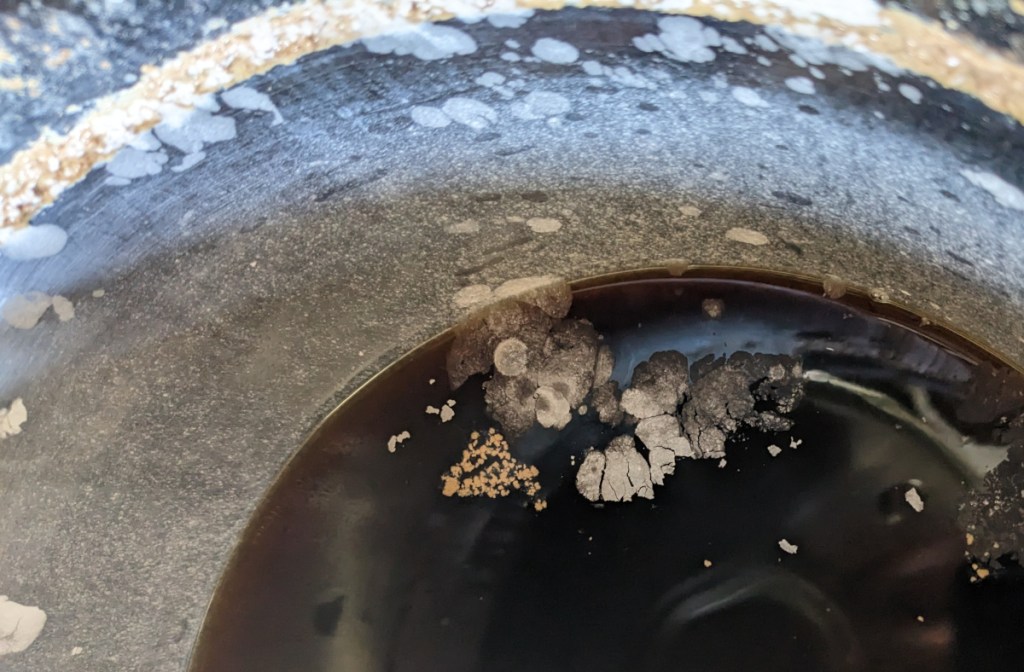
  • I kegged the beer on 30 April 2023. It had a final gravity of 1.010, for 5.1% abv. A thin white pellicle was forming on top of the beer, but overall it tasted just fine. Either way, I’ll need to do a deep sanitize/sterilize of my equipment.
  • The beer was a bit hazy to start, but had dropped fairly clear by 23 May 2023, and had dropped brilliantly clear by 1 June 2023.
A pellicle! How did that get there?

Tasting

  • Appearance
    • The beer pours with a fluffy, ivory head that subsides to a persistent blanket across the entire top of the beer. The beer itself is a deep amber color and brilliantly clear.
  • Aroma
    • This beer has plenty of clove yeast character at the front, with some black pepper. There is caramel and dark bread crust maltiness behind that.
  • Flavor
    • Yeast is at the front, with clove and sweet apple fruitiness, with a bit of pepper. Malt character is smooth, with some caramel and bread. Moderate level of bitterness, but not much hop character otherwise.
  • Mouthfeel
    • Medium body, medium carbonation, smooth finish with an off-dry quality.
  • Would I Brew This Again?
    • This is overall a good beer, with interesting qualities but not too interesting. Is it a Belgian pale ale? Sure, we can call it that. I’m grateful that I caught the pellicle before it went too far down the sour or funky road….as it is, I don’t really pick up anything. Phew! It’s squarely in the category of “decent, but probably won’t be brewed again.”
  • Overall
    • 7/10

Big Hop Summer IPA

Although many of my IPAs have been on the session side, I do try to make a full strength version every once in awhile. In this recipe, I aimed for something highly drinkable and packed with hop flavor. Towards the first item, I mashed low and added some dextrose to keep things light. Towards the second end, I looped in some HOPBOX finds–Azacca, HBC 586, and Idaho Gem. Finally, I wanted to experiment with Lutra, a kveik strain that has a reputation of a quick and clean fermentation. It’s a bit of a kitchen sink beer, in order to use up some grains and hops, but it’s all with a purpose.

Big Hop Summer IPA

  • 5.25 lb. Golden Promise malt (Simpsons)
  • 5.25 2-row pale malt (Rahr)
  • 1.75 lb. Vienna malt (Weyermann)
  • 0.25 lb. Munich I malt (Weyermann)
  • 0.75 lb. dextrose (added to boil)
  • 0.75 oz. Bravo hop pellets (14.2% alpha), 60 minute boil
  • 1 Whirlfloc tablet, 5 minute boil
  • 1 oz. Azacca hop pellets (12.7% alpha), 15 minute whirlpool
  • 1 oz. HBC 586 hop pellets (11.8% alpha), 15 minute whirlpool
  • 1 oz. Idaho Gem hop pellets (14.2% alpa), 15 minute whirlpool
  • 1 pkg. Lutra kveik (dry), Omega OYL-071
  • 1 oz. Azacca hop pellets (12.7% alpha), dry hop in keg
  • 1 oz. HBC 586 hop pellets (11.8% alpha), dry hop in keg
  • 1 oz. Idaho Gem hop pellets (14.2% alpa), dry hop in keg

Tasting

  • Appearance
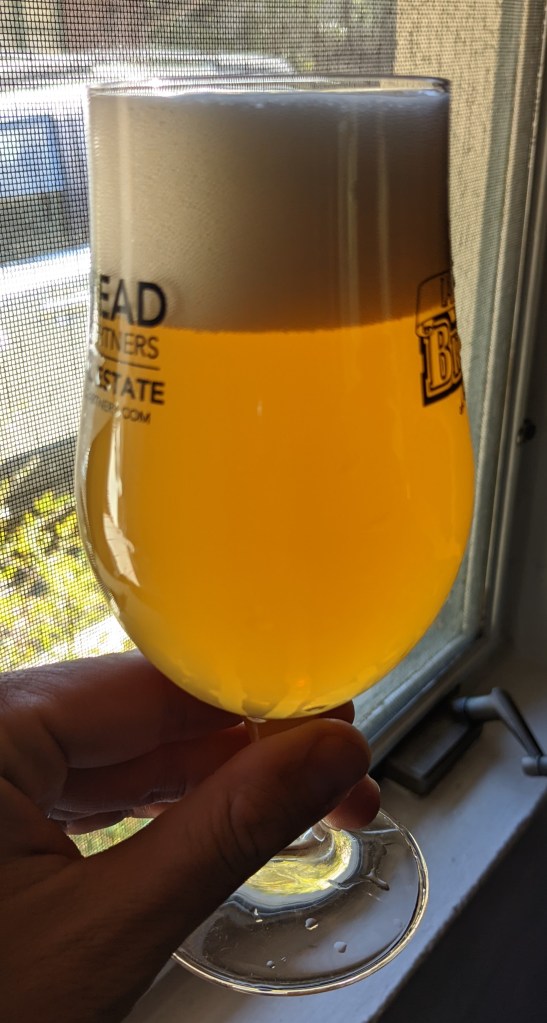
    • The beer pours as a hazy gold, with a persistent white head that leaves nice lacing down the side of the glass over time. I am surprised that the haze hasn’t dropped out, even after two months in the keg at temperatures below 40 degrees.
  • Aroma
    • Orange peel aroma at the front; very citrusy character overall.
  • Flavor
    • The balance is tipped towards the hops (no surprise), with a very citrusy and resin character. I also pick up a bit of stone fruit, which might be from the hops or perhaps from the yeast. There is a little bit of a “twang” of something somewhere in the background, which I suspect is from the yeast but I can’t be 100 percent certain. Even though Lutra is supposed to ferment clean, I’ve seen remarks that it is still a farmhouse-type strain, and they remain a bit rustic. As the beer sits on the tongue, I wonder if some of it is some citrus pith character. In any case, there is something that detracts a little bit from complete enjoyment of the beer by my tastes, but it’s not overwhelming, and it isn’t totally out of character for this kind of beer. The malt is in the background, as it should be, but provides a nice bit of body and a touch of malty flavor to balance against the hop bitterness.
  • Mouthfeel
    • Medium-light body, with moderate carbonation and a dry finish. It goes down super easy.
  • Would I Brew This Again?
    • I like the beer overall, but I might switch up the hop varieties. I tried Azacca years ago, it didn’t overwhelm me with awesome then, and I had a similar experience this time around. I think it’s just not a hop that does much for me. I’m surprised by how persistently hazy the beer has been, even after two months in the keg; the haze doesn’t terribly detract from the beer, but it’s just a bit more haze than I expected. Those remarks aside, this is a very drinkable beer, especially for something that clocks in at 6.7% abv. The combination of low mash temperature and dextrose addition likely contributed to keeping things on the lighter side.
  • Overall
    • 7.5/10

Dance Party IPA

This one was a total experiment for me! Experimental hops, experimental yeast, and experimental fermentation. My local homebrew shop had a new variety called Samba, with tropical characters that sounded pretty neat! So, I picked up a few ounces for a batch. I also had been meaning to try out Lallemand’s new dry Voss kveik strain, so grabbed some of those packets.

For this beer, I wanted a tropical/citrus character and fairly light drinkability, alongside a “full-strength” IPA. So, I combined Centennial, Samba, and Simcoe for a whirlpool as well as a dry hop addition.

Dance Party IPA

  • 12.5 lb. 2-row Xtra Pale Malt (Viking)
  • 0.75 lb. Carapils malt (Briess)
  • 1 oz. Magnum hop pellets (10.6% alpha), 60 minute boil
  • 1 Whirlfloc tablet, 5 minute boil
  • 1 oz. Centennial hop pellets (8.1% alpha), 15 minute whirlpool
  • 1 oz. Samba hop pellets (11.6% alpha), 15 minute whirlpool
  • 1 oz. Simcoe hop pellets (12.7% alpha), 15 minute whirlpool
  • 1 pkg. Voss Kveik Ale dry yeas (Lallemand)
  • 1 oz. Centennial hop pellets (8.1% alpha), dry hop in keg
  • 1 oz. Samba hop pellets (11.6% alpha), dry hop in keg
  • 1 oz. Simcoe hop pellets (12.7% alpha), dry hop in keg

Target Parameters

  • 1.059 s.g., 1.013 f.g., 6.1% abv, 62 IBU, 4 SRM
  • Claremont tap water, with Campden tablet and 5 g of gypsum added at the boil, to bump up the bitterness
  • 60 minute full volume infusion mash, 152°

Procedure

  • I mashed in with 7.25 gallons of water at 159°, to hit a mash temperature of 152°. I added 6 mL of 88% lactic acid, to adjust the mash pH.
  • After a 60 minute mash with recirculation at 152°, I bumped up the temperature to 168° for a 10 minute mash-out.
  • Following the mash, I removed the grain basket and brought the kettle to a boil.
  • In total, I had 6.3 gallons with a gravity of 1.050, for 66% mash efficiency. I added 5 g of gypsum to the boil, to bump up the sulfate.
  • I boiled for 60 minutes, adding finings and hops per the schedule.
  • After the boil, I did a 15 minute whirlpool at around 195°, and then chilled down to 90° and transferred to the fermenter.
  • Starting gravity was 1.050. I brewed this beer on 27 March 2021.
  • I pitched the packet of yeast directly, and began fermentation at 90°. After 18 hours, I raised the temperature to 95°, and then raised to 100° at the 24 hours mark after yeast pitch. After 72 hours, I lowered the temperature to 90°.
  • I kegged the beer on 7 April 2021, with the dry hops floating loose in the keg and a screen on the floating dip tube to filter out hops.
  • Final gravity was 1.013, for 5.8% abv.

Tasting

I didn’t have time to do a formal tasting on this one before the keg was kicked, but have a few general perceptions. First, the fermentation had a super clean character, and the kveik lives up to its reputation. I would totally do this fermentation profile again! Second, I really enjoyed the hop combo, but think that I probably overbittered it a bit, and the hops drowned out any potential malt character. There was a touch of astringency from the dry hops also, at times, which I think also detracted from the final flavor. So, if I redo this kind of IPA I might use a more character-rich base malt such as Vienna or Maris Otter and maybe a touch more of a crystal malt (e.g., crystal 20 or even crystal 40). That aside, the Samba hops did live up to their tropical reputation, and played well with the rest of the hops. It might be interesting to switch up the hop combos; I think this beer would be great with any combo of Samba, Citra, and/or Mosaic.

So…I would probably do this again, but modify things significantly. It was definitely worth the experiment, and I’ll likely dive into more kveik fermentations this summer! I give the beer itself a 5/10…not awful, but not quite where I want it to be either.

Blast from the Past: Gingerbread Winter Warmer 2016

Way, way, way back in the innocent days of September 2016, I brewed a winter warmer. At the time, it was okay, but nothing great. I drank much of it right from the keg, and the rest got bottled. I sampled some back in January 2018, and it was aging nicely. After that, I forgot about the beer for awhile, and only just ran across my stash in the basement while putting away Christmas decorations. Being New Year’s Eve and all, I thought it would be fun to pull out a bottle and give it a taste!

Although I was tempted to review my recipe and brewing notes prior to opening the bottle, I decided to go into the tasting with minimal expectations. I vaguely recalled that there was some ginger in there, but that’s about it. My spouse shared the bottle (it was 22 ounces of beer, and I didn’t need to drink all of it myself!), and we talked over the beer as watched the southern California sunset from our yard.

Tasting

  • Appearance
    • Very clear, deep amber beer, which pours with a moderately persistent cream-colored head.
  • Aroma
    • Raisins, light hint of leather, ginger, dried figs…very rich! No hop aroma noticeable.
  • Flavor
    • Malty, with moderate bitterness. Lots of pleasant notes from aging, including dried figs, raisins, and a touch of spice (ginger). Yeast character was surprisingly clean, with no unpleasant aspects that I was afraid might seep in after a few years.
  • Mouthfeel
    • Big body, very smooth, moderate carbonation.
  • Would I Age This Again?
    • YES. Although I don’t recall this being an exceptional beer four years ago, it sure is something special now. Everything has just come together in a rich, flavorful way, and I can’t think of a better beer to enjoy as we close out 2020. I’ll brew this again soon, to have at least a little aging under its belt before next New Year’s Eve.
  • Overall
    • 10/10
Here’s to cellared beer, and 2021!

Yule Log Smoked Scottish Ale

For Christmas this year, I wanted a special small-batch beer to sip on a cold, dark evening. I usually buy some barrel-aged commercial beers (Firestone Walker’s 2019 Old Man Hattan is particularly nice), so that flavor profile didn’t terribly appeal to me as a homebrew, especially not in larger volumes. After a bit of thought, I settled on a smoked ale. I’ve done a handful of those over the years, trying out the porter and brown ale styles previously. For this iteration, something in the Scottish ale space was appealing. I could get plenty of malt and plenty of body, and it would (hopefully) stand up well to any smokiness. Thus, the Yule Log Smoked Scottish Ale was born!

The recipe is built around the Scottish Export Ale BJCP style, which according to my reading sometimes is made with smoked variants. My version was based in part on Brulosophy’s Short & Shoddy Wee Heavy Recipe. To add a bit of smoked character, I put in two pounds (~16% of the total grain bill) of Briess cherrywood smoked malt.

In the spirit of the Short & Shoddy series, I cut a ton of corners in the brew day. I only did a 30 minute, full-volume mash, and a 30 minute boil. I used some oldish yeast, which meant I needed three packages total.

Yule Log Smoked Scottish Ale

  • 9 lbs. Maris Otter malt (Crisp)
  • 2 lb. Cherry wood smoked malt (Briess)
  • 5 oz. Biscuit malt (Dingemans)
  • 5 oz. Caramel 120° malt (Briess)
  • 5 oz. CaraPils malt (Briess)
  • 4 oz. Crystal 75° malt (Bairds)
  • 1 oz. Whitbread Golding Variety hop pellets (8.7% alpha), 15 minute boil
  • 2 pkg. Tartan yeast (Imperial Yeast #A31)
  • 1 pkg. Safale American ale yeast (US-05)

Target Parameters

  • 1.063 s.g, 1.019 f.g., 5.8% abv, 21 IBU, 15 SRM
  • 3.25 gallon batch
  • Full volume infusion mash, 156° target temperature
  • Claremont tap water, with Campden tablet treatment to remove chloramines

Procedure

  • I mashed in with 5.35 gallons of water at 165.5°, hitting a mash temperature of 155°. By the end of the 30 minute mash, temperature was down to 152°.
  • I vorlaufed and collected 3.75 gallons of wort with a gravity of 1.068, for 56% mash efficiency. This is a bit “thicker” than targeted, so I added 0.5 gallons of water to get 4.25 gallons of wort at a slightly lower gravity.
  • I boiled for 30 minutes, adding hops at the 15 minute mark. I then chilled down to 70°, transferred to the fermenter, and pitched the yeast.
  • Starting gravity was 1.066, on 24 November 2019. I fermented at 67°.
  • I kegged the beer on 10 December 2019. It had a final gravity of 1.014, for 6.9% abv.

Tasting

  • Appearance
    • Copper colored beer, moderately hazy, with a thin but persistent head.
  • Aroma
    • Faint smoke aroma, but not overbearing. Slight caramel note, and very mild fruity esters as the beer warms up.
  • Flavor
    • Modestly smoky, balanced nicely against the caramel and bready aspects of the malt. Bitterness is moderate, clean, and just about perfect for this beer. There is a very slight but pleasant sweetness to the beer. As I finish a glass, the smoke disappears behind the rest of the beer. On the one hand, it would be nice to smokiness be a bit more prominent, but on the other hand I think the drinkability would suffer. This is a rare smoked beer that can stand up to multiple pints!
  • Mouthfeel
    • This beer has a reasonable bit of body, and a medium-sweet finish. Carbonation level is moderate.
  • Would I brew this again?
    • I liked this beer pretty well! I find commercial smoked beers to be hit or miss, and I think the very moderate level of smoked malt I use paid off. Pretty much everything works about this one, and it’s a nice beer to enjoy on a cool SoCal winter day. I wish the clarity was a bit better at this point, but I never bothered to cold-crash the beer, nor did I use gelatin or even hot-side finings. I expect a combination of these would clear things significantly. I might also mash just a touch higher, as this beer would benefit from a slight bump in body.
  • Overall
    • 8/10