Session Saison

I’ve been spending lots of time in LagerTown (a few miles over from Flavertown) and overall feel like I have a good handle on many of these styles, especially pale lagers. So, I’m looking for some new challenges. The saison style has been of variable success for me, with the last saison session producing a good beer despite a ton of mishaps in the process. I’ve only made six batches of this style previously, most centered around the “Thumbspike Saison” incarnation.

For 2024, I decided to try a saison yet again, to have a drinkable and interesting brew on tap. I generally prefer lower alcohol beers, so used the Session Saison recipe at Great Fermentations as a starting point. It was a chance to use up some grains I had sitting around, while also experimenting with yeasts and techniques. Previously, I’ve never really been able to hit the attenuation I want in a saison consistently, so I focused on the areas of mash technique, ingredients, and yeast choice to move a few levers towards a drier beer.

The grain bill is pretty close to the original recipe, although I swapped in flaked oats instead of flaked barley based on what was accessible at home. I used honey instead of corn sugar, because I had a container of Costco honey and figured it would create the same result. This element of the recipe is important for getting towards a dry beer. Finally, I used up some of my hop stash–Ariana, a newer and high alpha German variety seemed like a good fit.

I haven’t used Lallemand’s Belle Saison strain before and wanted to give that a try here. It’s a diastaticus yeast, so I needed to keep this in mind in terms of separating out equipment later on, but I also hoped it would give me a better result than the diastaticus-negative yeasts I’ve used in most previous batches. I coupled this with creating a highly attenuative wort–I elected for a long mash of 120 minutes at only 149 degrees, in addition to the honey mentioned above.

Oddly enough, despite the low starting gravity (1.046 or so), the high attenuation takes it out of session territory — 5.3% calculated, and 5.9% actual when all was said and done! It’s not the monster 9.5% abv upper bound for the BJCP style, but it’s also not one anyone should chug by the pint.

I had an interesting experience on consumption of this one — the temperature probe on my keezer got knocked to the bottom of the chamber by accident, with a net result of the overall keezer temperature being around 50° instead of 40°. I was fairly disappointed in the carbonation and flavor of the saison–it wasn’t anywhere near highly carbonated, and the beer was a bit flabby. Once I figured out the temperature issue, things fell right into place with a more proper level of carbonation and a crisper beer. Beer held at 40° and 23 PSI will hit 3.5 volumes of CO2–but the the same PSI at 50° will be only 3 volumes. It was an amazing example of how critical temperature and carbonation are for beer enjoyment!

Session Saison

  • 3 lb. 9 oz. pilsner malt (Rahr)
  • 2 lb. 2-row malt (Briess)
  • 2 lb. Munich I malt (Weyermann)
  • 8 oz. Aromatic Munich malt 20L (Briess)
  • 8 oz. flaked oats
  • 0.5 tsp. BrewTanB, in mash
  • 1.25 oz. Ariana hop pellets (8.9% alpha), 15 minute boil
  • 0.5 tsp. BrewTanB, 10 minute boil
  • 1 lb. wildflower honey, 10 minute boil
  • 0.75 oz. Ariana hop pellets (8.9% alpha), 5 minute boil
  • 1 tsp. yeast nutrient (WLN1000, White Labs), 5 minute boil
  • 1 pkg. Belle Saison dry yeast (Lallemand)

Target Parameters

  • 1.046 s.g., 1.005 f.g., 5.3% abv, 26 IBU, 6 SRM
  • Full volume infusion mash to hit target of 149°, 120 minutes, no sparge
  • Claremont tap water, neutralized with lactic acid to reduce carbonates, target parameter of 60 ppm CA, 22 ppm Mg, 136 ppm Na, 175 ppm SO4, 150 ppm Cl, 10 ppm HCO3, RA=-48 ppm

Procedure

  • I added 6.5 mL of 88% lactic acid to 7.25 gallons of tap water, to remove the carbonates. As a result, no pH adjustment was needed (per calculations) for the mash.
  • I heated the water to 153°, added the grains, and held at 149° with recirculation for 120 minutes.
  • At the end of the mash, I raised the temperature to 168° for a 10 minute mash-out, before removing the grains.
  • In total, I collected 6.75 gallons of runnings with a gravity of 1.035, for 74% mash efficiency.
  • I brought the runnings to a boil and added hops and finings per the recipe. After 60 minutes, I turned off the heat and chilled to 75° before transferring the wort to the fermenter and chilling to 65° in the fermentation chamber before pitching the yeast.
  • I brewed this beer on 9 May 2024; it had a starting gravity of 1.048.
  • I held the fermentation at 68° until 14 May 2024, when I pulled the probe from the side of the fermenter and let the chamber free-rise to 85°.
  • I removed the beer to ambient temperature on 19 May 2024. At this point, final gravity was 1.003, presumably terminal.
  • I kegged the beer on 26 May 2024, adding 4 oz. of corn sugar to do some natural carbonation.
  • The abv on the final product was 5.9 percent — the combination of mash and yeast strain seemed to really do the trick for a dry beer!

Tasting

  • Appearance
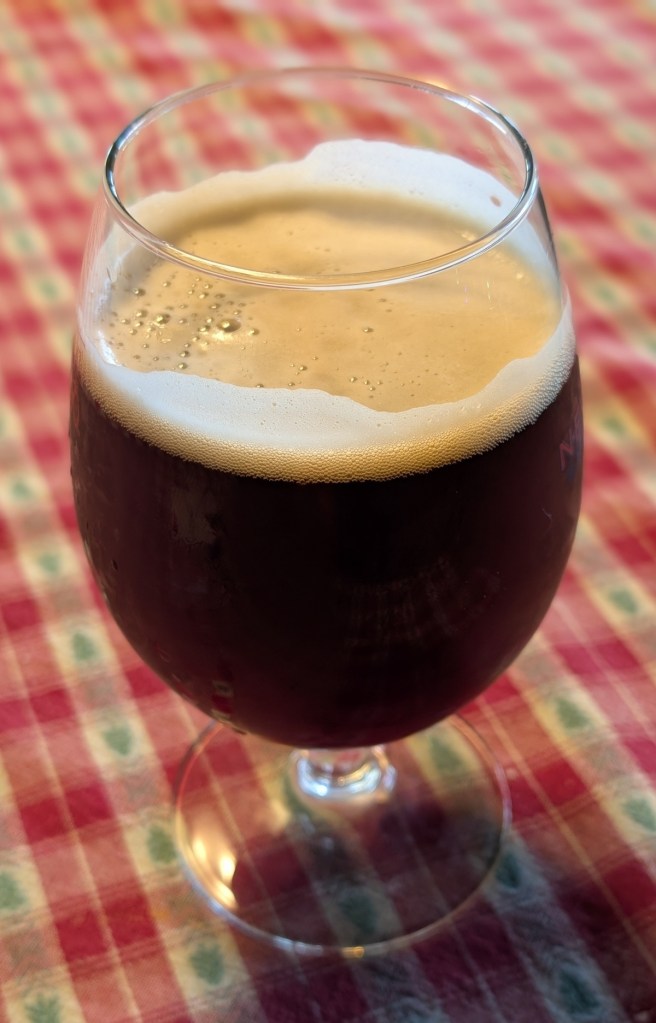
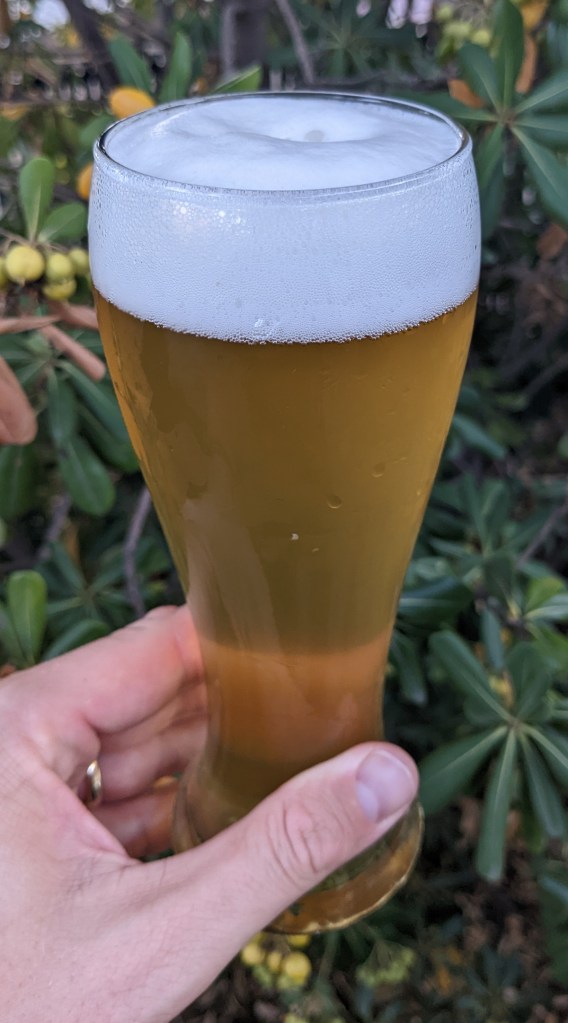
    • Golden beer, slightly hazy, pours with a creamy white head that settles to a persistent blanket.
  • Aroma
    • Pear aroma, with a bit of spice/pepper alongside that, somewhat reminiscent of a pear cobbler. A light bit of maltiness as the beer warms.
  • Flavor
    • A fairly bitter beer with a spicy, peppery flavor from the yeast. Low level of grainy flavor from the malt. The fruitiness doesn’t come through as intensely as in the aroma, until the beer warms up a bit.
  • Mouthfeel
    • Very dry, highly carbonated, light body.
  • Would I Brew This Again?
    • Once I got temperature and carbonation dialed in, this was a fairly excellent saison. It could use a touch more malt character; perhaps a bit of Vienna in for some of the 2-row or pilsner malt? The aroma and mouthfeel are about perfect! I’m very pleased that I finally achieved “dry beer” status.
  • Overall
    • 7/10

Sideways Saison

It has been a long time since I last made a saison, back in 2018. It’s an interesting style, but one that I’m usually content to enjoy in a sporadic bottle, rather than a full keg. But, inspired by some reading and podcasts, I decided to give the style another go. My friend Justin was in town, so it was fun to have a brewing partner.

I patterned my recipe after Odds & Ends Saison from Modern Homebrew Recipes, and followed Drew Beechum’s guide to yeasts and yeast techniques via the Maltose Falcons. I used the saison article in the July/August 2018 Zymurgy magazine for my water profile.

This was a complicated batch in the end. The breaker on my Foundry gave up mid-boil, so I had to transfer to a kettle and finish over a propane burner. There’s never a dull moment while brewing! Things really went sideways on this batch, which conveniently provided the name. (Thankfully, it was an easy fix for the breaker issue, which involved swapping in a new breaker)

Sideways Saison

  • 4.5 lb. Lamonta pale malt (Mecca Grade)
  • 1 lb. flaked rye
  • 1 lb. Viking Pilsner Zero Malt
  • 1 oz. roasted barley (Bairds)
  • 4 oz. rice hulls
  • 0.5 lb. white sugar, added at end of boil
  • 1.5 g. WLN1000 yeast nutrient (White Labs)
  • 1 oz. Moutere hop pellets (19.5% alpha acid), 15 minute whirlpool
  • 1 pkg. Belgian Saison yeast (Wyeast 3724), prepared in vitality starter

Target Parameters

  • 1.057 s.g., 1.006 f.g., 6.7% abv, 30 IBU, 10 SRM
  • Full volume mash, 149° for 60 minutes, 168° mash-out for 10 minutes
  • Claremont tap water and RO water adjusted to hit target water parameters of 33 ppm Ca, 18 Mg, 34 Na, 103 SO4, 49 Cl, 63 HCO3, 18 ppm RA

Procedure

  • A few hours before the mash, I made a vitality starter with a 16-oz. can of Propper Starter (Omega) along with 16 oz. of distilled water.
  • I combined 2.25 gallons of Claremont tap water and 3 gallons of distilled water, adding 1 g gypsum and 3 g of epsom salt to hit my water parameters. Once I got the water to 154°, I added the grains (except for the roasted barley) along with 3.4 mL of 88% lactic acid, to adjust the pH.
  • I held the mash temperature at 149° for 60 minutes, with recirculation. Then, I added the roasted barley, raised the mash to 168°, and held it there for 10 minutes before pulling the grains.
  • In total, I collected 5 gallons of runnings with a gravity of 1.037, for 78% mash efficiency.
  • The Foundry crapped out on the way to the boil, so I transferred the runnings to my big 10 gallon kettle and continued the process over my propane burner. I boiled for 90 minutes total, to up the gravity.
  • I added hops and finings per the recipe.
  • For some reason, I didn’t record the gravity, but I think it was around the target. I was able to estimate the starting gravity by measuring the final gravity and taking a final refractometer reading–which worked out to 1.055.
  • I brewed this beer on 28 May 2023.
  • Once the initial chill was done, I transferred it to the fermenter. I chilled the wort to 64° before pitching the yeast, and set the fermenter to 65°. I held it here for 3 days, before letting it free-rise.
  • I raised the temperature to 72° on 31 May 2023, and then to 85° on 2 June 2023. This was a free-rise with ambient heat, rather than measuring the temperature of the fermenter.
  • Despite using an “open” fermentation (aluminum foil over the airlock, rather than liquid in the airlock), I still got the “saison stall.” Gravity was only at 1.032 on 8 June 2023, so I left the beer at 85°.
  • The beer was finally down to 1.009 on 19 July 2023. This works out to 6.1% abv.

Tasting

  • Appearance
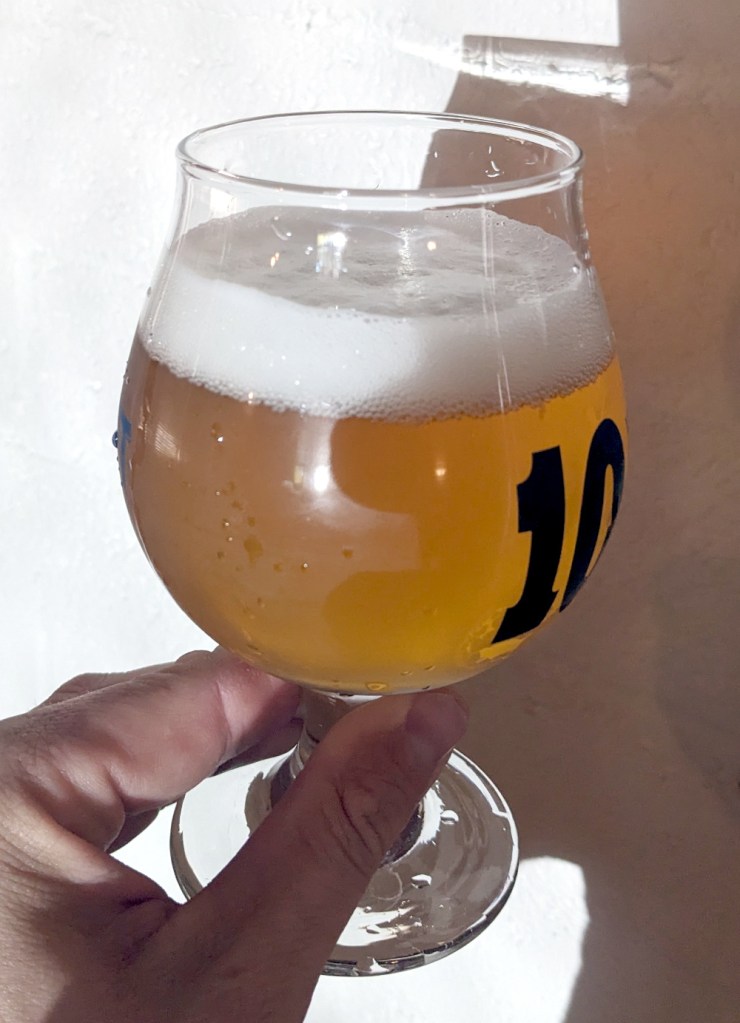
    • Pours with a fluffy and persistent ivory head. The beer itself is medium amber and has a decent haze..
  • Aroma
    • Slightly earthy aroma, with a moderate level of pear character alongside some peppery spice. A tartness also comes through, which is really delightful.
  • Flavor
    • Spicy, slightly peppery flavor and a decent bit of ripe pear at the forefront, with only moderate bitterness. I get a bit of the rye flavor, but most of the flavor is in the world of the yeast.
  • Mouthfeel
    • Medium-light body, moderately high carbonation, moderately dry finish.
  • Would I Brew This Again?
    • This is a pretty good recipe! It is a bit darker than I am used to for a saison (especially the classic Saison Dupont), but I think it’s still well within the style. I personally might like one that is a little lighter bodied, and I wonder if the rye didn’t complicate matters some. I also might go for 100 percent pilsner malt, rather than American pale malt as the dominant grain, in order to streamline the flavor. The yeast qualities are quite nice, and hit a nice balance of interesting but not in-your-face. I feel that I got the fermentation parameters just about perfect. It was worth the extra fuss!
  • Overall
    • 9/10

Odds ‘n’ Ends Belgian Ale

Last year, I had fantastic results with a Belgian pale ale, even if it’s not a style I typically make. They can be interesting beers, so it seemed worth another attempt. This time, though, I’m not worried as much about brewing to style as I am wanting to use up ingredients on-hand. The result is a kitchen sink recipe that tastes pretty good, even if it isn’t precisely any style. We’ll just call it a Belgian ale.

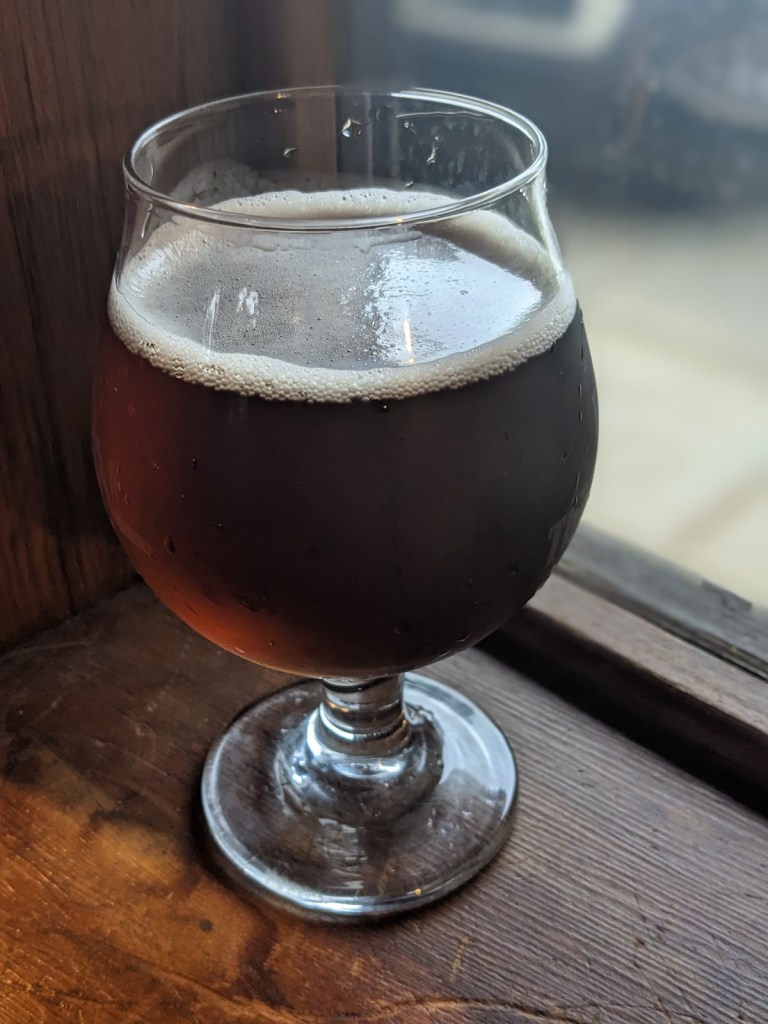
amber beer with ivory head in tulip glass, sitting on wood windowsill

Odds ‘n’ Ends Belgian Ale

  • 9 lb. 15 oz. 2-row malt (Rahr)
  • 8 oz. Carared (Weyermann)
  • 6 oz. honey malt (Gambrinus)
  • 2 oz. Carafa Special II malt
  • 2 oz. coffee malt (Simpsons)
  • 2 oz. Special B malt (Dingemans)
  • 1 oz. Hallertauer Mittelfrueh hop pellets (5.2% alpha), 60 minute boil
  • 1 oz. Hallertauer Mittelfrueh hop pellets (5.2% alpha), 10 minute boil
  • 1 oz. Saaz hop pellets (3.5% alpha), 5 minute boil
  • 1 pkg. Abbaye Belgian ale yeast (Lallemand)

Target Parameters

  • 1.050 s.g., 1.013 f.g., 4.9% abv, 29 IBU, 13 SRM
  • Full volume mash, 152° for 60 minutes, 168° mash-out for 10 minutes
  • Claremont tap water adjusted with lactic acid and mineral additions, to achieve calculated water profile of 60 Ca, 6 Mg, 84 Na, 30 SO4, 137 Cl, 156 HCO3, RA=82 ppm.

Procedure

  • I mashed in with 7.5 gallons of water at 158°, to hit a mash temperature of 152°. I added 4.3 mL of 88% lactic acid to adjust the mash pH.
  • I held the mash at 152° for 60 minutes, while recirculating, before raising the temperature to 168° for a 10 minute mash out.
  • After the mash, I removed the grains. In total, I collected 6.6 gallons of runnings with a gravity of 1.041, for 66% mash efficiency.
  • As I brought the runnings to a boil, I added 1 g of CaCl to adjust the water.
  • I boiled for 60 minutes, adding hops per the recipe. After 60 minutes, I turned off the heat and chilled the wort to 64° before transferring to the fermenter.
  • I started with 5.5 gallons total and a gravity of 1.048. I brewed this beer on 7 April 2023, and fermented at 64°.
  • On 15 April 2023, I pulled the beer to ambient.
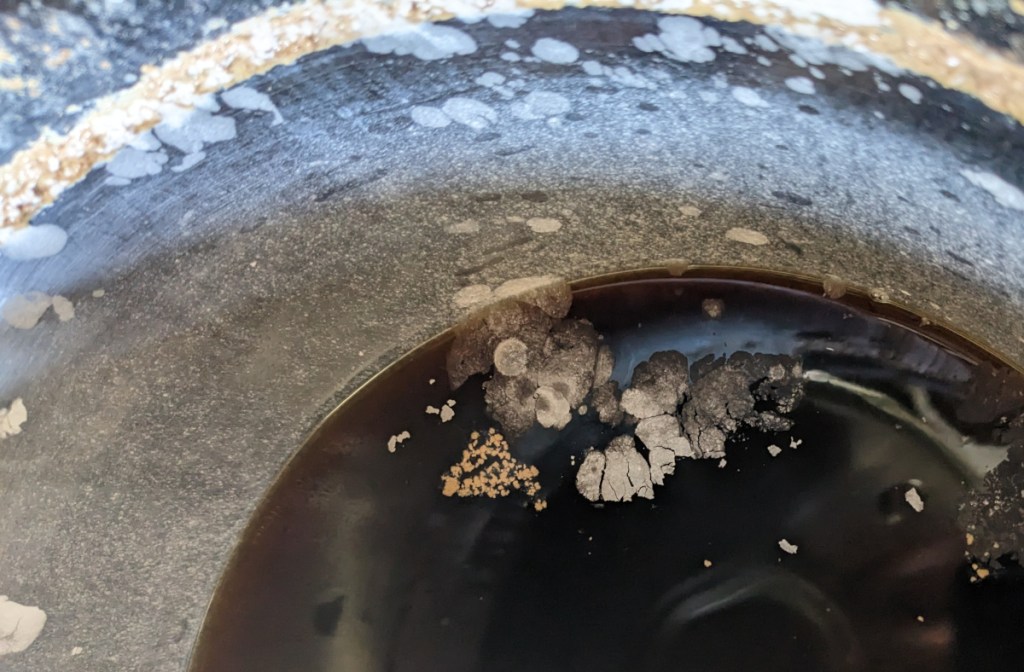
  • I kegged the beer on 30 April 2023. It had a final gravity of 1.010, for 5.1% abv. A thin white pellicle was forming on top of the beer, but overall it tasted just fine. Either way, I’ll need to do a deep sanitize/sterilize of my equipment.
  • The beer was a bit hazy to start, but had dropped fairly clear by 23 May 2023, and had dropped brilliantly clear by 1 June 2023.
A pellicle! How did that get there?

Tasting

  • Appearance
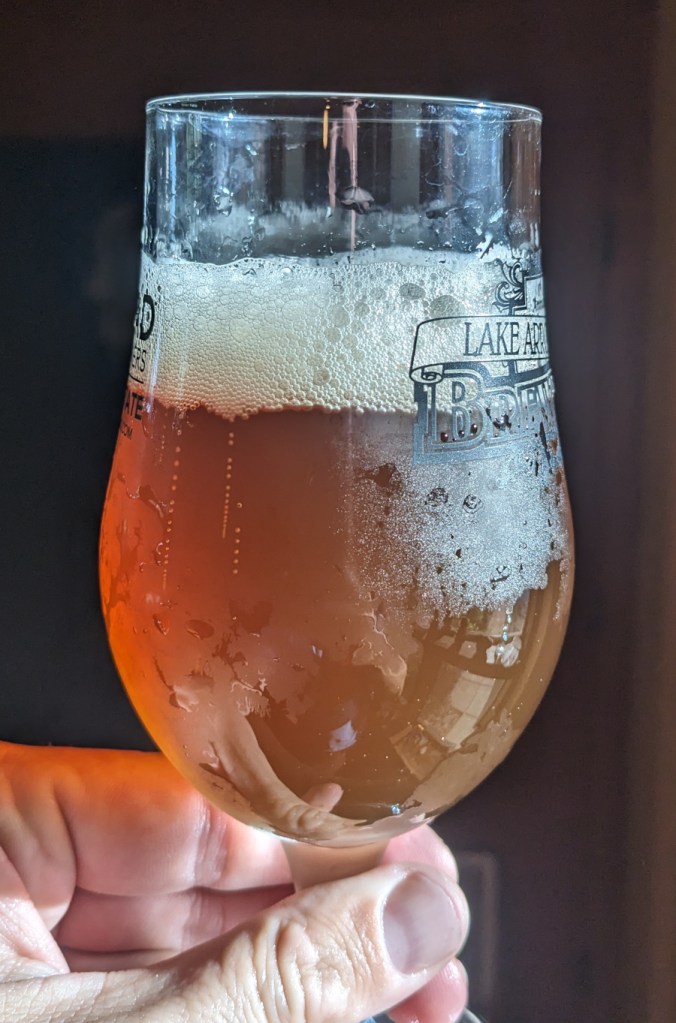
    • The beer pours with a fluffy, ivory head that subsides to a persistent blanket across the entire top of the beer. The beer itself is a deep amber color and brilliantly clear.
  • Aroma
    • This beer has plenty of clove yeast character at the front, with some black pepper. There is caramel and dark bread crust maltiness behind that.
  • Flavor
    • Yeast is at the front, with clove and sweet apple fruitiness, with a bit of pepper. Malt character is smooth, with some caramel and bread. Moderate level of bitterness, but not much hop character otherwise.
  • Mouthfeel
    • Medium body, medium carbonation, smooth finish with an off-dry quality.
  • Would I Brew This Again?
    • This is overall a good beer, with interesting qualities but not too interesting. Is it a Belgian pale ale? Sure, we can call it that. I’m grateful that I caught the pellicle before it went too far down the sour or funky road….as it is, I don’t really pick up anything. Phew! It’s squarely in the category of “decent, but probably won’t be brewed again.”
  • Overall
    • 7/10

Belgian Wit

I’ve brewed lots of fruit-based witbier recipes, and plenty of things with Belgian wit yeast, but I’ve only done a “real” witbier recipe once! BYO magazine recently featured the witbier style, so I brewed a slightly modified version recently.

Belgian Wit

  • 5.5 lb. Barke pilsner malt (Weyermann)
  • 5 lb. soft red flaked wheat (Briess)
  • 0.5 lb. flaked oats
  • 0.25 lb. Munich II malt (Weyermann)
  • 1 oz. Edelweiss hop pellets (5.1% alpha), 30 minute boil
  • 9 g chamomile flowers (dried), 5 minute boil
  • 1.5 oz. lemon zest (fresh), 5 minute boil
  • 0.4 oz. coriander seed, 5 minute boil
  • 1 pkg. wit Belgian wit-style ale yeast (Lallemand)

Target Parameters

  • 1.050 s.g., 1.009 f.g., 5.3% abv, 14 IBU, 4 SRM
  • Full-volume mash, no sparge, at 149° for 60 minutes
  • Claremont tap water, neutralized to remove carbonates.

Procedure

  • I heated 7.5 gallons of water to 155°, adding 6.25 mL of 88% lactic acid to remove the carbonates.
  • I mashed in to hit a mash temperature of 149°, adding 3.5 mL of 88% lactic acid to adjust pH. I held the mash here for 60 minutes with recirculation, before raising to 168° for a 10 minute mash out.
  • After removing the grains, I had a total of 6.25 gallons of runnings with a gravity of 1.041, for 63% mash efficiency.
  • I brought the kettle to a boil, boiling for an extra 15 minutes before adding hops and spices per the recipe, in order to raise the gravity. After 75 minutes total of the boil, I turned off the heat and chilled to 80°. I transferred the wort to a fermenter and chilled it the rest of the way down to 62° before pitching the yeast.
  • I brewed the beer on 17 September 2022. Starting gravity was 1.045.
  • I pitched the yeast at 62°, let it free rise to 64° and held there for the first three days of fermentation. I did all of this with open fermentation, putting a piece of foil over the hole in the fermenter lid rather than using an airlock or blowoff tube.
  • On 20 September 2022 (three days into fermentation), I added a blowoff tube and let the fermentation free rise to 72°.
  • I kegged the beer on 30 September 2022. It had a final gravity of 1.012, for 4.4% abv.

Tasting

  • Appearance
    • Straw colored, hazy beer with a fluffly and persistent white bead.
  • Aroma
    • Light chamomile and hay aroma; slightly tart character to it.
  • Flavor
    • Very refreshing! There is a bit of spice; the coriander is faintly present, and chamomile comes through on the back end of each taste, but is definitely more prominent. Coriander provides a pleasant sweetness. Medium-low bitterness; maybe even a bit too much? There is a hint of citrus flavor. The malt flavor is fairly low, with a doughy and slightly grainy character if anything.
  • Mouthfeel
    • Light body, highly carbonated, smooth finish, off-dry. It is almost a bit too dry.
  • Would I Brew This Again?
    • I like this recipe overall! It could use a bit more coriander, but the chamomile is delightful. It gives a fresh-mown hay quality that is quite interesting. The beer is a bit more dry than I like for this style; some more oats could help with that. The yeast character is okay, but not exceptional. I might like a bit more from the yeast, and suspect an increase in fermentation temperature could help. A little more haze would also be nice, and slightly less bitterness. The beer is quite refreshing, but not perfect. The beer clarified a bit after a few weeks from the initial tasting, and is still super interesting in flavor. The chamomile helps to make this a fall beer, rather than just something for a summer afternoon!
  • Overall
    • 6/10

Winner, Winner: Big Surprise Belgian Pale Ale

The Southern California Homebrewers Festival was held recently, and per tradition they had a style-focused competition. Each participating club could submit an entry for a bragging rights “best of show” beer…this year’s style of choice was Belgian Pale Ale. My beer was selected as the entry for our brew club (Horse Thief Brewer’s Association)…and I was blown away to learn that it was the top beer of the competition, among approximately 30 other entries! Due to a work conflict, I wasn’t able to be there in person, but enjoyed hearing about the results via text message (I was in the field when I received the news). The ?downside is that I received an empty keg back, so wasn’t able to enjoy the beer after my first few samples! I guess that means I’ll be brewing it again sometime soon.

Photo by Nataliya Vaitkevich on Pexels.com

These high ratings surprised me because I had never brewed the style before, was using an untested recipe, and didn’t actually expect to win. But hey, I won’t complain. Even though I didn’t think the beer was anything particularly special, other people obviously did, and I’m kinda proud of that.

The recipe I brewed here was a modification of Ben’s Belgian Pale Ale, which received a silver medal at the 2019 National Homebrew Competition. The recipe is posted on the AHA website; I figured that it would be a good starting point for my own version. This is not a style I’ve sampled a ton of, so I was working a bit in the dark. The original recipe called for flaked oats and red wheat malt, but I elected to pull those out to ensure a clearer result. After a bit of research, I settled on Omega Labs’ Belgian Ale A yeast, because it is supposed to be on the cleaner side for Belgian yeasts–a desirable quality in a Belgian pale ale. I suppose there are enough changes that the original recipe was an inspirational starting point, rather than anything I explicitly followed. I did choose to make Saaz the centerpiece of the hopping, in a nod to tradition.

Andy’s Belgian Pale Ale, in a “farewell tasting” before it headed off to the brewing festival

Big Surprise Belgian Pale Ale

  • 7 lb. Barke pilsner malt (Weyermann)
  • 2 lb. Munich I malt (Weyermann)
  • 12 oz. Cara 20 malt (Dingemans)
  • 8 oz. aromatic Munich malt 20L (Briess)
  • 8 oz. caramel Munich 60L malt (Briess)
  • 4 oz. dextrin malt (Viking)
  • 0.75 oz. Saaz hop pellets (4.0% alpha), 60 minute boil
  • 0.35 oz. Magnum hop pellets (10.1% alpha), 60 minute boil
  • 0.5 oz. Saaz hop pellets (4.0% alpha), 20 minute boil
  • 1 Whirlfloc tablet, 5 minute boil
  • 1 oz. Saaz hop pellets, 5 minute boil
  • 1 pkg. Belgian Ale A yeast (Omega OYL-024)

Target Parameters

  • 1.051 s.g., 1.010 f.g., 5.4% abv, 29 IBU, 10 SRM
  • Claremont tap water, adjusted to hit 45 Ca, 6 Mg, 91 Na, 50 SO4, 115 Cl, 144 HCO3
  • Full volume mash, 60 minutes at 152° and 10 minute mash-out at 168°.

Procedure

  • I mashed in with 7 gallons of water at 158°, to hit a mash temperature of 152°. I added 1 g CaCl to adjust water chemistry, as well as 2.5 mL 88% lactic acid to adjust pH. I held at 152° for 60 minutes, before raising the mash to 168° for a 10 minute mash-out.
  • I removed the grains and heated the runnings to a boil. In total, I collected 6.1 gallons of runnings with a gravity of 1.047, for 71% mash efficiency.
  • I brought the kettle to a boil, adding hops and finings per the recipe. After 60 minutes, I turned off the heat and chilled to ~66°.
  • On the morning of brew day, I made a 1L vitality starter to wake up the yeast.
  • I brewed this beer on 13 March 2022. Starting gravity was 1.052. I fermented the beer at ambient temperature in my garage, around 60°.
  • After vigorous fermentation slowed down, I moved the fermenter inside on 18 March 2022, where the temperature was slightly warmer (~66°). Very vigorous fermentation took off again (filling the airlock with yeast), so I cleaned the airlock, sanitized it, and let it go from there.
  • I kegged the beer on 8 April 2022, using 3.5 oz. of corn sugar dissolved in 1 cup of water. Final gravity was 1.011, for 5.4% abv.
  • I let the keg sit at ambient for ~2 weeks, and topped up the carbonation with forced CO2. The flavor was pretty good, but it was not terribly clear. So, I added 1 tsp. of gelatin dissolved in water on 24 April 2022. Within two days, the clarity was gorgeous!

Tasting

  • Appearance
    • Very clear, light amber color. The beer pours with a creamy and persistent white head.
  • Aroma
    • Bready and light caramel aroma, with a light pear-like fruitiness to the yeast aroma.
  • Flavor
    • Light fruity yeast character at the front, with a bready/grainy malt character. Bitterness is moderate, with a smooth extended finish.
  • Mouthfeel
    • Medium body, medium carbonation, slightly dry finish.
  • Would I brew this again?
    • Gelatin improved the clarity on this beer a TON! I really like the restrained yeast character here; it is interesting without being cloying or overpowering. I would highly recommend the Omega Labs’ Belgian Ale A for anyone else looking to make this style–the pear quality is particularly enjoyable. The few samples I had were good enough, although not mind-blowing to me. I guess that’s the slightly understated nature of this style. I’m going to have to give it another try, because I’m now intrigued, especially given the fact that other people liked it so much.
  • Overall
    • 7/10