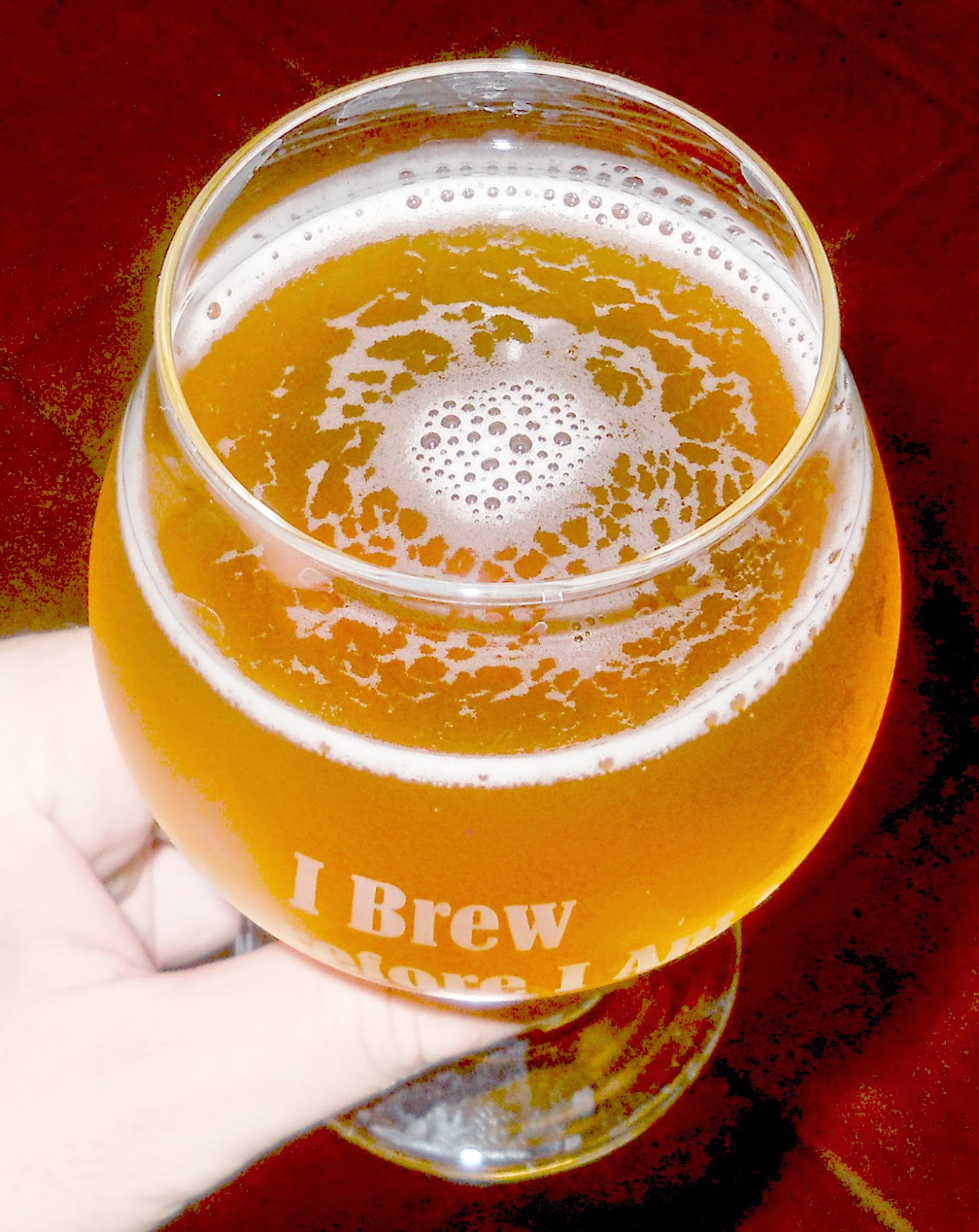
Vitamin K Kölsch Clone

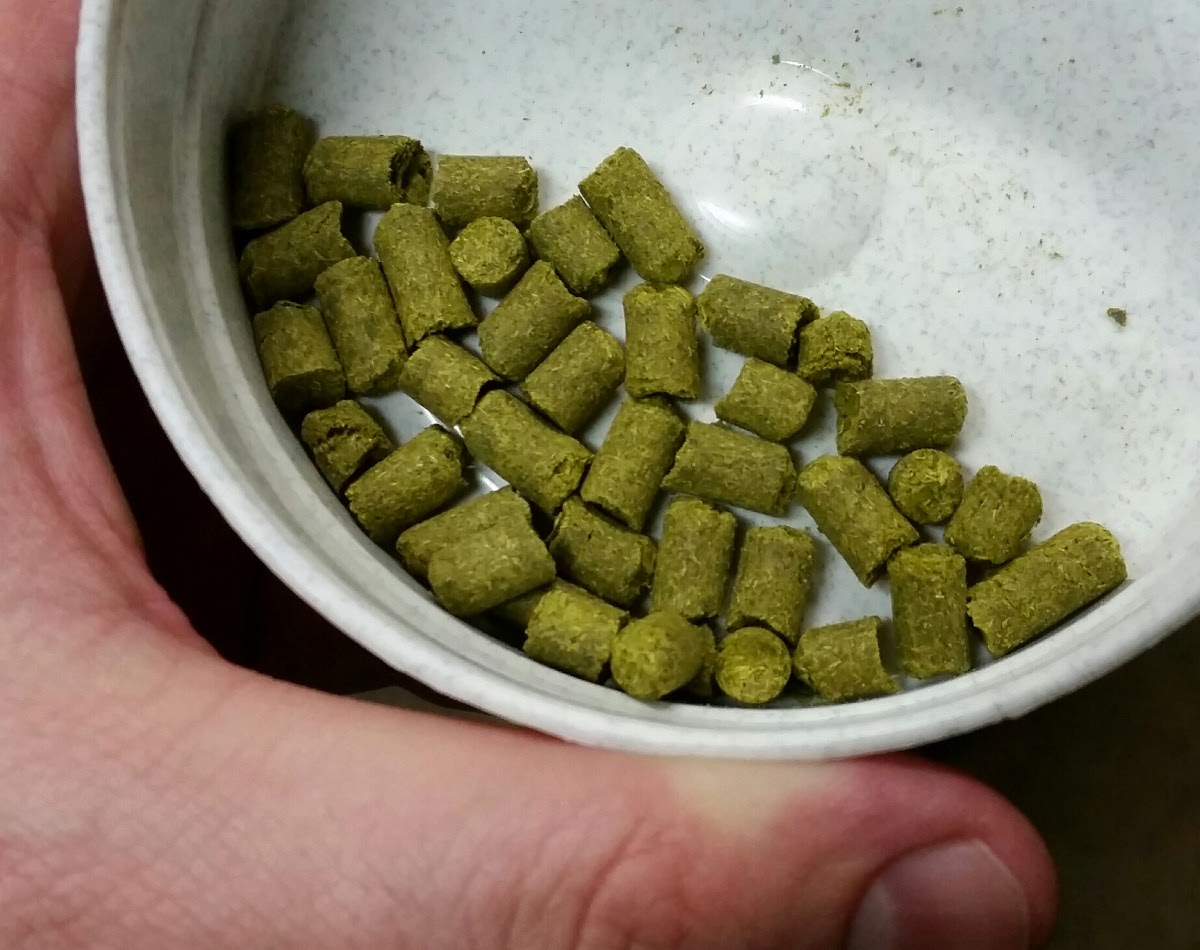
Magnum hops, locked and loaded
Magnum hops pellets, locked and loaded for this recipe.

As we inch closer and closer to the southern California version of spring, it’s time to wind down the “winter beers”, and start gearing up for some spring and summer brews. A kölsch seems like a good start for this. After thumbing through back issues of Brew Your Own, I found a recipe that is just the ticket. Vitamin K Kölsch Clone is a recipe mirroring a beer from Thunder Island Brewing Company, featured in the May/June 2014 issue of BYO. My adaptation of the recipe would probably horrify style purists, because I’ll be using American 2-row malt as the backbone. Then again, I’m not brewing this in Cologne, either, so authenticity (or indeed, the right to call it a kölsch) is out the window from the get-go.

I’m using White Labs WLP029, German Ale/Kölsch yeast. Following the calculations from my brewing software, I needed about 1 L starter (~1.040 starting gravity). This was prepared roughly 36 hours in advance of pitching; I haven’t yet made a stir plate, so I am relying instead on constant agitation. It took nearly 24 hours before I saw any real signs of activity in the starter (e.g., extensive foaming when agitated, etc.). The starter initially (for the first 24 hours or so) had a prominent fruity aroma, which is quite different from starters I have made for other strains. This transitioned into the more expected “yeast/bready” aroma after 30 hours or so. I am going to presume that this is just a characteristic of the strain (nothing online mentions typical aroma for this strain’s starter).

Following exceptional efficiency (75% and 83%) in my last two all-grain recipes, I have adjusted my equipment profile accordingly in BeerSmith to assume average efficiency of around 78%. Additionally, I will be tweaking my temperature settings a touch, based on the fact that my mash was ending up just a degree or two warmer than target on most occasions. I am heating up my mash tun with hot tap water prior to mashing in; in the past, I’ve been assuming a mash tun temperature of 75°. For BeerSmith calculations in this batch, I will assume a pre-warmed mash tun temperature of 130°.

Vitamin K Kölsch Clone

  • 7.25 lbs. 2-row malt (Great Western Malting Co.)
  • 0.75 lbs. white wheat malt
  • 0.5 lbs. Munich malt
  • 0.45 oz. Magnum hops pellets (13.7% alpha, 6.4% beta), 50 minute boil
  • 1 tsp. Irish moss, 10 minute boil
  • White Labs German Ale/Kölsch yeast (WLP029), in 1 L starter prepared 36 hours in advance.

Anticipated Statistics

  • S.g.=1.045; f.g. = 1.009, 4.6% abv
  • Bitterness = 22.2 IBU
  • Color = 3.7 SRM
Procedure
  • I mashed in with 3.25 gallons of water at 163° (a ratio of 1.5 quarts of water per pound of grain), aiming for a mash temperature of 150°. The mash settled at ~154° after five minutes, and was at 152° after 40 minutes. My mash temps are still running a little above calculated targets; I need to do a little more tweaking in BeerSmith. I wonder if my mash water isn’t rising in temperature just a touch after I turn the flame off.
  • After 60 minutes, I added 0.9 gallons of water at ~190°. I let this rest for 10 minutes, vorlaufed, and then drained the mash tun. From this step, I collected 3 gallons of wort.
  • Next, I added 3.1 gallons of water at ~185°. This brought the mash temperature up to 168°. I let this rest for 10 minutes, vorlaufed, and drained the mash tun.
  • In total, I collected 6.5 gallons of wort, with an overall gravity of 1.038. This equates to roughly 78% efficiency; looks like I guessed correctly on my mash efficiency assumptions.
  • I brought the wort to a boil; after 10 minutes, I added the Magnum hops (which were boiled for a total of 50 minutes).
  • 10 minutes before flame-out, I added the Irish moss. At this same time, I measured the volume of the wort to be ~5.6 gallons; this was a little below where I wanted, and I suspected this would bump my gravity up just a touch over target, so I added 0.25 gallons of distilled water. The boil-off rate must be just a touch higher than calculated for my equipment; I’ll have to adjust this in BeerSmith.
  • After a total of 60 minutes on the boil, I turned off the flame and began chilling the wort with my wort chiller. I brought the wort down to ~69°.
  • I transferred the wort to the fermenter and added the entire 1 L starter. Although I do not have this particular fermenter calibrated for volume measurements, based on my measurements at the end of the boil I transferred approximately 5.5 gallons into the fermenter.
  • I will be fermenting this beer at approximately 66°, which is right at the lower end of the optimal zone for WLP029 (65-69°). This way if things heat up a tad during the most vigorous part of fermentation, I should still keep esters and such under control.
  • Starting gravity was 1.045 – exactly on the nose! The wort is a beautiful light yellow in color, with excellent hot break separation.
  • I brewed this up on March 1, 2015. I will let it ferment for ~7 days before cold crashing it. Then, I’ll let it sit at least another week before kegging.

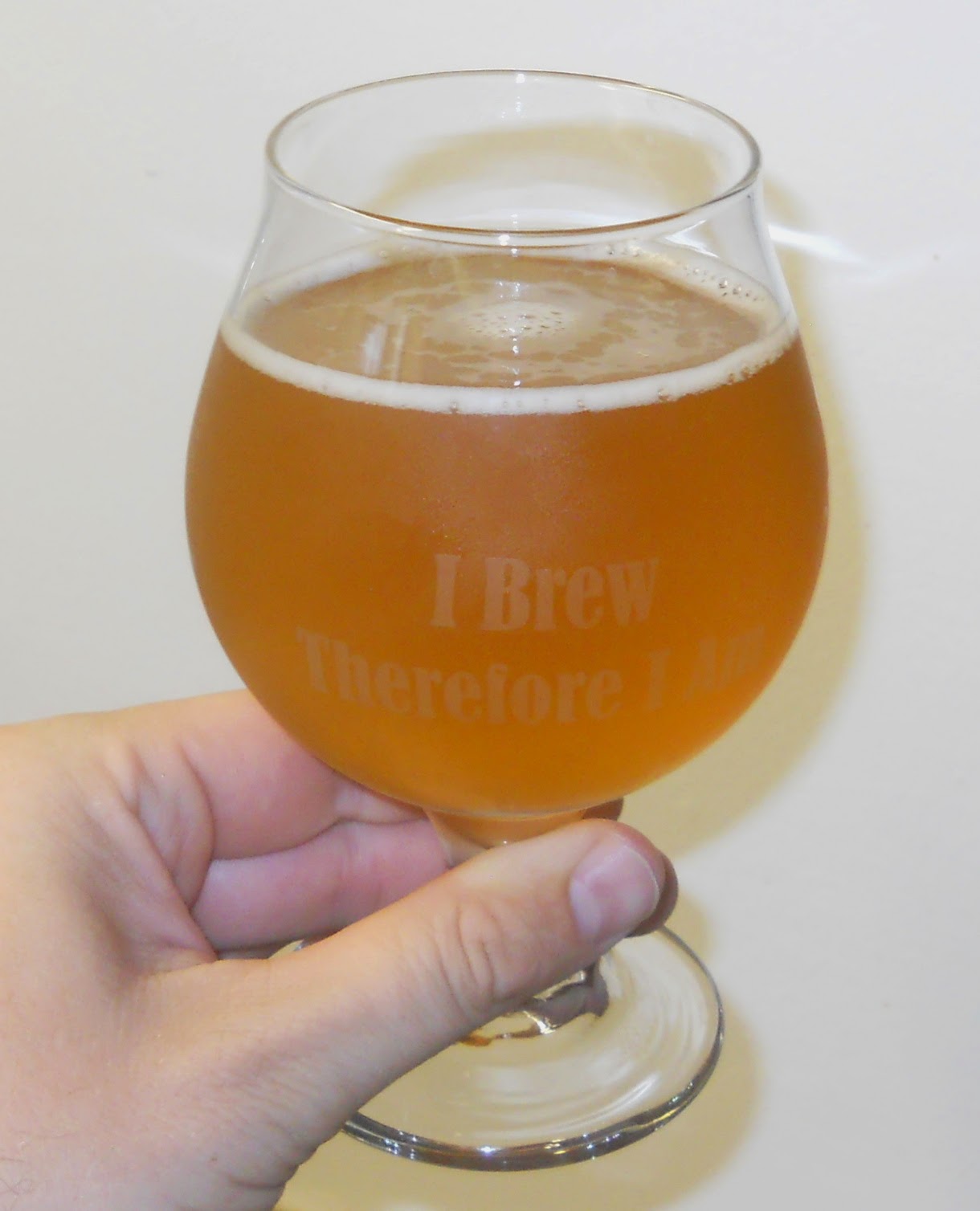
Bonedigger Brown Ale

Things finally seem to be clicking along with my all-grain setup; I’ve got my mash tun properties dialed in, my grain mill configured, and everything else coming up aces. The all-grain learning curve is perhaps a bit frustrating, after feeling like I was so proficient at extract brewing, but it feels like the pay-off is finally here. I’m now getting consistent extract efficiency (thanks in large part to owning my own grain mill), and the beers are turning out quite tasty.

For today’s brew session, I wanted to play with a style I haven’t brewed previously: American brown ale. Looking back at the blog, I brewed a British-style nut brown from a kit a few years back, but that’s it! I got some advice from Ray Daniels’ Designing Great Beers, and set up a recipe in BeerSmith. I was also inspired by a recent visit to Rök House Brewing Company, which had an incredibly tasty SMaSH ESB; on asking, I learned that the wonderfully malty flavor was courtesy of Maris Otter malt. So, I knew I had to incorporate that into my next recipe!

Bonedigger Brown Ale

  • 9 lbs. 2-row malt
  • 1 lb. Maris Otter pale malt
  • 0.75 lb. 80°L crystal malt
  • 0.5 lb. carapils malt
  • 0.5 lb. chocolate malt
  • 1 oz. Cascade whole hops, bittering (60 minute boil)
  • 1 oz. Cascade whole hops, bittering (20 minute boil)
  • 0.5 oz. Willamette hops pellets, aroma (5.3% alpha; 3.7% beta; 5 minute boil)
  • 1 tsp. Irish moss (10 minute boil)
  • 1 pkg. US-05 Safale American Yeast
Procedure
  • I mashed in with 3.75 gallons of water at 165°. This hit my target mash temperature of 153°. The mash ended at around 151-152°, an hour later.
  • After 60 minutes, I stirred in 0.82 gallons of water just below boiling temperature, and let this sit for 10 minutes. I collected ~3.1 gallons of first runnings.
  • Then, I added 3.14 gallons of water at 185°; the mash temperature stabilized at 168°. I let it sit for 10 minutes.
  • After the second runnings, I had collected 6.5 gallons of wort with a gravity of 1.049. This works out to 75.7% efficiency.
  • I brought the wort to a boil, and added the hops as indicated. The wort boiled for a total of 60 minutes.
  • After flame-out, I cooled the wort to ~78° using my wort chiller, whirlpooled, rehydrated the yeast, and pitched the yeast. I will be fermenting this beer for 2 weeks at 65°.
  • Starting gravity is 1.057, with a total of 5.1 gallons of wort. I brewed this up on 27 September 2014.

Edmund Fitzgerald Porter Clone

The past year has seen some major changes in my brew practices, most prominently in the transition from extract to all-grain. It has been fun to stretch my abilities and add new techniques to my toolkit, although not without its frustrations, either. There is a whole new learning curve to master! 
One of the toughest projects has been to master my mash efficiency. Where you can get really, really consistent gravities quite easily with extract (I would rate this as a big “plus” for extract brewing), I’ve found less consistency in my all-grain. From my reading and conversations with other brewers, “crush” hits the top of the list for improving efficiency. So, with that in mind, I purchased a two-roller mill from Monster Brewing Hardware. Their mills are pretty consistently well-rated, so it seemed wise to follow that reputation. It will be really nice to be able to control my crush more precisely–the local homebrew shop generally gave me good results, but now I can mill grains exactly to my home specs. This also makes it logistically easier to get big bags of my base malts (see photo). By buying in bulk, I can cut the per batch cost significantly.

It took me a bit to figure out what I wanted to brew for the first batch with my new mill. I had thought about a simple amber ale–but, I already have a fair bit of IPA and pale ale on hand (and apparently an amber ale is just a variant of a pale ale–makes sense, but I hadn’t thought of it this way before!). So, a good porter seemed like a great alternative. It will round out my beer stock nicely.

After a bit of thought and searching, I elected to go for a clone recipe that I’ve tried versions of before. One of my favorite beers is the Edmund Fitzgerald Porter, courtesy of Great Lakes Brewing. It’s tough to find out in California, but I have had it a few times on tap or in the bottle when in the midwest or out east. For this batch, I stuck much closer to the original recipe from the North American Clone Brews book. The only mild variation was to have Cascade as strictly an aroma (steeping) hop at the very end, mainly because I forgot to pick up a little more at the store.

Edmund Fitzgerald Porter Clone

  • 10.6 lbs. 2 row malt
  • 1 lb. 60°L crystal malt
  • 0.66 lb. chocolate malt
  • 0.66 lb. roasted barley
  • 0.70 oz. Northern Brewer hops pellets, bittering, first addition (9.9% alpha, 4.6% beta)
  • 0.75 oz. Willamette hops pellets, bittering, second addition (5.3% alpha, 3.7% beta)
  • 0.75 oz. Willamette hops pellets, bittering, third addition (5.3% alpha, 3.7% beta)
  • 1 oz. Cascade hops pellets, aroma, fourth addition (5.5% alpha, 6.0% beta)
  • 1 tsp. Irish moss
  • 1 tbs. pH 5.2 stabilizer (for mash)
  • 1 pkg. Danstar Nottingham dry yeast (11 g)
Procedure
  • I mashed in with 4.3 gallons of water at 172°. As measured 20 minutes later, the temperature was stabilized at 154°.
  • After 1 hour, the temperature was down to 152°. I added 0.75 gallons of water at ~185°, stirred, and let it sit for 10 minutes. From this, I collected ~3.1 gallons of wort. I did have a slightly stuck sparge (first time ever!) towards the end of the collection, but was able to unstick it by stirring the top of the mash slightly and blowing air up the tube.
  • Then, I added 3.25 gallons of water at 190°. After stirring, the mash stabilized at 168°. I let the mash rest for 10 minutes, vorlaufed, and collected 7.1 gallons of wort. I suspect I got so much because there was more wort left than usual in the first round of the batch sparge.
  • The 7.1 gallons of wort had a gravity of 1.046. This equals 72% mash efficiency.
  • Once the boil started, I added the Northern Brewer hops.
  • After 30 minutes, I added the first addition of Willamette hops. At this point, the wort volume was down to ~6.75 gallons.
  • After 60 minutes, I added the second addition of Willamette hops. Wort volume was down to ~6.2 gallons at this point
  • After 75 minutes, I added the Irish moss. Wort volume was down to 6 gallons at this point.
  • After 90 minutes, I added the Cascade hops, turned off the heat, and chilled the wort using my wort chiller.
  • It took ~30 minutes to chill the wort to 80°. I whirlpooled the wort, transferred it to the primary fermenter (with the Venturi pump in use for aeration), and pitched the rehydrated yeast. The beer was visibly bubbling within a little more than 12 hours.
  • The end result was 5 gallons of wort into the fermenter, with a starting gravity of 1.060 at 60°.
  • I am fermenting the beer at 65°. This batch was brewed on 30 August 2014.

Beer Tasting: Summer Blonde Ale

The summer blonde ale is at its peak, turning out to be a pretty delightful brew. The full specs are below.

Summer Blonde Ale

  • I brewed this up on June 28, 2014, and bottled it on July 13. Thus, it has had about a month to condition. The sample I am evaluating here is from a bottle.
  • Basics
    • Original gravity = 1.046; final gravity = 1.008; abv = 5.0%.
  • Appearance
    • Clear, straw-colored
    • Head is white, fine, and low, with fair retention over the course of the sampling
  • Aroma
    • Clean and slightly malty
  • Taste
    • Clean and slightly malty; pleasant
    • A subtle hops finish
    • Good balance between hops and malt
  • Would I brew this again?
    • Absolutely! This is perhaps one of the best all-grain beers I’ve done to date, and it is perfect for sipping on warm summer evenings. As near as I can tell, the recipe (and this batch) nails the style quite squarely, and is very much to my taste. I don’t know that there is much, if anything, that I would change; maybe up the malt and hops ever-so-slightly, but that’s about it. Probably a bad idea to mess with a good thing.
  • Overall rating: 8/10

Gondwana Pale Ale 1.1

Back in March, at the start of my all-grain brewing, I brewed up Gondwana IPA. The resulting beer turned out unexpectedly tasty, and hooked me on Citra hops (especially for dry-hopping). Because I was still figuring out my techniques at the time, my mash efficiency was a little low (~57%), and the result was closer to a pale ale than a traditional IPA in some respects. Thus, I retooled the original recipe as a pale ale, cutting back some of the malt and utilizing Citra as the only hops for the brew. As before, I want a prominent hops aroma, so this beer will get a nice dry-hopping.

Gondwana Pale Ale (version 1.1)
  • 9 lbs. 2 row malt
  • 1 lb. Vienna malt
  • 0.5 lb. cara-pils malt
  • 0.5 lb. 40° crystal malt
  • 1 oz. Citra hops (bittering, first addition; pellet form; 14.5% alpha, 3.9% beta)
  • 1 oz. Citra hops (bittering, second addition)
  • 1 tsp. Irish moss
  • 1 pkg. Safale American dry yeast (US-05, 11 g)
  • 2 oz. Citra hops (dry hopping)
Steps
  • First, I preheated the mash tun with 9 gallons of water that was as hot as possible from the tap.
  • In my brew pot, I heated 14 quarts of water to 170°. I added the milled grains to the mash tun with 1 tbs. of pH 5.2 stabilizer, and mashed in. The temperature stabilized at 154°. After 30 minutes, the temperature was 153°.
  • After 60 minutes, added 1 gallon of water at 185°, and let it sit for 10 minutes or so. I drained the tun, extracting ~2.9 gallons of wort.
  • Next, I added 3.2 gallons of water at 195°. This raised the mash temperature to ~175°, a little warmer than I wanted. So, I added 1 quart (.25 gallons) of ice cubes. This dropped the temperature down to 168°. I let the mix sit for 10 minutes before draining.
  • I collected a total of 6.7 gallons of wort, with a preboil gravity of 1.043. This works out to a mash efficiency of ~73%.
  • I heated the wort to boiling, aiming for a total of 60 minutes at boil. After 30 minutes, I added the first addition of hops.
  • After 50 minutes, I added the Irish moss.
  • After 58 minutes, I added the second addition of hops.
  • After 60 minutes of boiling, I turned off the heat, removed the hops (they were all bagged), and chilled the wort to ~80°.
  • Once the wort was chilled, I transferred it to the primary fermentation vessel. Along the way, it was oxygenated using my Venturi pump.
  • The yeast was rehydrated in 2 cups of preboiled water at ~90°, and pitched into the wort.
  • Starting gravity was 1.048 at 60 degrees, with ~5.3 gallons of wort. I can probably expect around 5% abv in the end.
  • The beer is fermenting at 64°; after 1 week I will transfer it to the secondary fermenter and dry-hop for 2 weeks, prior to bottling.
Notes
  • Total ingredient cost for this was $27.65. Assuming around a 5 gallon yield in the end, the cost per 12-oz. bottle will be around $0.55.
  • In order to maximize extract efficiency, I have been using a double crush on the mill at my local homebrew shop. Based on a visual inspection of the milled grain, and on conversations with the owner, I decided to try just a single pass through the mill this time. Based on my efficiency, that was an okay decision.
  • In the past, I had been a little frustrated by trying to raise the temperature of the grain bed during the second collection of wort. Thus, I tried adding much hotter water (~195°) than recommended by BeerSmith (168°), and got much better results both in terms of temperature as well as mash efficiency. There was a little fiddling to keep the temperature below 170°, so I might aim for around 185° to 190° next time.