Homebrew Highlights of the 2010’s

As we turn over not just one but two digits in the calendar year, from 2019 to 2020, it makes me reflect on how I’ve grown as a brewer. So, what happened in the ten years of 2010 through 2019?

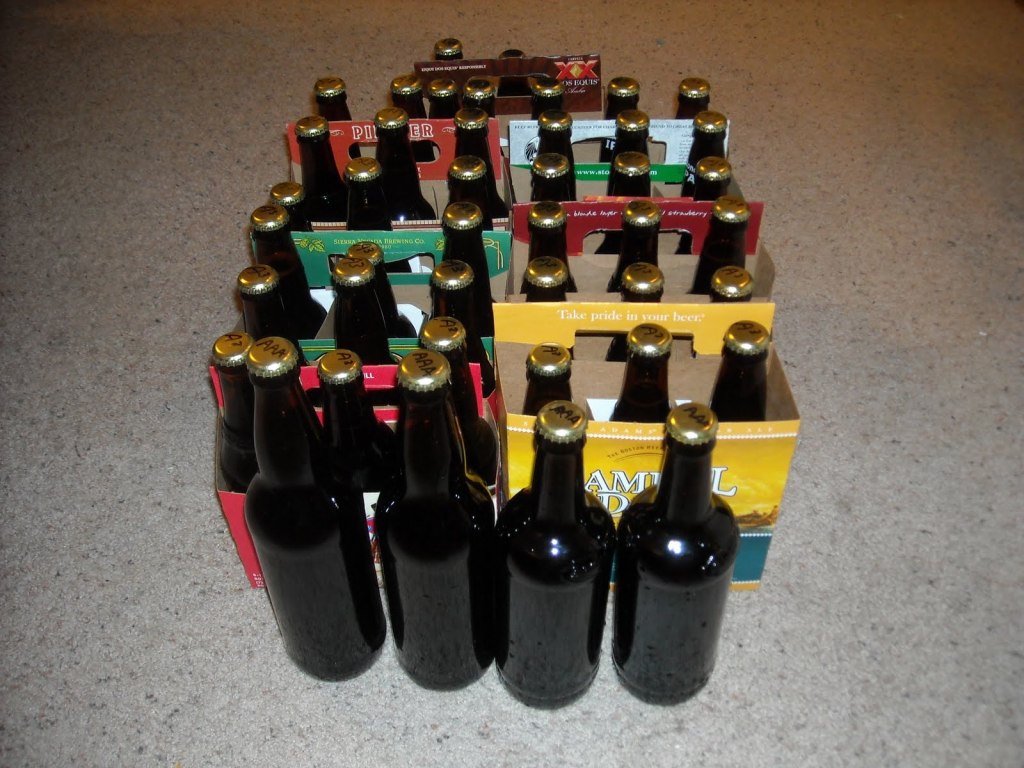
Beer bottles
An early batch, all bottled up and ready to condition in my closet.
  • Process
    • At the start of 2010, I was doing extract-only, partial volume boils in a 5 gallon pot on my stove. I had no fermentation temperature control, so was limited to brewing during the cooler months of the year, and bottled exclusively. Some of this was due to space (I was living in a one-bedroom apartment), some of it was money (I hadn’t yet bought the full assortment of equipment), and some of it was skill–I hadn’t yet practiced that much!
    • As we close out 2019, I’m doing all-grain, batch-sparge, full volume brew days. I’m using two temperature-controlled fermentation chambers, and then kegging my beers to serve via a three-faucet keezer. 2014 was the biggest year for this, as we moved into a new place that had much more space to set up a brewery.
  • Ingredients
    • In 2010, I was brewing with a limited supply of ingredients from a very small brew shop supplemented by mail order. The world of ingredients was quite a bit narrower then, and things like Citra and Mosaic and craft malting weren’t even in my vocabulary. Because I was only brewing with extract, I was heavily reliant upon a narrow selection of extract products.
    • In 2019, the world of ingredients is scarcely recognizable. Some of this is due to my process changes, as I get to know new malts. Much of this is due to a new array of suppliers and products. We have a truly excellent, well-stocked local homebrew shop very close by (Pacific Brewing Supplies of San Dimas), so I can easily get 95% of what I might ever need via them. There are so many new hops and yeasts and yeast suppliers and malting companies that I can’t even pretend to keep up. It’s awesome!
Wild hops — part of an experimental saison I brewed a few times.
  • Style
    • In 2010, I was brewing a variety of fairly “traditional” ales–brown ales, pale ales, wheat beers, etc. I was severely limited by space and temperature control!
    • In 2019, I’ve tried brewing everything from kettle sours to obscure European wheat ales to light lagers. The world feels wide open, and I’ve embraced lagers in a way I never imagined possible.
  • Community
    • In 2010, I was brewing totally solo, perhaps having friends over from time to time. I didn’t have much to challenge me (beyond myself), and it was hard to get honest feedback from trained palates.
    • In 2019, I am active in a local homebrew club, and know a fair number of brewers outside that circle. This has added considerably to my enjoyment of the hobby, helped me meet new people, and has also opened up new ways to challenge myself and get helpful feedback. I love club contests that push me to try new styles, and I like getting comments from a friendly yet critical crew of tasters. In the bigger sense of community, I’ve had opportunities to contribute to Zymurgy magazine and present at HomebrewCon. I never would have imagined this being a possibility back in 2010!
  • Commercial
    • In 2010, homebrew comprised only a small percentage of my beer consumption. I made four or five batches annually, and as a result had to make up the rest with commercial purchases. The commercial landscape for local craft beers was quite narrow at the time–we only had two or three breweries within a reasonable drive, and the reasonable drive didn’t exactly encourage sampling much (unless I had a driver!).
    • In 2019, there are so many local breweries that I can’t possibly sample them all. Access to Lyft helps a lot, but between money (it’s expensive to go to breweries constantly), liver (I drink less than I used to, and breweries just ain’t doing much less than 5% abv), and time (we’ve got two kids now), I don’t get out as much as I might. I would say 95% of my beer consumption now is my own homebrew. I brew enough that I can usually keep plenty on tap, and I can also brew lower alcohol beers and styles that don’t get as much attention in local craft breweries. It’s virtually impossible to find a quality German-style lager locally (and imports are incredibly hit or miss), so I gotta make ’em myself!
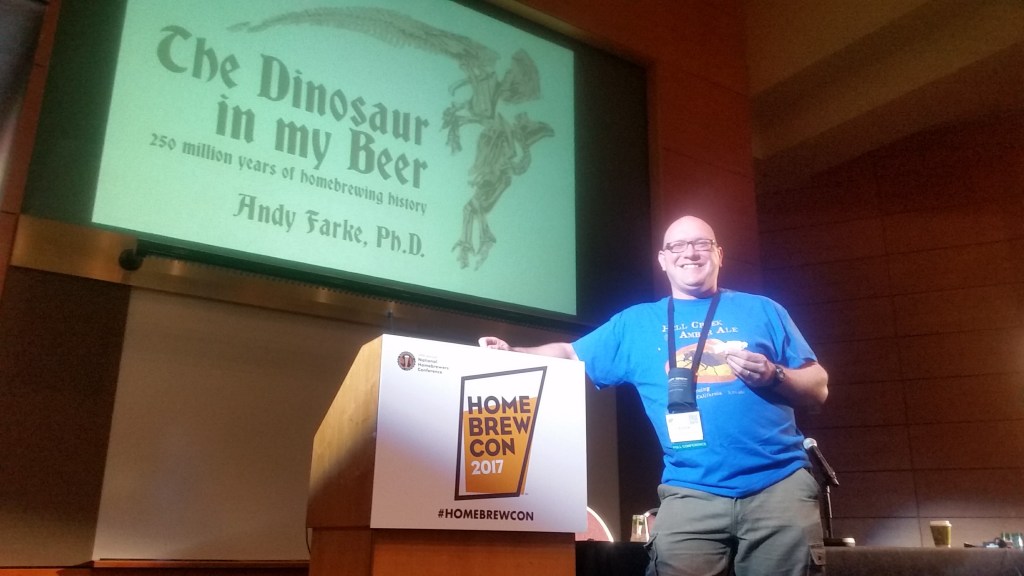
Getting ready for my presentation at the 2017 HomebrewCon
  • Recipe Highlights
    • If I had to pick one recipe to represent each year, what would it be?
      • 2010
        • Premium Oatmeal Stout — the brew session was a bit of a scramble, but it was (in my recollection) a pretty nice beer.
      • 2011
        • Vanilla Voay Porter — another one of my early dark beers. These styles tended to be more enjoyable, because they tended to cover up the sins of the learning process more than a lighter beer could.
      • 2012
      • 2013
        • Citation Porter — I didn’t brew much this year (new kid and all), so Citation Porter gets mentioned more by default than anything.
      • 2014
      • 2015
        • Pannotia White IPA — you just don’t see this style on the market, which is unfortunate. I find it far more interesting and drinkable than your average haze-bomb. It’s got plenty of fruit and citrus character, but also still tastes like a beer.
      • 2016
      • 2017
        • Raspberry Belgian — a sour beer, and one that is really hard to keep on hand because it goes so quickly. I need to play with this recipe more in the future…
      • 2018
        • Jamaica Wit — another Belgian, bringing together a Californian twist with hibiscus flowers.
      • 2019
Cheers to the 2010s, and on to the 2020s!

2019’s Homebrew Highlights

2019 marked my eleventh year brewing out in California, and I feel like I’m squarely in the comfort zone of homebrewing. Yet, I didn’t let myself get too comfortable, either. This was a year to push myself with more lager recipes and some new styles. I’ve improved my packaging of oxygen-sensitive beers, and overall this has paid off handsomely. Let’s take a look at some of the highlights!

  • Favorite Batch
    • This was a great year, with several batches I really loved. Favorite batch for 2019 is a hard choice, but I think I’ll give a slight edge to the Alta California Lager. It was a virtually perfect beer, and I hope I’ll be able to get something close to it again in a future incarnation!
  • Least Favorite Batch
    • I didn’t have any complete disasters this year, so this is another hard choice. My recent brown ale was a bit of a disappointment, so that’s probably what I would nominate. I also haven’t gotten quite to the perfect Bohemian pilsner. Something to shoot for next year!
  • Experimental Recipe with Most Potential
    • I made a Breslau-style pale schöps, and it was just plain fun. I loved the challenge of creating a recipe for a style taste-unseen, and the result was really nice. It was a treat!
  • Most Fun New Style/Recipe to Try
    • Stygimoloch Bock turned out great in its inaugural run, and with a little more tweaking it’s going to be pretty darned amazing. I had fun working with the artist on the commemorative design, and had just as much fun enjoying the beer with friends.
  • Best Technique Added to Repertoire
    • I’ve perfected a partially closed transfer, to reduce oxygen exposure for sensitive beers like dry hopped IPAs and light lagers. Just like a totally closed technique, I purge the keg with CO2 by filling it with StarSan solution and pushing out the liquid. Rather than pushing the beer in with CO2 also, I just siphon in via the out port. As long as I don’t disturb the surface of the fermenter’s beer too much, I figure that oxygen introduction is quite minimal. I feel this is a touch safer than even minimal pressure added to a glass carboy, and the process also involves less equipment.
  • Best Ingredient Added to Repertoire
    • Comet hops! I liked how my Comet Pale Ale turned out, and will be looking to try this again for future IPAs and pale ales.
  • Favorite Book(s)
    • I read the somewhat old Bavarian Helles volume by Hornbusch (from Brewers Publications), and rather enjoyed it. I picked up a few from this style-centered series when they were on sale, and have been working my way through them. The oldest date back to the early 1990s, when brewing and homebrewing were completely different worlds. Some of the recipes have value, and some I take with a bit of skepticism. Even so, the histories and background are super interesting, with more detail than the typical brewing article. The books are also a nice length to finish in one or two sittings, which is a rare sweet spot for the beer writing market.
    • On the cultural side, I think This Ain’t the Beer That You’re Used To: A Beginners Guide To Good Beer, by Dom “Doochie” Cook, stands out among books I read. It’s highly readable, and brings a fresh voice to the beer writing world. Check it out!
  • Other Milestones
    • This is the year that I finally figured out lagers. Around a quarter of the beers of 2019 were lagers, including everything from Munich dunkels to German pils to Mexican-style lager to bocks. I had more hits than misses, and can foresee even more lagers next year!
  • Overall Stats
    • I brewed around 25 batches this year; not as much as some years, but certainly not too shabby. There were times where I ran a little short on homebrew (mainly when I had extensive stretches of no-brewing due to work/family schedules), so next year I’ll try to plan things out a bit more.
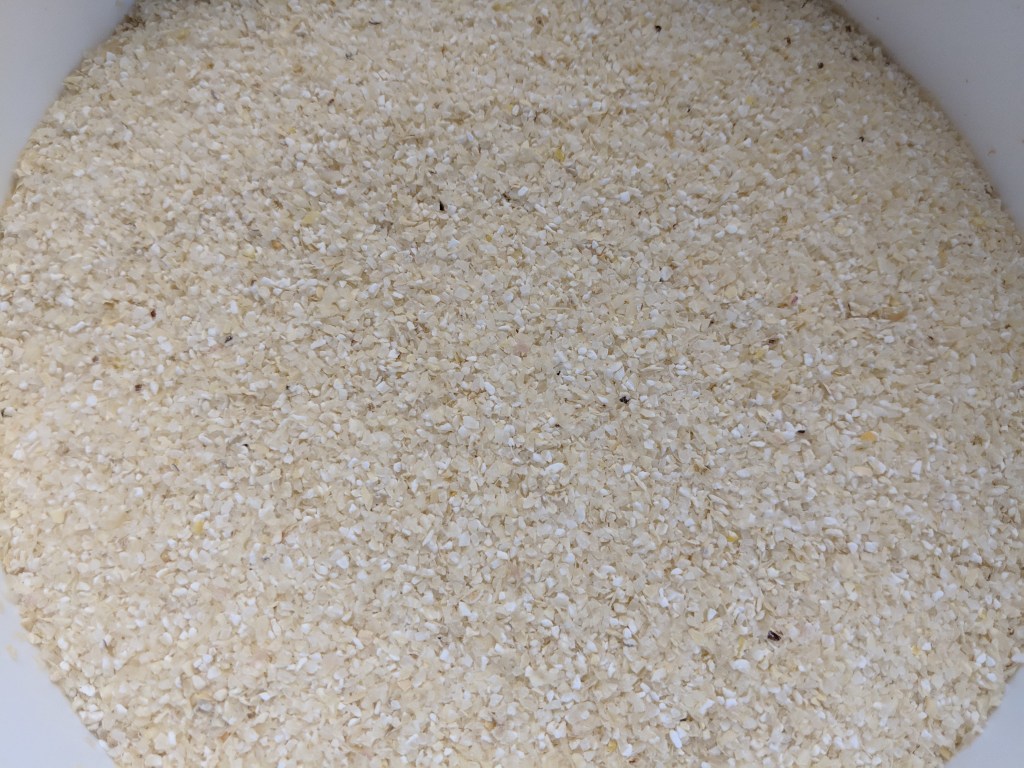
Corn grits, ready to go into the Alta California Lager