St. Arnold Christmas Ale (Homage)

Early in November, I visited the St. Arnold Brewing Company taproom, where I sampled their newly tapped Christmas Ale. True to its reputation, this was a phenomenal beer, and I enjoyed sitting down with the BYO Big Book of Clone Recipes to compare with my perceptions from the actual beer. That evening, I decided my next batch would be a Christmas Ale clone, and I planned out the brew session while sipping the real thing.

The batch brewed here hews pretty closely to the published clone in the malt bill and bittering hops. However, I subbed in Hallertauer for Liberty hops at flameout and used WLP066 (London Fog) instead of Wyeast 1968 or WLP002. WLP066 and WLP002 are very different, but the purported citrus and tropical fruit characters for WLP066 seemed like a good match for a holiday ale. From perspective of convenience, WLP066 is available in dry form and I already had some on-hand, too.

Saint Arnold Christmas Ale (Homage)

  • 6.25 lb. 2-row pale malt (Rahr)
  • 11 oz. Caravienne malt
  • 8 oz. Munich malt (BESTMALZ)
  • 4 oz. Caramunich II malt (Weyermann)
  • 4 oz. Special B malt (Dingemans)
  • 0.25 tsp. BrewTanB, added to mash
  • 0.75 oz. Perle hop pellets (6.3% alpha), 30 minute boil
  • 1 Kick carrageenan tablet, 5 minute boil
  • 0.25 tsp. yeast nutrient (White Labes WLN1000)
  • 1.1 oz. Hallertauer hop pellets (3.0% alpha), 5 minute whirlpool
  • 1 pkg. London Fog ale dry yeast (WLP066)
  • 0.5 oz. BioFine Clear, added to keg

Target Parameters

  • 75 minute infusion mash, 150°, full volume mash
  • 1.066 o.g., 1.011 f.g., 7.3% abv, 24 IBU, 14 SRM
  • Claremont tap water, neutralized with 88% lactic acid to remove bicarbonates.
  • 2.75 gallon batch

Procedure

  • I collected 4.3 gallons of tap water and added 4.4 mL of 88% lactic acid to knock out the carbonates. I heated this water to 156°, added the grains, and then held the mash at 150°, with recirculation, for 75 minutes. I added 2.7 mL of 88% lactic acid, to further adjust mash pH.
  • After 75 minutes, I raised the temperature to 168° for a 10 minute mash out. Finally, I removed the grains and brought the runnings up to a boil.
  • I collected 3.75 gallons of runnings at a gravity of 1.051, for 65% mash efficiency. I boiled the beer for 90 minutes, adding the hops and finings following the recipe. After the full boil, I added the whirlpool hops and recirculated for 5 minutes before chilling the rest of the way.
  • I chilled the beer to 71°, pitched the yeast, and let it ferment at 72°.
  • Starting gravity was 1.072; I brewed this beer on 9 November 2025.
  • Vigorous fermentation had kicked off within 24 hours. I pulled the beer to ambient on 22 November 2025 and kegged it on 23 November 2025.
  • Final gravity was 1.015, for 7.6% abv.
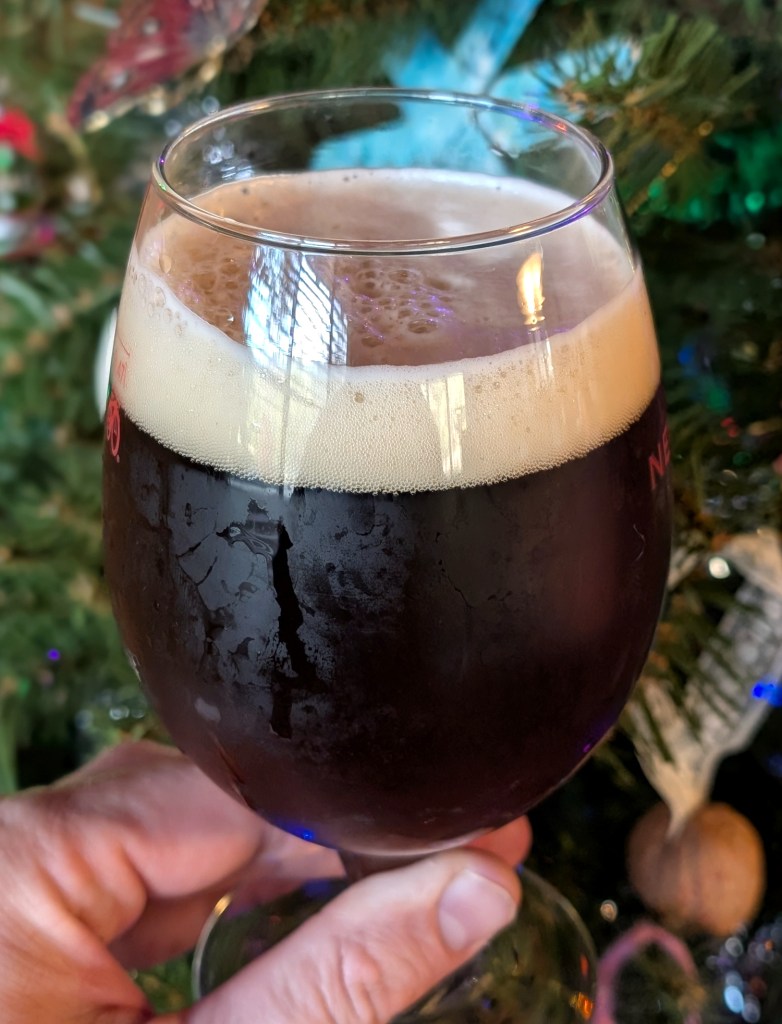
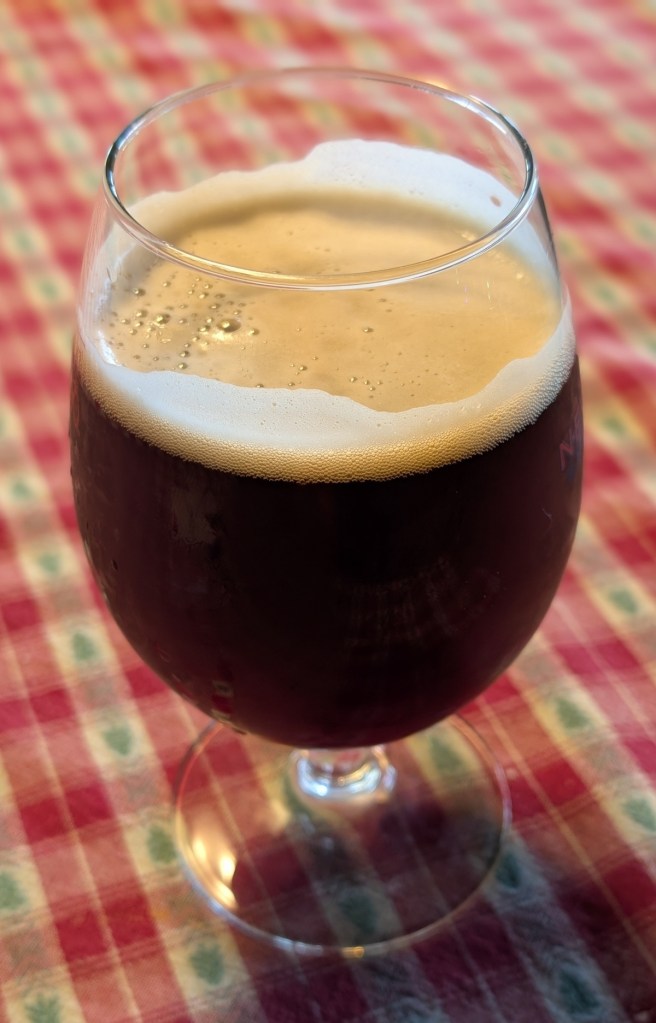
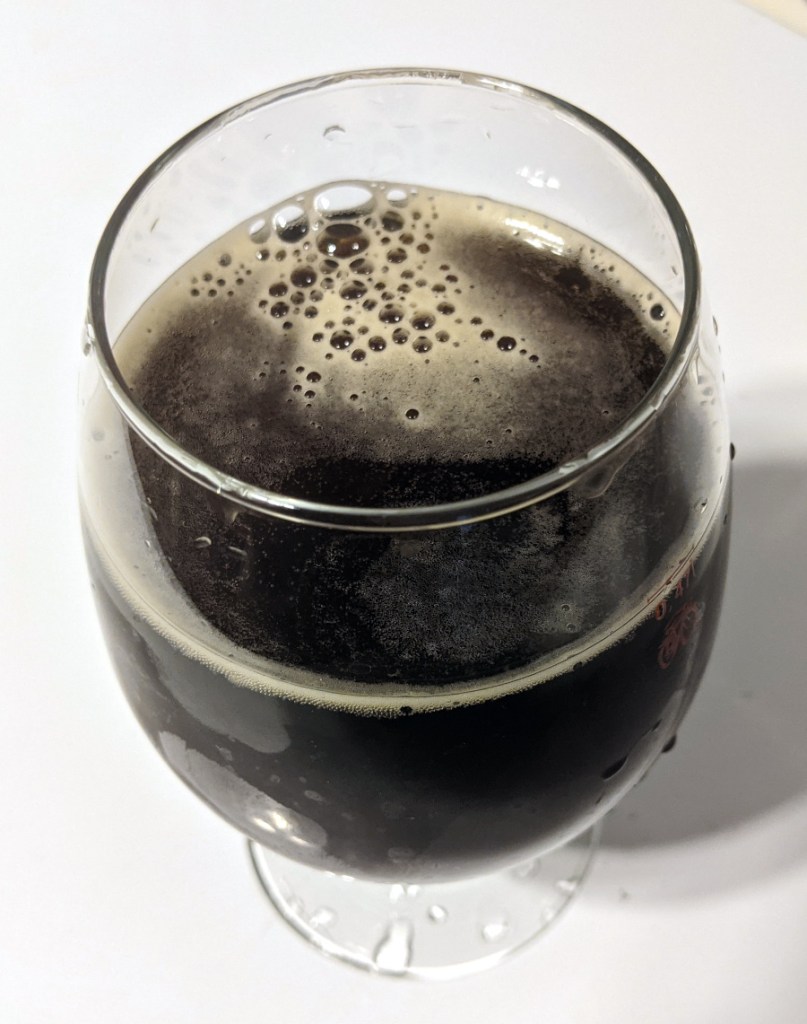
  • As expected, the beer was pretty hazy — WLP066 is used for hazy IPA’s, after all! I added Biofine Clear on 30 November 2025, to fix this. I was rewarded with a wonderfully clear beer, as shown in the picture.
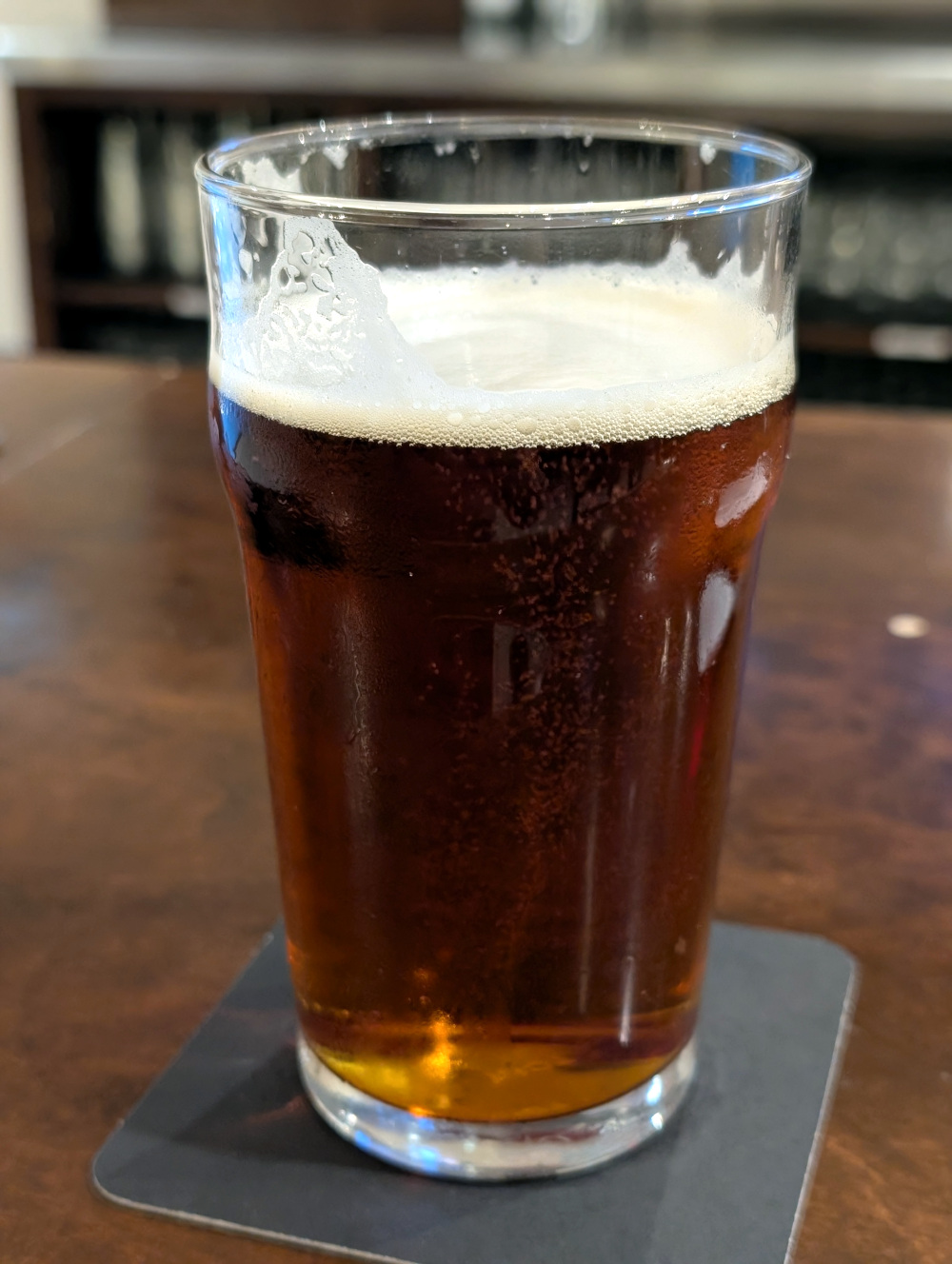
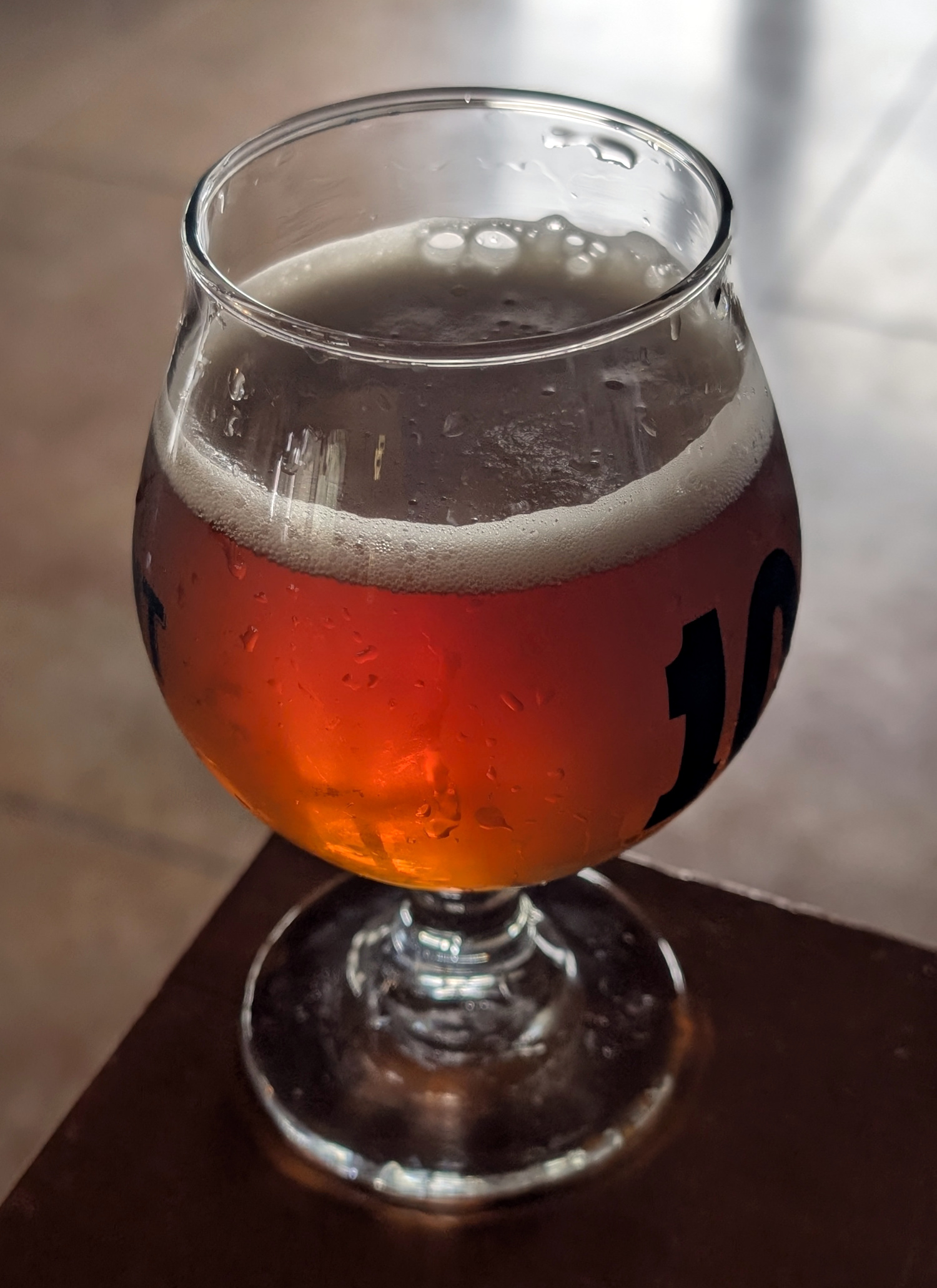
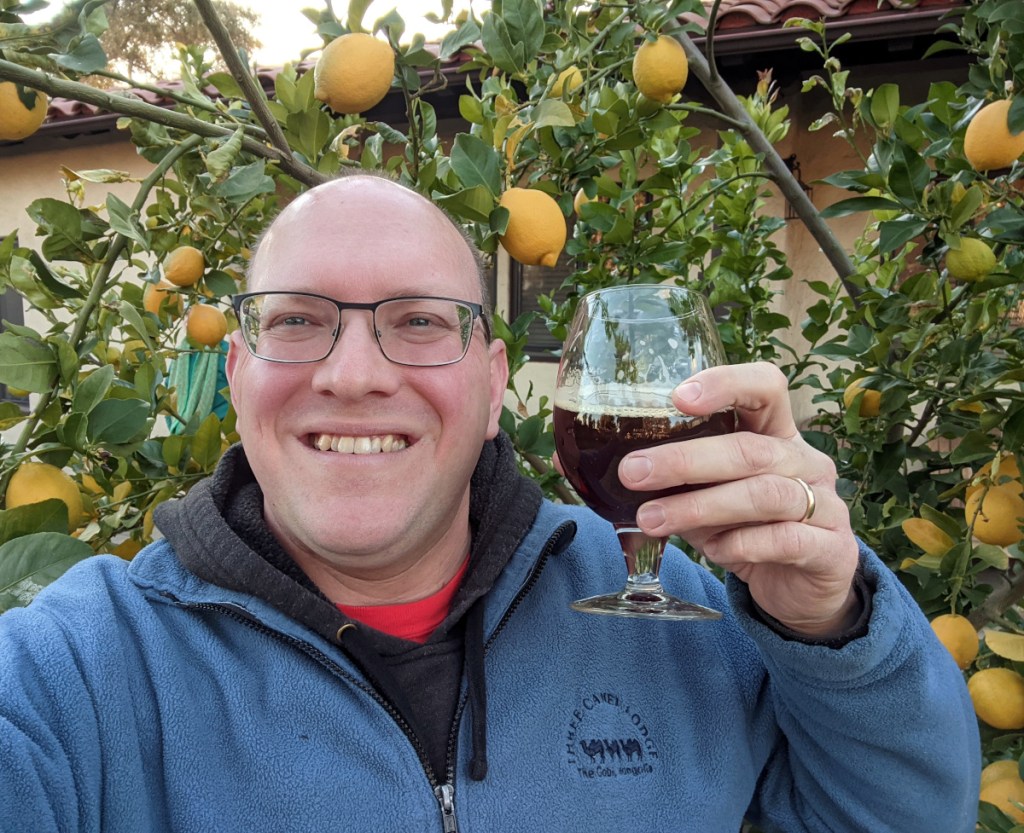
Left: the original St. Arnold’s Christmas Ale, at the brewery; right: my homebrew version

Tasting

  • Appearance
    • This beer pours with a persistent ivory head, and displays a beautifully clear amber orange color in the glass.
  • Aroma
    • Slightly herbal and spicy hop aroma, with a caramel malty aroma at a moderate level.
  • Flavor
    • Medium herbal bitterness in the hopping. Caramel and bready quality to the malt, at a medium-high level. Rich flavor!
  • Mouthfeel
    • This is a full-bodied beer, with a moderate level of carbonation. The finish is relatively smooth.
  • Would I Brew This Again?
    • This is a very drinkable and enjoyable holiday beer–pretty much exactly what I wanted. I don’t know how it stacks up as a clone (given I can’t do a side-by-side-tasting), but in any case the beer itself is super good. The flavors and body add up to a rich and flavorful beer. I also really like the concept of leaning on the base hops and malts to get the suggestion of holiday spices, versus actual spice additives. I’m a fan of this beer!
  • Overall
    • 10/10

Winter in Antwerp 2024

I like to make a holiday beer every once in awhile, for drinking during the Christmas and New Year’s stretch. It’s an opportunity to do a smaller batch of something unusual, which might not warrant a full 5 gallons. This year, I chose a version of a recipe from Gordon Strong’s Modern Homebrew Recipes, called “Winter in Antwerp.” It’s a spiced Belgian ale, roughly in the realm of a dark pale ale (yes, that’s an oxymoron). I made some malt substitutions and also used the Abbaye dry yeast, although the overall “feel” is pretty close.

Winter in Antwerp 2024

  • 4 lb. 2-row brewer’s malt (Great Western)
  • 2 lb. Vienna malt (Weyermann)
  • 0.5 lb. aromatic malt 20L (Briess)
  • 0.5 lb. caramel malt 60L (Briess)
  • 0.5 lb. Caramunich II (Weyermann)
  • 0.5 lb. Munich dark malt (Viking)
  • 0.25 lb. biscuit malt (Dingemans)
  • 2 oz. chocolate malt (Bairds)
  • 2 oz. Special B malt (Dingemans)
  • 0.5 oz. Liberty hop pellets (5.0% alpha), 60 minute boil
  • 1 oz. Liberty hop pellets (5.0% alpha), 10 minute boil
  • 0.5 oz. Liberty hop pellets (5.0% alpha), 5 minute boil
  • 1 vanilla bean, split, scraped, and steeped for 5 minutes after the boil
  • 1 cinnamon stick, steeped for 5 minutes after the boil
  • 1 pkg. Abbaye Belgian ale yeast (Lallemand)

Target Parameters

  • 1.068 s.g., 1.021 f.g., 6.2% abv, 30 IBU, 24 SRM
  • Full volume infusion mash, held at 156° for 60 minutes and 168° for 10 minutes
  • Claremont tap water with Campden tablet, with approximate ppm of 110 Cl, 50 SO4, 40 Ca, 156 HCO3, 12 Mg, 87 Na

Procedure

  • I heated 5 gallons of water (with Campden tablet) to 163°, and then mashed in the grains. I held the mash temperature, with recirculation, at 156° for 60 minutes before raising the temperature to 168° for a 10 minute mashout.
  • Once I pulled the grains, I collected 4.5 gallons of runnings at a gravity of 1.049, for 71% mash efficiency.
  • I brought the runnings to a boil, adding hops and finings per the recipe. After 60 minutes, I turned off the heat and added the spices in a mesh bag. Because the cinnamon was a bit old, I added two sticks (broken up). After a 5 minute steep, I removed the spices and continued the chilling process.
  • I chilled the wort to 78° before transferring to the fermenter. I chilled the rest of the way, down to 68°, in the fermentation chamber. I pitched the yeast at 68°, holding at this temperature for fermentation. Expecting a vigorous fermentation, I used a blow-off tube.
  • Starting gravity was 1.065. I brewed this beer on 17 November 2024.
  • I kegged the beer on 30 November 2024. Final gravity was 1.024, for 5.4% abv.

Tasting

  • Appearance
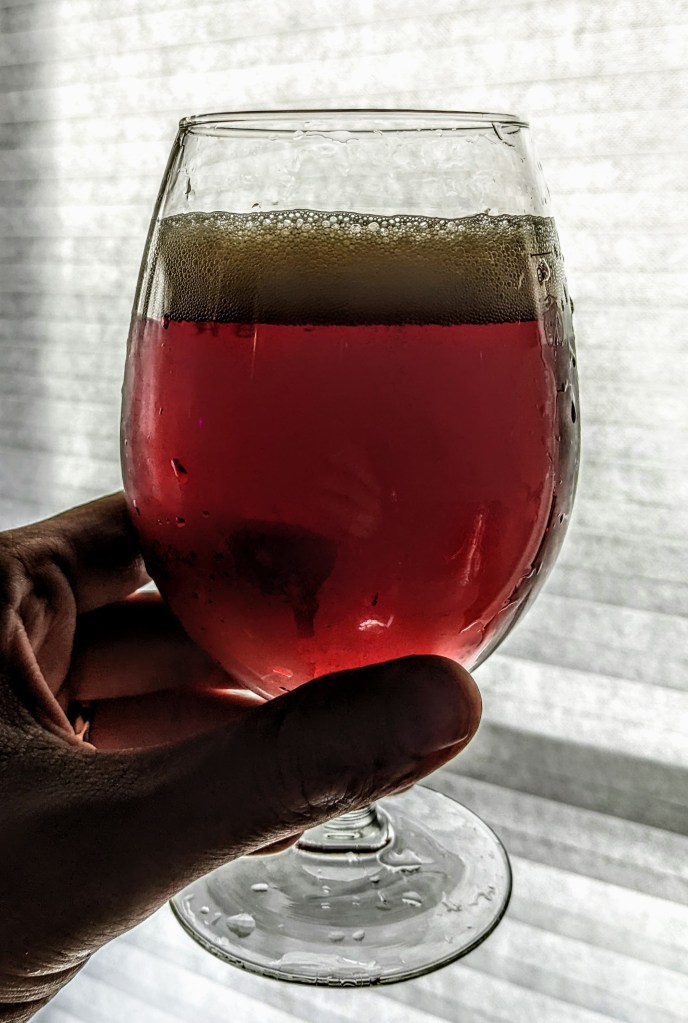
    • Deep reddish amber beer, very clear; pours with a creamy and persistent ivory head. It’s very pretty!
  • Aroma
    • Some dried dark fruit character as the beer warms and a hint of very ripe banana. Rich maltiness, but just a hint. Very faint cinnamon as it warms.
  • Flavor
    • Bread crust malt character, dried dark fruit in the yeast, medium level of bitterness. Less complex than I expected!
  • Mouthfeel
    • Medium body, medium high carbonation, very slightly dry finish.
  • Would I Brew This Again?
    • This is a good beer but nothing special. I was hoping for a bit more spice character, but there isn’t really any. I would probably increase the spicing rate a touch. For a similar beer next time, I would condition longer. It needs more body and malt “oomph”! Given all of the crystal malts, I’m surprised it doesn’t give the impression of more body. Perhaps for this kind of beer, it would benefit from a higher starting gravity or swapping in Munich for the 2-row malt. I would also age it for awhile longer. Another challenge is that I have this beer in my conditioning chamber, at around 35°, so it takes awhile to warm up after pouring. It’s definitely better at warmer temperatures!
  • Overall
    • 6/10

Winter Dream Ale

I often make a special, small-batch beer for Christmas, something that’s rich and high alcohol and perfect for cold (southern California) evenings next to the fire. For the 2021 edition, I threw together a Belgian-style winter warmer. I wanted a rich, sumptuous malt backbone, and to let the fermentation add any spice, rather than using actual species. I used up a few ingredients on-hand, which just happened to be perfect for my vision of the beer.

Winter Dream Ale

  • 8 lb. Vienna malt (Weyermann)
  • 1.25 lb. Munich light malt (Chateau)
  • 11 oz. Special B malt (Dingemans)
  • 4 oz. Crystal 120 malt (Great Western)
  • 0.75 oz. Magnum hop pellets (10.1% alpha), 60 minute boil
  • 1 Whirlfloc tablet, 5 minute boil
  • 1.5 g yeast nutrient (WLN1000, White Labs)
  • 8 oz. honey, add to flameout
  • 2 pkg. Abbay Belgian ale yeast (Lallemand)

Target Parameters

  • 1.086 o.g., 1.018 f.g., 9.2% abv, 22 IBU, 22 SRM
  • Mash held at 150° for 60 minutes, and 10 minute mash-out at 168°, with ~0.75 gallon sparge
  • Claremont tap water

Procedure

  • I heated 4.5 gallons of water to 159°, and added the grains to hit a mash temperature of 150°. I held here (with recirculation) for 60 minutes, before raising the temperature to 168° and holding there for 10 minutes. Then, I removed the grain basket and sparged with 0.75 gallons of hot water.
  • I collected 4.5 gallons of runnings with a gravity of 1.060, for 71% mash efficiency.This was a good efficiency but too high of a volume. So, I boiled for an extra 30 minutes before adding hops.
  • After 30 minutes of boiling, I added the hops, honey, and finings per the recipe, boiling for an addition 60 minutes.
  • Starting gravity was 1.076; this was a bit short of the recipe, but I didn’t worry about it too much.
  • I chilled to 80°, transferred to the fermenter, and let the wort chill overnight before pitching the yeast.
  • I brewed the beer on 12 October 2021, and pitched the yeast on 13 October 2021.
  • I fermented at 65°, and raised the beer to 70° (free rise) on 20 October 2021, to help the yeast ferment out.
  • I kegged the beer on 5 November 2021. Final gravity was 1.020, for 7.5% abv.

Tasting

  • Appearance
    • Deep reddish amber and very clear; there is a persistent and creamy ivory head.
  • Aroma
    • Spicy aroma, with a bit of caramel and dried dark fruit.
  • Flavor
    • Wonderfully rich! There is a caramel and toffee malt character with a bit of dried fruit and sweet candy. A bready malt quality sneaks up behind that. Bitterness is moderate, and the yeast character has a slightly spicy quality. Fermentation quality is really nice, and I dodged any hot alcohol character.
  • Mouthfeel
    • Medium body, with medium-high carbonation and a smooth finish. The body is maybe a little thinner than I had envisioned.
  • Would I brew this again?
    • I am really, really happy with the results in this recipe. It absolutely hit the rich, complex qualities I wanted, and is highly drinkable. The fermentation quality is perfect too! The only minor ding is that starting gravity was a touch low, which decreases the body a little, but I think that worked out okay in the end. I would rather the body be somewhat thin, than the beer be too sweet and cloying.
  • Overall
    • 8/10

Ill-Tempered Gnome Clone

As I am pretty sure I’ve lamented previously, I sometimes get too far down the rabbit-hole of brewing to a particular style. IPA, stout, porter, pilsner…all are great, but that can be at expense of creativity. On the other hand, I grew wary of the big and bitter beers that I gravitated towards early in my craft beer days. And yet…I now find myself picking up a bottle of Arrogant Bastard every few weeks, and kind of enjoying it. The excesses of craft beer recipes are still excessive, but I’m finding that they can be enjoyable in moderation and on occasion.

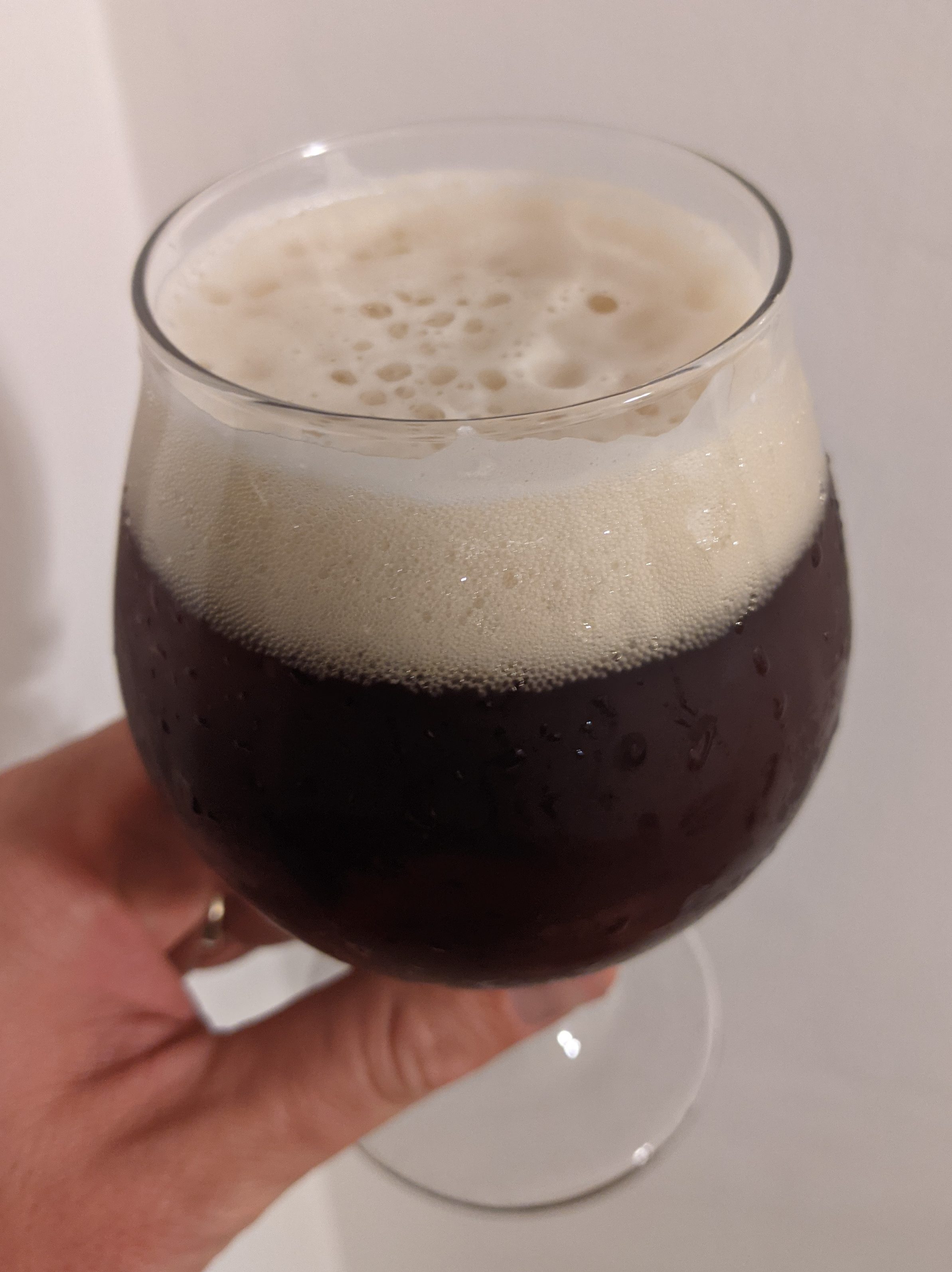
dark brown beer with tan head, held in clear tulip glass against a white wall

To scratch this itch, I paged through the Craft Beer For the Homebrewer book, and my eyes settled upon a clone recipe for something called Ill-Tempered Gnome. Produced by Oakshire Brewing, this recipe looked big, dark, and bitter, and was billed as an American Brown Ale (on the website) or a winter warmer (in the beer book).

Quite intrigued, I pulled together the ingredients, making a minor substitution or two based on availability for some of the harder-to-find malts (e.g., I had to go with a different brand of coffee malt versus Franco-Belges Kiln Coffee Malt in the original recipe). That said, I did try to adhere as closely as possible to the book’s version, which I was told (by Denny Conn himself) came direct from the brewer.

Ill-Tempered Gnome Clone

  • 12 lb. California Select 2-row malt (Great Western)
  • 11 oz. crystal 15° (Great Western)
  • 5 oz. coffee malt (Simpsons)
  • 5 oz. honey malt (Gambrinus)
  • 5 oz. special B malt (Dingemans)
  • 4.5 oz. special roast malt (Briess)
  • 3.5 oz. chocolate malt (Briess)
  • 1 oz. Nugget hop pellets (12.9% alpha), 60 minute boil
  • 0.5 oz. Centennial hop pellets (8.1% alpha), 20 minute boil
  • 0.5 oz. Crystal hop pellets (4.5% alpha), 20 minute boil
  • 1 Whirlfloc tablet, 5 minute boil
  • 1 oz Cascade whole hops (est. 5.5% alpha), 5 minute boil
  • 2 pkg. Safale American ale yeast (US-05)

Target Parameters

  • 1.062 o.g., 1.015 f.g., 6.3% abv, 58 IBU, 19 SRM
  • Full volume mash at 154° for 60 minutes, with 10 minute mash-out at 168°
  • Claremont tap water, adjusted to reach estimated profile of 75 ppm Ca, 11 ppm Mg, 93 ppm Na, 149 ppm sulfate, 105 ppm Cl, 156 ppm bicarbonate; RA 68, 128 ppm alkalinity; 60 ppm effective hardness.

Procedure

  • I heated 7.5 gallons of water to 161°, adding a Campden tablet to remove chloramines. Then, I mashed in with the grains to hit a temperature of 154°. I added 7 mL (1.5 tsp.) of 88% lactic acid to adjust the pH of the mash, and recirculated at 154° for 60 minutes. Then, I raised the mash temperature to 168° and held it there for 10 minutes, before removing the grains.
  • In total, I collected 6.35 gallons of runnings with a gravity of 1.055, for 68% mash efficiency.
  • As I brought the runnings to a boil, I added 5 g of gypsum to adjust the water profile.
  • To bring the gravity up a bit, I boiled for an extra 10 minutes, before beginning to add the hops. I then boiled for an additional 60 minutes, adding hops and kettle finings per the recipe.
  • After the 60 minute boil, I chilled to ~75°, transferred to the fermenter, and chilled down to 65° in the fermentation chamber. Then, I pitched the two packages of yeast.
  • I brewed the beer on 9 October 2021, and fermented at 65°. Starting gravity was 1.061.
  • On 20 October 2021, I let the beer free rise to 70° (after removing it from the fermentation chamber).
  • I kegged the beer on 23 October 2021. At this point, its gravity was 1.017. This equates to 5.9% abv.

Tasting

  • Appearance
    • The beer pours with a thick and frothy ivory head, and awesome lacing as the head subsides slowly. The beer is a brilliantly clear reddish amber in color in a tulip glass, and is a nice even brown in a tall glass.
  • Aroma
    • Resiny hops are at the front, with toffee and coffee malt aroma alongside some caramel. The malt/hop balance is spot-on.
  • Flavor
    • Moderately high bitterness, with a resin and pine quality to the hops, for an extended bitterness in the finish. This beer has a full malt character, with caramel at the front and a slight bit of chocolate at the back. Delicious!
  • Mouthfeel
    • Medium-full body, with moderate carbonation and an off-dry finish.
  • Would I Brew This Again?
    • YES! The resiny hops plus rich malt character are an awesome combo. The beer is straight out of 1997 in terms of its traditional hops and big flavors, but I love it for that. Who knows if my version is a true clone, but do I really care? I love this beer! In particular, it’s not really a winter warmer (in terms of the overspiced recipes so common out there), but definitely closer to an American brown ale. I’ll do this one again.
  • Overall
    • 10/10

Blast from the Past: Gingerbread Winter Warmer 2016

Way, way, way back in the innocent days of September 2016, I brewed a winter warmer. At the time, it was okay, but nothing great. I drank much of it right from the keg, and the rest got bottled. I sampled some back in January 2018, and it was aging nicely. After that, I forgot about the beer for awhile, and only just ran across my stash in the basement while putting away Christmas decorations. Being New Year’s Eve and all, I thought it would be fun to pull out a bottle and give it a taste!

Although I was tempted to review my recipe and brewing notes prior to opening the bottle, I decided to go into the tasting with minimal expectations. I vaguely recalled that there was some ginger in there, but that’s about it. My spouse shared the bottle (it was 22 ounces of beer, and I didn’t need to drink all of it myself!), and we talked over the beer as watched the southern California sunset from our yard.

Tasting

  • Appearance
    • Very clear, deep amber beer, which pours with a moderately persistent cream-colored head.
  • Aroma
    • Raisins, light hint of leather, ginger, dried figs…very rich! No hop aroma noticeable.
  • Flavor
    • Malty, with moderate bitterness. Lots of pleasant notes from aging, including dried figs, raisins, and a touch of spice (ginger). Yeast character was surprisingly clean, with no unpleasant aspects that I was afraid might seep in after a few years.
  • Mouthfeel
    • Big body, very smooth, moderate carbonation.
  • Would I Age This Again?
    • YES. Although I don’t recall this being an exceptional beer four years ago, it sure is something special now. Everything has just come together in a rich, flavorful way, and I can’t think of a better beer to enjoy as we close out 2020. I’ll brew this again soon, to have at least a little aging under its belt before next New Year’s Eve.
  • Overall
    • 10/10
Here’s to cellared beer, and 2021!