
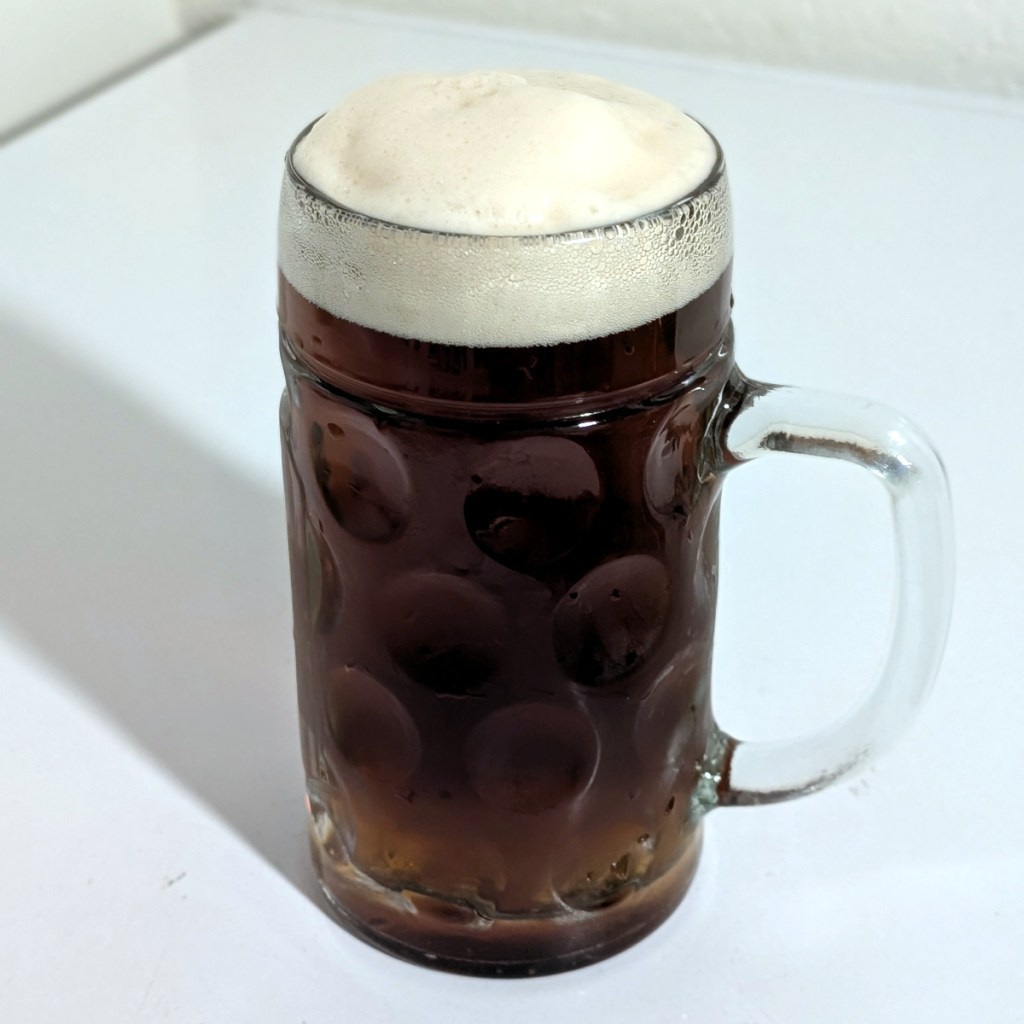
Back in 2021, I made my first kellerbier; it was a great lager for the winter months and was worth rebrewing in one form or another. The 2025 version (consumed in the early days of 2026) is in the same ballpark as the 2021 version, but has a number of minor changes. The base malt percentages are very slightly tweaked, and I subbed in Carared for Mela malt. North Brewer, rather than Magnum, is the core bittering hop. Finally, I focused on whole hops and moved them to the very last 10 minutes of the boil, to amplify hop aroma and flavor.
Recipe Name
- 5 lb. Vienna malt (Weyermann)
- 4.25 lb. pilsner zero malt (Viking)
- 1 lb 2 oz. Barke Munich malt (Weyermann)
- 4 oz. Carared malt (Weyermann)
- 2 oz. Carafa Special II malt (Weyermann)
- 0.5 tsp. BrewTanB, added to mash
- 1 oz. Northern Brewer hop pellets (6.1% alpha), 60 minute boil
- 1.1 oz. Hallertauer whole hops (est. 3.0% alpha, South Dakota origin), 10 minute boil
- 0.5 tsp. BrewTanB, 10 minute boil
- 1 Kick Carrageenan tablet
- 1.1 oz. Hallertauer whole hops (est. 3.0% alpha, South Dakota origin), 5 minute boil
- 2 pkg. Diamond lager yeast (Lallemand)
Target Parameters
- 1.049 o.g., 1.007 f.g., 5.5% abv, 29 IBU, 10 SRM
- Full volume step mash with recirculation, held at 142° for 40 minutes, 156° for 40 minutes, and 10 minute mash-out at 168°
- Claremont tap water
Procedure
- Starting with 7.4 gallons of tap water, I added a Campden tablet and heated the water to 147°. Next, I mashed in with the grains and 3.7 mL of 88% lactic acid to adjust pH. I held the mash at 142° for 40 minutes before raising it to 156° for another 40 minutes. Finally, I mashed out at 168° for 10 minutes before removing the grains.
- In total, I collected 6.5 gallons of runnings at a gravity of 1.044, for 71% mash efficiency.
- After bringing the runnings to a boil, I added the hops and finings per the recipe, across 60 minutes of boiling time.
- I chilled the wort to 67°, transferred to the fermenter, pitched the yeast, and then chilled down to 52° in the fermentation chamber.
- I brewed this beer on 22 November 2025. It had a starting gravity of 1.052.
- The beer fermented at 54° until 1 December 2025, when I moved the fermenter to ambient (~60°).
- I kegged the beer on 23 December 2025. Final gravity was 1.016, with an abv of 4.7%.
Tasting
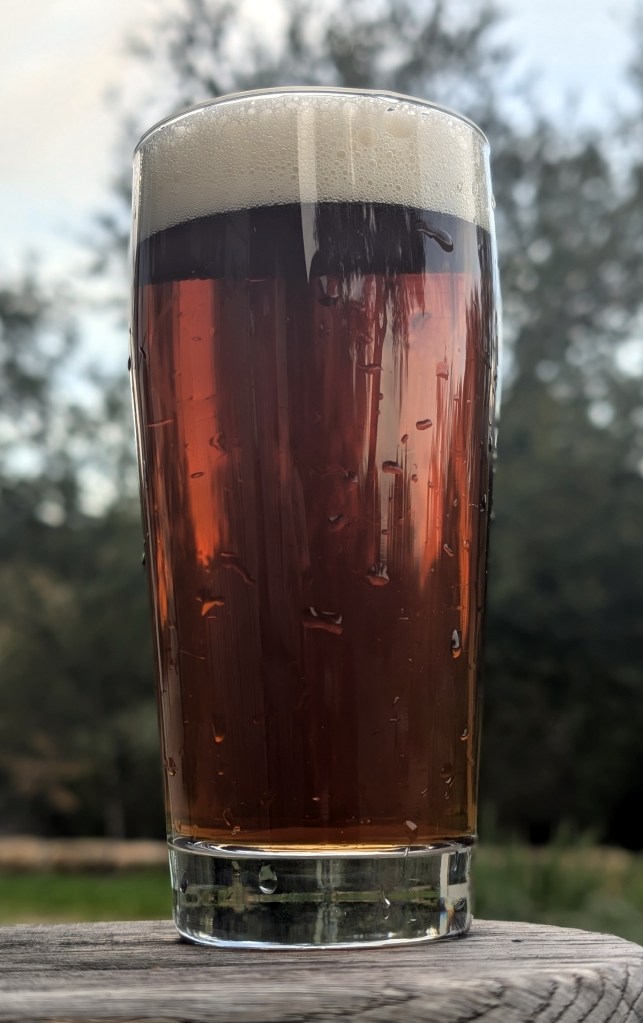
- Appearance
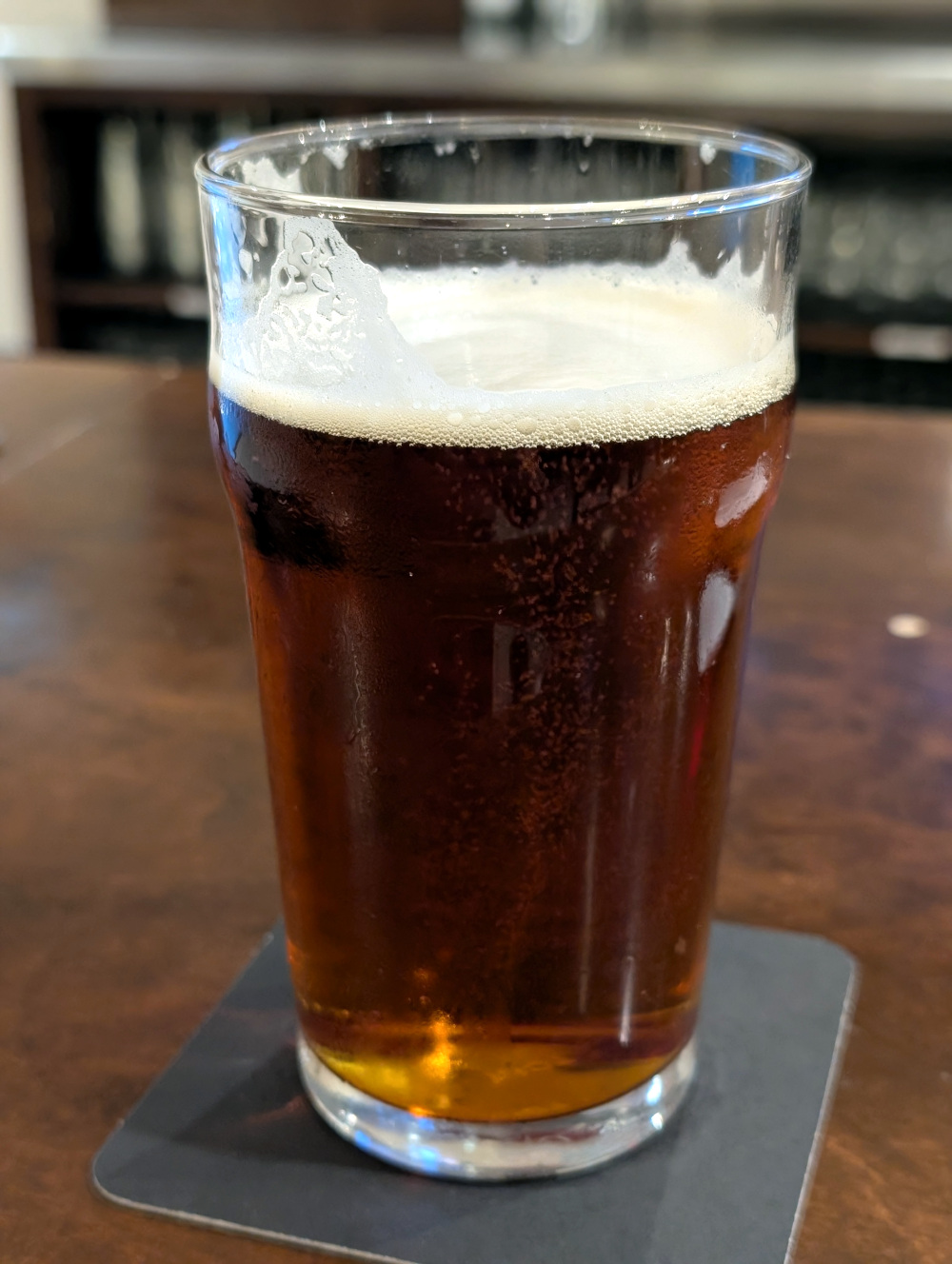
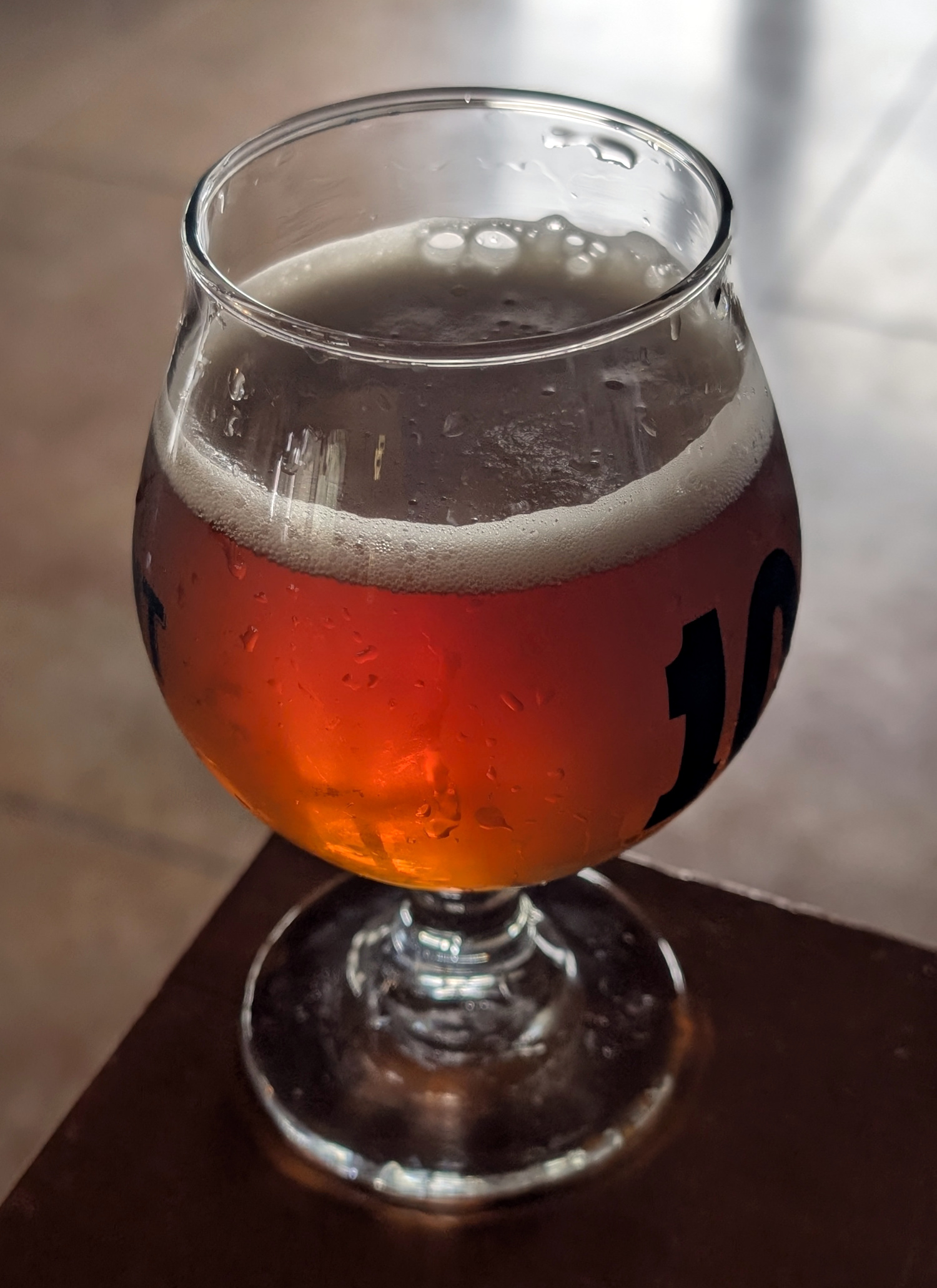
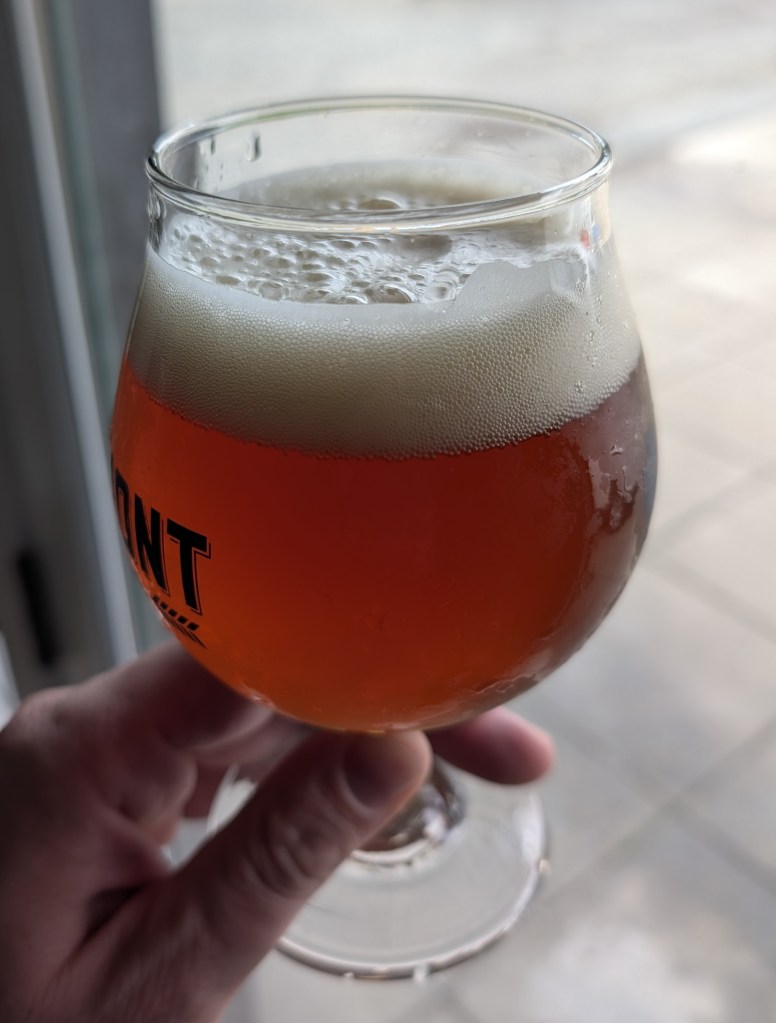
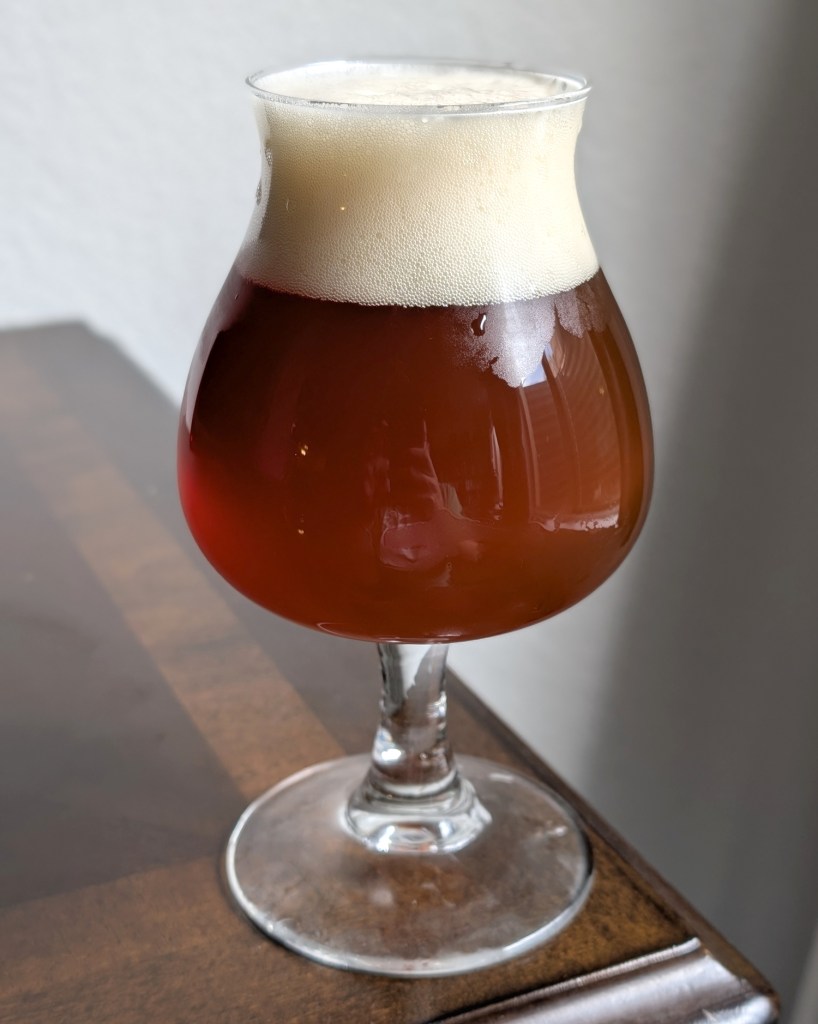
- Brilliantly clear, light copper beer, with a creamy and persistent ivory head
- Aroma
- Rich bread crust aroma at a medium level, with medium-low spicy hop note. Clean fermentation character.
- Flavor
- Malty rich flavor, with notes of bread and dark bread crust. Medium-high bitterness, with a slightly herbal hop character. Clean fermentation character.
- Mouthfeel
- Medium carbonation, medium body, off-dry finish.
- Would I Brew This Again?
- This is an enjoyable beer! I have no major comments or adjustments to suggest. If I make this again, I might go with a more characterful yeast; perhaps White Labs’ Munich Lager or something similar.
- Overall
- 8/10
 Andy's Brewing Blog