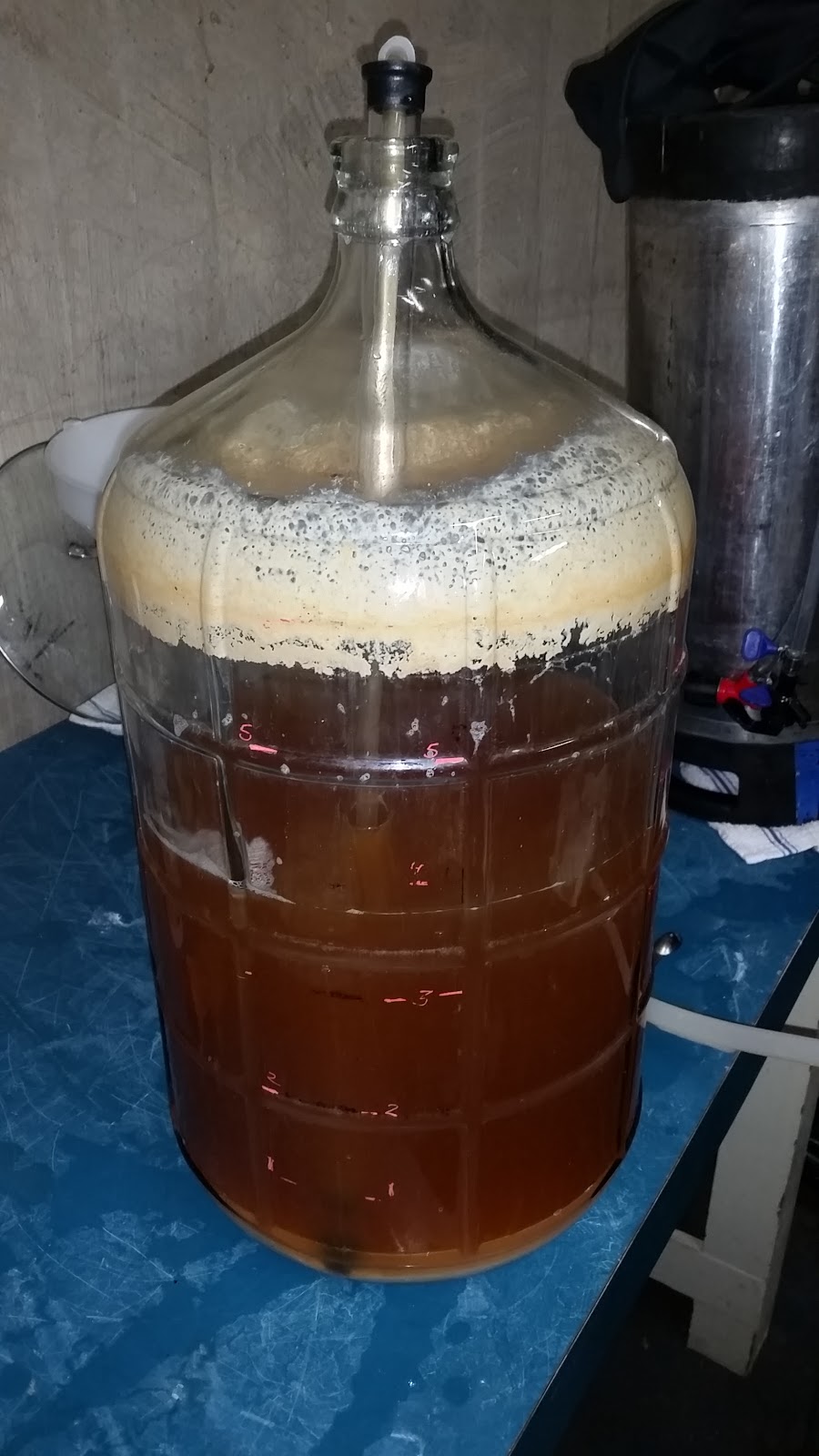
Otter-Squatch Wheat Ale

A light wheat ale is an American homebrew classic, but it has been awhile since I last made this style. I threw together a simple recipe, which is upside-down from my usual blend of 60/40 wheat/2-row. There was no particular reason for this, other than it just seemed like the thing to do. I had a hop variety on-hand called Sasquatch, and decided to use those up here. My preference on American wheat ales is a little fruity/citrusy yeast character, rather than super clean or super phenolic. Lutra kveik seemed like a perfect yeast choice along those lines; clean-ish, but not overly clean, and potential for some interesting flavors. “Lutra” is also the scientific name for a genus of otters; along with Sasquatch hops, I ended up calling this batch “Otter-Squatch Wheat Ale.”
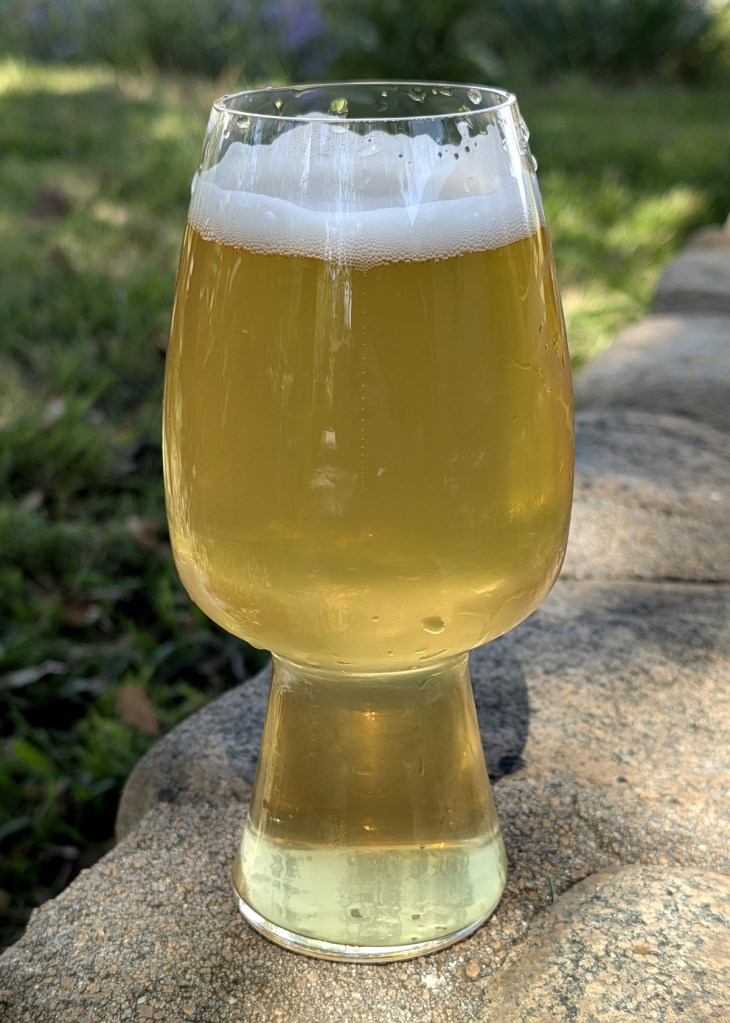
Otter-Squatch Wheat Ale

  • 6 lb. 2-row malt (Great Western)
  • 4 lb. white wheat malt (Briess)
  • 4 oz. rice hulls
  • 0.5 tsp. BrewTanB, added to mash
  • 1 oz. Sasquatch hop pellets (7.5% alpha), 20 minute boil
  • 0.5 tsp. BrewTanB, 10 minute boil
  • 1 oz. Sasquatch hop pellets (7.5% alpha), 5 minute boil
  • 1 pkg. Lutra kveik (Omega OYL-071), dry

Target Parameters

  • 1.046 s.g., 1.009 f.g., 23 IBU, 4 SRM, 4.9% abv
  • Full volume mash, 60 minute mash at 152°, 10 minute mash-out at 168°
  • RO water with added minerals to hit target of 78 ppm Ca, 86 ppm SO4, 74 ppm Cl, -55 ppm RA

Procedure

  • I started with 7.3 gallons of RO water, adding 4.25 g of calcium chloride and 4.25 g of gypsum to hit my target water profile. Then, I heated the water to 157° before adding the grains, to hit a mash temperature of 152°.
  • I held the mash with recirculation at 152° for 60 minutes, before raising the mash to 168° for 10 minutes.
  • At the end of the mash, I removed the grains and heated to a boil. In total, I collected 6.6 gallons of runnings with a gravity of 1.039, for 69% mash efficiency.
  • I heated the runnings to a boil, boiling for 60 minutes and adding hops per the recipe. After 60 minutes, I turned off the heat and chilled 85° before transferring the beer to the fermenter and pitching the yeast.
  • Starting gravity was 1.044, and I brewed the beer on 28 February 2025. I fermented the beer at room temperature ambient, between 60 and 65°.
  • I kegged the beer on 24 March 2025. Final gravity was 1.009, for 4.6% abv. I added 3.25 oz. of corn sugar to get some natural carbonation and scrub any oxygen from the transfer process. At the time of kegging, the beer had a very mild flavor and was quite drinkable! I finished up things with a bit of force carbonation, after the beer sat for a few weeks.

Tasting

  • Appearance
    • Lightly hazy, light yellow beer, which pours with a creamy and long-lasting white head.
  • Aroma
    • Doughy and tart, lemony aroma, at a moderate level of each.
  • Flavor
    • Moderate doughy malt character, light tartness to yeast and a very slight phenolic note (peppery, perhaps?). The latter is almost imperceptible; I can’t quite describe it. Medium-low bitterness.
  • Mouthfeel
    • Light bodied, moderately high carbonation, slightly dry finish. Crisp!
  • Would I Brew This Again?
    • This is a tasty beer! It defies styles a little bit; it’s probably closest to an American wheat ale, but not quite on target. It’s very drinkable! The kveik flavors probably aren’t for everyone, but work well in this particular batch.
  • Overall
    • 9/10

Beer Tasting: 2016 Orange Summer Wheat Ale

I am many weeks past kicking the keg of my latest orange wheat beer, but fortunately I did a tasting for posterity–on the very last pour for the batch. This recipe has earned its place in my regular rotation!

  • The Basics
    • Original gravity = 1.043; final gravity = 1.010; abv = 4.3%; estimated IBU = 22.
  • Aroma
    • Light orange blossom aroma, absolutely delightful!
  • Appearance
    • There is a moderate haze in the medium-yellow beer. The head is white, medium-fine and of moderate size and decent retention.
  • Flavor
    • The flavor is primarily a low-level of bready maltiness, with a low bitterness and a gentle orange flavor on the finish.
  • Mouthfeel
    • The beer has a light body and moderate carbonation. The finish has a gentle bitterness, but nothing too overpowering.
  • Overall
    • This is a darned fine beer; it hits pretty much every note I was looking for. I am particularly pleased with how the orange came through; just the right amount, without being too far in the background or too much in the front.
  • Overall score: 9.5/10

orange_wheat

2016 Orange Summer Wheat Ale

One of the better brews during the “early” stage of my homebrewing career was an orange wheat ale. Inspired by Hangar 24’s offering, my overall recollection is that I got some nice orange flavor into the mix. I would like to make this again, but with the massive changes in my brewing techniques (particularly the switch to all-grain), I needed a nearly complete reformulation. I’m also adjusting the recipe for the hops I have on-hand.

It’s still a fairly simple recipe, and one that I hope turns out well. My other experimental change this time is to modify the way I handle the oranges. In the previous batches, the whole oranges (crushed) went into the fermenter along with the zest. For this iteration of the recipe, I’m going to soak the zest in vodka and add it at kegging.

2016 Orange Summer Wheat Ale

  • 5.75 lbs. white wheat malt
  • 2.5 lbs. 2-row malt (Great Western Malting Co.)
  • 0.5 lbs. 10° L crystal malt
  • 0.25 lbs. rice hulls
  • 1.25 oz. Mt. Hood hops pellets (5.75% alpha, 30 minute boil)
  • 1 pkg. American Hefeweizen Ale yeast (White Labs WLP320), prepared in 1.25 L starter
  • Zest of 3 medium to large oranges (1 navel, 2 Valencia), steeped in a few ounces of vodka
Procedure
  • The day before brewing, I made a starter of 1.25L water and 125 g of light DME. I added the yeast culture, and let it run for around 20 hours.
  • I mashed in with 3.6 gallons of water at 164.5°, to hit a mash temperature of 152°. The temperature was down to 149.5° after 40 minutes.
  • After 60 minutes, I added 1.25 gallons of water at 185°, which raised the mash temperature to 154°. I let it sit for 10 minutes, vorlaufed, and collected the first runnings. Then, I added 3.75 gallons of water at 190°, and a little ice to cool the mash down, and got a temperature of 165°. I let it sit for 10 minutes, vorlaufed, and collected the rest of the runnings.
  • All told, I collected 6.9 gallons of wort with a gravity of 1.036. This equates to 74% mash efficiency.
  • I started the boil, and added the hops after 30 minutes. After 60 minutes total, I turned off the heat and chilled the beer to 72°. I pitched the yeast and sealed the fermenter.
  • Starting gravity was 1.043, with 5.5 gallons into the fermenter. Fermentation had taken off within 12 hours. Because my fermentation chamber was currently on hold for lagering, I am fermenting this beer at ambient temperature. This means the brew is about 68°, give or take a degree.
  • I brewed this up on Monday, February 9.