I set a goal to brew more with kveik, and did get two batches in with this family of yeast cultures, both IPAs. They turned out OK, but not great. I’ll probably play around more with kveik in the future, but I feel that the trend has perhaps run its course for my brewing tastes and needs.
Final Score: 5/10
Pilsner.
I set out to perfect a German pils, and came close. I’ve figured out my general grain bill and bitterness regimes, and now it’s just a matter of continued iteration. The Pilsnerpeton batch is perhaps the best from 2020/2021, and Farke’s Best Pils also came out pretty great. I just need a little more practice, and I’ll get there.
Final Score: 7/10
Big Beers in Small Batches.
I’m feeling really great about this one. I ended up with three small-batch beers higher than 7% abv, including the excellent Winter Dream Ale. Although I could have brewed more of these, I am actually pretty satisfied with where I landed on this goal. Each of the beers turned out fairly well, and it was about the perfect quantity for what I had energy to drink (or share).
Final Score: 8/10
Belgian Beers.
I didn’t do great on this one, probably because I got distracted by other brewing projects. Alongside the aforementioned Winter Dream Ale, I fermented three other beers with Belgian yeast. Two of these were old favorites (Raspberry Belgian and Pannotia White IPA), and another was a big quad for a homebrew club barrel project. So…I really have work to do here next year. Maybe a patersbier for Lent?
Final Score: 4/10
Overall Assessment of 2021: 6/10 for brewing goals — not great, but not awful. I still had fun, though!
This was a big year for my brewing, even if I had busy stretches with minimal time. As I enter the last few minutes of 2021, here are my thoughts looking back…
Favorite Batch
This was a tough one to pick! I had a decent number of beers I really liked, and so I chose the following two as my favorite batches:
Ill-Tempered Gnome. I don’t make American brown ales very often, but this one was just awesome. The hop character is particularly memorable, and I definitely want to make it again sometime.
Alstadt Altbier. I feel like I perfected my altbier game on this latest version of the recipe. Again, a very memorable beer!
Least Favorite Batch
Mow the Damn Lawn, Farke. I have done this one before and really enjoyed it, but the batch this year had some issues–specifically, a serious acetaldehyde problem. It cleared over time, but the batch never advanced much beyond “drinkable.”
Experimental Recipe with Most Potential
Winter Dream Ale. High-alcohol beers are not the sort of thing I do all the time, but this particular recipe was really enjoyable in the Christmas to New Year’s stretch. It had a nice mix of flavor and body, making an interesting beer without addition of spices or strange adjuncts.
Most Fun New Style/Recipe to Try
I had fun putting together an amber kellerbier, in Dimorphos Kellerbier. I really freestyled it in the recipe, and achieved a tasty result.
Upcoming Beer With Most Potential
I have another Pliny the Elder clone fermenting right now, and I’m crossing my fingers that it turns out well!
Best Technique Added to Repertoire
I’ve been using a Hochkurz mash semi-regularly, and like the results in terms of extract yield as well as fermentability and flavor.
Best Ingredient Added to Repertoire
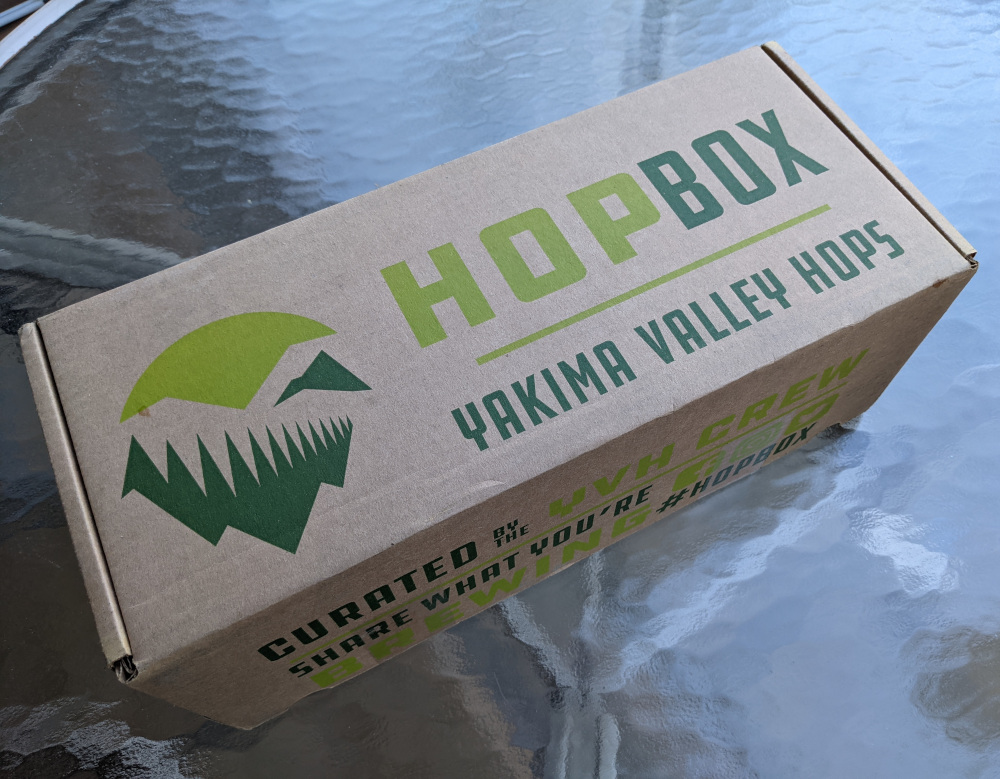
The HOPBOX was a lot of fun to play with, and gave me a nice IPA as a result. I’ll be enjoying the next iterations as they arrive this year.
Favorite Book(s)
For Christmas, I received a copy of Dark Lagers: History, Mystery, Brewing Techniques, Recipes (by Thomas Kraus-Weyermann and Horst Dornbusch)…it has been a fun one to browse! The historical information is interesting, the recipes seem solid, and the food recipes are also something I’ll look forward to trying.
Other Milestones
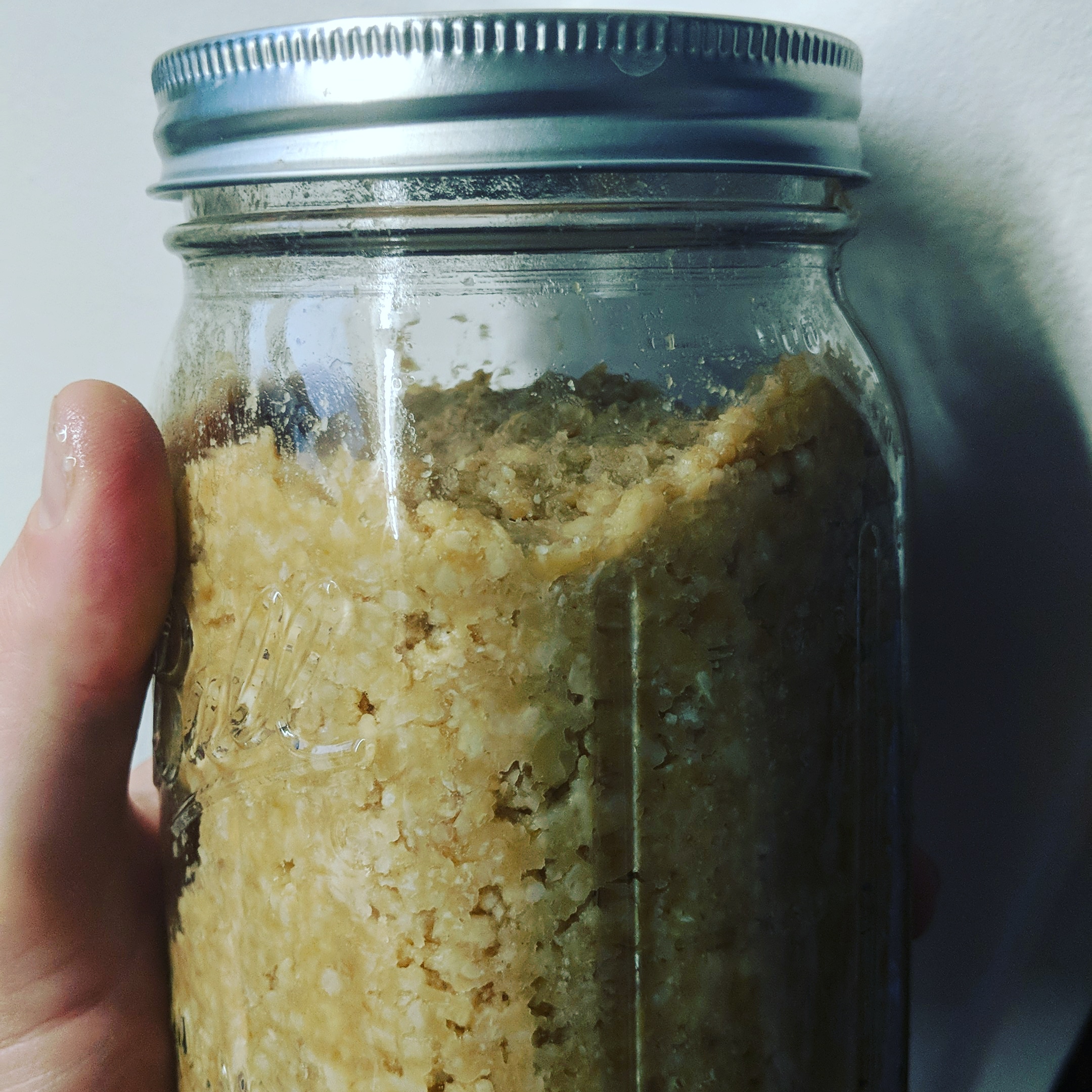
I had some fun with other fermentables this year, including creation of miso paste as well as injera bread. I’ve continued with sauerkraut and homemade mustard, all of which are fantastic accompaniments for beer and sausage.
Overall Stats
I brewed 31 batches of beer this past year, totalling around 150 gallons of beer produced.
No particular beer style dominated 2021, although I had three batches of German pils and two batches of American IPA as the most frequently brewed styles. Expanding into IPAs as a general category, I brewed seven recipes in the IPA world (including American, English, white, and double IPAs).
New Year, New Beer! I did fairly well in hitting most of my 2020 brewing resolutions, and I pushed my homebrew experience in some enjoyable new directions. This year is primarily about refinement–taking things I’ve done already, and working to perfect them or explore them in more detail.
Kveik.
I want to brew more with kveik. I had lots of fun exploring Hornindal from Omega, and will try out a few others this year, especially as the summer months hit. I’m particularly intrigued by Lutra and the concept of pseudo-lagers.
Pilsner.
I want to perfect my German pils recipes, especially with the local water. I’m feeling pretty good about the basics, but need to dial things down a bit in terms of bitterness and amp up the aroma and flavor aspects of hop character.
Big Beers in Small Batches.
I sometimes like sampling bigger beers, but I almost never want five gallons of them. As a result, I’ve done little brewing of many higher gravity styles, or more unusual styles. I aim to change this in 2021, with more 2.5 gallon batches. I’ve started a bit of this already (as mentioned in the December 2020 brew update)
Belgian Beers.
I like many Belgian beer styles, but I don’t love most of them enough to brew five gallons. As a corollary to the above resolution, I’m going to do some smaller batches of Belgian styles to explore that universe.
At the beginning of the past few years, I’ve set annual brewing goals. Now that we’re almost to the end of 2020, it seems like a good time to review my resolutions and see how it all went.
Recognizing that I often rushed my lagers into service quicker than is optimal, I planned my production so that each batch got a more extended lagering time. I did pretty well on this one. Most of my lagers got at least a month of cold conditioning before getting tapped, and in some cases even 5 or 6 weeks. I often felt another week or two of lagering might have been helpful, although the beers inevitably hit their full stride not long after going on tap. So, I count this one as a decent success.
I did pretty well here, also, with varieties like Crystal, Mt. Hood, Sterling, and others figuring prominently in my lagers and German ales (like the altbier depicted at right). Another succcess!
Final Score: 10/10
Prose.
At the start of 2020, I thought it might be fun to write another magazine article, or something similar. Then 2020 happened, and this one just had to go by the wayside. I got some good blogging in, but that’s about it.
Final Score: 2/10
Prost!
I had hoped to keep brewing fun…and, it really was. Even with everything else happening, brewing was a bright spot in my year. I couldn’t get together with friends in the same way, but I was able to arrange some socially distanced growler swaps for later enjoyment, and I got some good time in the early mornings while starting up brew sessions.
2020 was…2020. With everything that happened, from the pandemic to presidential shenanigans, this was one of the odder brewing stretches I’ve had. My homebrewing hobby was a bit of a respite from 2020, giving me a chance to disconnect and relax. Almost as importantly, homebrewing meant I had a steady supply of fresh beer even when the store shelves were bare, or when I really didn’t want to run more errands than necessary!
Here are some of this year’s highlights:
Tremonia Lager
Favorite Batch
It was hard to pick just one favorite, but Tremonia Lager stands out. The perfect level of maltiness in my version made it incredibly enjoyable, and it was ridiculously drinkable at just shy of 5% abv. More, please! In fact, I have another batch lagering right now.
Least Favorite Batch
Nothing was a complete dumper (in sharp contrast with the dumper year of 2020), although I found that the Kveik Pale Ale was the most disappointing batch. I blame my hopping strategy, not the yeast.
Experimental Recipe with Most Potential
Kveik the Keg Brown Ale was lots of fun, and turned out surprisingly well. If I have Hornindal Kveik on hand in the future, I’ll likely do more in this flavor space.
Most Fun New Style/Recipe to Try
“Favorite Batch” Tremonia Lager also wins this category! It was a new-to-me style (Dortmunder Export, a.k.a., German Helles Exportbier), and I had a lot of fun figuring out the recipe.
Upcoming Beer With Most Potential
I’ve got a few beers in the fermenter or keg that are still waiting to be put on tap, including a German pils, that rebrew of Tremonia Lager, a Scottish-esque ale, and a double IPA (clone of Avery Brewing’s Maharaja IPA). They’re all full of promise, but the one I’m most excited for is “Off the Rails Belgian IPA”. It’s currently in its second week of fermentation, as an attempt at a clone of Houblon Chouffe. It’s a pretty high octane beer, well on target to hit around 10% abv. The batch is going to condition for awhile before being ready to serve, probably a month or two at least. I imagine that this is going to be a beer that I’ll finish fairly slowly, and may not even put it on tap at the main keezer, but will just pull off a glass now and then using a picnic tap.
Best Technique Added to Repertoire
A few months ago, I transitioned to electric brewing, which has enabled mash recirculation as well as easier step mashing. I’m still on the learning curve, but the curve is starting to flatten out a bit. The brew day rhythm is locking into place, and I’ve steadily gotten more efficient with each batch.
Best Ingredient Added to Repertoire
As mentioned above, kveik was a fun yeast space to play around in. I made three batches with it–a pale ale, a brown ale, and my holiday ale. It really does live up to the hype of fermenting cleanly and quickly.
I’ switched entirely to stainless steel fermenters, after years of glass carboy use. Safety was a big concern, as well as ease of cleaning.
I had a lot of fun in the fermented foods realm, playing with some sauerkraut and other lacto-based items.
On the commercial beverage side, I’ve been sampling a variety of non-alcoholic options. They’re not a complete substitute for alcoholic beverages, but are a bit more interesting flavor-wise.
Overall Stats
I brewed 34 batches of beer this year, with around 160 gallons into kegs.
German Pils was my most frequently brewed style, with four batches. American pale ale followed, with three batches. American IPA, Dortmunder Export, Irish stout, and kölsch-style beers had two batches each. Lagers as a group comprised slightly more than a third of my overall brewing this year.
Overall beer strength was pretty middle-of-the-road, with a target starting gravity averaging 1.053 (median=1.048). My highest starting gravity was 1.105, for my homebrew club’s imperial stout barrel project. The lowest starting gravity was 1.031, for the Berliner Weisse.