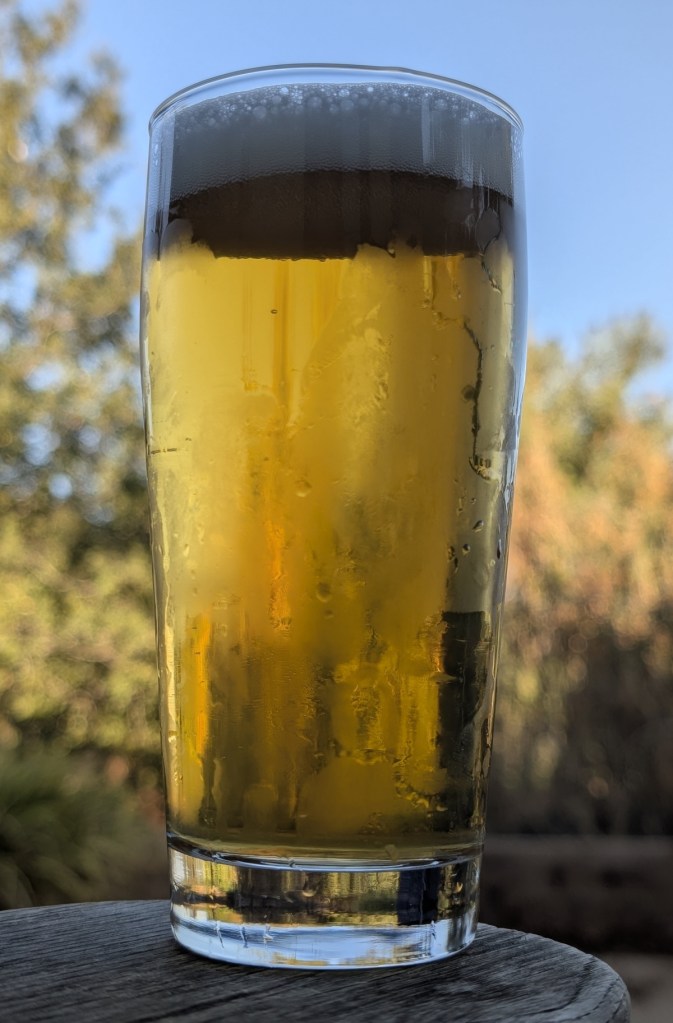
Munich Helles BYO Edition

As a delicate yet flavorful lager, Munich helles has a reputation as a style that is difficult to brew well. My previous three versions have all been pretty decent, and after a few years’ hiatus I wanted to give the style another try. A recipe from the May-June 2018 BYO magazine presented a different take from my previous batches, and was worth an attempt in order to explore my taste preferences. The main difference is that it cut out Munich malt, leaning on pilsner malt with just a touch of character malt to accent things. I modified the BYO version slightly, taking out acidulated malt and using lactic acid instead, replaced Tradition hops with Perle, and moved all late addition hops to the 5 minute mark at the end of the boil. The latter was because I wanted to emphasize aroma and not boil off the volatiles. I also reduced the calculated bitterness a touch (20 IBU vs. 17 IBU). For yeast, I had two packets of White Labs’ dry Munich Lager (WLP860); I had picked them up at White Labs last year, and this was a perfect chance to use them.

Recipe Name

  • 9 lb. Viking Pilsner Zero malt
  • 5 oz. Carahell malt (Weyermann)
  • 3 oz. Carafoam malt (Weyermann)
  • 0.5 tsp. BrewTanB, added to mash
  • 0.65 oz. Perle hop pellets (6.3% alpha), 60 minute boil
  • 0.5 tsp. BrewTanB, 10 minute boil
  • 1 Whirlfloc tablet, 5 minute boil
  • 1 oz. Hallertauer Mittelfrueh hop pellets (2.5% alpha), 5 minute boil
  • 2 pkg. Munich Lager WLP830 dry yeast (White Labs)
  • 1 pkg. Diamond Lager dry yeast (Lallemand)
  • 1 oz. Biofine Clear, added to keg

Target Parameters

  • Infusion mash, 45 minutes at 144°, 45 minutes at 160°, 10 minutes at 168°, full volume mash
  • 1.045 o.g., 1.008 f.g., 4.9% abv, 17 IBU, 4 SRM
  • Water built from scratch with RO water, to hit 55 ppm Ca, 61 ppm SO4, 53 ppm Cl, RA=-39

Procedure

  • I built my water up from scratch, starting with 7.25 gallons of RO water, to which I added 3 g of calcium chloride and 3 g of gypsum. I heated this to 148°, before adding the BrewTanB, grains, and 0.2 mL of 88% lactic acid.
  • I held the mash at 144° for 45 minutes, with recirculation, before increasing the temperature to 160° and holding it there for another 45 minutes. Finally, I had a 10 minute mash-out at 168°, before pulling the grains.
  • In total, I had 6.5 gallons of runnings with a gravity of 1.039, for 71% mash efficiency.
  • I brought the runnings to a boil, adding hops and finings per the recipe. After a 60 minute boil, I turned off the heat and then chilled to 75° before transferring to the fermenter. I chilled the wort the rest of the way down to 48° before pitching the yeast.
  • I brewed the beer on 19 June 2025. Starting gravity was 1.039 – right on the numbers!
  • Fermentation was held at 50°. There was no sign of fermentation, neither krausen nor bubbles in the airlock, by 21 June 2025. So, I pitched a packet of Diamond Lager yeast just to be safe. Later reading shows this strain tends to be a slow starter and quiet fermenter, so I perhaps was a bit too hasty. Next time, I might take a sample and see if the gravity had changed. In this case, it was better to be safe than sorry.
  • I cold crashed the beer on 17 July 2025, and kegged it on 4 August 2025 using a closed transfer. At this point, the beer was pretty hazy but had an amazing flavor.
  • I added Biofine Clear on 25 August 2025.
  • Final gravity was 1.010, down from 1.045, which equates to 4.7% abv.

Tasting

  • Appearance
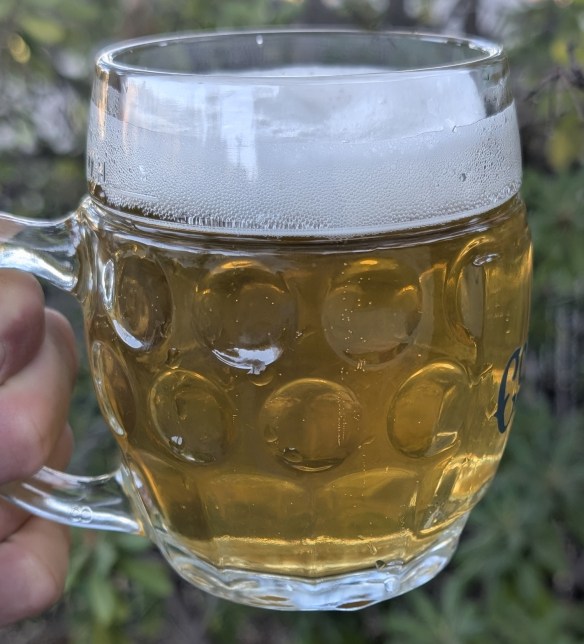
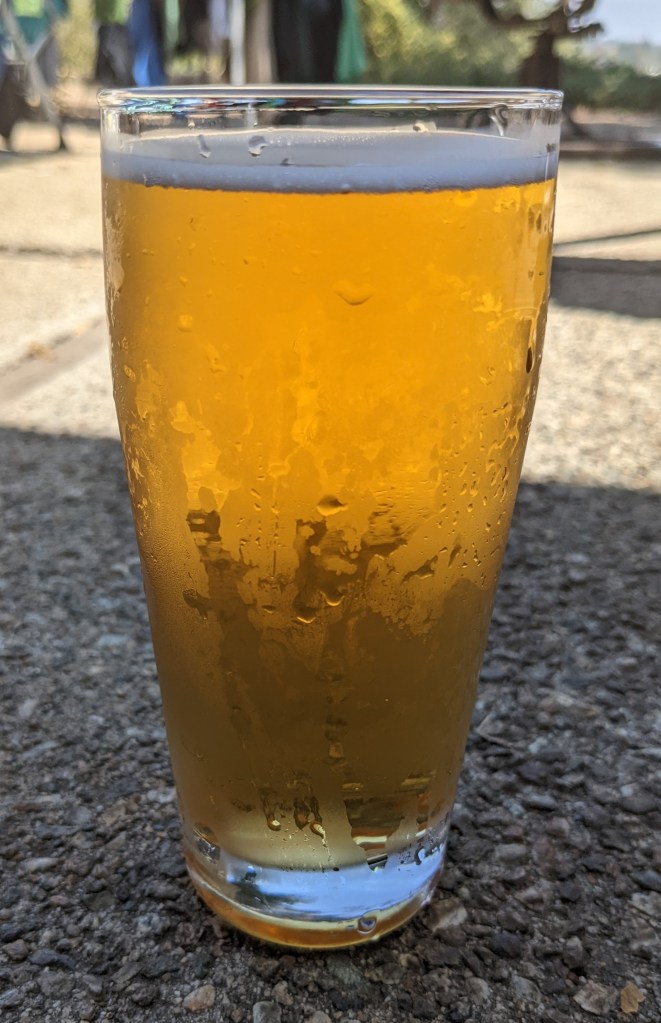
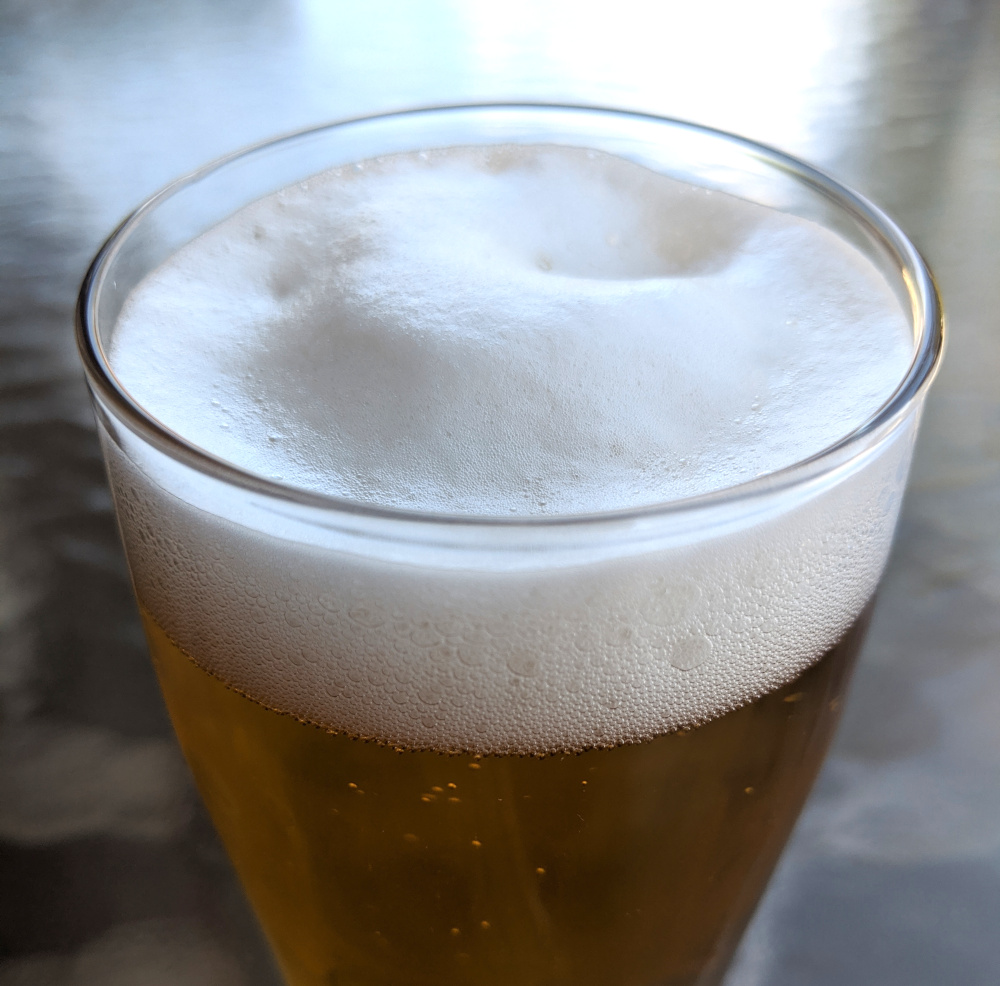
    • Light yellow and brilliantly clear, with a persistent fine white head.
  • Aroma
    • Clean fermentation profile, medium-low malt with a sweet malty character. Hops very faint.
  • Flavor
    • Medium level of malty sweet flavor, with a low level of spicy hops behind that. It tastes good, but inoffensive.
  • Mouthfeel
    • Medium-light body, moderate carbonation, smooth and slightly dry finish.
  • Would I Brew This Again?
    • This beer is technically great, but it just doesn’t grab my attention in any particularly way. It’s clean, clear, and decently flavorful, but needs a touch more malt character. Versus previous recipes, I skipped Munich malt on this one, and that set things back a bit. I might try a different pilsner malt, too, but either way the malt needs a bit more of “something.”
      • Note added later: I tried this beer again, in a big mug, and it hit a bit differently. The malt character was more prominent, and it goes down easily. I’m not going to adjust my ranking based on this, other than to say that it’s a very drinkable beer, and would be a crowd pleaser, even if not the most interesting beer for me. I guess not every beer needs to be interesting!
  • Overall
    • 7/10

Summer Helles

Last year, I made a Munich helles following a recipe in Gordon Strong’s Modern Homebrew Recipes, with pretty excellent results. Munich helles is such a great summer lager (among many great summer lager varieties!), but it was only on my 2021 batch that I felt I had finally gotten close to nailing the style.

This year’s version is along the same lines as last year’s, but I used different brands/variations of ingredients for what I had on hand or needed to use up. For instance, I used Weyermann’s Barke pilsner malt instead of their “regular” pilsner malt, and their Munich I malt instead of Chateau’s equivalent. I had Briess’s aromatic Munich 20L on-hand, so that went in as a substitute for Carahell, and I just flat-out skipped Carapils. I used Hallertau Tradition in place of Hallertauer Mittelfrueh, and finally went with Diamond Lager yeast instead of 34/70. I guess that’s a long way of saying it is a completely different recipe, but has largely the same proportions of ingredients and targets pretty similar numbers.

Because this was a really busy summer (filled with fieldwork, a house move, and COVID), the beer ended up conditioning in the keg for over two months. I rarely have a lager that sits for so long, and the end result was something that was crystal clear. As you’ll see in the tasting notes, I’m overall quite pleased with this iteration!

Summer Helles 2022

  • 8.25 lb. Barke pilsner malt (Weyermann)
  • 1.25 lb. Munich I malt (Weyermann)
  • 0.25 lb. Aromatic Munich malt 20L (Briess)
  • 0.75 oz. Hallertau Tradition hop pellets (6.1% alpha), 60 minute boil
  • 1 tsp. BruTanB, 10 minute boil
  • 1 Whirlfloc tablet, 5 minute boil
  • Repitch of Diamond Lager yeast (Lallemand)

Target Parameters

  • 1.044 o.g., 1.007 f.g., 17 IBU, 5 SRM, 4.9% abv
  • Full-volume infusion step mash, 45 minute rest at 144°, 45 minute rest at 160°, 10 minute rest at 168°
  • Water built from RO, to hit 23 Ca, 8 Mg, 32 SO4, 40 Cl, -21 RA

Procedure

  • I added 2.5 g epsom salt and 2.5 g CaCl to 7 gallons of RO water, to hit my target water specifications.
  • I heated the strike water to 148°, and added the grains along with ~1.1 mL of 88% lactic acid in order to hit my target pH of 5.4. I held at 144° for 45 minutes while recirculating, and then raised the mash to 160° for another 45 minutes. Finally, I mashed out for 10 minutes at 168°.
  • After removing the grains, I had collected 6.4 gallons of runnings with a gravity of 1.041, for 72% mash efficiency.
  • I brought the kettle to a boil, adding hops and finings per the recipe. After a 60 minute boil, I turned off the heat and chilled the wort to ~70° before transferring to the fermenter. I chilled overnight to 49°.
  • I brewed the beer on 15 May 2022, and pitched the yeast slurry from my Alta California Lager the next morning, 16 May 2022. At this time, I oxygenated with 30 seconds of pure O2.
  • I starting fermentation at 50°, holding it there until 23 May 2022, when I let it free-rise to 60°. Then, I cold crashed to 34° on 28 May 2022.
  • I kegged the beer on 8 June 2022. Starting gravity was 1.046, and final gravity was 1.012, for 4.5% abv. The beer cold conditioned at ~34° for over two months, before going on tap.

Tasting

  • Appearance
    • Brilliantly clear, gold beer. It pours with a white, medium head that subsides to a persistent white ring around the edge of the glass.
  • Aroma
    • Malty aroma, at a modest level. Very clean fermentation, with no noticeable yeast character. No hop aroma apparent.
  • Flavor
    • Moderately rich malt flavor, with a lingering sweet maltiness against a moderately low level of hop bitterness.
  • Mouthfeel
    • Medium-light body, moderate carbonation, very smooth finish.
  • Would I Brew This Again?
    • Yes! This is a great recipe. The low level of head on this is the only minor flaw. Otherwise, this is an incredibly gorgeous, tasty, and easy drinking beer. Next time, I’ll probably add the Carapils back in, and switch back to Carahell instead of Aromatic Munich.
  • Overall
    • 9/10

Summer Helles

I’ve been trying to get out ahead of my lagering schedule, by having a few lagers in the pipeline at a time. A minor, but consistent, flaw in my lagers has been that they have a slight haze when first put on tap. I primarily suspect that’s because I just don’t give them enough lagering time. Typically, they might be only 4 or 5 weeks post-brewing, with perhaps only two weeks at most of cold conditioning (<35°) prior to tapping. That’s just not enough time. I’m also not (usually) inclined to rush things with gelatin, because it’s another potential point of oxidation on what are often fairly delicate beers. If I’m going to all the work of making a lager, I want it to taste just as great at the start of the keg as at the finish of the keg!

So, this summer I’ve been working to build up a backlog of beer to allow a bit more time for full conditioning. It’s not always successful–“Mow the Damn Lawn, Farke” was on tap only two weeks after kegging–but I’ve certainly gotten better.

For a recent lager brew, I decided to chase after the elusive Munich helles style. They have notoriously delicate malt character, and are seemingly the cause of endless jousting on brewing forums (particularly when the low oxygen brewers get involved). I made my first attempt three years back, and it was alright, but nothing to write home about. The malt character needed some work.

For this round, my base recipe followed Gordon Strong’s helles in Modern Homebrew Recipes, with some modifications for ingredients on-hand as well as process. I did a shorter step mash schedule, skipping the 131° rest in the original recipe and going straight to 148° for the first rest. I also used W34/70 instead of a bock yeast, with a repitch of the yeast cake from my Tremonia Lager. I didn’t have Belgian aromatic malt on hand, so I used Carahell instead. Also, I used Hallertauer Mittelfrueh hop pellets instead of US Vanguard, a rare case as of late in which I am using the German variety instead of American hop equivalents!

Summer Helles

  • 8.75 lb. Pilsner malt (Weyermann)
  • 1 lb. Munich light malt (Chateau)
  • 0.25 lb. Carahell malt (Weyermann)
  • 2 oz. Carapils malt (Briess)
  • 1.55 oz. Hallertauer Mittelfrueh hop pellets (3.2% alpha), 60 minute boil
  • 1 tsp. Fermax yeast nutrient, 10 minute boil
  • 1 Whirlfloc tablet, 5 minute boil
  • Saflager W34/70, repitch of yeast from previous batch

Target Parameters

  • 1.046 o.g., 1.008 f.g., 17 IBU, 4 SRM, 5.0% abv
  • Full-volume infusion step mash, 40 minute rest at 148°, 15 minute rest at 158°, 15 minute rest at 168°
  • Claremont tap water, alkalinity neutralized by 88% lactic acid

Procedure

  • For my 4 gallons of initial strike water, I added 3.6 mL of 88% lactic acid to neutralize alkalinity, along with a Campden tablet.
  • I mashed in at 155°, to hit a 147.8° mash temperature. I added 2.5 mL of 88% lactic acid to adjust pH. The mash was down to 145° after 25 minutes.
  • 45 minutes after the initial infusion, I added 6.25 quarts of near-boiling water to raise the mash temperature to 157°. The water was added over a 5 minute period. After 15 minutes, the temperature was down to 154° or so.
  • At this point (~60 minutes into the mash), I added the rest of my hot water (~3 gallons) to hit a final mash rest of 167°.
  • After 10 minutes, I vorlaufed and collected the full volume of runnings in the kettle. I got 7.1 gallons at a gravity of 1.041, for 77% mash efficiency.
  • I brought the kettle to a boil, adding hops and finings per the schedule.
  • After a 90 minute boil, I turned off the heat and chilled down to ~75°, before transferring to the fermenter.
  • I let the fermenter chill the rest of the way down to 50°, and gave it a 30 second burst of pure oxygen before pitching the yeast.
  • I brewed the beer on 24 June 2020, with a starting gravity of 1.047.
  • The first week of fermentation was at 50°, and I let the fermenter free-rise to 54° on July 1. I let it further rise to 58° (July 3) and 60° (July 4), before chilling to 55° (July 5), 50° (July 6), and then 45° and 40° over an 8 hour period (July 7). I chilled further to 35° (July 8) and 33° (July 9), and let it lager on the yeast at that temperature until kegging.
  • I kegged the beer on July 24, using a closed transfer followed by force carbonation. The beer was pretty clear, but not perfectly clear at this point.
  • Final gravity was 1.008, down from 1.047, for 5.2% abv.

Tasting

  • Appearance
    • Pours with a beautiful, full white head, that is quite persistent. Pale gold in color and very clear, but just a touch off of brilliant. It’s a gorgeous beer!
  • Aroma
    • Malty and ever-so-slightly sweet, with a touch of hop spice.
  • Flavor
    • Full maltiness, with a really pleasant and rounded character. A clean but firm bitterness; I would say the bitterness tilts towards medium/medium-low, with a slight spice character. The bitterness could be notched back very slightly, but not by much.
  • Mouthfeel
    • Moderate carbonation, with a smooth and slightly dry finish.
  • Would I brew this again?
    • Yes! This is a really enjoyable recipe, and I feel like it nails the malt character quite well. It’s a much better version of a Munich helles than my last one, and it definitely benefited from a longer lagering time than I often get. I might edge the bitterness back a tiny bit. Also, I will probably play around with malt brands and hop varieties in future version, but the proportions and balance are pretty much right where I want them. This is a refreshing late summer lager!
  • Overall
    • 9/10

Beer Tasting: Holy Helles

20170423_150736Time for another beer tasting! This Munich helles–my first attempt for the style–has been an enjoyable brew. I entered it into the first round for the NHC…it didn’t place, but I’ll be interested to see how the score sheets pan out. I should get those later this week, but until then, here are my own thoughts!

  • The Basics
    • O.G. = 1.047; f.g. = 1.012; 4.6% abv; 4 SRM; 19 estimated IBU
  • Aroma
    • Mild spicy hop note, with a moderate degree of slightly sweet maltiness behind that.
  • Appearance
    • Brilliantly clear and light gold in color. The beer pours with a thick off-white head that settles to a nice even and persistent blanket across the top of the beer.
  • Flavor
    • Nice malt character, with a bit of graininess to it. The bitterness level is subdued and definitely in the background
  • Mouthfeel
    • Relatively light bodied, moderately carbonated, with a medium-dry finish. The bitterness hangs around on the finish for awhile, although it is not overpowering.
  • Would I brew this again?
    • This is a good beer, and quite drinkable, but I think it falls down a bit in the malt character. To bring this a touch more into the Munich helles style, I might up the malt profile just a bit–it seems like it swings to the hops end on aroma just a bit more than I would prefer. One fellow homebrewer suggested using a German pilsner malt rather than the Bohemian pilsner malt I’ve been using as of late–this might be a good first step.
  • Overall: 6/10

Holy Helles & First Amendment Blonde Ale Kegged

I did a whole mess of kegging tonight, to clear out fermenter space and move along some projects.

First up was my Holy Helles (a Munich Helles), which I split into two 2.5 gallon kegs. The reason behind this was that I plan to enter it in the National Homebrew Competition, and also to serve it at Easter. I didn’t want to dose the Easter beer with gelatin (in case some of our guests don’t do gelatin), but don’t much care for the NHC one.

A few notes on the helles fermentation…on 21 January 2017, the gravity was down to 1.014. At this point, I raised the temperature from 50° to 68° for a diacetyl rest. I left it at this temperature for about a week, and then dropped it down to 34° until kegging.

Final gravity was 1.012, a touch higher than predicted (1.010). With a starting gravity of 1.047, this equals 4.6% abv. That should make a nice, drinkable beer!

Next, I kegged the First Amendment Blonde Ale. Final gravity was 1.011, down from a starting gravity 1.051, for 5.2% abv. I hit my numbers perfectly on this batch–wow, what a nice treat!

I’m storing these beers at 34°, and force carbonating the blonde ale right away.