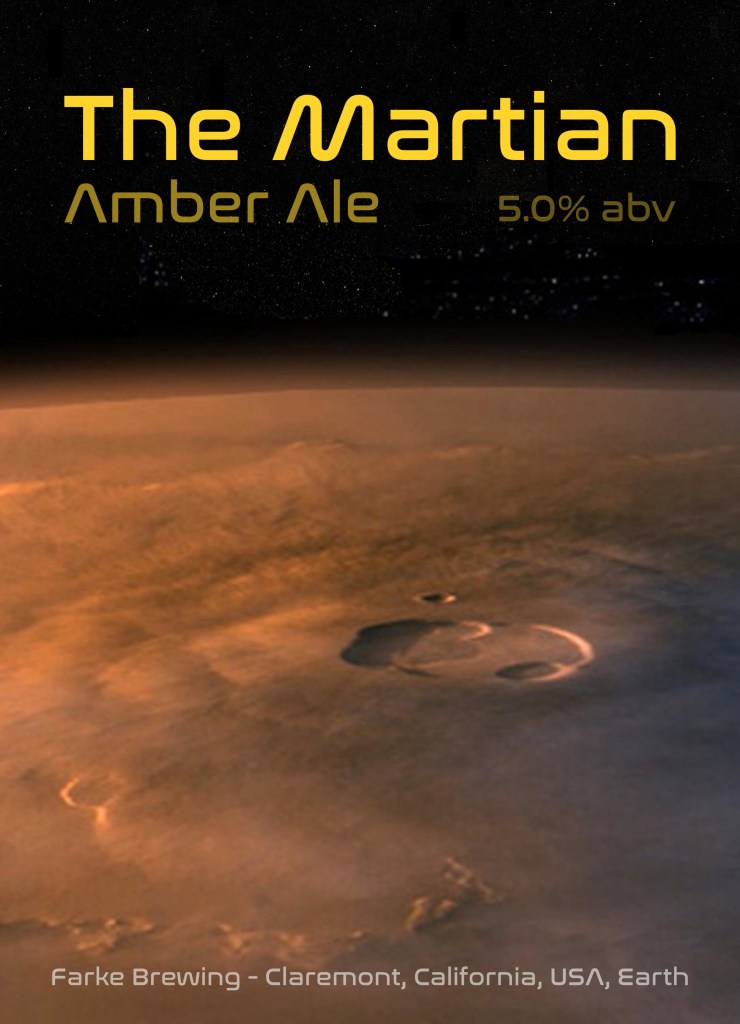
The Martian Amber Ale

Homebrewing is at its most fun for me in exploration. I’ll admit that with nearly 20 years of experience, I’m now pretty familiar with many ingredients and styles, so truly novel brews aren’t as common as they used to be. So, I was pretty excited when I read about a new malt from Gambrinus, called “Mars Malt,” which is marketed as a base malt that produces a red wort. The flavor description made it sound like a turbo-charged Munich, with all of the flavor characteristics one would expect there.

After seeing Denny Conn post on the AHA Forum about his plans to make a SMaSH altbier using Mars malt, I was inspired to make my own SMaSH recipe, aiming for an American amber ale. American ambers and altbiers are quite similar in strength, color, and bitterness, and so I think the recipes can be swapped around in creative ways. For an American amber ale SMaSH, I decided to focus on Centennial hops, because the pine and citrus work perfectly for that West Coast flavor. Yeast needed to be something clean and fast; although I often lean on WLP001 and BRY-97, I usually forget about Nottingham as another option. Although a British yeast, it’s another classic of American brewing, and does a good job of staying out of the way of the malt and hop flavors. Plus, Nottingham ferments fast and drops clear, both positive qualities for this project.

Because this was an experimental batch, I aimed for 2.75 gallons rather than my usual ~5 gallons. Gravity targeted Gambrinus’s recommended strength of 1.048 to maximize red color, and it also would keep the alcohol level in check. The hopping level was pretty standard for an American amber ale, and I kicked in some dry hops to maximize flavor and aroma. To avoid too minerally of water, I cut my tap water with some RO water, and built in epsom salt to boost the sulfates and enhance the hops.

I had fun putting together a logo/label for this recipe–it’s fairly simple, with a NASA-sourced artist’s image of Mars viewed from orbit, with a NASA-inspired font. All were freely available, and none were AI.

The Martian Amber Ale

  • 6 lb. Mars malt (Gambrinus)
  • 0.25 tsp. BrewTanB, added to mash
  • 0.5 oz. Centennial hop pellets (8.1% alpha), 60 minute boil
  • 0.25 tsp. BrewTanB, 10 minute boil
  • 1 Kick carrageenan tablet, 5 minute boil
  • 0.5 oz. Centennial hop pellets (8.1% alpha), 5 minute boil
  • 1 pkg. Nottingham ale dry yeast (Lallemand)
  • 1.5 oz. Centennial hop pellets (8.1% alpha), dry hop in primary

Target Parameters

  • 60 minute infusion mash, 152°, full volume mash
  • 1.048 o.g., 1.008 f.g., 5.3% abv, 33 IBU, 14 SRM
  • Water built from Claremont tap water and RO water to hit target parameters of 78 ppm Ca, 23 ppm Mg, 58 ppm Na, 107 ppm SO4, 78 ppm Cl, 85 ppm bicarbonate
  • 2.75 gallon batch

Procedure

  • I built the water up with 2.75 gallons of tap water (with a Campden tablet), 1.5 gallons of RO water, and 3 g of epsom salt.
  • I heated the water to 158°, before adding the grains and holding at 152° for 60 minutes, with recirculation.
  • After 60 minutes, I heated the mash to 168° for 10 minutes, and then pulled the grains.
  • In total, I collected 3.9 gallons of runnings at a gravity of 1.041, for 73% mash efficiency.
  • I brought the runnings to a boil, adding hops and finings per the recipe, maintaining a 60 minute boil.
  • After 60 minutes, I chilled the beer to 68° and let it settle for a bit before transferring to the fermenter and pitching the yeast.
  • I brewed this beer on 17 January 2026. It had a starting gravity of 1.049, a pretty good match for my target gravity.
  • Because ambient temperatures were pretty cool, I let the beer sit out. It was at 66° by the next morning, with regular bubbling through the airlock.
  • The beer was up to 70° by the morning of 19 January, so I moved the fermenter to a cooler room. This is still well within the optimal range for Nottingham, so I’m not too worried.
  • The fermenter was down to 66° by the evening of 19 January, and I moved it to a warmer room overnight.
  • The fermenter was down to 62° by noon on 20 January 2026. I added the dry hops at this point; when I opened the fermenter, the krausen had fallen pretty much entirely.
  • I cold crashed the beer on 24 January 2026, and kegged using a closed transfer on 1 February 2026.
  • Final gravity was 1.011, for 5.0% abv.
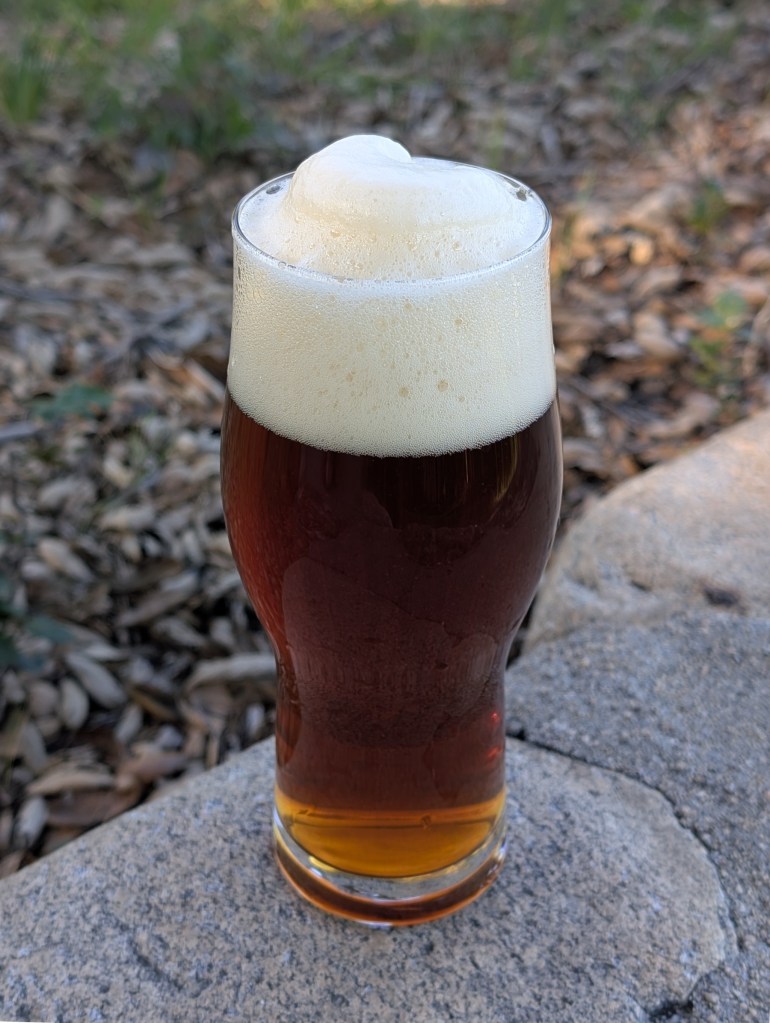
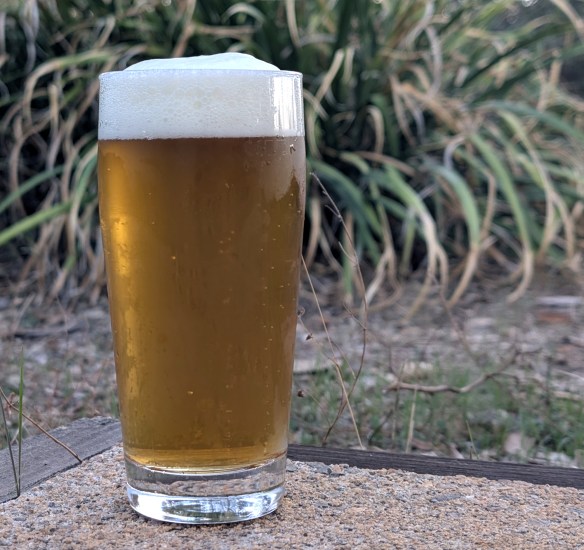
A glass of reddish amber beer with a foamy ivory-colored head, sitting on a stone surface surrounded by leaves.

Tasting

  • Appearance
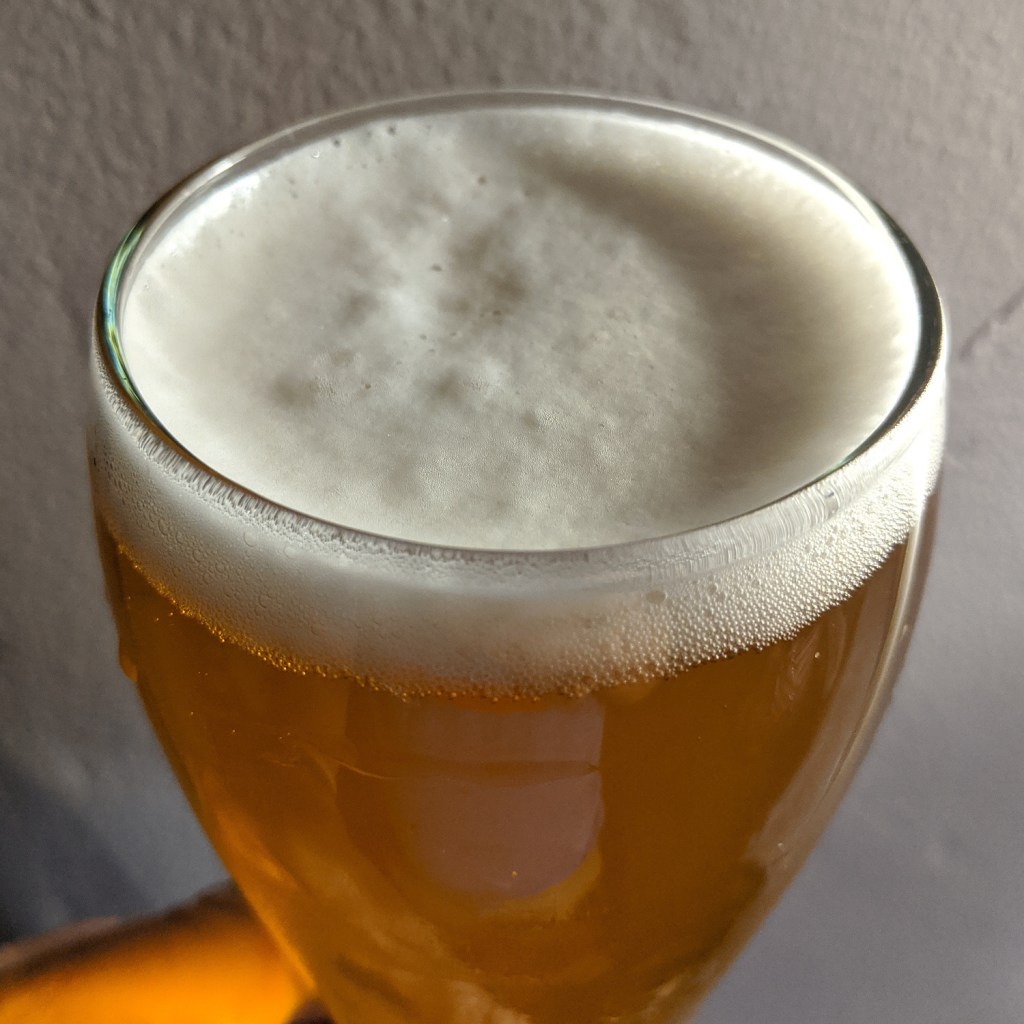
    • Clear, reddish amber beer, with a tall and persistent ivory head–it’s fluffy and gorgeous!
  • Aroma
    • Prominent bready aroma, slightly toasty; more dark bread than light. Very malt forward. Resiny hops at a moderate level.
  • Flavor
    • Medium-high maltiness, with dark bread character. Bitter, with a citrus and pine hop character. Clean yeast quality.
  • Mouthfeel
    • Medium-light body, medium carbonation, dry finish.
  • Would I Brew This Again?
    • This is a pretty good SMaSH. The body is a touch thin, and I might recommend a mash at 156° or 158° in a future version. Alternatively, I might add a bit of crystal 20 or crystal 40. Overall, this is an interesting beer and a worthy experiment.
  • Overall
    • 7/10

Old Franconia Lager

“Farmhouse beers” are a huge and fuzzy category, in my mind including everything from saison to many kveik-based concoctions to some kellerbiers. Although a character-rich and slightly wild yeast is most common, I would also think some “rustic” lagers should also qualify. Farmhouse, like so many things in homebrewing and craft beer, is a moderately mythological concept, and one built more around feelings than strict history. I suppose that’s why it’s fun to play in the space! It can stir a different set of emotions from by-the-books or paint-by-numbers brewing; it allows creativity (and I suppose role-playing) in a way that many other styles don’t, or at least in ways that differ from other styles.

I recently ran across a supplier for Isaria 1924 malt by Weyermann (William’s Brewing). I am often interested in trying base malts outside my norm, and this was a fun opportunity to experiment. The descriptions / marketing material from Weyermann state that the malt is “made from the oldest German malting barley variety Isaria, which was officially approved for the beer production in 1924. Brewers used Isaria to brew traditional, unfiltered and flavorful traditional German Lagers.”

Colorwise, Isaria 1924 weighs in at 3.5 SRM and is thus closest to most Vienna malts (3-5 SRM, depending on supplier; the Weyermann version is 3 SRM). Relative to the Weyermann flavor wheel, Isaria 1924 reads as a subdued Vienna, with similar locations of flavor/aroma peaks, but different magnitudes (e.g., a peak at “sweet” taste but an arbitrary value of 2.5 versus 4.5).

Among the recommended styles from Weyermann, Franconian landbier was near the top. This intrigued me, because I had recently read about the “style” in the Spring 2025 issue of Craft Beer and Brewing (including recipe). Why not try something in that vein?

My version is not really based on anything in particular, other than crafting a general story–something to emphasize malt and lean into a story of a rustic beer that plausibly would originate in Franconia (which primarily overlaps with northern Bavaria). I wanted to use 100 percent Isaria 1924 malt, particularly because this was my main point of the brew session. I only had 10 pounds, which might be a bit lower on gravity than I wanted for my usual 5.25 gallon batch, so I scaled down to 4.5 gallons. Spalt Spalter hops were my hop selection, because they provide a nice earthy and spicy quality that fit well with my intended “rustic” results. Finally, I wanted to give WLP860 Munich lager dry yeast another spin; as a strain that would emphasize the malt character, and that also would be consistent with my Franconian/Bavarian theme (although Munich itself is to the south of historical Franconia–we’re going for “vibes” and not authenticity here!). During my last brew with it, I learned that a bit of patience was key–WLP860 is a slow starter, and so I shouldn’t fear if signs of fermentation are delayed.

Old Franconia Lager

  • 10 lb. Isaria 1924 malt (Weyermann)
  • 0.5 tsp. BrewTanB, added to mash
  • 1.25 oz. Spalt Spalter hop pellets (4.3% alpha), 60 minute boil
  • 0.5 tsp. BrewTanB, 10 minute boil
  • 1 Whirlfloc tablet, 5 minute boil
  • 1.75 oz. Spalt Spalter hop pellets (4.3% alpha), 5 minute boil
  • 2 pkg. Munich Lager dry yeast (White Labs WLP860)

Target Parameters

  • 60 minute infusion mash, 154°, full volume mash
  • 1.051 o.g., 1.016 f.g., 4.7% abv, 29 IBU, 6 SRM
  • Claremont tapwater, neutralized to remove bicarbonates. Roughly 40 ppm Ca, 18 ppm Mg, 102 ppm Na, 50 ppm SO4, 130 ppm Cl, RA=-31
  • 4.5 gallon batch

Procedure

  • I treated 6.75 gallons of water with a Campden tablet and 6.9 mL of 88% lactic acid, in order to drop out the bicarbonates.
  • Next, I heated the strike water to 159°, added the grains, and held at 154° with recirculation for 60 minutes. After that, I raised the mash temperature to 168°, held it there for 10 minutes, and then pulled the grains.
  • In total, I collected 6 gallons of runnings with a gravity of 1.038, for 64% mash efficiency.
  • I brought the runnings to a boil, adding hops and finings per the recipe. Because my gravity was a bit lower than intended, I boiled a bit harder to bring the gravity up. After 60 minutes, I turned off the heat and chilled the wort to 69° before transferring to the fermenter.
  • I chilled the wort down to 50° in the fermentation chamber, pitching the yeast when the beer was at 60° (night of the brew day).
  • This beer was brewed on 21 September 2025; it had a starting gravity of 1.049.
  • I fermented the beer at 50 degrees; small bubbles were visible on the surface by 22 September 2025, 24 hours after pitching. By 29 September, there was a good layer of krausen on the surface. Given the slow start the last time I used this yeast, I wanted to confirm that things were moving along. I noted an aroma of sulfur in the fermentation chamber on 30 September 2025.
  • I raised the temperature of the beer to 56° on 2 October 2025, and moved the beer to ambient on 7 October 2025.
  • Using a closed transfer, I kegged the beer on 18 October 2025. At the time, it had an amazing malt flavor!
  • Final gravity was 1.013, for 4.7% abv.

Tasting

  • Appearance
    • A deep gold beer, with a very slight haze, which pours with a thick, white, and persistent head. Beautiful!
  • Aroma
    • Medium malty-rich aroma, with moderate spicy hop character. Delicate hoppiness.
  • Flavor
    • Moderate malty rich character, against a medium level of hop bitterness. Clean yeast character.
  • Mouthfeel
    • Medium-light body, moderately high carbonation, off-dry finish. There’s may be a tiny bit of astringency.
  • Would I Brew This Again?
    • This is super nice as something a little different from the “usual” lagers. Isaria 1924 stands well as a solo malt, making an interesting and highly drinkable beer. I might dial the bitterness back a touch, or else increase the gravity slightly; the aroma is amazing, but I feel that the malt character is slightly obscured. I would also do a 90 minute mash or a decoction mash in order to improve efficiency, given the lower mash yield for this particular malt.
  • Overall
    • 8/10

Update: Around Christmas, I noted an increasingly heavy protein precipitation in this beer. I’ve never experienced something like it previously, at least in my homebrew. I didn’t have anything unusual with handling or technique, so I wonder if it’s caused by the malt. Or maybe just a fluke?

golden beer in glass with lots of white flakes of protein precipitate floating in it, like snowflakes
Let it snow?

Holiday Festbier

I have always stereotyped lagers–especially those that are lighter in color–as beers best suited for warm weather. Lawnmower beer. That kind of thing. As my palate has expanded, though, I’ve decided that lighter lagers aren’t just for the summer. A festbier–with its slightly more complex flavor profile–seems like a good option for cooler months. And who says it’s just for Oktoberfest?

My recipe was inspired by a festbier recipe I saw on Brulosophy, with pilsner and Vienna malts carrying the bulk of the grist alongside a splash of Munich malt. In the end, it worked out pretty well!

Holiday Festbier

  • 6 lb. Vienna malt (Weyermann)
  • 5.5 lb. Superior pilsen malt (Great Western)
  • 0.75 lb. Munich Malt (Best; 7.6 SRM)
  • 0.35 oz. Magnum hops (13.2% alpha), 60 minute boil
  • 2 oz. Saaz whole hops (3.0% alpha), 10 minute boil
  • 1 Whirlfloc tablet, 10 minute boil
  • 1 tsp. Fermax yeast nutrient, 10 minute boil
  • 2 pkg. Saflager lager yeast (W34/70)

Target Parameters

  • 60 minute infusion mash, 149°, batch sparge.
  • 1.056 o.g., 1.011 f.g., 5.9% abv, 21 IBU, 5 SRM
  • Water built from RO, for target of 35 Ca, 3 Mg, 29 Na, 41 SO4, 40 Cl, 77 HCO3, 37 RA

Procedure

  • I built up 4.25 gallons of mash water by adding 1.7 g baking soda, 1.3 g CaCl, 0.8 g gypsum, and 0.5 g epsom salts. I aimed for a mash-in temperature of 160.5°, to hit 149.1° for the mash. Immediately after mashing in the grains, I added 9.5 mL of 88% lactic acid, to adjust the pH appropriately.
  • I built up the sparge water with 4.6 gallons of RO water supplemented with 1.9 g baking soda, 1.5 g CaCl, 0.9 g gypsum, and 0.6 g epsom salts.
  • I started the batch sparge with 1 gallon of water at 180°, let it sit for 10 minutes, vorlaufed, and collected first runnings. I then added the remainder of the sparge water, vorlaufed, and collected the rest of the runnings.
  • In total, I collected 7 gallons of runnings with a gravity of 1.045, for 70% efficiency.
  • I brought the kettle to a boil, adding hops and finings per the recipe. After 60 minutes, I turned off the flame and chilled down to 75° or so. After transferring to the fermenter, I chilled down to 50° in the fermentation chamber before oxygenating the wort and pitching the yeast.
  • I brewed this beer on 7 December 2019. Starting gravity was 1.053, a touch below my target (1.056), but not too awfully low.
  • I started fermentation at 52°, and raised it to 56° after two weeks (21 December 2019). I raised the beer to 60° on 23 December 2019, before crashing to 33° on 26 December 2019.
  • I kegged the beer on 28 December 2019, by semi-closed transfer into a CO2 purged keg. Final gravity was 1.009, which works out to 5.9% abv.
  • After kegging, I lagered the beer at 33°. From the start, flavor was really nice. When I sampled the beer on 12 January 2020, after two weeks of lagering, flavor was still amazing, but the beer was still fairly hazy. By February 6, the beer had only a slight haze, and could be rated as relatively clear (but not yet bright). I expect it should be up to snuff within a week or two.

Tasting

  • Appearance
    • Gold, nearly clear (only a slight haze at the time of this tasting), with a nice and persistent white head.
  • Aroma
    • Malt, malt, malt. Aroma is a slightly sweet malty quality, and I don’t pick up much for hops.
  • Flavor
    • Smooth maltiness, with the malt character being a combination of pure maltiness and a bit of breadiness. (I’m using various forms of “malt” in my descriptions, but that’s really the best descriptor for this beer!) Hop level is moderate and has a beautiful smoothness, with the balance of the beer definitely tilted towards malt.
  • Mouthfeel
    • This beer is sooooo drinkable! Medium body, moderate carbonation, just a pure thing of beauty.
  • Would I brew this again?
    • Absolutely! This is a wonderful recipe. My only mild knock-down is for the slight haze in the beer, but if I were to lager this for months as a proper festbier I think it would be fine. The malt character and hopping level are perfect. On top of all of this, it really nails the high drinkability that a good festbier should have.
  • Overall
    • 9/10

Summer Haze Brown Ale

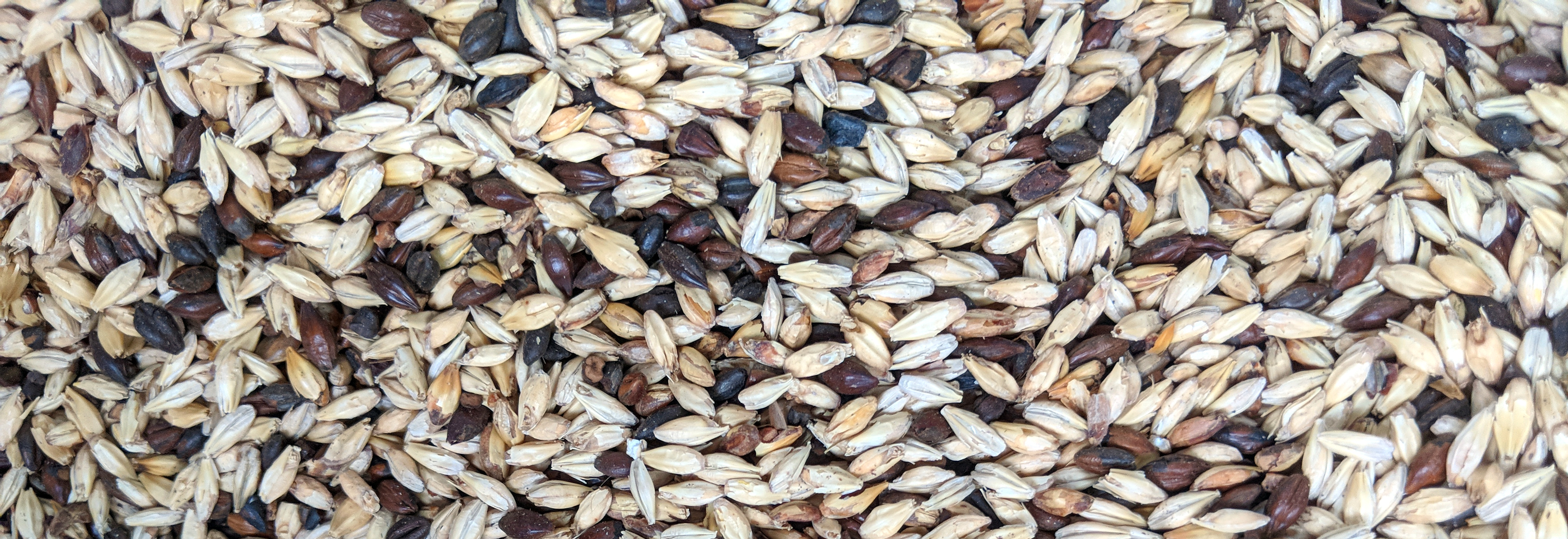
A friend of mine who lives out east experimented with smoking his own malt–in this case, he scrounged up some sassafras root, and used it to smoke a two-row malt. It took me a bit to think about what kind of beer I wanted to make with it, because I’ve already done smoked porters, and a stout wasn’t really appealing either. Why not try a brown ale? It’s not so heavy as to be undrinkable in the summer heat, and the other malt flavors would hopefully meld well with the smoked malt. This recipe is also intended to use up many of my specialty malts, so I freshen up my stockpile with newer malts. Although they seem to keep pretty well, it probably doesn’t hurt to rotate from time to time.

IMG_20180822_065954.jpg

Summer Haze Brown Ale

  • 4.1 lbs. California select 2-row malt (Great Western Malting Co.)
  • 2.5 lbs. Vienna malt (Great Western Malting Co.)
  • 2 lbs. sassafrass smoked 2-row malt
  • 14 oz. 40° crystal malt (Great Western Malting Co.)
  • 8 oz. pale chocolate malt (Crisp Malting Co.), 225° SRM
  • 4.3 oz. chocolate malt (Briess), 350° SRM
  • 1.9 oz. Carafa III malt (Weyermann)
  • 0.6 oz. Carafa Special II malt (Weyermann)
  • 1 oz. Cascade whole hops (5.5% alpha), 60 minute boil
  • 1 oz. Cascade whole hops (5.5% alpha), 10 minute boil
  • 1 Whirlfloc tablet, 10 minute boil
  • 1 pkg. Safale US-05 dry yeast

Target Parameters

  • 1.052 o.g., 1.011 f.g., 5.4% abv, 26 IBU, 25 SRM
  • Infusion mash to hit target of 152°, 60 minutes, batch sparge.
  • Claremont tap water, treated with Campden tablet

Procedure

  • I mashed in with 3.5 gallons of tap water at 163°, to hit a mash temperature of 151°. After 60 minutes, I added 1.5 gallons of sparge water at 170°. This rested for 15 minutes, before the vorlauf and then collection of the first runnings.
  • Next, I added 3.5 gallons of water at 170°, before resting for 10 minutes, vorlaufing, and collecting the rest of the runnings.
  • I collected 6.5 gallons of runnings at a gravity of 1.041, for 71% efficiency.
  • Next, I brought the kettle to a boil, adding hops and Whirlfloc per the schedule.
  • After a 60 minute boil, I chilled around 80° before transferring to the fermenter. I then chilled it the rest of the way in the fermentation chamber, down to 68°.
  • I sprinkled the yeast directly into the wort, fermenting at 68°.
  • Starting gravity was 1.046–I notched back the boil intensity a bit on this one (per recent recommendations from various corners of the internet), so I’ll need to start compensating for a change in evaporation rate.
  • I brewed this batch on Wednesday, August 22, and kept it at 68° until Friday, August 31. Then, I pulled it out of the keezer (to make room), finishing up at 75° ambient temperature.

The Quest for a Real Jurassic Beer

Unexpected connections between my vocation of paleontology and my avocation of brewing pop up in the strangest places.

Recently, I decided to try my hand at a traditional Bohemian pilsner. While reading up on the style in order to develop my recipe, I ran across this interesting tidbit from a technical presentation by folks from Technische Universität München and Weyermann Malting Company [link to PDF]:

The most influencing process for the production of original Bohemian malt is the floor malting process after a 48 h steeping. This is done on traditional naturally cooled Solnhofen limestone floor tiles.

Solnhofen Limestone?!!! No way! My paleontologist brain went into overdrive when I read that statement. Using Solnhofen Limestone for floor tiles is the paleontological equivalent of using Kobe beef in a McDonald’s Happy Meal. Kinda sacrilegious, but also pretty awesome. Let me take a minute to explain this seemingly inane (yet exciting) detail.

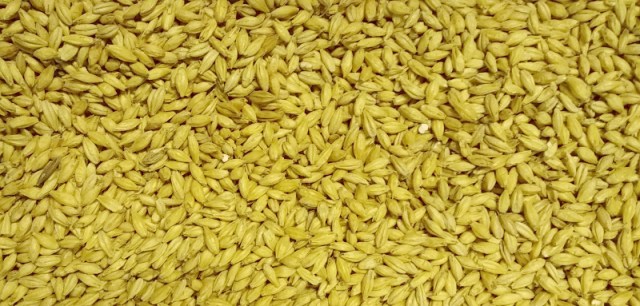
Malted barley

Malted barley

First, the brewing side. Raw barley grains are turned into malt by a brief germination, which among other things creates enzymes in the grain that break down starches into more fermentable sugars later during the brewing process itself. Germination produces a lot of heat, which can be a fire hazard in some conditions (and isn’t great for the quality of the finished malt, either). So, the grain is cooled by a combination of physical turning as well as specially cooled floors. Traditionally, the cooling was accomplished by hand-turning on stone tiles (including those made from Solnhofen Limestone, apparently). This germination period is followed by a drying and kilning period, which halts germination and readies the malted barley for brewing. The malted grains are ground up, steeped in water, the resulting liquid is boiled with hops and then fermented with yeast–and bingo, you have beer!

Now, let’s talk about rocks. Solnhofen Limestone is from Bavaria, formed in warm-water lagoons during the Late Jurassic, around 150 million years ago. The gentle waters and fine-grained ooze created the conditions for exquisite preservation of any animals that died in or near the water. Soft-bodied organisms that are rarely fossilized, including dragonflies and giant shrimp, are fairly common finds. The most widely known fossils, though, are the rare and delicate flying vertebrates. Winged reptiles such as Pterodactylus are housed in museum collections globally. And then there is the most iconic fossil of all: Archaeopteryx.

Fossil of Archaeopteryx in Solnhofen Limestone. Specimen displayed at the Museum für Naturkunde (Berlin). Photo by H. Raab, CC-BY-SA.

Fossil of Archaeopteryx in Solnhofen Limestone. Specimen displayed at the Museum für Naturkunde (Berlin). Photo by H. Raab, CC-BY-SA.

First discovered in the 1850s, the early bird Archaeopteryx is a textbook example of a transitional fossil. It preserves features of its dinosaurian ancestors, including sharp teeth and a long bony tail, as well as the long flight feathers found in today’s modern birds. The fingerprints of evolution are all over Archaeopteryx, and it has been key for many discussions on the origin of birds and flight as well as their relationship with carnivorous dinosaurs. Although new discoveries in China, Mongolia, and elsewhere have filled in additional details, the Archaeopteryx skeletons from the Solnhofen Limestone remain historically and scientifically important.

Beyond its paleontological significance, the durable and fine-grained Solnhofen Limestone has a long industrial history–indeed, the fossils are basically “by-catch” from that activity. Over the centuries, the limestone has been used for sculpture, floor tiles, and printing (lithographic) plates. A connection to brewing was new to me!

In the interest of geeky beers, I wondered: was it possible to brew a beer with malt that had rested on the same rocks as Archaeopteryx–a real Jurassic beer? I knew that Bohemian malt had traditionally been malted on Solnhofen Limestone floor tiles. But was this still the case today? Time for some sleuthing.

I started my investigation with Weyermann Malting. They carry a wide range of European pilsner malts; being a modern company, their product is largely produced using state-of-the-art malting techniques in order to maintain consistency and quality. This most typically entails malting on slotted metal floors to allow efficient germination and air circulation at the appropriate times in the process. These procedures create high quality malts, but they don’t involve Solnhofen Limestone.

My eye was then drawn to their floor-malted Bohemian pilsner malt. It is billed as being “made in an original floor malting facility”. That sounded promising. A little more sleuthing found a 2009 article [PDF] about the malt by Sabine Weyermann (of the very same malting company) in Scandinavian Brewers’ Review. In this article, Weyermann notes that their floor-malted pilsner malt is produced under contract at Ferdinand Brewery and Malting Company–whose malt house is floored by Solnhofen tiles.

A view inside the traditional floor malting facility at Ferdinand Brewing and Malting. From Weyermann 2009.

A view inside the traditional floor malting facility at Ferdinand Brewing and Malting. From Weyermann 2009.

My journey to Solnhofen Beer was almost complete! I sent off a quick email to several individuals at Weyermann Malting Company, to confirm if their traditional pilsner malt that is sold today is still produced on Solnhofen Limestone. Not long after, I received a response from Stefan Gottschall at Weyermann, verifying the Solnhofen connection. My quest was complete.

So, you can brew a Solnhofen-themed beer! Thanks to Weyermann’s Floor-Malted Bohemian Pilsner Malt, every sip of my latest lager has a physical connection to Archaeopteryx and all of the other Jurassic critters of ancient Bavarian lagoons. This is beer at its best–an experience not just of taste, but also one imbued with 150 million years of history and a link to the fossils I love.

An Archaeopteryx-linked beer requires the appropriate glassware.

An Archaeopteryx-linked beer requires the appropriate glassware.