Last Chance Lager

The Dortmunder Export (German Helles Exportbier) is a surprisingly neglected style, but one that I have enjoyed brewing over the years. It’s a great pale lager for hard waters, and a nice and malty style at that.

I made “Last Chance Lager” to use up some of my grains on-hand, while also highlighting the Dortmunder Export style. There’s not much to say about the recipe, other than that it paralleled previous versions in overall design philosophy. I like pilsner as the dominant malt, with a measure of Vienna and Munich to up the maltiness and add some character. I used Munich II instead of Munich I as part of the grist, which presumably will increase the maltiness relative to previous iterations.

Last Chance Lager

  • 7 lb. 15 oz. Barke Pilsner Malt (Weyermann)
  • 1 lb. 8 oz. Vienna malt
  • 1 lb. Viking Pilsner Zero malt
  • 12 oz. Munich II malt (Weyermann)
  • 1 oz. Hallertauer Mittelfrueh hop pellets (5.2% alpha), 60 minute boil
  • 1 oz. Hallertauer Mittelfrueh hop pellets (5.2% alpha), 10 minute boil
  • 1 tsp. BruTanB, 10 minute boil
  • 1 Whirlfloc tablet, 5 minute boil
  • 1 oz. Hallertauer Mittelfrueh hop pellets (5.2% alpha), 5 minute boil
  • 2 pkg. Diamond Lager yeast (Lallemand)

Target Parameters

  • 1.051 s.g., 1.013 f.g., 5.0% abv, 29 IBU, 5 SRM
  • Full volume mash, 152° for 60 minutes, 168° mash-out for 10 minutes
  • Claremont tap water adjusted with lactic acid and mineral additions, to achieve calculated water profile of 64 Ca, 8 Mg, 26 Na, 97 SO4, 91 Cl, 24 HCO3. RA=-31 ppm, alkalinity=20 ppm, effective hardness 51 ppm.

Procedure

  • I started with 7 gallons of tap water, adding 5.85 mL of 88% lactic acid to neutralize the carbonates, followed by a half Campden tablet, 2 g gypsum, 2 g epsom salt, and 0.8 g calcium chloride in order to hit my water target parameters. I raised the temperature to 158°, mashed in with the grains, and added 3 mL of 88% lactic acid in order to adjust pH.
  • I held the mash at 152° with recirculation for 60 minutes, before raising it to 168° for 10 minutes. Following this, I removed the grains.
  • In total, I collected 6.4 gallons with a gravity of 1.042, for 64% mash efficiency. That’s lower than I hoped, but not awful.
  • I boiled for 60 minutes, adding hops and finings per the recipe. Then, I turned off the heat and chilled down to 72°, before transferring to the fermenter and letting it chill the rest of the way (~50°) before pitching yeast.
  • I brewed the beer on 7 January 2023, and fermented at around 50° to 52°. Starting gravity was 1.050, just a bit shy of my target.
  • I kegged the beer on 12 March 2023, transferring to a CO2-purged keg. Final gravity was 1.012, for 5.0% abv. Exactly on target!
  • The beer took a long time to clarify — even after 2 weeks at near-freezing temperatures, it was still pretty hazy. Another month dropped out most, but not all, of the haze.

Tasting

  • Appearance
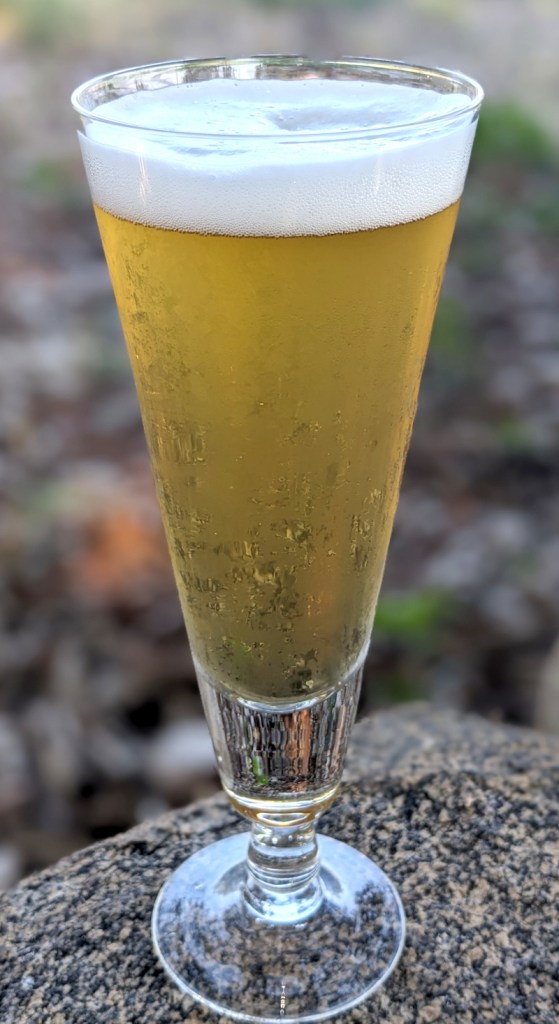
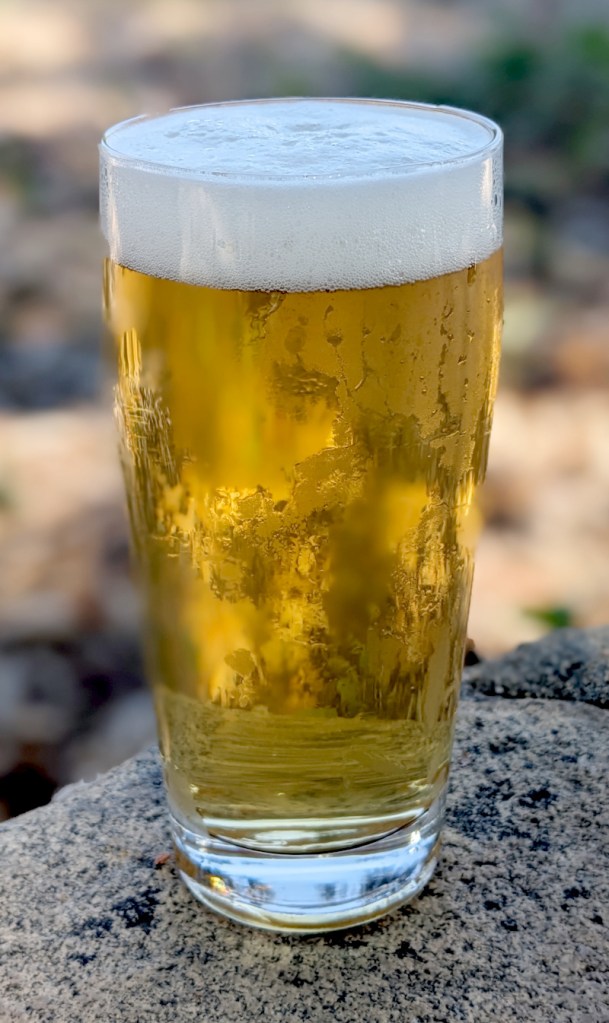
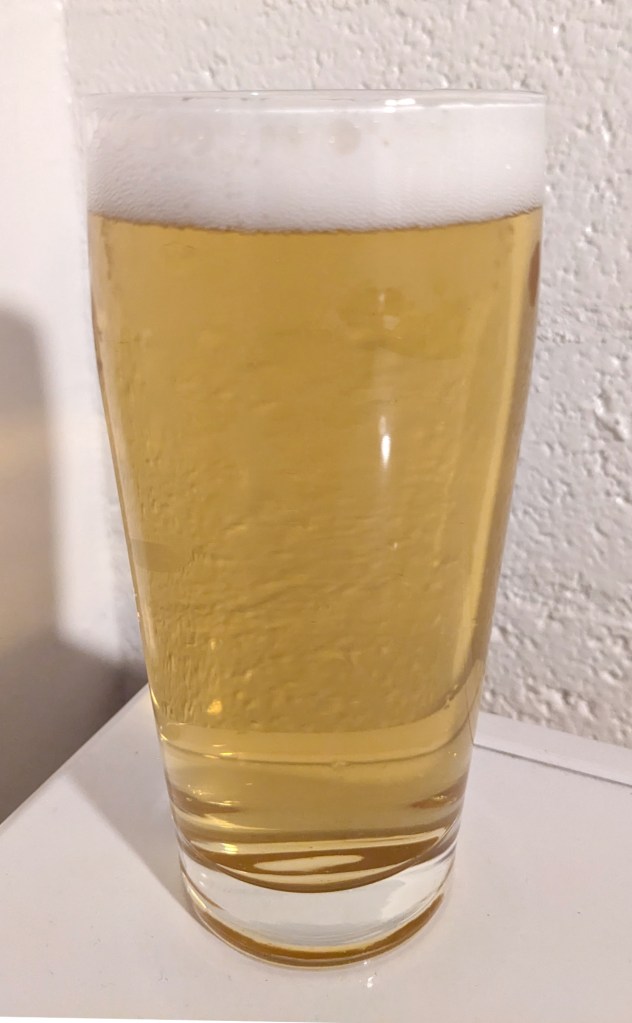
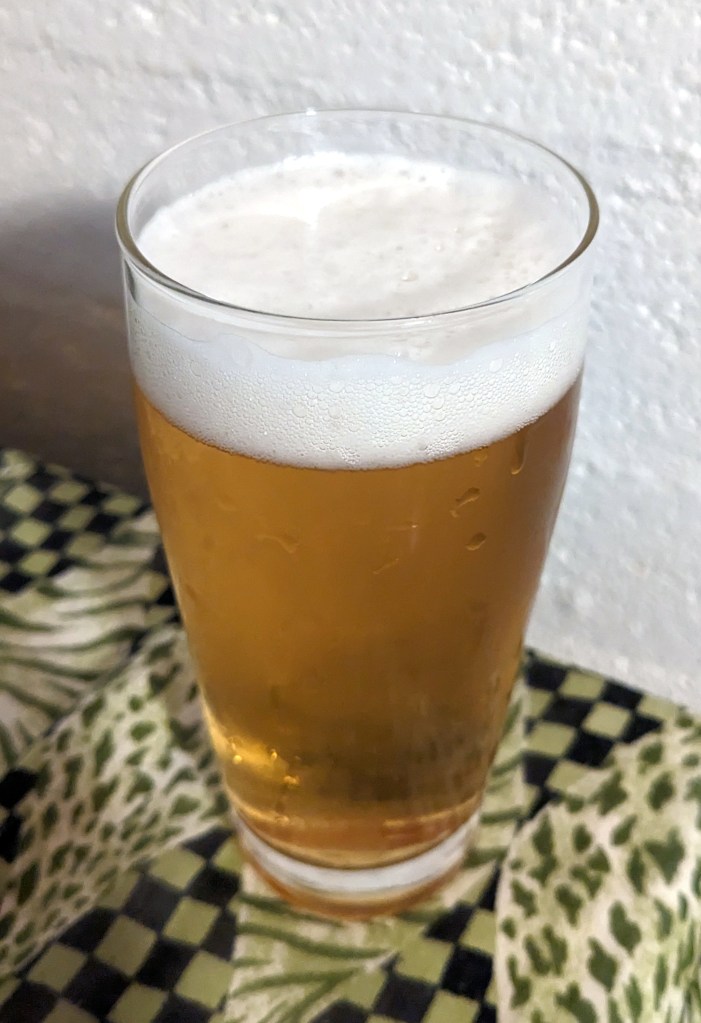
    • A gold beer that pours with a creamy and persistent white head. This is very clear, but not perfectly so.
  • Aroma
    • Doughy malt aroma, with a slight spicy hop character. Clean yeast profile; i.e., not noticeable.
  • Flavor
    • Moderately low bitterness. There is a nice malty quality to this beer, with a rich and bready quality. Malt-forward.
  • Mouthfeel
    • Medium body, medium carbonation, smooth finish.
  • Would I Brew This Again?
    • I really like this style, and this recipe is a good incarnation. I love the smooth maltiness that you get in a Dort. My only minor fault is that the beer could be a touch clearer, but that’s a very minor ding on an otherwise excellent beer. I can safely say that I have mastered this style!
  • Overall
    • 9/10

Bamberger Hofbräu® Schwarzbier

I enjoy some lager variety in my life, and dark lagers add a fun dimension to my brewing (and tasting). Although Munich dunkel has special place in my heart, schwarzbier is another great standby.

This time around, I followed the Bamberger Hofbräu® Schwarzbier recipe from the Dark Lagers book by Kraus-Weyermann and Dornbusch (you can also download a version on the Weyermann website). In terms of the grist, it’s probably closest to my Twisted Schwarzbier recipe, in that it uses primarily pilsner malt. However, rather than using just dark grains to produce the color, some Sinamar provides the final color adjustment. I have never used Sinamar before, so I was happy to have an excuse to explore this ingredient. My hop selection is very different from the original recipe (Magnum+Vanguard, vs. Perle+Spalter), but I am okay with that.

No Spaceballs jokes this time.

Bamberger Hofbrau Schwarzbier

  • 9 lb. Barke pilsner malt (Weyermann)
  • 1 lb. Munich II malt (Weyermann)
  • 0.5 lb. Carafa Special III malt (Weyermann)
  • 0.5 lb. Carapils malt malt (Briess)
  • 3 oz. acidulate malt (Weyermann)
  • 0.9 oz. (25.3 g) Sinamar extract (Weyermann), added at end of boil
  • 0.3 oz. Magnum hop pellets (16.5% alpha), 60 minute boil
  • 1 oz. Vanguard hop pellets (6.5% alpha), 10 minute boil
  • 1 Whirlfloc tablet, 5 minute boil
  • 2 pkg. Diamond lager yeast (Lallemand)

Target Parameters

  • 1.050 s.g., 1.011 f.g., 5.2% abv, 26 IBU, 21 SRM
  • Claremont tap water, with Campden tablet to remove chloramines
  • Full volume mash at 149° for 60 minutes and 10 minute mash-out at 168°

Procedure

  • I mashed in with 7 gallons of water at 155°, to hit 149°. I recirculated and held it at this temperature for 60 minutes, and then raised the mash to 168° for 10 minutes, before pulling the grains.
  • In total, I collected 6.1 gallons of runnings with a gravity of 1.045, for 68% mash efficiency.
  • I brought the runnings to a boil, adding hops and finings per the recipe. After a 60 minute boil, I turned off the heat and chilled down to 70° before transferring it to the fermenter. I chilled down to 49° in my fermentation chamber, before pitching the yeast.
  • I brewed this beer on 31 December 2022, fermenting at 50°. Starting gravity was 1.051.
  • I pulled the beer to garage ambient temperatures (55° to 60°) after 1 week.
  • I kegged the beer on 20 February 2023. Final gravity was 1.014, for 72% attenuation and 4.9% abv.

Tasting

  • Appearance
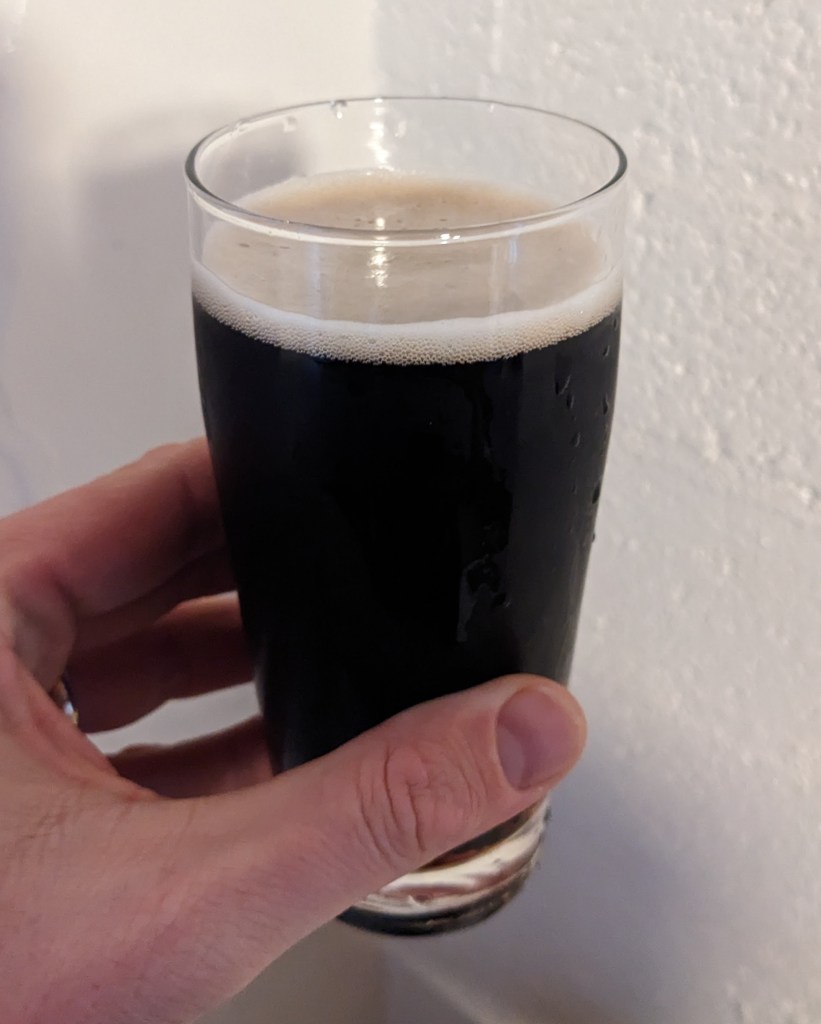
    • Deep, deep brown in appearance with a tan head; when you shine a light through it, it is very clear and dark brown with a reddish cast. The head is persistent, but not particularly fluffy.
  • Aroma
    • Malty, with a slight hint of dark chocolate.
  • Flavor
    • Rounded and bready yet highly drinkable maltiness, with a dark chocolate aspect. Yeast character is clean. Moderate bitterness that balances well against the malt.
  • Mouthfeel
    • Medium-light body, moderate carbonation, smooth and very slightly dry finish.
  • Would I Brew This Again?
    • This is a really nice dark lager. It hits some nice malty notes, without being cloying or burnt-roasty. A little more head retention would be nice (hence my lower score), but even so I’m quite happy with this beer.
  • Overall
  • 8/10

Monks’ Fortitude Märzen

I’ve never made a märzen before, and was intrigued by a recipe in the September 2022 issue of BYO, for Monks’ Fortitude Märzen (paywall). My version is virtually identical, other than using a different dry lager yeast.

Monks’ Fortitude Märzen

  • 8.5 lb. Vienna malt (Weyermann)
  • 3 lb. Munich II malt (Weyermann)
  • 0.5 lb. Carared (Weyermann)
  • 1 oz. Hersbrucker hop pellets (4.3% alpha), first wort hop and 75 minute boil
  • 0.5 oz. Hersbrucker hop pellets (4.3% alpha), 30 minute boil
  • 1 tsp. BruTanB, 10 minute boil
  • 1 Whirlfloc tablet, 5 minute boil
  • 0.5 oz. Hersbrucker hop pellets (4.3% alpha), 5 minute boil
  • 2 pkg. Diamond Lager dry yeast (Lallemand)

Target Parameters

  • 1.055 o.g., 1.009 f.g., 6.1% abv, 24 IBU, 8 SRM
  • Full volume mash at 145° for 40 minutes, 156° for 40 minutes, and 10 minute mash-out at 168°
  • Claremont tap water, with Campden tablet

Procedure

  • I mashed in with 7.25 gallons of water at 145°, adding 7 mL of 88% lactic acid. I maintained temperature at 145° for 40 minutes, before stepping up to 156° for 40 minutes and then 168° for 10 minutes.
  • I collected 6.5 gallons of wort with a gravity of 1.046, for 67% mash efficiency.
  • I forgot to add the CaraRed (argh! too many distractions during my brew day) in the initial mash, but was able to steep it in hot wort for 20 minutes at the start of the boil. I then filtered out the grains and added the steeped liquid to the boiling wort. This should probably kick my efficiency up to around the target.
  • I added hops and finings per the recipe, boiling for a total of 75 minutes.
  • I hit a target gravity of 1.055, exactly on the nose. I chilled the beer
  • I brewed the beer on 8 October 2022, and chilled it overnight to 48°. The next morning, on 8 October 2022, I pitched the yeast.
  • I started fermentation at 48°, and let it free rise to 50° on the first day.
  • I brought the beer out to ambient on 12 November 2022, and let it sit at this temperature until kegging on 19 November 2022.
  • Final gravity was 1.012, for 5.7% abv.

Tasting

  • Appearance
    • Brilliantly clear and light amber hue, with a persistent off-white head.
  • Aroma
    • Malty! There is also a slight bit of spicy hop character. Yeast profile is very clean.
  • Flavor
    • The beer has a rich malty character, with an off-dry finish and a bread-crust quality. Very drinkable! Bitterness is moderate, well matched with the maltiness.
  • Mouthfeel
    • Medium body, med\ium carbonation, smooth and off-dry finish.
  • Would I brew this again?
    • Yes! This is wonderfully drinkable and well attenuated, and a very nice lager. It’s a good version of this style.
  • Overall
    • 10/10

Black Bear Pils

I really like German pils, and make it pretty frequently…with 14 brews of this style under my belt, it’s time for number 15! For this iteraton, I returned to Dave Carpenter’s Lager book for inspiration via the Pfriem Pilsner recipe. My current version is modified for hop varieties on-hand; thanks to my HOPBOX I had a few different German hops in the freezer, which were a perfect match for this style. Notably, I’ve never brewed with Saphir before, and wanted to give it a try. I also had some S-189 in my stockpile (from a freebie give-away), and figured this would be a good batch to try it in.

The batch practically named itself. I was brewing in my garage on a hot summer day, with the Foundry right at the garage door entry. I ran across the driveway (our house is horseshoe shaped, with a parking space right in the middle of the U) to grab something from my fermenting area, leaving my brew rig unattended for a minute. Looking out the window and towards the garage, I suddenly noted a black bear wander into our yard. It ambled over to the open garage door, obviously intrigued by the malty aromas of a pilsner mash. As it started to poke its nose around the Foundry, two thoughts went through my head…first, “That’s so cool! I should get a picture!” The second thought was…”My beer! The bear! I don’t want the mash tun tipped over! The bear could get burned! My beer could get wasted! Action! Quick!” In an instant, I was at the door, yelling at the unexpected visitor to get out of my garage! With what I can only assume was surprise, the bear craned its neck to look at me, and then booked it out of the yard. Disaster averted! And beer recipe named.

Black Bear Pils

  • 10.25 lb. Barke pilsner malt (Weyermann)
  • 2 oz. acidulated malt (Weyermann)
  • 1 oz. Hallertau Tradition hop pellets (6.1% alpha), 60 minute boil
  • 0.5 oz. Hallertau Tradition hop pellets (6.1% alpha), 10 minute boil
  • 0.5 oz. Saphir hop pellets (3.7% alpha), 10 minute boil
  • 0.5 oz. Spalt Spalter hop pellets (3.0% alpha), 10 minute boil
  • 1 tsp. BruTanB, 10 minute boil
  • 1 Whirlfloc tablet, 5 minute boil
  • 1.5 oz. Saphir hop pellets (3.7% alpha), 10 minute whirlpool
  • 2 pkg. SafLager German lager yeast (Fermentis S-189)

Target Parameters

  • 1.047 s.g., 1.007 f.g., 35 IBU, 4 SRM, 5.2% abv
  • Full-volume mash, no sparge, at 142° for 40 minutes and 156° for 40 minutes, with 10 minute mash-out at 168°
  • Claremont tap water adjusted with RO and minerals to hit 47 ppm Ca, 2.5 ppm Mg, 33 ppm Na, 92 ppm SO4, 39 ppm Cl, and 11 ppm HCO3, with 9 ppm alkalinity and RA=-26 ppm

Procedure

  • To produce the water, I added 2 mL of 88% lactic acid to to 2.5 gallons of tap water to remove the bicarbonate, and then 1/4 of a Campden tablet to remove the chloramines. Then, I added 4.5 gallons of RO water and 3.5 g gypsum to achieve a final water with 47 ppm Ca, 2.5 ppm Mg, 33 ppm Na, 92 ppm SO4, 39 ppm Cl, and 11 ppm HCO3, with 9 ppm alkalinity and RA=-26 ppm.
  • I heated the mash water to 146°, and added the grains to hit a target mash temperature of 142°. I held it at this temperature for 40 minutes, chasing away bears when necessary. It wasn’t necessary to add lactic acid for this batch, because I already had acidulated malt. After the initial rest, I raised the mash temperature to 156°, and held it here for another 40 minutes. Finally, I heated to 168° and held it there for 10 minutes before removing the grains.
  • In total, I collected 6.5 gallons of runnings with a gravity of 1.041, for 70% mash efficiency.
  • I brought the runnings to a boil, adding hops, BrewTanB, and Whirlfloc as indicated in the recipe. In total, I had a 70 minute boil.
  • I brewed this beer on 20 August 2022. After chilling to ~75°, I transferred the beer to my fermenter and continued to chill overnight down to 48°.
  • Starting gravity was 1.047, right on target. I pitched the yeast on 21 August 2022, and started the fermentation at 48°.
  • I raised the fermentation temperature to 55° on 28 August, and then to 60° on 1 September 2022. I crashed the fermenter to 36° on 3 September 2022, and lagered at this temperature until kegging on 28 October 2022.
  • Final gravity was 1.010, for 4.9% abv. Although there was some yeast disturbance upon kegging and initial serving, I was pulling remarkably clear drafts within about 10 days. I’m quite pleased with that!

Tasting

  • Appearance
    • Near brilliantly clear, straw-colored beer, which pours with a medium white head of modest persistence.
  • Aroma
    • Spicy hop aroma with a doughy and very slight honey quality to the malt. Clean fermentation profile in the aroma. Wonderful!
  • Flavor
    • Cracker-like malt profile, with a slight bit of malty sweetness. Moderately high and clean bitterness, with a modest spicy quality. Clean yeast character. The malt is at the front of the taste, and the bitterness sneaks in and then pops for an extended and prominent bitter finish. The mineral character of the water also comes through, against the hops.
  • Mouthfeel
    • Medium-light body, moderate carbonation, off-dry finish.
  • Would I Brew This Again?
    • This is a super solid German pils! I wish the head retention was better, but everything else works super well. I’m also pleased with the yeast–it emphasizes the malt well, and also dropped clear pretty quickly.
  • Overall
    • 9/10

Summer Helles

Last year, I made a Munich helles following a recipe in Gordon Strong’s Modern Homebrew Recipes, with pretty excellent results. Munich helles is such a great summer lager (among many great summer lager varieties!), but it was only on my 2021 batch that I felt I had finally gotten close to nailing the style.

This year’s version is along the same lines as last year’s, but I used different brands/variations of ingredients for what I had on hand or needed to use up. For instance, I used Weyermann’s Barke pilsner malt instead of their “regular” pilsner malt, and their Munich I malt instead of Chateau’s equivalent. I had Briess’s aromatic Munich 20L on-hand, so that went in as a substitute for Carahell, and I just flat-out skipped Carapils. I used Hallertau Tradition in place of Hallertauer Mittelfrueh, and finally went with Diamond Lager yeast instead of 34/70. I guess that’s a long way of saying it is a completely different recipe, but has largely the same proportions of ingredients and targets pretty similar numbers.

Because this was a really busy summer (filled with fieldwork, a house move, and COVID), the beer ended up conditioning in the keg for over two months. I rarely have a lager that sits for so long, and the end result was something that was crystal clear. As you’ll see in the tasting notes, I’m overall quite pleased with this iteration!

Summer Helles 2022

  • 8.25 lb. Barke pilsner malt (Weyermann)
  • 1.25 lb. Munich I malt (Weyermann)
  • 0.25 lb. Aromatic Munich malt 20L (Briess)
  • 0.75 oz. Hallertau Tradition hop pellets (6.1% alpha), 60 minute boil
  • 1 tsp. BruTanB, 10 minute boil
  • 1 Whirlfloc tablet, 5 minute boil
  • Repitch of Diamond Lager yeast (Lallemand)

Target Parameters

  • 1.044 o.g., 1.007 f.g., 17 IBU, 5 SRM, 4.9% abv
  • Full-volume infusion step mash, 45 minute rest at 144°, 45 minute rest at 160°, 10 minute rest at 168°
  • Water built from RO, to hit 23 Ca, 8 Mg, 32 SO4, 40 Cl, -21 RA

Procedure

  • I added 2.5 g epsom salt and 2.5 g CaCl to 7 gallons of RO water, to hit my target water specifications.
  • I heated the strike water to 148°, and added the grains along with ~1.1 mL of 88% lactic acid in order to hit my target pH of 5.4. I held at 144° for 45 minutes while recirculating, and then raised the mash to 160° for another 45 minutes. Finally, I mashed out for 10 minutes at 168°.
  • After removing the grains, I had collected 6.4 gallons of runnings with a gravity of 1.041, for 72% mash efficiency.
  • I brought the kettle to a boil, adding hops and finings per the recipe. After a 60 minute boil, I turned off the heat and chilled the wort to ~70° before transferring to the fermenter. I chilled overnight to 49°.
  • I brewed the beer on 15 May 2022, and pitched the yeast slurry from my Alta California Lager the next morning, 16 May 2022. At this time, I oxygenated with 30 seconds of pure O2.
  • I starting fermentation at 50°, holding it there until 23 May 2022, when I let it free-rise to 60°. Then, I cold crashed to 34° on 28 May 2022.
  • I kegged the beer on 8 June 2022. Starting gravity was 1.046, and final gravity was 1.012, for 4.5% abv. The beer cold conditioned at ~34° for over two months, before going on tap.

Tasting

  • Appearance
    • Brilliantly clear, gold beer. It pours with a white, medium head that subsides to a persistent white ring around the edge of the glass.
  • Aroma
    • Malty aroma, at a modest level. Very clean fermentation, with no noticeable yeast character. No hop aroma apparent.
  • Flavor
    • Moderately rich malt flavor, with a lingering sweet maltiness against a moderately low level of hop bitterness.
  • Mouthfeel
    • Medium-light body, moderate carbonation, very smooth finish.
  • Would I Brew This Again?
    • Yes! This is a great recipe. The low level of head on this is the only minor flaw. Otherwise, this is an incredibly gorgeous, tasty, and easy drinking beer. Next time, I’ll probably add the Carapils back in, and switch back to Carahell instead of Aromatic Munich.
  • Overall
    • 9/10