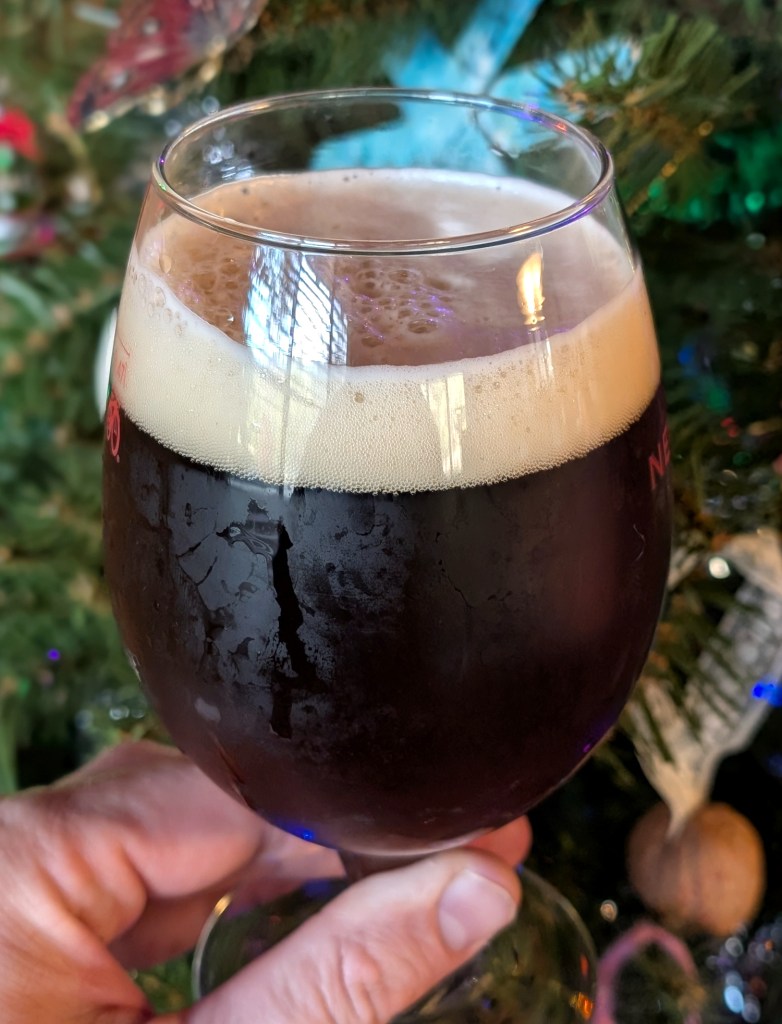
Rated “PG” for Pineapple Guava

Even though I have lived here for nearly 16 years, I didn’t grow up in southern California, and so I’m always learning something new about the the kinds of fruits and vegetables that grow in this climate. Last fall, I noted a bunch of fruit on a tree adjacent to our home, and upon examination found that it was rather tasty in aroma. A little internet research revealed the source–feijoa, or pineapple guava!

green fruit with white bloom on the surface -- the fruit are somewhat egg-shaped, and laying on the ground

Pineapple guava (I’ll use that name throughout) are native to parts of South America, including Brazil, Argentina, Uruguay, and Paraguay, and have been cultivated in many areas with appropriate climate (apparently they are particularly popular in New Zealand). A member of the myrtle group, rather than a true guava, pineapple guavas produce a small (one to two inch across), green-skinned fruit that tastes and smells almost exactly how the name sounds. Somewhat counter-intuitively, they are not ready to eat until they drop from the tree and onto the ground!

Once I found this fruit, I knew that it would be perfect for enhancing a sour beer–something low abv, refreshing, and spritzy. I chose a Berliner Weisse-style grain bill (50% pilsner, 50% wheat malt), aiming for ~1.030 s.g. I didn’t want a highly hopped beer, so I used ~1 oz. of South Dakota Saaz hops. I didn’t know the alpha acid, but if I added them late enough it didn’t really matter. For this beer, I wanted an easy sour, with a clean character that would let the fruit shine through. Wildbrew Philly Sour was an obvious choice, enhanced by the fact that I wouldn’t have to worry as much about contamination of other batches. The fruit is a fair bit of effort to pick and process, so I stuck with a 2.5 gallon batch, aiming for one pound of fruit per gallon of beer.

The results were totally worth it! This is one of the best experimental brews I made in a long time, and it was really fun to highlight something that I picked from our yard.

Rated “PG” for Pineapple Guava

  • 2 lb. pilsner malt (Rahr)
  • 2 lb. red wheat malt (Briess)
  • 2 oz. rice hulls
  • 1 oz. Saaz whole hops (est. 3.5% alpha), 10 minute boil
  • 0.5 tsp. BrewTanB, 10 minute boil
  • 0.5 tsp. yeast nutrient (WLN1000), 5 minute boil
  • 0.5 pkg. Wildbrew Philly Sour yeast (Lallemand)
  • 2.5 lb. pineapple guava puree

Target Parameters

  • 1.031 o.g., 1.006 f.g., 3.2% abv, 8 IBU, 3 SRM
  • Full volume mash, no sparge, 152° mash for 60 minutes, 10 minute mash-out at 168°
  • Claremont tap water, neutralized with 88% lactic acid and treated with Campden tablet

Procedure

  • Starting with 4.75 gallons of tap water, I added 1/4 Campden tablet and 3.2 mL of 88% lactic acid to remove the carbonates. I heated the strike water to 156°, before adding the grains along with 0.7 mL of 88% lactic acid. I held the mash at 152° with recirculation for 60 minutes.
  • After the 60 minute mash, I raised the temperature to 168° for 10 minutes, before pulling the grains.
  • Overall, I collected ~4.5 gallons of runnings with a gravity of 1.025, for 76% mash efficiency.
  • I boiled for 60 minutes, adding finings and hops per the recipe.
  • After turning off the heat, I chilled the wort to 85° and transferred to the fermenter. I pitched a half packet of Philly Sour and sealed up the fermenter.
  • I brewed this beer on 2 April 2024. Starting gravity was 1.033, and I fermented the beer at 80°.
  • I picked the fruit way back in December, peeled it, and put everything into the deep freezer until beer time. I thawed the fruit or a day or two, pureed it, and then pasteurized at 161° for 30 seconds. I let it cool a bit, and then added to the fermenter. All of this happened on 3 April 2024, very early in fermentation.
  • I kegged the beer on 18 April 2024. Final gravity was 1.009, for 3.1% abv.

Tasting

  • Appearance
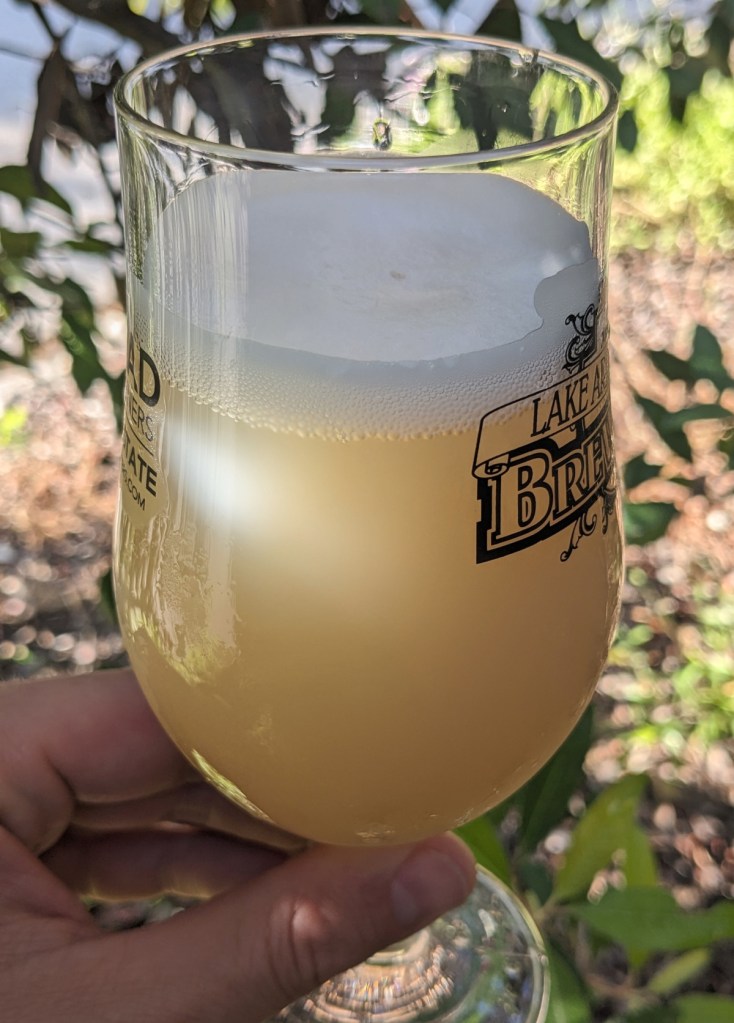
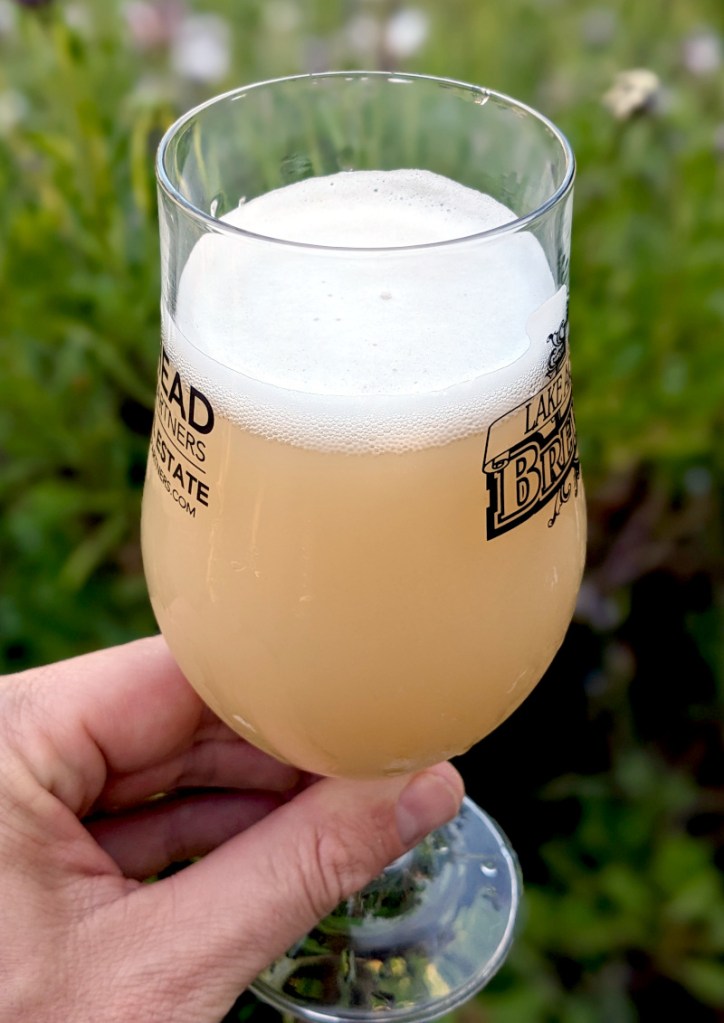
    • Hazy straw color, like the appearance of grapefruit juice. Pours with a thick white head that persists well.
  • Aroma
    • Quite prominent guava fruit aroma at the forefront, with a little doughy character behind that.
  • Flavor
    • The beer is fairly tart, but not puckeringly sour, at first impression. The tropical fruit character is definitely there, but it’s subtle–notes of guava (unsurprisingly) dominate. Some doughy wheat character hides behind it all, at a low level. Barely perceptible bitterness.
  • Mouthfeel
    • Light body, spritzy carbonation, slightly dry finish.
  • Would I Brew This Again?
    • Yes! This is a perfectly refreshing beer, well suited for the warming afternoons of spring. It is crisp, but not watery. The fruit is gorgeous on the aroma and perfectly restrained on the flavor. It’s that rare fruited beer where you can pick up the fruit character, but it takes a few seconds to process the flavor. This batch was a good bit of extra work in the fruit process, but absolutely worth it. I have sometimes seen some dismissive comments about Philly Sour being too one-note in character, but that is perfect for this beer as a way to let the subtle fruit notes take center stage. I know that I’ll never find a beer like this commercially, and that’s so much of the fun of homebrewing!
  • Overall
    • 10/10
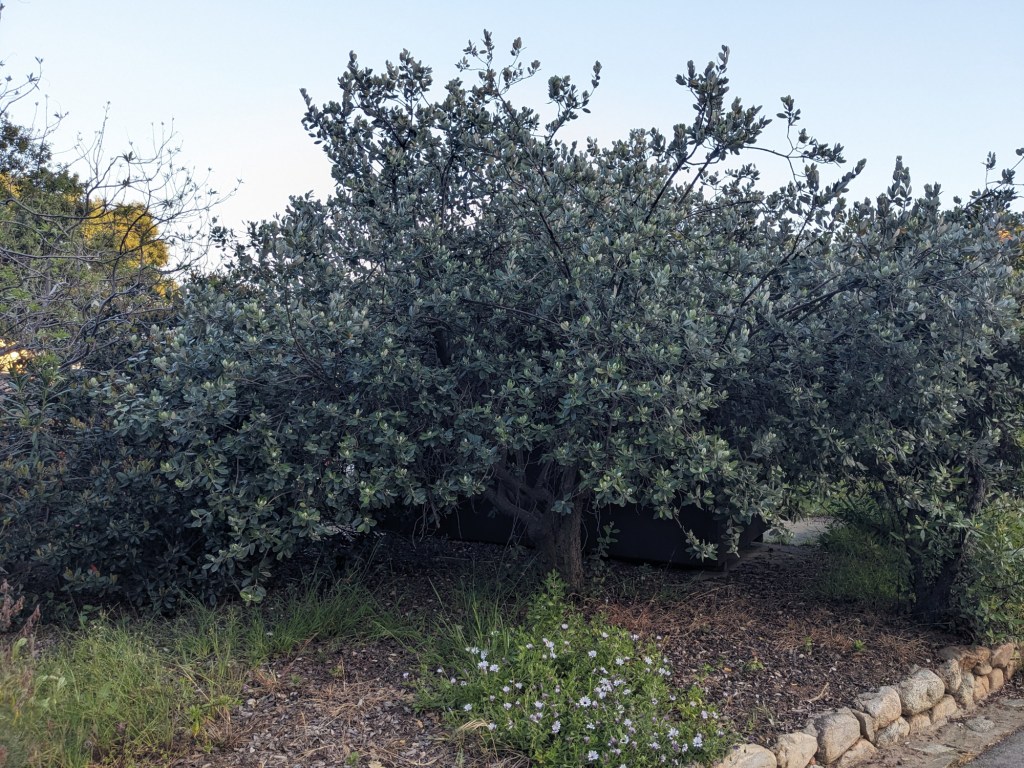
dark green tree
The feijoa tree in all of its glory — the tallest branch is perhaps 8 or 10 feet off the ground

Live Oak Canyon Ale

The holidays aren’t just for dark beers–anything with a decent bit of “heft” to it in flavor, alcohol, body, or some combination of those can be a great sipper next to the fire. Looking to expand my brewing repertoire, I returned to wood-aged beers, with a riff on an Imperial Red IPA from beloved local brewery Claremont Craft Ales. The original, called Happy Days, is an exceptional beer that has taken gold at the GABF (twice!), among a ton of other awards. It weighs in at 9.5% abv, so isn’t a casual beer–but it goes down smoothly nonetheless!

A clone recipe for Happy Days is available, and it’s a surprisingly simple brew. It starts out with just three malts — 2-row, crystal 150L, and a dash of chocolate malt for color, with some dextrose to dry out the beer. CTZ, Mosaic, and Simcoe round out the hop bill…and that’s it! This beer is a testament to how great recipe design and careful handling come together to make something exceptional.

For my own version, I used Happy Days as a starting point, but not the end. One goal was to play with wood aging, so the beer departs from a “clone” pretty much right away. Second, I wanted to try out some different hops, partly to see how they worked and partly to use up my (admittedly too large) hop stash.

I kept the target gravity around the same as the original Happy Days, but dropped the chocolate malt from the recipe. It seemed to be there only for color adjustment, and I just didn’t need it to hit my goals in the current batch. I had crystal 120 but not crystal 150 on-hand, so that was another malt adjustment. I aimed for around the same level of bitterness, but chose HBC 522 and Talus as my flavor/aroma hops. They seemed to have roughly similar qualities to the original recipe. Finally…I needed to figure out an oaking strategy. I didn’t want this beer to be an oak bomb, and I also didn’t want an extended barrel aging process that would kill the hop character. So, I elected to use the BeerStix product, aging a textured slab of wood in the primary as well as a bit in the keg.

The end result was pretty satisfying–one of the better experimental beers I’ve made! I am both glad and sad I did only a small batch–glad because I didn’t need 5 gallons of a 10% abv beer; and sad because this beer really is a smooth drinker, pretty darned tasty, and gone distressingly quickly.

The name for this beer comes from a canyon near where we live…it conveniently has “oak” in the name, so was a logical choice for a wooded beer.

Live Oak Canyon Ale

  • 10.5 lb. 2-row malt (Briess)
  • 13 oz. caramel malt 120L (Briess)
  • 1 oz. Warrior hop pellets (13.4% alpha), 60 minute boil
  • 0.5 oz. Magnum hop pellets (16.5% alpha), 60 minute boil
  • 0.75 lb. corn sugar, 5 minute boil
  • 1 Whirlfloc tablet, 5 minute boil
  • 2 oz. HBC 522 hop pellets (9.4% alpha), 15 minute whirlpool
  • 1 pkg. WLP001 (White Labs), California Ale dry yeast
  • 1 medium toast American oak Beer Stix carboy stick, added to primary and carried over to keg
  • 2 oz. LUPOMAX Talus hop pellets (12.0% alpha), dry hop in keg

Target Parameters

  • 1.093 s.g., 1.015 f.g., 10.5% abv, 125 IBU, 17 SRM
  • Infusion mash, held at 152° for 60 minutes and 168° for 10 minutes, with sparge
  • Claremont tap water, with Campden tablet, adjusted with minerals to achieve 58 ppm Ca, 23 ppm Mg, 54 ppm Na, 155 ppm SO4, 60 ppm Cl, 10 ppm CO3, -47 ppm RA

Procedure

  • Starting with 5.6 gallons of water, I added 4 mL of 88% lactic acid to neutralize the carbonates. Then, I added 2 g epsom salts and 2 g gypsum, to achieve my target water profile.
  • I heated the strike water to 161°, added the grains, and hit a 152° mash temperature. I also added 4 mL of 88% lactic acid, to adjust the pH.
  • After a 60 minute mash and recirculation, I raised the mash temperature to 168° for 10 minutes, before pulling the grains and sparging with ~0.9 gallons of water.
  • In total, I collected 5.25 gallons of runnings with a gravity of 1.058, for 72% mash efficiency. This was great…but meant that I needed to boil for a full 60 minutes before adding hops — so, the beer had a total of a 120 minute boil.
  • After the initial 60 minutes of boiling, I began adding hops and other finings per the recipe, with corn sugar added at the very end.
  • After the boil, I chilled the beer down to around 68°, before transferring to the fermenter.
  • I brewed this beer on 4 November 2023; it had a starting gravity of 1.089. Once pitching the yeast, I let it ride at ambient (around 62°).
  • Visible evidence of fermentation was present within 24 hours, and the beer was up to around 68° and had vigorous fermentation by 6 November 2023. On the morning of 7 November, the beer had climbed to 74°, so I put it into the conditioning chamber to drop it down over the course of the day. Unfortunately, I overshot a bit and it went all the way down to 45°. I pulled it out to ambient again, and it steadily rose to 62° by 9 November 2023. At this point, I put a thick towel around the beer to raise and maintain the temperature.
  • I soaked the oak stick in water overnight, and then put it into the microwave for around 90 seconds to flash steam and sanitize. I spritzed the oak with StarSan, before adding it to the fermenter. The oak was added to the primary fermenter on 7 November 2023.
  • I kegged the beer on 19 November 2023, adding the dry hops in a baggie and also transferring the oak to the keg.
  • Final gravity was 1.016, for 9.9% abv.
  • I left the keg at ambient until 27 November 2023, when I removed the dry hops and oak, moved the keg to the conditioning chamber, and let it condition and carbonate at 34°.

Tasting

  • Appearance
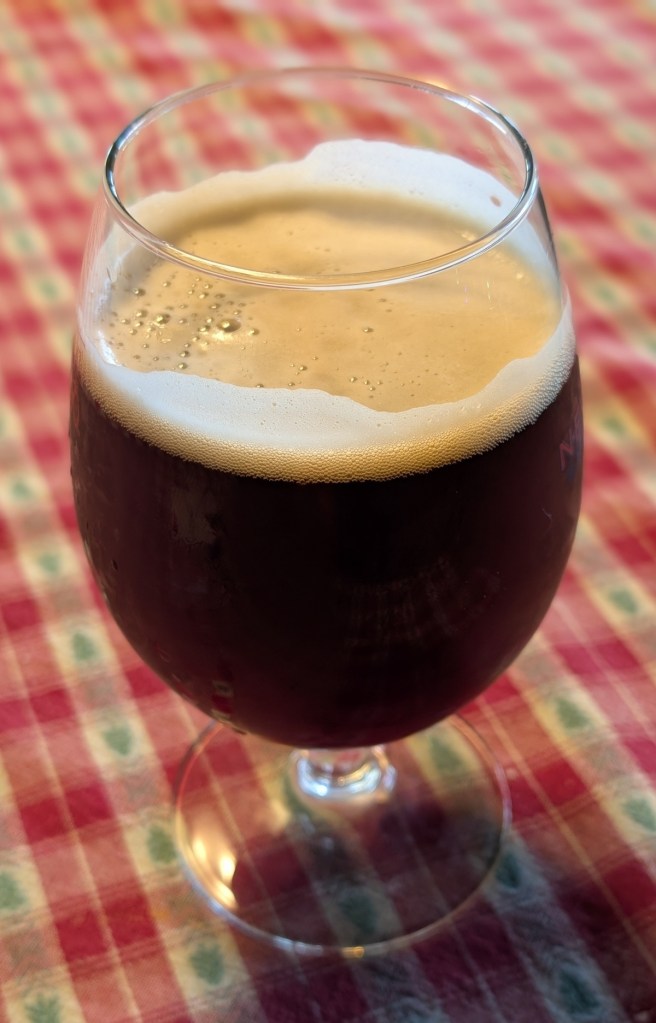
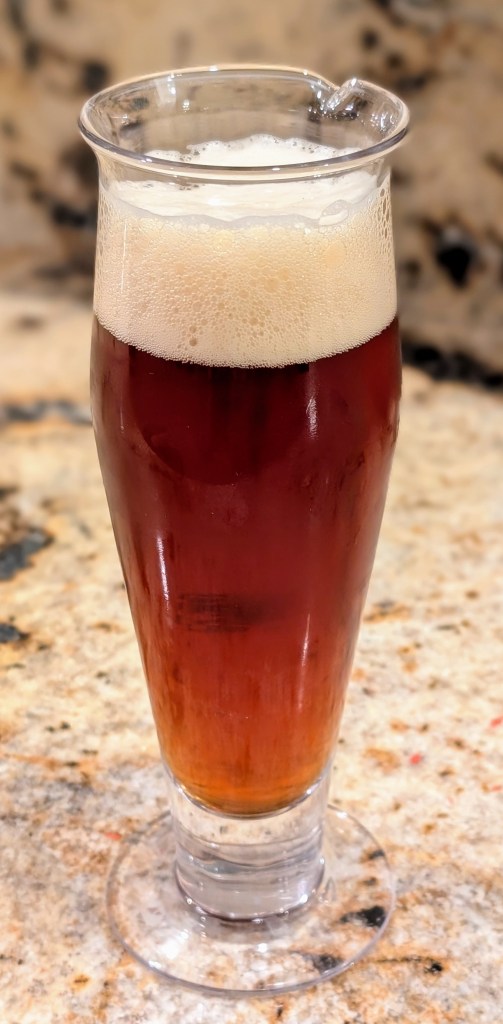
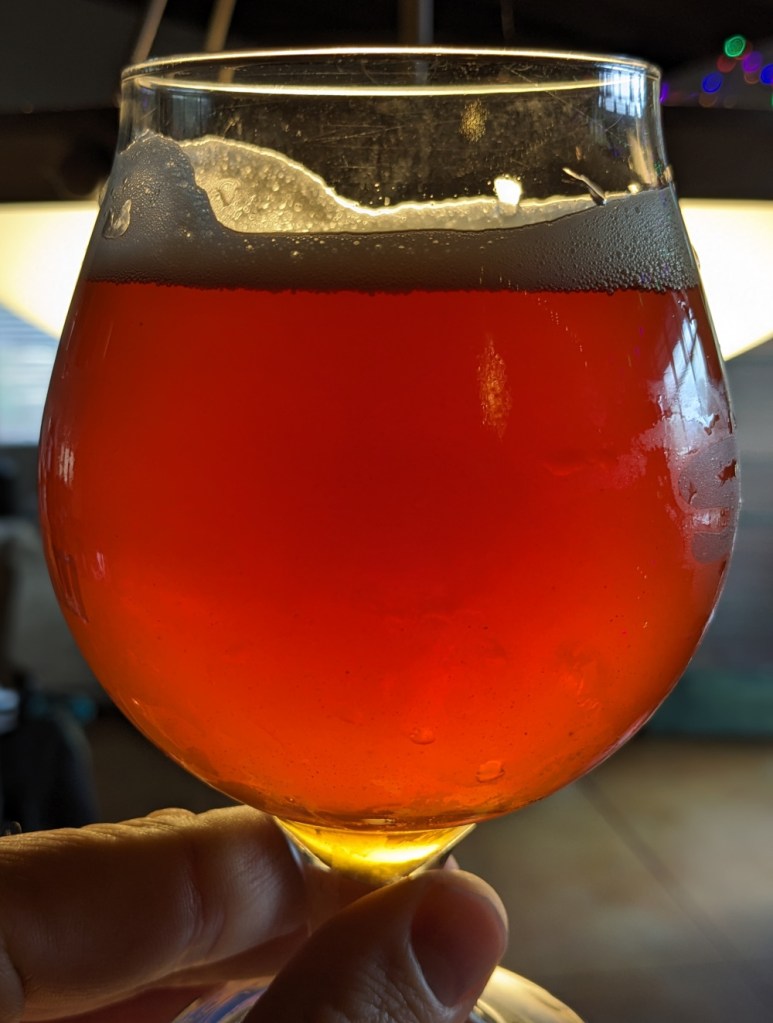
    • The beer has a deep reddish amber color, with a slight haze; it pours with a creamy and persistent ivory head. Gorgeous!
  • Aroma
    • Pine, sweet orange, and resin, with a hint of woody oakiness. As the beer warms up, the wood comes through more prominently.
  • Flavor
    • Hop forward, very bitter beer, with a hint of orange and resiny bitterness, and some woody character behind that. Caramel maltiness is at a moderate level. This woodiness holds mainly until the back end of the palate and the finish, which complements the hops nicely.
  • Mouthfeel
    • Medium carbonation, medium body, off-dry finish.
  • Would I Brew This Again?
    • What a wonderful experiment! This has been an incredibly enjoyable beer, with high drinkability. Overall, it’s an awesome winter seasonal brew.
  • Overall
    • 10/10

Odds ‘n’ Ends Belgian Ale

Last year, I had fantastic results with a Belgian pale ale, even if it’s not a style I typically make. They can be interesting beers, so it seemed worth another attempt. This time, though, I’m not worried as much about brewing to style as I am wanting to use up ingredients on-hand. The result is a kitchen sink recipe that tastes pretty good, even if it isn’t precisely any style. We’ll just call it a Belgian ale.

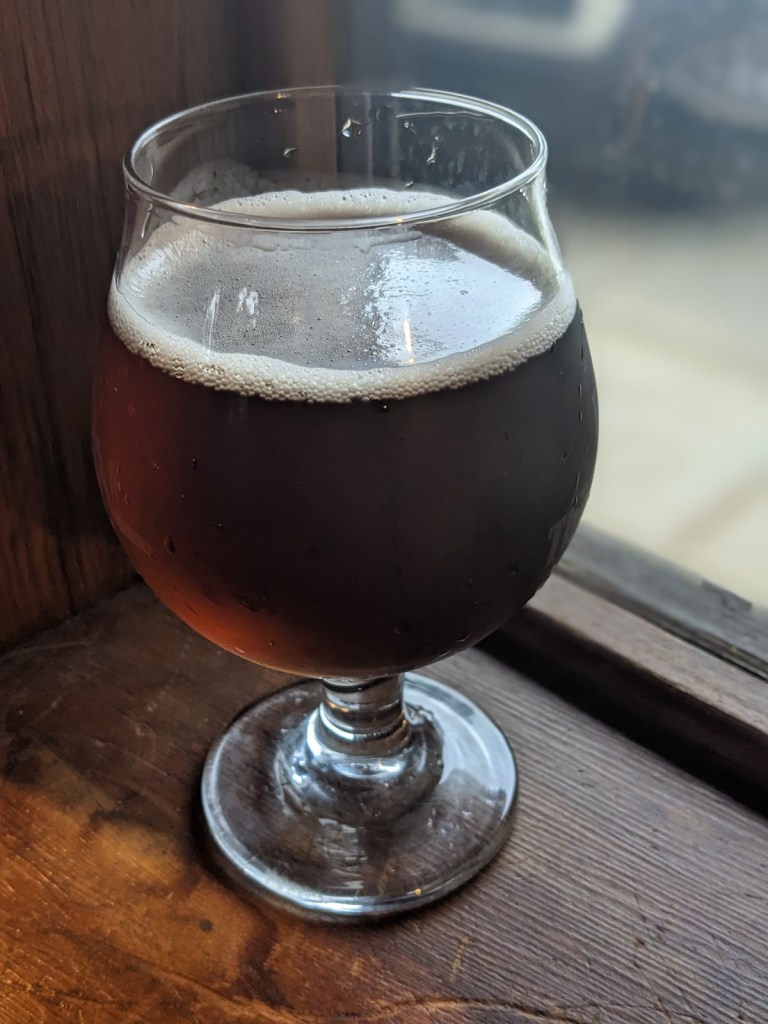
amber beer with ivory head in tulip glass, sitting on wood windowsill

Odds ‘n’ Ends Belgian Ale

  • 9 lb. 15 oz. 2-row malt (Rahr)
  • 8 oz. Carared (Weyermann)
  • 6 oz. honey malt (Gambrinus)
  • 2 oz. Carafa Special II malt
  • 2 oz. coffee malt (Simpsons)
  • 2 oz. Special B malt (Dingemans)
  • 1 oz. Hallertauer Mittelfrueh hop pellets (5.2% alpha), 60 minute boil
  • 1 oz. Hallertauer Mittelfrueh hop pellets (5.2% alpha), 10 minute boil
  • 1 oz. Saaz hop pellets (3.5% alpha), 5 minute boil
  • 1 pkg. Abbaye Belgian ale yeast (Lallemand)

Target Parameters

  • 1.050 s.g., 1.013 f.g., 4.9% abv, 29 IBU, 13 SRM
  • Full volume mash, 152° for 60 minutes, 168° mash-out for 10 minutes
  • Claremont tap water adjusted with lactic acid and mineral additions, to achieve calculated water profile of 60 Ca, 6 Mg, 84 Na, 30 SO4, 137 Cl, 156 HCO3, RA=82 ppm.

Procedure

  • I mashed in with 7.5 gallons of water at 158°, to hit a mash temperature of 152°. I added 4.3 mL of 88% lactic acid to adjust the mash pH.
  • I held the mash at 152° for 60 minutes, while recirculating, before raising the temperature to 168° for a 10 minute mash out.
  • After the mash, I removed the grains. In total, I collected 6.6 gallons of runnings with a gravity of 1.041, for 66% mash efficiency.
  • As I brought the runnings to a boil, I added 1 g of CaCl to adjust the water.
  • I boiled for 60 minutes, adding hops per the recipe. After 60 minutes, I turned off the heat and chilled the wort to 64° before transferring to the fermenter.
  • I started with 5.5 gallons total and a gravity of 1.048. I brewed this beer on 7 April 2023, and fermented at 64°.
  • On 15 April 2023, I pulled the beer to ambient.
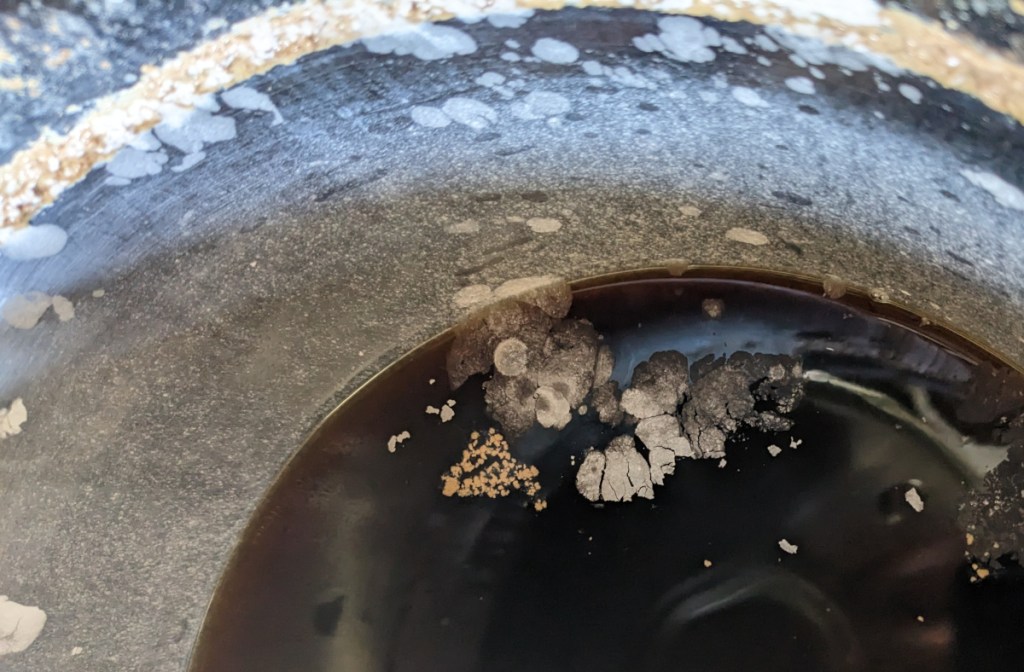
  • I kegged the beer on 30 April 2023. It had a final gravity of 1.010, for 5.1% abv. A thin white pellicle was forming on top of the beer, but overall it tasted just fine. Either way, I’ll need to do a deep sanitize/sterilize of my equipment.
  • The beer was a bit hazy to start, but had dropped fairly clear by 23 May 2023, and had dropped brilliantly clear by 1 June 2023.
A pellicle! How did that get there?

Tasting

  • Appearance
    • The beer pours with a fluffy, ivory head that subsides to a persistent blanket across the entire top of the beer. The beer itself is a deep amber color and brilliantly clear.
  • Aroma
    • This beer has plenty of clove yeast character at the front, with some black pepper. There is caramel and dark bread crust maltiness behind that.
  • Flavor
    • Yeast is at the front, with clove and sweet apple fruitiness, with a bit of pepper. Malt character is smooth, with some caramel and bread. Moderate level of bitterness, but not much hop character otherwise.
  • Mouthfeel
    • Medium body, medium carbonation, smooth finish with an off-dry quality.
  • Would I Brew This Again?
    • This is overall a good beer, with interesting qualities but not too interesting. Is it a Belgian pale ale? Sure, we can call it that. I’m grateful that I caught the pellicle before it went too far down the sour or funky road….as it is, I don’t really pick up anything. Phew! It’s squarely in the category of “decent, but probably won’t be brewed again.”
  • Overall
    • 7/10

Tropical Dream IPA

I crafted this recipe to be very tropical hop-forward, with Voss kveik to accentuate any citrus qualities. The kveik choice also let me not be so fussy about temperature; in the end, I’m not sure I’m 100% happy with that decision, but even so the beer is pretty darned good. The hops are amazing!

Tropical Dream IPA

  • 12 lb. 2-row malt (Rahr)
  • 0.5 lb. biscuit malt (Dingemans)
  • 5 oz. crystal 15 malt (Great Western)
  • 5 oz. corn sugar, added to boil
  • 1.15 oz. Magnum hop pellets (10.1% alpha), 60 minute boil
  • 1 tsp. BruTanB, 10 minute boil
  • Whirlfloc tablet, 5 minute boil
  • 1 oz. Enigma hop pellets (19.2% alpha), 10 minute whirlpool
  • 1 oz. HBC 586 hop pellets (11.5% alpha), 10 minute whirlpool
  • 1 oz. Vic Secret hop pellets (18.4% alpha), 10 minute whirlpool
  • 1 pkg. Voss Kveik Ale Yeast (Lallemand)
  • 1 oz. Enigma hop pellets (19.2% alpha), dry hop in keg
  • 1 oz. HBC 586 hop pellets (11.5% alpha), dry hop in keg
  • 1 oz. Vic Secret hop pellets (18.4% alpha), dry hop in keg

Target Parameters

  • 1.060 s.g., 1.010 f.g., 6.6% abv, 67 IBU, 6 SRM
  • Full volume mash at 149° for 60 minutes and 10 minute mash-out at 168°
  • Claremont tap water with Campden tablet, adjusted to hit 113 Ca, 7 ppm Mg, 92 ppm Na, 194 ppm SO4, 110 ppm Cl, 156 ppm HCO3.

Procedure

  • I heated 7.25 gallons of water to 155°, and added the grains along with 8 mL of 88% lactic acid for pH adjustment. I maintained the mash at 149° for 60 minutes, with recirculation, and then raised the mash to 168° for 10 minutes.
  • In total, I collected 6.25 gallons of runnings with a gravity of 1.045, for only 60% mash efficiency. Awful! I’ve had major issues with my grain mill lately, and this was pretty much the last straw. I added a bit of DME to adjust things.
  • I added 7 g of gypsum to the boil, to hit my water target.
  • I brought the wort to a boil, adding the hops and finings per the recipe.
  • After a 60 minute boil, I chilled the wort slightly (down to around 195°), did the whirlpool, and then did the initial chilling of the wort. I finished the chill overnight at ambient, letting things settle down to around 68°.
  • I brewed this beer on 26 November 2022, pitched the yeast on 27 November 2022, and let the beer ferment at ambient. Starting gravity was 1.055.
  • I kegged the beer on 29 December 2022. Final gravity was 1.012, for 5.6% abv.

Tasting

  • Appearance
    • The beer pours relatively clear, with a light-gold appearance and a persistent white head. Overall, it’s a very pretty brew!
  • Aroma
  • Lots of hop aroma–guava, honeydew, and orange; very nice!
  • Flavor
    • The beer has a prominent pithy bitterness, with guava, melon, and bright citrus character. The malt is light, clean, and malty sweet. The yeast quality has a very slight bit of ester character; it’s not bad, but gives some kind of Belgian character to the brew. The yeast holds fairly well against the hops, but as an American IPA it would be better without the kveik.
  • Mouthfeel
    • Medium-light body, medium carbonation, dry finish with lingering bitterness.
  • Would I Brew This Again?
    • Yes, but I would likely do it without the kveik; perhaps swap in some American ale yeast instead? There is some type of ester in the background that keeps it from being truly clean. There are no off-flavors; just…something…that clashes a bit. The hop combination is fantastic, though!
  • Overall
    • 7/10

Dance Party IPA

This one was a total experiment for me! Experimental hops, experimental yeast, and experimental fermentation. My local homebrew shop had a new variety called Samba, with tropical characters that sounded pretty neat! So, I picked up a few ounces for a batch. I also had been meaning to try out Lallemand’s new dry Voss kveik strain, so grabbed some of those packets.

For this beer, I wanted a tropical/citrus character and fairly light drinkability, alongside a “full-strength” IPA. So, I combined Centennial, Samba, and Simcoe for a whirlpool as well as a dry hop addition.

Dance Party IPA

  • 12.5 lb. 2-row Xtra Pale Malt (Viking)
  • 0.75 lb. Carapils malt (Briess)
  • 1 oz. Magnum hop pellets (10.6% alpha), 60 minute boil
  • 1 Whirlfloc tablet, 5 minute boil
  • 1 oz. Centennial hop pellets (8.1% alpha), 15 minute whirlpool
  • 1 oz. Samba hop pellets (11.6% alpha), 15 minute whirlpool
  • 1 oz. Simcoe hop pellets (12.7% alpha), 15 minute whirlpool
  • 1 pkg. Voss Kveik Ale dry yeas (Lallemand)
  • 1 oz. Centennial hop pellets (8.1% alpha), dry hop in keg
  • 1 oz. Samba hop pellets (11.6% alpha), dry hop in keg
  • 1 oz. Simcoe hop pellets (12.7% alpha), dry hop in keg

Target Parameters

  • 1.059 s.g., 1.013 f.g., 6.1% abv, 62 IBU, 4 SRM
  • Claremont tap water, with Campden tablet and 5 g of gypsum added at the boil, to bump up the bitterness
  • 60 minute full volume infusion mash, 152°

Procedure

  • I mashed in with 7.25 gallons of water at 159°, to hit a mash temperature of 152°. I added 6 mL of 88% lactic acid, to adjust the mash pH.
  • After a 60 minute mash with recirculation at 152°, I bumped up the temperature to 168° for a 10 minute mash-out.
  • Following the mash, I removed the grain basket and brought the kettle to a boil.
  • In total, I had 6.3 gallons with a gravity of 1.050, for 66% mash efficiency. I added 5 g of gypsum to the boil, to bump up the sulfate.
  • I boiled for 60 minutes, adding finings and hops per the schedule.
  • After the boil, I did a 15 minute whirlpool at around 195°, and then chilled down to 90° and transferred to the fermenter.
  • Starting gravity was 1.050. I brewed this beer on 27 March 2021.
  • I pitched the packet of yeast directly, and began fermentation at 90°. After 18 hours, I raised the temperature to 95°, and then raised to 100° at the 24 hours mark after yeast pitch. After 72 hours, I lowered the temperature to 90°.
  • I kegged the beer on 7 April 2021, with the dry hops floating loose in the keg and a screen on the floating dip tube to filter out hops.
  • Final gravity was 1.013, for 5.8% abv.

Tasting

I didn’t have time to do a formal tasting on this one before the keg was kicked, but have a few general perceptions. First, the fermentation had a super clean character, and the kveik lives up to its reputation. I would totally do this fermentation profile again! Second, I really enjoyed the hop combo, but think that I probably overbittered it a bit, and the hops drowned out any potential malt character. There was a touch of astringency from the dry hops also, at times, which I think also detracted from the final flavor. So, if I redo this kind of IPA I might use a more character-rich base malt such as Vienna or Maris Otter and maybe a touch more of a crystal malt (e.g., crystal 20 or even crystal 40). That aside, the Samba hops did live up to their tropical reputation, and played well with the rest of the hops. It might be interesting to switch up the hop combos; I think this beer would be great with any combo of Samba, Citra, and/or Mosaic.

So…I would probably do this again, but modify things significantly. It was definitely worth the experiment, and I’ll likely dive into more kveik fermentations this summer! I give the beer itself a 5/10…not awful, but not quite where I want it to be either.