Old Franconia Lager

“Farmhouse beers” are a huge and fuzzy category, in my mind including everything from saison to many kveik-based concoctions to some kellerbiers. Although a character-rich and slightly wild yeast is most common, I would also think some “rustic” lagers should also qualify. Farmhouse, like so many things in homebrewing and craft beer, is a moderately mythological concept, and one built more around feelings than strict history. I suppose that’s why it’s fun to play in the space! It can stir a different set of emotions from by-the-books or paint-by-numbers brewing; it allows creativity (and I suppose role-playing) in a way that many other styles don’t, or at least in ways that differ from other styles.

I recently ran across a supplier for Isaria 1924 malt by Weyermann (William’s Brewing). I am often interested in trying base malts outside my norm, and this was a fun opportunity to experiment. The descriptions / marketing material from Weyermann state that the malt is “made from the oldest German malting barley variety Isaria, which was officially approved for the beer production in 1924. Brewers used Isaria to brew traditional, unfiltered and flavorful traditional German Lagers.”

Colorwise, Isaria 1924 weighs in at 3.5 SRM and is thus closest to most Vienna malts (3-5 SRM, depending on supplier; the Weyermann version is 3 SRM). Relative to the Weyermann flavor wheel, Isaria 1924 reads as a subdued Vienna, with similar locations of flavor/aroma peaks, but different magnitudes (e.g., a peak at “sweet” taste but an arbitrary value of 2.5 versus 4.5).

Among the recommended styles from Weyermann, Franconian landbier was near the top. This intrigued me, because I had recently read about the “style” in the Spring 2025 issue of Craft Beer and Brewing (including recipe). Why not try something in that vein?

My version is not really based on anything in particular, other than crafting a general story–something to emphasize malt and lean into a story of a rustic beer that plausibly would originate in Franconia (which primarily overlaps with northern Bavaria). I wanted to use 100 percent Isaria 1924 malt, particularly because this was my main point of the brew session. I only had 10 pounds, which might be a bit lower on gravity than I wanted for my usual 5.25 gallon batch, so I scaled down to 4.5 gallons. Spalt Spalter hops were my hop selection, because they provide a nice earthy and spicy quality that fit well with my intended “rustic” results. Finally, I wanted to give WLP860 Munich lager dry yeast another spin; as a strain that would emphasize the malt character, and that also would be consistent with my Franconian/Bavarian theme (although Munich itself is to the south of historical Franconia–we’re going for “vibes” and not authenticity here!). During my last brew with it, I learned that a bit of patience was key–WLP860 is a slow starter, and so I shouldn’t fear if signs of fermentation are delayed.

Old Franconia Lager

  • 10 lb. Isaria 1924 malt (Weyermann)
  • 0.5 tsp. BrewTanB, added to mash
  • 1.25 oz. Spalt Spalter hop pellets (4.3% alpha), 60 minute boil
  • 0.5 tsp. BrewTanB, 10 minute boil
  • 1 Whirlfloc tablet, 5 minute boil
  • 1.75 oz. Spalt Spalter hop pellets (4.3% alpha), 5 minute boil
  • 2 pkg. Munich Lager dry yeast (White Labs WLP860)

Target Parameters

  • 60 minute infusion mash, 154°, full volume mash
  • 1.051 o.g., 1.016 f.g., 4.7% abv, 29 IBU, 6 SRM
  • Claremont tapwater, neutralized to remove bicarbonates. Roughly 40 ppm Ca, 18 ppm Mg, 102 ppm Na, 50 ppm SO4, 130 ppm Cl, RA=-31
  • 4.5 gallon batch

Procedure

  • I treated 6.75 gallons of water with a Campden tablet and 6.9 mL of 88% lactic acid, in order to drop out the bicarbonates.
  • Next, I heated the strike water to 159°, added the grains, and held at 154° with recirculation for 60 minutes. After that, I raised the mash temperature to 168°, held it there for 10 minutes, and then pulled the grains.
  • In total, I collected 6 gallons of runnings with a gravity of 1.038, for 64% mash efficiency.
  • I brought the runnings to a boil, adding hops and finings per the recipe. Because my gravity was a bit lower than intended, I boiled a bit harder to bring the gravity up. After 60 minutes, I turned off the heat and chilled the wort to 69° before transferring to the fermenter.
  • I chilled the wort down to 50° in the fermentation chamber, pitching the yeast when the beer was at 60° (night of the brew day).
  • This beer was brewed on 21 September 2025; it had a starting gravity of 1.049.
  • I fermented the beer at 50 degrees; small bubbles were visible on the surface by 22 September 2025, 24 hours after pitching. By 29 September, there was a good layer of krausen on the surface. Given the slow start the last time I used this yeast, I wanted to confirm that things were moving along. I noted an aroma of sulfur in the fermentation chamber on 30 September 2025.
  • I raised the temperature of the beer to 56° on 2 October 2025, and moved the beer to ambient on 7 October 2025.
  • Using a closed transfer, I kegged the beer on 18 October 2025. At the time, it had an amazing malt flavor!
  • Final gravity was 1.013, for 4.7% abv.

Tasting

  • Appearance
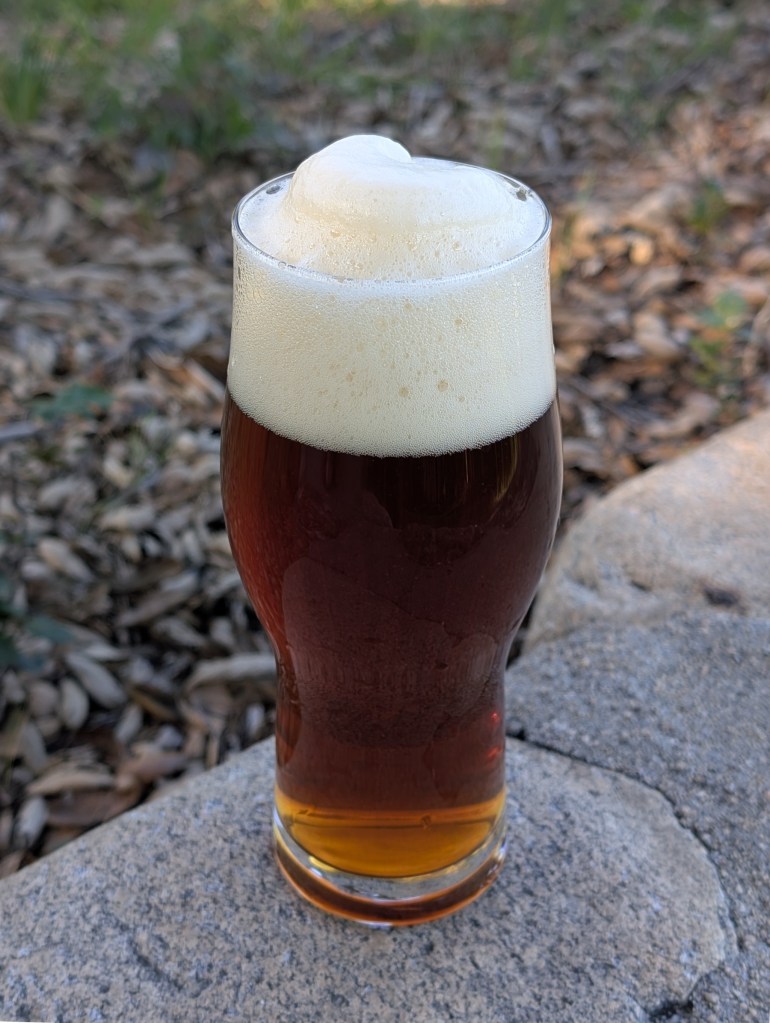
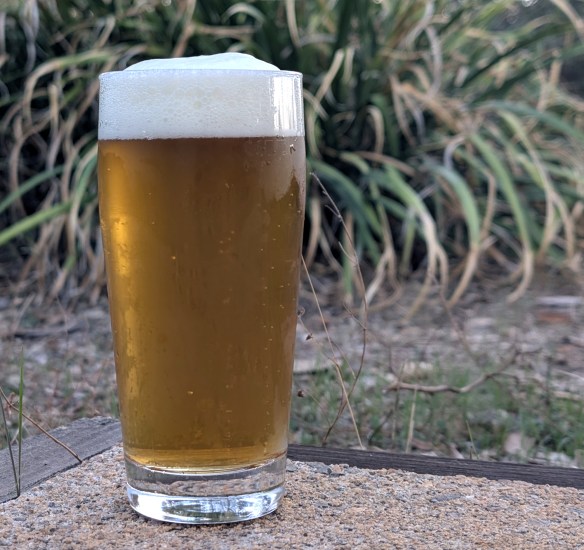
    • A deep gold beer, with a very slight haze, which pours with a thick, white, and persistent head. Beautiful!
  • Aroma
    • Medium malty-rich aroma, with moderate spicy hop character. Delicate hoppiness.
  • Flavor
    • Moderate malty rich character, against a medium level of hop bitterness. Clean yeast character.
  • Mouthfeel
    • Medium-light body, moderately high carbonation, off-dry finish. There’s may be a tiny bit of astringency.
  • Would I Brew This Again?
    • This is super nice as something a little different from the “usual” lagers. Isaria 1924 stands well as a solo malt, making an interesting and highly drinkable beer. I might dial the bitterness back a touch, or else increase the gravity slightly; the aroma is amazing, but I feel that the malt character is slightly obscured. I would also do a 90 minute mash or a decoction mash in order to improve efficiency, given the lower mash yield for this particular malt.
  • Overall
    • 8/10

Otter-Squatch Wheat Ale

A light wheat ale is an American homebrew classic, but it has been awhile since I last made this style. I threw together a simple recipe, which is upside-down from my usual blend of 60/40 wheat/2-row. There was no particular reason for this, other than it just seemed like the thing to do. I had a hop variety on-hand called Sasquatch, and decided to use those up here. My preference on American wheat ales is a little fruity/citrusy yeast character, rather than super clean or super phenolic. Lutra kveik seemed like a perfect yeast choice along those lines; clean-ish, but not overly clean, and potential for some interesting flavors. “Lutra” is also the scientific name for a genus of otters; along with Sasquatch hops, I ended up calling this batch “Otter-Squatch Wheat Ale.”

Otter-Squatch Wheat Ale

  • 6 lb. 2-row malt (Great Western)
  • 4 lb. white wheat malt (Briess)
  • 4 oz. rice hulls
  • 0.5 tsp. BrewTanB, added to mash
  • 1 oz. Sasquatch hop pellets (7.5% alpha), 20 minute boil
  • 0.5 tsp. BrewTanB, 10 minute boil
  • 1 oz. Sasquatch hop pellets (7.5% alpha), 5 minute boil
  • 1 pkg. Lutra kveik (Omega OYL-071), dry

Target Parameters

  • 1.046 s.g., 1.009 f.g., 23 IBU, 4 SRM, 4.9% abv
  • Full volume mash, 60 minute mash at 152°, 10 minute mash-out at 168°
  • RO water with added minerals to hit target of 78 ppm Ca, 86 ppm SO4, 74 ppm Cl, -55 ppm RA

Procedure

  • I started with 7.3 gallons of RO water, adding 4.25 g of calcium chloride and 4.25 g of gypsum to hit my target water profile. Then, I heated the water to 157° before adding the grains, to hit a mash temperature of 152°.
  • I held the mash with recirculation at 152° for 60 minutes, before raising the mash to 168° for 10 minutes.
  • At the end of the mash, I removed the grains and heated to a boil. In total, I collected 6.6 gallons of runnings with a gravity of 1.039, for 69% mash efficiency.
  • I heated the runnings to a boil, boiling for 60 minutes and adding hops per the recipe. After 60 minutes, I turned off the heat and chilled 85° before transferring the beer to the fermenter and pitching the yeast.
  • Starting gravity was 1.044, and I brewed the beer on 28 February 2025. I fermented the beer at room temperature ambient, between 60 and 65°.
  • I kegged the beer on 24 March 2025. Final gravity was 1.009, for 4.6% abv. I added 3.25 oz. of corn sugar to get some natural carbonation and scrub any oxygen from the transfer process. At the time of kegging, the beer had a very mild flavor and was quite drinkable! I finished up things with a bit of force carbonation, after the beer sat for a few weeks.

Tasting

  • Appearance
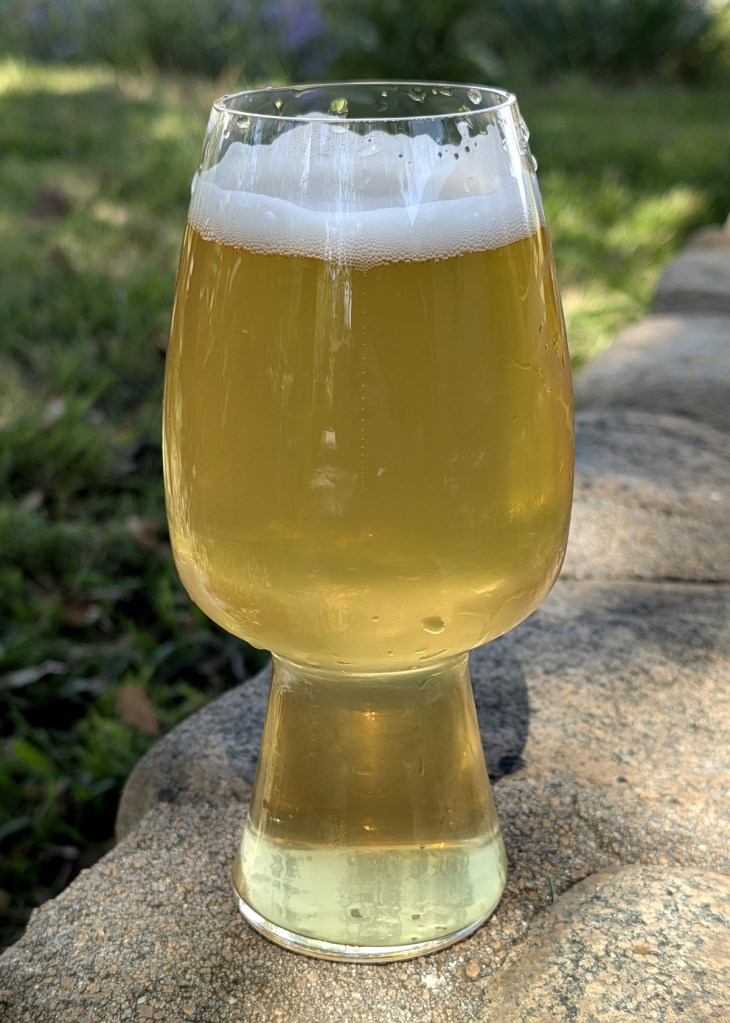
    • Lightly hazy, light yellow beer, which pours with a creamy and long-lasting white head.
  • Aroma
    • Doughy and tart, lemony aroma, at a moderate level of each.
  • Flavor
    • Moderate doughy malt character, light tartness to yeast and a very slight phenolic note (peppery, perhaps?). The latter is almost imperceptible; I can’t quite describe it. Medium-low bitterness.
  • Mouthfeel
    • Light bodied, moderately high carbonation, slightly dry finish. Crisp!
  • Would I Brew This Again?
    • This is a tasty beer! It defies styles a little bit; it’s probably closest to an American wheat ale, but not quite on target. It’s very drinkable! The kveik flavors probably aren’t for everyone, but work well in this particular batch.
  • Overall
    • 9/10

Unruly Gnome Belgian Blond Ale

La Chouffe is a darned good beer, and I will often get a pour if I find it on-tap at a quality alehouse (shout-out to The Back Abbey!). Belgian Blond Ale (or Belgian Blonde Ale) is not a style I have brewed previously, so it’s time to rectify that! I did a bit of research to find a clone recipe for La Chouffe, and a version from Brewer’s Friend inspired my own version, along with “The Gnome” recipe in Gordon Strong’s Modern Homebrew Recipes. The original recipe on Brewer’s Friend used decoction, but I decided to just put a little melanoidin malt into the grist instead. I also included a mash rest at 126°, in an attempt to improve the head.

Because this is an experimental beer, and a high alcohol one at that, I decided to make a small (3 gallon) batch.

Unruly Gnome Belgian Blond Ale

  • 7.75 lb. pilsner malt (Rahr)
  • 3 oz. melanoidin malt (Weyermann)
  • 0.5 tsp. BrewTanB (mash)
  • 12 oz. clear candi sugar (added to boil)
  • 1 oz. Styrian Goldings hop pellets (3.2% alpha), 60 minute boil
  • 0.5 oz. Saaz hop pellets (2.0% alpha), 15 minute boil
  • 0.25 tap. BrewTanB, 10 minute boil
  • 0.5 Whirlfloc tablet, 5 minute boil
  • 0.5 oz. Saaz hop pellets (2.0% alpha), 5 minute boil
  • 0.5 tsp. yeast nutrient WLN1000 (White Labs), 5 minute boil
  • 6 g. coriander seeds (Turkish), 5 minute boil
  • 1 pkg. Abbaye Belgian ale yeast (Lallemand)

Target Parameters

  • 1.068 s.g., 1.009 f.g., 7.9% abv, 6 SRM, 21 IBU
  • Full volume step mash, with 15 minutes at 126°, 90 minutes at 146°, and 10 minutes at 168°; 60 minute boil
  • Water built up from RO and Claremont tap water, to hit water target parameters of 50 ppm Ca, 4 ppm Mg, 45 ppm Na, 56 ppm SO4, 82 ppm Cl, 10 ppm bicarbonate, RA=-30.

Procedure

  • To get my strike water, I mixed 2.5 gallons Claremont tap water and 2.5 gallons distilled water, added 2.1 mL of 88% lactic acid, 1/4 Campden tablet, 1 g CaCl, and 1 g CaSO4.
  • I heated the strike water to 131°, added the grains and 1 tbs. of 10% phosphoric acid, and held the mash at 126° for 15 minutes, before raising the temperature to 146° for 90 minutes. Then, I raised the mash to 168° for 10 minutes before pulling the grains.
  • In total, I collected 4.5 gallons of runnings at a gravity of 1.050, for 75% mash efficiency.
  • I brought the runnings to a boil, adding finings per the recipe. After a 60 minute boil, I turned off the heat and chilled to 74° before transferring to the fermenter and pitching the yeast.
  • I brewed this beer on 7 December 2024. Starting gravity was 1.070.
  • I had vigorous fermentation within 18 hours of pitching the yeast; temperature was down to 72°, and so I moved the fermenter into the fermentation chamber on 8 December 2024, and set it at 74°.
  • Fermentation (as evidenced by bubbling) was pretty much done by 10 December 2024.
  • I kegged the beer on 23 December 2024, adding 1 oz. of corn sugar in 0.5 cups of water for carbonation, and let it sit at room temperature.
  • Final gravity was 1.011, for 7.8% abv.

Tasting

  • Appearance
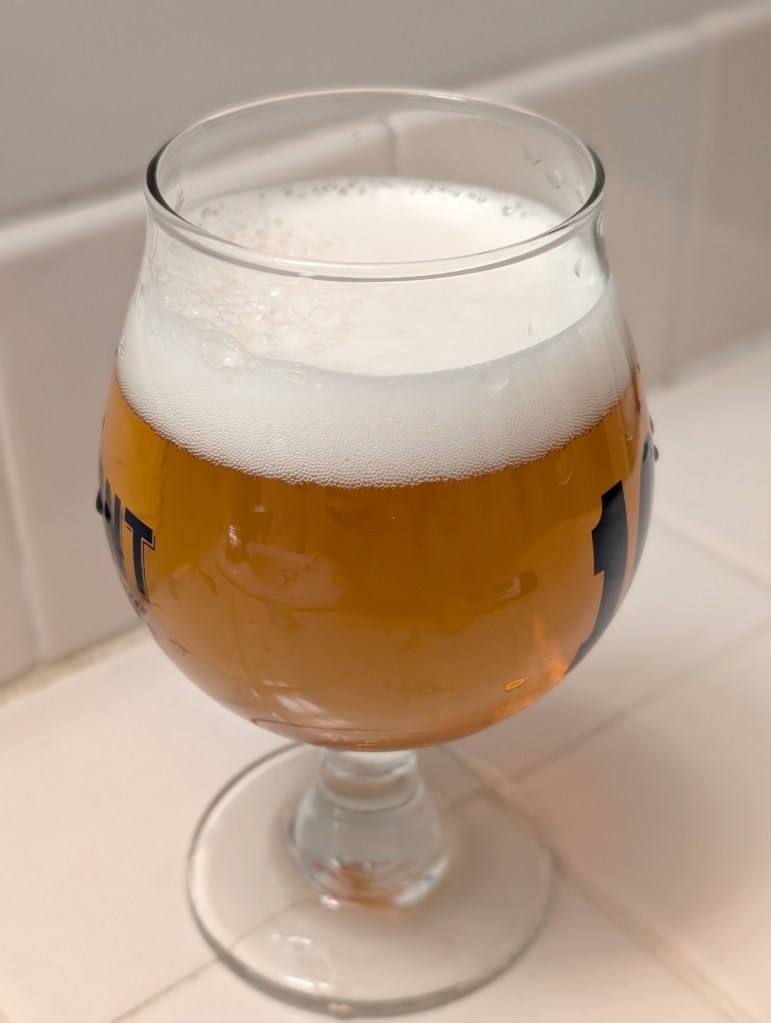
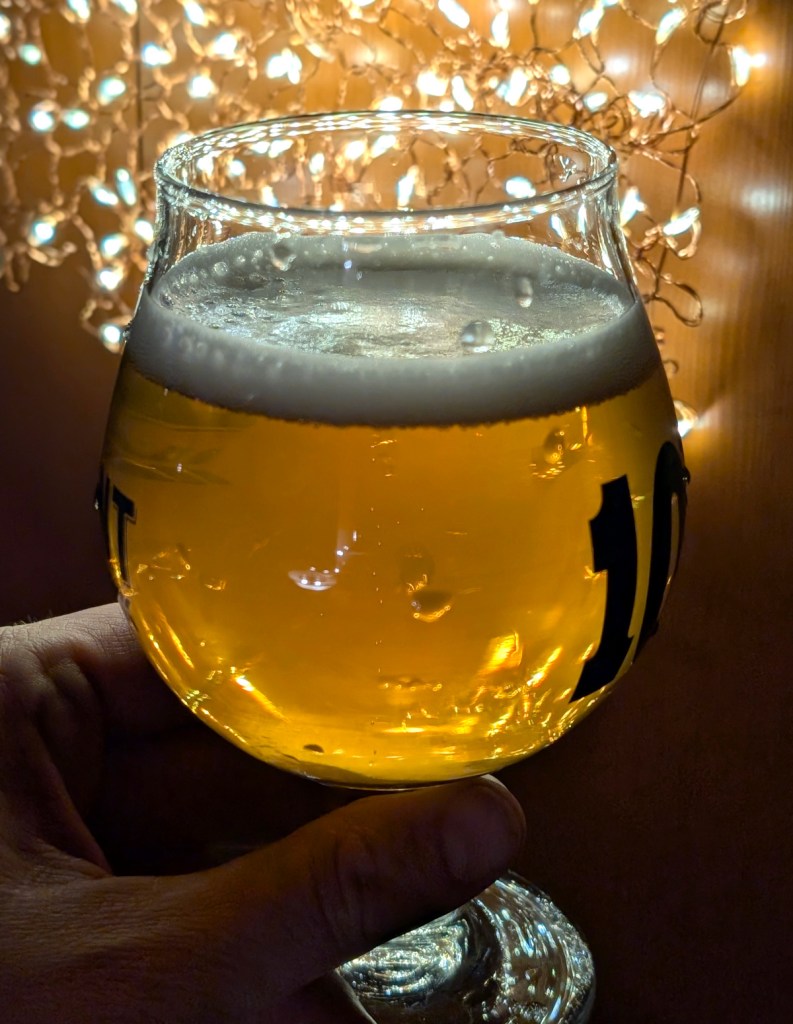
    • Very clear gold beer that pours with a creamy and persistent white head of foam. It’s quite pretty! I’ll note that it clarified a bit more after the photos were taken (about 10 days before this post).
  • Aroma
    • Moderate spicy phenolic notes, but overall pretty clean. A little light caramel malt comes through, and some citrus quality with light alcohol notes as it warms.
  • Flavor
    • Moderately high bitterness, crackery malt at a moderate level, with a touch of candy. Balance is towards the hops a bit. Orange peel citrus comes through as the beer warms. The yeast is perhaps a touch more prominent than what I remember in the commercial beer.
  • Mouthfeel
    • Highly carbonated, light body, dry finish. It drinks very easily!
  • Would I Brew This Again?
    • This is a good start. The yeast was perhaps a bit forward in the early samplings of the beer, but it has mellowed considerably over time. It might benefit from lower temperatures with this dry yeast strain, or a different strain at least relative to the style ideal (probably Ardennes for my next version, which isn’t available in dry yeast form; Belle Saison is another dry yeast I’m considering). Even so, this beer is dangerously drinkable! I might dial hops back a touch, perhaps to 15 IBU or so. The bitterness on the finish is just a touch harsher than I like. The coriander doesn’t come through, so I could safely ditch it; I don’t think anything would be lost. I might also try a fresher coriander from a different source area, which could also help.
    • Note added 10 February 2025: The beer has cleared to brilliant now!
  • Overall
    • 8/10

Winter in Antwerp 2024

I like to make a holiday beer every once in awhile, for drinking during the Christmas and New Year’s stretch. It’s an opportunity to do a smaller batch of something unusual, which might not warrant a full 5 gallons. This year, I chose a version of a recipe from Gordon Strong’s Modern Homebrew Recipes, called “Winter in Antwerp.” It’s a spiced Belgian ale, roughly in the realm of a dark pale ale (yes, that’s an oxymoron). I made some malt substitutions and also used the Abbaye dry yeast, although the overall “feel” is pretty close.

Winter in Antwerp 2024

  • 4 lb. 2-row brewer’s malt (Great Western)
  • 2 lb. Vienna malt (Weyermann)
  • 0.5 lb. aromatic malt 20L (Briess)
  • 0.5 lb. caramel malt 60L (Briess)
  • 0.5 lb. Caramunich II (Weyermann)
  • 0.5 lb. Munich dark malt (Viking)
  • 0.25 lb. biscuit malt (Dingemans)
  • 2 oz. chocolate malt (Bairds)
  • 2 oz. Special B malt (Dingemans)
  • 0.5 oz. Liberty hop pellets (5.0% alpha), 60 minute boil
  • 1 oz. Liberty hop pellets (5.0% alpha), 10 minute boil
  • 0.5 oz. Liberty hop pellets (5.0% alpha), 5 minute boil
  • 1 vanilla bean, split, scraped, and steeped for 5 minutes after the boil
  • 1 cinnamon stick, steeped for 5 minutes after the boil
  • 1 pkg. Abbaye Belgian ale yeast (Lallemand)

Target Parameters

  • 1.068 s.g., 1.021 f.g., 6.2% abv, 30 IBU, 24 SRM
  • Full volume infusion mash, held at 156° for 60 minutes and 168° for 10 minutes
  • Claremont tap water with Campden tablet, with approximate ppm of 110 Cl, 50 SO4, 40 Ca, 156 HCO3, 12 Mg, 87 Na

Procedure

  • I heated 5 gallons of water (with Campden tablet) to 163°, and then mashed in the grains. I held the mash temperature, with recirculation, at 156° for 60 minutes before raising the temperature to 168° for a 10 minute mashout.
  • Once I pulled the grains, I collected 4.5 gallons of runnings at a gravity of 1.049, for 71% mash efficiency.
  • I brought the runnings to a boil, adding hops and finings per the recipe. After 60 minutes, I turned off the heat and added the spices in a mesh bag. Because the cinnamon was a bit old, I added two sticks (broken up). After a 5 minute steep, I removed the spices and continued the chilling process.
  • I chilled the wort to 78° before transferring to the fermenter. I chilled the rest of the way, down to 68°, in the fermentation chamber. I pitched the yeast at 68°, holding at this temperature for fermentation. Expecting a vigorous fermentation, I used a blow-off tube.
  • Starting gravity was 1.065. I brewed this beer on 17 November 2024.
  • I kegged the beer on 30 November 2024. Final gravity was 1.024, for 5.4% abv.

Tasting

  • Appearance
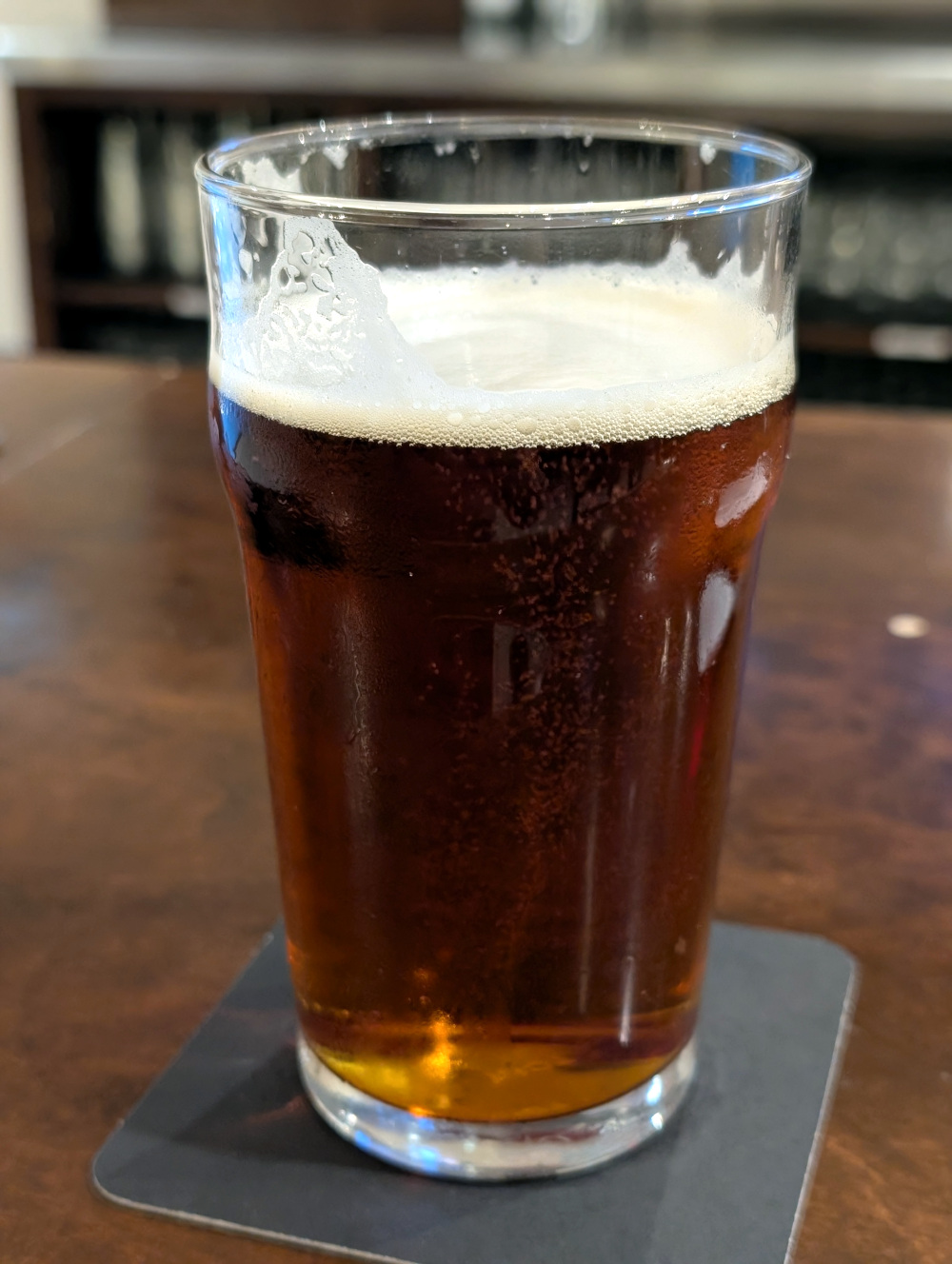
    • Deep reddish amber beer, very clear; pours with a creamy and persistent ivory head. It’s very pretty!
  • Aroma
    • Some dried dark fruit character as the beer warms and a hint of very ripe banana. Rich maltiness, but just a hint. Very faint cinnamon as it warms.
  • Flavor
    • Bread crust malt character, dried dark fruit in the yeast, medium level of bitterness. Less complex than I expected!
  • Mouthfeel
    • Medium body, medium high carbonation, very slightly dry finish.
  • Would I Brew This Again?
    • This is a good beer but nothing special. I was hoping for a bit more spice character, but there isn’t really any. I would probably increase the spicing rate a touch. For a similar beer next time, I would condition longer. It needs more body and malt “oomph”! Given all of the crystal malts, I’m surprised it doesn’t give the impression of more body. Perhaps for this kind of beer, it would benefit from a higher starting gravity or swapping in Munich for the 2-row malt. I would also age it for awhile longer. Another challenge is that I have this beer in my conditioning chamber, at around 35°, so it takes awhile to warm up after pouring. It’s definitely better at warmer temperatures!
  • Overall
    • 6/10

Live Oak Canyon Ale 2024

As is tradition, I crafted a special batch for the Thanksgiving celebration, a multi-day affair with friends and family. This is a time when I like to roll out a special batch, often a bigger beer that can be savored in smaller (or bigger) pours. Last winter, I experimented with a wood-aged imperial red IPA, and it was so good that I decided to roll it forward into this year’s Thanksgiving beer. It was an extra fun brewing session, in that I hosted my homebrew club to assist with the brew day!

Stylistically, this is an imperial red IPA, or something like it. It’s very much a beer from yesteryear, in the thick of the IBU wars–big, bold, and unapologetically in your face. Versus the 2023 version, the 2024 edition is pretty much the same grist but different hops to reflect what I had on-hand. I used Moutere as my bittering hops, in order to finish out the ounce left in my hop stash; the addition of Centennial and Simcoe at the whirlpool and dry hop stages is different from last year (which used HBC 522 and Talus).

Live Oak Canyon Ale

  • 10.5 lb. 2-row malt (Briess)
  • 13 oz. caramel malt 120L (Briess)
  • 0.5 tsp. BrewTanB, added to mash
  • 1 oz. Moutere hop pellets (19.5% alpha), 60 minute boil
  • 0.25 tsp. BrewTanB, 10 minute boil
  • 0.75 lb. corn sugar, 5 minute boil
  • 1 Whirlfloc tablet, 5 minute boil
  • 2 oz. Centennial hop pellets (8.1% alpha), 15 minute whirlpool
  • 1 pkg. WLP001 (White Labs), California Ale dry yeast
  • 1 medium toast American oak Beer Stix carboy stick, added to primary and carried over to keg
  • 2 oz. Simcoe hop pellets (12.4% alpha), dry hop in keg

Target Parameters

  • 1.092 s.g., 1.015 f.g., 10.4% abv, 113 IBU, 17 SRM
  • Infusion mash, held at 152° for 60 minutes and 168° for 10 minutes, with sparge
  • Claremont tap water, with Campden tablet, adjusted with minerals to achieve 58 ppm Ca, 23 ppm Mg, 54 ppm Na, 155 ppm SO4, 60 ppm Cl, 10 ppm CO3, -47 ppm RA

Procedure

  • Starting with 5.6 gallons of water, I added 4 mL of 88% lactic acid to neutralize the carbonates. Then, I added 2 g epsom salts and 2 g gypsum, to achieve my target water profile.
  • I heated the strike water to 161°, added the grains, and hit a 152° mash temperature. I also added 4 mL of 88% lactic acid, to adjust the pH.
  • After a 60 minute mash and recirculation, I raised the mash temperature to 168° for 10 minutes, before pulling the grains.
  • I had neglected to pull the sparge water from the strike water, so I had to sparge with ~0.5 gallons of water, which topped up my volume a bit beyond that which was intended. This meant a longer boil.
  • In total, I collected 5.35 gallons of runnings with a gravity of 1.055, for 70% mash efficiency.
  • I boiled for 45 minutes before starting the formal timer, which meant a 105 minute boil total.
  • After the initial 45 minutes of boiling, I began adding hops and other finings per the recipe, with corn sugar added at the very end.
  • After the boil, I chilled the beer down to around 78°, before transferring to the fermenter and chilling to 64° in my fermentation chamber and pitching the yeast.
  • I brewed this beer on 12 October 2024; it had a starting gravity of 1.085. Once pitching the yeast, I fermented at 64°.
  • I soaked the oak stick in water overnight, and then put it into the microwave for around 90 seconds to flash steam and sanitize. I spritzed the oak with StarSan, before adding it to the fermenter. The oak was added to the primary fermenter on 15 October 2024.
  • I kegged the beer on 31 October 2024, adding the dry hops in a baggie and also transferring the oak to the keg. I left the beer at ambient for this phase.
  • Final gravity was 1.016, for 9.3% abv.
  • I left the keg at ambient until 6 November 2024, when I removed the dry hops and oak, moved the keg to the conditioning chamber, and let it condition and carbonate at 34°.

Tasting

  • Appearance
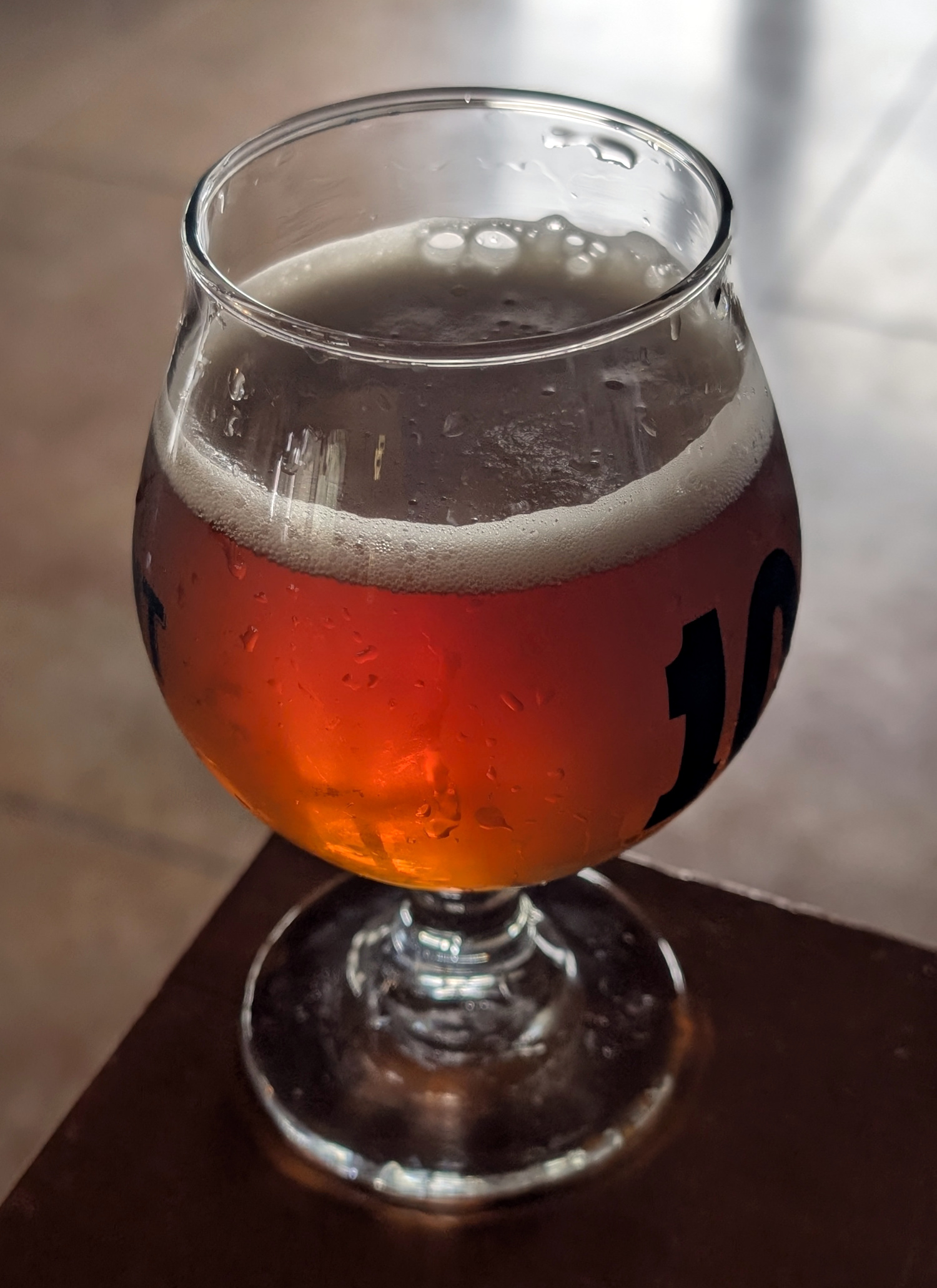
    • This is a deep reddish amber beer, very clear, which pours with a persistent and fine ivory head. It’s very pretty!
  • Aroma
    • The nose has a citrus and fresh pine hop aroma at a moderate level, with vanilla-type woodiness and light caramel behind that. The wood comes through more prominently as the beer warms, along with a light alcohol aroma.
  • Flavor
    • Very bitter, with resin and citrus pith qualities, and a hint of fresh orange zest; there is a modest level of woodiness as the beer warms up. A light and sweet caramel flavor is at the back end.
  • Mouthfeel
    • Medium body, moderate carbonation, dry finish.
  • Would I Brew This Again?
    • This is a good one! I think that last year’s version was maybe a touch better; perhaps Simcoe and Centennial don’t quite hit the mark for what the beer needs. The recipe upon which I based this beer used a mix of Simcoe and Mosaic, so I might try those in a future iteration. Either way, this is a highly drinkable beer for as big as it is, even if in the “sipping beer” category.
  • Overall
    • 9/10