Old Speckled Hen Homage

As a semi-mass-market English ale, Old Speckled Hen is one of my favorites. I think it’s mainly due to the name and associated nostalgia of my early days of better beer exploration, but in any case it’s something I come back to from time to time. A decade ago, I attempted a clone, which turned out okay but not great. This beer has been kicking around in my head ever since, and I even buy a bottle (or can) from time to time. It’s a legitimately enjoyable beer! Given that continued fascination, it was time for another attempt.
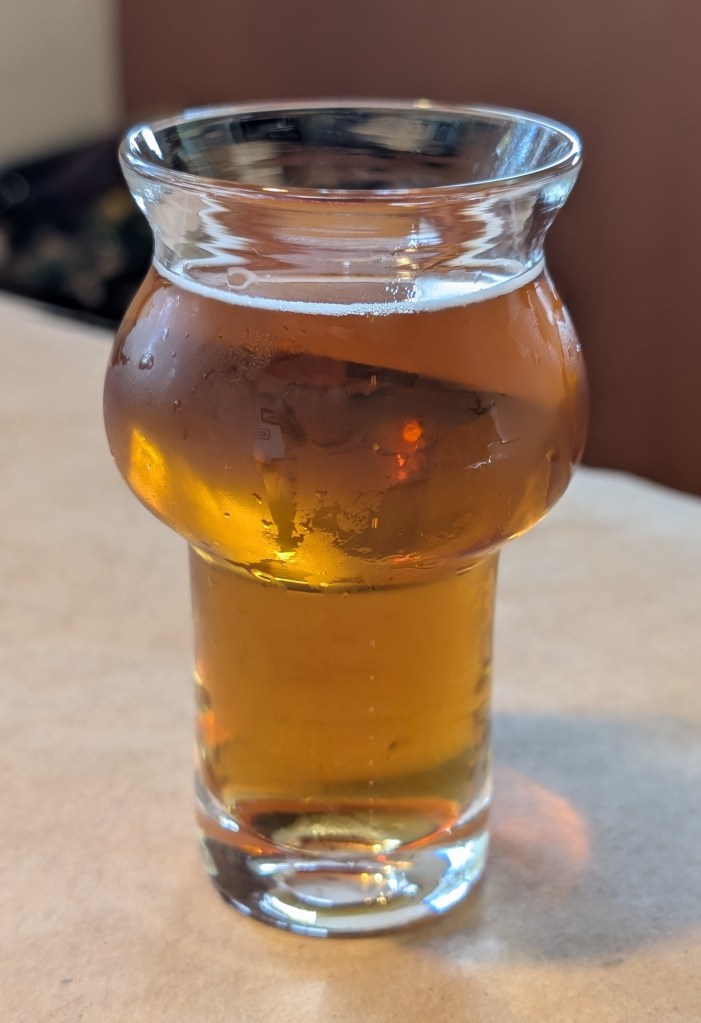
My new version is based on two recipes posted online, somewhat different from the previous template I used. The current edition leans into a more complex malt bill, reducing the previous substantial addition of crystal 120 and adding a major addition of crystal 40. I also used this as a chance to try out a dry version of WLP066 (London Fog Ale Yeast), which seemed to target much of what I was looking for in yeast character. A constant is the use of Maris Otter as the base malt, along with Lyle’s Golden Syrup to provide another flavorful fermentable.

Old Speckled Hen Homage

  • 9.5 lb. Maris Otter pale ale malt (Thomas Fawcett)
  • 1 lb. crystal 40 malt (Great Western)
  • 3 oz. caramel 120 malt (Briess)
  • 11.4 oz. Lyle’s Golden Syrup (added to boil)
  • 1 oz. Challenger hop pellets (5.6% alpha), 60 minute boil
  • 1 oz. East Kent Goldings hop pellets (5.4% alpha), 20 minute boil
  • 1 Whirlfloc tablet, 5 minute boil
  • 1 oz. East Kent Goldings hop pellets (5.4% alpha), 5 minute boil
  • 1 pkg. London Fog ale dry yeast (WLP066)

Target Parameters

  • 1.054 s.g., 1.013 f.g., 35 IBU, 10 SRM, 5.3% abv
  • Full volume mash with 60 minutes at 156° and 10 minutes at 168°; 60 minute boil
  • Claremont tap water, with Campden tablet added

Procedure

  • I heated 7.35 gallons of water to 162°, adding a Campden tablet to remove chloramines. I added the grains with 5.5 mL of 88% lactic acid, and let them mash at 156° for 60 minutes. Next, I raised the mash temperature to 168° for 10 minutes and then pulled the grains.
  • In total, I collected 6.25 gallons of runnings with a gravity of 1.046, for 73% mash efficiency.
  • I brought the mash to a boil, adding hops and finings per the recipe. After a 60 minute boil, I turned off the heat and chilled to 70° before transferring to the fermenter.
  • I brewed this beer on 24 December 2025. Starting gravity was 1.052; I am fermenting at ambient, around 65°.
  • I kegged the beer on 7 February 2025, adding 2.5 oz. of corn sugar to the keg dissolved in 0.5 cup of boiling water.
  • I let the keg sit for around 2 weeks before chilling down to ~35° until a free space opened up on my keezer.
  • Final gravity was fairly high, at 1.019, for 4.4% abv.

Tasting

  • Appearance
    • A very clear, light amber beer, which pours with a thin ivory head that quickly subsides. It’s a bit lighter in color than the original inspiration.
  • Aroma
    • Caramel notes are most prominent, with a little bit of candy, and a touch of light fruitiness behind that.
  • Flavor
    • Caramel and malty notes are at a moderate level. Medium-high bitterness. The hops, especially in initial tastes, have a woody and moderately herbal quality, in addition to a touch of earthiness. I don’t particularly care for the herbal notes here. I’m guessing they are coming from the hops; it doesn’t match EKG, so perhaps the Challenger is the culprit?
  • Mouthfeel
    • Moderate carbonation, medium body, smooth and slightly dry finish.
  • Would I Brew This Again?
    • This is definitely closer to what I want for an Old Speckled Hen clone, but the hops need a rework. I would probably ditch the Challenger and lean in on EKG entirely, or find another hop to sub in. The herbal notes I get here are more than I care for, but not something that totally wrecks the beer; it’s just not to my personal taste. It might be something with this lot of EKG (if that’s the true culprit), because I didn’t have that concern previously. The malt and yeast all do well, although I might go 50/50 on the crystal 40 and crystal 120 in order to round out the malt profile and deepen the color. I love the gentle fruitiness on the yeast and also how it dropped so clear. This is a very pretty beer!
  • Overall
    • 6/10

Bear Butte Porter

Porters are a classic homebrewing style, and they are an accessible entry point for newer brewers because their rich flavors are simultaneously enjoyable and also able to cover the results of overheated fermentations. As my brewing has progressed, and my fermentation temperature control has improved, I come back to them again and again as an enjoyable winter beer.

Last year I made a Sierra Nevada Porter clone, and this year I delved into a clone recipe for Deschute Brewing’s Black Butte Porter. The version I had was pulled from the Brew Your Own Big Book of Homebrewing (2022 updated edition), with some small modifications for hops and yeast on-hand on-hand as well as some very slight malt quantity adjustments. Instead of Galena as the bittering charge, I subbed in Chinook, which seemed like a reasonable swap, and I used Mangrove Jacki’s M36 Liberty Bell ale yeast instead of Lalbrew’s Verdant strain. Again, this seemed to be a reasonable swap that would get me into the same flavor zone. Interestingly, I learned via David Taylor’s Yeast Master List that M36 is a blend of M42 (New World/Nottingham) and M15 (Empire/Windsor); the reported fruitiness of the strain seemed like a good fit for this particular batch.

It’s interesting to note that the BYO clone recipe is very different from an AHA clone recipe. The AHA version uses chocolate wheat malt instead of chocolate malt, 80L crystal instead of 60L crystal, and a bit of dextrine malt, and it also calls for WLP002. Hops include Hallertauer instead of Tettnang. I’m not sure which version is more “authentic,” and I suppose it doesn’t really matter in the end! As another aside, I brewed a version of the AHA recipe back in 2021, as Turtle Toe Porter.

Because this is not a direct version of the clone recipe, and in honor of a landmark in my home state, I have called this batch “Bear Butte Porter.” I also used some South Dakota-grown hops from my dad, another fitting addition to the beer.

Bear Butte Porter

  • 10.25 lb. 2-row brewer’s malt (Great Western)
  • 0.75 lb. crystal 60L (Briess)
  • 0.75 lb. chocolate malt (Simpsons)
  • 0.35 oz. Chinook hop pellets (12.3% alpha), 60 minute boil
  • 2 oz. Cascade whole hops (3.5% est. alpha), 20 minute boil
  • 1 Whirlfloc tablet, 5 minute boil
  • 2 oz. Tettnang hop pellets (2.4% alpha), 5 minute boil
  • 1 pkg. Liberty Bell ale yeast (Mangrove Jack’s M36)

Target Parameters

  • 1.052 s.g., 1.012 f.g., 5.4% abv, 33 IBU, 33 SRM
  • Full volume infusion mash, held at 152° for 60 minutes and 168° for 10 minutes
  • Claremont tap water with Campden tablet, with approximate ppm of 110 Cl, 50 SO4, 40 Ca, 156 HCO3, 12 Mg, 87 Na

Procedure

  • I heated 7.5 gallons of Claremont tap water, with Campden tablet, to 158°, before adding the grains as well as 6 mL of 88% lactic acid to adjust the mash pH. I held the mash at 152° for 60 minutes, with recirculation, before raising the temperature to 168°. After 10 minutes at the mash-out temperature, I removed the grains and heated the runnings to a boil.
  • In total, I collected 6.7 gallons of runnings with a gravity of 1.043, for 68% mash efficiency.
  • Once the runnings were boiling, I added the hops and finings per the recipe. After 60 minutes on the boil, I turned off the heat and chilled to 78° before transferring to the fermenter and dropping to 66° in the fermentation chamber.
  • Once the beer was at 66°, I pitched the yeast.
  • I brewed this beer on 25 October 2024; it had a starting gravity of 1.057.
  • I fermented the beer at 66° until 28 October 2024, when I pulled it to ambient (~70°). Active fermentation seemed mostly done, so I figured it wouldn’t hurt it to sit at ambient for awhile.
  • I kegged the beer on 16 November 2024. Final gravity was 1.016, for 5.4% abv. This was around 71% measured attenuation. It’s on the lower end that Mangrove Jack’s reports for the strain (74% to 78%), but in my experience I’ve often had lower attenuation with the Windsor strain that comprises part of this blend.

Tasting

  • Appearance
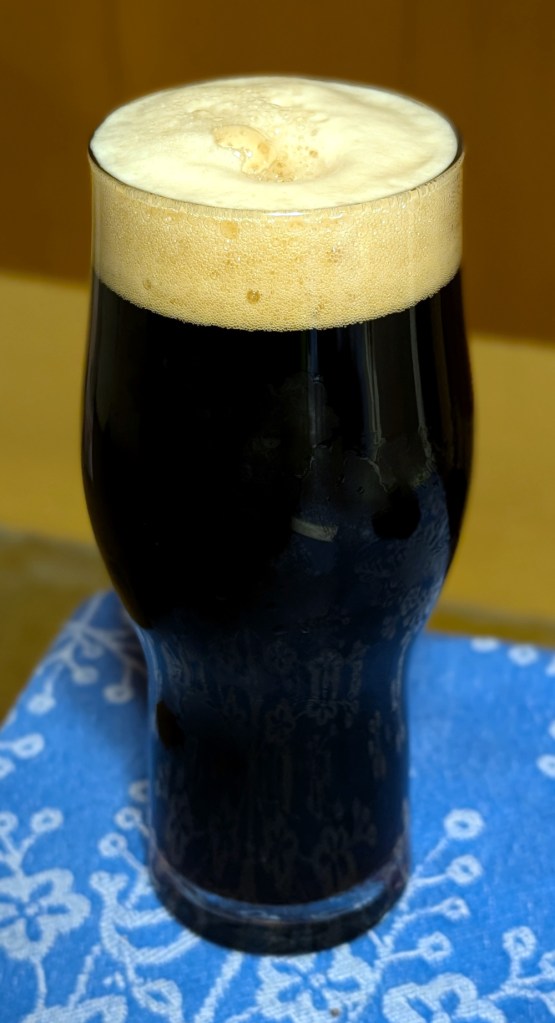
    • Deep, deep brown beer with dark garnet highlights, very clear. Pours with a persistent and creamy tan head. Beautiful! Great lacing down the side of the glass.
  • Aroma
    • Moderate dark chocolate: coffee aroma, a touch of earthy hop character.
  • Flavor
    • Slightly roasty and bitter chocolate malt character, a bit of dark sugar character; medium bitterness. A medium bit of dark dried fruit yeast character, but it’s in the background.
  • Mouthfeel
    • Medium carbonation, medium-full body, off-dry finish.
  • Would I Brew This Again?
    • I love this beer! It’s a perfect American porter, and wonderfully drinkable. Porter is such an underappreciated style; this version looks great and tastes great!
  • Overall
    • 10/10

Levitation Ale Homage

I like my session beers, and I’m always looking for something creative and interesting. This is the core philosophy of Stone Brewing, so I was excited to see a recipe for their Levitation Ale. I’m not sure I’ve ever sampled it “in the wild,” but a session amber ale sounded pretty neat.

A few versions of Levitation Ale are floating around, and I used a version from Jennifer Talley’s Brewing Session Beers book. My version is a parallel rather than a clone, with some different hops and malts. The original recipe called for crystal 75, so I mixed crystal 60 and crystal 80, tilting towards the former because I was running low on the latter. I also adjusted the hops, so that I had Mt. Hood and Mandarina Bavaria, rather than Simcoe and Crystal. I also dropped the black malt, because it made the beer too dark. Finally, I used WLP001 versus an English ale yeast. With all of those changes, I should definitely deem this an homage (a la Denny Conn) rather than a clone. Either way, it was an interesting beer.

Levitation Ale Homage

  • 8.5 lb. 2-row malt (Briess)
  • 12.5 oz. caramel malt 60L (Briess)
  • 12 oz. caramel malt 120L (Briess)
  • 1.4 oz. caramel malt 80L (Briess)
  • 0.5 tsp. BrewTanB (mash)
  • 0.7 oz. Magnum hop pellets (12.6% alpha), 60 minute boil
  • 0.5 oz. Amarillo hop pelletrs (10.4% alpha), 10 minute boil
  • 0.5 tsp. BrewTanB, 10 minute boil
  • 1 Whirlfloc tablet, 5 minute boil
  • 1 oz. Mandarina Bavaria hop pellets (6.7% alpha), 10 minute whirlpool
  • 1 oz. Mt Hood hop pellets (4.0% alpha), 10 minute whirlpool
  • 1 pkg. American West Coast Ale Yeast (Lallemand BRY-97)
  • 1.5 oz. Amarillo hop pellets (10.4% alpha), dry hop in keg

Target Parameters

  • 1.046 s.g., 1.011 f.g., 4.5% abv, 48 IBU, 15 SRM
  • Full volume infusion mash, held at 154° for 60 minutes and 165° for 10 minutes
  • Claremont tap water adjusted to hit 72 ppm Ca, 12 ppm Mg, 87 ppm Na, 127 ppm SO4, 110 ppm Cl, 156 ppm bicarbonate, RA=69

Procedure

  • I started with 7.75 gallons of water, treated with a Campden tablet and 4 g gypsum, heated to 159° before mash-in. I added the BrewTanB just before adding the grains, and then added 6 mL of 88% lactic acid to adjust the mash pH.
  • I held the mash at 154° for 60 minutes, with recirculation, before raising to 165° for a 10 minute mash-out. Then, I pulled the grains and brought the runnings to a boil.
  • I collected 6.9 gallons of runnings with a gravity of 1.039, for 72% mash efficiency.
  • I brought the runnings to a boil, adding hops and other finings per the schedule. The boil was 90 minutes long total, so the first hop addition wasn’t until 30 minutes in.
  • After the full 90 minute boil, I turned off the heat and added the whirlpool hops, whirlpooling for 10 minutes at just below boiling. Of course, it chilled down into the 180s relatively quickly.
  • After the whirlpool finished, I removed the hops and continued chilling.
  • I transferred the wort to the fermenter, chilled down to 68°, and pitched the yeast.
  • Starting gravity was 1.050. I brewed the beer on 24 August 2024.
  • I kegged the beer on 4 September 2024, with a final gravity of 1.014 for 4.8% abv. I added the dry hops in a bag, intending to remove them after a few days and add gelatin. Unfortunately, I forgot that they would sink, and so I couldn’t recover them. Ah well.

Tasting

  • Appearance
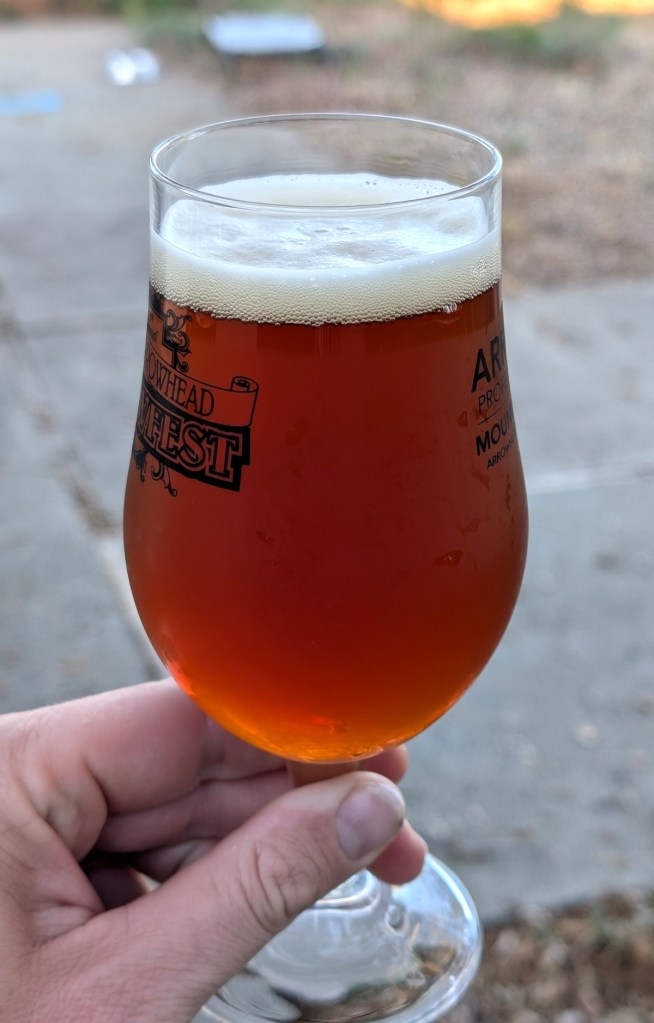
    • Deep amber beer with moderate haze; persistent but thin ivory head
  • Aroma
    • Light caramel malt notes with a good dose of citrus. a touch of pine
  • Flavor
    • Medium caramel malt flavor, against a strong orange/citrus and moderate pin character from the hops. Delicious! Medium-high bitterness.
  • Mouthfeel
    • Medium-light body, moderate carbonation, slightly dry, somewhat thin finish.
  • Would I Brew This Again?
    • This is a wonderful session amber ale, bursting with hop flavor and aroma. The haze is a minor flaw, but the flavor and aroma totally make up for it. I would love to try this with the original malt and hop combos, to see how it is. I might also add the black patent back in, to darken the beer. The malt body comes across as a little thin, so for a future version I might try Vienna or Maris Otter instead of plain 2-row, and/or mash at a higher temperature. Overall, this is a very drinkable beer!
  • Overall
    • 8/10

Sierra Nevada Porter Clone

I love American porters, and they are among the first beers I ever brewed (all the way back to 2009!). Sierra Nevada’s porter is a great one, a classic in the American porter style, as listed by the BJCP 2021 style guide. The BJCP also indicates that this style is “becoming increasingly hard to find.” That’s a good reason to make a homebrew version!

I did some searching to find an appropriate recipe, which landed on one that is allegedly directly from Sierra Nevada. I adjusted the grains very slightly to get more even amounts, and I also upped the Carafa Special III and black malt, in order to darken the beer. Oddly, the grain-only version was lighter than consistent with the style (noted by folks at the original link), so I added Sinamar to bring things into line. The original recipe called for Sterling and Aurora hops, neither of which I had on-hand. So, I substituted Mandarina Bavaria and Elixir. They’re not the same, but should be enough in the ballpark.

This was an enjoyable recipe to brew. It didn’t require dry hopping or whirlpooling, and I didn’t bother with a closed transfer. Other than using Sinamar, the ingredients and techniques were dead-basic.

Sierra Nevada Porter Clone

  • 10.25 lb. 2-row malt (Briess)
  • 1 lb. Munich I malt (Weyermann)
  • 0.5 lb. caramel malt – 60L (Briess)
  • 0.5 lb. chocolate malt (Bairds)
  • 1 oz. black malt (Briess)
  • 1 oz. Carafa Special III (Weyermann)
  • 1.5 oz. Sinamar (added at end of boil)
  • 1 oz. Mandarina Bavaria hop pellets (6.7% alpha), 60 minute boil
  • 1 oz. Elixir hop pellets (5.1% alpha), 15 minute boil
  • 1 Whirlfloc tablet, 5 minute boil
  • 1 oz. Elixir hop pellets (5.1% alpha), 5 minute boil
  • 1 pkg. California ale yeast, dry version (White Labs WLP001)

Target Parameters

  • 1.056 s.g., 1.014 f.g., 5.7% abv, 35 IBU, 40 SRM
  • Full volume infusion mash, held at 154° for 60 minutes and 168° for 10 minutes
  • Claremont tap water with Campden tablet

Procedure

  • I heated 7.5 gallons of water to 160°, and added the grains for a mash temperature of 154°. I added 5 mL of 88% lactic acid to adjust the pH, and held the mash at 154° for 60 minutes.
  • After 60 minutes, I raised the mash to 168° for 10 minutes, before pulling the grains and heating to a boil.
  • The mash yielded 6.5 gallons of runnings with a gravity of 1.050, for 71% mash efficiency.
  • I boiled the wort for 60 minutes, adding finings and hops per the recipe.
  • After the boil, I chilled to 70° and transferred to the fermentater.
  • I brewed the beer on 2 December 2023. Starting gravity was 1.058, just a touch above target.
  • I fermented the beer at 66°, and kegged on 31 December 2023. Final gravity was 1.016, for 5.5% abv.

Tasting

  • Appearance
    • The beer is a deep, deep brown, almost black, with a persistent tan head.
  • Aroma
    • Dark chocolate and coffee–very roasty! Resiny hop character. Very nice!
  • Flavor
    • Rich, chocolate and coffee malt notes. Medium-high bitterness with a resiny and piney character.
  • Mouthfeel
    • Medium body, moderate carbonation, slightly dry finish.
  • Would I Brew This Again?
    • Yes! This is a fantastic American porter, simultaneously rich and drinkable. It has interesting character, and is just a nice beer. I don’t know how it would stack up against Sierra Nevada’s product, but even on its own this recipe is pretty nice.
  • Overall
    • 10/10

Beam Me Up Pale Ale

Beer can commemorate life events and the passage of time…meeting new friends and saying farewell to old. A dear friend and neighbor is off to new opportunities with their family, and it’s definitely a beer-worthy event. He loves Sierra Nevada Pale Ale (SNPA), and we’ve shared a few in his driveway (as well as a few homebrews) over the years. So, I decided to brew something SNPA-inspired…and by coincidence, this year’s “Big Brew Day” recipe is right in that wheelhouse.

Beam Me Up Pale Ale, all on its own

The original recipe was in the March/April 2023 issue of Zymurgy, under the name of “Nearly Nirvana Pale Ale.” It’s pretty similar to the Miss’ippi #BIGCASCADE recipe from the September 2013 BYO issue, too! My recipe is a good match for “Nearly Nirvana,” except I lowered the gravity a touch (1.056 vs. 1.060), to more closely match SNPA. This batch is also special in that I used only whole cone Cascade hops from the Farke family farm in South Dakota, all representing the 2022 crop year. I made some minor adjustments in the grist — the original called for Simpsons Crystal Light malt, and I substituted in Briess’s Caramel 40L.

I elected for a quick mash on this one, with just 30 minutes for the main rest of 156°. The goal was to shave a few minutes off of the brew day!

I did something a little different for the tasting, in doing a head-to-head with Sierra Nevada Pale Ale. Although my beer isn’t precisely a clone, I thought it would be good to make a comparison nonetheless. The intent was to help me more clearly evaluate my own version, and think about what the ingredients delivered.

Beam Me Up Pale Ale

  • 12 lb. 2-row pale malt (Rahr)
  • 0.5 lb. caramel malt – 40L (Briess)
  • 1.5 oz. Cascade whole hops (5.5% estimated alpha acid), 60 minute boil
  • 1.0 oz. Cascade whole hops (5.5% estimated alpha acid), 15 minute boil
  • 0.5 tsp. BrewTanB, 10 minute boil
  • 1 Whirlfloc tablet, 5 minute boil
  • 1.5 oz. Cascade whole hops (5.5% estimated alpha acid), 5 minute boil
  • 2 pkg. BRY-97 (Lallemand)

Target Parameters

  • 1.056 s.g., 1.015 f.g., 5.4% abv, 44 IBU, 6 SRM
  • Full volume mash, 156° for 30 minutes, 168° mash-out for 10 minutes
  • Claremont tap water adjusted with lactic acid and mineral additions, to achieve calculated water profile of 142 Ca, 6 Mg, 84 Na, 83 SO4, 120 Cl, 156 HCO3, RA=23 ppm.

Procedure

  • I mashed in with 7.75 gallons of water at 163°, to hit a target rest of 156°. I added 5.5 mL of 88% lactic acid to adjust the pH.
  • I recirculated during the mash, raising it to 168° for a 10 minute mash-out.
  • After the mash, I removed the grains. In total, the mash yielded 7 gallons of runnings with a gravity of 1.046, for 70% mash efficiency.
  • On the way to the boil, I added 2.5 g of gypsum to accentuate the bitterness a bit more.
  • Once the runnings were boiling, I added hops and kettle finings per the recipe. After 60 minutes, I turned off the heat and chilled to 68° and transferred the wort to the fermenter. I pitched the yeast, and held the fermenter at 67° for the primary fermentation.
  • I brewed the beer on 18 March 2023. Starting gravity was 1.053.
  • I kegged the beer using a closed transfer, on 15 April 2023. Final gravity was 1.013, for 5.3% abv.
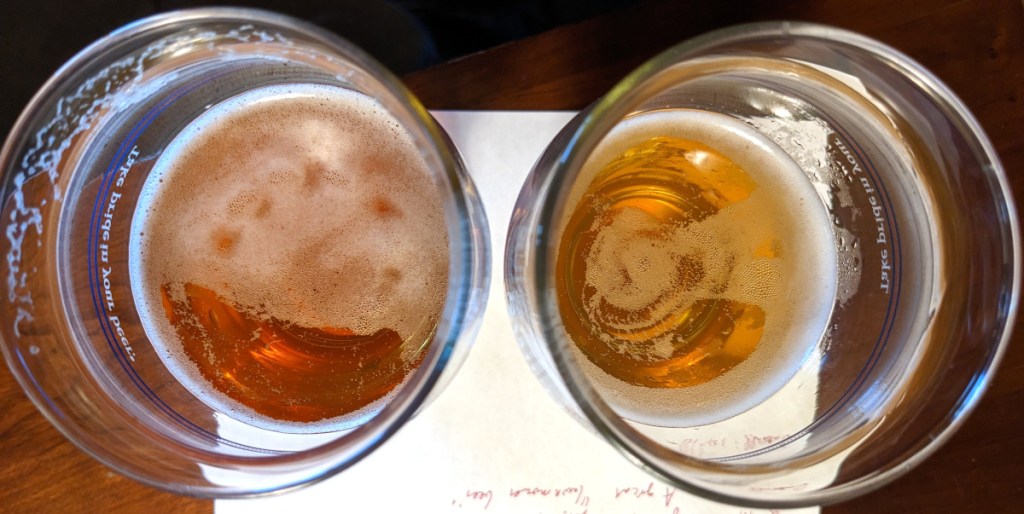
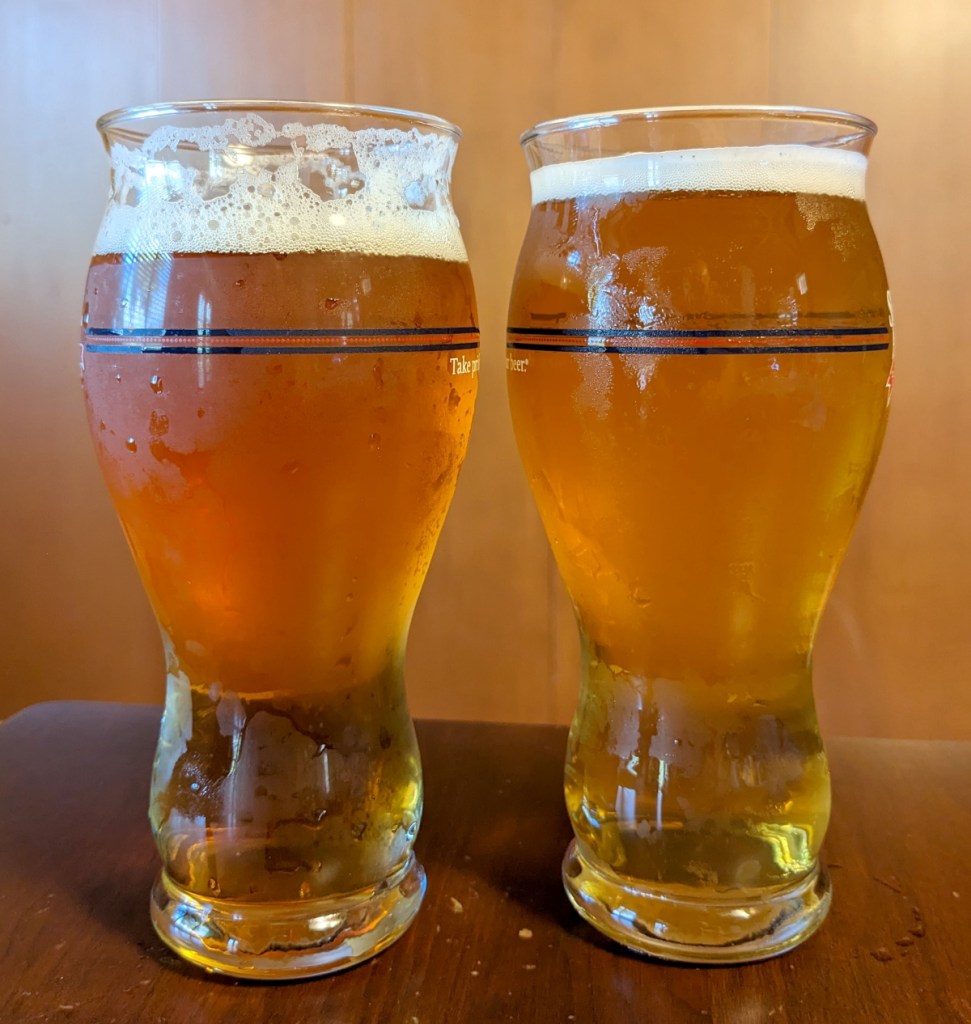
Down the glass, with Sierra Nevada Pale Ale at left, and Beam Me Up Pale Ale at right.

Tasting

Just for fun, I tasted the beer on its own and also did a side-by-side with a can of Sierra Nevada Pale Ale.

  • Appearance
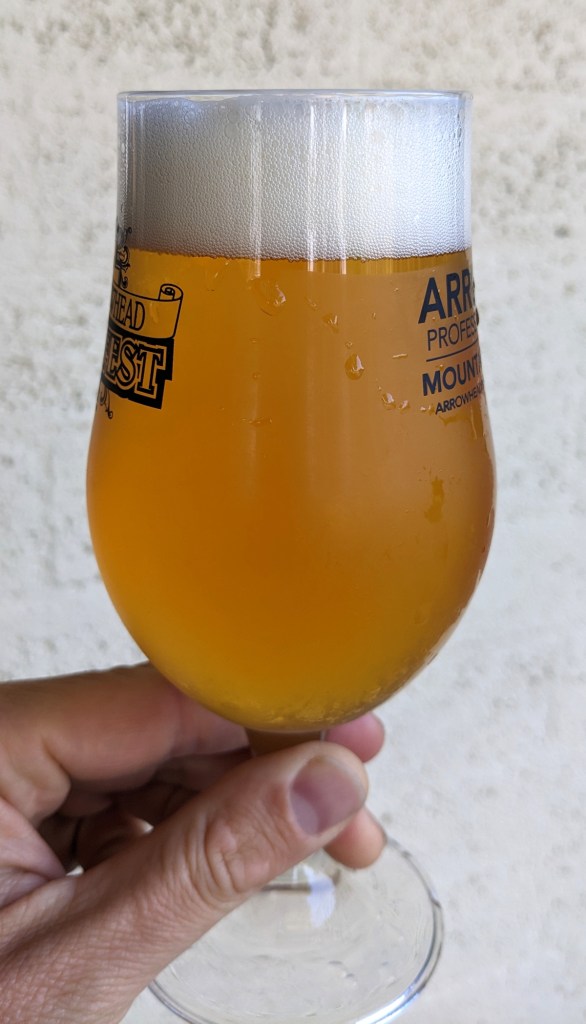
    • The beer is very clear, gold in color, and pours with a white and moderately persistent head.
      • Versus Sierra Nevada: Mine is slightly lighter in color, with less head and less head retention. The latter might be a result of a pour from draft versus the can? I’m not sure. The SNPA is slightly clearer, but also has what looks like some minor hop particulates at the bottom.
      • Winner: SNPA, by just a small margin, due to the better head and head retention.
  • Aroma
    • Sweet malt aroma and light caramel, with a light and citrusy hop aroma. The hops definitely have a mandarin quality.
      • Versus Sierra Nevada: SNPA lacks the light caramel aroma, and doesn’t have as much hop character (at least in the can I poured).
      • Winner: It’s a draw! I don’t have a preference either way.
  • Flavor
    • Medium level of citrusy mandarin orange and grapefruit, with a light resin quality in the hops. Light caramel in the malt character, medium bitterness, and clean yeast character.
      • Versus Sierra Nevada: SNPA is slightly more bitter, with more resin/pith character to the hop flavor. It’s definitely hop-dominated, with the malt to the back end, unlike mine.
      • Winner: Draw! I like aspects of each. They’re just different beers.
  • Mouthfeel
    • Medium carbonation, medium-light body, off-dry and smooth finish.
      • Versus Sierra Nevada: SNPA has a medium body profile and is slightly dryer on the finish.
      • Winner: I like SNPA slightly better, for having just a touch more body.
  • Would I brew this again?
    • Yes! “Beam Me Up Pale Ale” is by no means a clone (nor is it intended to be), but it’s a tasty and very drinkable beer! The mandarin quality on the hops in my version is super enjoyable. My main adjustments would be to up the bitterness slightly, and perhaps bitter with Chinook or another more resiny hop, using the Cascade for later additions. Or maybe I would leave it the same! It’s not a clone, after all.
  • Overall
    • 8/10
Sierra Nevada Pale Ale (left) and Beam Me Up Pale Ale (right), head to head