Beer Tasting: Transatlantic IPA

My Transatlantic IPA seems to be at its peak–no better time to give it a close look!
  • The Basics
    • Original gravity = 1.064; final gravity = 1.015; abv = 6.5%; estimated IBU = 64
  • Aroma
    • The aroma is very hop-forward and pleasant, but not overwhelming. I pick up citrus (orange) and floral aromas, with a hint of fresh apricot. There is a faint malty aroma that comes through as the beer warms up.
  • Appearance
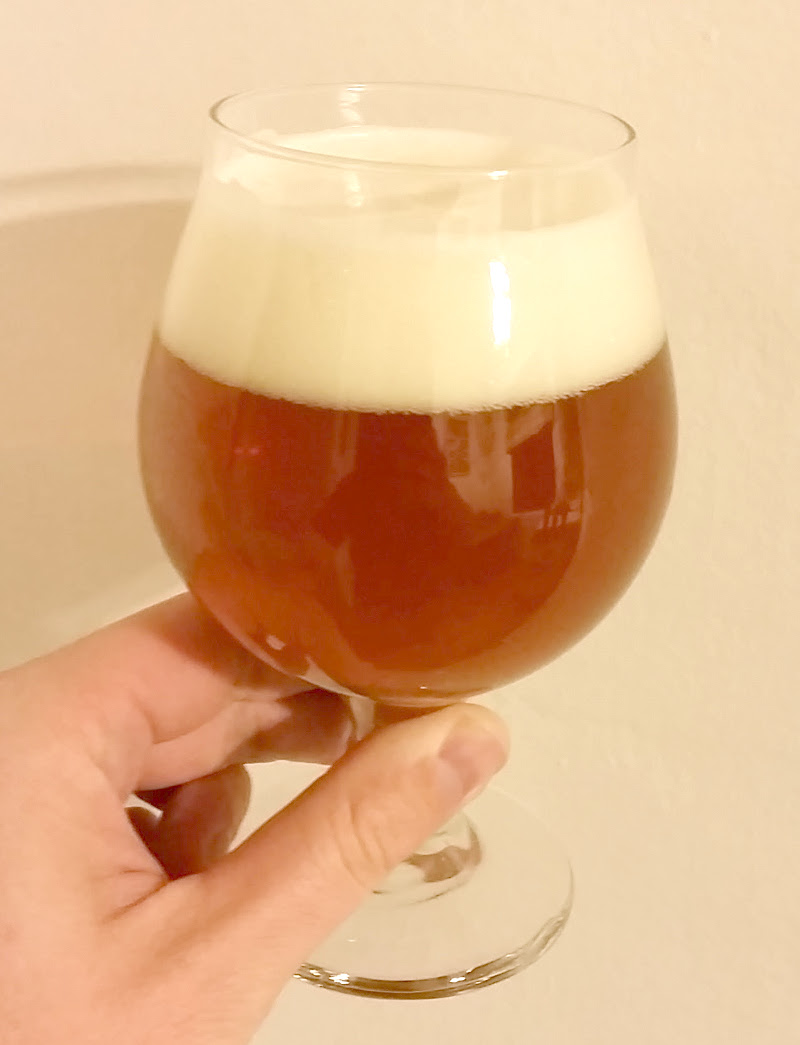
    • Relatively clear, with a minor bit of haze. The head is quite prominent, white in color, and fine-bubbled, with excellent retention. The beer itself is a beautiful gold color.
  • Flavor
    • This is a pretty well-balanced IPA. There is a low degree of malty flavor, with a slight caramel note to it, but not enough to take it out of character for what I intended. The hops are of course prominent, tending towards the floral and piney side of things. The bitterness is strong but not over the top, and it definitely has a piney and slightly resinous finish. I detect a very modest ester background, perhaps some of the stone fruit (peach/apricot) that characterizes the yeast strain.
  • Mouthfeel
    • The beer has a medium body, with an appropriately moderate degree of carbonation. The finish is slightly dry, but not ridiculously so.
  • Would I brew this again?
    • Yes! This is a really nice “winter IPA”, and nails pretty much everything I was hoping for in the beer. I really like how the Conan strain plays against the hops and malt. Additionally, the hops combo stands up pretty well too. It’s complex, but not muddled. The beer is probably a bit heavier than I would want outside of the cold months, but that isn’t a flaw in my view. I was a little curious when formulating this recipe as to how much the Maris Otter base malt would show through–not much, in the end! It provides a good base, but doesn’t get in the way of the other ingredients.
  • Overall rating
    • 9/10

Beer Tasting: The Celtic Elk Stout

My Irish stout (“The Celtic Elk Stout”) has been on tap for a few weeks now, and is definitely ready for a tasting.

  • The Basics
    • Original gravity = 1.048; final gravity = 1.018; abv = 3.9%; estimated IBU = 36
  • Aroma
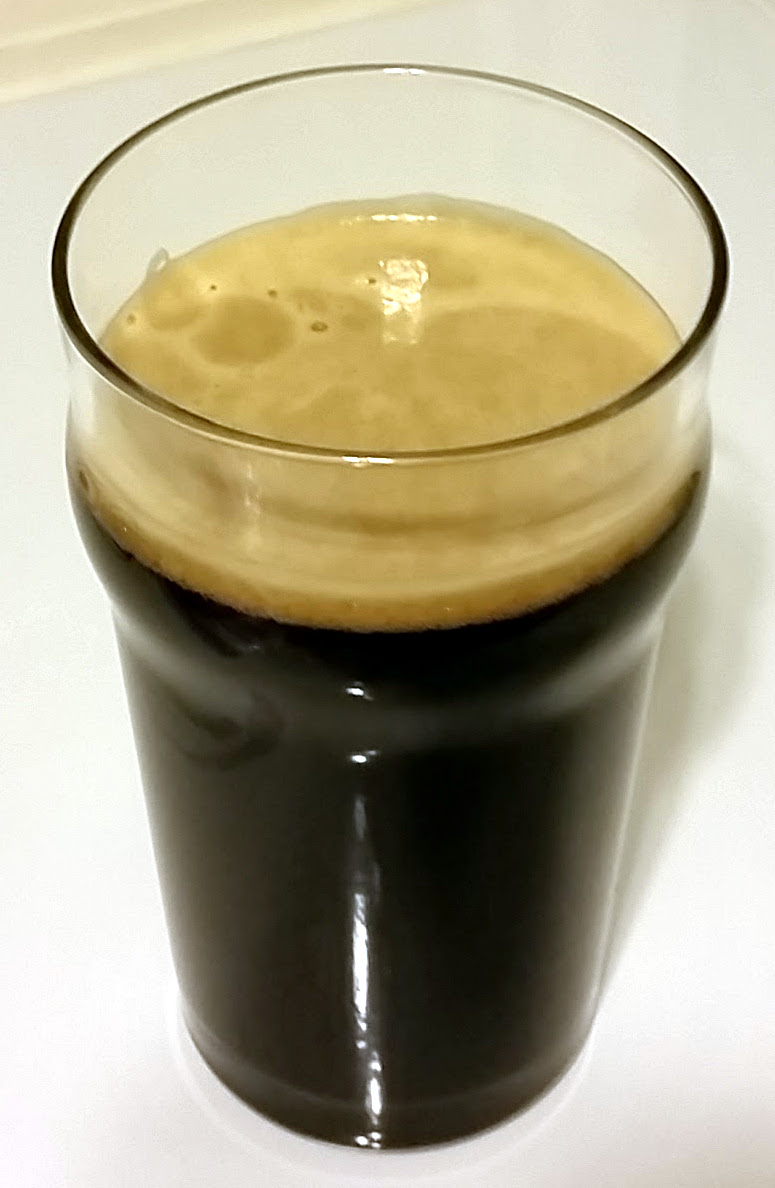
    • Strong and ever-so-slightly sweet coffee aroma, with a roasty chocolate note behind it. 
  • Appearance
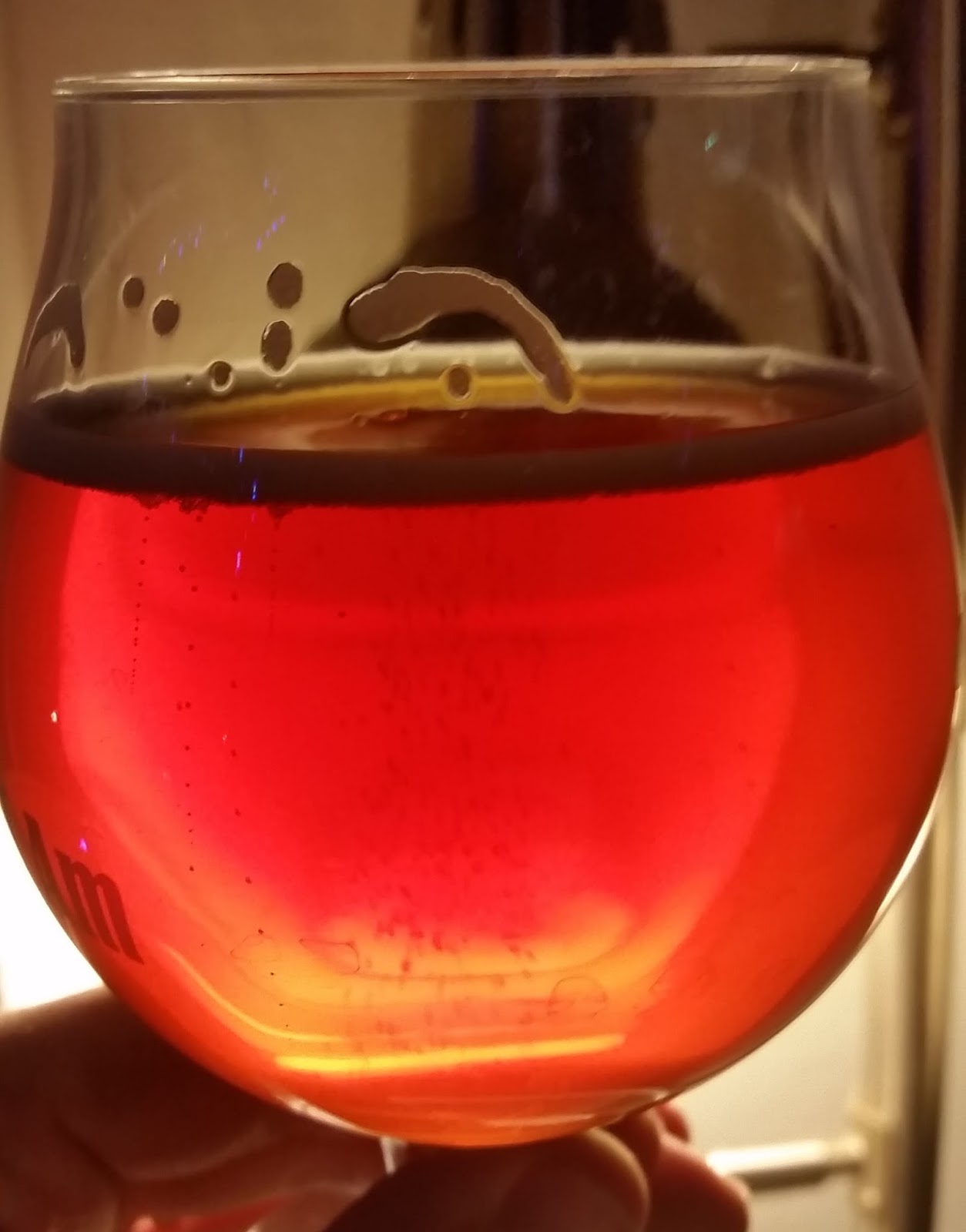
    • Clear as near as I can tell, but pitch-black in the glass. When you hold it up to the light, you can glimpse a dark brown color with a red tinge to it, but that’s only if you have the thinnest sliver of beer against strong backlight. The head is dark tan and thin, with a fine texture and good retention.
  • Flavor
    • This beer has a very coffee-like quality, in terms of being quite roasty in flavor with a bitter finish (more from the barley than the hops, though, in terms of the bitterness character).
  • Mouthfeel
    • The stout has a moderate-low body, with moderate and fine carbonation. It is a pretty dry (but not puckering) beer, as befits the style. 
  • Would I brew this again?
    • This beer is a darned good Irish stout, and I’d definitely use the recipe again in the future. It hits exactly what I was looking for, in terms of dryness, drinkability, fairly low alcohol content, and intangibles. I like this one!
  • Overall
    • 9.5/10
And a label!
On a whim, I drafted a beer label in honor of the original “Celtic Elk,” Megaloceras. It brings in one of the “Irish elk” skulls along with a Celtic knot. Maybe it will make a good t-shirt someday?

Beer Tasting: 80 Shilling Ale

With nearly a month in the keg, the 80 Shilling Ale is ready to formally assess. So, how does it look?

  • Aroma
    • Quite malty, with a distinct caramel and a faint whiff of butterscotch as the beer warms up. No detectable hops on the aroma.
  • Appearance
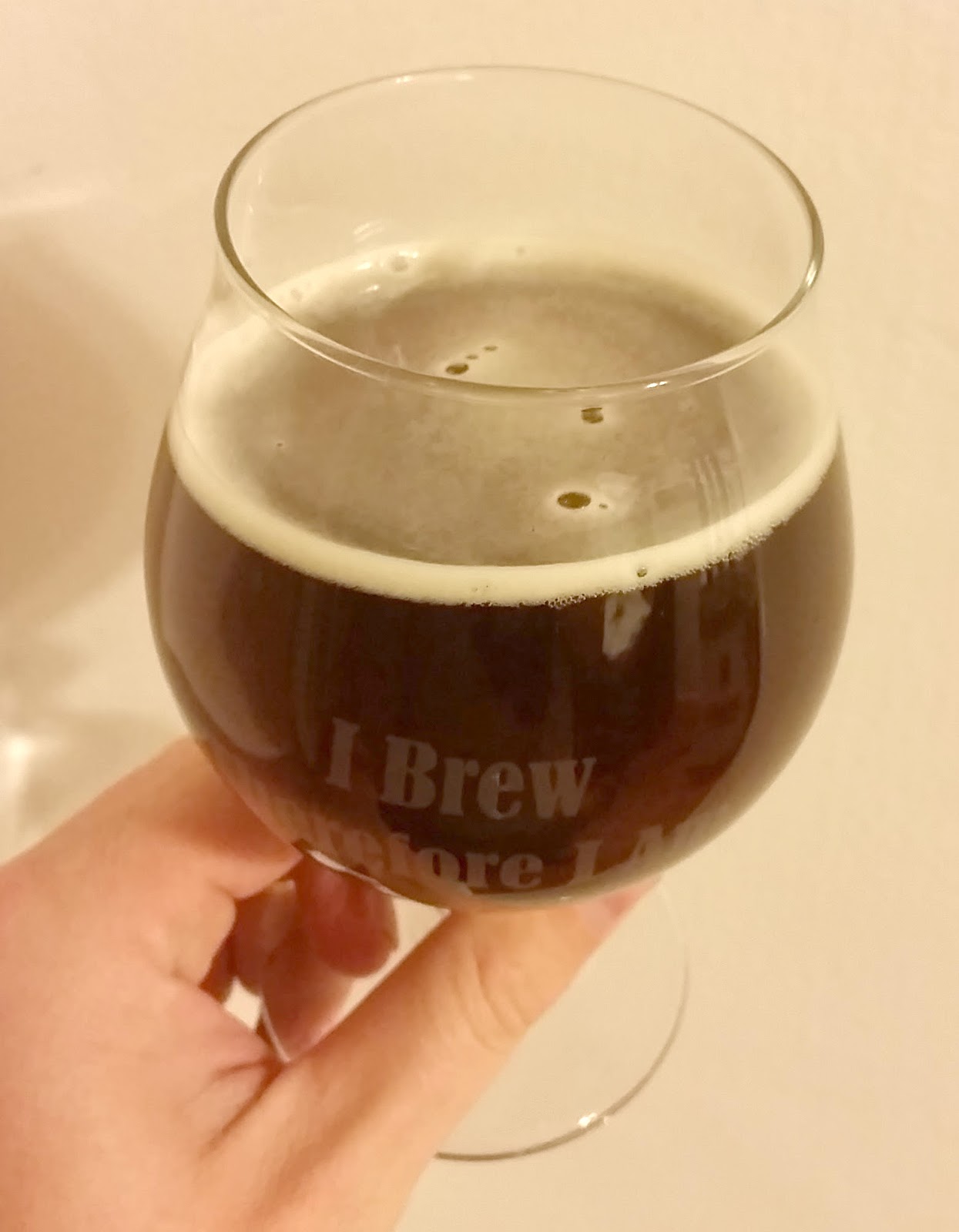
    • Clear, with a fine, low and persistent off-white head. The beer is a deep copper in color.
  • Flavor
    • Very malt-forward, with a strong caramel component. The hops are extremely subtle, but tend towards the earthy/spicy side. Butterscotch (presumably from kettle caramelization) was pretty forward in the earlier tastings, but has tapered off some since.
  • Mouthfeel
    • This is a fairly dry beer, with a moderately light body. Carbonation is moderate, with very fine bubbles.
  • Would I brew this again?
    • This is a very solid (and delightfully simple) recipe, with a tasty result. It has been nice to have on-hand as my “light” ale during the cold months, and fits this bill pretty well. As near as I can tell from the BJCP guidelines, the recipe is also a pretty good approximation of the style. That said, it’s not such an engaging style for me that I’m going to brew it every day. It probably falls in the category of “fun to try every few years when I get the urge.” All that said, I’m glad I expanded my brewing horizons a bit!
  • Overall
    • 8.5/10

Alt-Alt Ale

With a little extra time over the holidays, I wanted to brew up a few batches. I’ve never made anything along the lines of an altbier before, so a recipe in the November 2015 issue of Brew Your Own caught my eye. It’s a clone recipe from the Milwaukee Brewing Co., called Louie’s Demise. From what I know of the style, the recipe hits most of the notes for an altbier, but takes an American bend in the malts (unspecified 2-row malt, which I presume is usually brewed with an American variety rather than Pils malt) and the yeast (WLP051, California V, rather than a German ale yeast). I made a few additional tiny modifications for my ingredients on-hand, and thus beer is titled the “Alt-Alt Ale”. It has a ring to it, and also vaguely reminds me of the AT-AT’s from Star Wars.

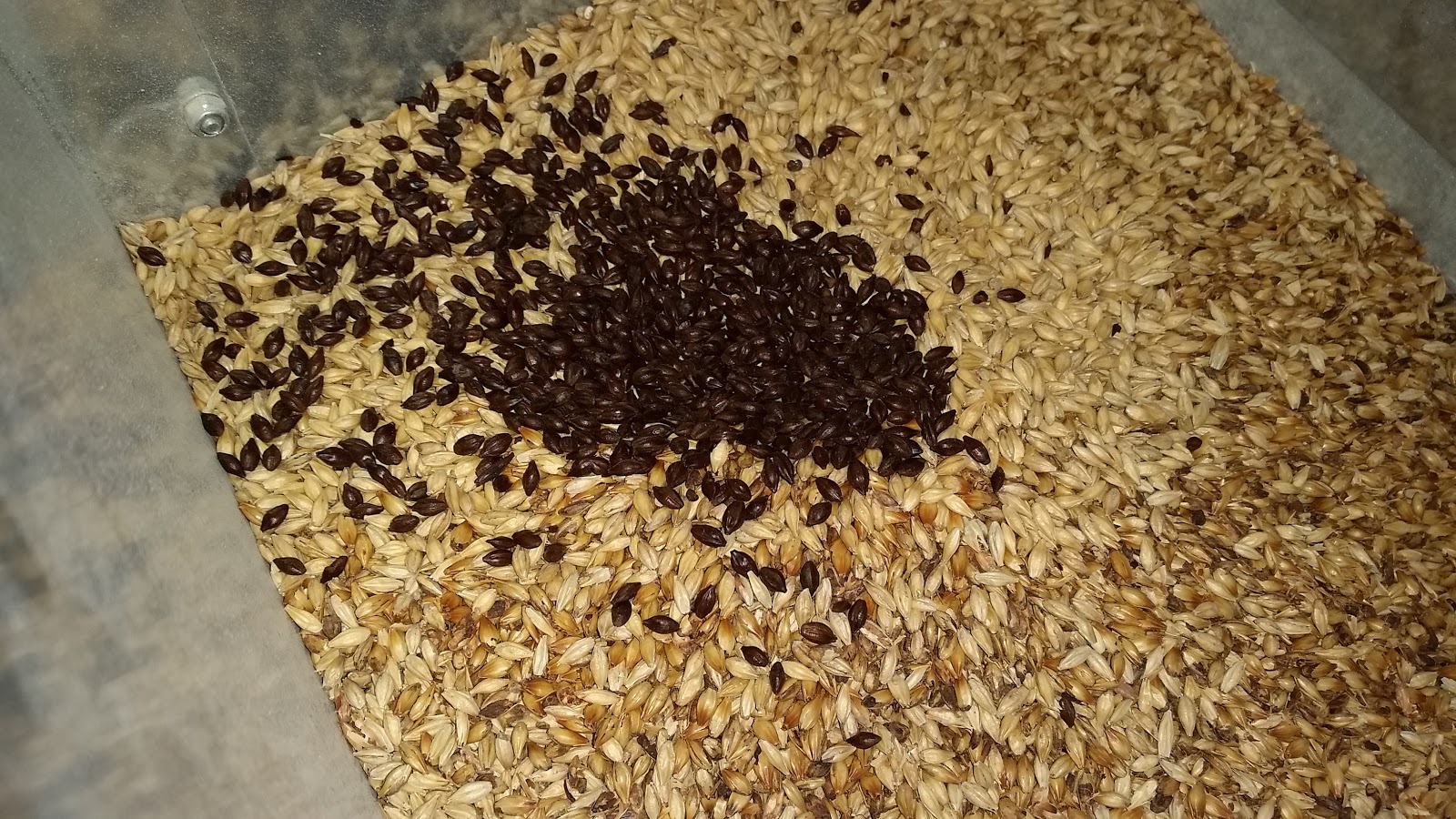
One interesting thing about this recipe is the use of honey malt. My eye has been on this for some time, but I’ve never actually brewed with it. This malt has a very strong aroma, with a thick, sweet and raisin-like character. It’s almost reminiscent of crystal 80, but much stronger. I think it’s going to be quite good, but I also think it would be something to use with caution in other recipes. This is a malt that’s nice to use when you need it, but could overwhelm a brew if competing with more delicate ingredients or aromas.

Alt-Alt Ale

  • 7.25 lbs. 2-row malt (Great Western Brewing Co.)
  • 1.5 lbs. honey malt
  • 1.25 lbs. Borlander Munich malt (Briess)
  • 0.5 lbs. Munich 20°L (“Dark Munich”, Briess)
  • 0.31 lbs. Carafoam (5 oz., Weyermann)
  • 0.06 lbs. roasted barley (1 oz., Simpsons)
  • 0.75 oz. Mt. Hood hops pellets (5.7% alpha), 60 minute boil
  • 2 oz. Perle hops pellets (7.3% alpha), 5 minute boil
  • 2 oz. Czech Saaz hops pellets (2.6% alpha), 5 minute whirlpool
  • 1 tsp. Irish moss (10 minute boil)
  • California Ale yeast (White Labs, WLP001), harvested and made in 1L starter
Procedure
  • From the yeast harvested at last batch, I prepared a 1L starter to aim for ~200 billion yeast cells (I “needed” 188 billion). I had only intended for it to sit overnight, but due to illness and then Christmas it ended up cold-crashing for another six days in the refrigerator. Because the starter should (theoretically) have been at full-strength, I didn’t figure that this was too big of a problem. One interesting thing I noticed is that the yeast this go-around seemed to be a bit more flocculent than I am used to for WLP001, with behavior closer to that which I normally see for WLP002.
  • This recipe called for a somewhat thinner mash than I usually do, at 1.4 quarts of water per pound of grain. I mashed in with 4.78 gallons of water at 159.1°, which hit a mash temperature of 148.1°. This was effectively dead-on for my target (148°). The mash temperature was down to 145.5° after 30 minutes, and down to 144.5° after 45 minutes.
  • After a 60 minute mash, I added 0.25 gallons of water at 210°, to raise the mash temperature to 145°. I let it sit for 10 minutes, vorlaufed, and collected the first runnings. Then I added 3.78 gallons of water at 180°, which raised the mash bed to 160°. I let it sit 10 minutes, vorlaufed, and collected the remainder of the wort.
  • Altogether, I collected 6.8 gallons of wort with a gravity of 1.045, for 74% mash efficiency.
  • I boiled the wort for a total of 60 minutes, adding the hops and Irish moss at the intervals indicated above.
  • After the boil, I chilled the wort down to 76°, transferred to the primary fermenter, and pitched the yeast.
  • I had approximately 6 gallons of beer in the primary, with a starting gravity of 1.052. I brewed the beer on 26 December 2015, and plan to ferment it at 67° for around two weeks.

Transatlantic IPA Kegged

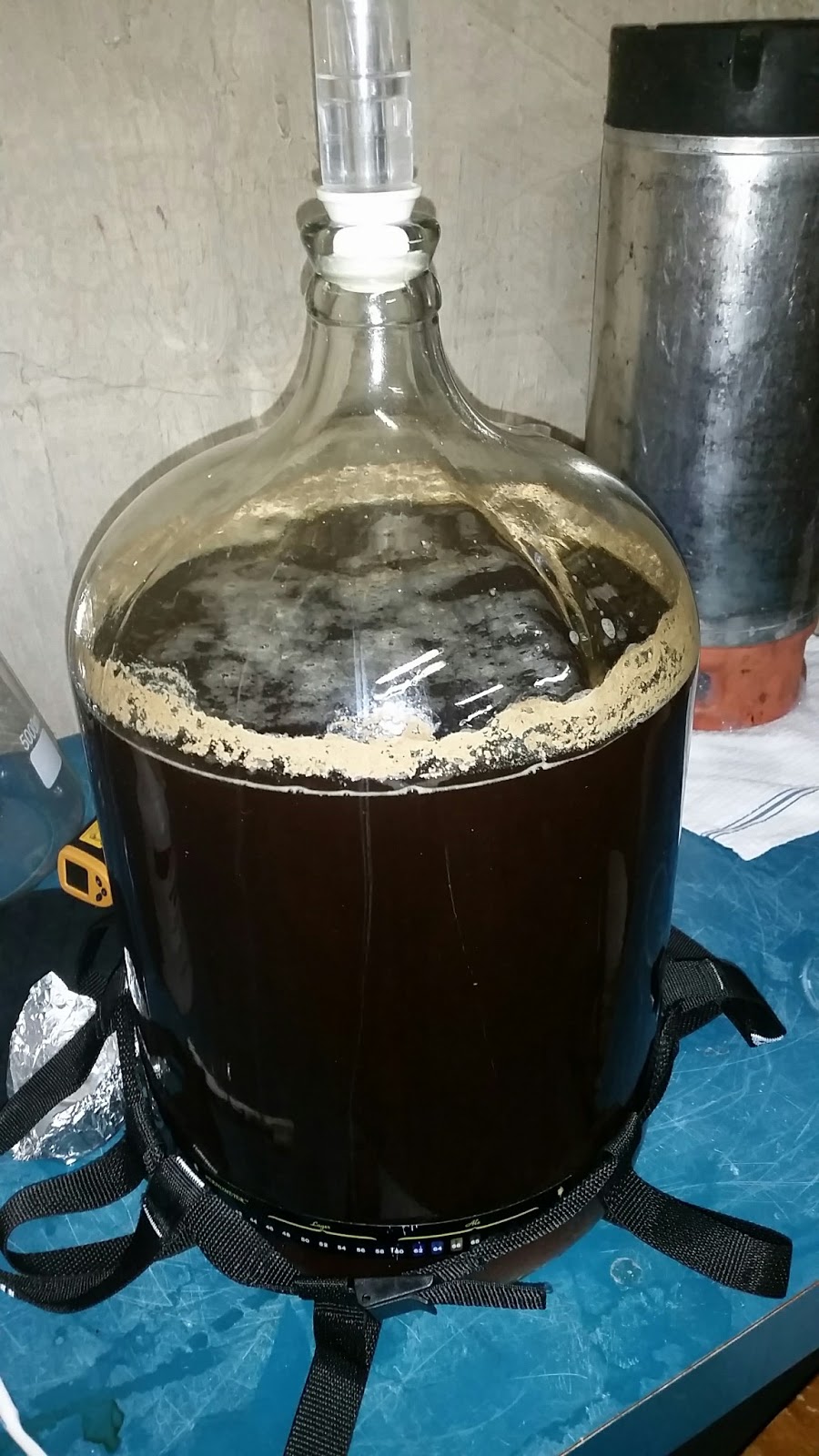
After 13 days in the primary fermenter, I kegged my Transatlantic IPA tonight. During the primary fermentation, I roused the yeast once or twice, to help attenuation along. In the end, I had a final gravity of 1.015, down from 1.064, for 6.5% abv and 75% attenuation. At the time of kegging, I added 3 oz. of hops pellets (2 oz. Simco, 1 oz. Galaxy), for dry-hopping. In my initial tasting, I’m pleased with what the Vermont Ale yeast has done so far (although I’m at the very low end of its attenuation range–will have to see how it tastes in the final product to decide if I want to do anything about it). The keg is now carbonating, in wait for the time when I can finally tap it!