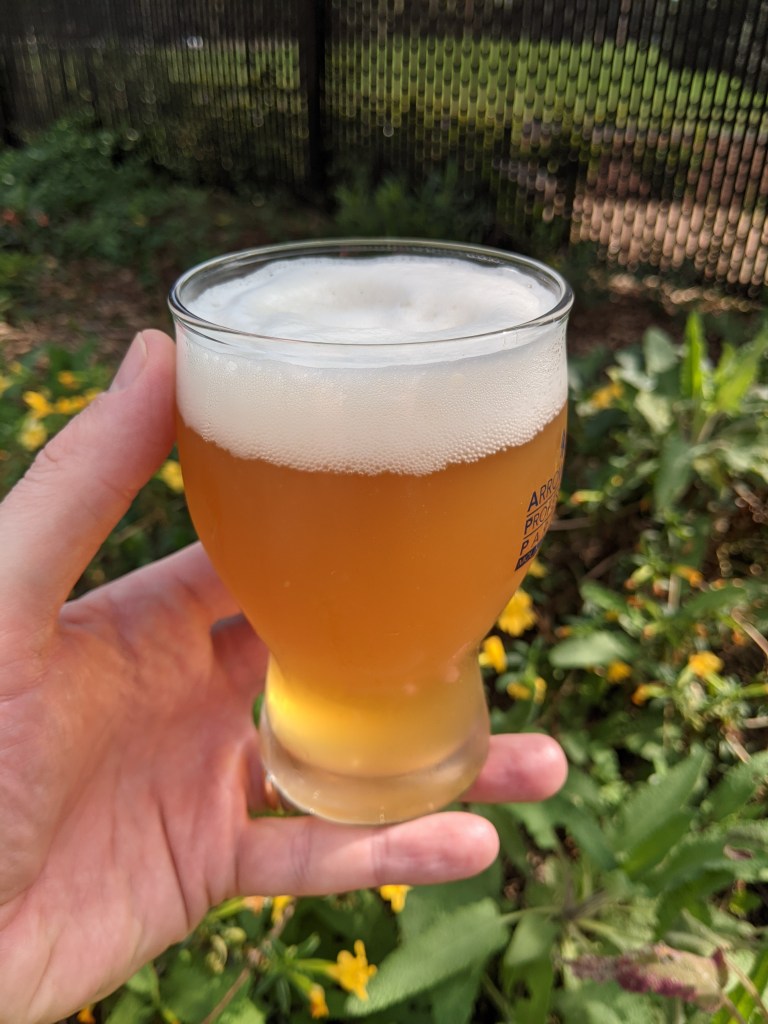
Mosaic SMaSH Session Pale Ale

I wanted a quick-and-easy hoppy beer in the sessionable zone, so I threw together a SMaSH recipe with mostly on-hand ingredients. Maris Otter served as the base, for something a little more flavorful than average 2-row. I have a pound of Mosaic on-hand; I haven’t brewed with that variety in forever, and it’s interesting enough to stand on its own. Finally, I needed a yeast decision. This one required a quick turn-around to go on tap, so kveik was an obvious choice. My fantastic LHBS (Pacific Brewing Supplies in San Dimas) had a new brand in stock, a company called Kveik Yeastery. Looking through their products, a variety called Stalljen seemed perfect–it promised tropical fruit, mango, and pineapple, with citrus behind that. Reading a bit more about the yeast, I’m not sure if there are other commercial versions sold; if anyone knows differently, I’m happy to learn more. As a final note, this beer was set up as a “short and shoddy” style mash and boil, with 30 minutes on each.

Mosaic SMaSH Session Pale Ale

  • 10.5 lb. Maris Otter pale ale malt (Thomas Fawcett)
  • 0.5 tsp. BrewTanB (mash)
  • 1.25 oz. Mosaic hop pellets (10.7% alpha), 20 minute boil
  • 0.5 tsp. BrewTanB, 10 minute boil
  • 1 Kick Carrageenan tablet, 5 minute boil
  • 1.75 oz. Mosaic hop pellets (10.7% alpha), 10 minute whirlpool
  • 1 pkg. Stalljen kveik (Kveik Yeastery #K.22)
  • 3 oz. Mosaic hop pellets (10.7% alpha), dry hop

    Target Parameters

    • 30 minute infusion mash, 152°, full volume mash
    • 1.049 o.g., 1.012 f.g., 4.8% abv, 41 IBU, 5 SRM
    • Claremont tap water adjusted to hit 75 ppm Ca, 26 ppm Mg, 102 ppm Na, 164 ppm SO4, 130 ppm Cl, 10 ppm bicarbonate, RA=-60

    Procedure

    • Starting with 7 gallons of water, I added 7.2 mL of 88% lactic acid, 4 g of gypsum, and 2 g of epsom salts, in order to hit my water targets.
    • I heated the mash water to 157°, added the grains, and mashed at 152° with recirculation for 30 minutes. I then raised the mash to 168° for a 10 minute mash-out, before removing the grains.
    • My post-mash gravity was a bit underwhelming at 1.035 — that’s only 56% mash efficiency, well below my norm. Based on past results with the Fawcett Maris Otter, I’m thinking this is a malt that needs a full 60 minute mash at least; it certainly hasn’t overwhelmed me with its efficiency. Although I hadn’t planned a session ale, this is where I kicked things into session ale territory. I double-checked my mill gap, and all was OK there, so I can’t blame the mill.
    • I brought the runnings to a boil, but I upped the boil vigor a bit (85% power on the Foundry) and extended the boil to 60 minutes (instead of the planned 30 minutes).
    • After the boil, I added the last bit of hops and then chilled down to 93°. I transferred to the fermenter, pitched the yeast, and fermented at ambient.
    • I brewed this beer on 16 August 2025. Starting gravity was 1.043.
    • Vigorous fermentation kicked off within four hours of adding the yeast; the fermenter temperature was down to 68° by the next morning.
    • I added the dry hops on 21 August 2025, and cold crashed the beer on 24 August 2025.
    • I kegged the beer using a closed transfer on 30 August 2025. Final gravity was 1.012, for 4.1% abv.

    Tasting

    • Appearance
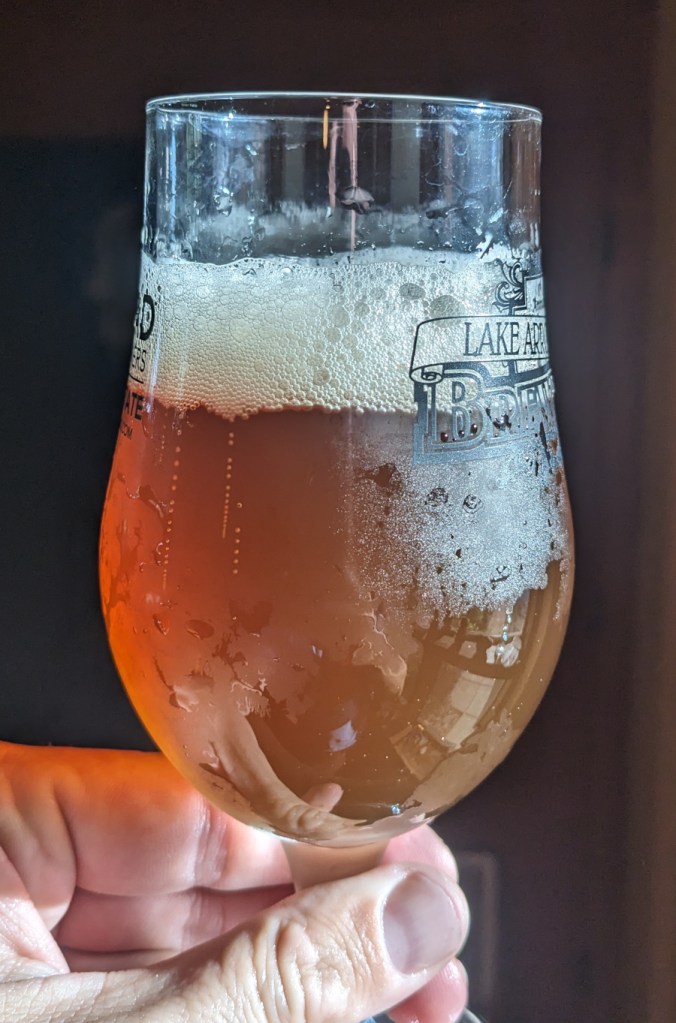
      • This is a hazy, light yellow beer that pours with a fluffy and persistent white head. The lacing is gorgeous!
    • Aroma
      • Aroma is dominated by a fresh citrus and blueberry hop character at a medium-high level. There is minimal malt or yeast character that I can pick up.
    • Flavor
      • Bitterness is at a high level, with slight astringency and hop bite. There is a medium-low level of malt flavor, with a grainy/malty-sweet character. The hops have a citrus and pine quality, with slight mango; it’s backed up by the citrusy notes presumably from the yeast.
    • Mouthfeel
      • Medium level of carbonation; light body and a dry finish with slight astringency.
    • Would I Brew This Again?
      • The core concept of this beer is great, but it definitely suffered from the low starting gravity. The astringency is annoying, but otherwise it’s a pretty decent beer. I would definitely do a version of this recipe again, with a higher gravity. Stalljen is a fantastic kveik strain; it’s unobtrusive and works well with Mosaic. I didn’t pick up the slight “twang” or tartness I get with Lutra (my other favorite strain), and I wouldn’t necessarily know this is a kveik otherwise. The persistent haze might be a negative in some recipes, but it’s so beautiful in this particular beer. Thinking ahead, I might aim for the same level of hops in a future version, with a starting gravity around 1.054. That would take a greater amount of malt as well as a longer mash.
    • Overall
      • 6/10

    Sideways Saison

    It has been a long time since I last made a saison, back in 2018. It’s an interesting style, but one that I’m usually content to enjoy in a sporadic bottle, rather than a full keg. But, inspired by some reading and podcasts, I decided to give the style another go. My friend Justin was in town, so it was fun to have a brewing partner.

    I patterned my recipe after Odds & Ends Saison from Modern Homebrew Recipes, and followed Drew Beechum’s guide to yeasts and yeast techniques via the Maltose Falcons. I used the saison article in the July/August 2018 Zymurgy magazine for my water profile.

    This was a complicated batch in the end. The breaker on my Foundry gave up mid-boil, so I had to transfer to a kettle and finish over a propane burner. There’s never a dull moment while brewing! Things really went sideways on this batch, which conveniently provided the name. (Thankfully, it was an easy fix for the breaker issue, which involved swapping in a new breaker)

    Sideways Saison

    • 4.5 lb. Lamonta pale malt (Mecca Grade)
    • 1 lb. flaked rye
    • 1 lb. Viking Pilsner Zero Malt
    • 1 oz. roasted barley (Bairds)
    • 4 oz. rice hulls
    • 0.5 lb. white sugar, added at end of boil
    • 1.5 g. WLN1000 yeast nutrient (White Labs)
    • 1 oz. Moutere hop pellets (19.5% alpha acid), 15 minute whirlpool
    • 1 pkg. Belgian Saison yeast (Wyeast 3724), prepared in vitality starter

    Target Parameters

    • 1.057 s.g., 1.006 f.g., 6.7% abv, 30 IBU, 10 SRM
    • Full volume mash, 149° for 60 minutes, 168° mash-out for 10 minutes
    • Claremont tap water and RO water adjusted to hit target water parameters of 33 ppm Ca, 18 Mg, 34 Na, 103 SO4, 49 Cl, 63 HCO3, 18 ppm RA

    Procedure

    • A few hours before the mash, I made a vitality starter with a 16-oz. can of Propper Starter (Omega) along with 16 oz. of distilled water.
    • I combined 2.25 gallons of Claremont tap water and 3 gallons of distilled water, adding 1 g gypsum and 3 g of epsom salt to hit my water parameters. Once I got the water to 154°, I added the grains (except for the roasted barley) along with 3.4 mL of 88% lactic acid, to adjust the pH.
    • I held the mash temperature at 149° for 60 minutes, with recirculation. Then, I added the roasted barley, raised the mash to 168°, and held it there for 10 minutes before pulling the grains.
    • In total, I collected 5 gallons of runnings with a gravity of 1.037, for 78% mash efficiency.
    • The Foundry crapped out on the way to the boil, so I transferred the runnings to my big 10 gallon kettle and continued the process over my propane burner. I boiled for 90 minutes total, to up the gravity.
    • I added hops and finings per the recipe.
    • For some reason, I didn’t record the gravity, but I think it was around the target. I was able to estimate the starting gravity by measuring the final gravity and taking a final refractometer reading–which worked out to 1.055.
    • I brewed this beer on 28 May 2023.
    • Once the initial chill was done, I transferred it to the fermenter. I chilled the wort to 64° before pitching the yeast, and set the fermenter to 65°. I held it here for 3 days, before letting it free-rise.
    • I raised the temperature to 72° on 31 May 2023, and then to 85° on 2 June 2023. This was a free-rise with ambient heat, rather than measuring the temperature of the fermenter.
    • Despite using an “open” fermentation (aluminum foil over the airlock, rather than liquid in the airlock), I still got the “saison stall.” Gravity was only at 1.032 on 8 June 2023, so I left the beer at 85°.
    • The beer was finally down to 1.009 on 19 July 2023. This works out to 6.1% abv.

    Tasting

    • Appearance
      • Pours with a fluffy and persistent ivory head. The beer itself is medium amber and has a decent haze..
    • Aroma
      • Slightly earthy aroma, with a moderate level of pear character alongside some peppery spice. A tartness also comes through, which is really delightful.
    • Flavor
      • Spicy, slightly peppery flavor and a decent bit of ripe pear at the forefront, with only moderate bitterness. I get a bit of the rye flavor, but most of the flavor is in the world of the yeast.
    • Mouthfeel
      • Medium-light body, moderately high carbonation, moderately dry finish.
    • Would I Brew This Again?
      • This is a pretty good recipe! It is a bit darker than I am used to for a saison (especially the classic Saison Dupont), but I think it’s still well within the style. I personally might like one that is a little lighter bodied, and I wonder if the rye didn’t complicate matters some. I also might go for 100 percent pilsner malt, rather than American pale malt as the dominant grain, in order to streamline the flavor. The yeast qualities are quite nice, and hit a nice balance of interesting but not in-your-face. I feel that I got the fermentation parameters just about perfect. It was worth the extra fuss!
    • Overall
      • 9/10

    Big Hop Summer IPA

    Although many of my IPAs have been on the session side, I do try to make a full strength version every once in awhile. In this recipe, I aimed for something highly drinkable and packed with hop flavor. Towards the first item, I mashed low and added some dextrose to keep things light. Towards the second end, I looped in some HOPBOX finds–Azacca, HBC 586, and Idaho Gem. Finally, I wanted to experiment with Lutra, a kveik strain that has a reputation of a quick and clean fermentation. It’s a bit of a kitchen sink beer, in order to use up some grains and hops, but it’s all with a purpose.

    Big Hop Summer IPA

    • 5.25 lb. Golden Promise malt (Simpsons)
    • 5.25 2-row pale malt (Rahr)
    • 1.75 lb. Vienna malt (Weyermann)
    • 0.25 lb. Munich I malt (Weyermann)
    • 0.75 lb. dextrose (added to boil)
    • 0.75 oz. Bravo hop pellets (14.2% alpha), 60 minute boil
    • 1 Whirlfloc tablet, 5 minute boil
    • 1 oz. Azacca hop pellets (12.7% alpha), 15 minute whirlpool
    • 1 oz. HBC 586 hop pellets (11.8% alpha), 15 minute whirlpool
    • 1 oz. Idaho Gem hop pellets (14.2% alpa), 15 minute whirlpool
    • 1 pkg. Lutra kveik (dry), Omega OYL-071
    • 1 oz. Azacca hop pellets (12.7% alpha), dry hop in keg
    • 1 oz. HBC 586 hop pellets (11.8% alpha), dry hop in keg
    • 1 oz. Idaho Gem hop pellets (14.2% alpa), dry hop in keg

    Tasting

    • Appearance
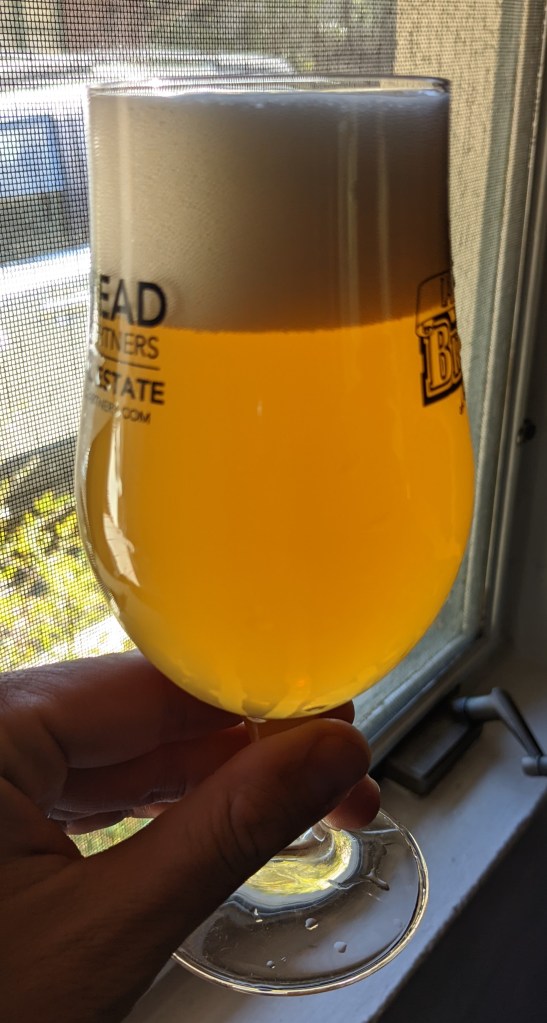
      • The beer pours as a hazy gold, with a persistent white head that leaves nice lacing down the side of the glass over time. I am surprised that the haze hasn’t dropped out, even after two months in the keg at temperatures below 40 degrees.
    • Aroma
      • Orange peel aroma at the front; very citrusy character overall.
    • Flavor
      • The balance is tipped towards the hops (no surprise), with a very citrusy and resin character. I also pick up a bit of stone fruit, which might be from the hops or perhaps from the yeast. There is a little bit of a “twang” of something somewhere in the background, which I suspect is from the yeast but I can’t be 100 percent certain. Even though Lutra is supposed to ferment clean, I’ve seen remarks that it is still a farmhouse-type strain, and they remain a bit rustic. As the beer sits on the tongue, I wonder if some of it is some citrus pith character. In any case, there is something that detracts a little bit from complete enjoyment of the beer by my tastes, but it’s not overwhelming, and it isn’t totally out of character for this kind of beer. The malt is in the background, as it should be, but provides a nice bit of body and a touch of malty flavor to balance against the hop bitterness.
    • Mouthfeel
      • Medium-light body, with moderate carbonation and a dry finish. It goes down super easy.
    • Would I Brew This Again?
      • I like the beer overall, but I might switch up the hop varieties. I tried Azacca years ago, it didn’t overwhelm me with awesome then, and I had a similar experience this time around. I think it’s just not a hop that does much for me. I’m surprised by how persistently hazy the beer has been, even after two months in the keg; the haze doesn’t terribly detract from the beer, but it’s just a bit more haze than I expected. Those remarks aside, this is a very drinkable beer, especially for something that clocks in at 6.7% abv. The combination of low mash temperature and dextrose addition likely contributed to keeping things on the lighter side.
    • Overall
      • 7.5/10

    Kveik the Keg Brown Ale

    As the days turn towards winter, I’m in a dark [beer] mood. This is the time of year when I really like having a stout, porter, brown ale, or even an amber ale on tap to round out my beer choices.

    To kick things off for the fall/winter dark beer season, I brewed up “Kveik the Keg Brown Ale.” It’s a total experiment, pulling together something that’s vaguely an American-style brown ale, with a repitch of the Hornindal kveik culture used in my recent pale ale. The idea was to make a sessionable beer holding ample malt character and a citrus highlight…something like a “chocolate orange” feel. I modified this from the Wasatch Premium Ale recipe in the Brewing Session Beers book by Jennifer Talley, because it looked like it had many of the initial features I was hoping for. For the malt base, I mixed American 2-row and light Munich malt, supplemented by a hefty dose of crystal 75, some chocolate malt, and a touch of Carafa Special III for color. For hops, I used all whole-Cascade hops. The Hornindal culture, which produces a subtle citrus character, would hopefully work alongside the Cascade. As you’ll see in the tasting notes, this was a pretty successful experiment!

    Kveik the Keg Brown Ale

    • 6.25 lb. 2-row brewer’s malt (Great Western)
    • 2.5 lb. Munich light malt (Chateau)
    • 1 lb. crystal 75 malt (Great Western)
    • 2.6 oz. Carafa Special III malt (Weyermann)
    • 2.5 oz. chocolate malt (Briess)
    • 1 oz. Cascade whole hops (5.5% alpha), 60 minute boil
    • 0.5 oz. Cascade whole hops (5.5% alpha), 30 minute boil
    • 1.5 oz. Cascade whole hops (5.5% alpha), 10 minute boil
    • 1 tsp. yeast nutrient, 10 minute boil
    • 1 Whirlfloc tablet, 5 minute boil
    • Hornindal Kveik (Omega OYL-091), repitched from previous batch
    • 1 oz. Cascade whole hops (5.5% alpha), dry hop in fermenter

    Target Parameters

    • 1.044 s.g., 1.011 f.g., 4.4% abv, 18 SRM, 33 IBU
    • Infusion mash, 156°, batch sparge; 60 minute boil
    • Claremont water, with Campden tablet to remove chloramines.

    Procedure

    • I mashed in with 3.4 gallons of water at 166°, to hit my mash target of 156°. After 40 minutes, I added 1.5 gallons of hot water (~175°), to raise the mash temperature to 164°. I let this sit for 10 minutes, vorlaufed, and collected the first runnings.
    • Next, I added 3.75 gallons of hot water, to hit a ~164° mash temperature. I let this sit for 10 more minutes, vorlaufed, and collected the second runnings.
    • In total, I collected 7.3 gallons of runnings at a gravity of 1.038, for 76% mash efficiency.
    • I brought the runnings to a boil, and added hops, nutrients, and finings per the indicated schedule. After 60 minutes, I turned off the heat, chilled the wort down to 89°, and transferred it to the fermenter.
    • I brewed this beer on 19 September 2020. Starting gravity was 1.045, pretty close to my target. I pitched around 8 ounces of yeast slurry (which had been harvested a week prior), and saw signs of fermentation within 90 minutes of pitching the yeast! Within 18 hours, there was vigorous fermentation. What a solid start for this culture! I fermented this at ambient temperatures.
    • On 23 September, I added 1 oz. of dry hops directly to the fermenter.
    • I kegged the beer on 3 October 2020, adding 2.8 oz. of corn sugar boiled in 1 cup of water. The keg sat at ambient for ~10 days, before I topped up the pressure using force carbonation.
    • Final gravity was 1.017, down from 1.045, for 3.6% abv.
    Kveik the Keg Brown Ale

    Tasting

    • Appearance
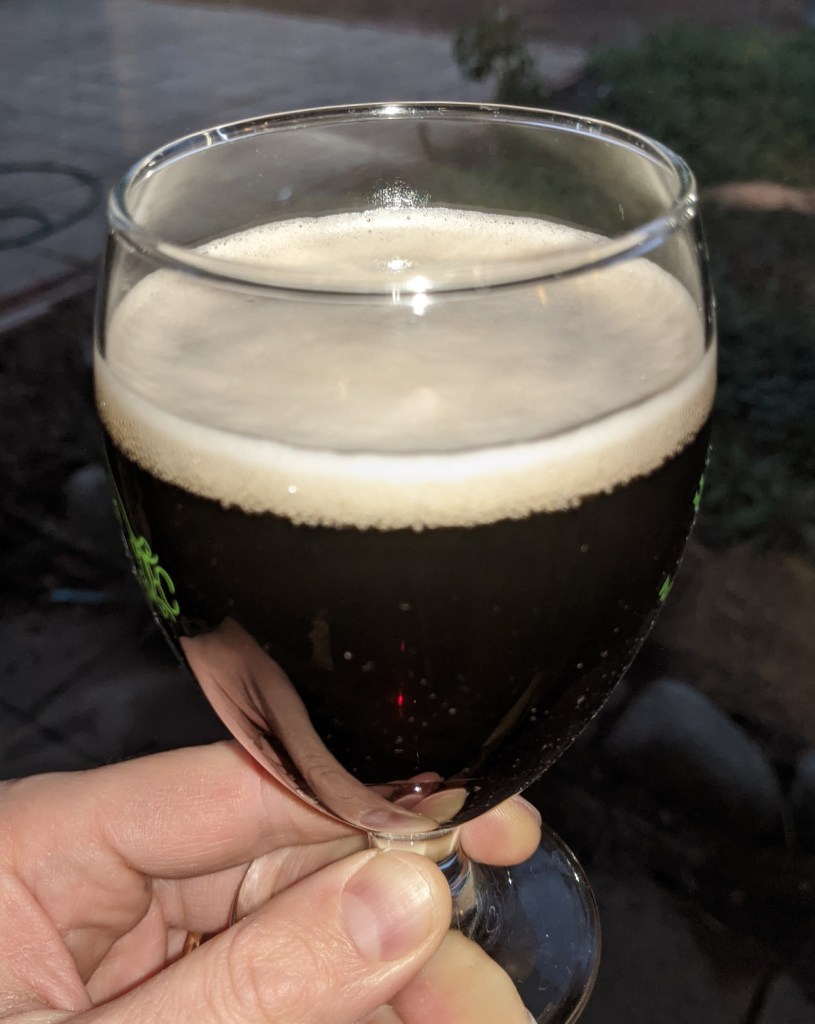
      • Very clear, deep brown beer with a persistent ivory head. It is exceptionally pretty!
    • Aroma
      • Moderate chocolate character to the malt aroma, with a slight citrus character, presumably from the yeast and hops. Very clean!
    • Flavor
      • The beer has a surprisingly rich, bready malt base (must be that Munich malt!), with a dark caramel and chocolate character behind that. Bitterness is at a moderately high level, but not over the top relative to the malt. There is definitely an orangey citrus character in play here.
    • Mouthfeel
      • Moderate carbonation, with a fairly light body and a crisp finish. There is a very slight bit of what might be astringency on the extended finish, but it’s barely noticeable. It’s not harsh at all, but does seem a touch out of balance with the rest of the beer.
    • Would I brew this again?
      • Yes! I might make a few minor modifications, perhaps to dial the bitterness back just a touch and maybe reduce the dry hopping level or dry hopping time. I think the beer would also benefit from swapping out the 2-row base malt with a Vienna or Maris Otter-type malt, to enrich the malt character. All that said, it’s overall a pretty good beer. I really like how the kveik culture worked in this beer, and it’s pretty nice to find something for this yeast that’s not yet another oversaturated IPA. I’ll probably be brewing more beers like this down the road!

    Kveik Pale Ale

    It happened…I’ve given in to a brewing trend, and am trying a recipe with kveik. As you’ll see in some upcoming posts, I’ve in fact tried a few kveik recipes at this point. This is my first one, and admittedly not my favorite.

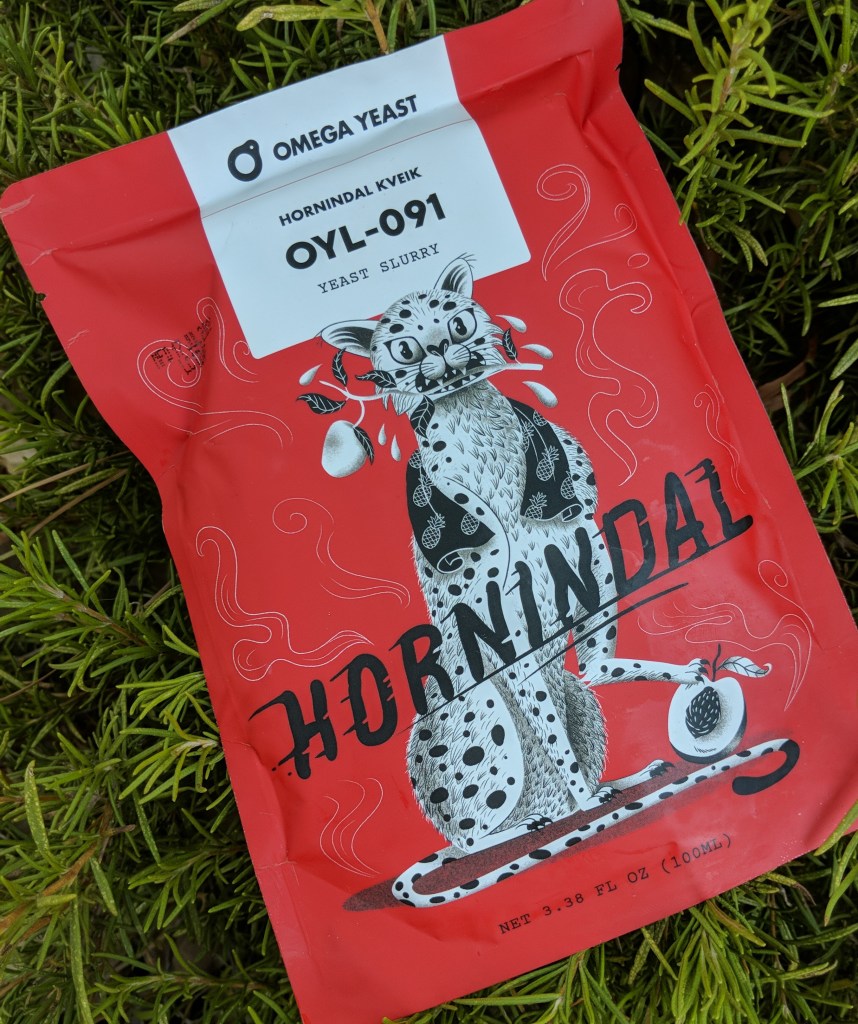
    red package of yeast from Omega Yeast, Hornindal Kveik strain, with cartoon of cat on front
    Kveik culture from Omega

    For those not familiar with it, kveik is essentially a Norwegian farmhouse ale culture, with a rich cultural history that has likely been over-analyzed by those outside of the original neighborhoods where the yeast originated. I’ve been intrigued by their stated qualities of fermenting cleanly in excess of 90°, which almost sounds too good to be true. It wasn’t, in the end!

    The recipe is inspired by a kit recipe from Atlantic Brew Supply, with major adjustments to pretty much everything. Many of the kveik-centered recipes out there are super-high alcohol, and that just doesn’t interest me. Session ales forever! I looked around at a few different kveik strains, and Hornindal from Omega seemed to hit the balance of a citrusy character that I wanted. I went with my usual session pale ale strategy of Vienna plus some Munich and a little crystal malt. For the hops, I grabbed a South African experimental variety, U1/108, from my local homebrew shop.

    Kveik Pale Ale

    • 8 lb. Vienna malt (Weyermann)
    • 1 lb. Munich light malt (Chateau)
    • 0.5 lb. Crystal 40 malt (Great Western)
    • 0.75 oz. Magnum hop pellets (13.2% alpha), 30 minute boil
    • 1 tsp. Fermax yeast nutrient, 10 minute boil
    • 1 Whirlfloc tablet
    • 1 oz. African Experimental U1/108 hop pellets (15.0% alpha), 5 minute boil
    • 1 oz. African Experimental U1/108 hop pellets (15.0% alpha), 15 minute whirlpool
    • 3 oz. African Experimental U1/108 hop pellets (15.0% alpha), dry hop in keg
    • 1 pkg. Hornindal Kveik (Omega OYL-091)

    Target Parameters

    • 1.043 s.g., 1.011 f.g., 4.3% abv, 6 SRM, 41 IBU
    • Infusion mash, 156°, batch sparge; 45 minute boil
    • Claremont water, with Campden tablet to remove chloramines and 2 g of gypsum added to boil kettle.

    Procedure

    • I mashed in with 3.25 gallons at 168°, to hit a 158° mash temperature. I also added 4 mL of 88% lactic acid to the mash, to adjust pH.
    • The mash temperature was down to 156° after 45 minutes. At this point, I added 1.5 gallons for the first sparge, which raised the temperature to 162°. After 10 minutes, vorlaufed and collected the first runnings. Next, I added 3.6 gallons for the second sparge, with a vorlauf after 10 minutes.
    • In total, I collected 7 gallons with a gravity of 1.039, for 77% mash efficiency.
    • In the kettle, I added 2 g gypsum, and the broil everything to a boil. I boiled for 45 minutes, adding hops and other items per the schedule.
    • After flame-out, I chilled the wort to below 185° and then added 1 oz. of whirlpool hops. Hops were between 175° and 180° for 10 minutes. Then, I continued chilling.
    • After I chilled the wort down to 90°, I let it settle for 1 hour and then transferred to the fermenter and pitched the kveik.
    • The fermenter showed minor activity within 6 hours, and vigorous bubbling within 18 hours. At this point, I measured ~85° degrees for fermenter temperature, with 80° degrees ambient in the garage. I started fermentation on September 5, and fermentation seemingly was done by 9 Sept 2020.
    • I kegged the beer on 13 September 2020, adding dry hops in a baggie at that time. As has been my usual practice lately, I did a mixture of keg priming and force carbonation, targeting 2.7 volumes of CO2. I added 2.8 oz of corn sugar dissolved in one cup water for this first stage, and after a week topped up the CO2 using my cylinder.
    • Final gravity is 1.017, for 3.6% abv.

    Tasting

    • Appearance
      • A hazy gold beer, with a pillowy, fine, and very persistent white head
    • Aroma
      • Aroma is malt-centered, very bready and showing a bit of caramel. Hop aroma is surprisingly low.
    • Flavor
      • Very hoppy, with a slightly rough bitterness. The malt in the background has a bready and toasty quality.
    • Mouthfeel
      • Light bodied, slightly astringent finish, probably from the dry hops. Moderately high carbonation.
    • Would I brew this again?
      • Not with this particular hopping regimen. The malt character is fine, and the yeast character is fantastically clean for having been fermented at high temperature, but the hops just don’t do it for me. I wonder if it’s a combination of the hop variety with the low starting gravity, so that the hops aren’t balanced more by the malt. I also think I overhopped on the dry-hopping, so I can’t blame it all on the hop variety. Honestly, the beer was far better before I added the dry hops! That said, I’m super impressed by the yeast, and harvested a ton for use in some upcoming batches.
    • Overall
      • 4/10