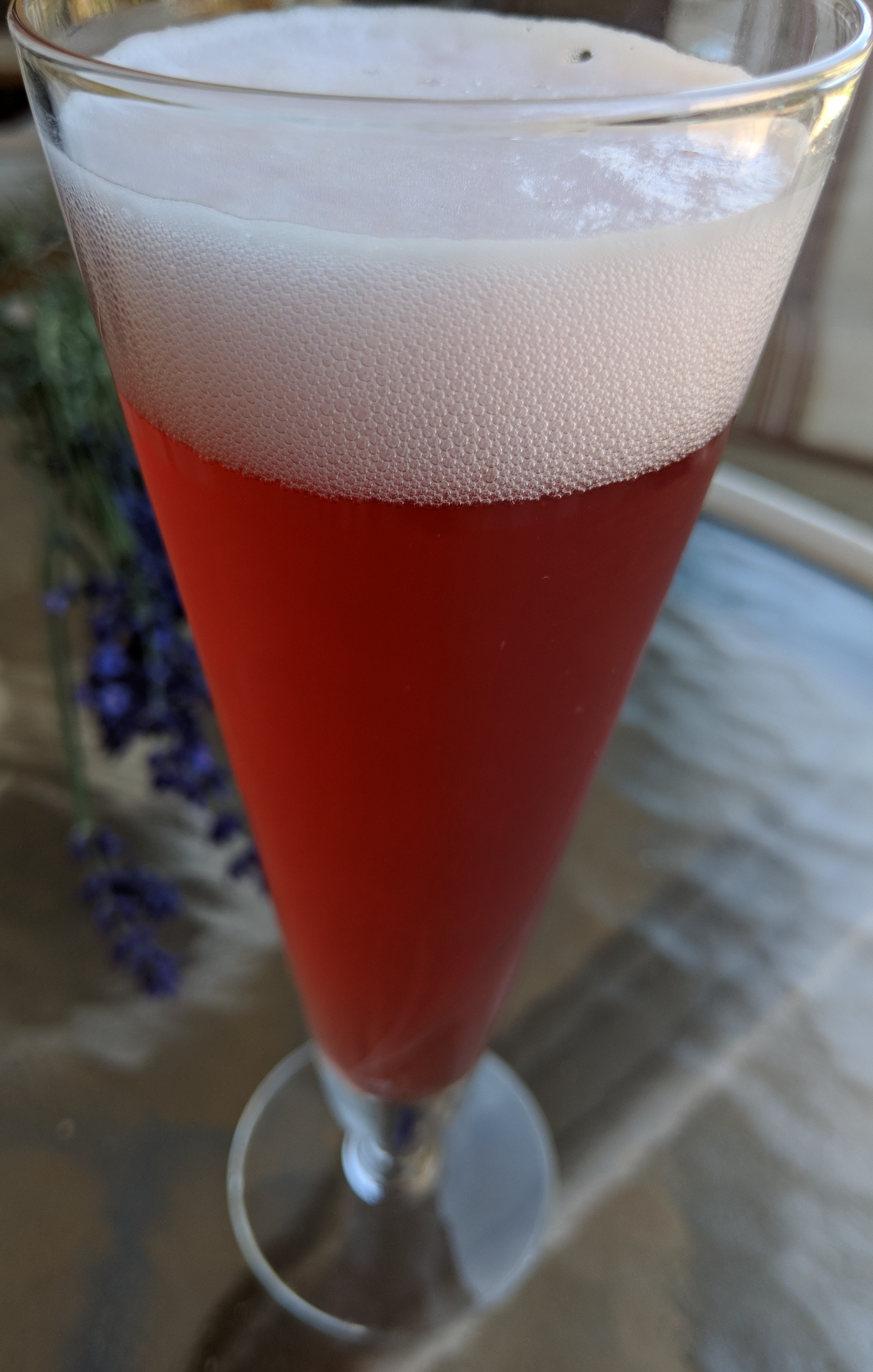
Humboldt’s Hefeweizen

It has been a loooooong time since I’ve brewed a German hefeweizen / weissbier. In fact, my records show that I’ve only done it once, over five years ago. That attempt was all-extract, and turned out reasonably well.
I’ve been thinking about this style because I wanted something that turns around quickly, has a ton of character, and is low alcohol enough to be enjoyed as a session beer on warm days. Plus, I’ve really been into German styles lately–what’s not to like?

The recipe more or less follows Gordon Strong’s weissbier recipe from the March/April 2020 issue of Brew Your Own magazine (recipe here, behind paywall). I liked its simplicity, and that it could be done fairly well with an infusion step mash. I added in a touch of melanoidin malt, to use up a lingering handful, and used up some extra wheat malt, too. The recipe called for a ferulic acid rest (to maximize clove character), and I was willing to give that a try in the interest of science.

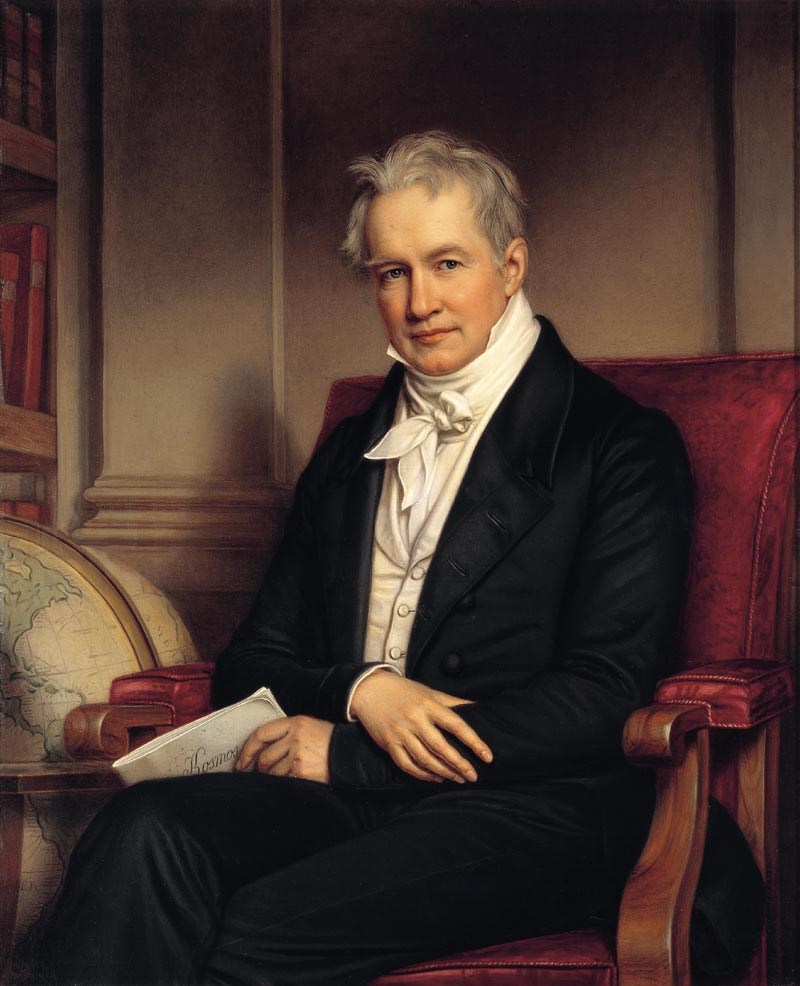
The name–Humboldt’s Hefeweizen–honors German scientist Alexander von Humboldt. I recently finished a biography about him (Andrea Wulf’s Invention of Nature–highly recommended!), and I was fascinated by his intellectual and cultural influence, as well as his incredible dedication to documenting knowledge. This dude has a ton of animals and plants bearing his name, bestowed by the scientific community. There’s a Humboldt Penguin, and a Humboldt Squid, and a Humboldt’s Sapphire Hummingbird. Why not a Humboldt’s Hefeweizen? I don’t know that he necessarily drank much of the stuff when he was alive, but he probably didn’t eat many penguins, either.

Humboldt’s Hefeweizen

  • 4.75 lb. Superior Pilsen Malt (Great Western)
  • 4 lb. white wheat malt (Briess)
  • 1.25 lb. white wheat malt (Great Western)
  • 1.6 oz. melanoidin malt (Weyermann)
  • 0.25 oz. Magnum hop pellets (13.2% alpha), 60 minute boil
  • 1 pkg. Hefeweizen Ale yeast (WLP300, White Labs)

Target Parameters

  • 1.047 o.g., 1.010 f.g., 4.9% abv, 11 IBU, 4 SRM
  • Infusion mash; 15 minute acid rest at 116°; 30 minute saccharification rest at 149°; 30 minute saccharification rest at 158°, batch sparge
  • Claremont tap water with mineral additions, to hit target water profile of 80 ppm Ca, 9 ppm Mg, 23 ppm Na, 58 ppm SO4, 50 ppm Cl, 220 ppm HCO3; RA=118 pm

Procedure

  • The night before brewing, I spooled up a 1.25L starter for the yeast.
  • On brew day, I mashed in with 2 gallons of water at 129°, to hit 119° for the acid rest. This is a touch higher than I wanted, but still within the acceptable parameters for an acid rest.
  • After 15 minutes, I added 1.6 gallons of water at 202°, to hit a 149° mash temperature. I added 4.5 mL of lactic acid at this time, and let it rest for 30 minutes.
  • Next, I added 1.6 gallons of water at 185°, to raise the mash temperature to 152°. I had been hoping for a little warmer (158°), but will settle for this. After 30 minutes, I collected the first runnings.
  • I added 3.6 gallons of water at 185°, let it rest for 10 minutes, and collected the second runnings.
  • In total, I collected 7.2 gallons of runnings with a gravity of 1.040, for 75% mash efficiency.
  • I brought the runnings to a boil, adding the hops per the schedule. After 60 minutes, I turned off the flame and began chilling.
  • I transferred the wort into the fermenter, and chilled it further in my fermentation chamber. Once I hit 62°, I pitched the yeast.
  • I brewed this beer on 26 April 2020, and kept the 62° temperature for the first four days of fermentation. I ramped up to 67° on 30 April.
  • On 3 May 2020, I brought the beer out to ambient temperature, which was around 72°, to finish out fermentation.
  • I kegged the beer on 5 May 2020, adding 3.61 oz. of corn sugar. This should hit a target carbonation volume of ~3.4 volumes. After a week, I hooked it up to the gas in my keezer, carbonating the last little bit in there.
  • Starting gravity was 1.045, and final gravity was 1.013, for 4.3% abv.
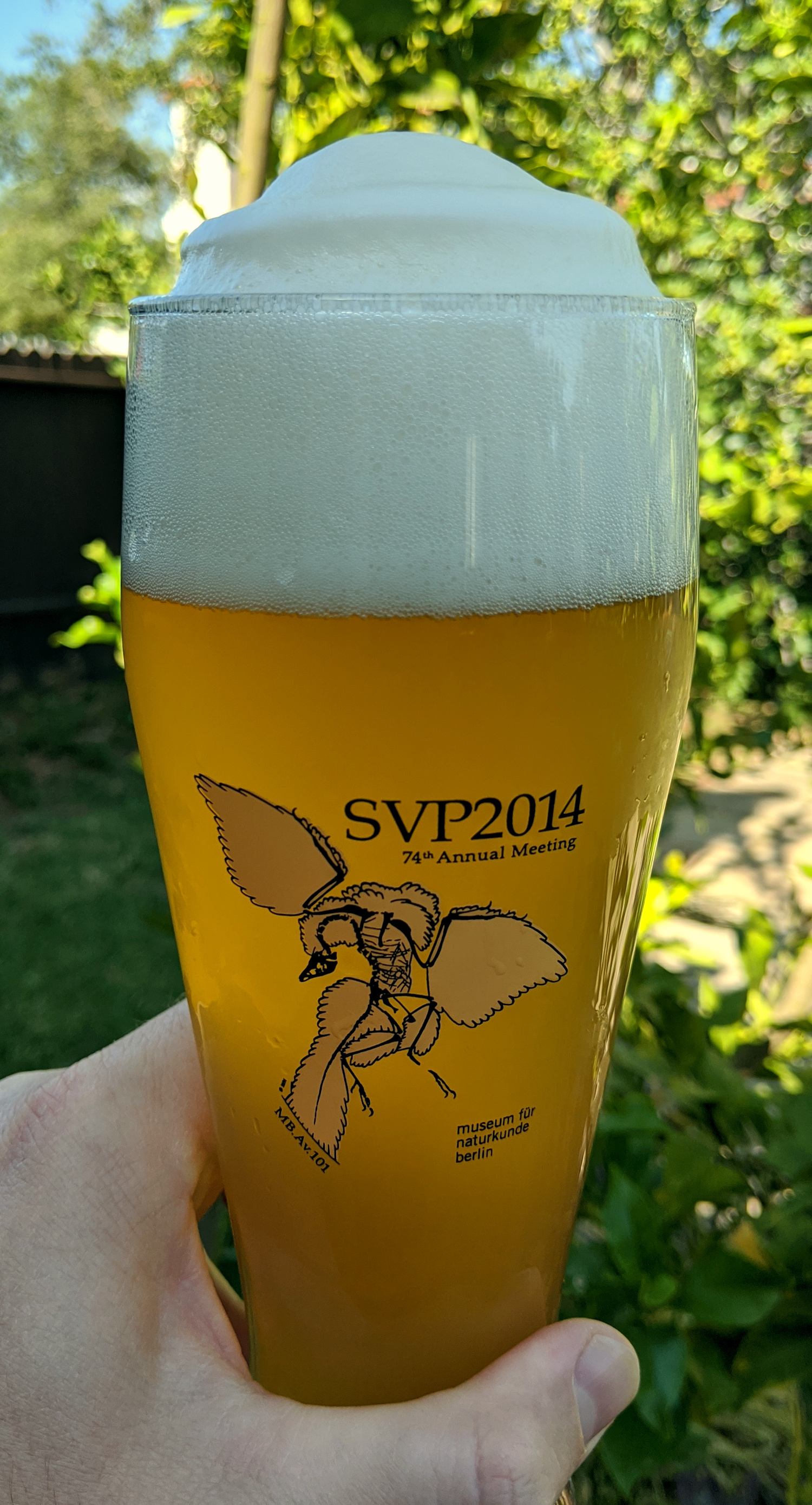
yellow beer with fluffy white head, in weizen glass with SVP2014 on front with picture of fossil Archaeopteryx, held by hand in green yard

Tasting

  • Appearance
    • Creamy white head, persistent; doesn’t always pour consistently tall, though (gotta work on the head factor). I seem to do better if I let the beer line rest for 10 minutes between pours, to let CO2 out of solution and encourage some foam. Very hazy light gold beer.
  • Aroma
    • Tart aroma, with light bubblegum and clove. (no banana) Lots of yeast character!
  • Flavor
    • Light and smooth, with very low, subtle hop flavor. Slightly tart, with a mild bite coming from high level of carbonation that offsets the malt. Moderate clove, slight banana, very slight bubblegum in the yeast character. Malt character is light and somewhat bready, with a residual sweetness.
  • Mouthfeel
    • Medium-light body, creamy on tongue, with high carbonation, very slightly dry finish.
  • Would I brew this again?
    • This is a really nice weissbier! I think the freshness, malt balance, and high carbonation come together pretty well. I like that I dodged the super-banana (sometimes to the level of stomach-churning) character of wheat beers fermented at higher temperatures, so there’s not much I would change on that end. The yeast character is pretty nice here, too. My one disappointment concerns the level of head; depending on my pour (and how long the beer has sat in the lines between pours, with a greater length of time encouraging more foam), I don’t get quite as tall of a head as consistently as I would like. I wonder if the low temperature initial mash rest had a detrimental effect in this regard (in terms of breaking down the relevant proteins just a bit too much). Or maybe it’s how I’m pouring? Or maybe I am expecting more head than is realistic in a typical setting? I might add in a touch of flaked wheat to address head character next time.
    • As a style, I’m definitely coming back to this one. It’s super flavorful, packing in a ton of character without a ton of alcohol. That’s perfect for enjoying on a summer afternoon!
  • Overall
    • 8.5/10

The Ones That Got Away…

For a variety of reasons, I haven’t been able to blog about every single batch I brewed in 2018. Many of the ones that didn’t make the cut were repeat brewings of successful recipes. Because I’m not likely to get all of them with full blog posts at this stage, I’m giving myself semi-amnesty by listing them with brief comments.

  • Cerveza de Jamaica 1.1
    • This was a rebrew of the first version, which I really liked. Version 1.1 was modified very slightly to add a little more hibiscus and a little more orange peel, and the result was an incredibly tasty beer!
  • Double IPA / Hoppy Blonde Ale
    • This was an experiment with parti-gyle techniques, co-brewed with a friend. The double IPA ended up at around 7.8% abv, and was fairly tasty. The blonde ale rounded out at 4.6% abv, and was also pretty nice. The experiment was a lot of work on brew day, but a fun attempt.
  • Raspberry Belgian 2018
    • I rebrewed a house favorite recipe for a beer festival, and thus didn’t really get to taste the final result (sadly). Everything on the process was tasty, though, so I’ll be doing this one again too.
  • Bavarica Session IPA
    • This one was pretty disastrous! The flavors clashed horribly (never again will I use Munich malt in a session IPA), and I dumped most of the batch.
  • Grab Bag IPA
    • Basically to use up a bunch of ingredients. Nothing memorable here, although it was pretty drinkable.
  • Grapefruit Wheat Ale
    • I don’t have many notes on this, other than that I used Amoretti grapefruit craft puree for some of the flavoring.

Beer Tasting: Lemondrop Wheat Ale

20170704_155850I am absolutely thrilled with this beer! In fact, a little too thrilled…the keg is nearly dry. Time for a tasting, then!

Lemondrop Wheat Ale

  • The Basics
    • O.G. = 1.047; f.g. = 1.011; 4.8% abv; 4 SRM; 34 estimated IBU
  • Appearance
    • Hazy light straw color, with firm and persistent white head. When poured well, it’s like a topping of meringue. Gorgeous!
  • Aroma
    • Light citrus (slightly lemony) and slightly bready aroma
  • Flavor
    • Citrusy forefront, with a smooth and doughy middle, fading then into a lingering but pleasant bitterness.
  • Mouthfeel
    • Light body and moderate carbonation, with a medium-dry finish
  • Would I brew this again?
    • In a second! This is solidly in the running for favorite beer of 2017 so far. It’s just about the perfect summer beer–light, refreshing, and ridiculously drinkable. I’m burning through this keg at a pretty quick pace! The Lemondrop hops are a fun addition, too. Although I wouldn’t call them distinctly “lemon” in all aspects of their character (i.e. it’s not “lemon oil” or “Lemon Pledge”), they definitely have a citrus note that contributes nicely to the overall character of this beer. The only, very minor, flaw in this batch is that the finish has gotten just a touch harsh over time, likely due to the extended keg dry hopping. That’s easily fixed in the next iteration, though. I am quite pleased with just about every other aspect of this recipe; the balance between pilsner and wheat malt is perfect, and the yeast is also a true winner. WLP320 has just a touch of character, but it’s not overwhelming like European wheat beer yeasts. Also, it stays in suspension forever, which also helps with appearance and presentation. I don’t think this would be as good of a beer with a Chico strain yeast. I also think my water adjustments paid off; it’s not overly minerally in character like some of my past lighter beers.
  • Overall
    • 9.5/10

Lemondrop Wheat Ale

Summer means wheat beers! My intention with this batch is to have something light and refreshing that won’t take too long to turn around, either. I also wanted to experiment with Lemondrop hops, and this seemed like the perfect style in which to do so.

In terms of recipe design, the grist (52% pilsner malt, 46% white wheat malt) is fairly standard. I vacillated on whether or not to include flaked wheat as a way to increase body and prolong haze in the keg, but in the end neither factor is terribly important to me on this batch. The other decision I had to make was whether or not to dope the beer with some homemade lemon extract. My first version of the recipe had this, but after discussion with some other homebrewers at the AHA forum, I decided not to use it. My main purpose with this batch is to explore the hops, and I don’t want those to be overwhelmed by citrus extract. Depending on how this turns out, I may add some extract towards the end of the keg, but we’ll see. Discussion on the forum also led me to use pilsner rather than 2-row, for a slightly lighter malt profile against the hops.

When testing the hops before I threw them into the kettle, I noted that they had some citrus (not nearly as prominent as I expected, given the name and the hype) along with a hay note (not necessarily grassy in the way I often think of grassy–it was dried hay, not freshly cut lawn). My suspicion based on these findings is that I’ll likely use the extract before the keg is finished!

Lemondrop Wheat Ale

  • 4.5 lbs. floor-malted Bohemian pilsner malt (Weyermann)
  • 4 lbs. white wheat malt (Great Western)
  • 2.7 oz. rice hulls
  • 0.3 oz. Warrior hop pellets (15.5% alpha), 60 minute boil
  • 0.5 tsp. Fermax, 10 minute boil
  • 1 oz. Lemondrop hop pellets (6.2% alpha), 15 minute steep/whirlpool
  • 1 oz. Lemondrop hop pellets (6.2% alpha), dry hop in keg
  • 1 pkg. American Hefeweizen Ale yeast, WLP320 (White Labs)

Target Parameters

  • Infusion mash to hit target of 152°. Batch sparge.
  • Claremont tap water with RO and salt additions to hit targets of 82 Ca, 8 Mg, 9 Na, 89 SO4, 73 Cl, 78 HCO3, 64 ppm alkalinity, 1 ppm RA.
  • 1.045 o.g., 1.012 f.g., 4.4% abv, 20 IBU, 4 SRM, 5 gallons into fermenter

Procedure

  • The day before brewing, I made a 1L starter for my yeast and set it going on the stir plate.
  • I mashed in with 3 gallons of Claremont tap water treated with a quarter of a Campden tablet. The water had a target temperature of 162.2°, which hit my target mash temperature of 152°.
  • For my sparge water, I added 3 g gypsum, 1.2 g epsom salt, and 4 g calcium chloride to 5 gallons of RO water. Added with the strike water, I should hit my target.
  • The mash was down to 148 or 149° after 60 minutes. I added 1.6 gallons of water at 160 degrees, to raise the mash temperature to 152°. Then, I let the mash rest for 10 minutes, vorlaufed, and collected the first runnings.
  • I added 3.4 gallons of sparge water at 183°, to raise the mash temperature to 164. I let this sit for 10 minutes, vorlaufed, and collected the remainder of the runnings.
  • In total, I collected 6.75 gallons of runnings with a gravity of 1.038, for 78% efficiency.
  • I brought the wort to a boil and added the hops and other items per the schedule.
  • After a 60 minute boil, I turned off the flame, added the last hop charge in a mesh bag, and let it sit for a few minutes before cooling. I started cooling, which brought the wort down to 165°. I paused the cooling, let it sit for another 10 minutes, and continued chilling down to 75°.
  • I transferred the wort to the fermenter and pitched the yeast.
  • I brewed this beer on 9 June 2017. Starting gravity was 1.047, just a bit more than predicted (0.02 above target). I’m fermenting this at 66°.

Beer Tasting: 2016 Orange Summer Wheat Ale

I am many weeks past kicking the keg of my latest orange wheat beer, but fortunately I did a tasting for posterity–on the very last pour for the batch. This recipe has earned its place in my regular rotation!

  • The Basics
    • Original gravity = 1.043; final gravity = 1.010; abv = 4.3%; estimated IBU = 22.
  • Aroma
    • Light orange blossom aroma, absolutely delightful!
  • Appearance
    • There is a moderate haze in the medium-yellow beer. The head is white, medium-fine and of moderate size and decent retention.
  • Flavor
    • The flavor is primarily a low-level of bready maltiness, with a low bitterness and a gentle orange flavor on the finish.
  • Mouthfeel
    • The beer has a light body and moderate carbonation. The finish has a gentle bitterness, but nothing too overpowering.
  • Overall
    • This is a darned fine beer; it hits pretty much every note I was looking for. I am particularly pleased with how the orange came through; just the right amount, without being too far in the background or too much in the front.
  • Overall score: 9.5/10

orange_wheat