Winter Dream Ale

I often make a special, small-batch beer for Christmas, something that’s rich and high alcohol and perfect for cold (southern California) evenings next to the fire. For the 2021 edition, I threw together a Belgian-style winter warmer. I wanted a rich, sumptuous malt backbone, and to let the fermentation add any spice, rather than using actual species. I used up a few ingredients on-hand, which just happened to be perfect for my vision of the beer.

Winter Dream Ale

  • 8 lb. Vienna malt (Weyermann)
  • 1.25 lb. Munich light malt (Chateau)
  • 11 oz. Special B malt (Dingemans)
  • 4 oz. Crystal 120 malt (Great Western)
  • 0.75 oz. Magnum hop pellets (10.1% alpha), 60 minute boil
  • 1 Whirlfloc tablet, 5 minute boil
  • 1.5 g yeast nutrient (WLN1000, White Labs)
  • 8 oz. honey, add to flameout
  • 2 pkg. Abbay Belgian ale yeast (Lallemand)

Target Parameters

  • 1.086 o.g., 1.018 f.g., 9.2% abv, 22 IBU, 22 SRM
  • Mash held at 150° for 60 minutes, and 10 minute mash-out at 168°, with ~0.75 gallon sparge
  • Claremont tap water

Procedure

  • I heated 4.5 gallons of water to 159°, and added the grains to hit a mash temperature of 150°. I held here (with recirculation) for 60 minutes, before raising the temperature to 168° and holding there for 10 minutes. Then, I removed the grain basket and sparged with 0.75 gallons of hot water.
  • I collected 4.5 gallons of runnings with a gravity of 1.060, for 71% mash efficiency.This was a good efficiency but too high of a volume. So, I boiled for an extra 30 minutes before adding hops.
  • After 30 minutes of boiling, I added the hops, honey, and finings per the recipe, boiling for an addition 60 minutes.
  • Starting gravity was 1.076; this was a bit short of the recipe, but I didn’t worry about it too much.
  • I chilled to 80°, transferred to the fermenter, and let the wort chill overnight before pitching the yeast.
  • I brewed the beer on 12 October 2021, and pitched the yeast on 13 October 2021.
  • I fermented at 65°, and raised the beer to 70° (free rise) on 20 October 2021, to help the yeast ferment out.
  • I kegged the beer on 5 November 2021. Final gravity was 1.020, for 7.5% abv.

Tasting

  • Appearance
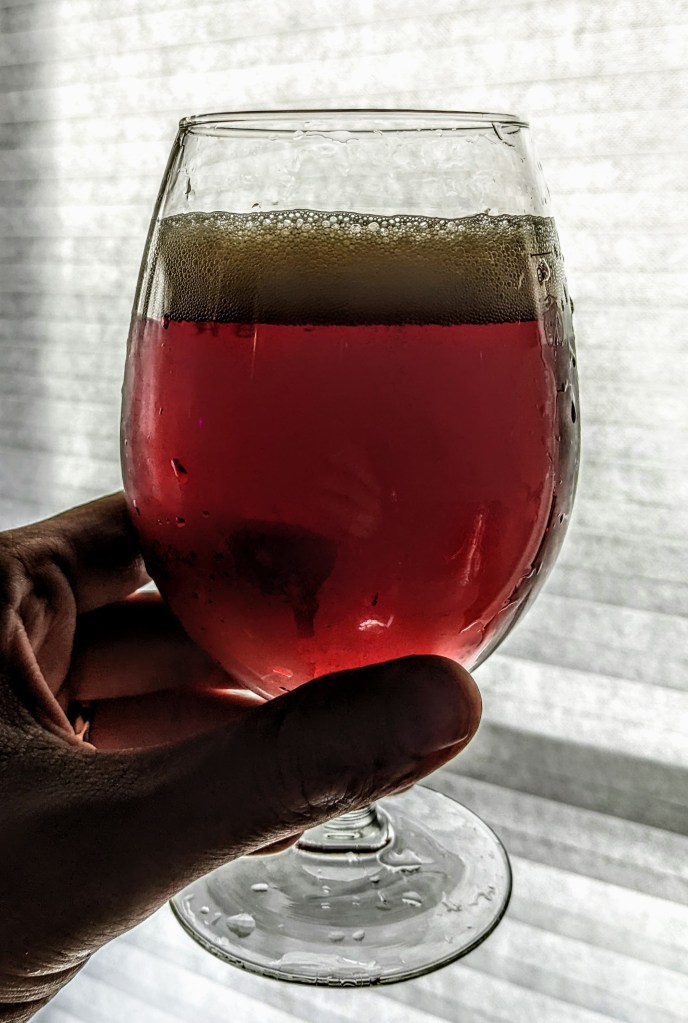
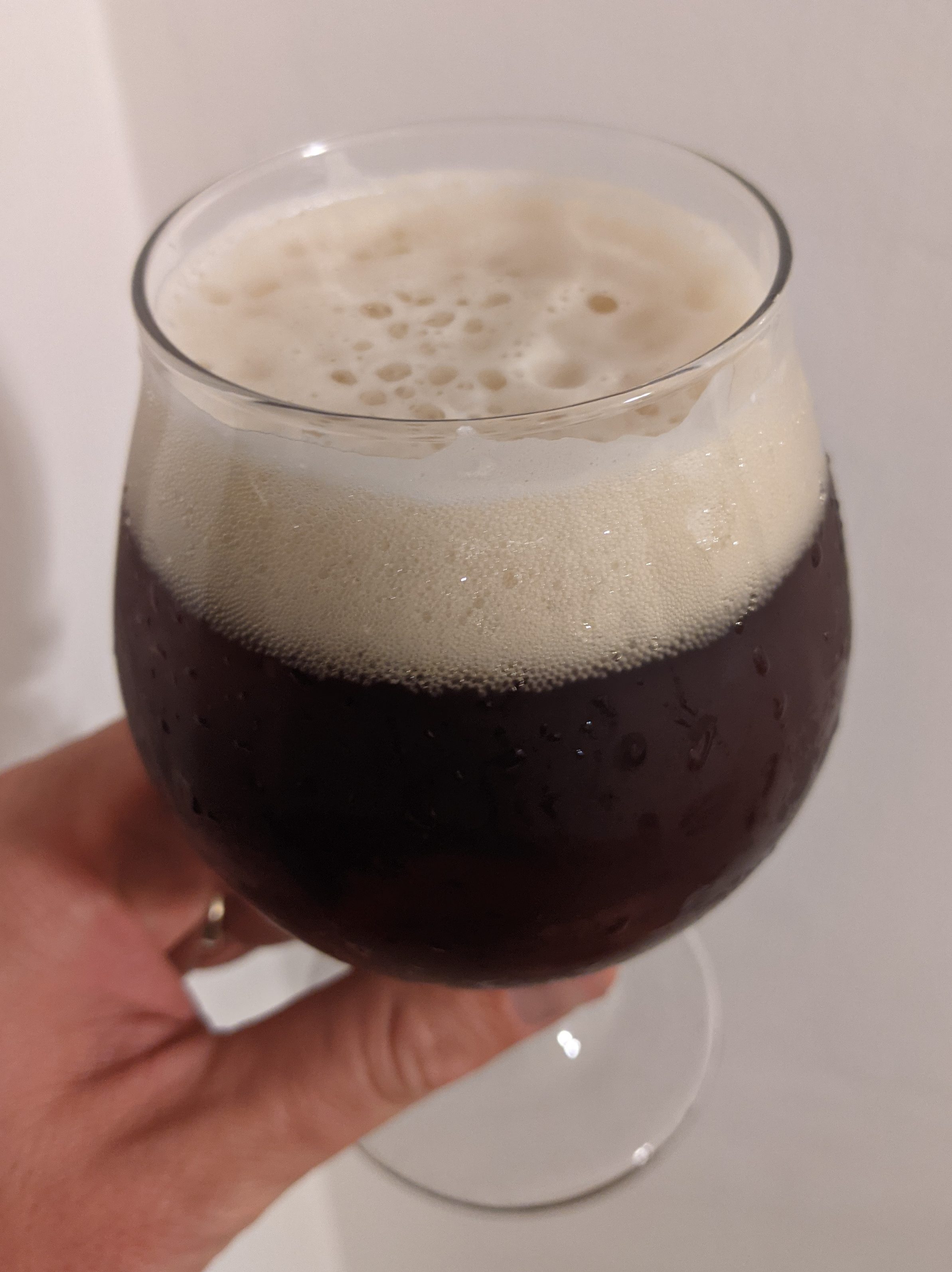
    • Deep reddish amber and very clear; there is a persistent and creamy ivory head.
  • Aroma
    • Spicy aroma, with a bit of caramel and dried dark fruit.
  • Flavor
    • Wonderfully rich! There is a caramel and toffee malt character with a bit of dried fruit and sweet candy. A bready malt quality sneaks up behind that. Bitterness is moderate, and the yeast character has a slightly spicy quality. Fermentation quality is really nice, and I dodged any hot alcohol character.
  • Mouthfeel
    • Medium body, with medium-high carbonation and a smooth finish. The body is maybe a little thinner than I had envisioned.
  • Would I brew this again?
    • I am really, really happy with the results in this recipe. It absolutely hit the rich, complex qualities I wanted, and is highly drinkable. The fermentation quality is perfect too! The only minor ding is that starting gravity was a touch low, which decreases the body a little, but I think that worked out okay in the end. I would rather the body be somewhat thin, than the beer be too sweet and cloying.
  • Overall
    • 8/10

Dimorphos Kellerbier

I’m still working my way through the world of German beer, and there is no shortage of varieties to try. Although kellerbier isn’t necessarily a discrete style (just being vaguely young lager), I wanted to give it a go. I also wanted to use up some ingredients. How convenient!

I aimed for an amber kellerbier, with a rich and malty character. I had some Munich malt to finish, as well as Vienna malt. A little bit of melanoidin (Great Western’s Mela malt, in this case) went in to raise the maltiness bar, and I used some Carafa Special II for color adjustment. Spalt hops are apparently somewhat traditional; I had a little bit to use up, so in they went too.

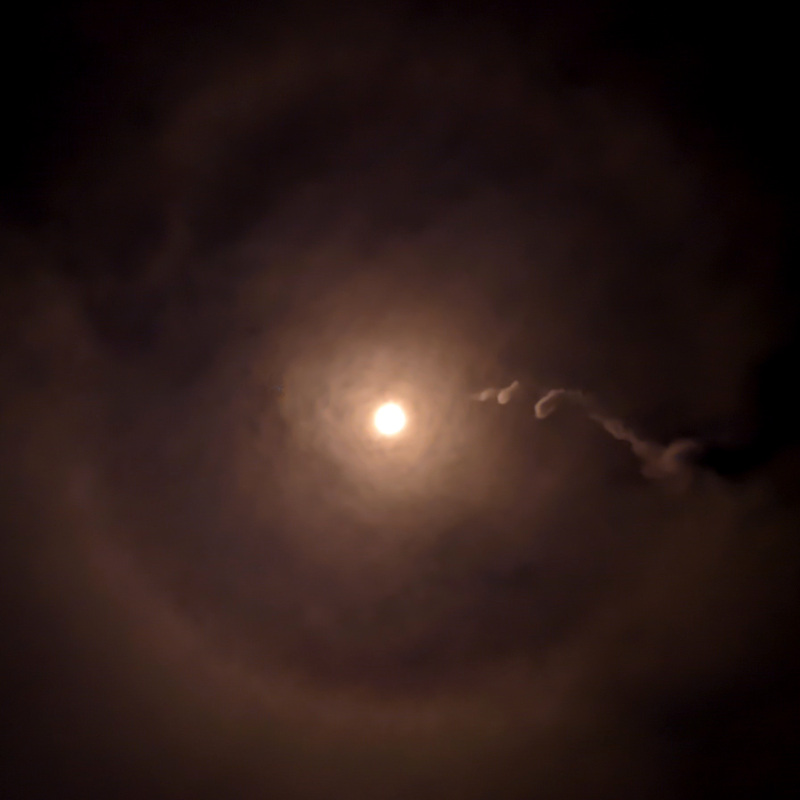
The name of “Dimorphos Kellerbier” is after the smaller member of the 65803 Didymos asteroid system. Coincidentally, it’s also part of the root for the pterosaur Dimorphodon, which appealed to my paleontological side. In any case, Dimorphos is the planned target for the DART (Double Asteroid Redirection Test) mission, in which the orbit of the asteroid will be changed very slightly through impact by a satellite. It’s testing technology that may be used to save Earth from an asteroid impact someday, which I can definitely support as a paleontologist. The mission launched on November 24, and I was just a few miles from the launchpad to see the satellite head into the great beyond. It was a pretty incredible experience, and one worth commemorating with a beer batch!

The DART mission on its way to its rendevous with Dimorphos and Didymos, during its launch with a Falcon 9 rocket on November 24, 2022. The ring represents clouds pushed aside by the shock wave of the rocket’s passage; the rocket itself is the bright object in the middle of the photo, with the exhaust plume to the left of the image.

For many of my beers, I write up the tasting notes after a few weeks on tap. This gives the beer chance to mature, and allows me to figure out the character of the beer. This time, I wrote up the tasting on my very first glass out of the keg. Because the style is supposed to be served young, I figured I didn’t gain anything by waiting. It also gave me a chance to provide first impressions, before I’ve had a chance to talk myself into a particular opinion about the beer.

Dimorphos Kellerbier

  • 5 lb. 1 oz. Vienna malt (Weyermann)
  • 3 lb. 12 oz. pilsner malt (Viking)
  • 15 oz. Munich I malt (Weyermann)
  • 4 oz. Mela malt (Great Western)
  • 2 oz. Carafa Special II malt (Weyermann)
  • 0.5 oz. Magnum hop pellets (10.1% alpha), first wort hop and 60 minute boil
  • 1 oz. Spalt hop pellets (3.0% alpha), 20 minute boil
  • 1 Whirlfloc tablet, 5 minute boil
  • 1 oz. Spalt hop pellets (3.0% alpha), 5 minute boil
  • 2 pkg. Diamond lager dry yeast (Lallemand)

Target Parameters

  • 1.049 o.g., 1.007 f.g., 5.5% abv, 28 IBU, 10 SRM
  • Full volume Hochkurz mash, held at 144° for 45 minutes, 160° for 45 minutes, and 10 minute mash-out at 168°
  • Claremont tap water

Procedure

  • I mashed in with 7 gallons of water at 149°, adding 6 mL of 88% lactic acid to adjust the pH. This hit an initial rest temperature of 144°, which I held for 45 minutes with recirculation.
  • Next, I raised the mash (while recirculating) to 160°, and held it here for 45 minutes.
  • Finally, I raised the mash temperature to 168°, and held it there for 10 minutes before removing the grain basket.
  • In total, I collected 6.4 gallons of runnings with a gravity of 1.045, for 77% mash efficiency. The Hochkurz mash protocol seems to do well for efficiency!
  • I brought the runnings to a boil, adding hops and finings per the recipe.
  • After a 60 minute boil, I turned off the heat and chilled to 70°, before transferring to the fermenter.
  • I brewed this beer on 22 November 2021, and let it sit overnight in the fermentation chamber to get down to my target temperature of 50°. I pitched the yeast on the morning of 23 November 2021.
  • Starting gravity was 1.050.
  • I raised the fermenter to 52° on 24 November 2021, to 54° on 28 November 2021, 56° on 1 December 2021, and let it free rise to 60° on 3 December 2021.
  • On 6 December 2021, I started to cycle down the temperature, lowering it by 5° to 10° daily (sometimes dropping 5° in the morning and 5° in the evening). It was down to 34° on 9 December.
  • I kegged the beer on 11 December 2021, and force carbonated it.
  • Final gravity was 1.013, which equates to 4.9% abv.

Tasting

  • Appearance
    • Deep copper beer with a slight haze; very persistent ivory head
  • Aroma
    • Bready, malty aroma with a slight bread crust character and a slight spicy hop character. Yeast character is very clean.
  • Flavor
    • Rich and very pleasant maltiness. Moderate bitterness with a spicy, slightly herbal quality. Clean yeast character.
  • Mouthfeel
    • Medium body, medium-low carbonation. Smooth, very slightly dry finish with extended bitterness.
  • Would I Brew This Again?
    • Yes! This is like tearing off a piece of warm, crusty bread pulled straight from the oven, and popping it into your mouth. There is so much awesome malt character, and the yeast quality is super clean. This is a perfect winter lager!
  • Overall
    • 10/10

2021 IPA

This might be my least creative recipe name ever, but it sure is appropriate! Thanks to my HOPBOX, I had a whole mess of hops from the 2021 harvest. I wanted to craft a recipe that would highlight more “traditional” IPA flavors of citrus and pine, while also exploring some new-to-me varieties.

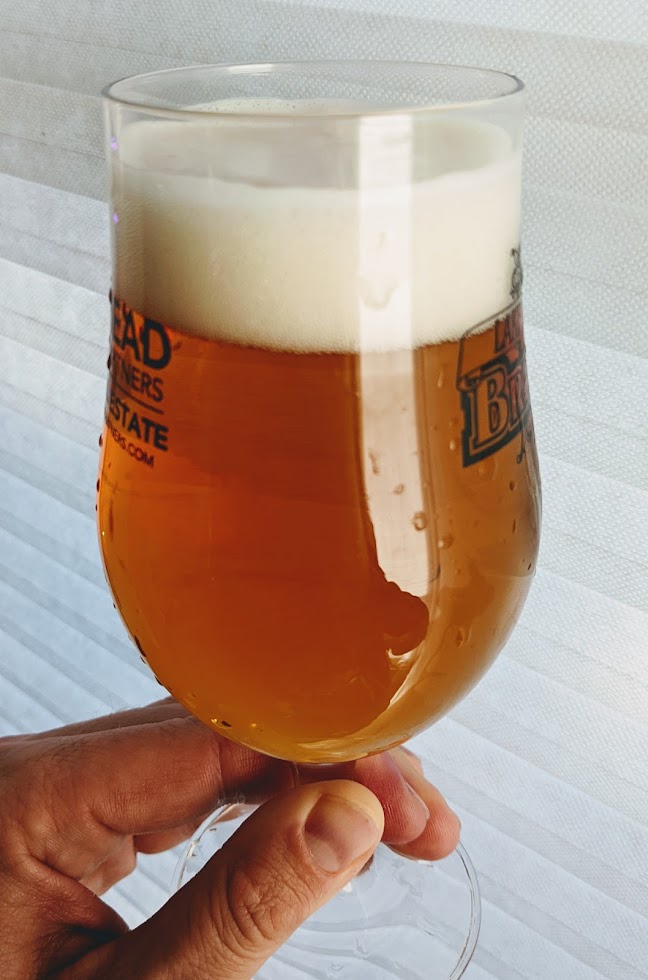
orange-gold beer with off-white head, held in tall tulip glass

After sorting through my hop selection, I selected Bravo as the main bittering hop, with heavy doses of Cashmere, Wai-iti, and Waimea in the whirlpool and dry hop. Each of those brought complementary notes of lemon, citrus, and pine, without major components of tropical fruits. When opening up the hops, I noted that Waimea had an incredible fruit aroma (and was my favorite), with Wai-iti being a close second. The Cashmere had a slightly dank aroma that verged on vegetal, so I wasn’t initially sure how I would like it in the brew. I built a moderately complex grist, in part to use up some malts and in part to give a robust malt backbone to the beer. Finally, I chose BRY-97 as the yeast. I haven’t brewed with it a ton (my early experiments found it to be veeery slooow to take off), but have heard enough great things that I wanted to give it a try.

2021 IPA

  • 10 lb. 6 oz. California Select 2-row malt (Great Western)
  • 2 lb. Maris Otter malt (Crisp)
  • 0.75 lb. Chateau Munich Light malt
  • 0.5 lb. Caramel 40° malt (Briess)
  • 0.25 lb. biscuit malt (BlackSwaen)
  • 1 oz. Bravo hop pellets (14.2% alpha), 60 minute boil
  • 1 Whirlfloc tablet, 5 minute boil
  • 1 oz. Cashmere hop pellets (7.0% alpha), 15 minute whirlpool
  • 1 oz. Wai-iti hop pellets (3.5% alpha), 15 minute whirlpool
  • 1 oz. Waimea hop pellets (13.2% alpha), 15 minute whirlpool
  • 2 pkg. American West Coast Ale yeast (Lallemand BRY-97)
  • oz. Cashmere hop pellets (7.0% alpha), 3 day dry hop in fermenter
  • 1 oz. Wai-iti hop pellets (3.5% alpha), 3 day dry hop in fermenter
  • 1 oz. Waimea hop pellets (13.2% alpha), 3 day dry hop in fermenter

Target Parameters

  • 1.062 o.g., 1.013 f.g., 6.5% abv, 63 IBU, 8 SRM
  • Full volume mash at 152° for 60 minutes, with 10 minute mash-out at 168°
  • Claremont tap water, adjusted with lactic acid to knock out carbonate in strike water. Adjusted further in kettle to reach target water profile of 61 ppm Ca, 16 ppm Mg, 91 ppm Na, 170 ppm SO4, 85 ppm Cl, 15 ppm HCO3; RA=-41 ppm.

Procedure

  • The night before brewing, I collected 7.5 gallons of tap water and treated it with 0.5 Campden tablet and 5.75 mL of 88% lactic acid, to knock out the carbonates. I let it sit overnight, before brewing the next morning.
  • I heated the water to 159°, and mashed in to hit a target temperature of 152°. I added 2.1 mL of 88% lactic acid, to adjust pH.
  • After recirculating at 152° for 60 minutes, I raised the temperature to 168° and held it there for 10 minutes before removing the grain basket.
  • In total, I collected 6.3 gallons of runnings with a gravity of 1.054, for 66% mash efficiency.
  • I brought the runnings to a boil, boiling for 30 minutes before adding the hops, to bring up the gravity a bit. As the boil started, I added 4 g of gypsum of 3 g of epsom salt to the boil, to hit the target water profile.
  • After the initial 30 minute boil, I added hops and finings per the recipe, reaching a 90 minute total boil.
  • Once I had finished the boil, I added the whirlpool hops and whirlpooled for 15 minutes before chilling down to 70° and transferring to the fermenter.
  • I pitched the yeast, and fermented at 66°.
  • I brewed the beer on 6 November 2021, and hit a starting gravity of 1.063.
  • On 14 November 2021, I added the dry hops to the fermenter in a bag, and let it sit at ambient temperature (~64°) for three days.
  • I kegged the beer on 17 November 2021. Within about a month, the beer had dropped completely clear.
Tasting

  • Appearance
    • This is a deep gold and very clear beer, with a persistent ivory head–gorgeous!
  • Aroma
    • Citrus peel and orange; not much in the way of detectable malt character, and the yeast character is very clean.
  • Flavor
    • The hops are at the forefront, with orange and citrus zest, followed by light pine. The malt character is smooth, but not over the top. I feel like a little bit of the hop character was lost between when I smelled the hops directly and now. Although I think it partly could be oxidation, I also suspect I should have either dry hopped more freely or else dry hopped in the keg, to get more exposure time. I bagged the hops for dry hopping, and don’t think they got as much contact as they should have.
  • Mouthfeel
    • Moderate body, with an off-dry finish and moderate carbonation level.
  • Would I Brew This Again?
    • Yes! I think I will modify my dry-hopping for next time, and dry hop a little longer or else leave the hops in the keg, or increase the amount of Waimea and Wai-iti.
  • Overall
    • 8/10

Ill-Tempered Gnome Clone

As I am pretty sure I’ve lamented previously, I sometimes get too far down the rabbit-hole of brewing to a particular style. IPA, stout, porter, pilsner…all are great, but that can be at expense of creativity. On the other hand, I grew wary of the big and bitter beers that I gravitated towards early in my craft beer days. And yet…I now find myself picking up a bottle of Arrogant Bastard every few weeks, and kind of enjoying it. The excesses of craft beer recipes are still excessive, but I’m finding that they can be enjoyable in moderation and on occasion.

dark brown beer with tan head, held in clear tulip glass against a white wall

To scratch this itch, I paged through the Craft Beer For the Homebrewer book, and my eyes settled upon a clone recipe for something called Ill-Tempered Gnome. Produced by Oakshire Brewing, this recipe looked big, dark, and bitter, and was billed as an American Brown Ale (on the website) or a winter warmer (in the beer book).

Quite intrigued, I pulled together the ingredients, making a minor substitution or two based on availability for some of the harder-to-find malts (e.g., I had to go with a different brand of coffee malt versus Franco-Belges Kiln Coffee Malt in the original recipe). That said, I did try to adhere as closely as possible to the book’s version, which I was told (by Denny Conn himself) came direct from the brewer.

Ill-Tempered Gnome Clone

  • 12 lb. California Select 2-row malt (Great Western)
  • 11 oz. crystal 15° (Great Western)
  • 5 oz. coffee malt (Simpsons)
  • 5 oz. honey malt (Gambrinus)
  • 5 oz. special B malt (Dingemans)
  • 4.5 oz. special roast malt (Briess)
  • 3.5 oz. chocolate malt (Briess)
  • 1 oz. Nugget hop pellets (12.9% alpha), 60 minute boil
  • 0.5 oz. Centennial hop pellets (8.1% alpha), 20 minute boil
  • 0.5 oz. Crystal hop pellets (4.5% alpha), 20 minute boil
  • 1 Whirlfloc tablet, 5 minute boil
  • 1 oz Cascade whole hops (est. 5.5% alpha), 5 minute boil
  • 2 pkg. Safale American ale yeast (US-05)

Target Parameters

  • 1.062 o.g., 1.015 f.g., 6.3% abv, 58 IBU, 19 SRM
  • Full volume mash at 154° for 60 minutes, with 10 minute mash-out at 168°
  • Claremont tap water, adjusted to reach estimated profile of 75 ppm Ca, 11 ppm Mg, 93 ppm Na, 149 ppm sulfate, 105 ppm Cl, 156 ppm bicarbonate; RA 68, 128 ppm alkalinity; 60 ppm effective hardness.

Procedure

  • I heated 7.5 gallons of water to 161°, adding a Campden tablet to remove chloramines. Then, I mashed in with the grains to hit a temperature of 154°. I added 7 mL (1.5 tsp.) of 88% lactic acid to adjust the pH of the mash, and recirculated at 154° for 60 minutes. Then, I raised the mash temperature to 168° and held it there for 10 minutes, before removing the grains.
  • In total, I collected 6.35 gallons of runnings with a gravity of 1.055, for 68% mash efficiency.
  • As I brought the runnings to a boil, I added 5 g of gypsum to adjust the water profile.
  • To bring the gravity up a bit, I boiled for an extra 10 minutes, before beginning to add the hops. I then boiled for an additional 60 minutes, adding hops and kettle finings per the recipe.
  • After the 60 minute boil, I chilled to ~75°, transferred to the fermenter, and chilled down to 65° in the fermentation chamber. Then, I pitched the two packages of yeast.
  • I brewed the beer on 9 October 2021, and fermented at 65°. Starting gravity was 1.061.
  • On 20 October 2021, I let the beer free rise to 70° (after removing it from the fermentation chamber).
  • I kegged the beer on 23 October 2021. At this point, its gravity was 1.017. This equates to 5.9% abv.

Tasting

  • Appearance
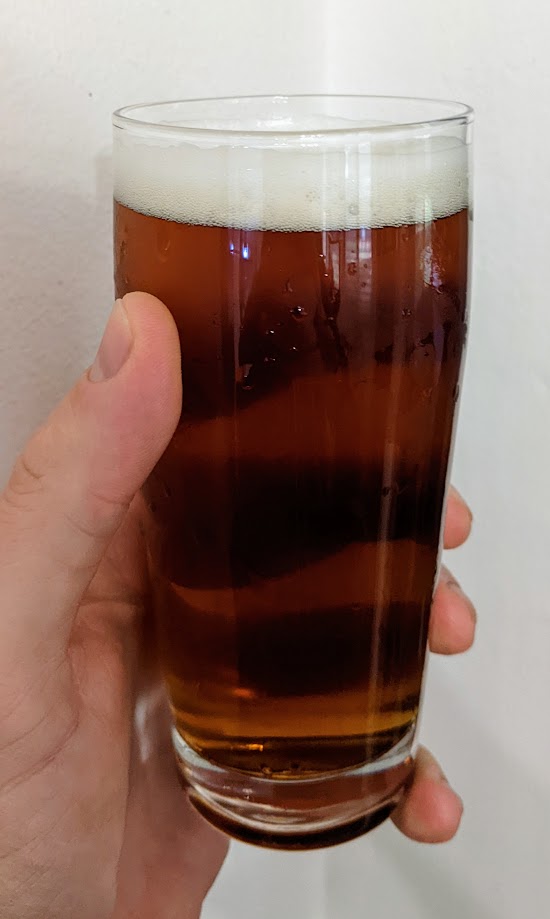
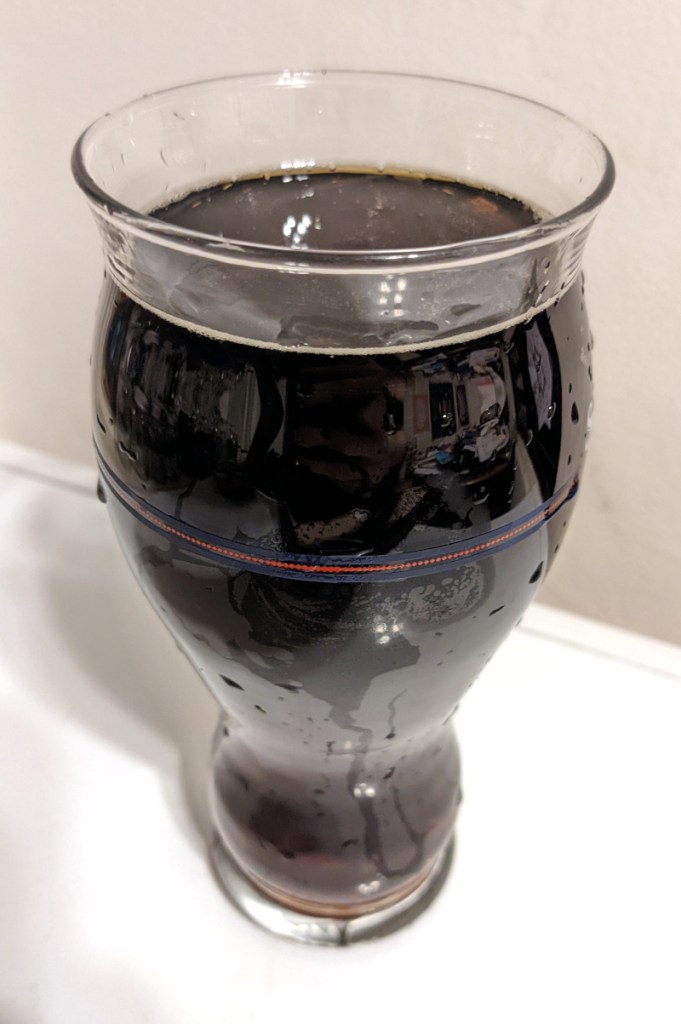
    • The beer pours with a thick and frothy ivory head, and awesome lacing as the head subsides slowly. The beer is a brilliantly clear reddish amber in color in a tulip glass, and is a nice even brown in a tall glass.
  • Aroma
    • Resiny hops are at the front, with toffee and coffee malt aroma alongside some caramel. The malt/hop balance is spot-on.
  • Flavor
    • Moderately high bitterness, with a resin and pine quality to the hops, for an extended bitterness in the finish. This beer has a full malt character, with caramel at the front and a slight bit of chocolate at the back. Delicious!
  • Mouthfeel
    • Medium-full body, with moderate carbonation and an off-dry finish.
  • Would I Brew This Again?
    • YES! The resiny hops plus rich malt character are an awesome combo. The beer is straight out of 1997 in terms of its traditional hops and big flavors, but I love it for that. Who knows if my version is a true clone, but do I really care? I love this beer! In particular, it’s not really a winter warmer (in terms of the overspiced recipes so common out there), but definitely closer to an American brown ale. I’ll do this one again.
  • Overall
    • 10/10

Farke’s Best Pils

My dad has a few hop bines on the farm in South Dakota, and usually has a fair bit of Cascade that he sends my way (see my recent pale ale). This year, I also managed to snag some South Dakota-grown versions of Saaz, Hallertauer, and Sterling, so a German pilsner seemed like an awesome use of them. I went with a super simple grist, and loaded up most of the hops towards the end in a hope to elevate relative flavor and aroma. I had to guess on alpha acid levels, so aimed a bit higher in estimated IBU in the presumption that they would be a bit lower in potential bitterness than is typical for the varieties.

Farke’s Best Pils

  • 10 lb. Viking Pilsner malt
  • 1 oz. Sterling whole hops (est. 7.4% alpha), 60 minute boil
  • 1 tsp. BruTanB, 10 minute boil
  • 1 Whirlfloc tablet, 5 minute boil
  • 1 oz. Hallertauer whole hops (est. 4.8% alpha), 5 minute boil
  • 1 oz. Saaz whole hops (est. 5.3% alpha), 5 minute boil
  • 1 tsp. yeast nutrient (WLN1000), 5 minute boil
  • 2 pkg. Saflager lager yeast (W34/70)

Target Parameters

pale yellow beer with white foam held aloft in tall clear glass
  • 1.046 o.g., 1.009 f.g., 4.9% abv, 32 IBU, 4 SRM
  • Full volume mash at 149° for 60 minutes, with 10 minute mash-out at 168°
  • Water built up from RO water, to hit target of 59 Ca, 8 Mg, 89 SO4, 63 ppm Cl, RA=-47

Procedure

  • I added 2.8 g gypsum, 2.3 g epsom salt, and 3.6 g CaCl in 7.25 gallons of water to hit a profile of 59 Ca, 8 Mg, 89 SO4, and 63 ppm Cl, with RA=-47.
  • I heated the water to 154° and mashed in to hit a temperature of 149°. At this point, I added 0.7 mL (approximately) of 88% lactic acid, to hit the target mash pH of 5.3 to 5.4.
  • I mashed at 149° for 60 minutes (with recirculation), before raising the temperature to 168° and holding it there for 10 minutes.
  • After the mash, I removed the grains. In total, I collected 6.5 gallons of runnings with a gravity of 1.041, for 70% mash efficiency.
  • I brought the runnings to a boil, adding finings per the recipe. After 60 minutes, I chilled to 78°, let settle for 90 minutes, and then transferred to the fermenter. I chilled it down the rest of the way to 50° in the fermentation chamber, before pitching the yeast.
  • Starting gravity was 1.046. I brewed the beer on 18 September 2021.
  • After starting fermentation at 50° on 18 September 2021, there were active signs of bubbling by 20 September 2021. I raised the temperature to 53° on that day, and then up to 56° on 22 September 2021, and 60° on 30 September. I dropped it to 55° on 3 October, 50° on 4 October, 45° on 5 October, 40° on 6 October, 35° on 7 October, and to 32° on 9 October.
  • I kegged the beer on 11 October 2021. There was a gorgeous and delicate malt flavor at that time, with a really nice floral hop character, and moderately low level of bitterness. This was shaping up to be a nice beer!
  • Final gravity was 1.010, for 4.7% abv.

Tasting

  • Appearance
    • Light yellow, very clear (nearly brilliant), with a fairly persistent white head
  • Aroma
    • Delicate malt aroma with a grainy character and light honey-sweet quality. A very low floral hop aroma. Very nice and clean fermentation character!
  • Flavor
    • Light malty character, slightly sweet, with a clean fermentation character. The bitterness is clean and moderate, but not overly so. There is a nice balance between hops and malt!
  • Mouthfeel
    • Medium body and moderate carbonation, with an off-dry finish.
  • Would I Brew This Again?
    • The malt aroma is amazing, but I wish there was a little more hop aroma alongside that in the final product. The bitterness level is perfect, and it dodges some of the issues I have had with overbittering in past recipes. The body could be a touch lighter. That said, I’m very happy with how clean the fermentation turned out, and the water character is great, too! Overall, this is not an amazing beer, but still a pretty good one.
  • Overall
    • 7/10