
Beer Tasting: Seven Seas Session IPA

After 5 weeks in the keg, it’s a good time to formally taste my latest session IPA! Overall, it seems like I’m about one iteration away from the “house recipe.”

Seven Seas Session IPA

  • The Basics
    • Original gravity = 1.052; final gravity = 1.018; abv = 4.3%; estimated IBU = 50.
  • Appearance
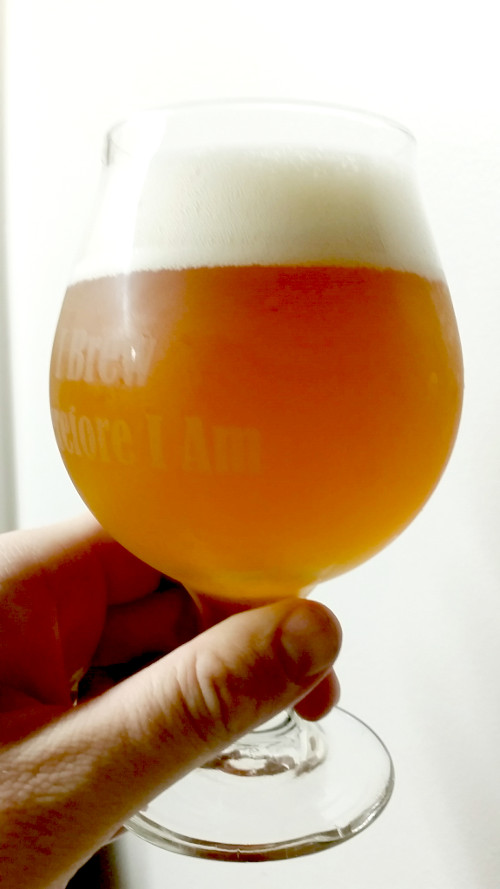
    • Very persistent ivory head with a little bit of lacing on the glass; it starts quite high, and lowers a bit as I drink the beer, but never disappears. The beer itself is a rich gold with a slight haze.
  • Aroma
    • A strong but not overwhelming pine and grapefruit dominate. I don’t pick up much in the way of malt (except towards the end of the glass, when the beer is warmed up a notch).
  • Flavor
    • The malt is in the background on this one, but definitely there. It supports a prominent bitterness from the hops, which is quite pleasant at the forefront but fades perhaps a little more harshly on the finish than I care for. In other words, the bitterness sticks around.
  • Mouthfeel
    • The body is just about perfect on this one; moderate, but not overly thin or overly chewy. Carbonation is moderate and on-point for an IPA.
  • Would I brew this again?
    • Yes, with only slight modification. The appearance, aroma, and mouthfeel are exactly perfect for me, so I wouldn’t change the malt bill, mashing schedule, yeast, or dry-hopping. The only minor issue that I would care to fix would be to tone back the nature of the bitterness a bit; something a little more subtle might be nice. It’s not bad in this way (as discussed at my homebrew club when I brought it), just slightly outside my personal preference. So, I would probably change up the bittering hops for this recipe; dial them back just a touch, and aim for something with a smoother bittering profile (?Cascade). The beer is definitely a big step closer to my house session IPA recipe. Once I get the bittering hops figured out, I think the recipe is set!
  • Overall rating
    • 7/10

On Falconer’s Flight 7C’s: I quite like this hop blend. It basically says “West Coast IPA.” And despite the slight shortcomings for the bittering profile in this particular recipe, I think it would be fine for bittering in a bigger beer (i.e., a standard strength IPA). It’s just a _touch_ much for a session IPA.
Seven Seas Session IPA Update

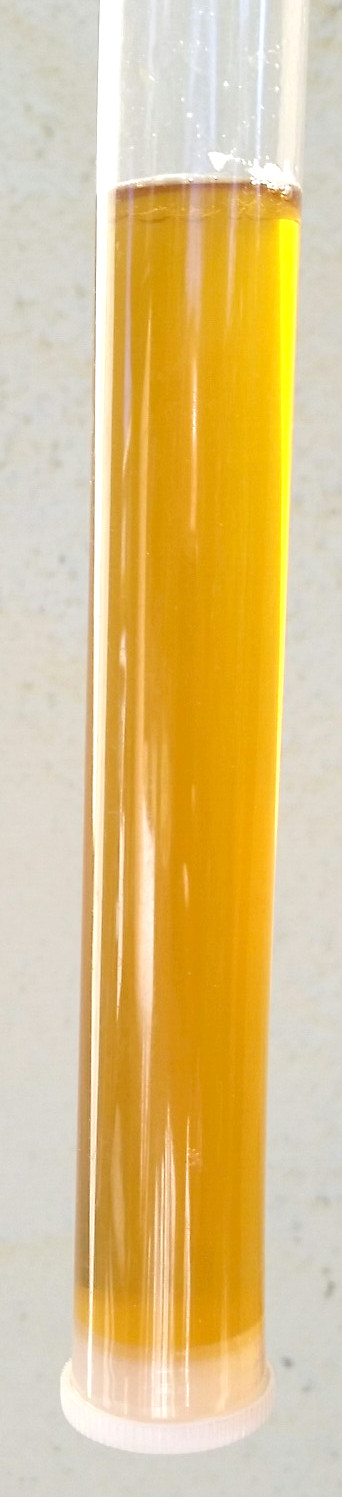
After 5 days in the primary fermenter, the Seven Seas Session IPA appeared to have finished up fermenting. So, I raised the temperature from 65°to 70°, to help things clean up a bit. After a total of eight days in the primary fermenter, I kegged the beer and added the dry hops (August 30, 2015). The yield was a full five gallons. Final gravity was 1.018, down from 1.052, which works out to 4.3% abv. The beer has a great flavor, with a definite hops character. Both the level of bitterness (higher than my last session IPA) as well as the body (more full than the last version) are greatly improved. I plan to let this dry-hop at room temperature for at least a week before carbonating and cold-conditioning.

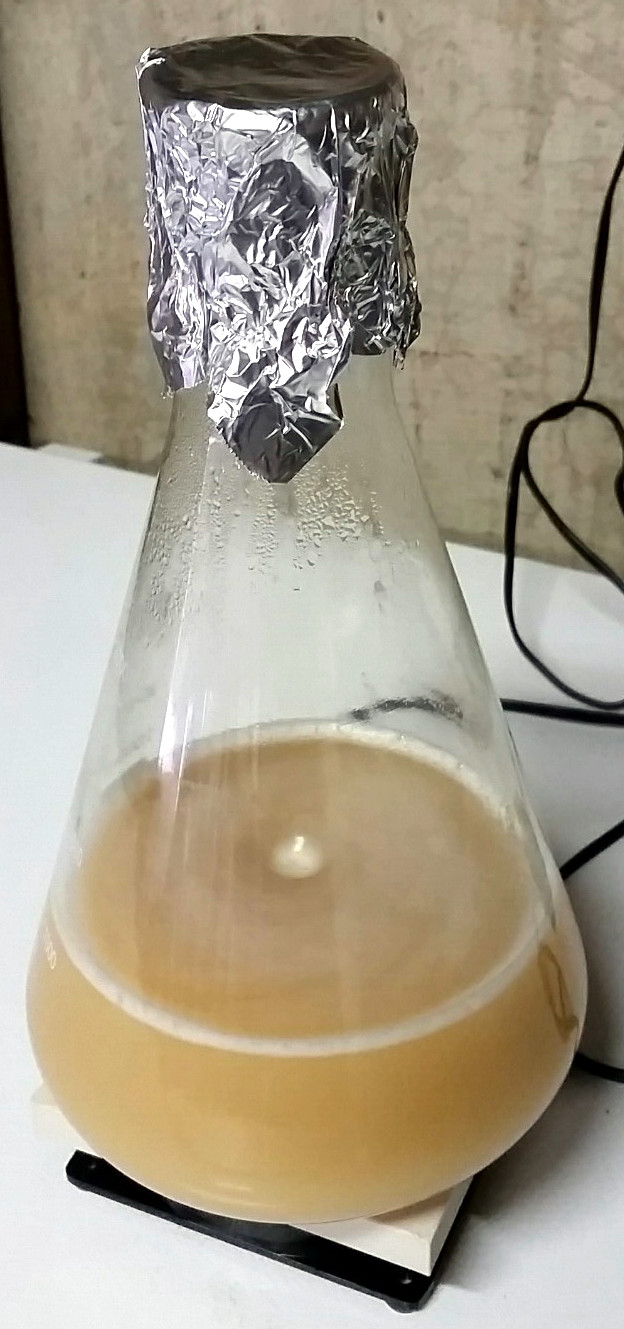
As an experiment for my upcoming brew (titled “Packrat Porter”), I’m washing and reusing my yeast. More on that in the next post!

Seven Seas Session IPA

My first real attempt at a session IPA was adequate, but needed some work. So, I’ve tuned up the malt and hop bill a bit in order to bolster the brew all around. The result: Seven Seas Session IPA. The name is a bad pun on the hops variety, Falconer’s Flight 7C’s.

Seven Seas Session IPA

  • 7.5 lbs. 2-row malt (Great Western Malting Co.)
  • 1.25 lbs. 10° Munich malt
  • 1 lb. white wheat malt
  • 0.5 lb. crystal 60° malt
  • 0.5 lb. crystal 15° malt
  • 1 tbs. 5.2 pH stabilizer
  • 1 oz. Falconer’s Flight 7C’s Blend hops pellets (10.3% alpha, 4.9% beta), 15 minute boil
  • 2 oz. Falconer’s Flight 7C’s Blend hops pellets (10.3% alpha, 4.9% beta), 10 minute boil
  • 1 oz. Falconer’s Flight 7C’s Blend hops pellets (10.3% alpha, 4.9% beta), 5 minute boil
  • 1 Whirlfloc tablet (10 minute boil)
  • 1 pkg. English Ale Yeast (WLP002), prepared in 1 liter starter, 12 hours in advance
  • 2 oz. Falconer’s Flight 7C’s Blend hops pellets (10.3% alpha, 4.9% beta), 14 day dry hop
Procedure
  • I mashed in with 16.75 quarts of water at 170°, to hit a mash temperature of 159.7° at the start. After 10 minutes, the mash was at 159.5°, 157.6° after 45 minutes, and 154.5° after 60 minutes.
  • I added 0.8 gallons of water at 210°, which raised the mash temperature to 160°. I let it sit for 10 minutes, vorlaufed, and collected 3.25 gallons of wort. Then, I added 3.8 gallons of water at 185°, which raised the mash temperature to 168°. This was then vorlaufed after 10 minutes at the remainder of the wort was collected.
  • All together, I collected 6.75 gallons of wort at a gravity of 1.043. This works out to 74% efficiency.
  • I brought the wort to a boil, and added the first ounce of hops at 45 minutes, two more ounces at 50 minutes (along with a Whirlfloc tablet), and the final ounce of hops at 55 minutes.
  • After 60 minutes of boiling, I turned off the flame and chilled the wort as much as I could. Given the high temperatures (and the warm-ish tap water), I was only able to chill down to about 90°. I transferred the wort into the fermenter, and then set it to chill in the fermentation chamber. Once I reached 70° (after about 3 hours), I pitched the yeast. I started fermentation at 68°, and will drop the temperature to 65° once visible fermentation was under way (persumably within a few hours).
  • In the end, I had 5.25 gallons of wort at a gravity of 1.052. I plan to ferment for at least 10 days before dry hopping.

Beer Tasting: Azacca Session IPA

My first intentional attempt at a session IPA has been in the keg for about a month. A perfect time for a tasting!

Azacca Session IPA

  • The Basics
    • Original gravity = 1.045, final gravity = 1.015, abv = 3.9%, estimated IBU = 38.
  • Appearance
    • The head is white and fairly thin, but still pretty persistent. The beer itself is slightly hazy and light gold in color. Quite pretty!
  • Aroma
    • Fairly weak, considering that it was dry-hopped for so long. There are slight tropical fruit notes, with perhaps a whiff of citrus.
  • Flavor
    • Light and hop-forward, with a pleasant floral and tropical fruit taste; very smooth on the finish. The bitterness is noticeable but restrained; I might up the hops a bit for any future iterations. There is a slight (but not unpleasant), rounded mineral taste at the finish. The malts are very much in the background, perhaps too much so.
  • Mouthfeel
    • Pleasant and fine carbonation; the body is adequate but perhaps a touch thin. 
  • Would I brew this again?
    • Yes, but with some modifications. I quite like the concept of session IPAs, which hit all of my buttons (hop-forward, not numbing in alcohol content). Truth be told, I was a little disappointed with Azacca hops. My personal preference for an IPA is to have a big nose punch, and Azacca just isn’t there. It has pleasant aroma and great flavor, but is restrained to the point where it might be better suited for light dry hopping in a blonde or perhaps plain pale ale. Next time, I’m going to try something different from the hops, and perhaps a little more for bittering. I also would like to up the maltiness on this just a touch–a small amount of crystal malt (perhaps crystal 60) might be what I need. Finally, I’m thinking about a little wheat to aid with head formation and retention. All in all, I feel like I’m on the right track with this brew, but have a little work to do to dial it in.
  • Overall rating
    • 5.75/10

Azacca Session IPA Update

Today (July 15), I kegged five gallons of my Azacca Session IPA, which was brewed 12 days prior. I added 2 oz. of Azacca hops pellets for dry-hopping, and will let it condition at 68° for five days before carbonating at serving temperature.

Gravity was 1.015, down from 1.045. This works out to 3.9% abv, nearly exactly as calculated. The beer is incredibly clear (as expected from the WLP005 yeast strain) and light gold in color. At least on initial tasting, the beer was only moderately bitter (hopefully to be accentuated as the beer conditions and carbonates), with a clean and definitely malty backbone, although not overly malty.