No. 11 Bohemian Pilsner

According to my records, I have made 18 batches of German pils over the years (starting in 2016), but only five batches of the original pilsner beer, Bohemian (Czech) pils. After a more than four year hiatus, it was time!

Taking lessons learned from previous recipes, I went for very fresh Saaz hops (from Yakima Valley Hops). Furthermore, I built the malt bill to have a touch of melanoidin malt, to avoid messing with a decoction but also not overwhelming with the honey-character that melanoidin brings at higher percentages. I used the Rahr pilsner malt as a base–although it is not “traditional,” I have found it to be an absolutely excellent malt for my tastes.

This isn’t my 11th batch, but I brewed it on 11/11 (Nigel Tufnel Day!), so the name was unavoidable.

No. 11 Bohemian Pilsner

  • 10 lb. pilsner malt (Rahr)
  • 0.5 lb. Carafoam malt (Weyermann)
  • 0.25 lb. melanoidin malt (Weyermann)
  • 0.5 tsp. BrewTanB, added to mash
  • 3.5 oz. Saaz hop pellets (2.4% alpha), 60 minute boil
  • 1.5 oz. Saaz hop pellets (2.4% alpha), 10 minute boil
  • 0.5 tsp. BrewTanB, 10 minute boil
  • 1 Whirlfloc tablet, 5 minute boil
  • 1 oz. Saaz, 5 minute boil
  • 1 tsp. tsp. WLN1000 yeast nutrient, 5 minute boil
  • 2 pkg. Diamond Lager yeast (Lallemand)

Target Parameters

  • 1.049 s.g., 1.014 f.g., 4.7% abv, 37 IBU, 5 SRM
  • Full volume infusion mash, held at 154° for 60 minutes and 168° for 10 minutes
  • RO water built to hit target of 6 ppm Ca, 5 ppm Na, 6 ppm SO4, 6 ppm Cl, 14 ppm HCO3, RA=7 ppm

Procedure

  • To 7.5 gallons of RO water, I added 0.3 g gypsum, 0.3 g calcium chlorie, and 0.5 g baking soda, to hit my water target parameters.
  • I heated the water to 160°, and added the grains to hit a mash target of 154°. I added 4 mL of 88% lactic acid to adjust the mash pH, and recirculated for 60 minutes.
  • Next, I heated the mash to 168° for 10 minutes, before pulling the grains and starting the ramp-up to the boil.
  • In total, I collected 6.75 gallons of runnings with a gravity of 1.042, for 71% mash efficiency.
  • I boiled for 60 minutes, adding hops and finings per the schedule. Finally, I turned off the heat and chilled to 75° before transferring to the fermenter.
  • Once in the fermenter, I chilled the wort to 52° before pitching the yeast.
  • I brewed this beer on 11 November 2023. Starting gravity was 1.049, exactly on target!
  • I held the fermentation temperature at 52° until 2 December 2023, when I moved the beer to ambient (~60°).
  • I kegged the beer on 26 December 2023. Final gravity was 1.014, for 4.7% abv.
  • Because I’ve been a bit slow to finish kegs lately, this beer ended up lagering for a full three months before tasting.

Tasting

  • Appearance
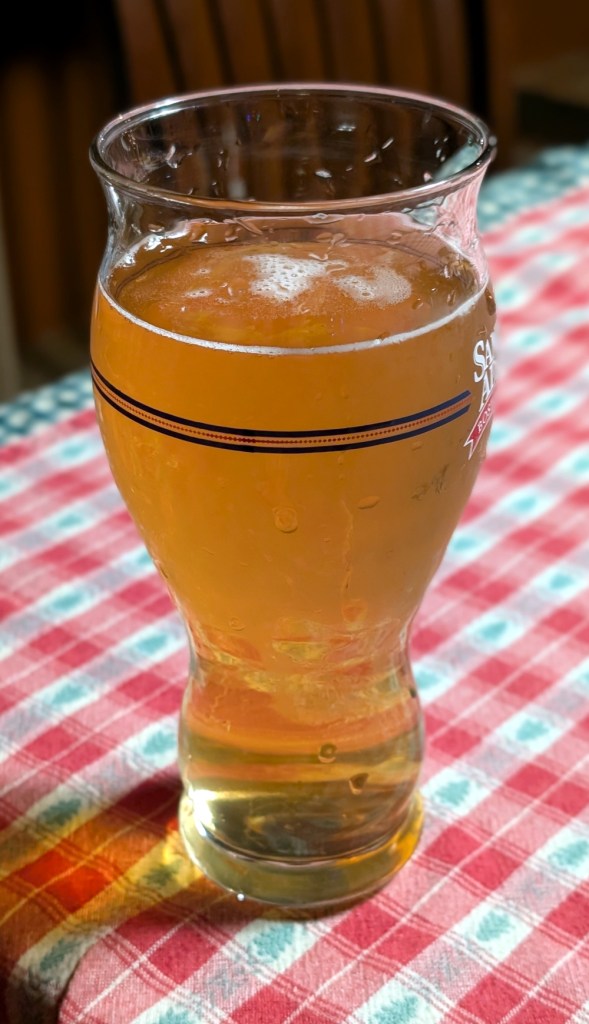
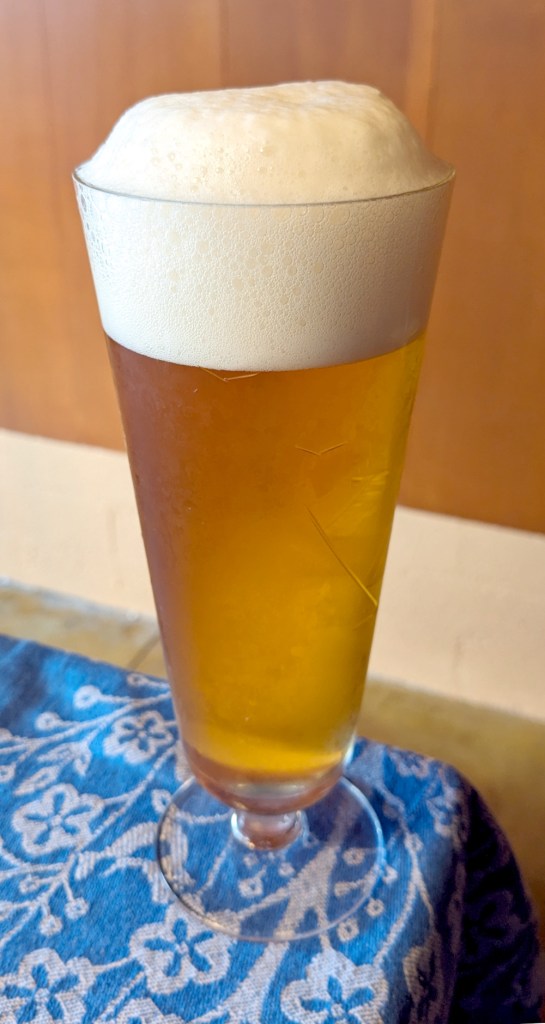
    • Beautiful medium gold color, brilliant clarity, pouring with a long-lasting, creamy white head that leaves nice tracks on the side of the glass.
  • Aroma
    • A whiff of spicy Saaz at the front, at some maltiness (slightly bready) back of that.
  • Flavor
    • Bitterness-forward, which lingers on the tongue, followed by a subtle maltiness. Clean fermentation profile. Tiny bit of caramel. I feel like the melanoidin is perhaps too much in the background–I would like a tiny touch more.
  • Mouthfeel
    • Medium body, medium carbonation, off-dry mouthfeel.
  • Would I brew this again?
    • Yes! It’s probably the best Bohemian pilsner I have made to date! It has a nice mix of malt/hops….It maybe could be a bit deeper gold in color, and I wouldn’t complain with a touch more melanoidin character. It was well worth the (not entirely intentional) extended aging, too.
  • Overall
    • 9/10 (for color)

Super SMaSH Pils

It’s no secret that German Pils is one of my very favorite styles, and one that I finally feel like I’ve mastered. I brewed German pils recipes 18 times in the past seven years, with some batches turning out well, and others less well.

My latest iteration is a SMaSH-esque beer, testing out Rahr’s pilsner malt. I tend to favor European pilsner malts, but that is more through habit than actual comparison. Weyermann, Viking, and Best have all made semi-regular appearances. This past fall, I picked up a 55-lb. sack of Rahr pilsner at the local store, and I wanted to test it in a beer like this. For the hops, I focused on the Edelweiss hop blend from Hop Heaven. In the past, I have absolutely loved the product, and wanted to see what it could do here. Because Edelweiss is a blend, it’s important to note that this is a “SMaSH-esque” beer, rather than a true SMaSH. So, I named my recipe “Super SMaSH Pils”, as a nod to the blend and an homage to a well-known video game.

For yeast, I selected S-189. I’ve been doing lots with Diamond and Novalager lately, and they are truly great yeasts, but I wanted to expand my horizons a little bit. I had a good experience with S-189 in one previous batch, and thought I’d test it out again.

Super SMaSH Pils

  • 10.5 lb. pilsner malt (Rahr)
  • 0.5 tsp. BrewTanB (mash)
  • 1.25 oz. Edelweiss hop pellets (5.8% alpha), 60 minute boil
  • 0.75 oz. Edelweiss hop pellets (5.8% alpha), 10 minute boil
  • 0.5 tsp. BrewTanB, 10 minute boil
  • 1 Whirlfloc pellet, 5 minute boil
  • 1 oz. Edelweiss hop pellets (5.8% alpha), 5 minute boil
  • 2 pkg. SafLager German Lager (S-189)

Target Parameters

  • 1.048 s.g., 1.007 f.g., 5.3% abv, 37 IBU, 4 SRM
  • Full-volume infusion mash, held at 144° for 60 minutes, 160° for 45 minutes, and 168° for 10 minutes
  • Water built up from RO, to hit target parameters of 53 ppm Ca, 11 ppm Mg, 123 ppm SO4, and 52 ppm Cl, with RA=-51 ppm

Procedure

  • Starting with 7.25 gallons of RO water, I added 4 g gypsum, 3 g epsom salts, and 3 g calcium chloride, to hit my water target. I heated this water to 149° and added the grains along with 1.5 mL of 88% lactic acid. This hit a mash temperature of 144° for 60 minutes, with recirculation. Then, I raised the mash to 160° for 45 minutes, and finally to 168° for the final 10 minutes of the mash.
  • I pulled the grain basket, and collected 6.5 gallons of runnings at a gravity of 1.043, for 71% mash efficiency.
  • I brought the runnings to a boil, boiling for 60 minutes and adding hops and finings per the recipe. After the boil, I turned off the heat and chilled to 75° before transferring to the fermenter.
  • Starting gravity was 1.049, pretty close to my target. I chilled the wort further to 48° in the fermentation chamber, before pitching the yeast.
  • I brewed the beer on 29 October 2023, and fermented at 52°.
  • On 12 November 2023, I moved the beer to ambient (~62°).
  • I kegged the beer on 29 November 2023, with a closed transfer.
  • Final gravity was 1.011, which works out to 5.0% abv.

Tasting

  • Appearance
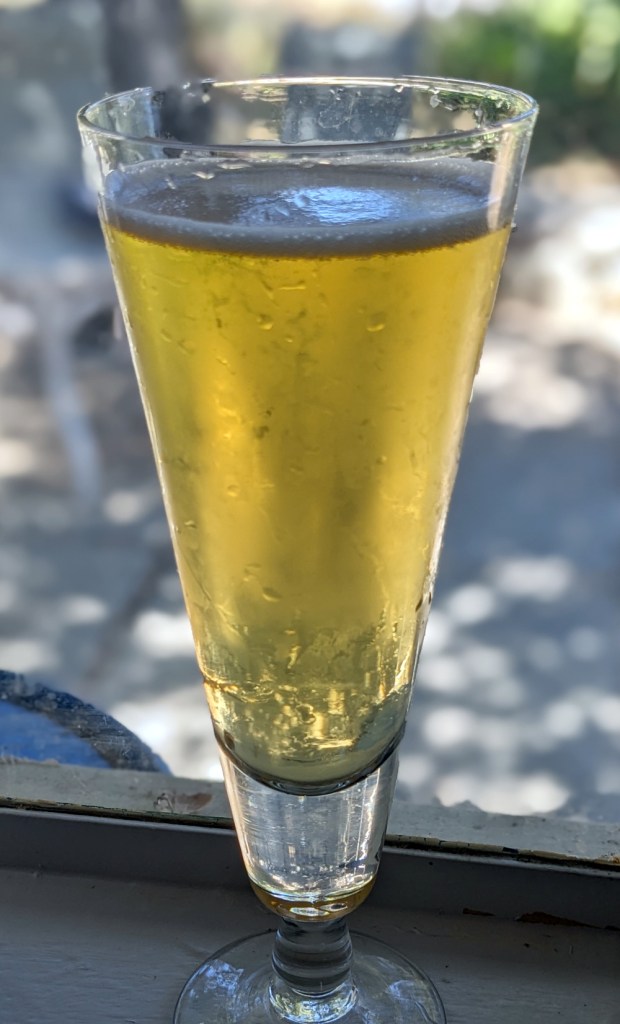
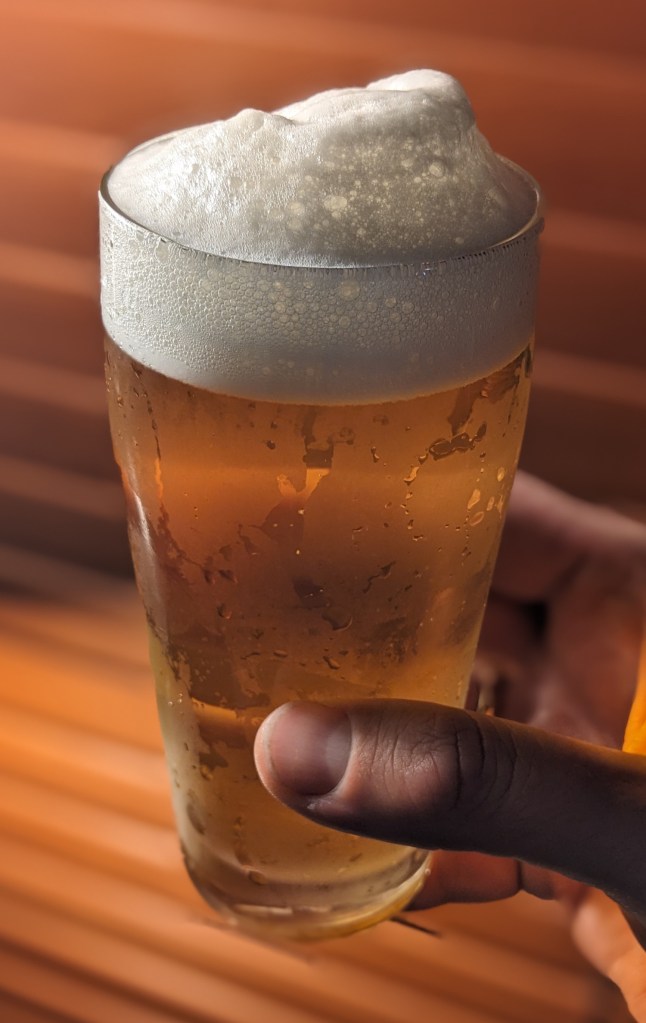
    • Brilliantly clear, straw yellow beer that pours with a dense and persistent, creamy white head.
  • Aroma
    • Clean, lightly floral, and slightly spicy aroma. Very pleasant! Malty sweet character, too.
  • Flavor
    • Clean, lightly floral hop flavor, with moderately high yet smooth bitterness. Light malty sweet flavor, with a nice balance against the hops. No yeast character detectable — it is very clean and crisp!
  • Mouthfeel
    • Medium-light body, moderate carbonation; nice and smooth finish.
  • Would I brew this again?
    • This is a near-perfect pils! It hits every mark of the classic style and is just plain enjoyable. I am incredibly pleased, and would absolutely brew it again.
  • Overall
    • 10/10

Oktoberfest 2023

It’s nice to brew a festbier from time to time; I most recently made one nearly four years ago! They are a perfect style for fall and winter, given their malt complexity as well as their high drinkability.

For this version, I followed Gordon Strong’s Modern Oktoberfest recipe from Modern Homebrew Recipes. My main adjustment was to swap in some Bohemian floor-malted malts that I had on-hand from the recent Czech dark lager project.

Oktoberfest 2023

  • 9 lb. Pilsner Zero malt (Viking)
  • 4 oz. Floor-Malted Bohemian Pilsner malt (Weyermann)
  • 1 lb. 10 oz. Floor-Malted Bohemian Dark malt (Weyermann)
  • 0.5 lb. Munich I malt (Weyermann)
  • 1 lb. Vienna malt (Weyermann)
  • 0.5 tsp. BrewTanB, added to mash
  • 1 oz. Hallertauer Mittelfrueh hop pellets (5.2% alpha), 60 minute boil
  • 0.5 tsp. BrewTanB, 10 minute boil
  • 1 Whirlfloc tablet, 5 minute boil
  • 0.5 oz. Hallertauer Mittelfrueh hop pellets (5.2% alpha), 5 minute boil
  • 2 pkg. Novalager dry yeast (Lallemand)

Target Parameters

  • 1.056 s.g., 1.005 f.g., 6.7% abv, 21 IBU, 5 SRM
  • Full-volume infusion mash, held at 146° for 40 minutes, 158° for 20 minutes, and 168° for 10 minutes
  • Claremont tap water, adjusted with lactic acid and minerals to hit target parameters of 59 ppm Ca, 12 ppm Mg, 54 ppm Na, 50 ppm SO4, 107 ppm Cl, 10 ppm HCO3, 8 ppm alkalinity, -41 ppm RA

Procedure

  • I collected 8.1 gallons of water, adding 5.7 mL of 88% lactic acid in order to knock out the carbonates. Next, I added 3 g of CaCl to achieve my target water profile.
  • I heated the strike water to 151° and added the grains along with 0.5 mL of 88% lactic acid, to hit a calculated pH target of 5.4 and a mash temperature of 146°.
  • After holding the mash at 146° for 40 minutes, I raised the temperature to 158° for 20 minutes, before finally raising it to 168° for a 10 minute mash-out.
  • I removed the grains, collecting in total 7.25 gallons of runnings at a gravity of 1.044, for 69% mash efficiency.
  • I brought the runnings to a boil, adding hops and finings per the recipe. After 60 minutes, I turned off the heat and chilled down to 79° before transferring to the fermenter.
  • I chilled the wort to 49° before pitching the yeast. I brewed this beer on 16 September 2023. Starting gravity was 1.053.
  • Fermentation temperature was held at 52° for the first 10 days, and then raised to 54° on 26 September 2023. I raised it to 58° on 28 September, 60° on 1 October, and cold crashed to 34° on 4 October 2023.
  • I kegged the beer on 14 October 2023, using a closed transfer.
  • Final gravity was 1.010, for 5.7% abv.

Tasting

  • Appearance
    • This festbier pours with a tall white head that subsides rapidly; it’s a bit disappointing in that regard. The beer is a medium gold color and very clear, but not brilliant.
  • Aroma
    • Clean and malty aroma, with a slight doughy quality.
  • Flavor
    • Soft but forward maltiness, with lightly toasty and doughy qualities. Medium-low bitterness.
  • Mouthfeel
    • Medium body, medium carbonation, and a smooth, soft finish.
  • Would I Brew This Again?
    • This is an incredibly drinkable beer! The flavor is spot on, although the head and head retention are not at all what I want. For this reason, I would probably try a different malt combination next time.
  • Overall
    • 7/10

Tmavý Ležák (Czech Dark Lager)

With the fall months bringing cooler evenings, I’m hankering for darker beers. In the past, that’s often meant porters and stouts. This year, I’ve been on a big lager roll. In fact, seven out of 20 beers for this year–more than a third!–have been lagers. German pils are of course a regular favorite, but in the dark realm I wanted to try a Czech-style dark lager. This past summer, I had an enjoyable sampling of the Czech Budvar tmavý ležák, and it was delicious! Inspired by that, I tracked down a Czech dark lager recipe in the Dark Lagers book by Kraus-Weyermann and Dornbusch.

This particular recipe, called Tmavý Ležák, promised a classic version of this classic style. To aim for maximum authenticity, I went through the effort of tracking down all of the exact grains. This meant some special orders, to get the floor-malted Bohemian dark malt from Weyermann, for instance. Hopefully the effort and expense would be worth it! I also elected to do a decoction mash as part of this, to experiment a little bit and up the malt character (presumably).

Tmavý Ležák

  • 5 lb. 12 oz. floor-malted Bohemian pilsner malt (Weyermann)
  • 3 lb. 6 oz. floor-malted Bohemian dark malt (Weyermann)
  • 1 lb. Carabohemian malt (Weyermann)
  • 6 oz. Carafa Special I malt (Weyermann)
  • 0.5 tsp. BrewTanB (add to mash)
  • 1 oz. Saaz hop pellets (3.25% alpha), 60 minute boil
  • 2 oz. Saaz hop pellets (3.25% alpha), 15 minute boil
  • 0.5 tsp. BrewTanB, 10 minute boil
  • 1 Whirlfloc tablet, 10 minute boil
  • 2 oz. Saaz hop pellets (3.25% alpha), 5 minute boil
  • 2 pkg. Novalager dry yeast (Lallemand)

Target Parameters

  • 1.047 s.g., 1.012 f.g., 4.6% abv, 29 IBU
  • Full-volume infusion mash, with 75 minute rest at 144°, 45 minute rest at 160°, 10 minute rest at 168°. I also did a decoction mash during the first rest.
  • Claremont water, neutralized to remove carbonates, with final target of 32 ppm Ca, 12 ppm Mg, 54 ppm Na, 50 ppm SO4, 60 ppm Cl, 10 ppm HCO3, RA=-22

Procedure

  • First, I heated the strike water to 148°, and added the grains to hit a target mash rest of 144°.
  • After 15 minutes with recirculation at 144°, I grabbed approximately a gallon of thick mash, heated it to 160°, and let it sit there for 15 minutes. Then, I brought it to a boil, and boiled for 30 minutes with frequent stirring before adding it into the main mash. The primary mash was held at 144° for this entire time, which means the 144° mash rest was around 75 minutes.
  • Next, I raised the mash temperature to 160° and held it there for 45 minutes.
  • Finally, I raised the mash to 168°, and held it there for 10 minutes.
  • Next, I removed the grains and brought the mash to a boil. I collected 6.75 gallons of runnings with a gravity of 1.039, for 68% mash efficiency.
  • I brought the runnings to a boil, adding hops and finings per the recipe. After 60 minutes, I turned off the heat and chilled to 80° before transferring to the fermenter. Then, I moved the fermenter to the fermentation chamber, where I chilled it the rest of the way (down to 50°).
  • I realized that I forgot the CaraBohemian malt in the mash, so had to improvise. I used 1.5 quarts of water with the milled grains, steeped it at 150° to 170° for 30 minutes, filtered, boiled for 10 minutes, and added this directly to the fermenter prior to pitching the yeast. Oops!
  • Starting gravity was 1.045. I brewed the beer on 9 September 2023.
  • After pitching the yeast, I did the initial fermentation at 52°, before raising to 54° on 26 September. Then, I raised to 58° on 28 September, and 60° on 1 October.
  • I cold crashed the beer to 34° on 4 October 2023.
  • I kegged the beer on 14 October 2023. Final gravity was 1.010, for 4.7% abv. All told, I hit my numbers pretty well!

Tasting

  • Appearance
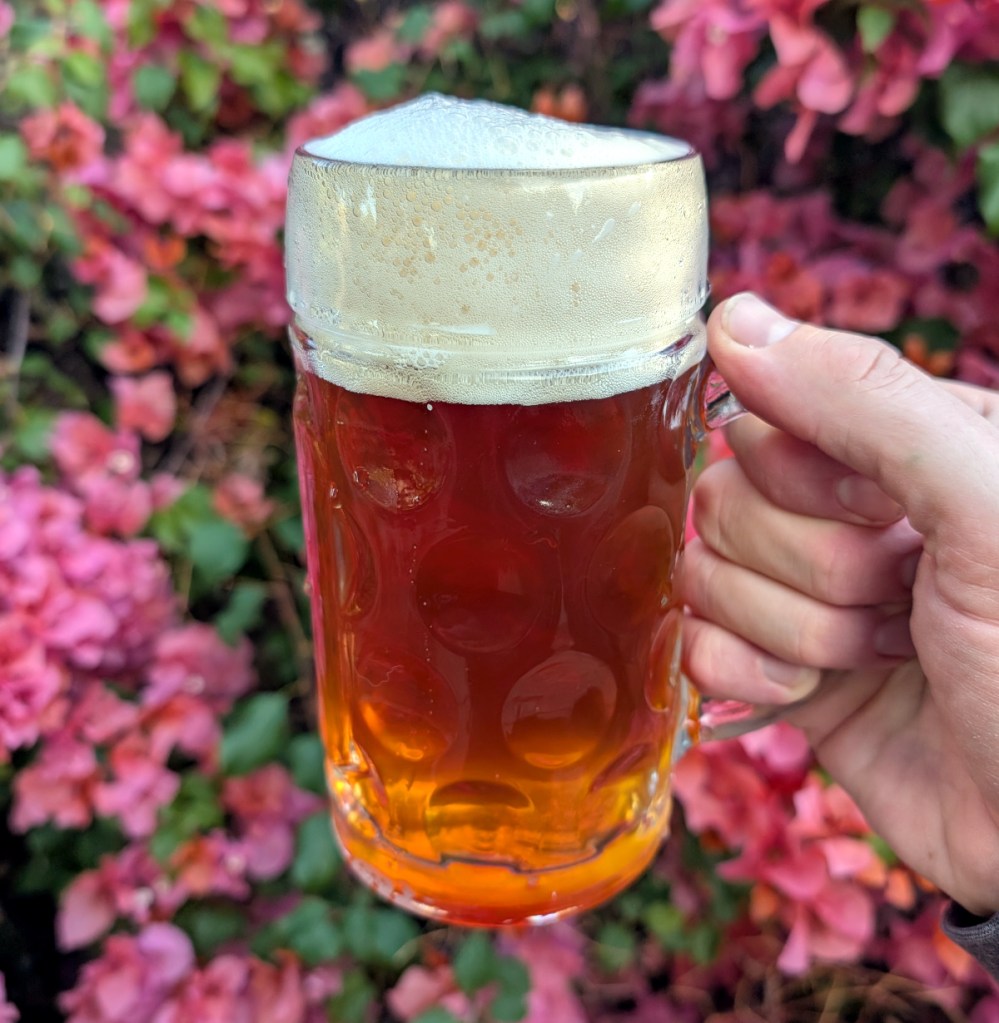
    • A very clear (but not brilliant), deep brown beer with garnet highlights on its edges. It’s almost chestnut in color when against a light source. The beer pours with a rich, fluffy, and persistent off-tan head, which leaves bits of lacing down the side of the glass.
  • Aroma
    • Malty and bread crust aroma, with a bit of cracker. There is a light hop spice, as well as a touch of dried dark fruit as the beer warms.
  • Flavor
    • Malt-forward, malty and bread crust flavor, with a medium level of spicy hop bitterness. There is a moderate coffee note and a slight hint of roastiness.
  • Mouthfeel
    • Medium-light body, with a dry finish. Moderate carbonation. Very drinkable!
  • Would I Brew This Again?
    • This recipe was a ton of effort in terms of ingredients and the decoction, but is also quite tasty and exceptionally easy to drink. The body is a touch thin for what I expected; it might benefit from backing off the hops just a touch, and perhaps ditching the decoction to reduce the length of time that the main mash was held at a low temperature. I suspect that may have dried out this beer a little more than desirable. That said, the overall drinkability tips the scales in favor of this beer!
  • Overall
    • 9/10

Pfriem Pils 2023

German pils is perhaps my favorite style. It’s surprisingly complex, highlights both malt and hops in a non-IPA sort of way, and is a fun challenge to do well. At current count, I’ve made 16 batches over the past 7 years.

My latest batch retreads the Pfriem Pils recipe from Dave Carpenter’s Lagers book. I’ve made versions of this twice previously, and it’s a really solid beer. Every iteration has some changes in hops, grist, and yeast, and this version is no different. I leaned into the HOPBOX European hops I had on hand, ending up with a nice combo of Hallertauer Mittelfrueh, Saaz, and Tettnang. Although the original recipe calls for acidulated malt, I worked with lactic acid instead, which provides pretty much the same effect. Lallemand’s Diamond Lager yeast rounded out the recipe–this strain is (in my opinion) one of the best dry lager yeasts out there right now. It ferments quickly and cleanly, and drops clear with minimal fuss.

Pfriem Pils 2023

  • 9.5 lb. Viking Pilsner Zero malt
  • 0.5 lb. Carafoam
  • 0.5 tsp. BrewTanB (added to mash)
  • 1.5 oz. Hallertauer Mittelfrueh hop pellets (5.2% alpha), 60 minute boil
  • 0.5 tsp. BrewTanB, 10 minute boil
  • 1 Whirlfloc tablet, 5 minute boil
  • 1 oz. Saaz hop pellets (2.4% alpha), 5 minute boil
  • 0.5 oz. Tettnang hop pellets (2.2% alpha), 5 minute boil
  • 1 oz. Saaz hop pellets (2.4% alpha), 10 minute whirlpool
  • 1.5 oz. Tettnang hop pellets (2.2% alpha), 10 minute whirlpool
  • 2 pkg. Diamond Lager dry yeast (Lallemand)

Target Parameters

  • 1.046 s.g., 1.007 f.g., 5.1% abv, 4 SRM, 36 IBU
  • Full volume step mash, with 45 minutes at 144°, 30 minutes at 156°, and 10 minutes at 168°; 60 minute boil
  • Water built up from RO, to hit target parameters of 59 ppm Ca, 8 ppm Mg, 89 ppm SO4, and 63 ppm Cl, with RA=-47 ppm

Procedure

  • To 7.5 gallons of RO water, I added 2.9 g gypsum, 2.4 g epsom salt, and 3.7 g of calcium chloride, in order to hit my target parameters.
  • I heated the strike water to 146°, and added the grains and BrewTanB. I set the mash for 144° with recirculation, holding it here for 45 minutes. Then, I raised the mash to 156° for 30 minutes, and finally mashed out at 168° for 10 minutes.
  • After removing the grains, I had 6.6 gallons of runnings with a gravity of 1.037, for 66% mash efficiency.
  • I brought the kettle to a boil, boiling for 60 minutes and adding the hops and finings per the recipe. Finally, I turned off the heat and chilled down to 82°. I let things settle, transferred to the fermenter, and let it chill to 50° before pitching the yeast.
  • Starting gravity was 1.044. I brewed this beer on 12 August 2023.
  • The beer was held at 52° for the bulk of fermentation, and raised to 60° on 19 August. I crashed it to 34° on 27 August 2023.
  • I kegged the beer on 7 September 2023, using a closed transfer. It tastes amazing at this point, with notes of hay in the aroma. In terms of appearance, it’s still reasonably hazy. Final gravity was 1.012, for 4.2% abv. It’s a true session beer!

Tasting

  • Appearance
    • Very clear, nearly brilliant; a light yellow beer with a persistent and creamy white head.
  • Aroma
    • Lightly spicy (like a spice cake); malt aroma is slightly sweet.
  • Flavor
    • Medium-high bitterness with a lingering finish; slightly herbal quality to the hop profile. The beer has a crackery malt flavor, with a bit of sweetness also. The balance is tilted towards the bitter side.
  • Mouthfeel
    • Smooth, moderate body, with medium-low carbonation (especially when “slow-poured”). Moderately dry and very crisp finish.
  • Would I Brew This Again?
    • Yes! It’s a great recipe. I might like to try it with more floral-type hops, such as the Edelweiss blend, for something different. I perfected a slow-pour on my faucet, to approximate the creamy and highly persistent heads you can get with the “side-pour” taps. Now that I’ve figured this out, I’m happy with the beer on home draft.
  • Overall
    • 10/10