Old Franconia Lager

“Farmhouse beers” are a huge and fuzzy category, in my mind including everything from saison to many kveik-based concoctions to some kellerbiers. Although a character-rich and slightly wild yeast is most common, I would also think some “rustic” lagers should also qualify. Farmhouse, like so many things in homebrewing and craft beer, is a moderately mythological concept, and one built more around feelings than strict history. I suppose that’s why it’s fun to play in the space! It can stir a different set of emotions from by-the-books or paint-by-numbers brewing; it allows creativity (and I suppose role-playing) in a way that many other styles don’t, or at least in ways that differ from other styles.

I recently ran across a supplier for Isaria 1924 malt by Weyermann (William’s Brewing). I am often interested in trying base malts outside my norm, and this was a fun opportunity to experiment. The descriptions / marketing material from Weyermann state that the malt is “made from the oldest German malting barley variety Isaria, which was officially approved for the beer production in 1924. Brewers used Isaria to brew traditional, unfiltered and flavorful traditional German Lagers.”

Colorwise, Isaria 1924 weighs in at 3.5 SRM and is thus closest to most Vienna malts (3-5 SRM, depending on supplier; the Weyermann version is 3 SRM). Relative to the Weyermann flavor wheel, Isaria 1924 reads as a subdued Vienna, with similar locations of flavor/aroma peaks, but different magnitudes (e.g., a peak at “sweet” taste but an arbitrary value of 2.5 versus 4.5).

Among the recommended styles from Weyermann, Franconian landbier was near the top. This intrigued me, because I had recently read about the “style” in the Spring 2025 issue of Craft Beer and Brewing (including recipe). Why not try something in that vein?

My version is not really based on anything in particular, other than crafting a general story–something to emphasize malt and lean into a story of a rustic beer that plausibly would originate in Franconia (which primarily overlaps with northern Bavaria). I wanted to use 100 percent Isaria 1924 malt, particularly because this was my main point of the brew session. I only had 10 pounds, which might be a bit lower on gravity than I wanted for my usual 5.25 gallon batch, so I scaled down to 4.5 gallons. Spalt Spalter hops were my hop selection, because they provide a nice earthy and spicy quality that fit well with my intended “rustic” results. Finally, I wanted to give WLP860 Munich lager dry yeast another spin; as a strain that would emphasize the malt character, and that also would be consistent with my Franconian/Bavarian theme (although Munich itself is to the south of historical Franconia–we’re going for “vibes” and not authenticity here!). During my last brew with it, I learned that a bit of patience was key–WLP860 is a slow starter, and so I shouldn’t fear if signs of fermentation are delayed.

Old Franconia Lager

  • 10 lb. Isaria 1924 malt (Weyermann)
  • 0.5 tsp. BrewTanB, added to mash
  • 1.25 oz. Spalt Spalter hop pellets (4.3% alpha), 60 minute boil
  • 0.5 tsp. BrewTanB, 10 minute boil
  • 1 Whirlfloc tablet, 5 minute boil
  • 1.75 oz. Spalt Spalter hop pellets (4.3% alpha), 5 minute boil
  • 2 pkg. Munich Lager dry yeast (White Labs WLP860)

Target Parameters

  • 60 minute infusion mash, 154°, full volume mash
  • 1.051 o.g., 1.016 f.g., 4.7% abv, 29 IBU, 6 SRM
  • Claremont tapwater, neutralized to remove bicarbonates. Roughly 40 ppm Ca, 18 ppm Mg, 102 ppm Na, 50 ppm SO4, 130 ppm Cl, RA=-31
  • 4.5 gallon batch

Procedure

  • I treated 6.75 gallons of water with a Campden tablet and 6.9 mL of 88% lactic acid, in order to drop out the bicarbonates.
  • Next, I heated the strike water to 159°, added the grains, and held at 154° with recirculation for 60 minutes. After that, I raised the mash temperature to 168°, held it there for 10 minutes, and then pulled the grains.
  • In total, I collected 6 gallons of runnings with a gravity of 1.038, for 64% mash efficiency.
  • I brought the runnings to a boil, adding hops and finings per the recipe. Because my gravity was a bit lower than intended, I boiled a bit harder to bring the gravity up. After 60 minutes, I turned off the heat and chilled the wort to 69° before transferring to the fermenter.
  • I chilled the wort down to 50° in the fermentation chamber, pitching the yeast when the beer was at 60° (night of the brew day).
  • This beer was brewed on 21 September 2025; it had a starting gravity of 1.049.
  • I fermented the beer at 50 degrees; small bubbles were visible on the surface by 22 September 2025, 24 hours after pitching. By 29 September, there was a good layer of krausen on the surface. Given the slow start the last time I used this yeast, I wanted to confirm that things were moving along. I noted an aroma of sulfur in the fermentation chamber on 30 September 2025.
  • I raised the temperature of the beer to 56° on 2 October 2025, and moved the beer to ambient on 7 October 2025.
  • Using a closed transfer, I kegged the beer on 18 October 2025. At the time, it had an amazing malt flavor!
  • Final gravity was 1.013, for 4.7% abv.

Tasting

  • Appearance
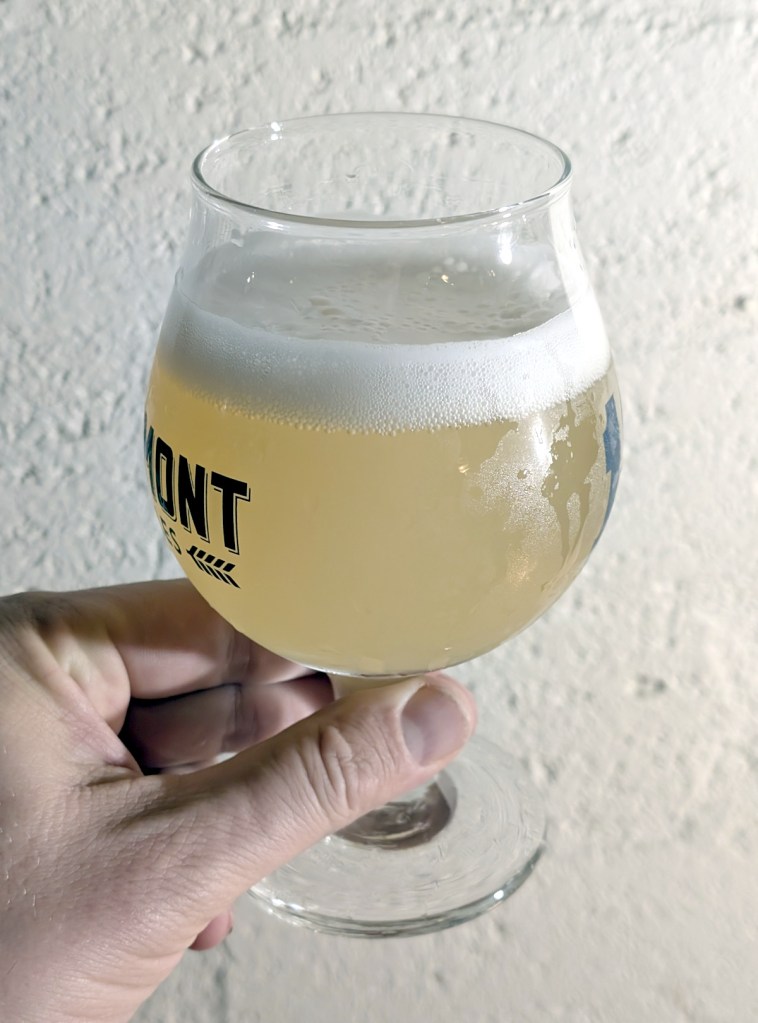
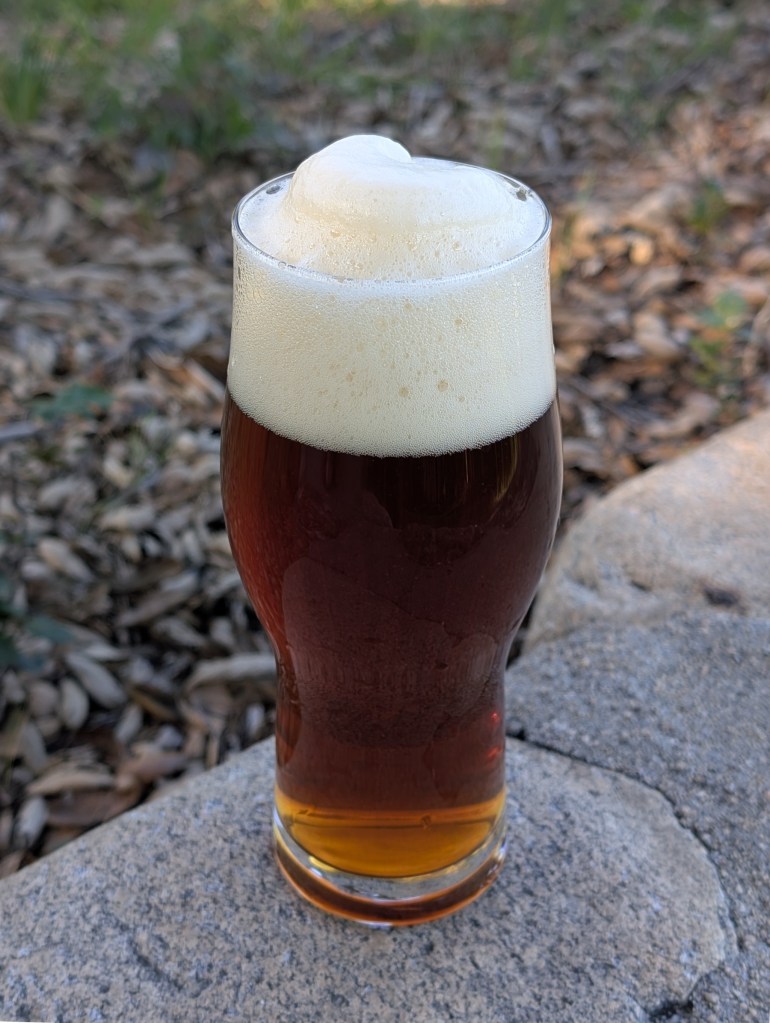
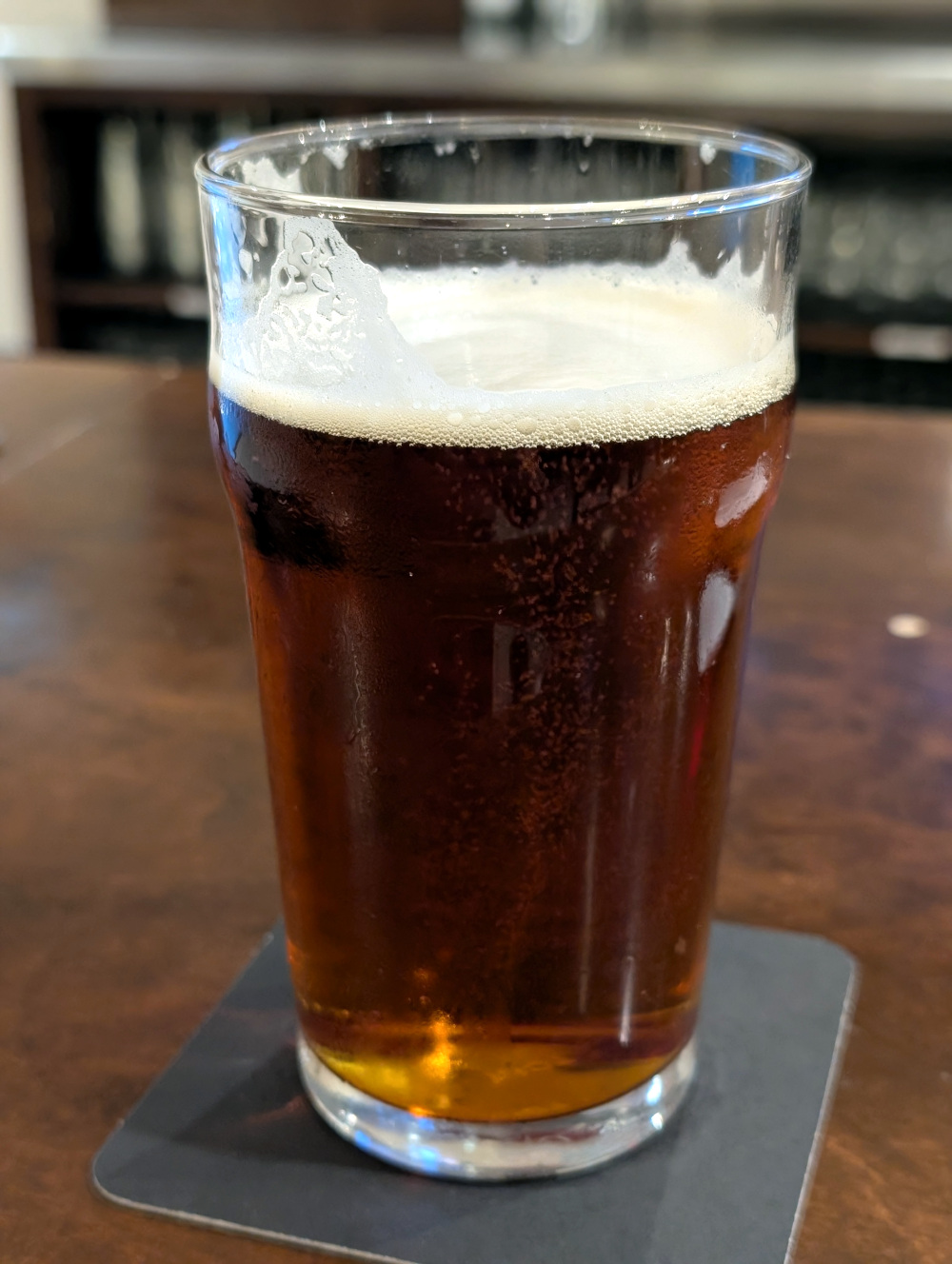
    • A deep gold beer, with a very slight haze, which pours with a thick, white, and persistent head. Beautiful!
  • Aroma
    • Medium malty-rich aroma, with moderate spicy hop character. Delicate hoppiness.
  • Flavor
    • Moderate malty rich character, against a medium level of hop bitterness. Clean yeast character.
  • Mouthfeel
    • Medium-light body, moderately high carbonation, off-dry finish. There’s may be a tiny bit of astringency.
  • Would I Brew This Again?
    • This is super nice as something a little different from the “usual” lagers. Isaria 1924 stands well as a solo malt, making an interesting and highly drinkable beer. I might dial the bitterness back a touch, or else increase the gravity slightly; the aroma is amazing, but I feel that the malt character is slightly obscured. I would also do a 90 minute mash or a decoction mash in order to improve efficiency, given the lower mash yield for this particular malt.
  • Overall
    • 8/10

Steve’s Cali-Belgique IPA Homage

Homebrew is best enjoyed with friends and family, whether it’s a brew day or a warm summer afternoon sharing a new recipe out on the patio. The social aspect is a big part of my enjoyment of the hobby, as I make new friends and welcome old friends into the world of brewing.

Steve and I met through work, and we had our first brew session together in 2009. He was quickly hooked, and soon started his own brewing adventures. Like many brewers, Steve began with extract and transitioned into brew-in-a-bag before too long. He loved experimenting (an early attempt at smoked beer involved some Liquid Smoke added at bottling; do not try this at home, because even Steve grudgingly admitted that it wasn’t very good), and he also loved riffing off of commercial recipes. We would often bounce ideas off of each other, do side-by-side tastings, and give feedback for each others’ beers. We also had semi-regular “hostage swaps,” trading a growler of his homebrew for a growler of mine. Steve and I had many adventures in beer over the years, with brew days together, the San Diego AHA meeting in 2015, carpooling to club meetings, pouring our beers at festivals, and more. He was a creative brewer in ways that I am not–I like to carefully plan each recipe, and Steve was more the type to say, “hey, I wonder what happens if I add sage to this,” or “can I get an approximation of this style with a random yeast?” Steve’s sudden and untimely passing earlier this year has been hard–I lost a close friend, a role model, and a good brewing buddy.

In honor and memory of Steve, I wanted to brew one of “his” beers. A few recipes stand out for me – a sage saison, a Mirror Pond Pale Ale clone, and most all his Cali-Belgique recipe. Cali-Belgique IPA was one of Steve’s early brewing obsessions, attempting to clone one of Stone Brewing’s beers. No longer commercially available, Cali-Belgique was a modification of the flagship Stone IPA, fermented with Belgian ale yeast. Steve enjoyed this beer, and wanted to make his own version; I sampled a few early brews, as he got closer and closer to his vision for the beer. Along the way, it turned into an excellent recipe and one that was truly Steve’s own, not just a clone. I’ll forever associate this beer with him!

Crafting Steve’s Cali-Belgique

Unfortunately, I didn’t have Steve’s Cali-Belgique IPA recipe (I had never gotten around to brewing it myself, because I could readily get the beer from Steve), but I remembered that Steve pretty regularly phoned his recipes in to our local homebrew shop. So, I reached out to Charles at Pacific Brewing Supplies, and I was in luck! Charles happened to have the grain bill and hop list, which set us well on the way to reconstructing this recipe.

The latest version of Steve’s Cali-Belgique had 50% 2-row, 33.3% Belgian Pilsner malt, 8.3% Carapils, and 8.3% Dark Munich. Steve double-milled his grains, and Charles thinks Steve was hitting around 75% efficiency in his system. He started as an extract brewer, spent much of his brewing career using brew-in-a-bag, and spent the last part with an Anvil Foundry all-in-one system. Based on all of this, target gravity was probably around 1.064 or 1.065. For my own version, I increased the 2-row from 6 lb to 8 lb to improve the gravity on my system and make it match Steve’s system better. A future brew on my system should increase percentage on all grains. I assumed a mash temperature of around 152°, just for simplicity.

The latest version of Steve’s recipe included 1 oz. of Chinook (13% alpha), 2 oz. of Columbus (15% alpha), and 1 oz. of Centennial (10% alpha). I had to guess at usage, but assumed Chinook as the main bittering hop and then a combination of late hop and dry hop additions for the rest. Steve seemed to always be adjusting the recipe, so it’s safe to play around in the hopping approach, because that’s what he would do. Following Steve’s preferences and the original Stone IPA recipes, it was probably hitting around 65 IBU.

Yeast varied over the years, but Steve’s most recent batches used Abbaye or Monk dry yeast. For fermentation temperature, I remember the beer having the nice spicy yeast notes and phenols that come with a warmer temperature for these Belgian strains. So, I decided to ferment around 72°.

With all of this information gathered, it was time to brew and sample Steve’s Cali-Belgique. Cheers to you, Steve, and thanks for the many happy hours of stargazing, conversation, philosophy, and beer tasting.

Steve’s Cali-Belgique IPA Homage

  • 8 lb. 2-row malt (Great Western)
  • 4 lb. pilsen malt (Dingemans)
  • 1 lb. dextrin malt (Viking)
  • 1 lb. Munich dark malt (Viking)
  • 0.5 tsp. BrewTanB, added to mash
  • 1.15 oz. Chinook hop pellets (12.3% alpha), 60 minute boil
  • 0.75 oz. Centennial hop pellets (8.1% alpha), 10 minute boil
  • 0.75 oz. Columbus hop pellets (15.6% alpha), 10 minute boil
  • 0.25 tsp. BrewTanB, 10 minute boil
  • 1 Whirlfloc tablet, 5 minute boil
  • 1 pkg. Abbaye Belgian ale yeast (Lallemand)
  • 1 pkg. Monk ale yeast (CellarScience DY106B)
  • 1.25 oz. Columbus hop pellets (15.6% alpha), dry hop in fermenter
  • 0.25 oz. Centennial hop pellets (8.1% alpha), dry hop in fermenter

Target Parameters

  • 60 minute infusion mash, 152°, full volume mash
  • 1.063 o.g., 1.016 f.g., 6.2% abv, 68 IBU, 6 SRM
  • Claremont water adjusted with lactic acid and minerals to hit 76 ppm Ca, 22 ppm Mg, 89 ppm Na, 182 ppm SO4, 110 ppm Cl, 20 ppm bicarbonate

Procedure

  • Starting with 7.6 galllons of water, I added 6.33 mL of 88% lactic acid, to drop out the carbonates. Then, I added 4 g of epsom salt and 4 g of gypsum to kick up the sulfates.
  • I heated the strike water to 159°, before adding the grains and 25.7 mL of 10% phosphoric acid, holding the mash at 152° (with recirculation) for 60 minutes.
  • At the end of the mash, I pulled the grains. In total, I had 6.75 gallons at a gravity of 1.052, for 68% mash efficiency.
  • I brought the kettle to a boil and boiled for 60 minutes, adding hops and finings per the recipe. Then, I turned off the heat and chilled the wort to 72° before transferring to the fermenter and pitching the yeast.
  • Starting gravity was 1.060. I brewed the beer on 30 March 2025, and fermented at ambient (~65°).
  • When I checked the fermenter on 1 April 2025, there was no activity in the airlock, so I opened the fermenter and confirmed no activity. I had a pack of Abbaye Ale yeast on-hand, so pitched that. Krausen was visible by the next day. I put a heat pad on the beer, but it got a bit hot; around 80° by 3 April. Oops! I let it ride at ambient at that point.
  • I kegged the beer on 14 May 2025, adding the dry hops in a bag. I removed the hops on 18 May 2025.
  • Final gravity was 1.015, for 6.0% abv.

Tasting

  • Appearance
    • A very clear, gold beer, which has a thick and persistent white head
  • Aroma
    • I get a strong sensation of pineapple in the aroma as the beer warms up; some moderate alcohol notes, too. Yeast character dominates, and I don’t get much for hops or malt.
  • Flavor
    • This is a very bitter beer with a resinous edge to the hops. It has a medium-low maltiness, with a light caramel quality. There is a touch of clove flavor as the beer warms. The bitterness lingers on the tongue.
  • Mouthfeel
    • Medium body, medium carbonation, slightly dry finish.
  • Would I Brew This Again?
    • Yes! This beer goes down surprisingly smoothly, which I didn’t necessarily expect. I would like more dry hop aroma, and probably should just let the hops float free in the fermenter rather than bagging them. For a variant, I might try Eclipse and El Dorado, while keeping the same yeast. Mosaic or Galaxy could also work. The beer overall is quite good – the low hop aroma / low flavor complexity is the main reason that I gave it a lower score (no fault of the recipe – just my handling of the hops). That said, I don’t really remember Steve’s version of this having much for hop aroma. So, I might adjust the beer for my own preferences, but as something that captures his beer as I remember it, it’s pretty close!
  • Overall
    • 6.5/10
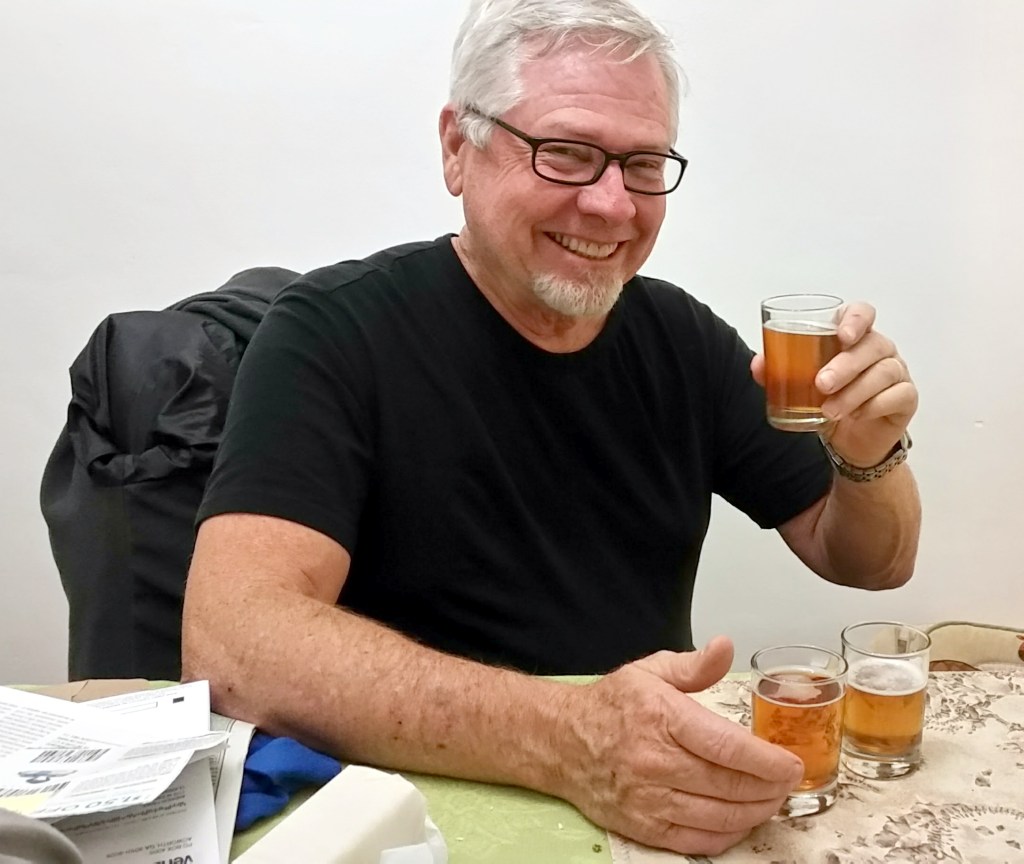
Steve helping with a festbier tasting, stacking my homebrew against commercial examples. I always enjoyed beer tasting with him…”I brewed up this new recipe…I’d love to get your thoughts on it!”

AquiloPils

Concept beers are fun–building a recipe around a story has a mix of constraint and creativity that scratches the brewer’s itch for me. A new opportunity for such a beer popped up recently, when a little dinosaur with which I am very familiar unexpectedly wandered into the spotlight. Aquilops (pronounced “uh-QUILL-ops), a raven-sized cousin of Triceratops that lived in Montana around 106 million years ago, is somehow going to make an appearance in the upcoming Jurassic World movie! As lead author on the original Aquilops publication (along with colleagues Rich Cifelli, Des Maxwell, and Matt Wedel), this was quite a surprise. The 12 year old me who watched Jurassic Park in the theater is pretty geeked out that one of “my” dinosaurs is joining the cast of a Hollywood blockbuster franchise. This dino is in Lego kits, FunkoPops, action figures, Dr. Pepper cans, and even a Scarlett Johansson ASMR video. That’s cool, but what about a beer? I can only guess that the cute dinosaur aimed selling merchandise to kids is not going to be showing up on beer cans anytime soon, so I had to take matters into my own hands.

Aquilops is no stranger to beer recipes–back when we named it, I brewed “Eagle Face Oatmeal Stout” (referencing the translation of the name from its Greek and Latin roots). The beer was served in our club booth at AHA, and even graced the pages of Zymurgy magazine. The oatmeal stout is pretty tasty, but we’re not really in oatmeal stout weather at the moment. I wanted a crisp and quaffable lager to put on tap, and thus AquiloPils was born.

The original fossil skull of Aquilops was found in Montana, and its closest known relative lived in Japan, so a pilsner with nods to classic American lagers and Japanese lagers evolved naturally. Plus, these kinds of beers are a fun technical challenge and always a crowd pleaser. I sourced Montana-grown barley malt, and Sorachi Ace hops were a perfect fit for the recipe (the ones I got from my LHBS were American-grown, which followed the theme nicely). This kind of beer needed an adjunct, so I used 10% flaked rice in the grist. I wanted a perfectly crisp and dry beer, and thus incorporated a long and low mash rest. Finally, because this is supposed to have a very clean yeast profile, I chose Novalager. The brewing process went smoothly, and after some time cold conditioning as well as a dose of Biofine Clear, the beer was brilliantly clear and incredibly tasty.

Matt–one of my co-authors on the paper, a good friend, Aquilops enthusiast, and the person who brought me on to the project in the first place–celebrated a milestone birthday recently, so I was proud to provide a keg for his party. What better way to enjoy AquiloPils than with good friends, co-authors, and a whole ton of paleontologists? It was a crowd pleaser! To celebrate, I also drafted a logo for this beer, of a little Aquilops clutching a glass of the beer. This project was fun from start to finish!

Me (left) and the birthday boy, with our cups of AquiloPils (photo courtesy Matt Wedel). Check out Matt’s musings on our critter in the movies over at the SV-POW! blog.

AquiloPils

  • 9 lb. pilsner malt (Montana Craft Malting Co.)
  • 1 lb. flaked rice (Briess)
  • 2 oz. rice hulls
  • 0.5 tsp. BrewTanB, added to mash
  • 0.4 oz. Sorachi Ace hop pellets (9.7% alpha), 60 minute boil
  • 0.5 tsp. BrewTanB, 10 minute boil
  • 1 Whirlfloc tablet, 5 minute boil
  • 2 pkg. Novalager yeast (Lallemand)
  • 1 pkg. Biofine Clear

Target Parameters

  • 90 minute infusion mash at 146°, full volume mash, with 10 minute mash-out at 168°
  • 1.044 o.g., 1.004 f.g., 5.3% abv, 15 IBU, 3.5 SRM
  • Water profile built with RO water to hit 59 ppm Ca and 105 ppm Cl.

Procedure

  • I built the water up from scratch, using 7.25 gallons of RO water and 6 g of calcium chloride to hit my target water parameters.
  • I heated the strike water to 151°, added the grains, and also added 20 mL of 10% phosphoric acid, holding the mash at 146° for 90 minutes. Then, I raised the temperature to 168° for 10 minutes, before pulling the grains.
  • In total, I collected 6.5 gallons of runnings with a gravity of 1.040, for 72% mash efficiency.
  • I brought the kettle to a boil, adding hops and finings per the recipe.
  • After a 60 minute boil, I turned off the heat and chilled the wort to 70°, before transferring it to the fermenter. I chilled the beer the rest of the way to 50° in the fermentation chamber.
  • I brewed this beer on 15 March 2025, with a starting gravity of 1.049 – well above my target!
  • Fermentation started at 52°; I increased the temperature to 54° on 17 March, and 60° on 20 March. I cold crashed the beer to 33° on 26 March and held it there until I kegged the beer using a closed transfer on 19 April.
  • Final gravity was 1.004, for 5.9% abv.
  • On 15 May 2025, the beer was still fairly hazy, so I added a package of Biofine Clear. Within a day or two, haze had almost entirely dropped out, and within three weeks the beer was brilliantly clear.

Tasting

  • Appearance
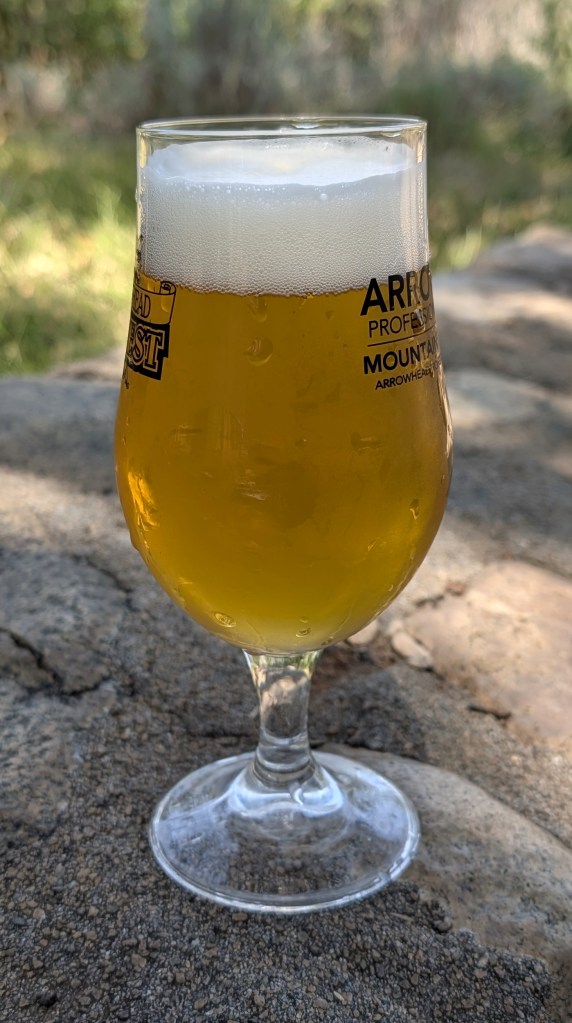
    • Brilliantly clear, straw colored beer with thin white head of low persistence.
  • Aroma
    • Medium-light sweet malty aroma, no hop or yeast character to speak of.
  • Flavor
    • Medium malty character, low bitterness, a bit of that light red apple yeast character.
  • Mouthfeel
    • Medium-high carbonation, light body, dry and crisp finish.
  • Would I Brew This Again?
    • This is pretty close to what I envisioned! It hits the gimmick well and is also super drinkable. The batch yielded a little too high on starting gravity (I was just too efficient in the mash!), so it would be good to notch that back a touch. Otherwise, it’s a perfect beer. I might also try W34/70 for a future iteration, to get more of that apple-like American lager flavor. Finally, I could up the rice percentage some to around 20%, if I wanted a better match with “typical” American lager recipes.
  • Overall
    • 9/10

Patersbier 2025

I love the concept of a patersbier (“Father’s Beer”), as a relatively light and low alcohol yet flavorful take on a Belgian ale. As with many Belgian ales that were associated with the monastic traditions, there is plenty of romance and a good dollop of fantasy around these brews. I’m not particularly interested into delving into historicity–I’m more interested in making a beer that I want to drink!

This particular version is a bit of a kitchen sink beer, intended to sweep out odds and ends from my brewing supply. Even so, I aimed to have a sturdy malt backbone. Hops were chosen, again, to use up a few varieties. I knew a Belgian yeast was in order, so Lallemand’s Abbaye Belgian fit the bill. It’s very different from the previous patersbier I made, which was a SMaSH with pilsner malt and Cascade hops.

Along the lines of my Brew Year’s Resolution to make more small batches, this was a 3 gallon batch. I also did a quick brew day, with 30 minute mash and 30 minute boil.

Patersbier 2025

  • 2.75 lb. Vienna malt (Weyermann)
  • 2 lb. 2-row malt (Great Western)
  • 0.5 lb. Caramel Munich 60L malt (Briess)
  • 0.5 lb. Munich II malt (Weyermann)
  • 0.25 lb. Caramel Malt 120L (Briess)
  • 0.25 tsp. BrewTanB, added to mash
  • 1 oz. Styrian Goldings hop pellets (3.2% alpha), 30 minute boil
  • 0.5 oz. Crystal hop pellets (4.5% alpha), 30 minute boil
  • 1 pkg. Abbaye Belgian ale yeast

Target Parameters

  • 1.045 o.g., 1.015 f.g., 3.9% abv, 13 SRM, 26 IBU
  • Full volume mash at 158° for 60 minutes
  • Claremont tap water, no adjustment

Procedure

  • I heated the mash water to 164°, added the grains, and held at 158° with recirculation for 30 minutes. Then, I raised the mash to 168° for 10 minutes before pulling the grains.
  • In total, I collected 4 gallons of runnings with a gravity of 1.037, for 66% mash efficiency.
  • I brought the kettle to a boil and added hops per the recipe. After 30 minutes, I turned off the heat and chilled the wort to 68° before transferring to the fermenter.
  • Starting gravity was 1.044. Once I pitched the yeast, I let it ferment at ambient. I brewed the beer on 12 March 2025.
  • I kegged the beer on 24 March 2025. Final gravity was 1.013, for 4.1% abv. I added 1.5 oz. of corn sugar dissolved in ~0.5 cup of water and boiled, in order to do natural carbonation. I finished off the carbonation with forced CO2. At the time of kegging, a pleasant and spicy yeast character was evident.

Tasting

  • Appearance
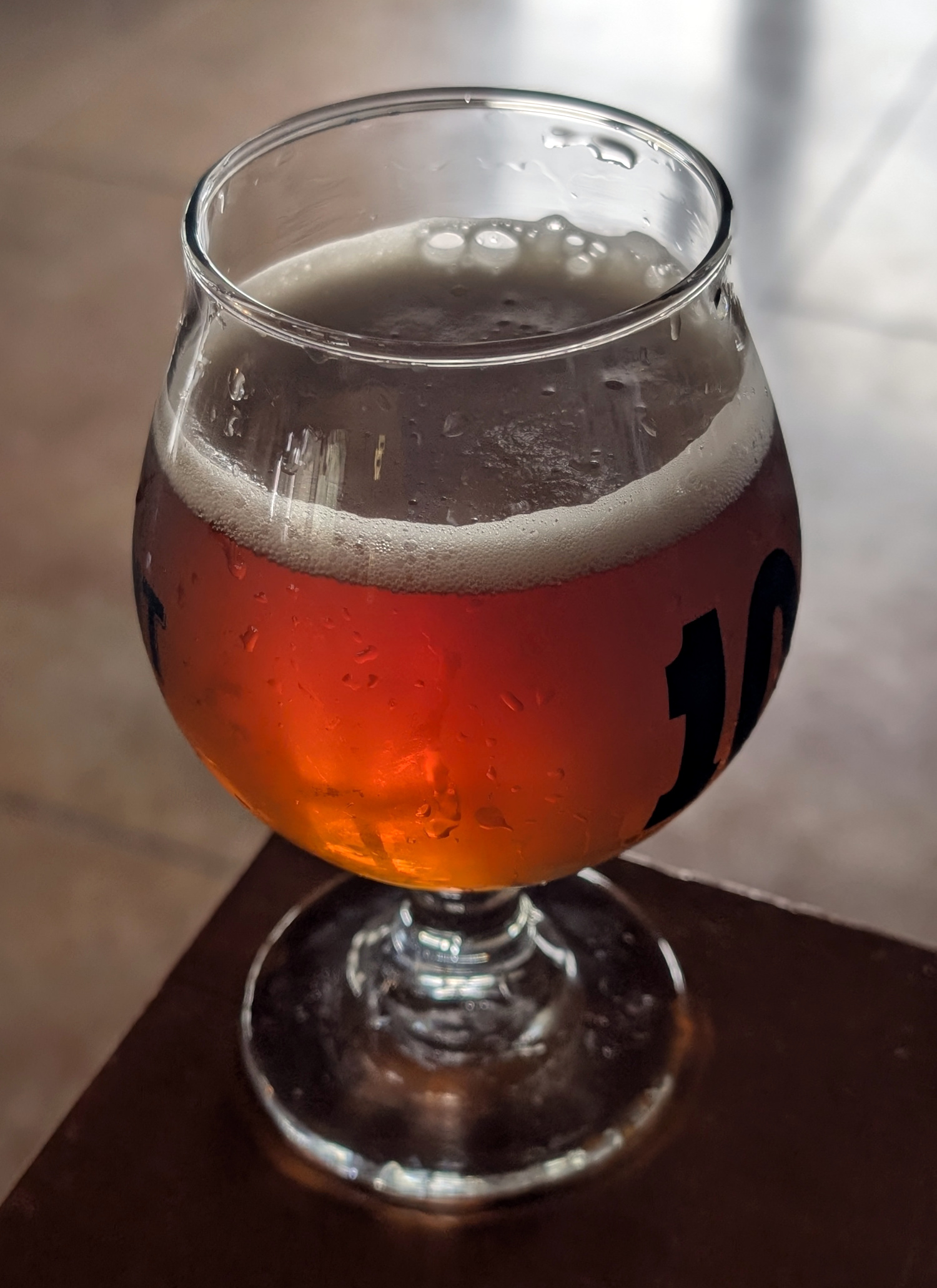
    • Medium amber beer, clear, ivory head with good persistence.
  • Aroma
    • Moderately high yeast aroma with good phenolic character; spicy notes, some red apple. Some bready and caramel notes come through as the beer warms up.
  • Flavor
    • Spicy yeast character at the forefront; medium level of malt character with a malty, bread crust quality. Medium-low level of hops.
  • Mouthfeel
    • Light body, medium level of carbonation, dry finish.
  • Would I Brew This Again?
    • This is good for what it is–easy drinking and lots of yeast character. It’s a bit thin on the body, so might benefit from a touch more crystal malt. The yeast character is perfect! As compared with my previous patersbier, I like the 2025 recipe much better.
  • Overall
    • 7/10

Otter-Squatch Wheat Ale

A light wheat ale is an American homebrew classic, but it has been awhile since I last made this style. I threw together a simple recipe, which is upside-down from my usual blend of 60/40 wheat/2-row. There was no particular reason for this, other than it just seemed like the thing to do. I had a hop variety on-hand called Sasquatch, and decided to use those up here. My preference on American wheat ales is a little fruity/citrusy yeast character, rather than super clean or super phenolic. Lutra kveik seemed like a perfect yeast choice along those lines; clean-ish, but not overly clean, and potential for some interesting flavors. “Lutra” is also the scientific name for a genus of otters; along with Sasquatch hops, I ended up calling this batch “Otter-Squatch Wheat Ale.”

Otter-Squatch Wheat Ale

  • 6 lb. 2-row malt (Great Western)
  • 4 lb. white wheat malt (Briess)
  • 4 oz. rice hulls
  • 0.5 tsp. BrewTanB, added to mash
  • 1 oz. Sasquatch hop pellets (7.5% alpha), 20 minute boil
  • 0.5 tsp. BrewTanB, 10 minute boil
  • 1 oz. Sasquatch hop pellets (7.5% alpha), 5 minute boil
  • 1 pkg. Lutra kveik (Omega OYL-071), dry

Target Parameters

  • 1.046 s.g., 1.009 f.g., 23 IBU, 4 SRM, 4.9% abv
  • Full volume mash, 60 minute mash at 152°, 10 minute mash-out at 168°
  • RO water with added minerals to hit target of 78 ppm Ca, 86 ppm SO4, 74 ppm Cl, -55 ppm RA

Procedure

  • I started with 7.3 gallons of RO water, adding 4.25 g of calcium chloride and 4.25 g of gypsum to hit my target water profile. Then, I heated the water to 157° before adding the grains, to hit a mash temperature of 152°.
  • I held the mash with recirculation at 152° for 60 minutes, before raising the mash to 168° for 10 minutes.
  • At the end of the mash, I removed the grains and heated to a boil. In total, I collected 6.6 gallons of runnings with a gravity of 1.039, for 69% mash efficiency.
  • I heated the runnings to a boil, boiling for 60 minutes and adding hops per the recipe. After 60 minutes, I turned off the heat and chilled 85° before transferring the beer to the fermenter and pitching the yeast.
  • Starting gravity was 1.044, and I brewed the beer on 28 February 2025. I fermented the beer at room temperature ambient, between 60 and 65°.
  • I kegged the beer on 24 March 2025. Final gravity was 1.009, for 4.6% abv. I added 3.25 oz. of corn sugar to get some natural carbonation and scrub any oxygen from the transfer process. At the time of kegging, the beer had a very mild flavor and was quite drinkable! I finished up things with a bit of force carbonation, after the beer sat for a few weeks.

Tasting

  • Appearance
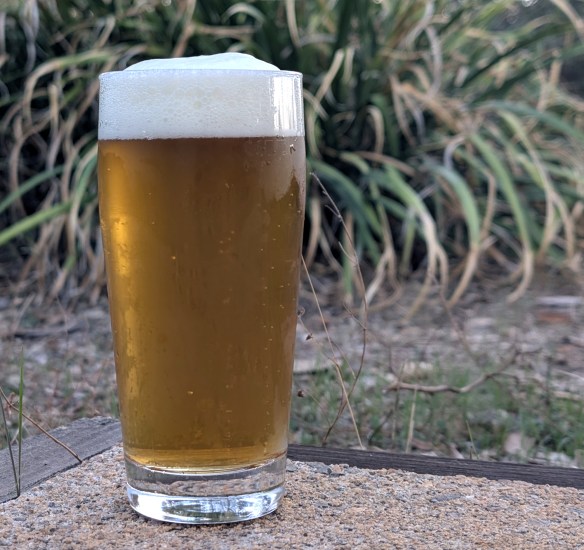
    • Lightly hazy, light yellow beer, which pours with a creamy and long-lasting white head.
  • Aroma
    • Doughy and tart, lemony aroma, at a moderate level of each.
  • Flavor
    • Moderate doughy malt character, light tartness to yeast and a very slight phenolic note (peppery, perhaps?). The latter is almost imperceptible; I can’t quite describe it. Medium-low bitterness.
  • Mouthfeel
    • Light bodied, moderately high carbonation, slightly dry finish. Crisp!
  • Would I Brew This Again?
    • This is a tasty beer! It defies styles a little bit; it’s probably closest to an American wheat ale, but not quite on target. It’s very drinkable! The kveik flavors probably aren’t for everyone, but work well in this particular batch.
  • Overall
    • 9/10