Ill-Tempered Gnome Clone

As I am pretty sure I’ve lamented previously, I sometimes get too far down the rabbit-hole of brewing to a particular style. IPA, stout, porter, pilsner…all are great, but that can be at expense of creativity. On the other hand, I grew wary of the big and bitter beers that I gravitated towards early in my craft beer days. And yet…I now find myself picking up a bottle of Arrogant Bastard every few weeks, and kind of enjoying it. The excesses of craft beer recipes are still excessive, but I’m finding that they can be enjoyable in moderation and on occasion.
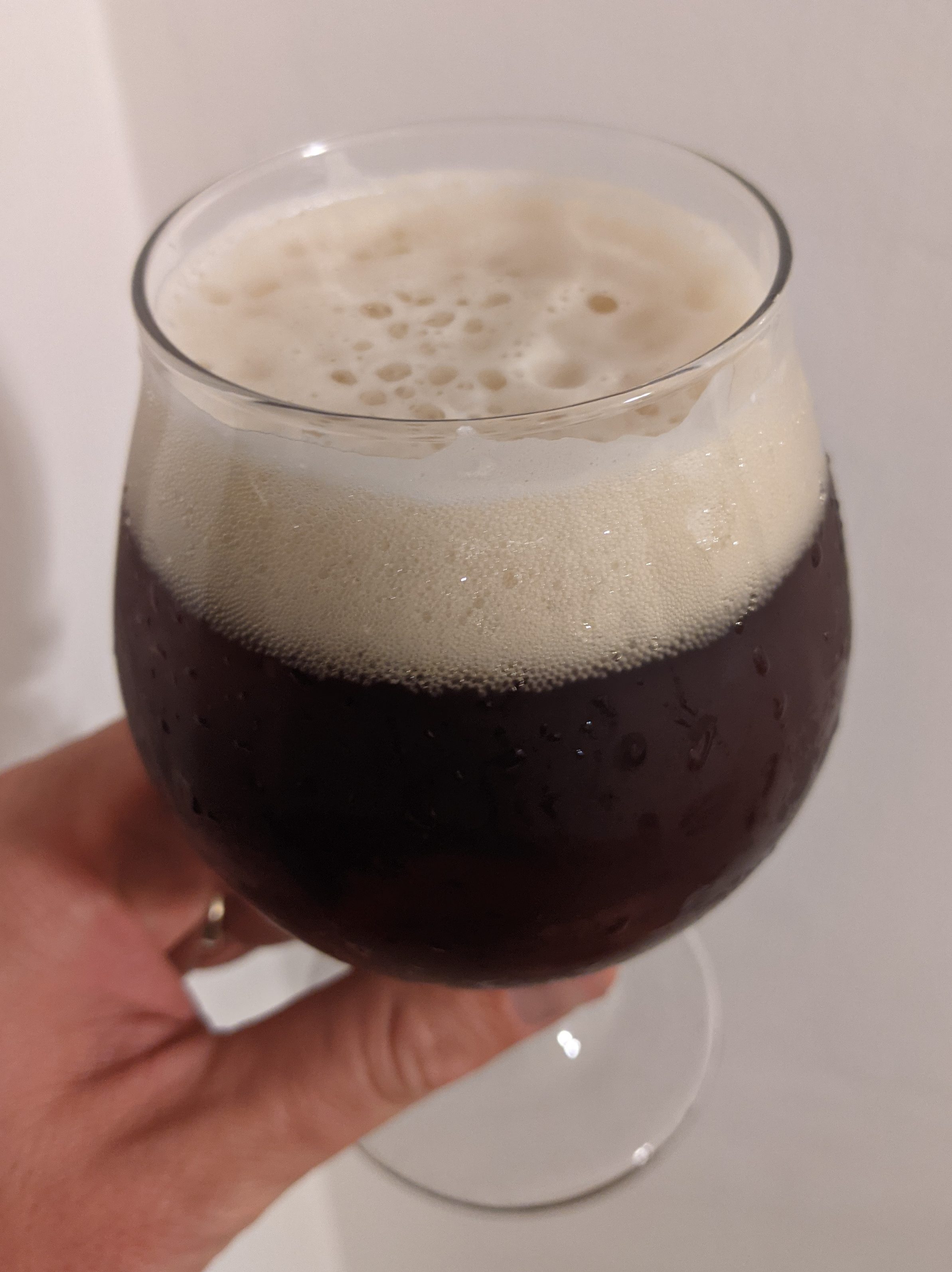
dark brown beer with tan head, held in clear tulip glass against a white wall

To scratch this itch, I paged through the Craft Beer For the Homebrewer book, and my eyes settled upon a clone recipe for something called Ill-Tempered Gnome. Produced by Oakshire Brewing, this recipe looked big, dark, and bitter, and was billed as an American Brown Ale (on the website) or a winter warmer (in the beer book).

Quite intrigued, I pulled together the ingredients, making a minor substitution or two based on availability for some of the harder-to-find malts (e.g., I had to go with a different brand of coffee malt versus Franco-Belges Kiln Coffee Malt in the original recipe). That said, I did try to adhere as closely as possible to the book’s version, which I was told (by Denny Conn himself) came direct from the brewer.

Ill-Tempered Gnome Clone

  • 12 lb. California Select 2-row malt (Great Western)
  • 11 oz. crystal 15° (Great Western)
  • 5 oz. coffee malt (Simpsons)
  • 5 oz. honey malt (Gambrinus)
  • 5 oz. special B malt (Dingemans)
  • 4.5 oz. special roast malt (Briess)
  • 3.5 oz. chocolate malt (Briess)
  • 1 oz. Nugget hop pellets (12.9% alpha), 60 minute boil
  • 0.5 oz. Centennial hop pellets (8.1% alpha), 20 minute boil
  • 0.5 oz. Crystal hop pellets (4.5% alpha), 20 minute boil
  • 1 Whirlfloc tablet, 5 minute boil
  • 1 oz Cascade whole hops (est. 5.5% alpha), 5 minute boil
  • 2 pkg. Safale American ale yeast (US-05)

Target Parameters

  • 1.062 o.g., 1.015 f.g., 6.3% abv, 58 IBU, 19 SRM
  • Full volume mash at 154° for 60 minutes, with 10 minute mash-out at 168°
  • Claremont tap water, adjusted to reach estimated profile of 75 ppm Ca, 11 ppm Mg, 93 ppm Na, 149 ppm sulfate, 105 ppm Cl, 156 ppm bicarbonate; RA 68, 128 ppm alkalinity; 60 ppm effective hardness.

Procedure

  • I heated 7.5 gallons of water to 161°, adding a Campden tablet to remove chloramines. Then, I mashed in with the grains to hit a temperature of 154°. I added 7 mL (1.5 tsp.) of 88% lactic acid to adjust the pH of the mash, and recirculated at 154° for 60 minutes. Then, I raised the mash temperature to 168° and held it there for 10 minutes, before removing the grains.
  • In total, I collected 6.35 gallons of runnings with a gravity of 1.055, for 68% mash efficiency.
  • As I brought the runnings to a boil, I added 5 g of gypsum to adjust the water profile.
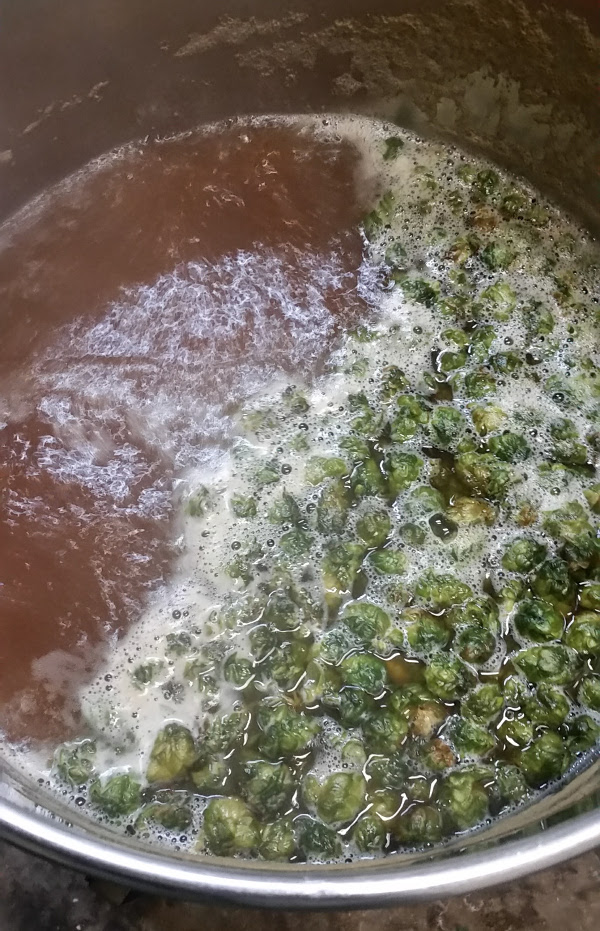
  • To bring the gravity up a bit, I boiled for an extra 10 minutes, before beginning to add the hops. I then boiled for an additional 60 minutes, adding hops and kettle finings per the recipe.
  • After the 60 minute boil, I chilled to ~75°, transferred to the fermenter, and chilled down to 65° in the fermentation chamber. Then, I pitched the two packages of yeast.
  • I brewed the beer on 9 October 2021, and fermented at 65°. Starting gravity was 1.061.
  • On 20 October 2021, I let the beer free rise to 70° (after removing it from the fermentation chamber).
  • I kegged the beer on 23 October 2021. At this point, its gravity was 1.017. This equates to 5.9% abv.

Tasting

  • Appearance
    • The beer pours with a thick and frothy ivory head, and awesome lacing as the head subsides slowly. The beer is a brilliantly clear reddish amber in color in a tulip glass, and is a nice even brown in a tall glass.
  • Aroma
    • Resiny hops are at the front, with toffee and coffee malt aroma alongside some caramel. The malt/hop balance is spot-on.
  • Flavor
    • Moderately high bitterness, with a resin and pine quality to the hops, for an extended bitterness in the finish. This beer has a full malt character, with caramel at the front and a slight bit of chocolate at the back. Delicious!
  • Mouthfeel
    • Medium-full body, with moderate carbonation and an off-dry finish.
  • Would I Brew This Again?
    • YES! The resiny hops plus rich malt character are an awesome combo. The beer is straight out of 1997 in terms of its traditional hops and big flavors, but I love it for that. Who knows if my version is a true clone, but do I really care? I love this beer! In particular, it’s not really a winter warmer (in terms of the overspiced recipes so common out there), but definitely closer to an American brown ale. I’ll do this one again.
  • Overall
    • 10/10

Aspiration Ale

In the winter months, it’s nice to have something malty and tasty but not overly heavy, as an “everyday” beer. Looking through Craft Beer for the Home Brewer recipe book, I ran across a clone recipe for 90 Shilling Ale from Odell Brewing Company. Although it has a Scottish name, the ingredients are anything but! I adjusted for the malts I had on-hand, and swapped in a pound of Vienna for a pound of 2-row, because I was finishing up my 2-row malt supply before opening a new bag. I called this batch “Aspiration Ale,” because it’s aspiring to be a 90 shilling ale, but sure as heck ain’t it!

Aspiration Ale

  • 7 lb. 6.5 oz. 2-row malt (Great Western)
  • 1 lb. Munich light malt (Chateau)
  • 1 lb. Vienna malt (Weyermann)
  • 9 oz. Carafoam malt (Weyermann)
  • 8 oz. Crystal 75 malt (Bairds)
  • 8 oz. Caravienne malt (Weyermann)
  • 8 oz. white wheat malt (Briess)
  • 1 oz. Cascade whole hops (5.5% alpha), 60 minute boil
  • 1 oz. Cascade whole hops (5.5% alpha), 10 minute boil
  • 1 Whirlfloc tablet, 5 minute boil
  • 1 pkg. Nottingham yeast (Danstar)

Target Parameters

  • 1.051 s.g., 1.012 f.g., 5.2% abv, 9 SRM, 24 IBU
  • Infusion mash, 152°, full volume; 60 minute boil
  • Claremont water, with Campden tablet to remove chloramines.

Procedure

  • I mashed in with 7.25 gallons of water at 159°, to hit a target mash temperature of 152°. I added 3 mL of 88% lactic aid to a hit a pH of around 5.2 to 5.3. There was an amazing malt aroma to the mash; it smelled like malt and brown sugar and all sorts of goodness!
  • After 60 minutes, I raised the mash temperature to 168° for 10 minutes, and then removed the grain basket. In total, I got 6.4 gallons of wort with a gravity of 1.045, for 68% mash efficiency.
  • I boiled the runnings for 60 minutes, adding hops and finings per the recipe. At the end of the boil, I chilled the wort down to 78°, transferred it to the fermenter, and let it sit at ambient temperature in the garage to let the temperature drop a bit more.
  • I fermented at 62° (garage ambient), and moved it inside to 65° ambient temperature on 7 December 2020.
  • I moved the beer outside to 60° ambient on 22 December 2020.
  • I kegged the beer on 27 December 2020, with 2.4 oz. of corn sugar. Final gravity was 1.012, for 5.0% abv. I hit my predicted numbers nearly exactly for this batch!

Tasting

  • Appearance
    • Medium amber beer with a moderately persistent ivory head and slight haze.
  • Aroma
    • Malty, caramel aroma.
  • Flavor
    • Toasty and malty, with a slight caramel character. This has a pretty clean yeast profile, with a touch of pear on the backend. Medium-low hop character; not much to report for this aspect!
  • Mouthfeel
    • Medium-light body and moderate carbonation. This has a really nice “round” finish!
  • Would I brew this again?
    • This beer drinks so easily. The balance between malt and hop is perfect, and it’s great to have an amber beer that isn’t too filling! There’s no way this is a “Scottish Ale” of any sort though (at least as compared to past recipes I’ve done), but in any case it’s a great beer. My minor ding keeping me from a perfect 10 is the slight haze; otherwise the beer is fantastic!
  • Overall
    • 9/10

Mahajanga IPA

Although my tastes tilt towards lower alcohol (<5.5% abv) beers, I like something a bit stronger as a treat now and then. I’ve previously enjoyed Avery Brewing Brewing Company’s Maharaja, a 10% abv double (triple?) IPA, and found a clone recipe in Craft Beer for the Homebrewer. I modified the hops in my version, with Chinook in place of Columbus and Centennial on the boil. On the dry hop end of things, I was much closer to the original recipe.

The name is a play on Avery’s brew, honoring a city in northwestern Madagascar where I spent a bit of time during my fieldwork in that country.

Mahajanga IPA

  • 10.5 pounds 2-row malt (Great Western)
  • 7 oz. biscuit malt (Dingemans)
  • 6 oz. crystal 120 (Great Western)
  • 1 oz. Chinook whole hops (13.1% alpha), 60 minute boil
  • 1 oz. Chinook whole hops (13.1% alpha), 30 minute boil
  • 1 lb. pilsen light dry malt extract, 10 minute boil
  • 1 Whirlfloc tablet, 5 minute boil
  • 1 tsp. Fermax yeast nutrient, 5 minute boil
  • 2 oz. Centennial hop pellets (8.1% alpha), 10 minute whirlpool
  • 1 pkg. Safale American Ale yeast (US-05)
  • 1 oz. Centennial hop pellets (8.1% alpha), dry hop in keg
  • 1 oz. Chinook whole hops (13.1% alpha), dry hop in keg
  • 1 oz. Simcoe hop pellets (13.6% alpha), dry hop in keg

Target Parameters

  • 1.088 o.g., 1.013 f.g., 10% abv, 113 IBU, 13 SRM
  • Claremont tap water, with 2 g of gypsum added at end of boil
  • Full volume mash, 90 minutes at 147°, mash out to 168°, ferment at 65°

Procedure

  • I mashed in full volume with ~5 gallons of water at 156°, to hit a mash temperature of 147°. I added ~4 mL of 88% lactic acid to adjust the mash pH.
  • After a 90 minute mash, I brought it up to 168° and held for 10 minutes before removing the grains.
  • I hit around 57% mash efficiency, with ~1.058 gravity for 4 gallons of runnings. This is pretty low, so I knew I would have to add a pound of DME.
  • I brought the runnings to a boil, adding hops, DME, and kettle finings per the recipe.
  • I added 2 g of gypsum at the end of the boil.
  • Approximately 3.4 gallons of wort went into the fermenter. I gave this 30 seconds of pure O2, and then pitched the yeast. It fermented at ambient (~64°).
  • I brewed the beer on 25 November 2020, and it had a starting gravity of 1.077.
  • I kegged the beer on 19 December 2020, adding the dry hops at that time. Final gravity was 1.014, for 8.5% abv. I’m thrilled that the beer attenuated fairly well!
  • I removed the dry hops on 27 December 2020, to avoid overhopping or harshness.

Tasting

  • Appearance
    • The beer has an orangish, burnished gold color; it’s slightly hazy, but not overly so. It pours with a persistent ivory head with really nice lacing.
  • Aroma
    • Slight caramel malt quality, and a prominent hop character of citrus rind and pine resin. There is no yeast character or hot alcohol character, which is awesome!
  • Flavor
    • The beer is quite bitter, with a grapefruit rind and pine resin character to the bitterness. The malt flavor is somewhat grainy, and relatively moderate compared to the hops. Yeast character is very clean. This is a hop-forward beer!
  • Mouthfeel
    • Medium-light body, with an off-dry finish and moderate carbonation.
  • Would I brew this again?
    • Overall, this is a great recipe that just requires some hop adjustment. The hop character is a bit one-dimensional, with the Chinook dominating everything else. If I rebrew this, I’ll go closer to the original recipe, and ditch Chinook for all but a small dry hop addition. The malt character is about perfect, with enough body to stand up to the hops. The yeast management was perfect on this one–it attenuated well, and the yeast character was clean rather than boozy or fusel-ridden.
  • Overall
    • 6/10

Isolation Ale Clone

20161119_204044Another winter beer! Thumbing through the November 2016 issue of Brew Your Own, I ran across a clone recipe for Odell Brewing Company’s Isolation Ale. I can’t say I’ve ever sampled the beer myself, but the description of a rich, malty British strong ale (which isn’t a complete alcohol bomb) had me intrigued. This is the perfect brew to balance out my winter line-up!
The recipe I am brewing here is pretty similar to what was in BYO, with a few minor changes to account for my system’s efficiency and the ingredients I have on-hand. I decreased the amount of Maris Otter by a quarter pound, increased the mild malt by a quarter pound, and decreased the Vienna malt by a half pound. Additionally, I opted for an all-Cascade hopping, which better accommodates my hop stash (I really, really don’t need to buy any more hops!). Finally, I swapped out liquid yeast (WLP007) for dry yeast (SafAle S04), because my local shop had just run out of WLP007 on the day I stopped by.

Isolation Ale Clone

  • 4 lbs. Maris Otter pale malt
  • 3 lbs. mild malt – Ashburne (Briess)
  • 2.5 lbs. Vienna malt (Weyermann)
  • 1 lb. Munich malt
  • 0.75 lb. 90°L caramel 6-row malt (Briess)
  • 0.5 lb. 10°L caramel malt (Briess)
  • 0.25 lb. 120°L caramel malt (Briess)
  • 0.25 lb. 45°L crystal light malt (Crisp)
  • 1 oz. Cascade whole hops (5.1% alpha), 60 minute boil
  • 1 oz. Cascade whole hops (5.1% alpha), 40 minute boil
  • 1 WhirlFloc tablet, 10 minute boil
  • 2 pkg. SafAle English Ale dry yeast (S-04)

Target Parameters

  • 152° mash, 60 minutes
  • 1.062 o.g., 1.016 f.g., 6.1% abv, 30 IBU, 15 SRM, 5.5 gallons into the fermenter

Procedure

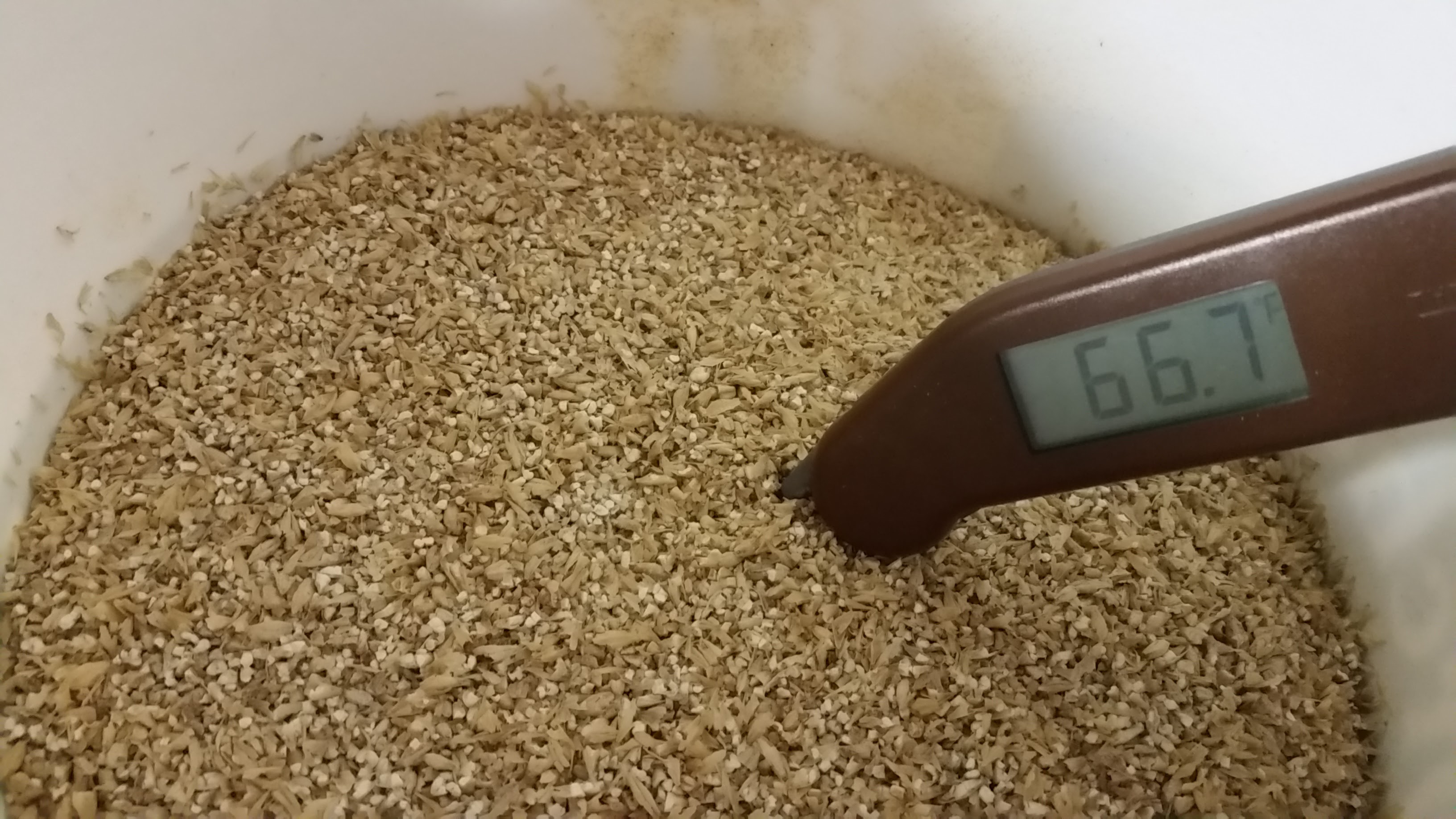
  • I mashed in with 4.8 gallons of water at 168.5°, to hit a mash temperature of 153°. I let it sit for 60 minutes (at which point it had declined to around 150°), and added 0.86 gallons of water at 185°. After 10 minutes, I vorlaufed and collected the first runnings. Then, I added another 3.5 gallons of water at 185°, let sit for 10 minutes, vorlaufed, and collected the second runnings.
  • In total, I collected 6.8 gallons of wort with a gravity of 1.050, for 75% mash efficiency.
  • During the 60 minute boil, all hop and other ingredients were added per the schedule above.
  • After flame-out, I chilled the wort to 76°, transferred to the fermenter, and pitched the yeast. I will ferment at 67° for the first three days, and then raise the temperature to 70° for the remainder of fermentation.
  • Starting gravity was 1.061. This was a great brew session, in terms of how closely I hit my targets! I consider this well within the margin of error for my measuring equipment. I brewed this up on 19 November 2016.

Honey Fuggle Ale

I recently ran across a fun-looking recipe in BYO (December 2015 issue), for a clone of Firestone Walker’s 805. I was in the mood to make a blonde ale, and particularly in the mood to make a new recipe of blonde ale. With a few minor modifications (US Fuggles instead of Willamette for the hops, and a touch less wheat malt, to use up my stash without having to buy more), I had everything in order.

The original recipe suggested building up from RO water; given the highly mineralized nature of our tap water, that seemed like a good idea. I’ve noticed that many of my lighter-flavored beers come across as a bit “flabby”, and suspect that the water is behind it. So, I bought a bunch of distilled water and some more brewing minerals. For the 3.75 gallons of mash water, I added 7 g of calcium chloride and just under 1/4 tsp. of 10% phosphoric acid. The 4.9 gallons of sparge water were treated with just 1/4 tsp. of 10% phosphoric acid.

I have to say that I really enjoy the honey malt addition in this one–it adds a deliciously sweet and distinct character to the wort. Although it certainly isn’t a malt for all occasions, it’s a nice ingredient to keep in the back of my mind for other batches. I’m intrigued to see how the honey malt plays out in a blonde ale like this one.

I had planned to use my culture of Conan (Yeast Bay’s “East Coast Ale” yeast), but when growing up the culture I noticed the aroma was a bit “off” from the first few generations. It wasn’t awful–just not quite right. So, I made a decision to toss it and go with dry yeast instead. The yeast didn’t really owe me anything–I got three good batches out of it, so that seemed to be plenty fine. I’m not sure if it was a contamination issue, or if the yeast had just drifted genetically.

20160521_072106

Grains ready for the mash tun.

Honey Fuggle Ale

  • 8.25 lbs. 2-row malt (Great Western Malting Co.)
  • 0.75 lbs. honey malt
  • 0.5 lb. white wheat malt
  • 1 oz. US Fuggle hops pellets (4.5% alpha, 3.1% beta), 60 minute boil
  • 1 oz. US Fuggle hops pellets (4.5% alpha, 3.1% beta), 5 minute steep after boil
  • 1 tsp. Irish moss (10 minute boil)
  • 1/4 tsp. yeast nutrient (10 minute boil)
  • 1 pkg. Nottingham dry yeast (Danstar)
  • Brewing water prepared as follows:
    • 3.75 gallons of mash water, with 7 g. calcium chloride and 1/4 tsp. 10% phosphoric acid
    • 4.9 gallons of sparge water, with 1/4 tsp. 10% phosphoric acid

Brewing Targets

  • Mash temperature = 156°
  • Original gravity = 1.045 (actual = 1.048)
  • Color = 5 SRM
  • IBU = 19

Procedure

  • I mashed in with 3.75 gallons of water at 167.9°, to hit a mash temperature of 157°. The mash was down to 152° after 60 minutes.
  • I collected the first runnings, and then added 4.9 gallons of water at 185°, to bring the mash bed up to right at 170°. I let it sit for 10 minutes, vorlaufed, and collected the rest of the wort.
  • I collected 7.2 gallons of wort at a gravity of 1.039, for 81% efficiency! Wow! I am not sure if this was the result of my water treatment, or something else, but it was certainly unexpectedly high.
  • I brought the wort to a boil, and added the various ingredients per the schedule in the recipe.
  • After 60 minutes, I added the final dose of hops and chilled the wort down to 80°. After transferring it into my carboy, I let it cool in the fermentation chamber for an hour or two, down to 68°, and then sprinkled the yeast on the wort.
  • The starting gravity was 1.048, and I am fermenting the beer at 68°. This beer was brewed on Saturday, 21 May 2016.