Spring Cleaning Amber Ale

Amber ales have gotten a bit of short shrift in my homebrewing world lately. They’re fairly easy to craft well, and rank among the classic (and stereotypical) “brewpub” styles. I brewed them relatively frequently when I started out in homebrewing, and as a result got a little bored with them. It has been nearly a year and a half since my last amber ale, though, and lately I have been kinda missing having one on tap.

One good thing about amber ales is that for me they have a fairly broad spectrum of possible flavors, which makes them convenient for using up ingredients. The flip side of this is that they can become a muddy mess of too many competing flavors. I think I have struck a reasonable balance in the recipe below, although the proof will be in the tasting a few weeks down the line. My first task was to use up a few lingering pounds of Maris Otter for the base malt, with the remainder made up with the ol’ standard American two-row. A touch of Victory malt will add some biscuit notes, and honey malt should bring in a bit of caramel sweetness (instead of using the more traditional crystal malt). To aim for deeper red hues, I’ve added in just the tiniest bit of black malt.

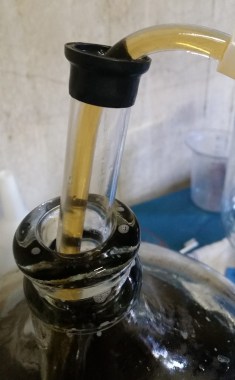
Hop Spider in Action

Hop spider in action for Spring Cleaning Amber Ale

Spring Cleaning Amber Ale

  • 5.34 lbs. Maris Otter malt (Thomas Fawcett)
  • 3.5 lbs. 2-row malt (Great Western Brewing Co.)
  • 0.75 lbs. Victory malt
  • 0.5 lbs. honey malt
  • 2 oz. de-bittered black malt
  • 1 oz. Cluster hops pellets (6.8% alpha), 60 minute boil
  • 1 oz. American Fuggle hops pellets (4.5% alpha, 3.1% beta), 5 minute boil
  • 1 tsp. Irish moss, 10 minute boil
  • 0.5 tsp. yeast nutrient, 10 minute boil
  • Vermont Ale yeast (The Yeast Bay), prepared in starter

Brewing Targets

  • Mash temperature = 152°
  • Original gravity = 1.049
  • IBU = 29

Procedure

  • I made a yeast starter three days in advance, using a jar of yeast that I had set aside three months ago. The 1.75L starter took right off. After two days, I saved 0.6L for another batch and cold-crashed the rest for this batch.
  • On brew day, I mashed in with 4 gallons of water at 163.8°, to hit my target mash temperature of 152° exactly. The mash went down to 149° after 60 minutes. At this point, I vorlaufed and drained the first runnings. I added 4.75 gallons of water at 190°, to hit 169°. I let this sit for 10 minutes, vorlaufed and collected the rest of the wort.
  • All together, I collected 7 gallons of wort at a gravity of 1.041, for 76% efficiency.
  • I brought the wort to a boil, and added the hops and other ingredients per the schedule for the recipe.
  • After 60 minutes, I chilled the wort and transferred it into the fermenter. The wort was exceptionally clear–quite a change after all of the hazy wheat-based recipes of late! The temperature was only down to 80°, so I let it sit in the fermentation chamber for three hours until the temperature hit 68°, and pitched the yeast at this point.
  • Starting gravity was 1.050, nearly exactly at my brewing target. I’ll be fermenting at 68°.
  • I brewed this on May 14, 2016.

Beer Tasting: Experimental Amber Ale

After about 10 days of carbonation, I felt that my Experimental Amber Ale was ready for a serious evaluation. The overly malty flavor at kegging–almost to the point where I was worried that it might be diacetyl or some other flaw–has disappeared, and the beer tastes quite nice. The full story is below.

  • Basics
    • Starting gravity = 1.047; final gravity = 1.013; abv = 4.5%
  • Aroma
    • Clean and lightly malty; nothing to speak of for hop aroma.
  • Appearance
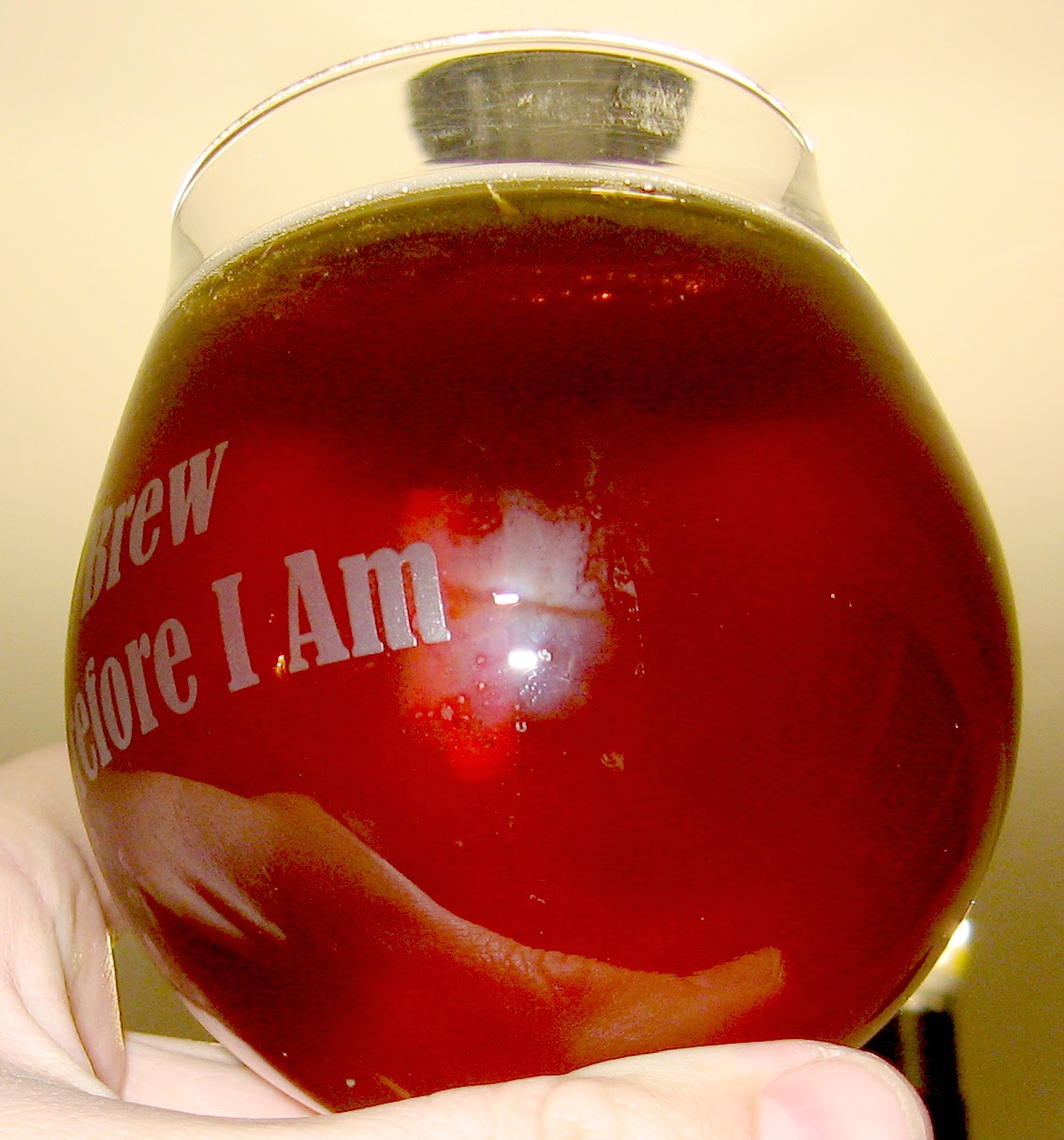
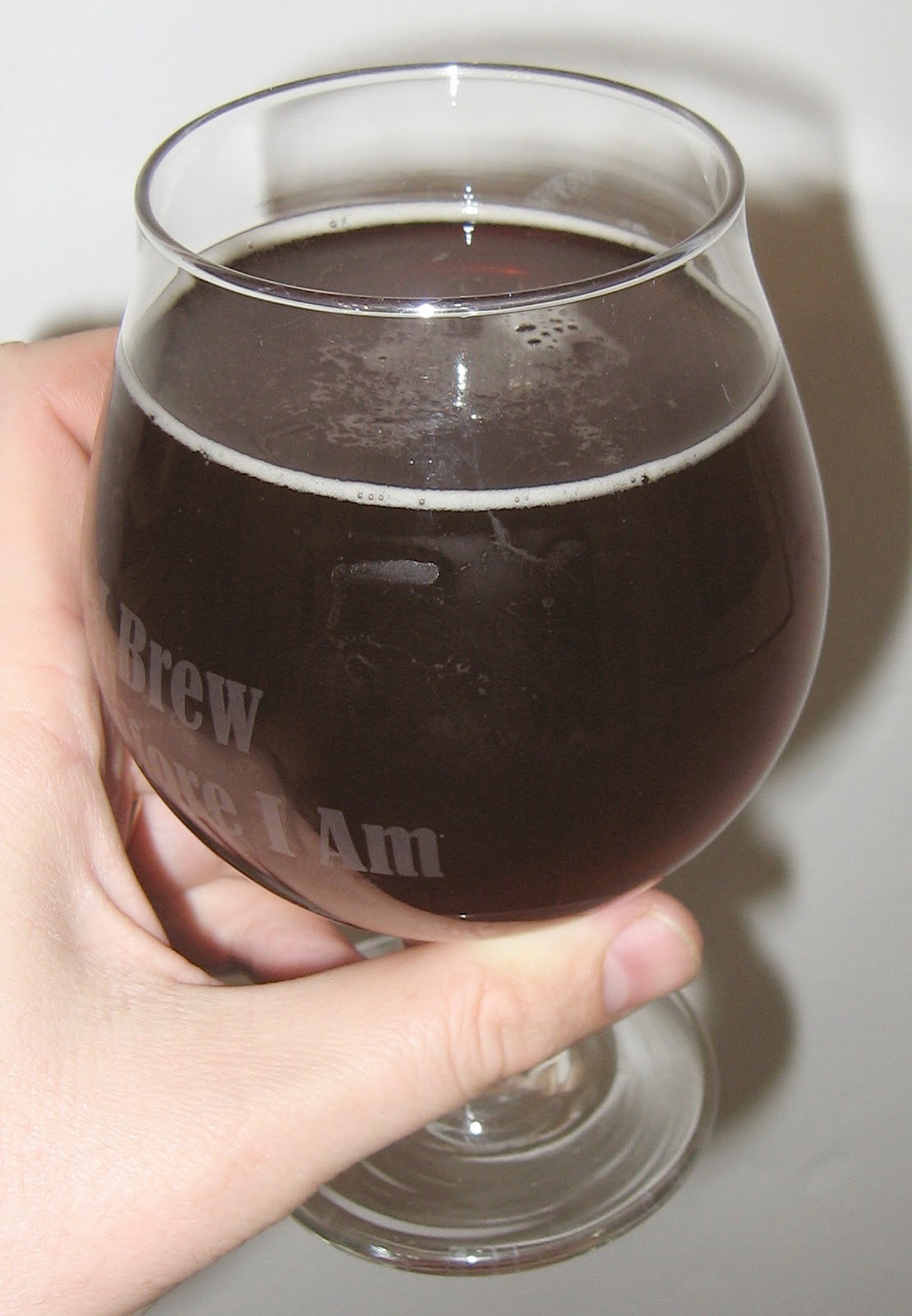
    • A rich amber in color, and clear in appearance. The head is off-white, with good retention, but is not particularly “big” in size.
  • Flavor
    • Malt-forward, with a moderate bitterness that finishes smoothly. Nicely balanced.
  • Mouthfeel
    • Moderately light (but not thin) body and moderately carbonated.
  • Would I brew this again?
    • Probably so, but maybe with a bit of crystal 60 added. I wouldn’t place this into the “absolutely outstanding” category, but there is nothing terribly offensive about it, either. It could probably have a little more of a caramel presence to fit the style guidelines for an amber ale (and indeed, I had intended to add this, but forgot when at my homebrew store), as well as to round out the flavor. If I enter this in a competition, I expect it would get dinged a bit for style. On the other hand, I still like this beer!
  • Overall rating:
    • 7/10

Experimental Amber Ale Kegged

Last night (11 January 2015) I kegged the Experimental Amber Ale. It had been in the primary fermenter for 10 days. For the first eight days, I had it at 65°, and for the last two days I raised it up to 68° to clean up any lingering diacetyl. During the course of fermentation, gravity dropped from 1.047 to 1.013, which works out to 4.5% abv.

I’ll be force carbonating this at ~13.5 psi at 42°, which works out to around 2.5 volumes of CO2. Yield was about 4.5 gallons of beer in the keg. Aroma is predominantly malty, and the flavor is fairly smooth. The maltiness is maybe a little more prominent than I like (which is probably my fault for making Maris Otter a good chunk of the malt bill); I am hoping it balances out a bit as the beer matures.

Experimental Amber Ale

As I work on a keezer build(!) over the winter break, I’m also developing beers with which to populate said keezer during its launch. Eagle Face Oatmeal Stout will be the inaugural tap, but I’m also hoping to build two more beers for this three-keg system. For my second tap, I thought an amber ale would be a nice balance–it also was a chance to use up some of the hops packages that were cluttering my freezer. Thus, the Experimental Amber Ale was born!

I will note that the recipe in the end was a bit of a mistake; I had intended to throw in a pound of crystal 60, but forgot to write it down when I went to the brew store. The resulting malt bill was thus a little simpler than I intended. This also meant that I miscalculated my mash steps (I didn’t remove the crystal malt from BeerSmith’s recipe calculations), and the mash was a bit thinner than it should have been, at least by a little. But…I am hopeful that the strong mix of Maris Otter malt will balance out the flavor, and I do not think the mash was thin to the point of inhibiting enzymatic reactions (I achieved 85% efficiency!).

Experimental Amber Ale

  • 4.5 lbs. American 2 row malt
  • 4 lbs. Maris Otter pale malt
  • 0.25 lbs. chocolate malt
  • 1 oz. Cascade whole hops (5.5% alpha acid; boil 60 minutes).
  • 1 oz. Willamette hops pellets (5.3% alpha acid, 3.7% beta acid; boil 10 minutes)
  • 1 oz. Liberty hops pellets (4.5% alpha acid, 3.5% beta acid; whirlpool ~30 minutes)
  • 1 tsp. Irish moss
  • 1 tbs. 5.2 pH stabilizer
  • 1 pkg. Safale US-05 dry yeast (rehydrated in 1 cup water)
Procedure
  • I mashed in with 3.1 gallons of water at ~172°, which stabilized to 156° within 10 minutes (and was still at that temperature after 20 minutes).
  • After 60 minutes of mash, I added 1.2 gallons of water at 185°, which bumped the mash temperature up to ~160°. I let this sit for 10 minutes, vorlaufed, and then collected ~3.3 gallons of wort.
  • I then added 3.15 gallons of water at 185°, let it sit for 10 minutes, vorlaufed, and collected the rest of the wort, for a total of ~6.7 gallons. This had a gravity of 1.041, which works out to 85% efficiency! This high efficiency, I suspect, is due to the fact that I sparged more than I would have normally (due to assuming the extra pound of crystal malt in the calculations, which wasn’t physically in the recipe).
  • I brought the wort to a boil, and added the Cascade hops.
  • After 45 minutes of boiling, I added the Irish moss.
  • After 50 minutes of boiling, I added the Willamette hops.
  • After 60 minutes, I turned off the flame, added the Liberty hops, and started chilling. The volume in the brew kettle at this point was around 5.8 gallons.
  • I rehydrated the yeast in 1 cup of water, and pitched it.
  • The starting volume was ~5.5 gallons and had a gravity of 1.047 at 60°.
  • I set the temperature for the fermentation chamber at 65°. The beer was brewed on 1 January 2014.
Despite my mistake in my calculations, I think this will (inadvertently) be an OK brew. I’ll be curious to see how it ends up with no crystal malt, and how the combination of 2-row and Maris Otter play together. It probably won’t be true to the American amber ale style, but it should still be drinkable!

Beer Tasting: El Dorado Amber Ale

I’ve been reasonably good at documenting my brewing process (hence this blog), but haven’t done as much for recording the resulting product. This post is a first attempt at formalizing personal evaluations of my homebrew.

  • I brewed this up on March 31, and bottled it on April 27. Thus, it has had a little over three months to condition. The sample I’m evaluating here was from a mini-keg. The character of the beer has changed somewhat from first sampling; definitely a little more mellow in the aroma (a good thing).
  • Appearance
    • Medium amber color. Clear, with only a minor chill haze.
    • Nice head with good head retention
  • Aroma
    • Modestly malty, with a very minor hops aroma
    • When I sampled this beer a month or two ago, the hops aroma was fairly strong and spicy/herbal. Not at all what I expected, especially for how El Dorado hops was described.
  • Taste
    • A moderately malty flavor, but not overly so. There is a modest bitterness, but not too much so.
    • The finish is smooth with a slight caramel flavor, and nicely hoppy
    • Carbonation is moderate; about right for this style of beer
  • Would I brew this again?
    • Overall, this has turned into a decent beer, but not my very best. Particularly in its earlier days, I didn’t really care for how the dry-hopped El Dorado aroma came through; far more vegetal than I was expecting, and very little if any of the promised citrus/fruity notes. It wasn’t unpleasant, necessarily, just not to my personal taste. I was a little unimpressed by how the El Dorado hops worked for this beer; I might try them for bittering again, but not for dry hopping.
    • All in all, I’m going to test a few other amber ale recipes.
  • Overall rating: 5/10